Canada Fossil Fuel Subsidies Hit $30 Billion Amid Pipeline Push, Study Reveals

Spread the love

Original article by Taylor Noakes republished from DeSmog.
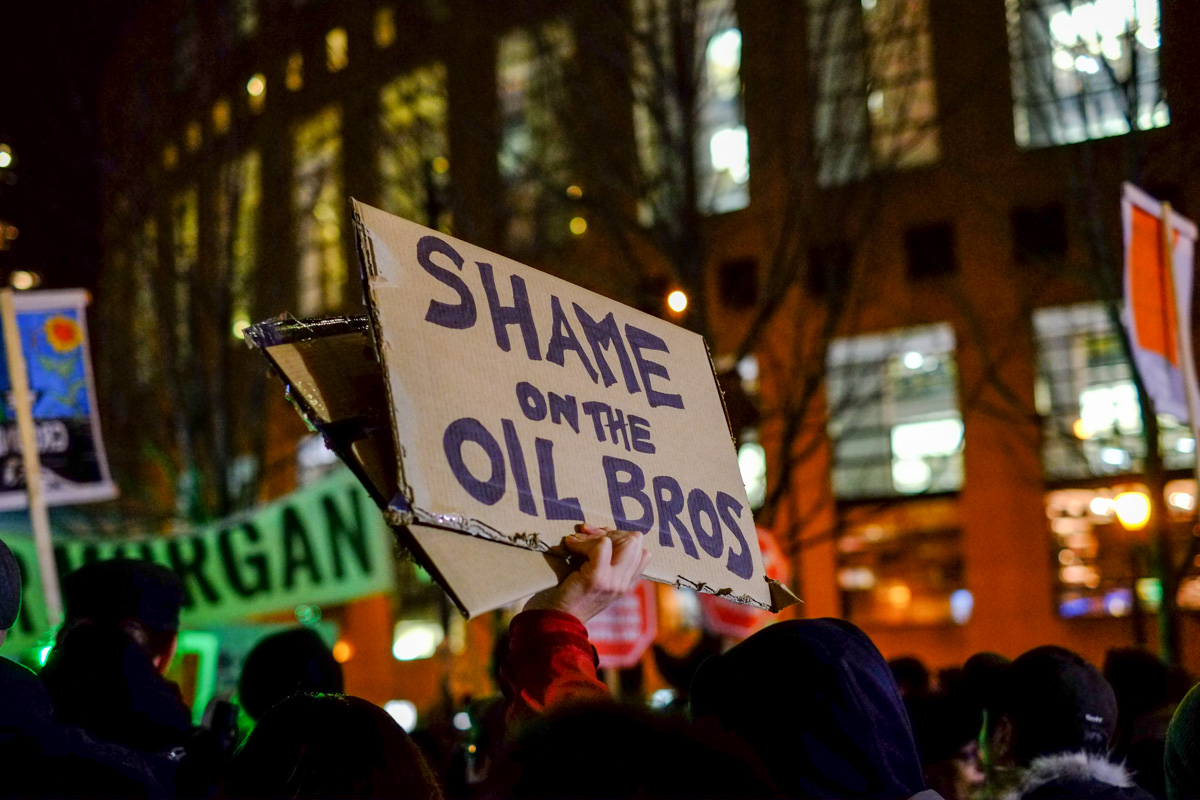
Shame Oil Bros on cardboard sign
Federal subsidies to the oil and gas sector totalled $74.6 billion over five years, Environmental Defence found. Credit: David Niddrie / Flickr (CC BY NC 2.0)

Amid trade war talk of expanding Canadian energy infrastructure, a new report reveals that direct Canadian subsidies to the fossil fuel and petrochemical sectors reached nearly $30 billion in 2024.

For comparison’s sake, Canada spent between $38 billion and $39 billion on defense in 2024. 
 
 “Oil and gas companies – emboldened by their influence over President Trump – are exploiting the current economic uncertainty to call on governments to double down on fossil fuels,” Julia Levin, associate director of national climate with nonprofit group Environmental Defence, which put out the report, said in a statement.

Levin notes that oil and gas companies have been vocal in their demand that politicians work to expand pipelines and related projects, and seek new export markets for Canadian fossil fuels. Meanwhile, Canadian taxpayers, who fund the companies’ subsidies, face the expensive consequences of climate change and related disasters.

In recent weeks, the chief executives of Canada’s major oil and gas companies — including Suncor, Cenovus, Enbridge, and Imperial — signed an open letter to the leaders of four of Canada’s major political parties. In it, they demand federal party leaders to eliminate regulations, emissions caps, tanker bans on the West Coast, and carbon levees on major emitters.

The open letter was endorsed by prominent Canadian conservatives, including Conservative Party leader Pierre Poilievre. Alberta Premier Danielle Smith recently repeated many of the same industry talking points in defending her taxpayer-funded trip to attend a controversial PragerU fundraiser where she shared a stage with far-right influencer Ben Shapiro.  
 
 Last month, Liberal leader Mark Carney indicated his interest in building new east-west pipelines, ostensibly to reduce dependence on foreign imports and develop new trade opportunities. 

“This push ignores the fact that fossil fuels come at a high price — not just at the pump, but through rising costs of groceries, worsening health outcomes, damage to property and huge government handouts,” said Levin in the statement. 

“It also ignores the rapid energy transition towards renewable energy that is happening globally.”

Among Environmental Defence’s principal findings is that the Canadian government spent $29.6 billion on the fossil fuel sector in 2024, which is nearly $6 billion more than what it would cost to build interprovincial grid connection infrastructure. Recent research from the International Institute for Sustainable Development suggests that a national electrical grid could lower electricity costs nationwide, create hundreds of thousands of new clean tech jobs, stabilize electricity costs, improve Canadians’ health, and provide Canada with the energy security currently threatened by the Trump trade war.
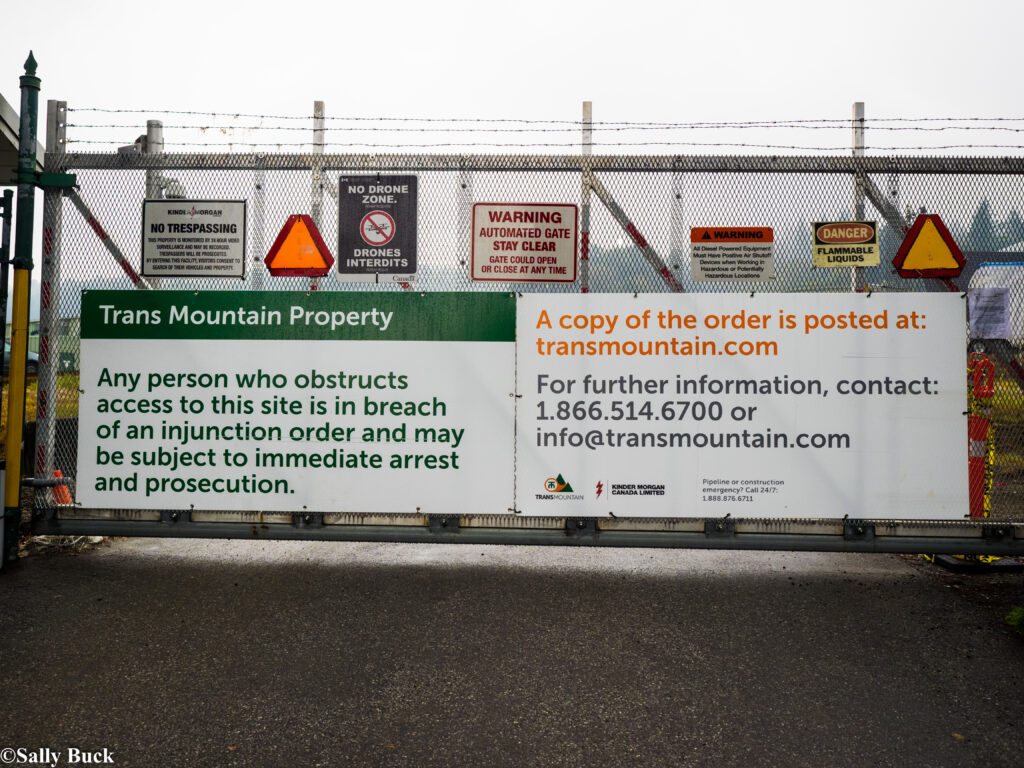
The Trans Mountain project has received $21 billion in government financing. Credit: Sally T. Buck / Flickr (CC BC NC ND 2.0)

Canada’s direct subsidies includes approximately $21 billion in financing for the Trans Mountain Pipeline, $7.5 billion from Export Development Canada (which included money for LNG and carbon capture, and financing for Canadian companies and companies and governments seeking to buy Canadian products), and another $700 million for LNG infrastructure.
 
Big Oil regularly promotes LNG and carbon capture as potential solutions for the climate crisis, though these arguments have been thoroughly debunked. LNG advocates in Canada often characterize it as a “bridge fuel” that could be used to help developing nations transition away from coal. Recent research indicates that the world’s two largest coal users — India and China — are in fact transitioning directly to renewable energy systems like solar and wind.

Moreover, LNG is a deadly fossil fuel that also happens to be resource intensive to produce, and often results in large volumes of methane emissions. Methane is estimated to be 80 times more potent a greenhouse gas than carbon dioxide. As for carbon capture, recent research from the Institute for Energy Economics and Financial Analysis poured cold water on Canada’s premier industry-driven carbon capture project — Pathways Alliance — determining that it is not financially viable and is unlikely to provide any environmental benefit. This determination is consistent with expert analyses of other carbon capture projects, both in Canada and globally.

Canada Has Given Away $74.6 Billion in Subsidies 

Environmental Defence estimates Canada spent $2.4 billion on carbon capture projects in 2024, more than in previous years.

The group’s report also determined that federal subsidies to the oil and gas sector over the last five years amounted to $74.6 billion. Their analysis of what constitutes federal fossil fuel funding includes direct grants, tax breaks, loans, and loan guarantees from the government of Canada and some federal agencies (such as Export Development Canada).

Despite oil industry claims that fossil fuel companies are investing in climate solutions (claims that have led the federal government to introduce anti-greenwashing legislation), Environmental Defence found that none of Canada’s four largest industry companies reported investments in climate initiatives or emissions reductions as part of their capital spending.

The report has also reveals that pollution created by oil and gas companies reached an estimated $53 billion in 2024. This includes increased health costs, property damage from extreme weather events, as well as decreased agricultural productivity, a consequence of changing weather patterns.

“The calls for a new oil pipeline pose real risks to Canadian taxpayers,” said Levin in an email to DeSmog, noting not only that global demand for oil is set to peak in the next four years and then significantly decline, but that oil demand is already showing signs of plateauing in major energy markets like China.

“No company is willing to bet its own money on what is guaranteed to quickly become a massive stranded asset,” said Levin. “Instead, oil and gas companies want taxpayers to pay the price for new fossil fuel infrastructure as their wealthy shareholders reap the rewards.”

Levin is particularly critical of the under reported fact that federal subsidies to the fossil fuel sector have deepened Canada’s economic vulnerability.

“The Canadian public is already on the hook for the new Trans Mountain Pipeline — to the tune of somewhere around $30 to $40 billion and rising. And the project has done nothing to reduce our dependence on the United States, with nearly half its oil still flowing south of the border,” she said.

Original article by Taylor Noakes republished from DeSmog.

Orcas comment on killer apes destroying the planet by continuing to burn fossil fuels.
Continue ReadingCanada Fossil Fuel Subsidies Hit $30 Billion Amid Pipeline Push, Study Reveals

Kemi Badenoch’s Climate Denial Tour

Spread the love

Original article by Adam Barnett republished from DeSmog

Vice president elect JD Vance and Conservative Party leader Kemi Badenoch. Credit: JD Vance / X

The Conservative leader, who attacked “radical green absolutism” in a Washington DC speech, recently met with a host of influential anti-climate figures.

Speaking to an audience in Washington DC last week, Conservative Party leader Kemi Badenoch declared that the conservative desire to “protect the natural world” had been “hacked, replaced by a radical green absolutism”. 

“Looking after our planet became an exclusive discussion about net zero and reducing emissions, and alongside it the growth of activist government to regulate it,” she said. 

Badenoch was giving the keynote speech at the centre-right International Democracy Union (IDU) Forum on 5 December. According to her team, she was in the U.S. to build ties with the Republican Party following the election of Donald Trump as the next president.

In keeping with her speech, the new friends that Badenoch spent time with during the trip – vice president elect JD Vance, Florida Governor Ron DeSantis, Republican House Speaker Mike Johnson, and Canadian Conservative Party leader Pierre Poilievre – have spread climate science denial and received funding from the fossil fuel industry. 

Badenoch describes herself as a “net zero sceptic” and has suggested that the UK’s 2050 target for achieving net zero emissions would “bankrupt the country”. As DeSmog has reported, her political advisors have attacked the UK’s climate goals, and her campaign for Tory leader was backed by Neil Record, chair of Net Zero Watch, an arm of the Global Warming Policy Foundation climate denial group. 

Her ministers Priti Patel and Robert Jenrick have ties to the Heritage Foundation, the U.S. think tank behind the Project 2025 blueprint for a second Trump term, which proposes the rollback of climate policies and environmental protections. 

Here’s what you need to know about Badenoch’s new anti-green allies.

JD Vance

Badenoch reportedly had an hour-long dinner with vice president elect JD Vance, during which they “renewed their friendship”.

Vance has a history of dismissing human-caused climate change. In 2021, he told the American Leadership Forum, a U.S. Christian group: “I’m skeptical of the idea that climate change is caused purely by man”. He added: “It’s been changing, as others pointed out, it’s been changing for millennia.”

During this year’s U.S. presidential election, Vance repeatedly attacked the Biden administration’s climate policies as “the Green new scam”. 

Former venture capitalist Vance received a total of $352,000 (around £276,000) from the fossil fuel industry between 2019 and 2024, according to campaign finance database OpenSecrets. 

Ron DeSantis

The Tory leader also met with Florida Governor Ron DeSantis, who ran to be the Republican nominee for president this year.

DeSantis, who endorsed Badenoch to be Conservative leader, has described climate change as a “religion” and has passed laws to curb action to tackle it. 

In October, when asked about the role of climate change in two hurricanes off the Florida Gulf Coast, DeSantis said: “I don’t subscribe to your religion.” 

Hurricanes are fuelled by warmer waters, meaning that more devastating hurricanes are directly linked to rising temperatures. Consequently, as the Florida Climate Center has pointed out: “A larger proportion of storms have reached major hurricane strength in recent years, along with an increase in rapid intensification events.”

DeSantis went on to defend the continued extraction of fossil fuels, saying climate action would involve: “Taxing [people] to smithereens, stopping oil and gas, making people pay dramatically more for energy; we would collapse as a country.”

Earlier this year, DeSantis signed a bill into law that would delete references to climate change from all state legislation. In May he posted on X in support of the bill: “Florida rejects the designs of the left to weaken our energy grid [and] pursue a radical climate agenda”.

Mike Johnson

Badenoch also reportedly met with Mike Johnson, the Republican speaker of the House of Representatives. 

In 2017, Johnson told a public meeting with constituents: “I am not a big proponent of the climate change data because I have seen data on the other side.” 

He added: “The climate is changing, but the question is, is climate changing because of natural cycles in the atmosphere over the span of history, or is it changing because we drive SUVs? I don’t believe in the latter. I don’t think that’s the primary driver.”

In reality, authors working for the world’s foremost climate science body, the UN’s Intergovernmental Panel on Climate Change (IPCC), have said that “it is a statement of fact, we cannot be any more certain; it is unequivocal and indisputable that humans are warming the planet”.

The IPCC has also stated that carbon dioxide “is responsible for most of global warming” since the late 19th century, which has increased the “severity and frequency of weather and climate extremes, like heat waves, heavy rains, and drought” – all of which “will put a disproportionate burden on low-income households and thus increase poverty levels.”

Johnson has repeatedly voted against action to tackle rising temperatures, including laws that would require oil and gas companies to disclose the climate risks of their activities, while supporting cuts to the federal Environmental Protection Agency.

He has also received around $240,000 (more than £118,000) in campaign donations from the oil and gas industry, according to OpenSecrets. 

Pierre Poilievre

Badenoch’s North American trip also saw her visit Toronto, where she met with Pierre Poilievre, leader of the Canadian Conservative Party. 

Declaring that conservative leaders in Canada and the UK were “uniting over shared values”, Badenoch posted on X calling Poilievre “an impressive and thoughtful figure” and “a new friend and ally”. 

https://twitter.com/KemiBadenoch/status/1865587501684973612?ref_src=twsrc%5Etfw%7Ctwcamp%5Etweetembed%7Ctwterm%5E1865587501684973612%7Ctwgr%5E77d16c26df5e280380dcfcf0aa21ab73231285ea%7Ctwcon%5Es1_c10&ref_url=https%3A%2F%2Fwww.desmog.com%2F2024%2F12%2F12%2Fkemi-badenoch-climate-denial-tour-jd-vance%2F

Sorry, this content could not be embedded.
X

As DeSmog reported in March, Poilievre has voted against climate and environmental legislation nearly 400 times during his parliamentary career. 

Poilievre has also campaigned against a carbon tax in Canada, and has supported Canadian oil and gas extraction, calling it “the most ethical and environmentally sound in the world”.

The Free Press

Badenoch also recorded a podcast with The Free Press, a conservative platform which has published attacks on climate science and action. 

In 2022, it ran an article by climate crisis denier Michael Shellenberger arguing that the West’s “green delusions”, and its attempts to transition away from fossil fuels, had “empowered” Russian autocrat Vladimir Putin. 

In September 2023, the platform published an article by U.S. scientist Patrick Brown, who heads a climate unit at Shellenberger’s Breakthrough Institute, claiming he had been pressured by Nature magazine to make a paper on wildfires fit a climate change “narrative” – claims rejected by the magazine and other scientists. 

Original article by Adam Barnett republished from DeSmog

Continue ReadingKemi Badenoch’s Climate Denial Tour