Tag: poverty
Unions call for end of ‘rampant profiteering’ as pre-Christmas food inflation remains at 9.2%

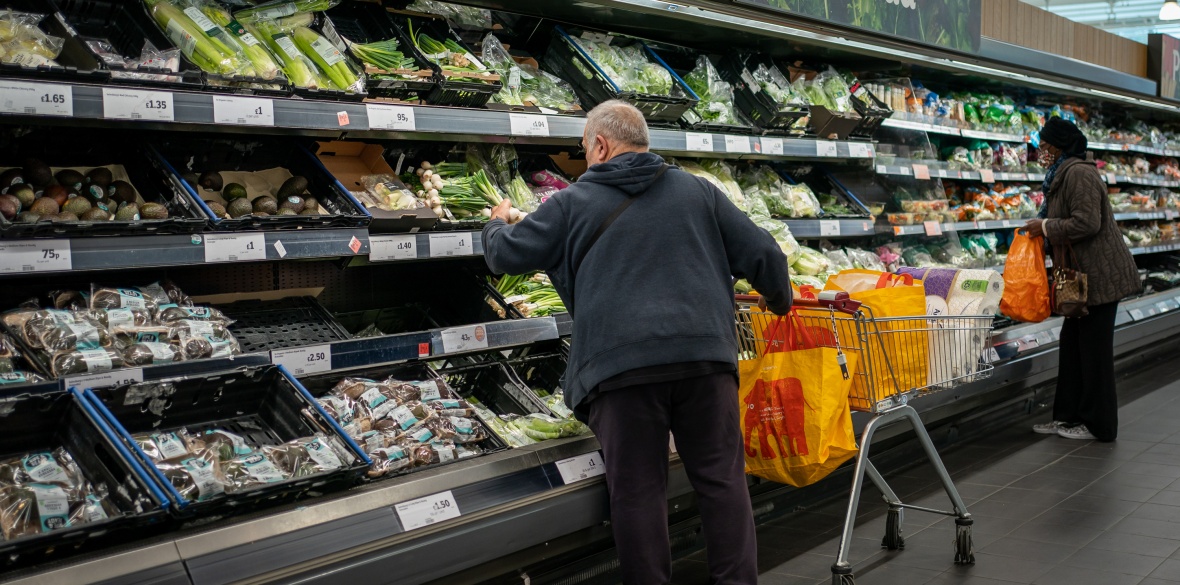
Shoppers in a supermarket, October 15, 2021 UNIONS called for an end to “rampant profiteering” as official figures showed food inflation remains at a painfully high 9.2 per cent in the run-up to Christmas.
Unite general secretary Sharon Graham said yesterday’s larger-than-expected drop in overall inflation would not offset the real-terms fall in wages this Christmas.
She said: “Headline inflation might be slowing, but workers know their wages aren’t going as far as they did two years ago.
“Even the competition regulator now admits what Unite has said all along: that firms have been exploiting the cost-of-living crisis to raise prices excessively.
“It’s time the government and Bank of England tackled the rampant profiteering in our economy to get inflation under control.”
Responding to the figures showing CPI inflation slowing to 3.9 per cent and RPI inflation to 5.3 per cent, TUC general secretary Paul Nowak added: “Today’s inflation figures will provide scant relief for hard-pressed families. Prices are still going up — just a bit more slowly.
“Household budgets remain under immense pressure. And many families will struggle with the cost of Christmas, with food and energy bills sky high.”
…
Homeless people urinated on and attacked with bricks, shocking survey shows
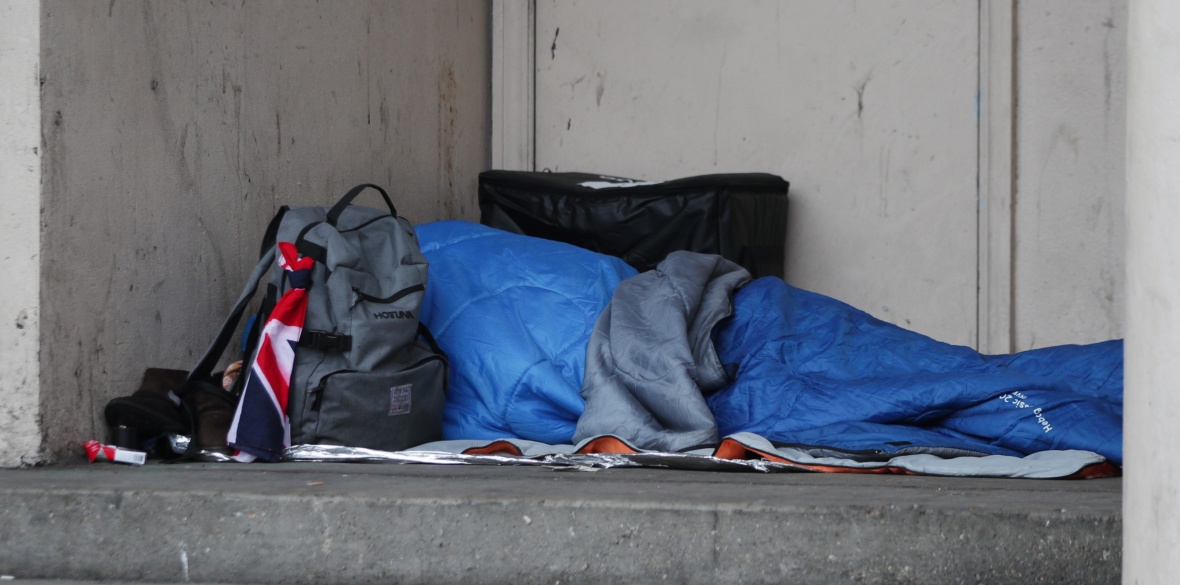
Person sleeping rough in a doorway, February 7, 2017 SHOCKING levels of violence and abuse are being faced by homeless people, a new survey finds.
Rough sleepers are frequently attacked, urinated on, verbally abused and have bricks and beer cans thrown at them, according to homelessness charity Crisis.
The charity spoke to 156 people in late summer who had rough sleeping experience within the last two years.
It found that 90 per cent of them had experienced some form of violence or abuse and 51 per cent had been physically attacked.
Three-quarters cruelly had items stolen, while 72 per cent had suffered verbal abuse or harassment.
More than half (53 per cent) had something thrown at them, examples given included bricks and beer cans.
More than a quarter had been racially abused, harassed or attacked (27 per cent), while almost a fifth (18 per cent) had been urinated on.
Nine of those who responded said they had been sexually assaulted.
…
Revealed: Where up to a quarter of your water bill is really going

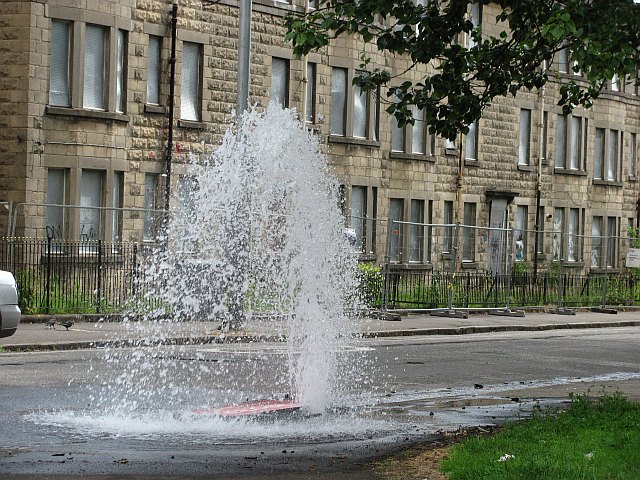
Image of a burst water main. It’s been branded ‘daylight robbery’
An investigation by the Guardian published today has revealed that staggering proportions of the public’s water bills are used to service private water firms’ debt. According to the paper’s analysis of financial data over a quarter of some water companies’ revenue goes on servicing debt.
The UK’s largest water firm, Thames Water, uses an astonishing 28 per cent of its revenue to service debt. Southern Water and South East Water both also use more than a quarter of their revenue for the same purpose.
Almost the entirety of water company revenue is made up of customer bills. As of March, the private water firms in England had racked up combined debts of more than £60 billion. Meanwhile, since privatisation of water in England in 1989, private water companies have paid out over £70 billion in dividends to shareholders.
The Guardian notes that Scottish Water, which remains publicly owned, spent just 10 per cent of its revenues financing its debt, less than all of the private water firms in England.
The revelations have led to a furious public backlash and renewed calls for England’s water to be taken back into public ownership.
Labour peer and Left Foot Forward columnist Prem Sikka branded the situation as ‘daylight robbery’, saying that money had been ‘borrowed to pay dividends, and that ‘companies want more from captive customers’.
…
dizzy: This ridiculous situation is on the Conservatives watch …

Image of cash and pre-payment meter key Autumn Statement: Greens offer 10-point plan of distinctive tax and spend policies to create a fairer, greener society

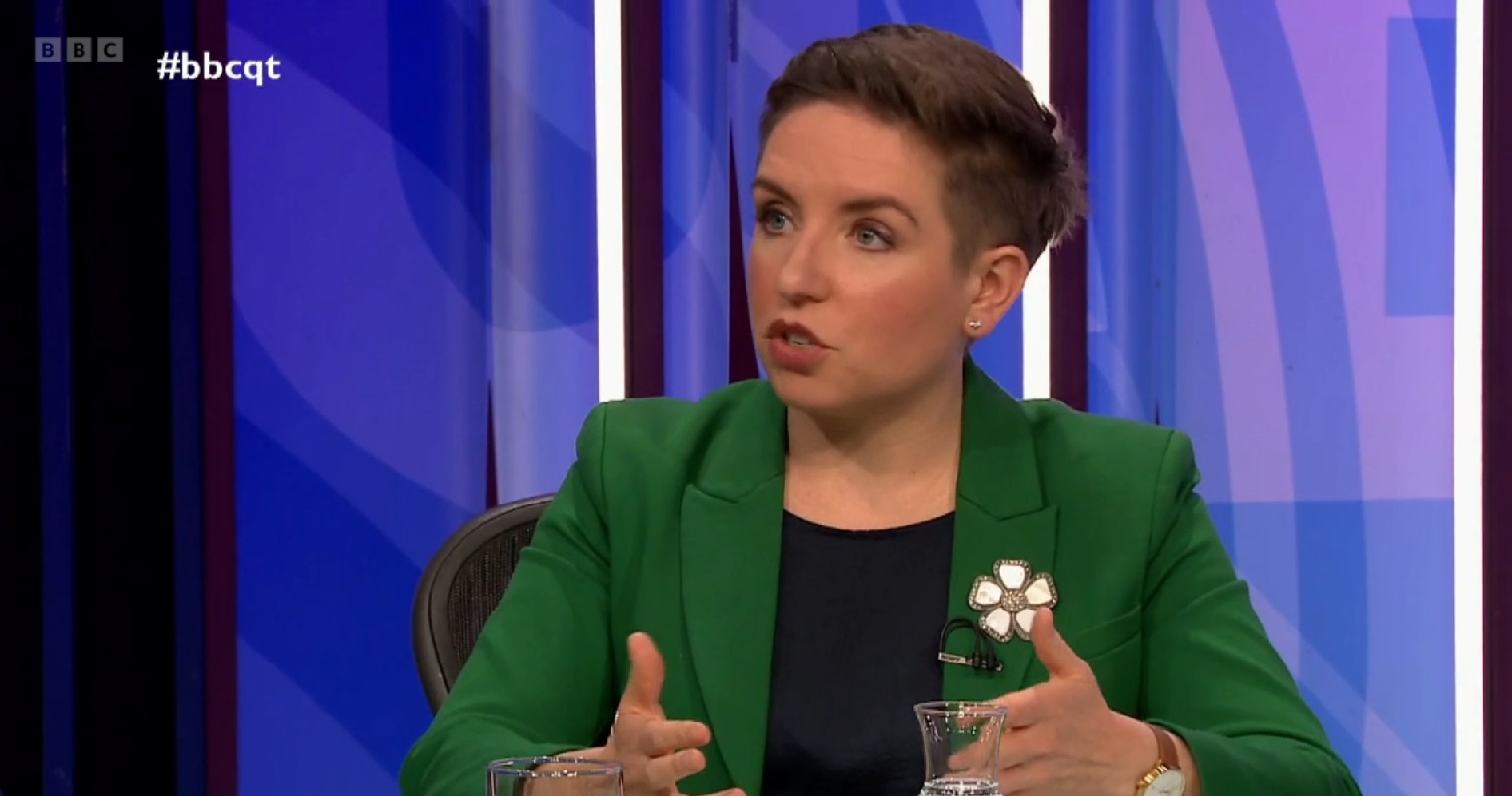
Image of the Green Party’s Carla Denyer on BBC Question Time. Green Party co-leader Carla Denyer has outlined a 10-point plan of distinctive tax and spend policies aimed at delivering a fairer, greener country. She will dismiss the chancellor’s Autumn Statement, saying it will be “another failed opportunity to end the cost-of-living crisis, tackle the climate crisis and restore crumbling public services on which we all rely.”
Denyer said:
“Our 10-point plan identifies around £30 billion of additional funds that would be available from simply rebalancing the tax system so that the super-rich pay their fair share and both people and planet benefit.”
“The extra revenue raised would enable the government to pay NHS staff an inflation-matching pay award, increase access to NHS dentists, increase Universal Credit, abolish the two-child benefit cap, improve bus services and help small businesses take advantage of the opportunities offered by greening the economy.
“Instead, the chancellor’s Autumn Statement will be another failed opportunity to end the cost-of-living crisis, tackle the climate crisis or restore crumbling public services. It’s clear that as the Tories continue to languish in the polls, Jeremy Hunt has more interest in electoral gimmickry that he has in creating a fairer and greener country.”
The Green Party’s 10-point plan would:
- Restore the public health budget by increasing spending by £1.4 billion
- Immediately increase NHS spending by £8 billion, to ensure NHS staff can be paid an inflation matching pay award
- Meet the Government’s current plan to increase access to NHS dentists by increasing spending 50 per cent – £1.5 billion – of the total NHS dentistry budget
- End the rise in homelessness caused by the cap on Local Housing Allowances at a cost of £700 million
- Increase Universal Credit by £40 per week at a cost of £9bn
- Abolish the two-child benefit cap to reduce poverty for some of the most vulnerable children in the country by increasing the welfare budget by £1.3 billion
- Provide the necessary powers and funding to rural local authorities to take back control of bus services so they can increase routes and service frequencies at a cost of £3bn
- Turn ISAs green by linking their tax exemptions to investments in green bonds
- Invest an additional £3billion in Green Transition Grants for small businesses to help them prepare for and take advantage of the opportunities offered by greening the economy
- Rebalance the tax system to raise an extra £30 billion through changes to Capital Gains Tax, National Insurance and the abolition of “non dom status” which would pay for the proposed measures
Championing the Green’s alternative Autumn Statement, Carla Denyer said:
“These fairer, greener alternatives give just a flavour of what could be done if we had a Government willing to tackle the long-term crises we face. They would start to remove the fundamental injustice that means that wealthier people who own more assets often see a lower effective tax rate than less well-off people.
“Everyone deserves easy access to a dentist, improved public health, properly paid and supported doctors and nurses working with decent facilities, reduced poverty and homelessness, and accessible public transport.
“There is enough money in the economy to make our country fairer and greener. What is lacking is the political will to change priorities. And Starmer’s official opposition seems no more ready to offer this than the Government is. That is why we so desperately need more Greens in Parliament to make the case for the common-sense changes that can deliver a fairer greener country.”