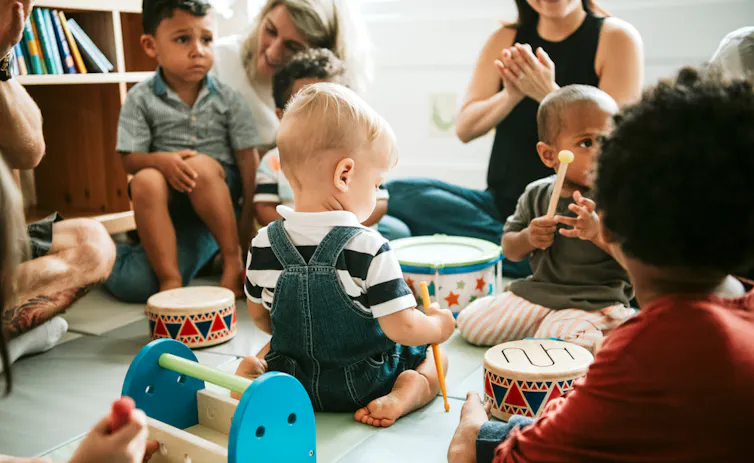
Over 1.6 million children live in families made poorer by the two-child limit on benefits – new data

Spread the love

Ruth Patrick, University of Glasgow and Kitty Stewart, London School of Economics and Political Science

New government statistics released today show the reach of the two-child limit. There are 1,665,540 children in England, Scotland and Wales living in households affected by the two-child limit, an increase of over 35,000 from the same time in 2024.

The two-child limit restricts means-tested child benefits to the first two children in a household, subject to some exceptions.

Its sister policy, the benefit cap, affects over 115,000 households, including 300,000 children. It routinely pushes families into deep poverty, far below the standard poverty line of 60% of median income.

The benefit cap places a limit on the total amount a household can receive if no-one in the household earns a minimum amount, again subject to some exceptions linked to receipt of disability benefits.


Get your news from actual experts, straight to your inbox. Sign up to our daily newsletter to receive all The Conversation UK’s latest coverage of news and research, from politics and business to the arts and sciences.


Over the past five years, we have been part of a team of academic researchers investigating the impact of both policies on families with three or more children. We’ve found that these policies drive up poverty, creating deprivation and hardship. This in turn causes sustained and severe harm to children and their families.

The two-child limit and benefit cap leave many families living with extreme financial insecurity. They harm parental mental health, as mothers and fathers struggle to try and make an inadequate income stretch to meet the needs of their children.

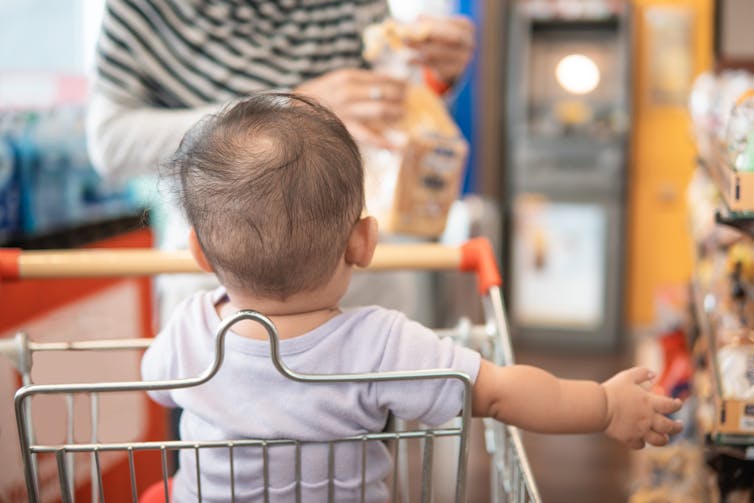
Parent with baby in supermarket
Parents are struggling to make their income go far enough. Odua Images/Shutterstock

In addition, these policies do not fall evenly across the population when looking at ethnicity. Overall, 70% of the families affected by the two-child limit are white, as are 66% affected by the benefit cap. But our new analysis shows that children from an ethnic minority are up to three times as likely as white children to be affected by the two-child limit. They are also up to four times as likely to be affected by the benefit cap.

Alongside administrative statistics, we have analysed household survey data, published today as a policy brief. We find that one in five children from Pakistani families and one in four children from Bangladeshi families are now affected by the two-child limit.

Rising poverty

Our analysis also indicates that these policies are contributing to very high and rising levels of poverty. We estimate that 66% of Bangladeshi children, 60% of Pakistani children, and nearly half (48%) of black children live in poverty. This compares to one in four (24%) white children living below the poverty line – still far too many.

This new analysis provides us with better understanding of where the damage done by both policies is falling. It’s an important reminder of how the two-child limit and benefit cap directly conflict with ambitions not only to act on child poverty, but also to reduce systematic inequalities linked to ethnicity.

Scrapping the two-child limit would give larger families access to benefits they currently miss out on – but it would not have any effect on smaller families living in poverty, so isn’t the only policy solution needed.

Nonetheless, analysis by the Resolution Foundation has shown that getting rid of the two-child limit – which would cost £1.4 billion – is by far the most cost-effective way to reduce the number of children living in poverty. Spending £1.4 billion in other ways – for example by increasing benefits for all families – would make less difference to child poverty than if the two-child limit were ended.

It’s also important to keep in mind the impact on the depth of poverty. Larger families tend to be living further below the poverty line. Scrapping the two-child limit will make a big difference in many households, even if they are not lifted out of poverty as a result.

Labour came into government on a manifesto of “change”, and Keir Starmer has promised to be “laser-focused” in his commitment to drive down poverty.

Labour have already said that they want to get rid of the two-child limit, arguing that they just need to find the money to do so. The government has established a child poverty taskforce, due to report in the autumn, and made a first concrete policy commitment with the extension of free school meals provision for families in England. But there is no alternative to serious action on social security benefits if significant progress is to be made.

Ruth Patrick, Professor in Social Policy, University of Glasgow and Kitty Stewart, Professor, Department of Social Policy, London School of Economics and Political Science

This article is republished from The Conversation under a Creative Commons license. Read the original article.

Keir Starmer says that the Labour Party under his leadership all feel a small part of Scunthorpe.
Keir Starmer explains that he feels no shame or guilt benefitting personally from gifts from the rich and powerful while insisting on policies of severe austerity causing suffering and death.
Continue ReadingOver 1.6 million children live in families made poorer by the two-child limit on benefits – new data

Children in England ‘living in almost Dickensian levels of poverty’

Spread the love

https://www.theguardian.com/society/2025/jul/08/children-england-living-almost-dickensian-levels-poverty

Children’s commissioner says any Labour strategy to tackle deprivation must scrap the two-child benefit cap

Children in England are living in “almost Dickensian levels of poverty” where deprivation has become normalised, the children’s commissioner has said, as she insisted the two-child benefit limit must be scrapped.

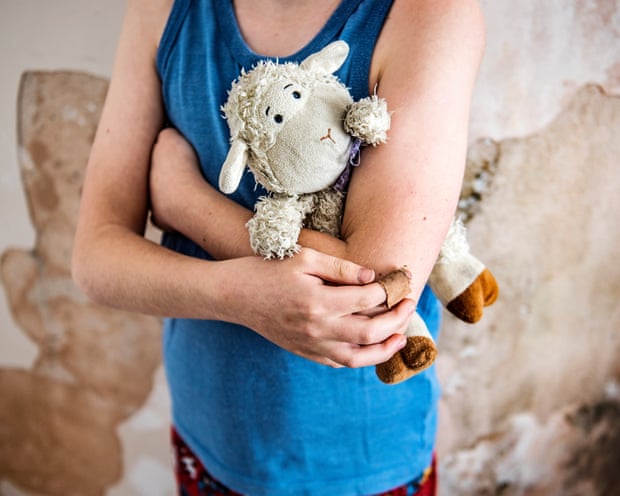
Young people said they had experienced not having enough water to shower, rats biting through their walls, and mouldy bedrooms, among a number of examples in a report on the “crisis of hardship” gripping the country.

Dame Rachel de Souza said she had noticed a significant shift in how young people talked about their lives since she became children’s commissioner four years ago, and that “issues that were traditionally seen as ‘adult’ concerns are now keenly felt by children”.

“Children shared harrowing accounts of hardship, with some in almost Dickensian levels of poverty,” she said. “They don’t talk about ‘poverty’ as an abstract concept but about not having the things that most people would consider basic: a safe home that isn’t mouldy or full or rats, with a bed big enough to stretch out in, ‘luxury’ food like bacon, a place to do homework, heating, privacy in the bathroom and being able to wash, having their friends over, and not having to travel hours to school.”

She said that, in “one of the richest societies in the world”, people in power “should be ashamed that children are growing up knowing their futures are being determined by their financial circumstances”.

https://www.theguardian.com/society/2025/jul/08/children-england-living-almost-dickensian-levels-poverty

Keir Starmer says that the Labour Party under his leadership all feel a small part of Scunthorpe.

Continue ReadingChildren in England ‘living in almost Dickensian levels of poverty’

MP Zarah Sultana resigns from Labour to co-found a new party with Corbyn

Spread the love

https://www.theguardian.com/politics/2025/jul/03/jeremy-corbyn-hints-at-launch-of-new-party-as-leftwing-alternative-to-labour

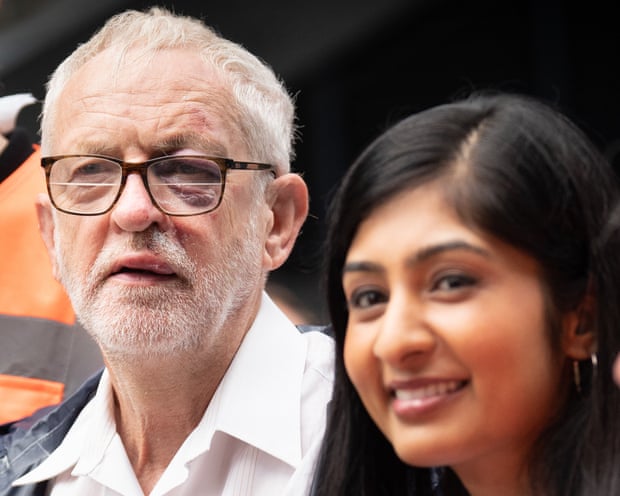
Zarah Sultana with Jeremy Corbyn in 2022. He said earlier he wants to offer an alternative to Labour. Photograph: Stefan Rousseau/PA

Sultana lost the whip last year and she and ex-party leader want to enlist other independent MPs and campaigners

She said in a statement posted on X that she was “resigning from the Labour Party”.

“Jeremy Corbyn and I will co-lead the founding of a new party, with other independent MPs, campaigners and activists across the country.”

She said that “Westminster is broken but the real crisis is deeper” and the “two-party system offers nothing but managed decline and broken promises”.

She added: “A year ago I was suspended by the Labour Party for voting to abolish the two-child benefit cap and lift 400,000 children out of poverty. I’d do it again. I voted against scrapping winter fuel payments for pensioners. I’d do it again. Now, the government wants to make disabled people suffer; they just can’t decide how much.”

She urged people to “join us”.

See the original article at https://www.theguardian.com/politics/2025/jul/03/jeremy-corbyn-hints-at-launch-of-new-party-as-leftwing-alternative-to-labour

Keir Starmer says that the Labour Party under his leadership all feel a small part of Scunthorpe.
Keir Starmer commits to play the caretaker role for Capitalism through the "hard times".
Keir Starmer commits to play the caretaker role for Capitalism through the “hard times”.
Keir Starmer objects to criticism of the IDF. He asks how could anyone obect to them starving people to death, forced marches like the Nazis did, bombing Gaza's hospitals and universities,mass-murdering journalists, healthworkers and starving people queuing for food, killing and raping prisoners and murdering children. He calls for people to stop obstructing his genocide for Israel.
Keir Starmer objects to criticism of the IDF. He asks how could anyone obect to them starving people to death, forced marches like the Nazis did, bombing Gaza’s hospitals and universities,mass-murdering journalists, healthworkers and starving people queuing for food, killing and raping prisoners and murdering children. He calls for people to stop obstructing his genocide for Israel.

4 July 2025 1.20pm

It appears that Jeremy Corbyn has yet to comment regarding Zarah Sultana’s announcement. I don’t know what’s going on and can only speculate.

There have been false starts of a new left party before, the announcement itself is a political event signalling that there is an extent of opposition organising against shameless genocidalist Keir Starmer. I would expect that the old school Socialists like Jeremy Corbyn and John McDonnell would prefer to stay in the Labour Party. That’s where they’ve always been, after all. Is there a plan or is it just testing the waters?

5.50pm

https://www.thecanary.co/uk/analysis/2025/07/04/corbyn-zarah-sultana-party/

At 6:30pm tonight, Corbyn is due to speak at an event with independent candidate Leanne Mohamad about “Breaking the Two-Party Nightmare“. That would be an appropriate place for Corbyn to address Sultana’s announcement. So we may know a bit more by the end of the day.

6.05pm

Continue ReadingMP Zarah Sultana resigns from Labour to co-found a new party with Corbyn

Welfare reform bill: what changes did the government make to get it over the line?

Spread the love
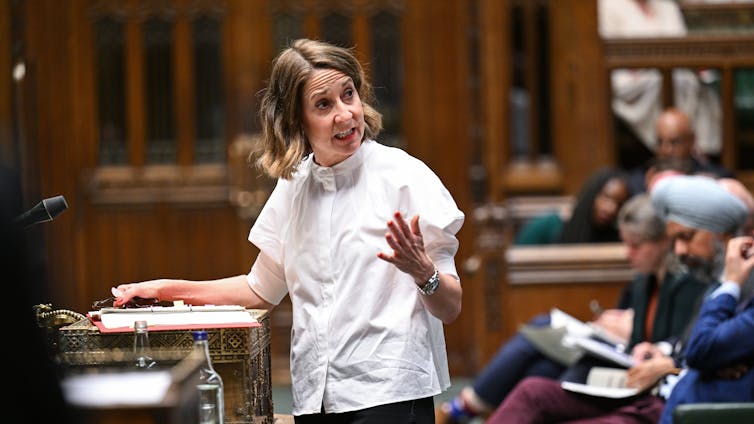
Liz Kendall, the work and pensions secretary, speaks to the Commons ahead of the crucial vote on welfare reform. House of Commons/Flickr, CC BY-NC-ND

Richard Machin, Nottingham Trent University

The government’s landmark bill on welfare reform passed by 335 to 260 votes on Tuesday evening, after staving off a major rebellion from Labour MPs. To win over backbench MPs who had opposed the bill, the government made a series of concessions, including a last-minute compromise agreeing that any changes to personal independence payment (Pip) will not be introduced until the outcome of a review.

In March, the government introduced the universal credit and personal independence bill. The aim was to create a sustainable welfare system in response to changing demographics and population health.

In recent years, the UK has seen an increase in people claiming benefits for long-term health conditions, with one in ten people of working age claiming a sickness or disability benefit. Welfare expenditure has increased, and is projected to be £70 billion a year by the end of the parliament.

Recalibrating the welfare system is not an easy task. The government has said reform is needed to support those with highest needs and assist more people into work. However, critics of the bill, raised concerns that it would result in an overly restrictive disability benefits system and push more people into poverty.

Here’s what’s the bill initially proposed and what was changed ahead of the vote.


Get your news from actual experts, straight to your inbox. Sign up to our daily newsletter to receive all The Conversation UK’s latest coverage of news and research, from politics and business to the arts and sciences.


Personal independence payment

The bill initially proposed significant changes to personal independence payments (Pip) from November 2026. Pip is a working-age benefit to help people with the costs associated with a long-term health condition or disability. It has two elements, a daily living component and a mobility component.

A points-based system is used to assess eligibility for Pip. Currently, to qualify for the daily living component a claimant must have limited ability in relation to a range of ten activities. These include washing and bathing, dressing and undressing, eating and drinking and managing medication or therapy.

Eight to 11 points leads to qualification for the standard rate and over 12 points for the enhanced rate. On the current system, a claimant can score one or two points across a range of activities, it doesn’t matter how the points are made up.

In March, the government announced that from November 2026, claimants will need to score at least four points on at least one of the ten activities to qualify. The amount of points available ranges from zero to 12, depending on the activity.

Critics argued that this places the bar at too high a level, making it more difficult for people whose health problems are spread across a range of activities, rather than meeting the criteria in one.

Close up of hands of a nurse helping a woman count out medication tablets
Needing assistance managing medication is one area where Pip points are measured. Yuri A/Shutterstock

Concerns were raised that this change could disproportionately affect people with mental health problems. Research shows that previous changes to Pip have caused uncertainty and anxiety for many people with mental health problems.

Typically if the help required relates to being reminded or encouraged to compete a task, only two points are awarded. This can be a common way for people with mental health problems to qualify for Pip, including those with severe conditions such as bipolar disorder. It is estimated that between 800,000 and 1.2 million people would have lost entitlement to Pip under the four-point proposal.

After it became clear that dozens of Labour MPs planned to vote against the bill, the work and pensions secretary, Liz Kendall, announced a concession on the Pip proposals. First, that four-point rule should only apply to new claimants, with people already in receipt of Pip remaining within the current rules. Second, there will be a review of the Pip assessment led by Stephen Timms, the minister for social security and disability, alongside people with disabilities and representative organisations.

But for some MPs and campaigners, this raised the spectre of a two-tier system which protects existing claimants but not future ones. Two hours before the Commons vote, Timms announced that no changes would be made to Pip eligibility before the review. The bill passed without any changes to Pip.

Universal credit

What remains in the bill are changes to universal credit, the UK’s main means-tested benefit, primarily for claimants who are unfit for work.

Over 3 million claimants (out of a total of over 7 million) are not required to look for work as a result of a health condition. They receive an additional health-related payment of more than £400 per month. The bill reduces the health element for new claims from £97 to £50 per week from April 2026 and restricts payment to claimants over the age of 22.

Under original proposals, the higher health-related rate was to be frozen for existing claimants. This will now be increased every year for the rest of the parliament, at least in line with inflation.

A £1 billion back-to-work support package, originally scheduled to be introduced in 2029, will be accelerated.

The Department for Work and Pensions estimates that 730,000 future universal credit claimants will lose an average of £3000 per year compared to current claimants.

What happens next?

The government’s original plans were estimated to save £5 billion a year by 2030. Last weeks’ concessions would cost £3 billion. The last-minute compromises mean that there will be virtually no medium-term savings.

Labour minister Pat McFadden has ruled out raising income tax, VAT or national insurance, but questions remain on how these concessions will be paid for.

The government technically won the vote on welfare reform, but was unable to push through its most significant reforms. The debate over the future of the welfare system will continue (and probably intensify) as the Timms review begins.

Richard Machin, Associate professor (Social Policy), Nottingham Trent University

This article is republished from The Conversation under a Creative Commons license. Read the original article.

Keir Starmer says that the Labour Party under his leadership all feel a small part of Scunthorpe.
Keir Starmer confirms that he's proud to be a red Tory continuing austerity and targeting poor and disabled scum.
Keir Starmer confirms that he’s proud to be a red Tory continuing austerity and targeting poor and disabled scum.
Continue ReadingWelfare reform bill: what changes did the government make to get it over the line?

Labour could face biggest rebellion since Iraq war as MPs vote on welfare cuts

Spread the love

https://morningstaronline.co.uk/article/labour-could-face-biggest-rebellion-iraq-war-mps-vote-welfare-cuts

 Members of Disabled People Against Cuts (DPAC) protest in Leeds. Photo: Neil Terry Photography

… Keir Starmer could face the biggest parliamentary revolt since the Iraq war as MPs vote on welfare cuts the government’s own figures say will push 150,000 into poverty by 2030 tomorrow.

No 10 was accused of “total desperation” as furious Labour rebels vowed to vote down the Universal Credit and Personal Independence Bill.

Celebrities joined disabled activists as they staged protests outside Parliament and across the country today against the plans to create a “two-tier” welfare system.

Disabled People Against Cuts co-founder Linda Burnip told the Morning Star: “We are very much against the paltry concessions that have been made which actually don’t seem to going to protect anyone. 

“It smacks to me of total desperation, they are just flopping around changing things from one day to another.

“We are obviously not being bought off by the concessions and protests will continue and we will make sure that any Labour MPs that vote in favour of this Bill don’t get back into the Parliament at the next election.”

Article continues at https://morningstaronline.co.uk/article/labour-could-face-biggest-rebellion-iraq-war-mps-vote-welfare-cuts

Keir Starmer says that the Labour Party under his leadership all feel a small part of Scunthorpe.
Continue ReadingLabour could face biggest rebellion since Iraq war as MPs vote on welfare cuts