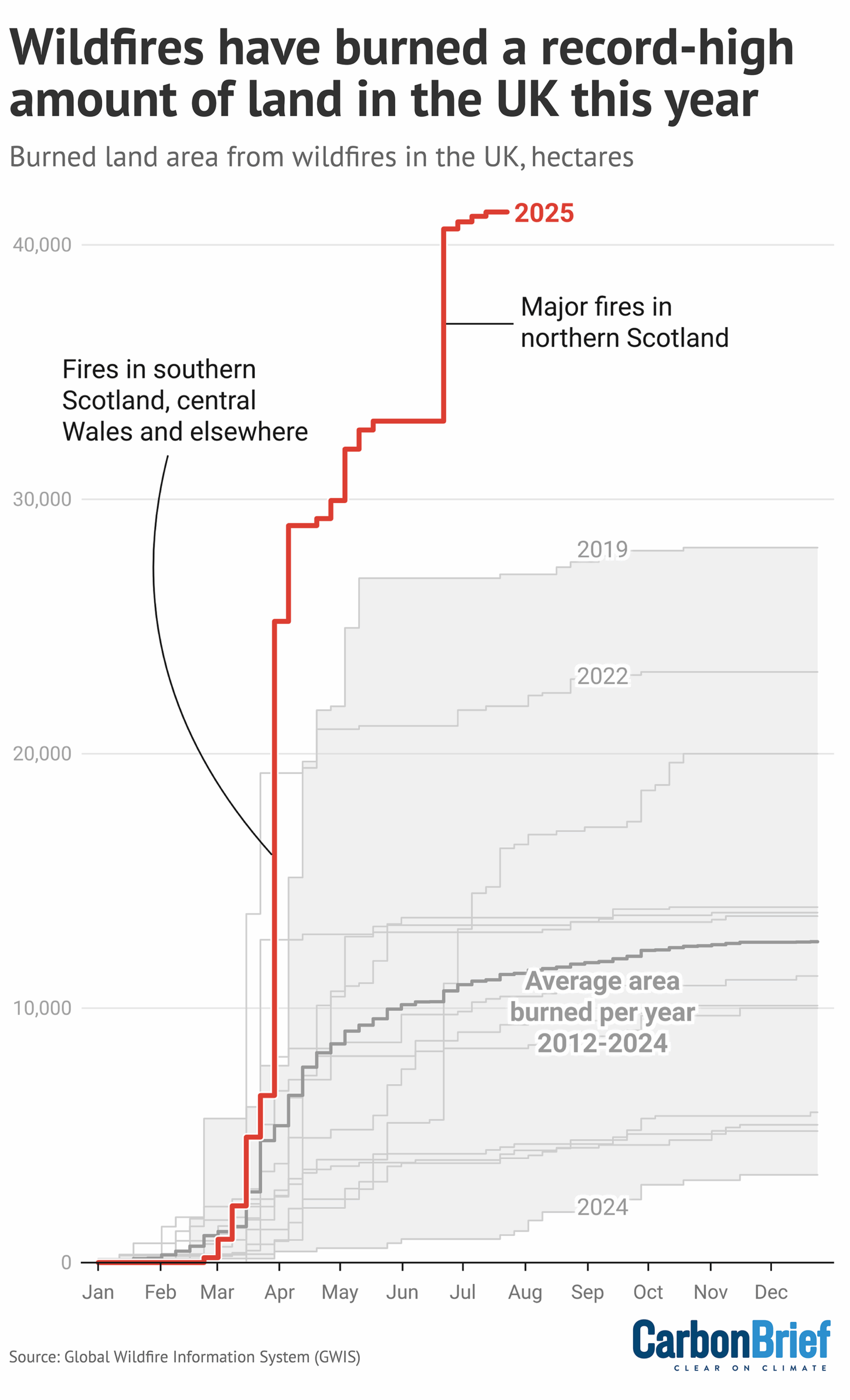
Wildfires have scorched more than 40,000 hectares of land so far this year across the UK – an area more than twice the size of the Scottish city of Glasgow.
This is already a record amount of land burned in a single year, far exceeding the previous high, Global Wildfire Information System (GWIS) data shows.
It is also almost four times the average area burned in wildfires by this stage of the year over 2012-24 – and 50% higher than the previous record amount burned by this time in 2019.
The burned area overtook the previous annual record in April, BBC News reported at the time, and has continued to soar in the months since.
Major wildfires
The chart below shows that UK wildfires in 2025 so far have already burned by far the largest area of land over any calendar year since GWIS records began in 2012. The previous record year was 2019, followed by 2022, while 2024 saw the lowest area size burned.
Annual land area burned by wildfires across the UK from 2012 to 2025 (red), alongside the average area burned each year over 2012-24. Source: Global Wildfire Information System.
Climate change can increase the risk and impact of wildfires. Warmer temperatures and drought can leave land parched and dry out vegetation, which helps fires spread more rapidly. Climate change is making these types of extreme conditions more likely to occur, as well as more severe.
Fire services in England and Wales responded to 564 wildfires from January to June 2025 – an increase from 69 fires in the same period last year, the National Fire Chiefs Council (NFCC) said in a statement in June.
Most wildfires in the UK are caused by human activity, whether accidental or deliberate, according to the NFCC. Some common ignition sources are disposable barbecues, lit cigarettes and campfires.
Jessica Richter, a research analyst at Global Forest Watch, says that, while fires are also a key part of some ecosystems, climate change is the “major driver behind the increasing fire activity around the globe”. She tells Carbon Brief:
“As we see more fires, we’re going to see more carbon being emitted and that’s just going to be, for lack of a better phrasing, adding fuel to the fire.”
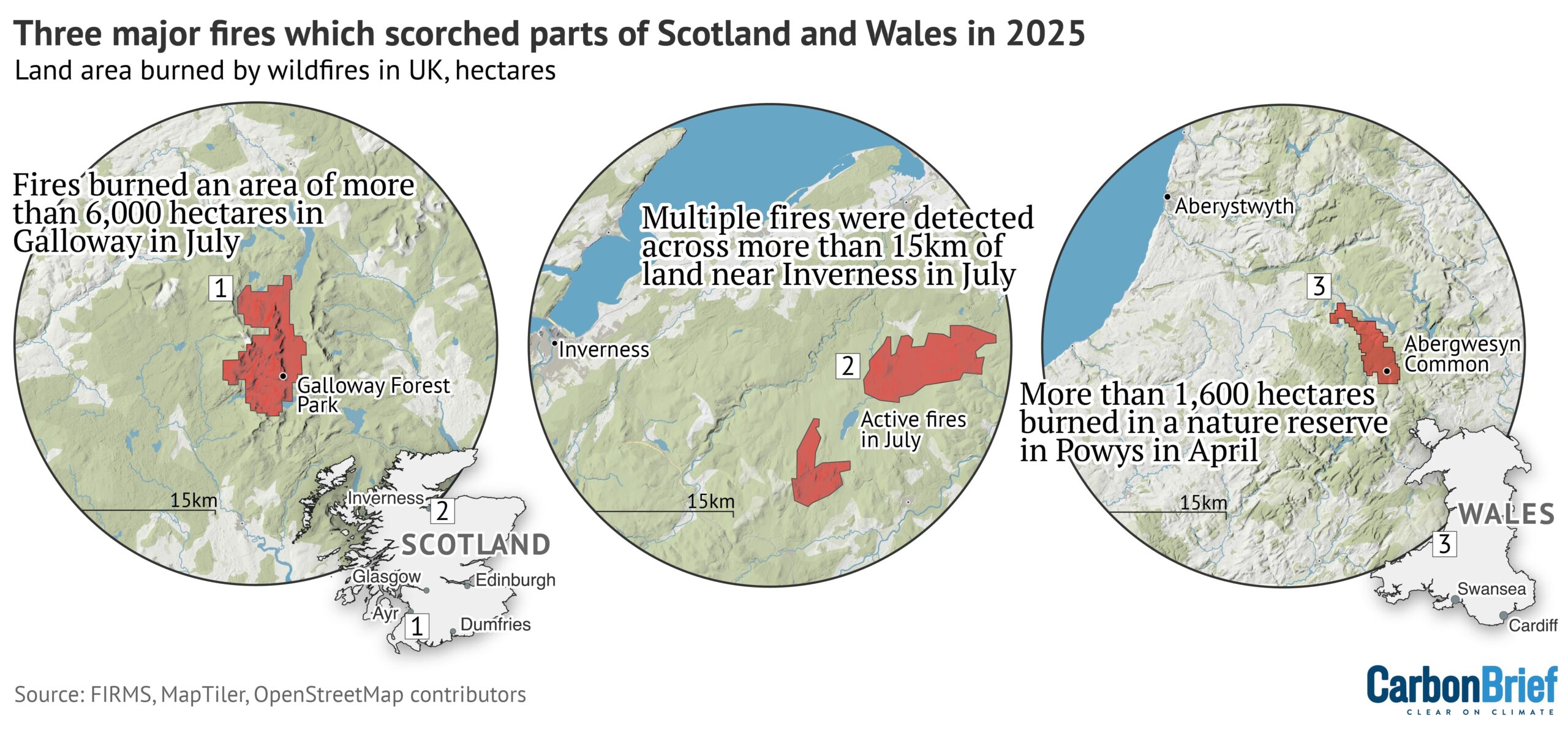
Examples of 2025 wildfires around Galloway (1) and Inverness (2) in Scotland, and a wildfire in Powys (3) in Wales. Source: FIRMS, MapTiler, OpenStreetMap contributors.
The UK has also recorded its highest-ever wildfire emissions this year, according to Copernicus, which was “primarily driven” by major wildfires in Scotland from late June to early July.
These were the largest wildfires ever recorded in the country, reported the Scotsman. They “ravaged” land in Moray and the Highlands in the north of the country, the newspaper added.
Scotland experienced an extreme wildfire in Galloway Forest Park in April, which was “so intense it could be seen from space”, the Financial Times said.
Elsewhere, in April, the Belfast News Letter reported that firefighters tackled almost 150 fires on the Mourne Mountains in Northern Ireland.
More recently, BBC News reported that firefighters in Dorset, England received “non-stop” wildfire calls in the first weekend of August, with one blaze “engulf[ing] an area the size of 30 football pitches”.
Wildfires have also caused devastation across many parts of Europe in recent weeks – including Albania, Cyprus, France, Greece, Spain and Turkey – as well as in the US and Canada.
Words by Orla Dwyer. Analysis by Ho Woo Nam. Charts by Tom Prater.
Nigel Farage urges you to ignore facts and reality and be a climate science denier like him. He says that Reform UK has received millions and millions from the fossil fuel industry to promote climate denial and destroy the planet.Donald Trump urges you to be a Climate Science denier like him. He says that he makes millions and millions for destroying the planet, Burn, Baby, Burn and Flood, Baby, Flood.
Emissions of ammonia from industrial-scale poultry production are surging across the UK’s “megafarming” hotspots, TBIJ and the i can reveal.
The gas, which is emitted by livestock and farm waste, can mix with other pollutants to create particles linked to increased death rates, respiratory problems and cardiovascular diseases. Ammonia can also harm biodiversity and ecosystems.
The government has committed to reduce ammonia emissions by 2030 and although pollution linked to chicken farms has fallen across England as a whole since 2017, it has increased sharply in certain regions. Across the UK there has been a rise in vast factory-style farms, some of which supply major supermarkets and fast-food chains.
In Wales, ammonia emissions from poultry production have surged by nearly 40%, according to an analysis of public and industry records, while high increases have also been recorded in Lincolnshire, Norfolk and counties near the River Wye.
Norfolk, which recorded one of the biggest ammonia increases in England, is home to farms run by a company supplying 2 Sisters Food Group that are among the most polluting poultry facilities in the country according to government data.
Across the Wye region, chicken production is dominated by Avara Foods, which has a processing plant in Hereford and is part-owned by US-based food giant Cargill. The industry in the region has been widely blamed for polluting the River Wye, prompting a public outcry.
‘When I walk past a large concentration of ammonia … a pile of chicken faeces or a chicken shed, I can feel my lungs tightening up’
Records seen by TBIJ show Avara-supplying farms accounted for much of Herefordshire’s ammonia emissions linked to poultry production in 2021. At least seven have reported increases in pollution since 2017, data show, both in Herefordshire and elsewhere in the UK.
Analysis has also revealed that one Avara “megafarm” is now among the most polluting poultry units in the country. The firm supplies chicken to retailers and fast-food chains including Tesco and McDonald’s.
“People come to places like Herefordshire expecting to have nice clean air. But they might not,” said Colin Lawrence, a retired engineer. Lawrence, who successfully campaigned against a new 80,000-bird farm a few miles from his home in the county, said another farm is situated less than a mile from a school and its effects on the children have not been studied.
Christine Hugh-Jones lives over the border in Powys, Wales. She has asthma, which she says is fairly mild. “When I walk past a large concentration of ammonia… a pile of chicken faeces or a chicken shed, I can actually feel my lungs tightening up,” she told TBIJ and the i. “What the impact for people with serious respiratory diseases must be and what the impact is on people who work in the sheds or live really near to one, I don’t know.”
Reporting loophole
TBIJ and the i have also uncovered regulatory loopholes that mean significant amounts of emissions are currently going unreported.
‘The findings provide yet another reason for applications for new US-style megafarms to be rejected’
According to current rules, any farm housing fewer than 40,000 birds is not required to report its ammonia emissions. Figures show almost 20 million birds are currently reared on farms that fall below this threshold.
Emissions from farms’ waste consignments, meanwhile, can go unreported altogether because there is no requirement for a farm to monitor waste that leaves its site. The amount of waste produced by a poultry farm can be vast – in some cases hundreds of tonnes a year – and can be used as fertiliser on farmland, often at third-party locations.
Air tests detected ammonia pollution in eight of 18 litter sites and poultry units across the south of England. Although the levels detected were, in isolation, below what is considered to pose a human health hazard, ongoing low-level emissions can affect the environment, particularly in areas with multiple farms. They can also combine with other particles in the air to create “particulate matter” harmful to humans.
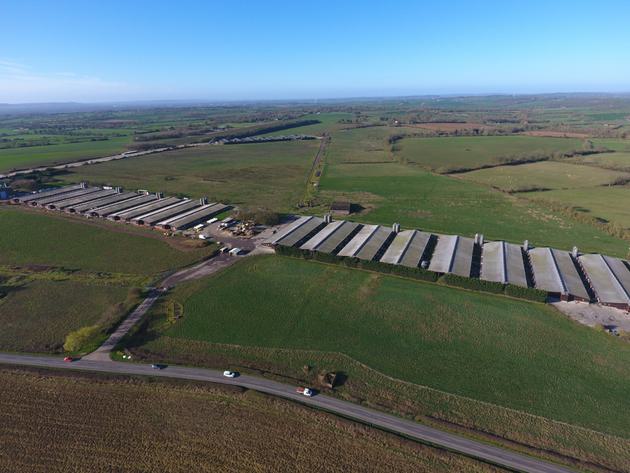
The number of US-style megafarms in the UK has been rising since 2017TBIJ
Former environment minister Zac Goldsmith said the findings “raised serious concerns” about the expansion of intensive farming and called for an immediate moratorium on permits for new farms in regions with increasing air pollution.
“Industrial-scale chicken farms come with such a heavy price – on the environment, animal welfare and, in numerous ways, human health as well,” he said. “These new findings relating to ammonia pollution provide yet another reason for applications for new US-style megafarms to be rejected.”
Anthony Field, head of animal welfare charity Compassion In World Farming UK, said: “Airborne pollutants – such as ammonia – mix with water in the atmosphere and fall on woodland, rivers, and other sensitive habitats, causing terrible pollution, damaging ecosystems, impacting human health and killing aquatic life.”
He said TBIJ’s investigation “highlights the need for appropriate scrutiny of planning applications for new or expanding farms that must take account the impact of cumulative ammonia emissions, which can often be overlooked, despite the widely acknowledged scientific research. We must stop building factory farms that drive pollution.”
2 Sisters Food Group told TBIJ: “All our operations are strictly controlled throughout the UK by country-specific regulators, and all farms audited to ensure compliance.” It stressed that ammonia pollution at a national level is declining.
Avara said: “Official data suggests poultry’s contribution to ammonia emissions is a small minority, limited in comparison to other sources, and has reduced since 1980. Moreover, poultry manure is not waste, it is a sought-after product that offers many advantages over its fossil fuel-based alternatives.” It added that emissions are an estimation based on the maximum capacity of birds at a site, rather than a specific measurement, and that the “vast majority” of farms in its supply chain fall under the reporting requirements.
The British Retail Consortium, on behalf of UK supermarkets, told TBIJ: “Retailers continue to work closely with their suppliers and farmers to drive best practice and reduce the environmental impact of chicken production. This includes work to reduce emissions of both greenhouse gases and other air pollutants, like ammonia.”
A single poultry farm can produce hundreds of tonnes of waste a year TBIJ
Amassing of megafarms
The scale of intensification within the UK’s poultry industry was first documented by a TBIJ investigation in 2017 that found Britain was home to nearly 600 US-style “megafarms”.
‘The more farms you add in an area the more total ammonia is released’
The 2017 findings prompted Michael Gove, then the environment minister, to tell parliament: “I do not want to see, and we will not have, US-style farming in this country.”
However, the number of poultry “megafarms” has nonetheless continued to rise and had reached almost 1,000 last year.
Unpublished records seen by TBIJ and the i show that regulators have waved through the vast majority of applications for new intensive farms of 40,000 or more birds. In Wales, authorities have rejected just one of 33 applications since 2017; in Northern Ireland and Scotland, no applications of the 32 submitted were turned down in the same period; while in England, the vast majority of more than 2,000 applications for permit variations and new permits were approved, with just 57 blocked by the Environment Agency.
Some of this expansion has occurred in a handful of poultry hubs near major abattoirs and processing plants.
Lincolnshire has seen the biggest increase in bird numbers, rising from 12 million in 2017 to more than 35 million in 2023. In Norfolk the figure has jumped from 12 million to 21 million.
And counties within the catchment of the Wye – Herefordshire, Gloucestershire, Powys and Monmouthshire – now have 32 million birds combined, up from 23 million in 2017.
‘Clustering of multiple small units increases the risk of locally acute ammonia pollution levels with particular threat to sensitive biodiversity’
An employee at one environmental regulator said: “The more farms you add in an area the more total ammonia is released. This is a real weakness as you do not have a single ammonia emission limit set as a collective [for the region]. In the River Wye if you double the number of poultry farms, as has happened over the past 15 years, you increase the total ammonia emitted.”
Professor Mark Sutton from the UK Centre for Ecology and Hydrology said these findings raised “valid concerns”. He added: “Although farms lower than the threshold size may not require reporting of emissions, such new developments ought to be assessed in relation to local planning requirements.” “Clustering of multiple small units increases the risk of locally acute ammonia pollution levels with particular threat to sensitive biodiversity.”
Natural Resources Wales said: “NRW undertake regular compliance inspections and any necessary enforcement on permitted poultry units (over 40,000 birds).” It added that permits for farms of this size set out the requirements for minimising risks to the environment, and smaller farms are subject to other pollution regulations.
A spokesperson for the Northern Ireland Environment Agency told TBIJ: “All permitted farms must meet a range of environmental criteria and requirements include implementing measures to reduce and prevent odour, noise and protect air.”
A spokesperson for the Scottish Environment Protection Agency (SEPA) said: “We provide clear guidance for farmers on best available techniques for preventing or, where that is not practicable, reducing emissions from livestock housing and manure management and storage within the permitted installation.”
A Department for Environment, Food & Rural Affairs spokesperson said: “This government has delivered significant reductions in emissions since 2010 – with emissions of fine particulate matter falling by 24%, nitrogen oxides down by 48% and since 2005, ammonia emissions have decreased by 12%.
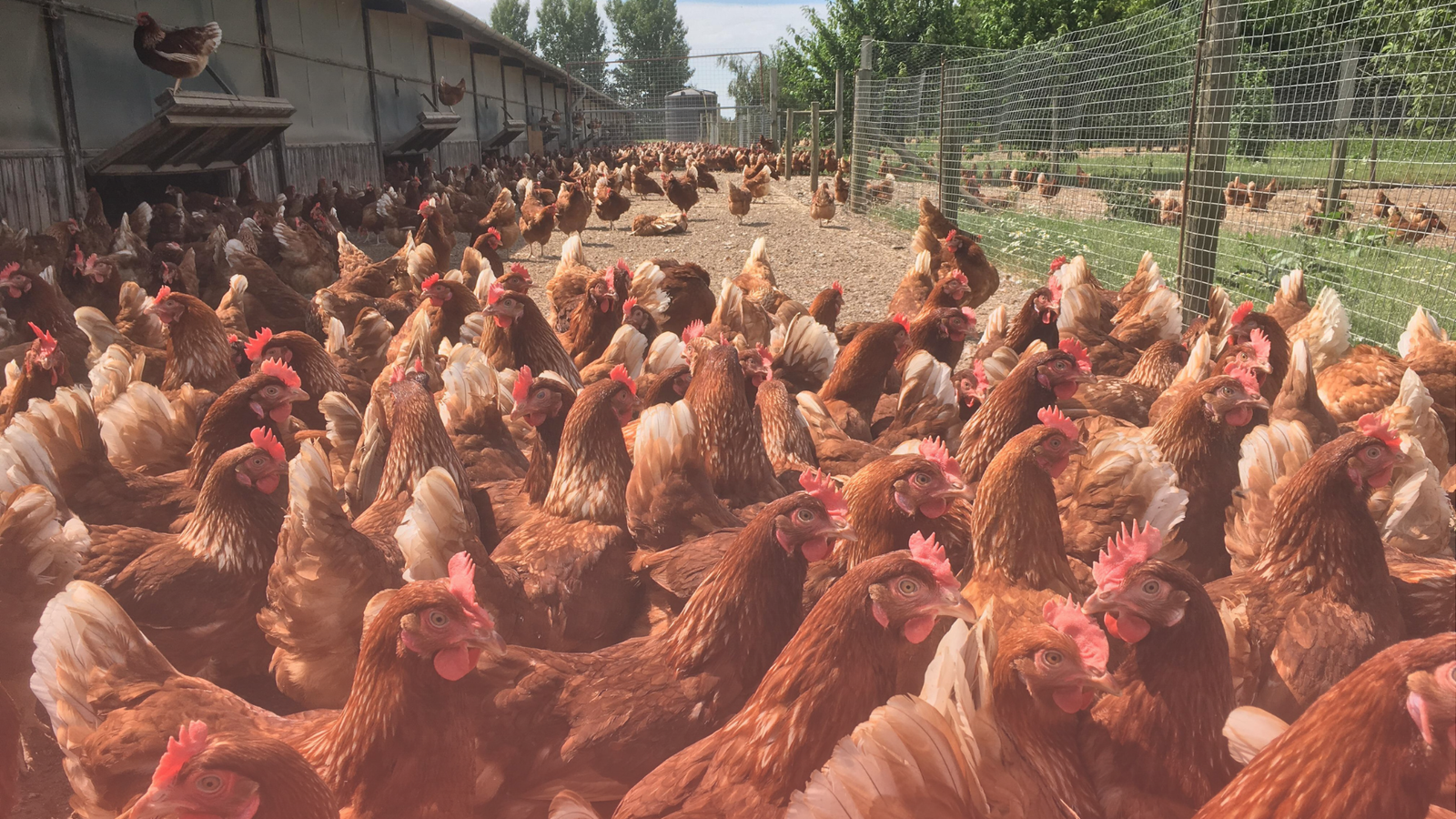
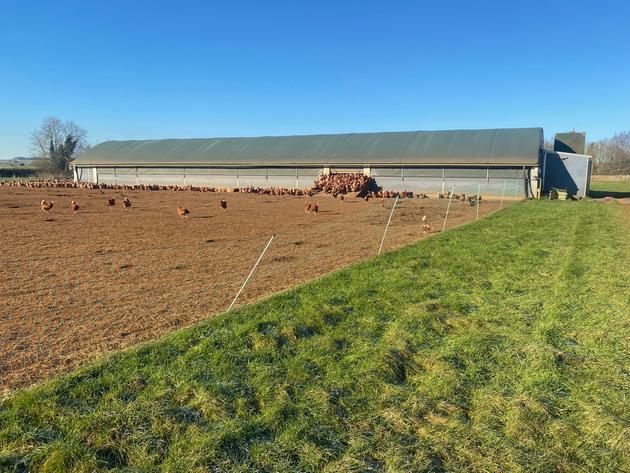
Main image: Poultry at a UK farm. Credit: Andrew Linscott / Stockimo / Alamy
Reporters: Andrew Wasley and Lucie Heath Environment editor: Robert Soutar Deputy editors: Chrissie Giles and Katie Mark Editor: Franz Wild Production editors: Alex Hess Fact checker: Paul Eccles Impact producer: Grace Murray
Our Food and Farming project is partly funded by Quadrature Climate Foundation and partly by the Hollick Family Foundation.