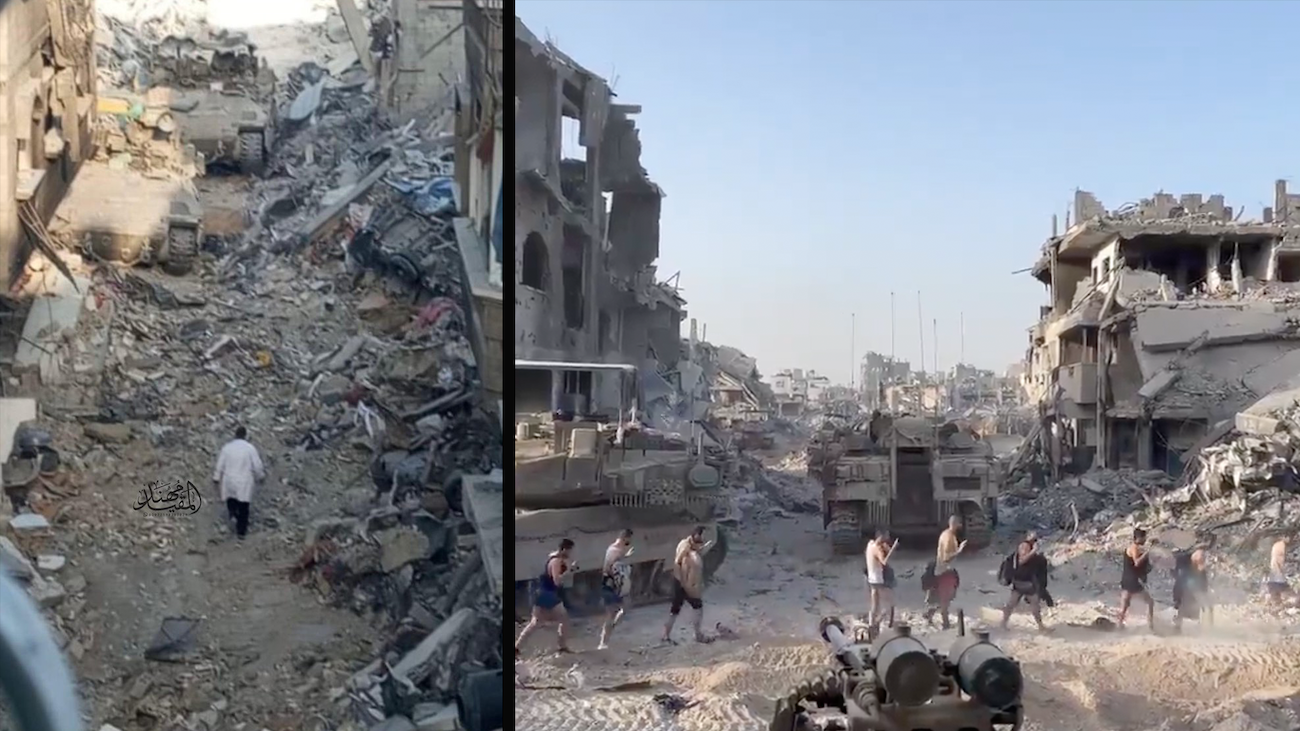
Scenes from Israel’s siege on Kamal Adwan Hospital. On the left, the last photo of Dr. Hussam Abu Safiya as he walks towards Israeli tanks. On the right, IOF forced health workers and patients to strip and evacuate the hospital. Photo: Screenshots
Despite being interrogated for 13 consecutive days, and subjected to brutal torture and abuse, a Palestinian lawyer confirmed that Dr. Hussam Abu Safiya has kept his morale high.
After over two months of imprisonment in Israeli jails, new information has been revealed about Dr. Hussam Abu Safiya, the director of Kamal Adwan hospital in Gaza. According to Palestinian lawyer Ghaid Qassem, who visited Dr. Abu Safiya last week, he has gone through long periods of sustained interrogation and torture and several prison transfers.
Dr. Abu Safiya was arrested amid a brutal siege of Kamal Adwan Hospital by Israeli forces, which culminated on December 27, when the Israeli Occupation Forces (IOF) set Kamal Adwan Hospital on fire. The IOF also ordered 350 people, including 75 patients and their escorts, along with 185 medical staff to evacuate the hospital.
In the months prior, Dr. Abu Safiya had been using his own social media page and giving interviews on local and western media in order to provide constant updates about Israel’s siege of the hospital and pleading for international institutions to take action to stop Israel’s attacks. He had become a visible spokesperson for the people of Gaza during the genocide and in particular, the healthcare workers who have faced disproportionate levels of violence as they struggled to keep the healthcare system online amid Israel’s blockade and targeted attacks.
While media reports had circulated indicating that Dr. Abu Safiya was set to be freed in the final stage of the first phase of the Hamas-Israel prisoners-for-captives swap deal at the end of February, Israel continues to imprison the hospital director, in defiance of the massive international campaign demanding his release.
Abu Safiya’s abuse and solitary confinement in Israeli detention
Prior to meeting Qassem on Thursday, March 6, Abu Safiya was only allowed to see a lawyer once throughout over two months of detention. During his imprisonment, he spent a couple of weeks in solitary confinement inside Israel’s infamous Sde Teiman detention camp, which he described as a “slaughterhouse”.
While at Sde Teiman, Dr. Hussam reported being “forcibly stripped, having his hands shackled, and being made to sit on sharp gravel for approximately five hours by Israeli forces.”
Moreover, he was subjected “to severe physical abuse, including beatings with batons and electric shock sticks, as well as repeated blows to the chest.”
The Palestinian doctor was later transferred to Ofer prison in the occupied West Bank, where he was placed in solitary confinement for 25 days, then he was moved to section 24 with other detainees from Gaza.
Qassem clarified that section 24, alongside section 23, is designated for prisoners from Gaza to keep them isolated from other Palestinian prisoners from the West Bank and the territories that were occupied by Israel in 1948.
Horrific accounts from the “slaughterhouse”
Based on Abu Safiya’s accounts, as well as other prisoners she met, Qassem described the conditions inside Sde Teiman, stating: “if we talk about this prison, it is a slaughterhouse in every sense of the word. The torture, violations, and starvation are unprecedented.”
The lawyer provided further details of atrocities practiced against Palestinian prisoners in the notorious detention facility, which included shackling prisoners for 10 months straight, denying amputees medical care, binding elderly detainees and blindfolding them.
In addition, prisoners narrated how they endure freezing temperatures in open-air cages, where they are constantly exposed to wind and rain, forced to sit on the ground, prevented from speaking, praying, or even reading the Quran.
In terms of psychological torture, Qassem was informed that the “Israeli intelligence often tells prisoners in Sde Teiman that their entire families have been killed, whether true or not”. “Such tactics leave deep psychological scars,” she said.
Israel placed Abu Safiya under “unlawful combatant” status
On February 12, the head of the IOF’s Southern Command, Yaron Finkelman, issued an order to detain Abu Safiya under the “unlawful combatant law” instead of conducting a standard legal trial,” according to the Palestinian Al-Mezan Center for Human Rights.
Qassem explained that Israeli authorities resorted to classifying Abu Safiya as an “unlawful combatant” as they could not build a case against him after failing to find any evidence against him following 45 days of interrogation.
With this classification, they stripped Abu Safiya of his basic legal rights, including representation or a formal indictment, and justified the repeated extension of his detention without charge.
Prolonged consecutive interrogation sessions and brutal torture
The testimonies of the Palestinian lawyer revealed that Abu Safiya was subjected to prolonged interrogation sessions throughout 13 consecutive days, and that each interrogation session lasted about 8 to 10 hours. Abu Safiya also experienced torture and beating, in addition to verbal and psychological abuse.
Qassem referred to the forced media appearance of Abu Safiya in an interview aired by Israel’s Channel 13, late February as evidence of the psychological abuse Abu Safiya endured.
The attorney pointed out that Abu Safiya was not aware that the interview was recorded. “He was caught off guard by the filming. He was not informed, and after the interview, he was isolated, humiliated, beaten, and tortured,” she said.
For many, the Israeli occupation authorities aimed to demoralize Abu Safiya and his supporters over the globe by filming him exhausted and shackled. Nevertheless, Qassem confirmed the steadfastness that Abu Safiya demonstrated.
Unshaken by the gross inhumane treatment and torture he suffered, the resilient iconic Palestinian doctor told Qassem: “a person creates a history, and history is built upon the stands one takes. Such history is to be recorded and taught to others.”
Genocide denier and Current UK Prime Minister Keir Starmer is quoted that he supports Zionism without qualification. He also confirms that UK air force support has been essential in Israel’s mass-murdering genocide. Includes URLs https://www.declassifieduk.org/keir-starmers-100-spy-flights-over-gaza-in-support-of-israel/ and https://youtu.be/O74hZCKKdpAUK Foreign Minister David Lammy confirms that UK government and military are active participants in Israel’s genocides and that the F-35 parts that they suspended from supplying to Israel are instead simply diverted via the United States. He says see https://youtu.be/QILgUHrdWRE
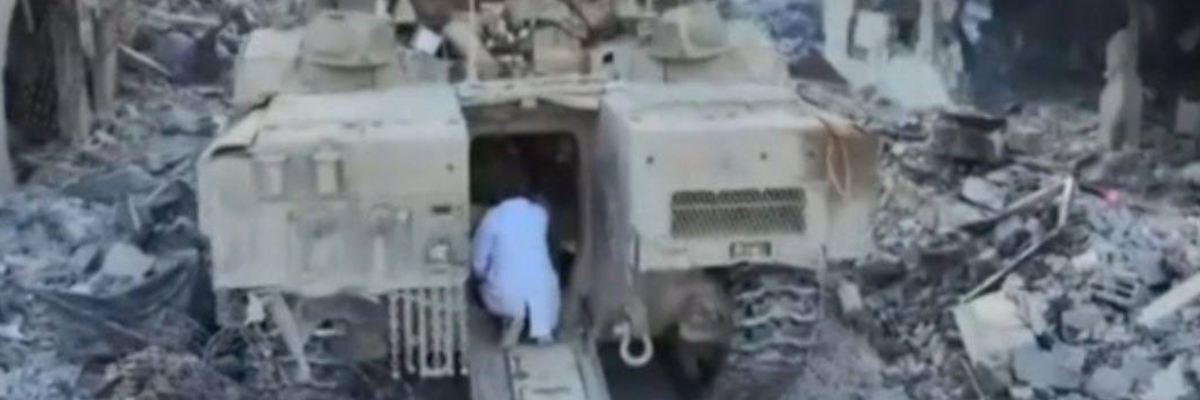
Kamal Adwan Hospital Director Dr. Hussam Abu Safiya approaches the open door of an Israel Defense Forces tank after an Israeli raid on the facility, in Beit Lahia on December 28, 2024. (Photo: Channel 14 screen grab)
“Bombing of hospitals and kidnapping, torturing, and killing doctors and healthcare workers is illegal and immoral and a crime according to the Genocide Convention,” asserted Doctors for Humanity.
Human rights defenders in the global medical community and beyond are demanding Israel immediately release Dr. Hussam Abu Safiya, the director of Gaza’s obliterated Kamal Adwan Hospital, who was seized by Israeli troops on Saturday and is believed to be imprisoned at a notorious detention center where dozens of detainees have died and where torture, rape, and other abuses have been reported.
“We appeal to world leaders, to the global medical community, and to all who value humanity: Help us save our friend, our colleague, and a true healer,” Dr. Karameh Kuemmerle, a Boston-based pediatric neurologist and co-founder of Doctors Against Genocide, told Common Dreams on Monday.
“Put all kinds of pressure to ensure his release so he can return to his patients, who need him desperately, and to his family, who cannot endure this pain,” Kuemmerle added. “We demand a reality that respects life, respects human rights, and respects every man, woman, and child for humanity’s sake.”
Doctors for Humanity—a coalition of groups including Global Health Coalition, Doctors Against Genocide, and Union of Medical Care and Relief Organizations—said in a statement Monday, “We the medical community demand the immediate release of Dr. Abu Safiya and an immediate end to the bombing of hospitals and targeted kidnapping and killing of healthcare workers in Gaza.”
“Bombing of hospitals and kidnapping, torturing and killing doctors and healthcare workers is illegal and immoral and a crime according to the Genocide Convention,” Doctors for Humanity added.
Dr. Zaher Sahloul, president and co-founder the Illinois-based NGO MedGlobal, for whom Safiya works as lead Gaza physician, said over the weekend that “Dr. Abu Safiya has dedicated his life to protecting the health and lives of children in Gaza, providing care under conditions no medical professional should have to endure.”
“His arrest is not only unjust—it is a violation of international humanitarian law, which upholds the protection of medical personnel in conflict zones,” the group added. “We urgently call for the immediate and unconditional release of Dr. Abu Safiya.”
Dr. Yipeng Ge—who in November 2023 was suspended from his medical residency at the University of Ottawa for social media posts critical of Israel’s “settler-colonialism” and “apartheid upon Palestinian people”—called for Abu Safiya’s “immediate release,” as well as “protection of hospitals and medical workers in Gaza” and “an end to the genocide” there.
Amnesty International secretary-general Agnès Callamard hailed Abu Safiya as “the voice of Gaza’s decimated health sector,” who pleaded “for the protection of his hospital” while “working under inhumane conditions, including following the killing of his son” by an Israeli drone strike at the hospital gates earlier this year.
“We at Amnesty are extremely concerned over the fate and well-being of Dr. Hussam Abu Safiya,” Callamard said. “He must be released immediately and unconditionally.”
Recently released former detainees at the Sde Teiman prison in Israel’s Negev Desert said Abu Safiya is being held there, and that the Israeli security forces working there—some of whom stand accused of gang-raping a prisoner—are treating captured Palestinian doctors “really badly.”
Idrees Abu Safiya, Abu Safiya’s son, toldThe Guardian on Monday that his father’s leg was badly injured during the Israeli raid on the hospital.
“We are so worried, we haven’t been able to sleep for three days because we didn’t know until today where he is,” Idrees told the British newspaper.
Relatives of Abu Safiya toldCNN that “Sde Teiman is known for brutality and torture, we can’t imagine what our father is going through in that place and if he is well or not, warm or cold… hungry or in pain.”
The last photo of Dr. Hussam Abu Safiya, detained after refusing to abandon his colleagues and patients.In just one image, we see both the power of Palestinian humanity and the moral weakness of all those complicit in genocide.End all arms sales to Israel, now.
Kuemmerle told Common Dreams: “What is striking about Dr. Abu Safiya is his extraordinary composure, kindness, and unwavering dedication, even in the face of unimaginable hardships. We have come to know his bravery, dedication, humane professionalism, and gentle manners. We are terrified for his fate, knowing all too well as Palestinians the horrors that await our doctors in these torture camps.”
Israel claims that Abu Safiya—who, despite the killing of his son and an injury caused by shrapnel from a November 23 Israeli attack on Kamal Adwan, refused to stop working at the hospital—is a suspected Hamas terrorist. That’s a common allegation made by Israeli officials, who also often claim that hospitals are used as Hamas command-and-control centers. These officials usually offer very little if any evidence to support their assertions.
“The lies that are being spread right now that [Abu Safiya] is really a Hamas colonel are lies to prevent what is happening right now, which is a global wave of outrage, and that global wave of outrage must grow so we, the global medical community, can stop the relentless attacks on healthcare workers and healthcare infrastructure,” Dr. Rupa Marya, a University of California, San Francisco professor of medicine who’s currently on paid suspension after questioning whether an Israeli student and likely Israel Defense Forces (IDF) veteran may have committed war crimes, told Common Dreams.
According to the Gaza Health Ministry, hundreds of healthcare workers have been detained and more than 1,000 have been killed since the October 7, 2023 Hamas-led attack on Israel. Critics accuse Israel of deliberately killing and wounding health workers.
The Geneva-based Euro-Mediterranean Human Rights Monitor on Saturday published the testimonies of witnesses to alleged IDF war crimes during the Kamal Adwan raid, including “deliberate killings, field executions, as well as sexual and physical assaults on women and girls from medical teams and displaced women in the area.”
Responding to Israeli attacks on hospitals and Abu Safiya’s detention, Rohan Talbot, director of advocacy and campaigns at London-based Medical Aid for Palestinians, said on the Bluesky social media platform Saturday that “our leaders must demand the immediate and safe release of Dr. Hussam Abu Safiya and all detained Gaza health workers.”
“Health workers are not a target,” he added, “and impunity for Israel’s destruction of Palestinian healthcare must end.”
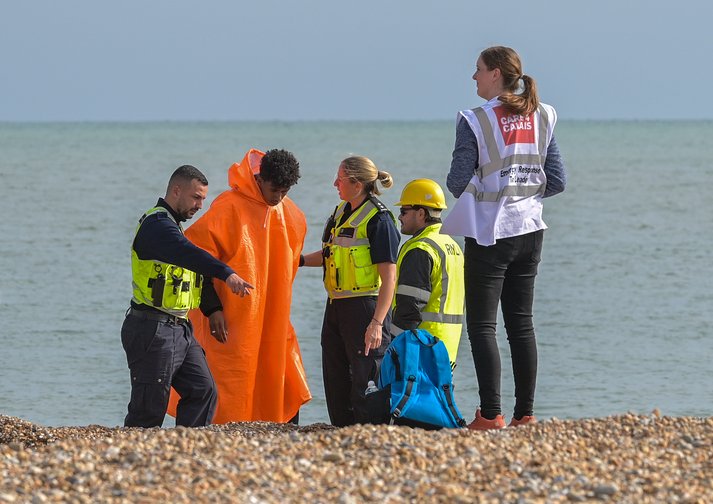
Border force and police officers take people to shore after they arrived in Kent in October 2022 | Stuart Brock/Anadolu Agency/Getty Images. All rights reserved
I was labelled a ‘smuggler’ and spent over two years in prison for touching the tiller on a dinghy. That’s not justice
Samyar Bani, 42, is an Iranian refugee who travelled to the UK in a dinghy on 1 June 2019. He was arrested on arrival and convicted of assisting unlawful entry into the UK in November 2019. His initial sentence of six years was later reduced to five. An appeal hearing in December 2021 then acquitted him of all charges. The appeals judge determined that the law had been interpreted incorrectly, as Bani and co-passengers had intentionally been picked up by police before disembarking on UK shores. This interview has been edited for clarity and length, and the final transcript was reviewed by Samyar before publication. It is part of the seriesHow migration became a criminal offence.
Melissa Pawson (BTS): Can you tell us why you left Iran?
Samyar Bani: I had a problem with the government there. So I came to England to ask for help as an asylum seeker.
Melissa:What was the journey from Iran like?
Samyar: I left my home country on 1 January 2017. First, I went to Turkey and stayed there for six months. Then I went to Greece. There are so many refugees in Greece. I tried to claim asylum there, but they didn’t accept my claim.
I like Greece. They have good weather, and Athens reminds me of my city, Shiraz. But I wasn’t allowed to stay. So I went to Germany. I was there for four months, but I couldn’t stay there either. They made a mistake in my asylum claim and rejected me as well.
I liked living in Germany, because I have a sister there. But Germany doesn’t like me. So I came to England.
Melissa:Did you travel through Calais?
Samyar: Yes, I lived in the Jungle there for around two months. There were too many people in the Jungle, and everyone was planning to go to England to claim asylum.
Editor’s note: the Jungle was the nickname of a large informal encampment on the outskirts of Calais, France. It was demolished in 2016 but undocumented peoplecontinued to live in the area.
When I was going to France from Germany on the train, I was searching on Google and Telegram and Facebook, and I found lots of information telling me that England supports people like me. I read that England understands that Iran isn’t a democracy. Because of that, I thought UK would support me.
So me and four other Iranians bought a boat together to come here.
Melissa:Why did you decide to buy the boat by yourselves?
Samyar: Because smugglers are so expensive. I think they charge around £2,500 per person. I don’t have that kind of money. Instead, each of us put in £500 for the boat to come here. We were six in the boat, including a child around 10 years old.
Melissa: So you crossed the English Channel and were picked up by the UK Border Force boat. Did they arrest you straight away?
Samyar: The police arrested everyone and sent us to the immigration detention centre. We stayed there the first night, and they transferred me to a hotel in London the next day.
They arrested me at the hotel after I’d been there for just one night. It was 6 or 7pm. Six people came to the hotel. One of them had a gun – it was a big one like a machine gun. There was no interpreter. They put my hands behind my back and arrested me. Then they transferred me to Kent police station.
I touched the tiller for maybe four or five seconds, that’s it
Melissa:You must have been very confused and scared.
Samyar: I was really confused. I was lying awake in the cell thinking maybe I’m not in England. Maybe I came to a different country. Every night after that I was talking to myself, asking, why does England think I’m a smuggler, why did England arrest me? This is wrong. This isn’t Iran, it’s not a dictatorship.
I kept thinking maybe the police would come to apologise. They would tell me, Mr. Bani, we were wrong. Sorry, you’re free now. Later, this just became a wish.
I was scared and stressed. It was a very dark time for me. I was alone, with no family or friends. I didn’t speak English.
Melissa: Did an interpreter and a lawyer explain what was happening at any point?
Samyar: After I’d been in the police station for two days, an interpreter came to speak to me. But he was from Afghanistan and spoke Pashto – I speak Farsi, which is a completely different language. Then a solicitor came. Then I got a different solicitor. I wasn’t allowed to choose either of them, they were just assigned to me. The second solicitor didn’t have time for me, he was really busy. He just came once and spoke to me for a short time. My case was very serious, but he barely gave me any time.
Melissa: Did they tell you what you had been accused of?
Samyar: They said I’m a smuggler. But I’m not a smuggler, I’m not trafficking people. They said they had video evidence showing me driving the boat, but the video was very short. When I took the tiller I was just following the orders of the police who were directing our boat. Before they took the video, there were different people driving boat.
We had bought the boat together. I wasn’t in command of this trip. I’m not a boat driver – I don’t even know how to swim, and I’d never seen a boat before the day we bought one. But I sat in the wrong place in the dinghy, near the engine, and ended up touching the tiller for maybe four or five seconds. That’s it. But that was enough.
The police know that real smugglers don’t come to England, but every boat has to be steered somehow. The people on board do that. So why not put everyone in jail? Why just me?
Melissa: Did you see the police recording you while you were in the boat?
Samyar: Yes, we saw them. And when the police took us onto their boat, everybody was scared. But I told them, “the police won’t kill you.” They want to help refugees.
Melissa: Were you able to speak to your family while you were being held?
Samyar: No, because I didn’t have their phone number. I had saved their number on my phone, like anyone else would, but the police took it from me when I went into custody.
I couldn’t speak to my wife for three years. She thought I’d died.
I wrote dozens of applications to ask my caseworker, my solicitor, anyone, to please get me back my mobile. Just so I can write the number down and then they could take back it again.
Melissa: That must’ve been incredibly difficult for you and your family. How did you find her number again?
Samyar: My sentence finished in December 2021, but they didn’t give me my phone back right away. I was living on the streets, with nowhere to go, when I found out about a charity called Care4Calais. They helped me to contact a solicitor and I was transferred to a hotel.
That solicitor wrote to the court so many times. It took maybe five months for the police to give my phone back. Maybe the police just really liked my mobile, I don’t know.
It hadn’t been used in more than two years and wouldn’t turn on at first. But I finally got the phone numbers from it and I called my wife.
Melissa: What was that phone call like?
Samyar: She was very confused. She asked me why I hadn’t spoken to her in three whole years. It was very, very hard.
I was so scared I’d be recognised. All the newspapers said I’m a smuggler. My picture was in the BBC
Melissa: How is your wife now, is she okay?
Samyar: She’s doing better now. She was struggling with depression before because I had disappeared.
Melissa: And how did the sentencing affect you?
Samyar: I changed my hair and my beard because I was so scared I’d be recognised. All the newspapers said I’m a smuggler, and my picture was in the BBC.
That wasn’t all undone when the appeal went through. I didn’t see any big headlines saying, ‘Bani is not guilty, he’s not a smuggler’. So I didn’t feel safe, even though I was free again.
It’s not been easy. I’m doing better now at least – better than prison.
Melissa: Can you tell us what your time in prison was like?
Samyar: I was in prison for just over two years after the sentencing. Including my time in remand, I was in prison for two and a half years.
Prison is bad for everybody. But for people who are not guilty, it’s so much worse. All the time, you’re thinking, why am I here?
I was in there with people who had been jailed for life. Some of them had murdered people, committed rape, attacked people, robbed, laundered money, run drugs operations. I remember asking someone what they’d done and they said, “I just killed one person”.
It was terrible.
Melissa: This sounds like a really scary experience. Can you tell us about the appeal?
Samyar: I went to the Royal Courts of Justice in London, and three judges reviewed my case. Three or four days later, they all agreed that a big mistake had been made because I hadn’t broken the law. They said I hadn’t come here illegally because we were transferred to the port by the police.
So then I was free. But I had to wear an electronic tag on my leg for six months. The Home Office said this is an immigration tag, but if that’s the case then I don’t understand why they don’t make everyone wear one. Surely the law is for everybody?
And when I got to the hotel two weeks later, there were lots of other asylum seekers there. But I was the only one with an electronic tag.
In Iran, if you change your religion the government will put you in prison and you could get the death penalty. That’s if people don’t kill you first
Melissa: You said you were first homeless after you were released – where were you sleeping?
Samyar: I slept on the streets for two weeks. It was rainy and people were everywhere getting ready for Christmas. It was a very hard time.
I went to a church and I told them I’m homeless. I showed them my immigration papers, but they said they couldn’t help because I didn’t have refugee status or a visa. And I wasn’t allowed to rent a house – I could only get support from the Home Office.
Melissa: What happened after that?
Samyar: My solicitor wrote lots of letters to the Home Office, and finally they helped me to get accommodation in a hotel.
But it wasn’t a hotel for asylum seekers, it was a quarantine hotel. So many people had Covid 19, and I caught it too. I had a very high temperature, I felt like I was dying. I was there for maybe two months, and then I was transferred to a hotel in Newcastle. After that they sent me to a shared house in Stockton-on-Tees.
Six months after I was released from prison, the Home Office sent me a letter telling me I have leave to remain for five years. That was in June 2022. I had good evidence and lots of paperwork, because I changed my religion in Iran.
I don’t believe in Islam, so I converted to Christianity. But in Iran, if you change your religion the government will put you in prison and you could get the death penalty. That’s if people don’t kill you first. Some people think that if they kill a convert, they’ll be rewarded by Allah.
This is fake. My religion is for me, and your religion is for you.
Melissa: Was this one of the reasons why you had to leave Iran?
Samyar: Yes, because I was scared that the government would arrest me and kill me. Then I came to England, and it was the same thing I was afraid of in Iran. I wasn’t guilty, but I was in prison anyway.
Melissa: And what’s your situation like now in Birmingham?
Samyar: I had to leave the Home Office accommodation two months after I got my visa, but I had no way of renting a place without help. I needed council support because I don’t have a guarantor.
I went to a charity called Open Door and they supported me to rent a shared room. I was 40 years old at the time – it’s hard to be sharing.
Then later an Iranian person helped me to rent a room in a house in Birmingham.
I haven’t started work yet because of my mental health and the arthritis in my back. I often get flashbacks from my time in prison – maybe one day is good, then the next day is bad. The Job Centre supports me but it’s not very much. I get around £300 in benefits for food and everything, and some of that has to go towards rent.
I’d like to get back into work, and I have lots of skills. I’m a tradesman – I design and fit kitchens. In Iran I had a house fitting company, and we did tiling, plumbing, plastering.
The Job Centre said I should do a very basic job like cleaning, but I can do more than that. I tried to take the certificates for plumbing and carpentry. I tried three times. But they refused me because my English isn’t good enough.
I’m working on that. I’m doing an English course, but my brain is so busy worrying about my family. Maybe after my family comes and we live together, I’ll feel well enough to focus on my courses, and I can get the certificate to do a carpentry job.
Melissa: Are you applying for your wife and daughter to join you in the UK?
Samyar: I already did, but it was refused. It’s because I had an Islamic marriage. I don’t believe in Islam, and I didn’t want an Islamic marriage. But if I’d had a different marriage in Iran, the government would’ve arrested me. My mother and father are Muslim, so I had no choice.
This has created a big problem for me. The Home Office said I didn’t have the right evidence, but I do. I have the marriage contract, and I have pictures and evidence showing that me and my wife lived together for a long time.
I’m appealing, but my solicitor said there’s a waiting list. It could be two years, it could be ten years. I don’t know. I just have to wait.
Melissa: It must be very hard, having been apart from them for so long.
Samyar: I have no choice. I can just talk to my wife on the phone. We can’t live together. The courts and immigration offices in this country, they don’t care about love. All they’re interested in is evidence.
Police understand who a smuggler is, and they don’t sit in the boat. They just do this so they can close the border to refugees
Melissa: We spoke before about how the courts decided you were a smuggler. What does the word ‘smuggler’ mean to you?
Samyar: A smuggler lives in France or a different country. You’ll never see a smuggler. They’re very clever, they won’t sit in the boat because it’s dangerous. A smuggler is someone who just likes money. They just take money.
Police understand who a smuggler is, and they don’t sit in the boat. They just pretend it’s different so they can close the border to refugees. It’s the same as the plan for Rwanda.
It’s not good for human rights. A better plan would be a visa for refugees, so we don’t have to make this journey in the first place.
Melissa: How would life have been different if this kind of visa had been available to you?
Samyar: I didn’t want to sit in the dinghy to come to UK. But I didn’t have a choice. Humans need life. My country wasn’t safe for me, so I came to the UK. That’s why I left my father, my mother, my wife and my daughter. I didn’t come here for money. I just came here to get help because Iran isn’t safe for me.
I had a good job in Iran – I liked my work, I liked my city. Shiraz is very beautiful, and it has good weather. All my family live there too – I have a big family. Now I’m alone here.
I like human rights, and I thought I might have mine respected here. But this is just a wish now. No country has real human rights.
Explore the rest of the series
This series looks at how the UK, EU and bordering countries are increasingly treating migration as a criminal offence, and targeting migrants and solidarity actors in the name of ‘anti-smuggling’ and ‘border control’.
In prioritising oil and gas over renewables, ministers are doing the bidding of the polluters. And we’ll all pay the price
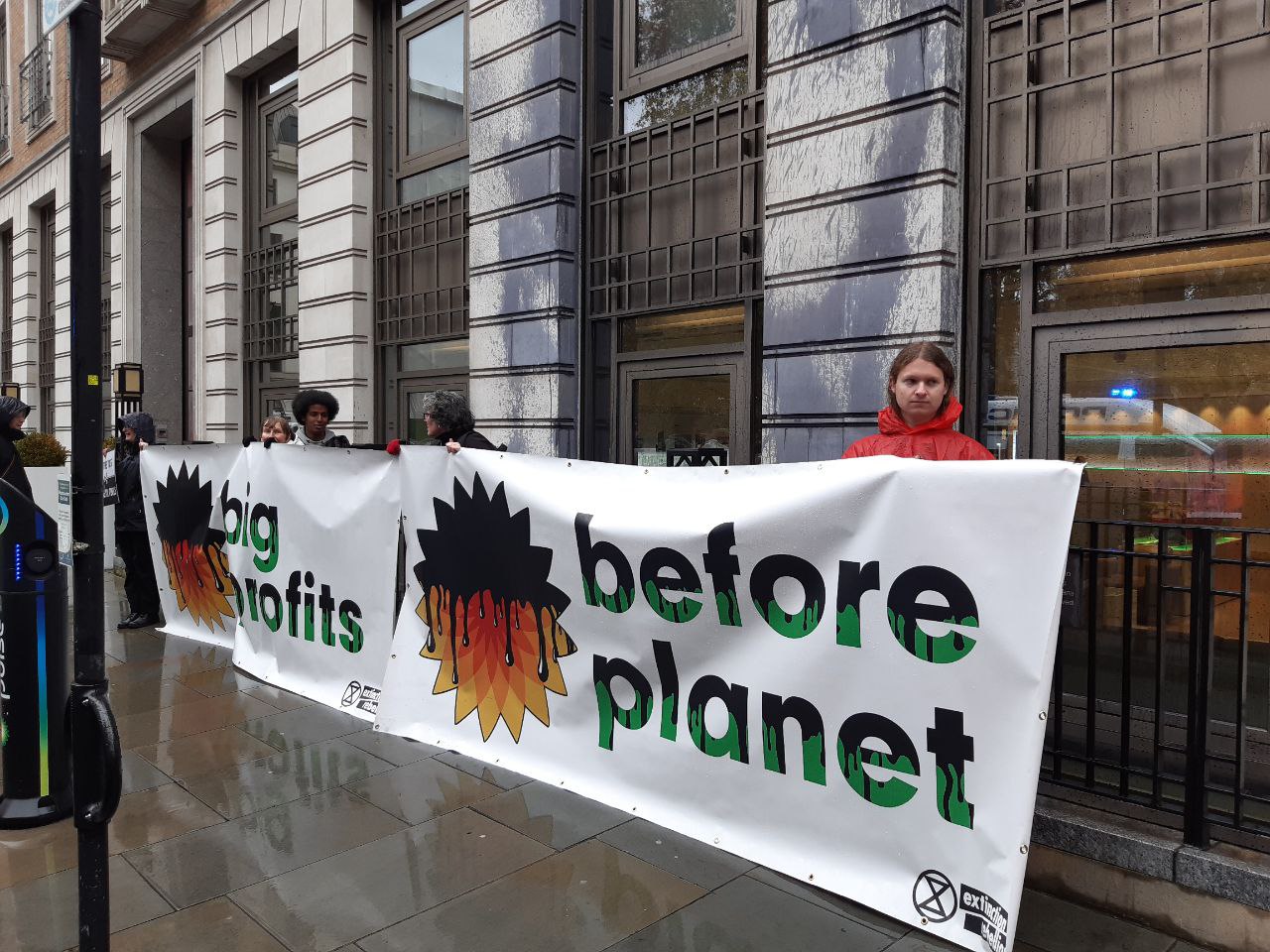
Money for the criminals, prison for the heroes: this, in brief, is the government’s climate policy. If something is damaging to the public interest, it’s likely to be rewarde
Money for the criminals, prison for the heroes: this, in brief, is the government’s climate policy. If something is damaging to the public interest, it’s likely to be rewarded and subsidised. If it’s beneficial, it will find itself in a hostile environment.
This government represents the denouement of the Pollution Paradox: as dirty money has the greatest incentive to invest in politics, it comes to run the whole system. Across these 13 years of misrule, we have seen the perversities of Conservative government multiply and intensify.
Thursday was supposed to be “green day”, when the government, forced to act by a court ruling, would unveil a new, more detailed plan for achieving net zero emissions. Instead, the occasion has been rebranded “energy security day”.
CHILDREN in care are 10 times more likely to end up in prison by the time they reach 24 than those who grew up outside the system, official figures suggest.
The study by the Office for National Statistics (ONS) published today found that looked-after children were more at risk of coming into contact with the criminal justice system during early adulthood than their peers.
Looking at children in care who were born in the academic year ending 1994, the ONS found that more than half had received a criminal conviction by the time they turned 24.
This compares to 13 per cent of children who were not in care.
…
Prison reform campaigners said the figures show more needs to be done to address the criminalisation of children in care.