‘Grim News for the Planet’ as Arctic Sea Ice Hits Record Low

Spread the love

Original article by Julia Conley republished from Common Dreams under Creative Commons (CC BY-NC-ND 3.0).
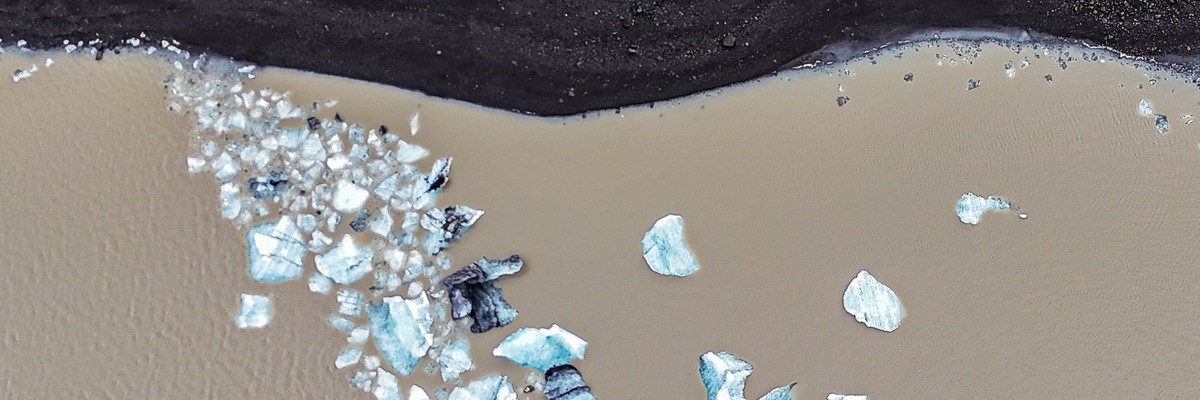
An aerial view shows the Vatnajokull glaciers in Iceland are melting into the ocean or forming lagoons due to global warming and climate change on February 23, 2025. (Photo: Evrim Aydin/Anadolu via Getty Images)

“The environment does not care about politics. Keep spewing greenhouse gases and face the consequences.”

European Union officials said the Copernicus Climate Change Service had issued its latest “stark reminder of why climate action is urgent” when the bloc’s program announced that it observed less sea ice covering the Earth’s oceans last month than at any other point in recorded history.

In the Arctic, sea ice reached its lowest monthly extent on record, at 8% below average, in early February, and it remained below the previous record for the rest of the month.

The oceans were missing an area of ice roughly the size of the United Kingdom last month, according to Copernicus (C3S), and the finding was not an anomaly in recent sea ice observations.

February marked the third consecutive month in which record low sea ice levels for the corresponding month were observed in the Arctic.

C3S reported that in the Antarctic, sea ice levels have rapidly declined in 2025 after appearing to recover to near-record levels in December 2024.

Last month, sea ice near the South Pole reached its fourth-lowest monthly extent, at 26% below average.

C3S said the daily sea ice extent in the Antarctic may have also reached its annual minimum toward the end of the month, which will be confirmed later in March; if confirmed, it would be the second-lowest annual minimum in the satellite record.

“February 2025 continues the streak of record or near-record temperatures observed throughout the last two years,” said Samanatha Burgess, strategic lead for climate at the European Center for Medium-Range Weather Forecasts. “One of the consequences of a warmer world is melting sea ice, and the record or near-record low sea ice cover at both poles has pushed global sea ice cover to an all-time minimum.”

The melting sea ice was recorded as global average temperatures rose 1.59°C (2.8°F) above the pre-industrial average last month, making it the third-warmest February on record.

In Europe, the temperatures that most exceeded averages were recorded last month in parts of Scandinavia, Iceland, and the Alps. Outside of Europe, “temperatures were most above average over large parts of the Arctic.”

The low extent of sea ice will lead to “more solar heat absorbed by the darker oceans,” and “faster warming,” said Simon Oldridge, a climate campaigner.

The loss of sea ice can also lead to the collapse of ocean currents that are crucial for marine life to thrive.

C3S reported on the record-low sea ice levels as campaigners in the U.S. and around the world condemned recent anti-climate actions taken by U.S. President Donald Trump and the Republican Party, including the country’s exit from the Paris climate agreement, the GOP’s passing of a bill to end a federal program aimed at reducing planet-heating methane emissions, and Trump’s push to fast-track fossil fuel projects—as scientists warn that new extractive projects have no place on a pathway to limiting planetary heating and avoiding its worst impacts.

“The environment does not care about politics,” said public health expert Ali Khan. “Keep spewing greenhouse gases and face the consequences.”

Original article by Julia Conley republished from Common Dreams under Creative Commons (CC BY-NC-ND 3.0).
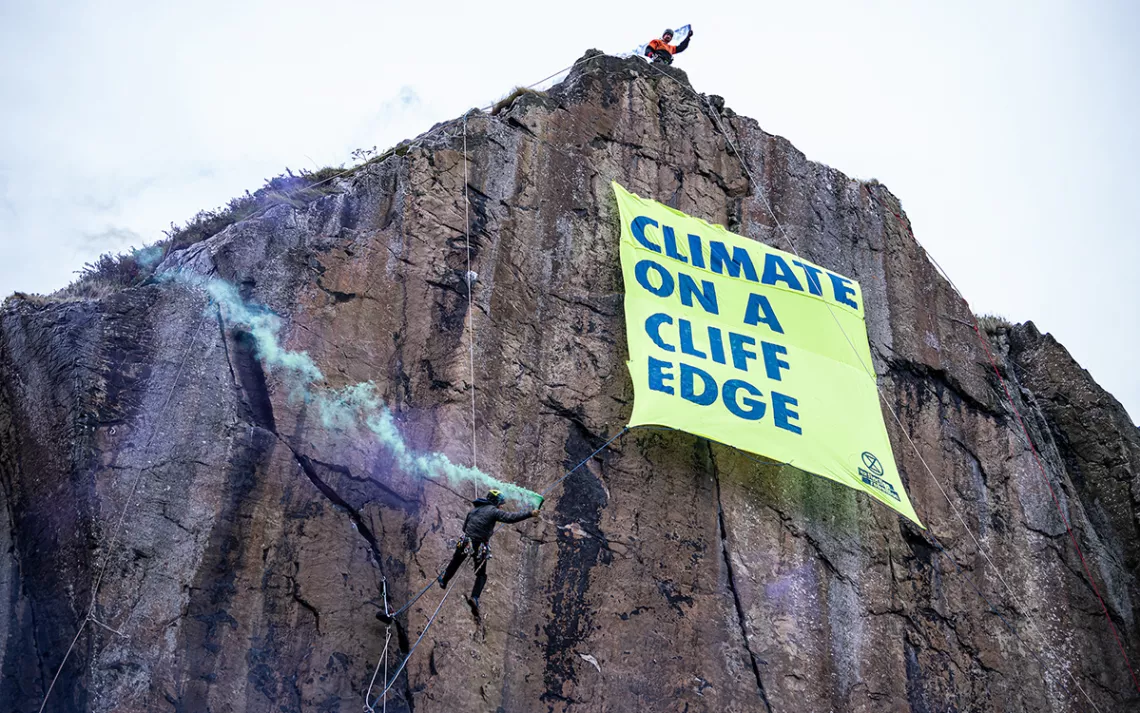
Experienced climbers scale a rock face near the historic Dumbarton castle in Glasgow, releasing a banner that reads “Climate on a Cliff Edge.” One activist, dressed as a globe, symbolically looms near the edge, while another plays the bagpipes on the shores below. | Photo courtesy of Extinction Rebellion and Mark Richards
Neo-Fascist Climate Science Denier Donald Trump says Burn, Baby, Burn.

Continue Reading‘Grim News for the Planet’ as Arctic Sea Ice Hits Record Low

More than 200 scientists from 19 countries want to tell us the Southern Ocean is in trouble

Spread the love
Pat James, Australian Antarctic Division

Andrew J Constable, University of Tasmania and Jess Melbourne-Thomas, CSIRO

While the Southern Ocean around Antarctica has been warming for decades, the annual extent of winter sea ice seemed relatively stable – compared to the Arctic. In some areas Antarctic sea ice was even increasing.

That was until 2016, when everything changed. The annual extent of winter sea ice stopped increasing. Now we have had two years of record lows.

In 2018 the international scientific community agreed to produce the first marine ecosystem assessment for the Southern Ocean. We modelled the assessment process on a working group of the Intergovernmental Panel on Climate Change (IPCC). So the resulting “summary for policymakers” being released today is like an IPCC report for the Southern Ocean.

This report can now be used to guide decision-making for the protection and conservation of this vital region and the diversity of life it contains.

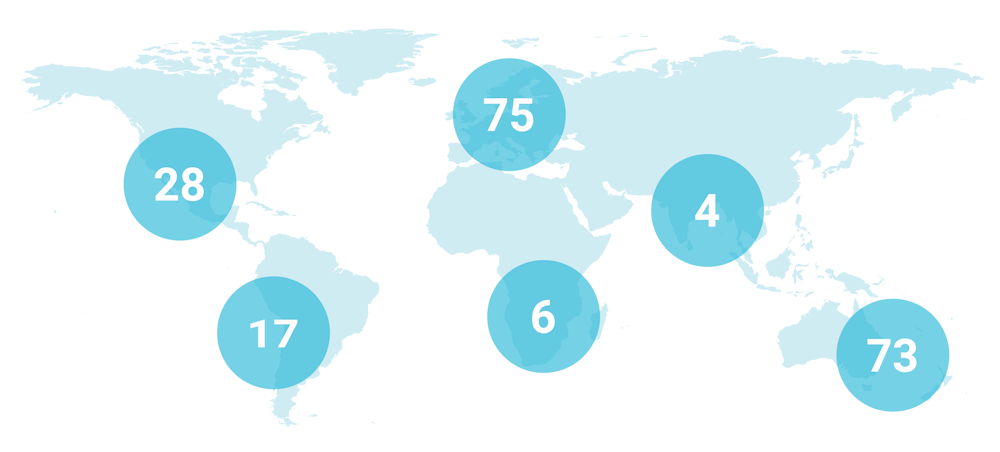
Map showing the number of authors from different regions, illustrating the international nature of the assessment process.
Global participation (numbers of authors from different regions) in the assessment.
Constable, A.J. et al (2023) Marine Ecosystem Assessment for the Southern Ocean., CC BY-NC

Why should we care about sea ice?

Sea ice is to life in the Southern Ocean as soil is to a forest. It is the foundation for Antarctic marine ecosystems.

Less sea ice is a danger to all wildlife – from krill to emperor penguins and whales.

The sea ice zone provides essential food and safe-keeping to young Antarctic krill and small fish, and seeds the expansive growth of phytoplankton in spring, nourishing the entire food web. It is a platform upon which penguins breed, seals rest, and around which whales feed.

The international bodies that manage Antarctica and the Southern Ocean under the Antarctic Treaty System urgently need better information on marine ecosystems. Our report helps fill this gap by systematically identifying options for managers to maximise the resilience of Southern Ocean ecosystems in a changing world.

An open and collaborative process

We sought input from a wide range of people across the entire Southern Ocean science community.

We sought to answer questions about the state of the whole Southern Ocean system – with an eye on the past, present and future.

Our team comprised 205 authors from 19 countries. They authored 24 peer-reviewed papers. We then distilled the findings from these papers into our summmary for policymakers.

We deliberately modelled the multi-disciplinary assessment process on a working group of the IPCC to distill the science into an easy-to-read and concise narrative for politicians and the general public alike. It provides a community assessment of levels of certainty around what we know.

We hope this “sea change” summary sets a new benchmark for translating marine research into policy responses.

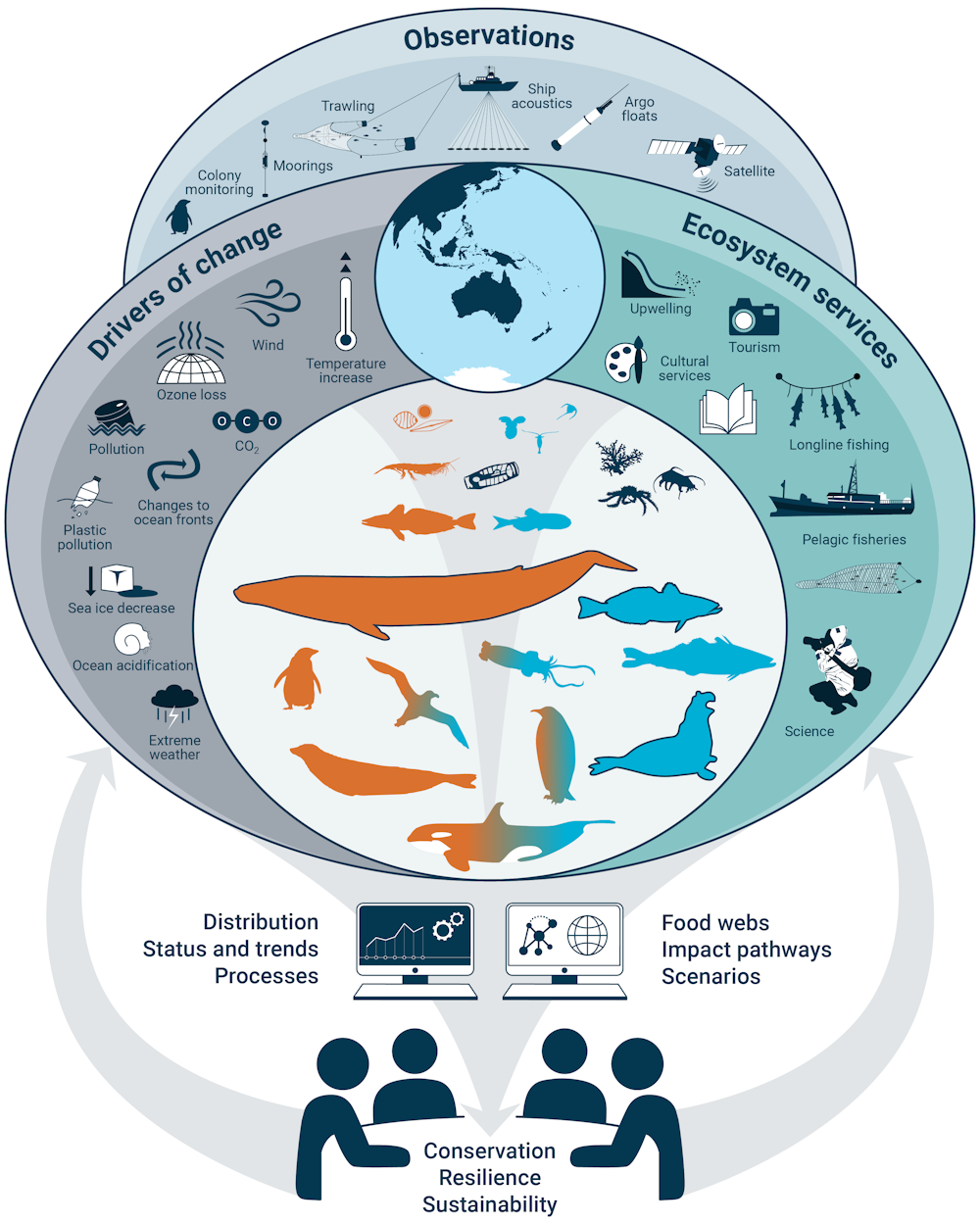
A graphic illustrating how the system-level assessment of marine ecosystems came together, showing a group of people at a table with concentric circles in the background including observations, drivers of change and ecosystem services
Our system-level assessment addressed the multiple drivers of ecosystem change in the Southern Ocean.
Constable, A.J. et al (2023) Marine Ecosystem Assessment for the Southern Ocean., CC BY-NC

So what’s in the report?

Southern Ocean habitats, from the ice at the surface to the bottom of the deep sea, are changing. The warming of the ocean, decline in sea ice, melting of glaciers, collapse of ice shelves, changes in acidity, and direct human activities such as fishing, are all impacting different parts of the ocean and their inhabitants.

These organisms, from microscopic plants to whales, face a changing and challenging future. Important foundation species such as Antarctic krill are likely to decline with consequences for the whole ecosystem.

The assessment stresses climate change is the most significant driver of species and ecosystem change in the Southern Ocean and coastal Antarctica. It calls for urgent action to curb global heating and ocean acidification.

It reveals an urgent need for international investment in sustained, year-round and ocean-wide scientific assessment and observations of the health of the ocean.

We also need to develop better integrated models of how individual changes in species along with human impacts will translate to system-level change in the different food webs, communities and species.

What’s next?

Our report will be tabled at this week’s international meeting of the Commission for the Conservation of Antarctic Marine Living Resources in Hobart.

The commission is the international body responsible for the conservation of marine ecosystems in the Southern Ocean, with membership of 26 nations and the European Union.

It is but one of the bodies our new report can assist. Currently assessments of change in habitats, species and food webs in the Southern Ocean are compiled separately for at least ten different international organisations or processes.

The Southern Ocean is a crucial life-support system, not just for Antarctica but for the entire planet. So many other bodies will need the information we produced for decision-making in this critical decade for action on climate, including the IPCC itself.

Beyond the science, the assessment team has delivered important lessons about how coordinated, collaborative and consultative approaches can deliver ecosystem information into policymaking. Our first assessment has taken five years, but this is just the beginning. Now we’re up and running, we can continue to support evidence-based conservation of Southern Ocean ecosystems into the future. The Conversation

Andrew J Constable, Adviser, Antarctica and Marine Systems, Science & Policy, University of Tasmania and Jess Melbourne-Thomas, Transdisciplinary Researcher & Knowledge Broker, CSIRO

This article is republished from The Conversation under a Creative Commons license. Read the original article.

Continue ReadingMore than 200 scientists from 19 countries want to tell us the Southern Ocean is in trouble