Tag: SEIU

  • NAACP Sues to Stop Trump From Sending Armed Agents to ‘Intimidate’ Minority Voters at Polls

    Spread the love

    Article by Brett Wilkins republished from Common Dreams under Creative Commons (CC BY-NC-ND 3.0).
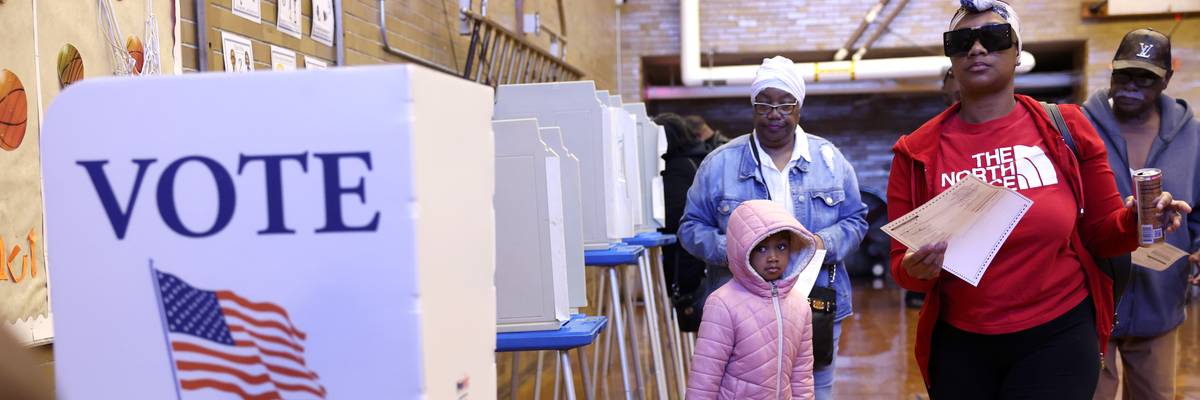
    Voters cast their ballots at a polling place in Milwaukee, Wisconsin on November 8, 2022.
     (Photo by Scott Olson/Getty Images)

    “When the federal government puts fear between people and the ballot box, that is voter intimidation—plain and simple.”

    A coalition of civil rights and labor groups led by the NAACP sued the Trump administration Friday in a bid to prevent armed federal agents from being deployed at or near polling places during November’s midterm elections, warning that the threatened presence of such officers could intimidate voters of color and repress turnout.

    The lawsuit was filed in the US District Court for the District of Columbia by the NAACP, National Urban League, Mi Familia en Accion, OCA-Asian Pacific American Advocates, SEIU, American Federation of Teachers, International Union of Painters, and United Food and Commercial Workers International.

    RECOMMENDED…
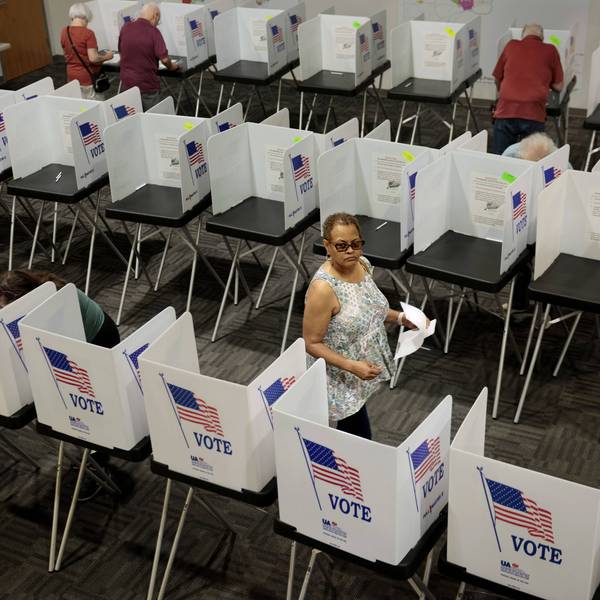
    No Excuse Absentee Voting in St. Charles County

    ‘Voter Suppression, Plain and Simple’: Lawsuit Aims to Stop Trump From Sending ICE to Polling Sites
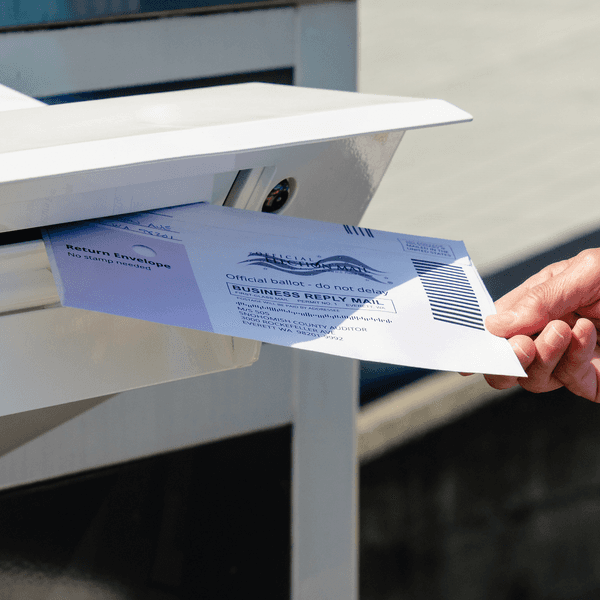
    a person places a ballot in a madilbox

    ‘Democracy Is Under Attack’: Civil Rights Lawsuit Aims to Block Trump Assault on Mail-In Voting

    The complaint names senior Trump administration officials as defendants, including Homeland Security Secretary Markwayne Mullin, Attorney General Todd Blanche, FBI Director Kash Patel, and White House border czar Tom Homan. The lawsuit seeks an order barring the administration from “deploying agents in a manner that unlawfully intimidates voters or anyone urging or aiding voters.”

    The plaintiffs are represented by the Legal Defense Fund, Asian American Legal Defense and Education Fund (AALDEF), Brennan Center for Justice at NYU Law, LatinoJustice PRLDEF, National Immigration Law Center, Protect Democracy, and Democracy Defenders Fund. They argue that the administration’s policies and statements have created a reasonable fear among Black, Latino, Asian American, naturalized, immigrant, and mixed-status voters that they could face questioning, surveillance, detention, or force while voting.

    Asked in May whether he would send National Guard troops or ICE agents to polling locations, President Donald Trump refused to rule out such a move, saying that he would “do anything necessary to make sure we have honest elections.”

    Other senior administration officials have similarly refused to rule out the deployment of federal forces to polling places in the name of fighting voter fraud—which is extremely rare.

    The Justice Department, meanwhile, has denied that it is preparing to send agents to polling places. Spokesperson Kiersten Pels called such suggestions “fearmongering,” while Mullin has said ICE would not patrol polling locations.

    The coalition is suing under Section 11(b) of the Voting Rights Act, which prohibits intimidation, threats, or coercion of people for voting or attempting to vote, as well as those assisting others in voting.

    “All American voters have the sacred right to have a voice in our democracy, and should be able to exercise that right freely and without fear,” said Janai Nelson, president and director-counsel of the Legal Defense Fund.

    “Using federal law enforcement as a scare tactic to target and intimidate Black communities is illegal and antithetical to the promise of a multiracial democracy that was enshrined in the Voting Rights Act,” Nelson added. “Neither Black, Latino, Asian, or any other voters nor any other communities should ever again face the threats of terror and intimidation at the ballot box that defined the Jim Crow era.”

    “We are experiencing a level of voter intimidation like we haven’t seen since the civil rights era.”

    AALDEF executive director Bethany Li asserted that “when the federal government puts fear between people and the ballot box, that is voter intimidation—plain and simple.”

    “We are experiencing a level of voter intimidation like we haven’t seen since the civil rights era, when local governments and the KKK openly intimidated Black voters,” Li added. “This time, it is the federal government ordering ICE and other federal law enforcement to intimidate naturalized citizen voters and immigrant communities. In 2026, voters should not have to choose between their safety and their right to vote.”

    NAACP general counsel Kristen Clarke said the threatened deployment would turn polling places into “militarized zones.”

    “Turning the fundamental right of exercising our vote into a high-stakes encounter with the militarized strong arm of the current administration isn’t protection and it isn’t oversight; it’s disenfranchisement, period,” she argued.

    The lawsuit comes one week after a similar challenge was filed by the League of United Latin American Citizens, UnidosUS, Common Cause, and the city and county of Denver, Colorado. That case cites an 1865 federal law that generally prohibits federal officials from bringing “troops or armed men” to places where elections are being held, except when necessary to repel armed enemies of the United States.

    “The Trump administration has been waging a campaign to undermine American elections, and their insinuations that federal law enforcement agents might be at the polls this November are part of that effort,” Jasleen Singh, senior counsel and manager in the Brennan Center’s Democracy Program, said during Friday’s announcement of the new suit. “We’re bringing this lawsuit so that voters are protected against intimidation and can have their voices heard.”

    Article by Brett Wilkins republished from Common Dreams under Creative Commons (CC BY-NC-ND 3.0).

    Orcas discuss Donald Trump and the killer apes' concept of democracy. Front Orca warns that Trump is crashing his country's economy and that everything he does he does for the fantastically wealthy.
    Orcas discuss Donald Trump and the killer apes’ concept of democracy. Front Orca warns that Trump is crashing his country’s economy and that everything he does he does for the fantastically wealthy.

    ‘Democracy Is Under Attack’: Civil Rights Lawsuit Aims to Block Trump Assault on Mail-In Voting ›
  • Allies Vow to Fight Off Big Oil Lawsuit Aimed at Ending ‘Existence’ of Greenpeace

    Spread the love

    Original article by OLIVIA ROSANE republished from Common Dreams under Creative Commons (CC BY-NC-ND 3.0).

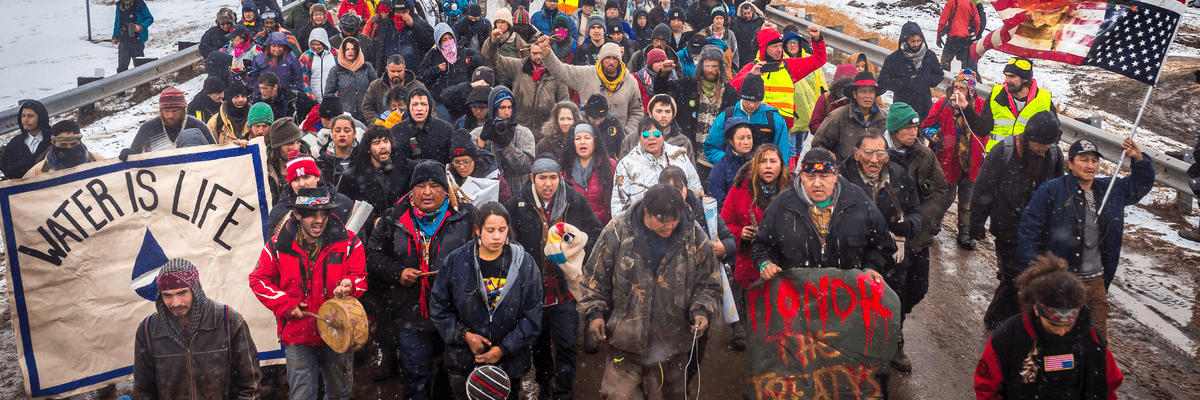
    Dakota Access Pipeline protesters rally at Standing Rock Indian Reservation on February 22, 2017. (Photo: Michael Nigro/Pacific Press/LightRocket via Getty Images)

    “No matter who you are, no matter what your politics are, this is one of the most important issues in America right now,” one Greenpeace spokesperson said.

    Nearly 300 organizations and tens of thousands of individuals have signed an open letter supporting Greenpeace USA against a $300 million lawsuit brought against the environmental group by Energy Transfer—a company with a majority stake in the Dakota Access pipeline.

    The corporation is falsely accusing Greenpeace of being the driving force behind Indigenous-led protests against the Dakota Access pipeline (DAPL) in 2016 and 2017.

    Greenpeace USA announced its supporters on Thursday as it launched a campaign to raise awareness about the lawsuit—which it said could “functionally bankrupt” the organization, threatening its “existence.” However, Greenpeace said that the dangers posed by strategic lawsuits against public participation (SLAPPs), like the one it faces, extend far beyond one organization.

    “No matter who you are, no matter what your politics are, this is one of the most important issues in America right now,” Greenpeace USA spokesperson Rolf Skar said in a statement. “Energy Transfer built the Dakota Access pipeline. But they’re suing anyway in order to send a message: If you dare to oppose us, we will financially ruin you.”

    The Dakota Access pipeline drew massive protests from the Standing Rock Sioux Tribe, more than 300 other tribal nations, and non-Indigenous allies. While former U.S. President Donald Trump forced the pipeline through shortly after taking office in early 2017, the protests rattled the fossil fuel industry and their allies in government. After 2016, 18 states passed anti-protest laws that shielded around 60% of U.S. oil and gas production and related infrastructure from peaceful protests. The industry also turned to “judicial harassment.”

    Energy Transfer (ET) initially brought suits against Standing Rock Tribal Chairman Dave Archambault and other Water Protectors, as well as a federal suit against Greenpeace in 2017.

    At the time, ET CEO Kelcy Warren told a reporter: “Could we get some monetary damages out of this thing, and probably will we? Yeah, sure. Is that my primary objective? Absolutely not. It’s to send a message—you can’t do this, this is unlawful, and it’s not going to be tolerated in the United States.”

    “Everyone who says they care about freedom—of whatever political stripe—should join together to support the Greenpeace campaign to protect people’s right to speak out against corporate abuses.”

    While the 2017 cases were all dismissed, ET immediately filed a similar case against Greenpeace in North Dakota state court in 2019. The new case, which is scheduled to go to trial in February 2025, makes what Greenpeace called a “deeply racist” case that Greenpeace, and not Indigenous leaders, coordinated the Dakota Access protests.

    “The lawsuit against Greenpeace is also an attack on the Indigenous movement in our fight for self-determination to protect Mother Earth, our waters, sacred and cultural sites, and our youth and future generations,” Morgan Brings Plenty of the Standing Rock Youth Council said in a statement. “These colonialist lawsuits are trying to send a warning to anyone who might consider speaking out and to be quiet—any of you could be next.”

    ET also makes several claims that would set a dangerous precedent if upheld, including denouncing legitimate speech as defamatory and making anyone who is present at a protest liable for things that occurred at the same protest.

    “The whole point of this type of lawsuit is to limit freedom of expression, so even if you don’t care about climate change, or you don’t care about Greenpeace, you should pay attention,” Skar said. “What’s at stake isn’t just Greenpeace or environmentalism, but the fundamental American rights to freedom of peaceful expression and advocacy for all of us.”

    Greenpeace has circulated a letter to ET that has so far been signed by more than 290 organizations—including 350.org, Public Citizen, ACLU North Dakota, SEIU, Indigenous Environmental Network, and Amnesty International USA—and tens of thousands of individuals, including prominent celebrities and activists like Jane Fonda, Susan Sarandon, Billie Eilish, and Adam McKay.

    “This is corporate overreach that is part of a disturbing trend of attacks on advocacy and speech around the world,” the letter reads. “We will not allow lawsuits like this one to stop us from advocating for a just, green, and peaceful future. On the contrary, we will ensure they have the opposite effect, increasing the support for organizations like Greenpeace and strengthening the broader movement for justice.”

    “This legal attack on Greenpeace is an attack on us all,” the letter continues. “We will not stand idly by. We will not be bullied. We will not be divided and we will not be silenced.”

    Organizations also issued individual statements of support.

    “Everyone who says they care about freedom—of whatever political stripe—should join together to support the Greenpeace campaign to protect people’s right to speak out against corporate abuses,” said Robert Weissman, co-president of Public Citizen. “As Greenpeace knows from its own experience, too often corporations use their political, economic, and legal power not just to run PR campaigns justifying their wrongdoing, but to threaten public interest advocates with bad-faith lawsuits (SLAPPs) and other intimidation tactics.”

    Brian Hauss, a senior staff attorney for the ACLU, said: “Protesters and advocacy groups should never have to fear the weight of groups like ETP as a condition for expressing their First Amendment rights. The court should see this lawsuit for what it is and toss it.”

    Progressives are also calling for a national legislative solution to the problem of SLAPP suits. While most states do have laws on the books against them, North Dakota is one of the 18 that do not.

    Rep. Jamie Raskin (D-Md.) introduced the Strategic Lawsuits Against Public Participation (SLAPP) Protection Act during Congress’ last session, and plans to reintroduce it in September of this year.

    “The case against Greenpeace illustrates how mega-corporations can use lawsuits to silence, intimidate, and ruin their critics,” Raskin said. “America must demand, and Congress must pass, bipartisan legislation to protect First Amendment rights against ruinous litigation practices.”

    Original article by OLIVIA ROSANE republished from Common Dreams under Creative Commons (CC BY-NC-ND 3.0).