Barclays’ billions of ‘sustainable’ finance for fossil fuel industry is greenwash, says investor

Spread the love

Original article by Josephine Moulds Nimra Shahid republished from TBIJ under a Creative Commons Attribution-NonCommercial-NoDerivs 3.0 Unported License.

The bank has funded the companies behind a controversial pipeline and aggressive oil expansion as part of their commitment to fighting climate change

Barclays has been branded “totally dishonest” by one of its investors for calling tens of billions of dollars for fossil fuel companies “sustainable finance”.

The UK high street bank says it is helping to address climate change by raising $1 trillion in sustainable and transition finance by 2030. This includes sustainability-linked loans and bonds, in which a company agrees to meet certain climate-related targets or else face a higher interest rate.

But these targets can be weak and the penalties for failing to meet them paltry. The company can also use the money raised how it sees fit, meaning supposedly sustainable finance could fund polluting activities.

Andrew Harper of Epworth, an investment manager owned by the Methodist church that invests in Barclays, said: “We’re concerned because the bank is making such a substantial claim and the public thinks the climate emergency is being worked towards being solved. Meanwhile, the problem is getting worse and worse. We think it’s totally dishonest.

“If they are calling the financing of any fossil fuel companies sustainable finance, that to me is greenwash.”

Barclays said: “We are committed to being transparent and report separately on the green finance, sustainable finance and the sustainability-linked finance mobilised towards our $1 trillion target, so stakeholders and investors have a clear understanding of what we are reporting.” It said it set out very clear requirements for energy clients’ targets and transition plans in order to access finance.

‘Deeply problematic’ deals

Barclays helped raise $41bn in sustainability-linked finance for fossil fuel companies last year, according to an analysis by the Bureau of Investigative Journalism of data from LSEG, the financial markets group. The $41bn figure covers the total value of the deals Barclays worked on alongside other banks. Barclays itself counts only the funding it is directly responsible for, which it said was $10.9bn across all sectors last year.

Katharina Lindmeier, responsible investments manager at the publicly owned workplace pension scheme Nest, which also invests in Barclays, said TBIJ’s findings were “very concerning”. She added: “We’ll be raising this research with their management team directly at the next opportunity.

“Regulators are looking closely at the issue of greenwashing and if there is any uncertainty, it’s better to be cautious than to mislead customers. Any loans which help companies expand oil and gas infrastructure should not be classed as sustainable.”

The Financial Conduct Authority, the UK regulator, wrote to banks last year highlighting concerns about this type of loan, including weak incentives, potential conflicts of interest, and low ambition. It said that these may lead to accusations of greenwashing.

Anders Schelde, chief investment officer of AkademikerPension, another Barclays investor, said sustainability-linked finance for oil and gas companies is “in most cases deeply problematic”. He said: “We don’t count sustainability-linked bonds and loans as green investments in our own accounting because we know there are so many problems with them. The penalties are low and the targets often insufficient.”

Last year, Barclays helped raise $3bn worth of sustainability-linked loans and bonds for Enbridge, a company that is dramatically expanding oil and gas infrastructure across North America.

Enbridge is behind the construction of a controversial 1,000-mile pipeline that cuts through Indigenous land in the US to pump tar sands oil. It paid US police to crack down on protesters and has been fined millions of dollars for repeated environmental violations.

Barclays classifies the Enbridge debt as sustainable because the company has set a target to cut emissions from its own operations. In part, it intends to do this by using solar power to pump oil through its pipelines.

“The real source of emissions from a company like Enbridge will be from the oil and gas its pipelines help transport,” said Jeanne Martin from responsible investment charity ShareAction. “We do not need greener pipelines, we need to stop the reckless expansion of the fossil fuel industry.

“If the conditions that a bank sets to provide financing to oil and gas transport companies don’t tackle oil and gas, the bank will be accused of greenwashing.”

Barclays also helped raise a $2.8bn sustainability-linked loan for Harbour Energy, the UK’s largest oil and gas producer. Harbour extracted the equivalent of nearly 70m barrels of oil last year, which if burned would produce the equivalent of eight coal-fired power stations’ annual emissions.

Scientists agree that developing any new oil and gas fields will derail climate targets and push global heating beyond 1.5 degrees – which the UN says will threaten lives, food sources and economies worldwide.

It seems that Harbour is aggressively exploring for new oil and gas as it hopes to extract a further 880 million barrels of reserves in the coming decades. It does not appear from Harbour’s public statements that the company has any plans to shift its focus to renewables.

Yet Barclays’ loan to Harbour Energy is called sustainable because the company has committed to reducing emissions from the process of extracting oil and gas. This, however, takes no account of the vast majority of Harbour’s emissions, which are generated from burning the oil and gas itself.

Enbridge paid US police to crack down on protesters opposing its Line 3 pipeline
Nicole Neri/Bloomberg via Getty Images

The notorious oil trader Trafigura also benefited from more than $5.4bn in loans that Barclays called sustainable finance. Counting its supply chain and all the emissions generated by the oil it trades and transports, Trafigura was responsible for more greenhouse gas emissions last year than Spain.

Trafigura’s interest payments are linked to certain sustainability targets, including a pledge to cut emissions – but only from its own operations rather than the burning of the fuels it trades and transports. This accounts for about 1% of the company’s total emissions.

Trafigura said Barclays was one of 54 banks involved in the deal, and said “sustainability-linked loans are an important tool in incentivising reductions in emissions”. It added that its direct emissions were less than 1% of Spain’s. While it reports its indirect emissions, it does not consider all of them “to be within our current sphere of influence”.

Enbridge said it takes climate change seriously and is committed to reducing its greenhouse gas emissions. It said sustainability-linked finance plays an important role in meeting emission-reduction goals and supporting the transition to a lower carbon economy. The company also said that the 1,000-mile Line 3 pipeline had local and tribal approvals and met the strictest environmental standards, and that payments to law enforcement were made and administered via a third party.

Harbour did not respond to a request for comment.

Barclays said: “Sustainability linked loans and bonds are an important sustainable finance tool, incentivising borrowers, particularly in hard to abate sectors, to achieve sustainability objectives over time.”

Net-zero banking

Barclays has committed to cut its emissions – including of the companies it finances – to net zero by 2050. To reach this target, it will have to stop providing money to companies that refuse to shift away from fossil fuels.

Enbridge’s Line 3 project cuts through Indigenous land
Tim Evans/Bloomberg via Getty Images

But a report out today shows that the bank’s funding for fossil fuels increased in 2023 from 2022, which troubled shareholders who have been urging it to reduce lending in line with its climate targets. Barclays was Europe’s top funder of the fossil fuel industry last year, according to the report led by the Rainforest Action Network.

Lindmeier, the Nest investment manager, said: “We want to see Barclays immediately reduce its financing to companies behind new fossil fuel expansion. Any delays could leave the company more exposed to bad loans and potentially cost them millions of pounds.”

Laura Hillis from the Church of England pensions board, another Barclays investor, said: “We are looking for banks to produce a clear climate plan and to see the commitments carry through into lending decisions. Our concern is that these fossil fuel financing figures show that is not happening at the pace we’d like.”

Climate-conscious investors have been putting pressure on Barclays to make good on its net-zero pledge and earlier this year the bank committed to stop providing specific project finance for oil and gas expansion and related infrastructure.

However, less than 2% of Barclays’ funding for oil and gas last year fell under the label of “project finance”. Almost all of it comes in the form of general, unrestricted finance for the companies undertaking those projects.

“Barclays’ new oil and gas policy is an important step forward for the bank but it should have gone so much further,” said Martin from ShareAction, which brought together Barclays shareholders to urge the bank to restrict lending to oil and gas companies.

“Ultimately, the bank has kept the right to finance companies that have plans to massively expand the fossil fuel industry with no strings attached, and that’s a real problem.”

Original article by Josephine Moulds Nimra Shahid republished from TBIJ under a Creative Commons Attribution-NonCommercial-NoDerivs 3.0 Unported License.
Continue ReadingBarclays’ billions of ‘sustainable’ finance for fossil fuel industry is greenwash, says investor

Top Tory Think Tank’s North Sea Oil and Gas ‘Vested Interests’

Spread the love

Original article republished from DeSmog.

‘Shocking’ findings show how board members at the Tufton Street think tank are tied to fossil fuel firms.

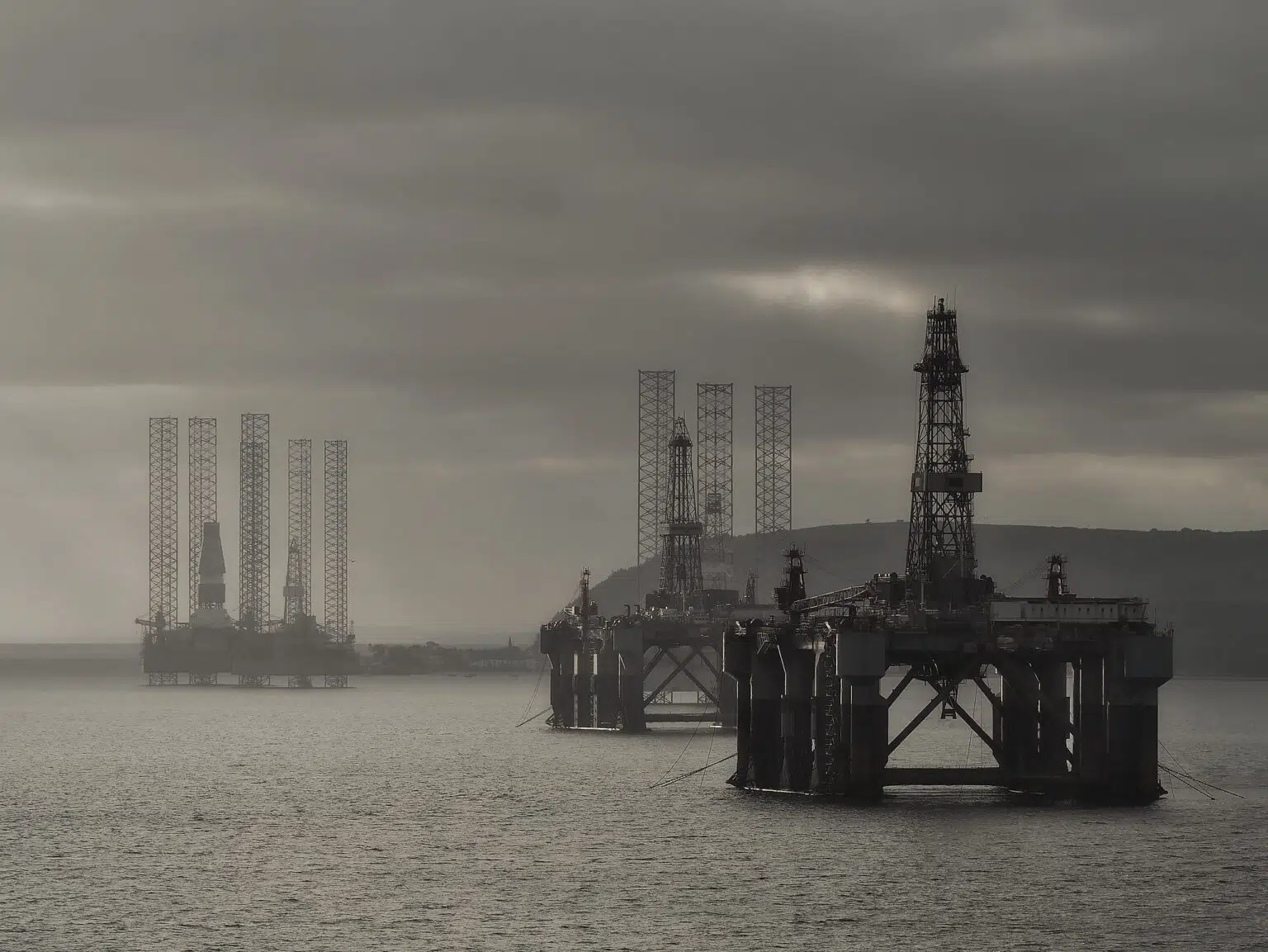
North Sea oil rigs in Cromarty Firth, Scotland. Credit: joiseyshowaa (CC BY-SA 2.0)
North Sea oil rigs in Cromarty Firth, Scotland. Credit: joiseyshowaa (CC BY-SA 2.0)

The influential Conservative-linked Centre for Policy Studies (CPS) has been pushing for further North Sea oil and gas drilling while several of its board members hold financial interests in the industry, a DeSmog investigation has found.

The news follows the government’s approval of the major Rosebank oilfield and the issuing of new North Sea licences, which the government intends to turn into a mandatory annual process, as announced in this week’s King’s Speech.

Five of the think tank’s board have financial interests in North Sea oil and gas, including its chair Lord Spencer, a major Conservative Party donor whose exploration company is bidding for licences in the current round.

The think tank, which is based at 57 Tufton Street in Westminster, meets regularly with ministers. It has called for new oil and gas projects to be accelerated, labelled the windfall tax on energy companies a “terrible idea”, and argued for a more generous fiscal environment for the UK’s fossil fuel producers.

Prime Minister Rishi Sunak is quoted on the organisation’s website as saying that “Lots of exciting ideas are being generated at the CPS… many of which are finding their way into government.”

Tessa Khan, executive director of climate group Uplift, said the findings were an example of how some think tanks have “long been little more than lobbying vehicles for private interests, including oil and gas”. The CPS denies that it is a lobbying group.

Khan added that organisations like the CPS “amplify the voices” of the oil and gas industry.

“This maybe goes some way to explaining why this government is set on subsidising new oil and gas fields when they represent such a bad deal for the public, in that they won’t lower bills, won’t increase energy security but will make the climate crisis worse,” she said.

Nature broadcaster Chris Packham, who is threatening to take the government to court over its recent watering down of climate measures, said: “Just weeks after we learn that not a single new offshore wind project will be going ahead this year due to the government’s intransigence – and as Rishi Sunak tears up vital climate policies – these findings are shocking.

“They provide further evidence that Number 10’s fossil fuel agenda is far from accidental. There are powerful vested interests at work and the Centre for Policy Studies seems to be at the heart of it. The government’s plan to hand out more than a hundred new North Sea drilling licences in the coming months is looking grubbier than ever.”

DeSmog previously revealed that the Conservative Party received £3.5 million from fossil fuel interests in 2022, including from the North Sea industry. This week, DeSmog also revealed that the government watered down its windfall tax on the excess profits of energy firms after a lobbying blitz by the oil and gas industry.

When asked about its board members’ business interests, a CPS spokesperson said that the think tank is “grateful for all our supporters, especially the support of our board members, but the investments of other boards on which they sit have no bearing on their relationship with the CPS”.

They claimed that DeSmog was “cherry-picking in order to manufacture an incorrect picture of the CPS’s position” and that it was “misleading and below journalistic standards.”

They added that “the Centre for Policy Studies has been one of the most prominent champions of free-market environmentalism, with a dedicated workstream on net zero” and that “Where our work is sponsored, this is made clear in the report acknowledgments, in press releases, and in event invitations.”

The North Sea Transition Authority (NSTA), the regulator in charge of issuing drilling licences, said that oil and gas were “forecast to play an important role in the energy mix for decades to come”. A spokesperson said the NSTA was “pleased” with the number of applications received in the current oil and gas licensing round and that the process of assessing them was “progressing well”.

The Department for Energy Security and Net Zero declined to add any further comment.

At the end of September, the International Energy Agency, of which the UK is a member, released a report reiterating the need for a phaseout of fossil fuels if climate goals are to be met. 

Lord Deben, the recently retired chair of the UK’s Climate Change Committee, which advises the government, argued in August that the government should stop approving North Sea licences.

Deltic Energy

Lord Spencer, who has chaired the CPS since the start of 2020, is the largest shareholder of Deltic Energy, which holds stakes in 18 North Sea areas, known as blocks, according to NSTA data.

A former Conservative Party treasurer, Spencer was given a life peerage by Boris Johnson. Official data shows that he has donated more than £7.5 million to the Conservative Party, individual Tory politicians and officially affiliated groups since 2015. He also sits on the board of the party’s multi-million-pound endowment fund. DeSmog revealed earlier this year that many of its directors have significant fossil fuel interests.

Through his holding company, IPGL, Spencer owns a £17.5 million stake in Deltic, according to Refinitiv data – nearly a fifth of the firm. He has held a significant shareholding since at least 2018, and bought more shares in 2019 from its founder Algy Cluff, a pioneer of the original North Sea oil boom in the 1970s who himself later joined the CPS board.

Responding to an enquiry from DeSmog, Cluff said that although the value of the company “may have increased in the view of management”, the stock market is “unimpressed and very much aware of the risks associated with any oil investments nowadays”. He described the “small number” of options he holds in the company as “presently worthless”.

Cluff has nevertheless spoken of the North Sea’s “second coming”, claiming that there is “a lot more oil to be found” and a “huge amount of gas”.

Deltic has made significant discoveries in recent years, touting its “enviable reputation as proven hydrocarbon finders” on its website, and has seen its market value rise in tandem.

It won blocks in North Sea licensing rounds in both 2018 and 2020, with the former is said to represent an area the “size of Bedfordshire”.

In its latest annual report, for the 2022 calendar year, Deltic criticises the government’s windfall tax but praises its accompanying investment allowance, which provides North Sea companies with tax breaks to encourage investment.

A presentation it gave investors in March describes its strategy as “Identify. Explore. Monetise. Repeat.” It says the investment allowance “significantly enhances economics from investment in Deltic exploration”, touts controversial gas-derived “blue hydrogen” as environmentally friendly, and highlights “established export infrastructure” and “regular licensing rounds” as attractive features of the North Sea.

Deltic is chaired by Mark Lappin, a former technical director of fracking company Cuadrilla who has publicly called for more oil and gas production, criticising opposition to new drilling.

Lord Spencer’s Conservative donations, made either personally or through IPGL and ICAP, include £25,000 gifts to the 2022 leadership campaigns of Sunak, Liz Truss, and Penny Mordaunt.

Spencer made £20,000 donations to Johnson, Jeremy Hunt, Michael Gove and Sajid Javid in 2019, and has made smaller donations to numerous other leading figures within the party in recent years, including Kwasi Kwarteng, Dominic Raab, Theresa May, Brandon Lewis, and Andrew Griffith.

Spencer has also funded “Blue Collar Conservatism”, a large caucus of Conservative MPs working to “champion working people”, with donations totalling £25,000 in 2019 and 2020. The group has campaigned against fuel duty rises.

Spencer’s Other Fossil Fuel Interests

Lord Spencer has also publicly talked up the fossil fuel industry, telling LBC’s Nick Ferrari last September that the UK “sadly has opposed further investment in North Sea oil and gas”. During the interview, he praised then Prime Minister Liz Truss for speaking out against windfall taxes on the sector, calling them “not Tory policy” and “not pro-business”.

He also expressed support for fracking, praised Truss’s “strategy” and “ideology”, and called for investment in renewable energy, but omitted to mention his interests in oil and gas.

In addition to the North Sea, Spencer has various other fossil fuel interests. According to Refinitiv, he holds the second largest stake in Pantheon Resources, a UK company exploring for oil in Alaska that recently hailed a potentially enormous discovery.

His brokerage firm ICAP also includes an oil and gas trading arm. Until December last year, Spencer held shares in Petrofac, an oilfield services firm heavily involved in the North Sea, including the controversial Cambo project.

Spencer’s shareholdings are disclosed to the House of Lords – indicating either a stake worth more than £70,000 or significant control over the company. They include Cluff Energy Africa, described as an “early stage oil prospecting company, seeking licences in Africa (Angola and Sierra Leone)”.

Its founder, Algy Cluff, told DeSmog that they had “wound the company up” because they “found the premium being asked by governments for the right to explore not to be consonant with the rewards”.

Cluff was a director of the CPS between 1995 and 2006, coinciding with the executive directorship of the late Tessa Keswick. Cluff confirmed to DeSmog that Keswick helped him find investors for his North Sea consortium in the 1970s, as has been reported.

Tessa’s husband Henry Keswick, chairman emeritus of the conglomerate Jardine Matheson and a major Tory donor, used to own the influential conservative Spectator magazine and sold it to Cluff in the early 1980s. Cluff was its chairman until 2004, during which Charles Moore, Dominic Lawson, and Boris Johnson were editors.

The magazine was edited in the 1960s by the late Nigel Lawson, who would become Thatcher’s chancellor and in later life promote climate science denial through the Global Warming Policy Foundation, based at 55 Tufton Street.

Cluff’s remaining business interests include Cluff Mineral Resources, an Africa-focused gold and coal exploration company, which was temporarily based at 55 Tufton Street before moving next door to share an address with the CPS.

The Board

Another CPS board member, Lord Strathclyde, is a senior strategic adviser to Hibiscus Petroleum, a Malaysian oil and gas company that has amassed stakes in 11 North Sea blocks in recent years

Ithaca, the firm behind the high-profile Rosebank and Cambo projects, is partnering with Hibiscus on one of the blocks.

Hibiscus is also one of the firms to have been awarded stakes in the latest round of oil and gas licences.

Strathclyde, who was leader of the House of Lords under David Cameron, is an adviser to oil trading giant Trafigura.

Sir Douglas Flint, chair of Abrdn – formerly, Standard Life Aberdeen – also sits on the CPS board. Abrdn has been targeted by protesters for its investments in oil and gas, which climate researchers Urgewald estimate at £2.9 billion. According to the latest figures, they include oil majors like BP, Shell and Exxon, as well as North Sea-focused firms Serica Energy, Harbour Energy, and EnQuest.

The major asset manager was reportedly one of a group of financial institutions recently summoned by the Treasury to increase investment in the North Sea.

Lord Spencer’s entry in the register of interests indicates he also holds a stake worth more than £70,000 in Abrdn.

Other CPS board members include Jon Moulton, chair of FinnCap, a financial advisory firm whose activities include raising finance for North Sea oil and gas companies, and Roger Orf, a partner at Apollo Global Management, a US private equity firm with £349 million of investments in BP and Shell, both major North Sea players.

Two further CPS board members have wider interests in oil and gas: Ian Molson, deputy chair of Central European Petroleum, which is exploring for oil in Germany and Poland; and major Tory donor Lord Bamford, chair of construction giant JCB, a sector still heavily reliant on fossil fuels.

In April 2023, DeSmog revealed that CPS board members had donated more than £600,000 to the Conservatives since Rishi Sunak became prime minister. 

The CPS also leans on its board for funding. According to the group’s latest accounts – for the period up to September 2022 – its directors donated £1 million to the company during the year. Turnover was £650,000 during the year and ‘other operating income’ hit £1.5 million, meaning that the CPS board contributed nearly half (47%) of its income during the period.

North Sea Push

The Centre for Policy Studies has strongly supported new North Sea oil and gas drilling in recent years.

In a March 2022 economic bulletin, it recommended that the government “look at accelerating regulatory approval for upcoming oil and gas projects such as Rosebank [Phase 1], Clair South, Glengorm, Cambo and Bentley [Phase 2]”. 

The bulletin added that introducing a windfall tax on profits would be a “terrible idea” and “completely self-defeating”. It welcomed “reports” suggesting the government was planning to launch another licensing round for fossil fuel projects.

A month later, the CPS welcomed the government’s “energy security strategy”, calling the return of annual North Sea licensing rounds “overdue”. A 33rd licensing round was launched in October.

In September 2022, an economic bulletin from the think tank called for “improved tax incentives for firms operating in the North Sea”.

In February this year, one of the CPS’s senior researchers criticised the “punishment beatings inflicted on the North Sea oil and gas industry from George Osborne onwards” – despite the sector having enjoyed one of the most generous tax regimes in the world until the recent windfall tax.

Other articles published on CapX, a commentary website run by the CPS, have labelled the Labour Party’s policy of no new North Sea licences “more than a little nuts” and the SNP’s similar position a “dangerous gambit”.

Andy Mayer, chief operations officer at the BP-funded Institute of Economic Affairs, writes regularly for CapX. He has used the platform to describe opposition to the Rosebank project as “shrill hysteria”, Shell’s bumper profits this year as “brilliant stuff”, and North Sea companies being fined for gas flaring as a “dotty investment message to send”. Following the announcement of the latest North Sea licences, Mayer wrote a story for CapX headlined “Hurrah for new North Sea oil licences!”

CPS Influence

The CPS has significant political access, having conducted private, one-to-one meetings with ministers on 27 occasions since 2014 and attended many other larger ministerial meetings, according to data compiled by Transparency International from government disclosures.

A number of the think tank’s former employees are now working as government advisers and its homepage carries supportive quotes from former prime ministers Liz Truss and Boris Johnson. 

Rishi Sunak spoke at a CPS event at the Conservative Party conference in 2019 and wrote a report for the organisation in 2016 backing the roll-out of freeports, which have since been introduced.

The think tank, which was co-founded by Margaret Thatcher, hosted a “dedicated space” at this year’s party conference, with speakers including Jeremy Hunt, Michael Gove, and Grant Shapps.

The chair of Times Newspapers, which publishes The Times and Sunday Times, and the editor of The Spectator, both sit on the CPS board. All of the titles editorially support new North Sea oil and gas.

Richard Sharp, who was forced to resign as chairman of the BBC earlier this year over his connection to a secret £800,000 loan to Boris Johnson, sat on the CPS board for 19 years before joining the BBC in 2021.

The CPS, which does not disclose its funding, has offices on Tufton Street in Westminster, alongside several other “free market” pressure groups and think tanks, including the climate science denying Global Warming Policy Foundation.

Other board members include Rachel Wolf, a co-author alongside CPS Director Robert Colvile of the 2019 Conservative manifesto, which said the “North Sea oil and gas industry has a long future ahead” and supported a deal with the sector that allows for new drilling projects.

Original article republished from DeSmog.

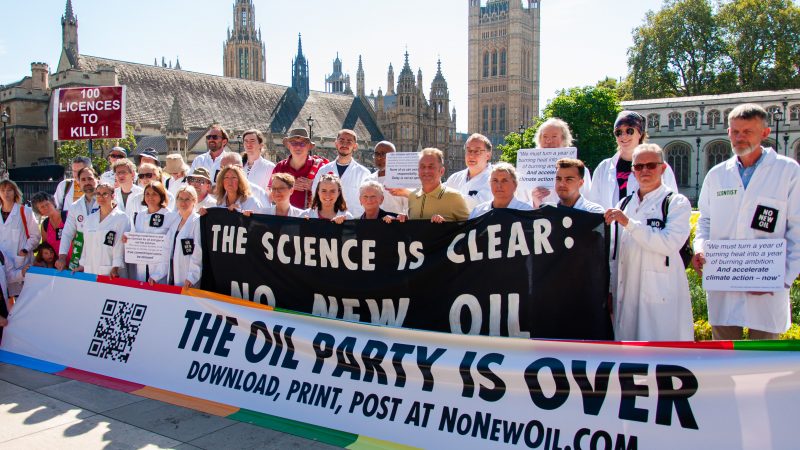
Scientists protest at UK Parliament 5 September 2023.
Continue ReadingTop Tory Think Tank’s North Sea Oil and Gas ‘Vested Interests’