UNICEF: Israeli attacks killing 28 children daily in Gaza

Spread the love

This work by Middle East Monitor is licensed under a Creative Commons Attribution-NonCommercial-ShareAlike 4.0 International License

Injured Palestinians, including children are brought to al-Ahli Baptist Hospital for medical treatment aftermath of Israeli attack on Gaza City, Gaza on July 16, 2025. [Dawoud Abo Alkas - Anadolu Agency]
Injured Palestinians, including children are brought to al-Ahli Baptist Hospital for medical treatment aftermath of Israeli attack on Gaza City, Gaza on July 16, 2025. [Dawoud Abo Alkas – Anadolu Agency]

During a session at the UN Security Council on Wednesday, the Executive Director of UNICEF, Catherine Russell, revealed alarming figures about the impact of the ongoing Israeli offensive on Gaza. 

She confirmed that more than 17,000 children have been killed since the beginning of the war, at an average rate of 28 children each day– the equivalent of an entire classroom.” It is as if we are losing an entire classroom of pupils every single day for two years.”

Children are not political actors. They do not start conflicts, and they are powerless to stop them. But they suffer greatly, and they wonder why the world has failed them,” she added.

Meanwhile, the UN Under-Secretary-General Mr Tom Fletcher warned that the health situation in Gaza has reached catastrophic levels.

“Only 17 of 36 hospitals and 63 of 170 primary healthcare centres are functioning, all only partially, even as mass casualties arrive daily,” he highlighted.

Fletcher indicated that half of all medical equipment has been damaged, with the ongoing fuel crisis remaining critical, despite its vital role in powering ambulances and other essential services.

Expressing concern over the alarming rates of child starvation in June, he revealed that “more than 5,800 girls and boys have been diagnosed as acutely malnourished.”

“Last week, amid this hunger crisis, children and women were killed in a strike while waiting for the food supplements to keep them alive,” he warned.

READ: UNRWA: Israel kills the equivalent of a classroom full of children each day in Gaza

Continue ReadingUNICEF: Israeli attacks killing 28 children daily in Gaza

Greens call for end to arms exports alongside boycotts, divestment and sanctions in wake of Security Council vote

Spread the love
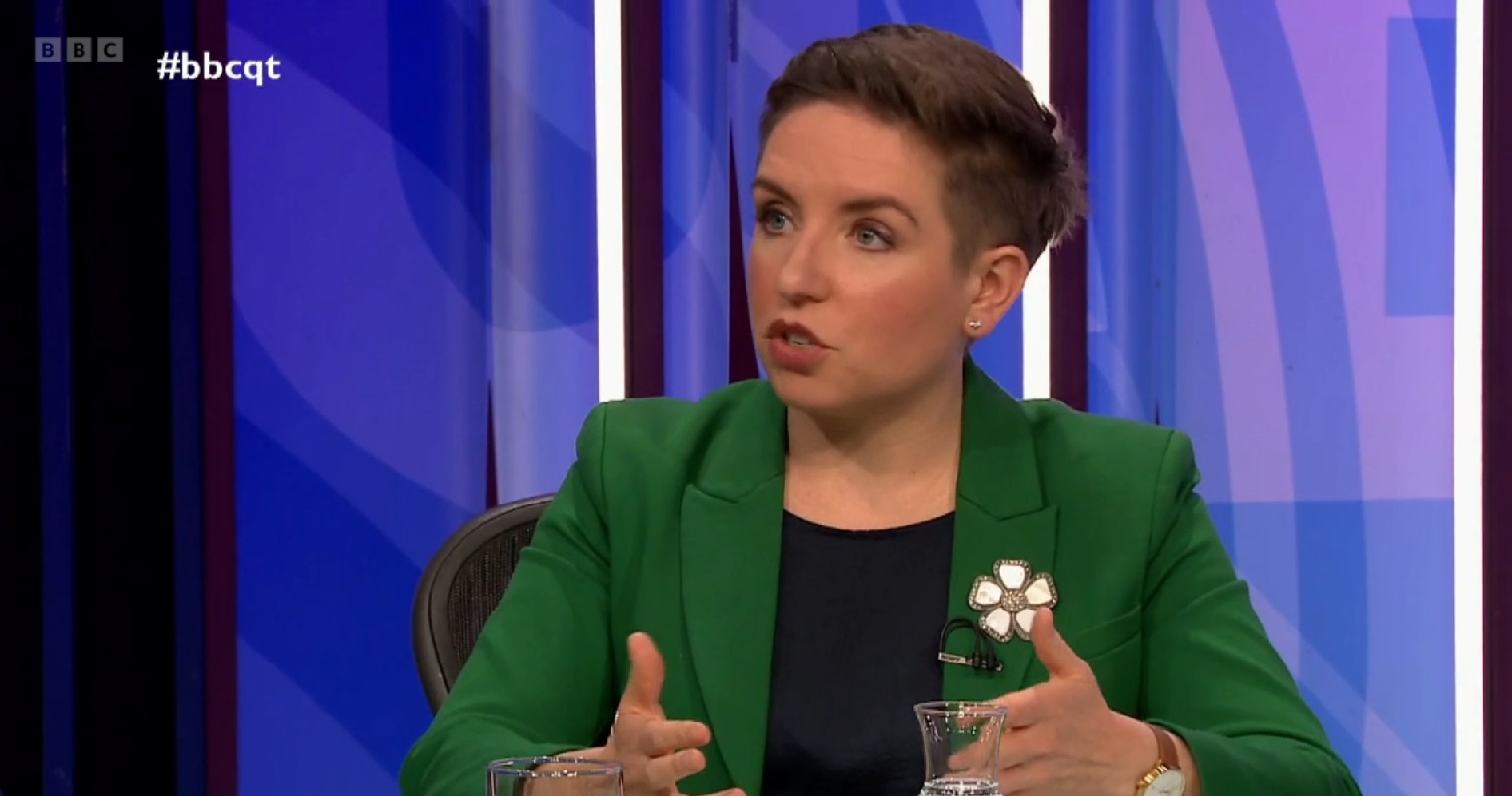
Image of the Green Party's Carla Denyer on BBC Question Time.
Image of the Green Party’s Carla Denyer on BBC Question Time.

Reacting to news that the UN Security Council has called for an immediate ceasefire in Gaza, without the US using its veto to block the resolution, co-leader of the Green Party Carla Denyer, said: 

“The Green Party has been calling for a ceasefire since last October, so this vote is hugely welcome if long overdue. With Israel’s greatest ally the United States abstaining, the Netanyahu regime is more isolated than ever – and rightly so.  

“This Security Council resolution comes too late for hundreds of thousands of people who have seen their families and friends killed, maimed, or seriously injured and their homes, hospitals and schools destroyed. Nonetheless, it ramps up international pressure on Israel to end its deadly assault on Gaza. 

“However, Netanyahu is not listening – the attacks continue. The UK government must now further pressurise the Netanyahu regime by immediately suspending export licenses for arms to Israel. The Green Party also calls for further leverage through boycotts, divestment and sanctions. This means withdrawing all public money from funds with investments in Israel and suspending beneficial trade arrangements with the country.  

“Only a full bilateral ceasefire and release of all hostages can stop more people dying. Israel must immediately stop blocking humanitarian aid to Gaza, where their blockade on aid is causing famine and intolerable suffering. And only a ceasefire can allow talks to begin on the long-term political solutions that will bring peace and security to everyone in the region.” 

Continue ReadingGreens call for end to arms exports alongside boycotts, divestment and sanctions in wake of Security Council vote

UN Security Council’s Gaza Cease-Fire Resolution Is Not Enough—But It’s a Start

Spread the love

Original article by PHYLLIS BENNIS republished from Common Dreams under Creative Commons (CC BY-NC-ND 3.0). 
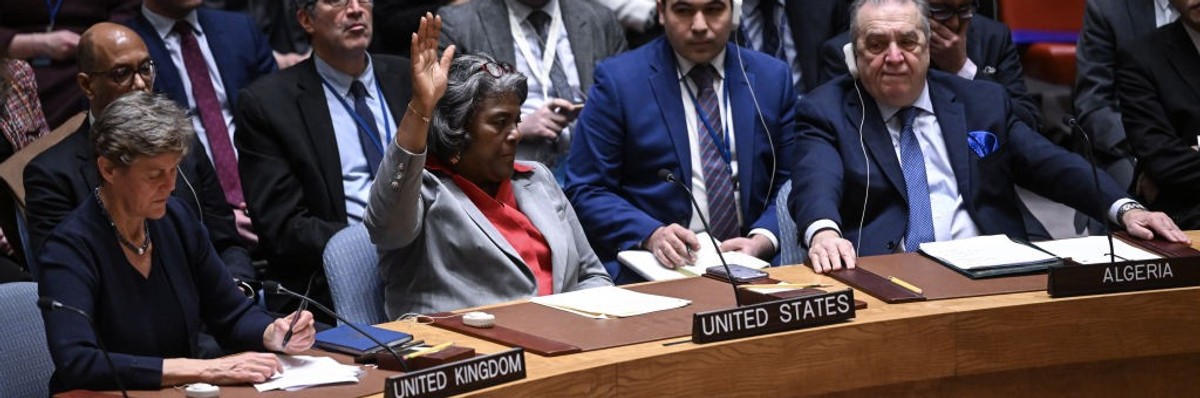
US Ambassador to the United Nations Linda Thomas-Greenfield raises her hand during the UN Security Council meeting which adopted a resolution demanding an immediate cease-fire in Gaza Strip for the month of Ramada on March 25, 2024. As many as 14 countries voted in favor of the resolution, presented by 10 elected members of the Council, while the US abstained from voting.  (Photo by Fatih Aktas/Anadolu via Getty Images

Despite weaknesses and false U.S. claims that the resolution is nonbinding, it demands an end to the bombing and a massive influx of humanitarian aid. And that means the possibility of saving lives.

Five and half months into Israel’s genocidal assault on Gaza with more than 32,000 Palestinians already killed, six weeks after the International Court of Justice found Israel plausibly committing genocide and ordered it to stop, and after four earlier tries, the UN Security Council on Monday finally passed a resolution submitted by all ten elected members aiming to stop the slaughter. The resolution has lots of weaknesses and shows the effects of U.S. pressure—but it demands an end to the bombing and a massive influx of food and medicine. And that means the possibility of saving lives.

The resolution demanded an immediate ceasefire leading to a lasting and sustainable ceasefire, the release of all hostages, and compliance with international law in treatment of all those detained. The Council also demanded “the lifting of all barriers to the provision of humanitarian assistance at scale,” reminding the world of the need for massive expansion of that aid and for protection of Palestinian civilians across the entire Gaza Strip.

The resolution’s passage was uncertain until the very last moment. An hour before the vote, U.S. diplomats won a final concession—replacing the original demand for a “permanent” ceasefire” to the squishier, less clear “lasting.” And there are significant other weaknesses in the resolution.

When U.S. Ambassador Linda Thomas-Greenfield claimed that the Council vote was “nonbinding,” she was setting the stage for the U.S. government to violate the UN Charter by refusing to be bound by the resolution’s terms.

The most important flaw in the Council’s text is that it calls for a ceasefire only “for the month of Ramadan.” This most important of Muslim holidays began on March 11, so the demand for a ceasefire is only for about two weeks. And while it does demand that the immediate halt lead to a lasting ceasefire, two weeks is still a much too-short time.

Other problems reflect deliberate obfuscation of language. The demand that all parties treat “all persons they detain” in compliance with international law clearly refers to the thousands of Palestinian detainees Israel is holding, many in administration detention without even the pretense of legitimate legal procedures, whom international law requires to be immediately released. Their detention violates a host of those laws, but by not naming them directly, diplomatic wrangling always threatens to deny them their rights.

And in the paragraph focusing on the catastrophic humanitarian situation across Gaza, the Council’s demand for “lifting all barriers to provision of humanitarian aid at scale” should be a clear and straightforward message to Israel that it must open the gates, end its rejection of goods on the spurious grounds of potential “dual use,” replace its deliberately complex and time-consuming inspection processes and more. But that reference to “lifting all barriers” is hidden in a long sentence within a reference to an earlier resolution. The first part of the sentence merely “emphasizes” the need for more humanitarian aid and protection for Palestinian civilians. And in UN diplo-speak, especially in the Security Council that actually has the right to enforce its resolutions, “emphasizing” something ain’t even close to “demanding” that it happen.

Israel was still not pleased, of course. Prime Minister Benjamin Netanyahu immediately announced his delegation, expected in Washington tomorrow to discuss Tel Aviv’s planned escalation against Rafah, will stay home instead.

But even if the resolution is not all it should be, its passage (14 in favor, the U.S. abstained) still represents a powerful global rejection of the U.S.-backed Israeli assault against Palestinians in Gaza, and an important expression of support for the South African-led intervention at the International Court of Justice designed to prevent or stop Israeli genocide and to hold Israel accountable for its crimes. Importantly, and despite U.S. Ambassador Linda Thomas-Greenfield’s false claim following the vote, all decisions of the Council, as stated in Article 25 of the UN Charter, are binding on Member States.

That puts a big obligation on the U.S. and global movements for ceasefire, massive escalation of humanitarian aid, and resumption of funding UNRWA. Left to its own devices, the Council will almost never move to enforce its own decisions. That responsibility, that obligation, lies with our movements—and, in the UN context, with the General Assembly. The legacy of the South Africa anti-apartheid movement, especially through the 1970s and 80s, and into the early 1990s, shows that model. The U.S. and Britain over and over again vetoed resolutions in the Security Council for sanctions against apartheid South Africa. Over and over again the General Assembly passed the resolutions—for banking, trade, and other sanctions, for arms embargoes and much more. Eventually, public pressure against Washington and London forced a pull-back, and eventually, reluctantly and grudgingly, those governments gave in, stopped vetoing the Council resolutions and started abiding by the calls of the Assembly. It all played a huge role in ending South African apartheid.

Left to its own devices, the Council will almost never move to enforce its own decisions. That responsibility, that obligation, lies with our movements—and, in the UN context, with the General Assembly.

When U.S. Ambassador Linda Thomas-Greenfield claimed that the Council vote was “nonbinding,” she was setting the stage for the U.S. government to violate the UN Charter by refusing to be bound by the resolution’s terms. But enforcement of Council decisions can take shape in many forms—protest movements around the world can demand their governments move to pressure Israel to abide by the Council’s demands. The General Assembly can urge Member States to impose some of those same sanctions it used so successfully against apartheid South Africa. Maybe the Assembly and global movements together can escalate the call urging boycotts of Israeli products, divestment from companies profiting from Israel’s occupation or apartheid, and sanctions on banking transactions or trade, and the imposition of arms embargoes.

First things, of course, an immediate ceasefire, release of hostages and Palestinian detainees, and a flood of emergency humanitarian aid. Then maybe, just maybe, we’ll see this Security Council resolution lead to the United Nations joining the global BDS movement. It’s never too late.


Phyllis Bennis

Phyllis Bennis is a fellow of the Institute for Policy Studies and serves on the national board of Jewish Voice for Peace. Her most recent book is the 7th updated edition of “Understanding the Palestinian-Israeli Conflict: A Primer” (2018). Her other books include: “Understanding the US-Iran Crisis: A Primer” (2008) and “Challenging Empire: How People, Governments, and the UN Defy US Power” (2005).

Original article by PHYLLIS BENNIS republished from Common Dreams under Creative Commons (CC BY-NC-ND 3.0). 

Continue ReadingUN Security Council’s Gaza Cease-Fire Resolution Is Not Enough—But It’s a Start

‘If This Isn’t Genocide, I Don’t Know What Is,’ Says Lula of Israeli Attack on Gaza

Spread the love

Original article by JON QUEALLY republished from Common Dreams under Creative Commons (CC BY-NC-ND 3.0). 

Brazil’s President Luiz Inacio Lula da Silva delivers a speech during the launching ceremony of a Petrobras cultural investment project at the Modern Art Museum in Rio de Janeiro, Brazil on February 23, 2024.  (Photo by Pablo Porciuncula/AFP via Getty Images)

“What the Israeli government is doing to the Palestinian people is not war,” said the President of Brazil. “It’s not soldiers who are dying, but women and children who are dying inside the hospitals.”

Just days after Brazil’s President Luiz Inácio Lula da Silva was announced to be ‘person non grata’ by the Israeli government for critical comments he made about its conduct in Gaza, the leftist leader known as Lula remained outspoken over the weekend as he condemned the military onslaught that has claimed nearly 30,000 lives, mostly innocent civilians, in just over four months.

“What the Israeli government is doing to the Palestinian people is not war, it is genocide,” Lula thundered in remarks Friday during an event in Rio de Janiero. “They are killing women and children. There are thousands of children dead and thousands missing. It’s not soldiers who are dying, but women and children who are dying inside the hospitals.”

He continued: “If this isn’t genocide, I don’t know what is.”

In his remarks, Lula condemned the failure of the UN Security Council to intervene in a meaningful way to stop the carnage in Gaza. On Feb. 19, the United States once again used its veto power to reject a resolution calling for an immediate cease-fire.

The UNSC “represents nothing,” he said. “It does not take any decisions, it does nothing for peace,” he added, while decrying the amount of “hypocrisy in the world today” when it comes to political leadership.

Original article by JON QUEALLY republished from Common Dreams under Creative Commons (CC BY-NC-ND 3.0). 

Continue Reading‘If This Isn’t Genocide, I Don’t Know What Is,’ Says Lula of Israeli Attack on Gaza

Israel’s collective punishment of Palestinians in Gaza not acceptable, says UN Chief

Spread the love

Original article by Abdul Rahman republished from peoples dispatch under a Creative Commons Attribution-ShareAlike 4.0 (CC BY-SA) license.

The UN Security Council meets on the situation in the Middle East, including Palestine (Photo via United Nations)

Participants in the UN Security Council highlighted need for a ceasefire in Gaza and a long term solution to the Palestinian question as necessary for peace

On January 23, speaking during the two day extended meeting of the UN Security Council on Palestine, UN Secretary General Antonio Guterres underlined that “Israel’s clear and repeated rejection” of a two-state solution is unacceptable. He also warned that this refusal and “denial of the right to statehood to the Palestinian people would indefinitely prolong a conflict that has become a major threat to global peace and security.”

Most of the countries which participated in the two day proceedings demanded an immediate humanitarian ceasefire and a two-state solution, claiming it necessary for regional and global peace.

Invoking ever deteriorating humanitarian conditions in Gaza, Guterres termed it “collective punishment” executed by Israeli forces, asserting that “nothing can justify it.”

More than 25,700 Palestinians have been killed, over 63,000 have been wounded, and nearly 90% of Gaza’s population has been displaced due to relentless bombings and ground offensives carried out by Israeli armed forces since October 7.

Israel has maintained that its war in Gaza is in response to Palestinian resistance forces, mainly Hamas, attacking inside its borders on October 7, in which nearly 1,200 people were killed and nearly 250 Israelis were taken as hostages.

Speaking in the meeting, Gilad Erdan, the Israeli ambassador to the UN, claimed that until persons involved in the October 7 attacks are handed over and hostages are released, war in Gaza will not end.

Most of the members of the UN Security Council repeated the call for an immediate ceasefire and called for better delivery of humanitarian aid to Gaza.

The Chinese ambassador to the UN, Zhang Jun, also noted that the Israeli leadership’s repeated rejection of a two-state solution is unacceptable, and demanded that it must be rejuvenated by granting Palestinians full membership to the UN.

Israeli Prime Minister Benjamin Netanyahu had, earlier this month, rejected the calls for a Palestinian state, calling it untenable and a threat to Israeli security.

The need for a two-state solution was raised by the Palestinian Foreign Minister Riyad Maliki, who denounced the war in Gaza as Israel’s “premeditated effort to inflict maximum pain on the Palestinian population.”

“No home, hospital, school, mosque, church or UNRWA shelter is safe from Israeli bombardments, 2,000 pound bombs dropped with no care whatsoever for civilian lives,” he noted.

South Africa, which has taken Israel to the International Court of Justice for its genocide of Palestinians, maintained that there cannot be selective implementation of international law and Israel must face consequences for its repeated violations of the same.

US positions provide a carte blanche to Israeli crimes

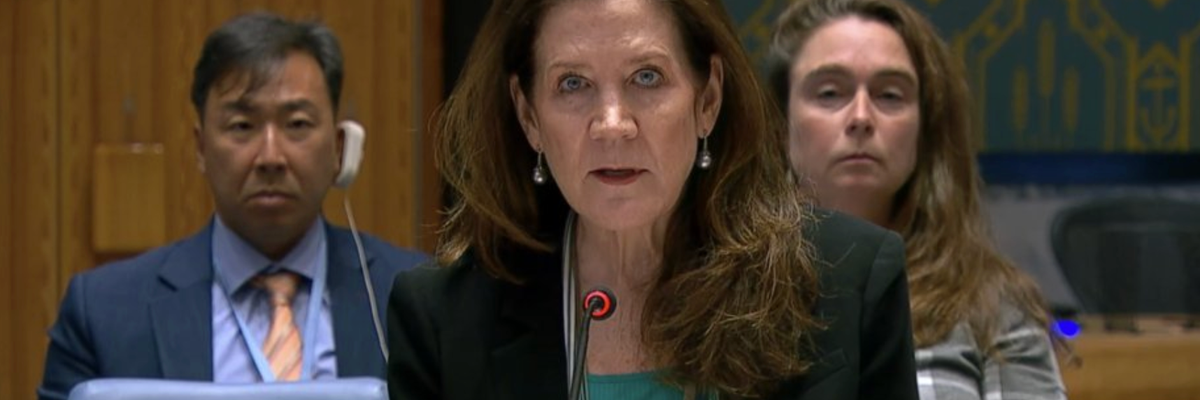
Speaking during the meeting, the US representative Uzra Zeya claimed the centrality of a two-state solution. She claimed that the US has been making efforts to prevent greater civilian casualties in the Israeli war in Gaza. However, US policies in Gaza were heavily criticized by both the permanent members of the UNSC and others as detrimental to peace.

Chinese ambassador Jun condemned the repeated use of veto by the US in earlier UNSC meetings on ceasefire resolutions, identifying them as impeding all efforts to peace.

The US had vetoed resolutions proposing a ceasefire in the UNSC in previous months and tried to excuse Israeli bombings in Gaza as the Zionist state’s right to self defense.

Jun hoped that all members of the international community must prioritize ceasefire in Gaza, and ways to stop the spread of the war in the region.

Russian Foreign Minister Sergei Lavrov asserted that the UNSC must take steps to prevent further destabilization in the region, which has been caused by US policies which vetoes ceasefire resolutions and provides carte blanche to Israeli acts of “collective punishment of Palestinians.”

Lavrov emphasized that until a ceasefire is implemented the talks about future solutions to the conflict are useless.

Iranian Foreign Minister Hussein Amir Abdollahian warned the US against violating Yemeni sovereignty by carrying out repeated air strikes against it. He alleged that it is a trap laid down by Israel with the objective of expanding the war in Gaza to the regional level.

Abdollahian proposed that a referendum among all Palestinians must be held to find a permanent solution to the Palestinian question.

Lebanese Foreign Minister Abdallah Bou Habib emphasized that all stakeholders, including the US, should see that Israel wants to expand the war across the region, and underlined that his country does not want war.

He emphasized that “what happened on October 7 did not happen in a vacuum” and if no attempts are made to secure a lasting solution “it will happen again,” as there is no peace in the region until there is justice for Palestinians.

Speaking in the meeting on Tuesday, the Saudi delegate Waleed El-Khereiji said that because of the “Israeli war machine,” tensions in the region, including in the Red Sea and Yemen, are increasing. He demanded that the Security Council make sure that Israel stops its violations of international law.

On Sunday, in an interview with CNN, Saudi Foreign Minister Faisal bin Farhad al-Saud denied any possibility of normalization of relations with Israel, as proposed by the US, until there is a road map for a two-state solution and an independent Palestinian state. “What we are seeing is Israelis crushing Gaza, the civilian population of Gaza. This is completely unnecessary, completely unacceptable, and has to stop.”

Original article by Abdul Rahman republished from peoples dispatch under a Creative Commons Attribution-ShareAlike 4.0 (CC BY-SA) license.

Continue ReadingIsrael’s collective punishment of Palestinians in Gaza not acceptable, says UN Chief