Article by Brett Wilkins republished from Common Dreams under Creative Commons (CC BY-NC-ND 3.0).
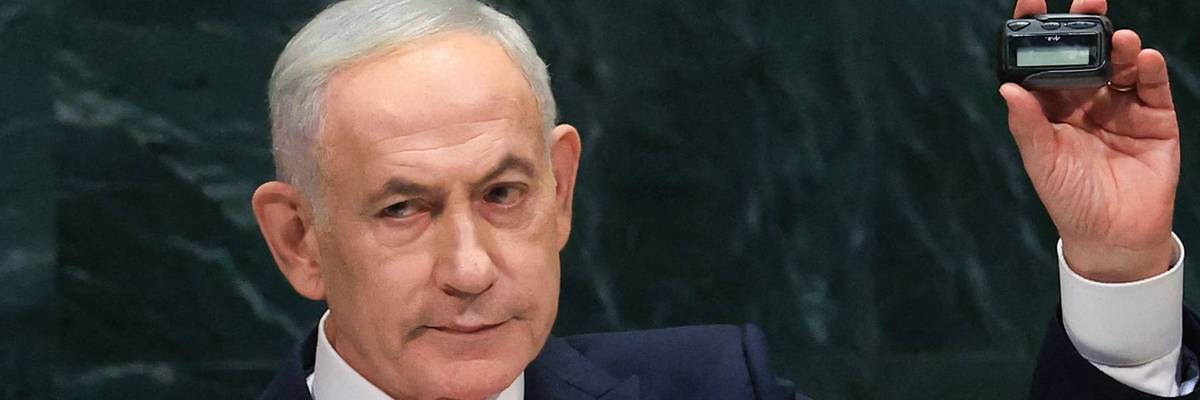
(Photo by Timothy Clary/AFP via Getty Images)
“No lie can change the fact that he remains the subject of an International Criminal Court arrest warrant alleging war crimes and crimes against humanity,” New York City’s mayor said of the Israeli prime minister
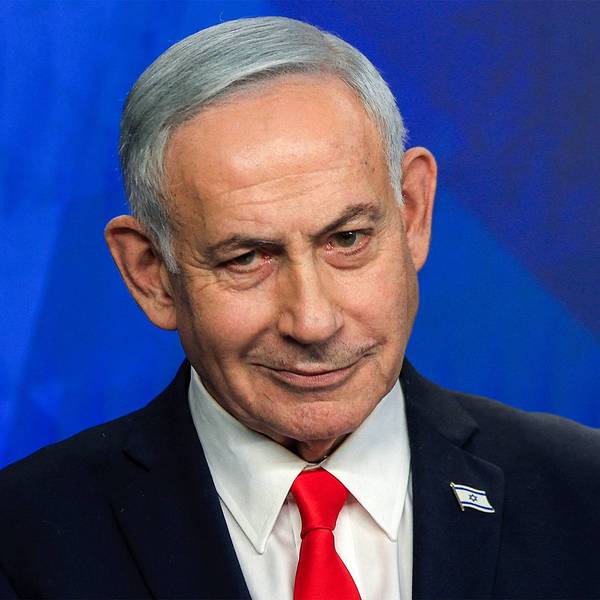
New York City Mayor Zohran Mamdani hit back Thursday after Israeli Prime Minister Benjamin Netanyahu took to the United Nations General Assembly podium to accuse him of supporting Hamas and making Jewish New Yorkers feel unsafe—remarks that came after delegates from scores of countries walked out of the chamber to protest the far-right fugitive’s presence.
Refuting allegations that Israel is committing genocide in Gaza—where Israeli forces have killed more than 73,000 Palestinians, including more than 21,500 children, since the Hamas-led attack of October 2023—Netanyahu said, “To all those spreading these lies about my country and about our brave soldiers, whether they sit in this hall or in the office of the antisemitic mayor of New York City, I say this: Shame on you.”
RECOMMENDED…
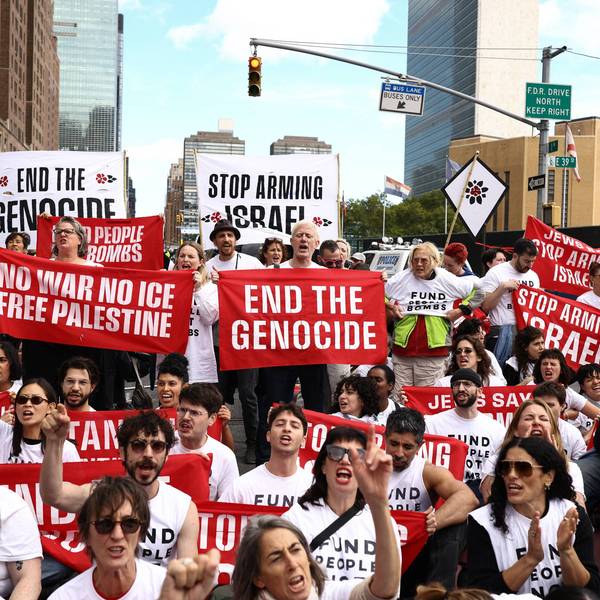
‘Netanyahu Wanted for Genocide!’ 100+ Arrested Outside UN Speech
As Netanyahu Threatens Libel Suit, Haaretz ‘Stands By Its Reporting’ on 10/7 Attack
“Mr. Mamdani, since you were elected mayor of this city, many Jews no longer feel safe in New York,” the prime minister claimed. “It’s no wonder… You falsely and repeatedly accuse Israel of genocide. Israel didn’t commit genocide. Israel prevented genocide. And that’s exactly what Mr. Mamdani’s Hamas buddies would have done to us had we not stopped them. They would have killed every last one of us.”
Mamdani issued a statement later Thursday saying: “As he has done time and again, Prime Minister Netanyahu used his speech to repeat baseless lies meant to sanitize his genocide of Palestinians. Yet no lie can change the fact that he remains the subject of an International Criminal Court arrest warrant alleging war crimes and crimes against humanity.”
Netanyahu and Yoav Gallant, his former defense minister, are fugitives from the International Criminal Court, where they are accused of murder and forced starvation of Palestinians in Gaza. The ICC also issued arrest warrants for three Hamas leaders, but Israel assassinated them.
While neither Israel nor the United States is a party to the Rome Statute governing the ICC, the treaty states that people from nonsignatory states who commit alleged crimes in states that are party to the treaty—as Palestine is—can be arrested in third countries and subsequently tried by the court.
Mamdani has said that Netanyahu should be arrested and brought before the Hague-based tribunal for trial, but that he lacks the legal authority to apprehend the prime minister in New York.
The International Court of Justice—also located in The Hague, Netherlands—is currently processing a genocide case filed against Israel by South Africa and formally supported by nearly 20 nations. The case is based on what the ICJ called the plausibility that Israel is committing genocide in Gaza. The court has issued a series of provisional orders for Israel to adhere to the Genocide Convention—orders that critics say Israel has simply ignored.
Last year, an independent UN commission of inquiry found that Israel had committed genocide in Gaza, a conclusion shared by the International Association of Genocide Scholars and other experts including many Israeli and diaspora Jewish academics, jurists, human rights campaigners, and others.
As Netanyahu prepared to deliver his UN speech Thursday, delegates from a reported 77 nations walked out of the chamber in protest.
“If there are any other moral cowards who haven’t yet left this hall—please do so now,” the prime minister said. “Thank you very much.”
While some observers applauded the display of solidarity with Palestinians, others expressed disgust that Netanyahu was allowed to address the world body and that he has not yet been brought to justice.
“The head of the genocidal Israeli apartheid regime, a fugitive indicted for crimes against humanity, was allowed to enter the US and to address the UNGA today, without arrest,” said Craig Mokhiber, a former senior UN official who resigned in protest of what he described as the world body’s failure to stop Israel’s genocidal war.
“Netanyahu insulted delegations, openly celebrated the regime’s many crimes, bragged about its terrorist pager attacks on Lebanon, repeated the regime’s debunked genocide propaganda, defended the illegal occupation of Palestine and Syria, lied incessantly, called violent, racist, illegal Zionist settlers ‘peaceful’ and ‘honorable people,’ labeled human rights defenders as ‘antisemites,’ even arrogantly attacked American citizens and officials for speaking out against the regime’s crimes,” he continued.
“This violent psychopath cannot hide behind [US President Donald] Trump’s skirts forever,” Mokhiber added. “He (and his collaborators) must be captured and brought to justice. And the UN must finally act to isolate the regime and hold it accountable. ”
Referring to Netanyahu’s address and Trump’s threat on Tuesday to “annihilate” Iran during his rambling, lie-laden General Assembly speech, University of Colorado Law School associate professor Maryam Jamshidi said on social media, “Between Trump threatening Iran w/annihilation and Netanyahu bragging about Israel’s pager attacks, the UN podium has become a venue for promoting genocide, crimes against humanity, and war crimes.”
Meanwhile, people took to the streets of New York to protest Netayahu’s presence in the city, US complicity in Israeli crimes, and to show solidarity with Palestinians.
Hundreds of protesters gathered outside UN headquarters in Turtle Bay for a sit-in demonstration led by Jewish Voice for Peace. Demonstrators blocked roads while chanting slogans including, “Netanyahu you can’t hide, you are wanted for genocide!”
As Common Dreams reported earlier Thursday, more than 100 demonstrators were arrested.
Among those reportedly arrested were progressive congressional candidate Darializa Avila Chevalier; actors Susan Sarandon, Hannah Einbinder, and Cynthia Nixon; New York state Assemblymember Emily Gallagher (D-50); Democratic New York City Councilmembers Chi Ossé and Alexa Avilés; former Army whistleblower Chelsea Manning; and Palestinian American political activist Linda Sarsour.
“I will never, ever be silent,” Sarsour said on Facebook. “I will never just accept the world as it is. I want history to record for future generations of Palestinians that we fought. At every turn. In every way. When it was easy and when it was hard.”
“I want Palestinian girls in Gaza to see me in my hijab and my unapologetic Palestinian blood fighting for them to live FREE,” she added. “This is bigger than all of us. Netanyahu is a war criminal and belongs in The Hague, not the United Nations.”
Article by Brett Wilkins republished from Common Dreams under Creative Commons (CC BY-NC-ND 3.0).


- GOP NYC Councilwoman Openly Dares Mamdani to Arrest Netanyahu With New Year’s Invite ›
- Netanyahu ‘Should Be Arrested and Tried,’ Says Mamdani, But NYC Lacks Authority to Detain Him ›
- With ‘Blood-Soaked War Criminal’ Set to Land in Mamdani’s NYC, Calls Grow to Arrest Netanyahu ›
- Attacks on Mamdani Prove Israel’s Supporters Can’t Even Tolerate Criticism of Netanyahu ›