Tag: United States

  • UN Puts Out ‘Truly Damning Report Card’ for Climate Action Before Global Summits

    Spread the love
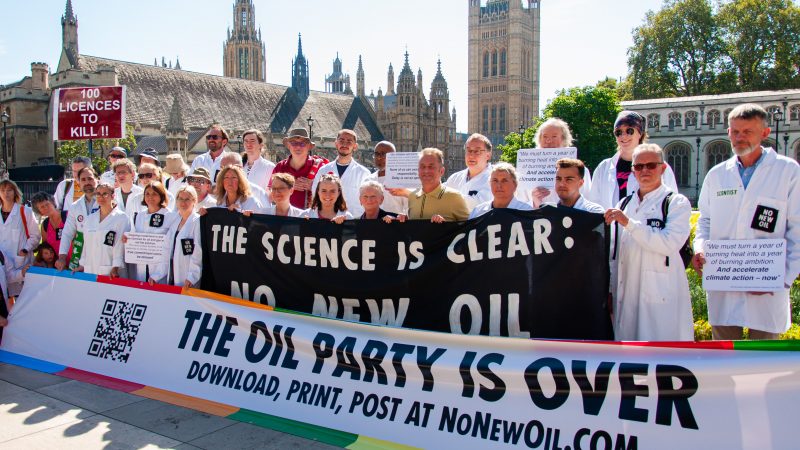
    Scientists protest at UK Parliament 5 September 2023.
    Scientists protest at UK Parliament 5 September 2023.

    Original article by JESSICA CORBETT republished from Common Dreams under Creative Commons (CC BY-NC-ND 3.0). 

    “This report is a wake-up call to the injustice of the climate crisis and a pivotal opportunity to correct course,” said one expert.

    “The United Nations’ polite prose glosses over what is a truly damning report card for global climate efforts. Carbon emissions? Still climbing. Rich countries’ finance commitments? Delinquent. Adaptation support? Lagging woefully behind.”

    That’s how Ani Dasgupta, president and CEO of the World Resources Institute, began his response to a “global stocktake” report released Friday by the U.N. Framework Convention on Climate Change (UNFCCC) ahead of two global summits.

    “This report is a wake-up call to the injustice of the climate crisis and a pivotal opportunity to correct course,” Dasgupta continued. “We already knew the world is failing to meet its climate goals, but leaders now have a concrete blueprint underpinned by a mountain of evidence for how to get the job done.”

    “There are a few bright spots worth celebrating,” he noted. “But overall, the report finds there are more gaps than progress—gaps that can only be erased by transformational change across systems like energy, food, land, and transport. The future of our planet depends on whether national leaders use this stark assessment as a catalyst for bold systems transformation.”

    “This report makes clear that President Biden is squandering precious time every second he fails to take bold action on fossil fuels.”

    The UNFCCC report comes nearly eight years after countries finalized the Paris climate agreement, which aims to keep global temperature rise this century below 2°C, relative to preindustrial levels, with a more ambitious target of 1.5°C.

    “The global stocktake was designed under the Paris agreement to assess our global response to the climate crisis and chart a better way forward,” the UNFCCC explained Friday. “The global stocktake is held every five years and is intended to inform the next round of nationally determined contributions to be put forward by 2025.”

    Data collection began in 2021, ultimately resulting in more than 170,000 pages of written submissions and over 252 hours of meetings and discussions. The new synthesis report summarizes 17 key technical findings from the discussions.

    “I urge governments to carefully study the findings of the report and ultimately understand what it means for them and the ambitious action they must take next,” said U.N. Climate Change Executive Secretary Simon Stiell. “It’s the same for businesses, communities, and other key stakeholders. While the catalytic role of the Paris agreement and the multilateral process will remain vital in the coming years, the global stocktake is a critical moment for greater ambition and accelerating action.”

    As University College London professor of climatology Mark Maslin explained, the report “makes it clear that the Paris agreement was a game-changer” but also countries’ greenhouse gas (GHG) emission reduction pledges are not in line with the 1.5°C target.

    “The U.N. estimates that… we need to reduce global GHG emissions by 43% by 2030 and further by 60% by 2035 compared to 2019 levels and reach net-zero [carbon dioxide] emissions by 2050 globally,” Maslin summarized. “This is a huge ask given that greenhouse gas emissions were at their highest level ever in 2022.”

    “All the technology exists to undergo the net-zero transformation but the huge increases in renewables, [electric vehicles], and batteries [have] to be even more rapid to make the huge cuts suggested by the U.N.—estimates are we need everything to happen five times faster,” he added.

    The UNFCCC publication was released in preparation for the U.N. Climate Change Conference (COP28)—scheduled for November and December in Dubai, United Arab Emirates—where the first global stocktake will conclude.

    “This global stocktake report provides clear direction on how we can meet the expectations of the Paris agreement by taking decisive action in this critical decade,” said COP28 President-Designate Sultan Al Jaber—whose selection for the summit post is controversial because he also heads the UAE’s Abu Dhabi National Oil Company. “We must urgently disrupt business as usual and unite like never before to move from ambition to action and from rhetoric to real results.”

    The report also comes just ahead of U.N. Secretary-General António Guterres’ Climate Ambition Summit scheduled to begin on September 20 in New York City. In response, activists have planned the March to End Fossil Fuels on September 17.

    Organizers of the NYC march are calling on U.S. President Joe Biden to stop federal approvals for new fossil fuel projects and repeal permits for “climate bombs” like the Willow project and the Mountain Valley Pipeline; phase out oil and gas drilling on public lands and waters; declare a climate emergency; and provide a just transition.

    Advocacy groups supporting the march issued fresh demands for action on Friday in response to the UNFCCC publication.

    “This report makes clear that President Biden is squandering precious time every second he fails to take bold action on fossil fuels,” said the Center for Biological Diversity’s Jean Su, who previously authored a document detailing how an emergency declaration would empower the administration to tackle the climate crisis. “Every day we’re seeing and feeling the harms of fossil-fueled climate change from extreme heat to deadly wildfires and devastating floods.”

    “As leader of the world’s largest oil and gas producer, Biden has more power than anyone to stop expanding the fossil fuels driving this deadly crisis,” Su added. “Ahead of the U.N.’s Climate Ambition Summit, thousands of people will be in the streets of New York on September 17 for the March to End Fossil Fuels. This is the perfect opportunity for Biden to declare a climate emergency, use all his executive powers to phase out fossil fuels, and finally secure a legacy as a climate leader.”

    “We need the biggest players to use their power to avert climate chaos, and to flex their muscle to protect human life rather than protecting corporate polluters.”

    Greenpeace International policy coordinator Kaisa Kosonen on Friday called out governments across the globe, declaring that “our house is burning down and the people with the power to save us are still sipping coffee pretending it’s not happening.”

    “No government can claim they didn’t know how to fix the climate problem,” she said. “They’ve been thrown a lifesaver again and again by scientists, and now we have this report. What the world is waiting for is action; leadership. We need the biggest players to use their power to avert climate chaos, and to flex their muscle to protect human life rather than protecting corporate polluters.”

    Looking toward COP28, Kosonen argued that “at this year’s U.N. climate summit, governments must agree to end the use of oil, gas, and coal in a fast and fair way and make the polluters pay. Leaders can no longer smile and claim they support the Paris agreement and its 1.5°C warming limit, if they fail to give fossil fuels an end date and continue their expansion.”

    “The solutions are ready—renewables are now the cheapest power source—but we’ve got to push the fossil fuel industry out of the way,” she stressed. “Fossil fuel corporations are holding us hostage, but their time’s up.”

    The UNFCCC report and resulting calls for action follow a series of scientific findings throughout the week that also generated demands for a swift end to fossil fuels, including that Antarctica is warming more quickly than models project, this summer is the hottest on record, and last year greenhouse gas concentrations, global sea level, and ocean heat content all hit record highs.

    Original article by JESSICA CORBETT republished from Common Dreams under Creative Commons (CC BY-NC-ND 3.0). 

  • ‘A harrowing summer’: extreme weather costs hit US as 60m under heat alerts

    Spread the love
    Scientists protest at UK Parliament 5 September 2023.
    Scientists protest at UK Parliament 5 September 2023.

    https://www.theguardian.com/environment/2023/sep/06/a-relatively-new-challenge-why-us-heatwaves-dont-receive-disaster-funds

    States face challenges getting federal aid amid dwindling Fema funds and laws that don’t consider heat a climate disaster

    The spiraling costs of extreme weather in the US are hitting hard as more than 60 million Americans are under heat alerts this week, experts say, even though federal law does not explicitly consider heatwaves to be climate disasters.

    Temperatures on Tuesday climbed toward record highs across the north-east, upper midwest and mid-Atlantic, with the south also bracing for soaring temperatures later in the week.

    “It’s just an extraordinary, harrowing summer when it comes to extreme events, many of which bear the fingerprints of climate change,” said Rachel Cleetus, the climate and energy policy director with the Union of Concerned Scientists.

    The country is stretched paying those costs, due to dwindling funds from the Federal Emergency Management Agency (Fema) and laws that don’t consider heat to be a climate disaster.

    …

    https://www.theguardian.com/environment/2023/sep/06/a-relatively-new-challenge-why-us-heatwaves-dont-receive-disaster-funds

  • How will the US cope next summer when it could be even hotter?

    Spread the love
    A Texas Longhorn bull.

    https://www.theguardian.com/us-news/2023/sep/04/us-climate-crisis-heat-temperature-heatwave

    This year’s heatwaves have been a huge challenge – and scientists predict 2024 will likely break records again

    It’s been a record-breaking summer of heatwaves across large parts of the US and the world, and trying to stay cool and safe has been an unprecedented challenge.

    There has been a rise in heat-related fatalities; companies and organizations have been under greater pressures to protect workers; and officials from small towns to the White House have been scrambling to respond.

    All of this could be the start of the “new normal”.

    Climate scientists say the heat and other extreme weather is in line with three decades of scientific prediction amid humanity’s relentless carbon emissions. It might, in fact, be the tip of the iceberg compared with what is to come.

    …

    Next year will probably not only see record or near-record heat, it will also likely see a surge in flooding events. The influence of El Niño will cause the US to experience three times the number of “nuisance” flooding events next year than it did in 2000, according to the National Oceanic and Atmospheric Administration. Oliver Milman

    …

    https://www.theguardian.com/us-news/2023/sep/04/us-climate-crisis-heat-temperature-heatwave

  • After America’s summer of extreme weather, ‘next year may well be worse’

    Spread the love
    18 July 2021 California Wildfires. Image: Felton Davis

    https://www.theguardian.com/environment/2023/aug/26/us-summer-extreme-heat-wildfires-climate-crisis

    A freakish season of record temperatures, wildfire smoke and the destruction of Lahaina could soon become normal, climate experts say

    It’s been a strange, cruel summer in the United States. From the dystopian orange skies above New York to the deadly immolation of a historic coastal town in Hawaii, the waning summer has been a stark demonstration of the escalating climate crisis – with experts warning that worse is to come.

    A relentless barrage of extreme weather events, fueled by human-caused global heating, has swept the North American continent this summer, routinely placing a third of the US population under warnings of severe heat and unleashing floods, fire and smoke upon communities, with a record 15 separate disasters causing at least $1bn in damages so far this year.

    The heat has been particularly withering in places like Phoenix, Arizona, which had a record 31 consecutive days at temperatures above 110F (43C), while an enormous heatwave across the central swath of the US this week caused schools to be closed in states such as Wisconsin, Colorado and Iowa and food banks to be shut in Nebraska.

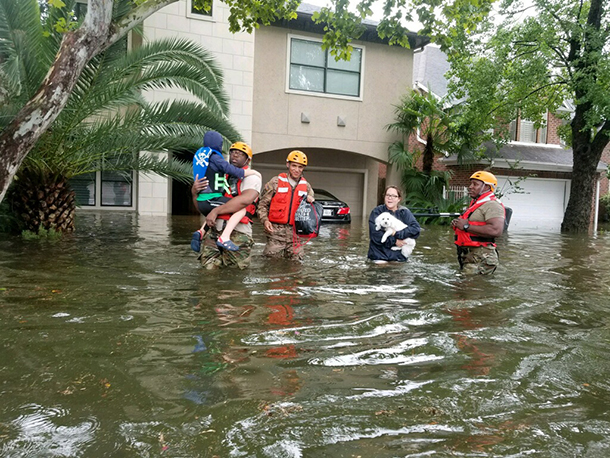
    While the aftermath of hurricanes continue to affect residents, such as those in Houston, Texas devastated by Hurricane Harvey (see image), research has found that the frequency and intensity of these latest storms have done little to shift public opinion about their connection with global warming. (Photo: Texas Military Department, Flickr CC BY-ND 2.0)
    While the aftermath of hurricanes continue to affect residents, such as those in Houston, Texas devastated by Hurricane Harvey (above), research has found that the frequency and intensity of these latest storms have done little to shift public opinion about their connection with global warming. (Photo: Texas Military Department, Flickr CC BY-ND 2.0)

    In Miami, which had a record 46 days in a row with a heat index above 100F (37C), there was no respite even in the nearby ocean, with a raging marine heatwave turning the seawater to a temperature more normally seen in hot tubs, raising fears that Florida’s coral reef will be turned to mush.

    “It’s been a shocking summer,” said Daniel Swain, a climate scientist at UCLA. “We know most of this is happening because of long-term warming of the climate system so it’s not surprising, sadly, but you still get shocked by these extremes. Records are not just being broken, they are being shattered by wide margins.”

    …

    https://www.theguardian.com/environment/2023/aug/26/us-summer-extreme-heat-wildfires-climate-crisis

  • ‘We Are Not Taxing the Very Wealthy Enough’: Runaway Inequality About to Get Worse

    Spread the love

    Original article by Jake Johnson republished from Common Dreams under Creative Commons (CC BY-NC-ND 3.0).
    People participate in a “march on billionaires” event on July 17, 2020 in New York City.
    (Photo: Spencer Platt/Getty Images)

    “Americans overwhelmingly prefer raising taxes on the ultra-wealthy and huge corporations to making cuts to critical programs like healthcare, medical research, and infrastructure,” said Sen. Elizabeth Warren.

    The United States’ astronomical levels of economic inequality are poised to become further entrenched in the coming years as what The New York Timesdescribed Sunday as “the greatest wealth transfer in history” gets underway, with the richest members of the Baby Boomer generation set to pass trillions of dollars in assets on to their descendants—often paying little or nothing in taxes.

    “Most will leave behind thousands of dollars, a home, or not much at all. Others are leaving their heirs hundreds of thousands, or millions, or billions of dollars in various assets,” the Times reported. “Of the $84 trillion projected to be passed down from older Americans to millennial and Gen X heirs through 2045, $16 trillion will be transferred within the next decade.”

    The newspaper added that thanks to the loophole-ridden U.S. tax system, “heirs increasingly don’t need to wait for the passing of elders to directly benefit from family money, a result of the bursting popularity of ‘giving while living‘—including property purchases, repeated tax-free cash transfers of estate money, and more—providing millions a head start.”

    “The trillions of dollars going to heirs will largely reinforce inequality,” the Times observed. “The wealthiest 10% of households will be giving and receiving a majority of the riches. Within that range, the top 1%—which holds about as much wealth as the bottom 90%, and is predominantly white—will dictate the broadest share of the money flow. The more diverse bottom 50% of households will account for only 8% of the transfers.”

    Don Moynihan, a professor at Georgetown University’s McCourt School of Public Policy, argued that the Times analysis further demonstrates that “we are not taxing the very wealthy enough.”

    The Times noted that individuals in the U.S. can pass nearly $13 million in assets to heirs without paying the federal estate tax, which only applies to around two of every 1,000 American estates.

    “As a result, although high-net-worth and ultrahigh-net-worth individuals could inherit more than $30 trillion by 2045, their prospective taxes on estates and transfers is $4.2 trillion,” the Times observed.

    The explosion of wealth inequality in the U.S. over the past several decades has prompted growing calls for systemic reform but little substantive action from lawmakers. In 2017, congressional Republicans and then-President Donald Trump contributed to the inequality boom by ramming through tax legislation that disproportionately benefited the wealthiest Americans.

    Now in control of the U.S. House, Republicans are trying to make the Trump tax cuts for individuals permanent and eliminate the estate tax altogether—a move that would give the nation’s wealthiest households another $2 trillion in tax breaks.

    In April, Sen. Bernie Sanders (I-Vt.) led several of his colleagues in offering an alternative proposal: Legislation that would impose progressively higher taxes on estates worth between $3.5 million and $1 billion, as well as a 65% levy on estates worth more than $1 billion.

    “At a time of massive wealth and income inequality, we need to make sure that people who inherit over $3.5 million pay their fair share of taxes,” Sanders said last month. “We do not need to provide a huge handout to multi-millionaires and billionaires. It is unacceptable that working families across the country today are struggling to file their taxes on time and put food on the table, while the wealthiest among us profit off of enormous tax loopholes and giant tax breaks.”

    Sen. Elizabeth Warren (D-Mass.), a co-sponsor of Sanders’ legislation, tweeted Monday that “Americans overwhelmingly prefer raising taxes on the ultra-wealthy and huge corporations to making cuts to critical programs like healthcare, medical research, and infrastructure.”

    “Congressional Republicans need to get on board,” the senator added.

    Morris Pearl, a former managing director at the asset management behemoth BlackRock and the chair of the Patriotic Millionaires, stressed in an interview with the Times that structural changes to the U.S. tax code—not just a crackdown on wealthy tax cheats—are necessary to slow the rise of inequality.

    “People are following the law just fine. I generally don’t pay much taxes,” said Pearl, whose group has warned that democracy “will not survive” unless the rich are taxed much more aggressively.

    Stressing the ease with which rich families in U.S. are able to pass assets on to their heirs tax-free, Pearl told the Times that he currently holds stock that his wife’s father, “who died a long time ago, bought in the 1970s,” an investment that “has gone from a few thousand dollars to many hundreds of thousands of dollars”—unrealized capital gains that are not subject to taxation.

    University of California, Berkeley economists Emmanuel Saez and Gabriel Zucman have estimated that $2.7 trillion of the $4.25 trillion in wealth held by U.S. billionaires is unrealized.

    “I’ve never paid a penny of taxes on all that,” Pearl said of his inherited equities, “and I may not ever, because I might not sell and then my kids are going to have millions of dollars in income that’s never taxed in any way, shape, or form.”

    Original article by Jake Johnson republished from Common Dreams under Creative Commons (CC BY-NC-ND 3.0).