People walking over Westminster Bridge with the Elizabeth Tower, or Big Ben, and the Houses of Parliament in the background in Westminster, central London, June 22, 2026
IT is time for a clampdown on lobbying abuses, the government’s ethics adviser said today.
In a report widely welcomed by campaigners, the Ethics and Integrity Commission (EIC) recommended a tenfold increase in amount rule-breaking lobbyists are fined, to £75,000.
The EIC also slammed the system for ensuring transparency by lobbyists as “wholly inadequate.”
The government should urgently create a register of all lobbying activity to replace the current regime, which does not require in-house lobbyists employed by tech giants, arms monopolies and foreign companies to detail their interactions with ministers, the commission said.
Unlock Democracy chief executive Tom Brake backed the report, saying: “The EIC is right — Britain’s lobbying rules are not fit for purpose.
“A single, searchable database bringing together government and lobbyists’ disclosures would be a big win for transparency.
“Instead of today’s fragmented picture, the public would have a clear view of who is lobbying government, on whose behalf and about what.”
We know think tanks can shape government policy. But we often have no idea who is paying them to do so
openDemocracy’s Who Funds You? report finds think tanks raking in millions ahead of general election | Getty
You don’t have to follow UK politics too closely to have spotted the names of a handful of think tanks cropping up again and again in the news.
There is little doubt these organisations exert significant influence. Just last year, the Institute for Economic Affairs (IEA) was reported to have shaped then-prime minister Liz Truss’s disastrous budget.
And sometimes it seems like only hours have passed between the publication of a Policy Exchange research paper and the adoption and implementation of its content as government policy. This is perhaps unsurprising given even Policy Exchange says its “status as the UK’s most influential think tank is widely recognised”.
The influence of high-profile think tanks is also apparent in the revolving door between them and the government. The former CEO of Taxpayers’ Alliance (TA), for example, took up a job in Priti Patel’s office when she was home secretary.
So we know think tanks can shape public policy. What is often far less obvious, though, is who is paying them to do so.
openDemocracy’s annual Who Funds You? report, published today, assesses how transparent think tanks’ financial disclosures were in the past year, grading them on a scale from A to E based on how much they publish about their funders.
I should mention, at this point, that I am the CEO of Unlock Democracy, a think tank awarded an A rating (the most transparent possible) in the report.
The report has revealed that UK think tanks have raised more than £101m to influence public policy in the run-up to the next general election – £25m of which came from ‘dark money’-funded think tanks, which are opaque about funders.
Policy Exchange and the IEA were both awarded D ratings, the second lowest.
There is nothing in either think tank’s mission that indicates any requirement for high levels of secrecy surrounding their funders. So why are they so shy about revealing their backers?
Is it because the public and ministers might view any advocacy of slower action on climate change or accusations of ‘nanny-statism’ over limits on sugar, salt and fat in processed foods differently if their accounts revealed they were partly funded by oil or gas companies, large food manufacturers or private individuals with an interest in promoting deregulation or privatisation? Of course, they might not be. But that’s the point – we don’t know.
Or is it because much of the media might stop describing them, rather generously, as ‘independent’ if the truth were known about from where and whom they received financial support?
Or is it because pressure would build for Parliament to force these think tanks to register as consultant lobbyists?
Given the IEA, Policy Exchange, the Taxpayers’ Alliance and other think tanks have declined to take voluntary action to reveal their sponsors, it is time for the government to step in and require them to declare funders contributing over £5,000 a year.
The media could help by refraining from describing think tanks whose funding remains as murky as the waters in our polluted rivers as ‘independent’.
We would all then be better equipped to establish whether the exhortations of the most influential think tanks will help deliver ‘a stronger society’ or something far less attractive.
Tom Brake is the Director of Unlock Democracy which campaigns for real democracy in the UK, protected by a written constitution.
…
The connection between Truss and the IEA goes back a long way: according to Tim Montgomerie, the founder of Conservative Home, the IEA had “incubated” Truss – and her key ally, former chancellor Kwasi Kwarteng – when they were junior MPs. With their assumption of high office, Britain was to become a “laboratory” for the IEA’s ideas, he said.
Although Truss’ relationship with the IEA is remarkable for its extreme proximity, politicians being close to particular institutions is nothing new. Politicians often find themselves drawn to particular interests and ideas, and so will gravitate toward institutions that reinforce or augment their thinking.
…
There is no requirement, either, for think tanks to be transparent about the sources of their funding. In fact, for some, it is impossible to find out who their big donors are. A comparative assessment of the transparency ratings of various think tanks can be viewed here: Unlock Democracy has the highest rating of openness; the IEA, meanwhile, has the lowest rating.
Without being able to follow the money, we cannot hope to understand the interests (commercial or national) that may underpin donations to think tanks, or determine whether those giving money are based in the UK. While it is expected that any foreign funds are most likely to come from rich donors or corporations rather than foreign governments, these donors may still have very close links with a foreign government and seek to shape UK policy in line with the interests of those Governments. Without the data, we just don’t know.
If a think tank advocates for a more relaxed attitude to climate change, the public, the media and Ministers are likely to scrutinise their proposals more carefully if they can see that an oil company is one of its major donors. The same can be said for a think tank that opposes measures to cut smoking when a tobacco manufacturer contributes a significant sum to its budget. Without full transparency of funding – something which the Government has already committed to ensure for the tobacco industry but has not yet delivered – this scrutiny cannot be guaranteed.
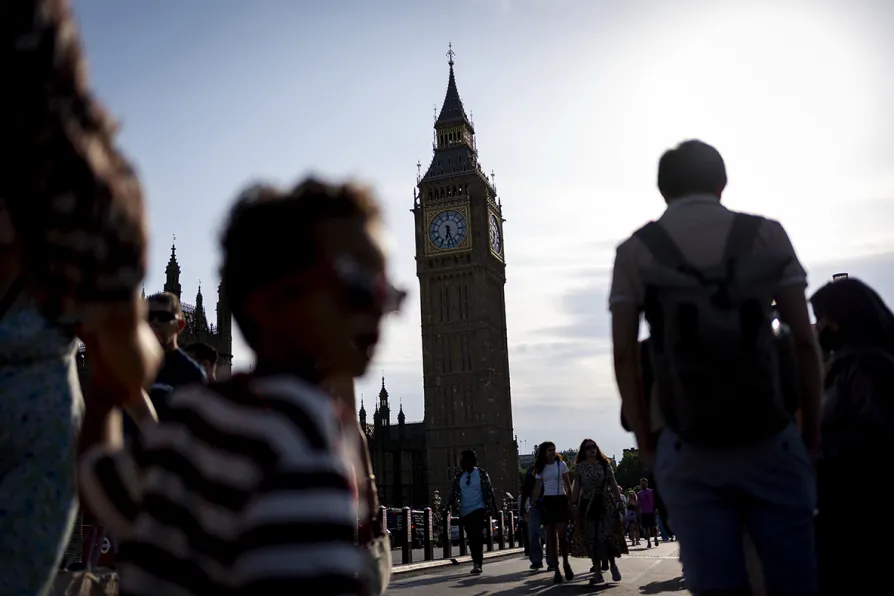
 People walking over Westminster Bridge with the Elizabeth Tower, or Big Ben, and the Houses of Parliament in the background in Westminster, central London, June 22, 2026