‘No End to Hell’: Disaster Spirals as Israeli Assault Traps 400,000 in Northern Gaza

Spread the love

Original article by Jake Johnson republished from Common Dreams under Creative Commons (CC BY-NC-ND 3.0). 
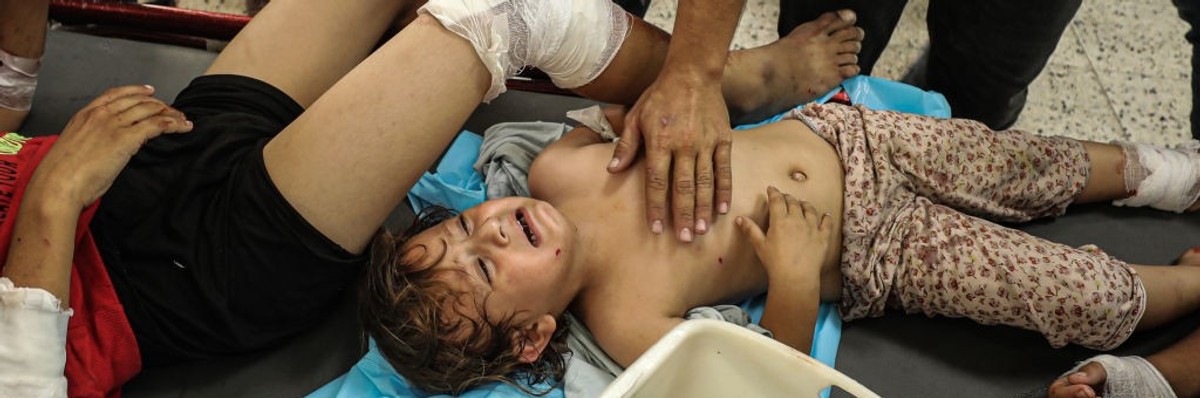
A Palestinian child who was wounded in an Israeli attack on Jabalia, Gaza receives treatment on October 9, 2024. (Photo: Dawoud Abo Alkas/Anadolu via Getty Images)

“The latest move to forcefully and violently push thousands of people from northern Gaza to the south is turning the north into a lifeless desert,” warned one aid worker.

The head of the United Nations agency for Palestinian refugees said Wednesday that at least 400,000 people are trapped in northern Gaza as Israeli forces ramp up their bombardment of the area, killing dozens and intensifying an already nightmarish humanitarian emergency.

“Northern Gaza: no end to hell,” Philippe Lazzarini, commissioner-general of the United Nations Relief and Works Agency for Palestine Refugees in the Near East (UNRWA), wrote on social media. “Recent evacuation orders from the Israeli authorities are forcing people to flee again and again, especially from Jabalia Camp. Many are refusing because they know too well that no place anywhere in Gaza is safe.”

Lazzarini said some UNRWA shelters and services in northern Gaza have been forced to shut down amid the Israeli assault “for the first time since the war began” over a year ago.

“With almost no basic supplies available, hunger is spreading and deepening again,” said Lazzarini. “This recent military operation also threatens the implementation of the second phase of the polio vaccination campaign for children. Children are as ever, the first and most to suffer. They deserve so much better, they deserve a cease-fire now, they deserve a future.”

Zero humanitarian aid has entered besieged northern Gaza in over a week, according to aid groups and the U.N., and incessant Israeli attacks have rendered the area’s hospitals largely inaccessible. Israeli forces have ordered the area’s hospitals to evacuate, endangering patients and healthcare workers.

The director of northern Gaza’s Kamal Adwan Hospital told Drop Site on Wednesday that he is refusing to comply with Israel’s evacuation order.

“As long as there are patients, I won’t leave,” said Dr. Hossam Abu Safia. “I’ve been here since the genocide started, and I am determined to continue helping my people.”

At least dozens of people have reportedly been killed in the Israeli military’s latest assault on northern Gaza, but emergency workers on the ground have said it’s impossible to determine the true toll given Israel’s ongoing bombing campaign, which has targeted the Jabalia refugee camp and other areas in the region.

Citing Gaza’s Civil Defense, The Associated Press reported Wednesday that an Israeli airstrike “hit a family home” in the Jabalia camp, “killing at least nine people”—including two women and two children.

“Footage shared by the Civil Defense showed first responders recovering dead bodies and body parts from under the rubble,” the outlet noted.

On Monday—the one-year anniversary of the Hamas-led October 7 attack and the beginning of Israel’s devastating response—Israeli forces ordered swaths of famine-stricken northern Gaza to evacuate, instructing residents to move south to Deir Al-Balah and Al-Mawasi, badly overcrowded so-called “humanitarian zones” that the Israeli military has repeatedly bombed.

After ordering most of northern Gaza to evacuate, Israeli forces fired on Palestinians desperately trying to flee.

Médecins Sans Frontières (MSF), also known as Doctors Without Borders, said Tuesday that Israel’s forced displacement of Palestinians is “turning the north of Gaza into an unlivable wasteland, effectively emptying out the whole north of the strip of Palestinian life.”

“The latest move to forcefully and violently push thousands of people from northern Gaza to the south is turning the north into a lifeless desert, while aggravating the situation in the south, where more than one million people have already been squeezed into a small portion of the Gaza Strip and live in deplorable conditions,” said Sarah Vuylsteke, an MSF project coordinator in Gaza.

“Access to water, healthcare, and safety is already almost nonexistent, and the thought of more people fitting into this space is impossible to imagine,” Vuylsteke added. “People have been subjected to endless displacement and relentless bombing for the past 12 months. Enough is enough, this must stop now.”

In a joint statement on Wednesday, a coalition of 18 aid groups warned that the ongoing Israeli assault “will worsen the already dire humanitarian situation in the north” and has already “prevented international and national humanitarian organizations from carrying out already very limited lifesaving aid operations.”

“The new orders have obstructed humanitarian actors from providing necessities such as health services, clean water, food, and nutrition services, taking away the remaining lifelines for the civilian population,” reads the statement signed by Oxfam, ActionAid, Islamic Relief, and more than a dozen other groups.

“Nowhere in Gaza is safe for civilians,” the coalition said. “Given the severity of the needs, humanitarian actors must be able to distribute aid and continue their work, without threat of displacement or military operations. The undersigned aid organizations urge all parties to the conflict to uphold their obligations to protect civilians and facilitate unhindered humanitarian access at all times.”

Original article by Jake Johnson republished from Common Dreams under Creative Commons (CC BY-NC-ND 3.0). 

Continue Reading‘No End to Hell’: Disaster Spirals as Israeli Assault Traps 400,000 in Northern Gaza

The infanticide that is inherent in Israel’s genocide

Spread the love

Original article by Iqbal Suleman republished from Middle East Monitor  under a Creative Commons Attribution-NonCommercial-ShareAlike 4.0 International License

Protestors take part in a National March for Gaza in London, England on September 07, 2024 [Photo by Leon Neal/Getty Images]

Just as head chopping was central to Daesh as an expression of its military prowess and power, killing babies and children is central to Israel as an expression of its dominance in occupied Palestine. No one loves head chopping more than Daesh, and no one loves killing children more than Israel. That’s the message which comes through loud and clear on a near daily basis.

Such barbarism is cloaked in a religious garb but everything that Daesh does is contrary to the human rights and justice at the core of Islam, and everything that Israel does is contrary to the human rights and justice enshrined within Judaism. Israel and Daesh profess to be Jewish and Islamic State respectively, but the savagery of their conduct is more satanic than Godly.

The very notion of killing babies and children should be anathema to every human being, so what is it about the Zionist psychology that actualises baby killing? After the 7 October cross-border incursion by Hamas, South Africa’s Sunday Times reported the words of Saar Ben Hamoo, a South African Zionist and ardent supporter of Israel: “We will drink the blood of your children in Gaza,” he declared. The Zionist Ben Hamoo is guilty of hate speech, but also gave expression to Zionist infanticide in advance of Israel launching its genocide in Gaza.

READ: Israeli government chose revenge, not hostages: Ex-Mossad chief

Prior to last October, no one could have imagined the mercilessness of Israeli Zionists and their supporters in their desire to commit infanticide. How did Ben Hamoo know that baby killing would feature prominently in the genocide being carried out in revenge for 7 October?

Was it a guess? Or wishful thinking?

It is natural for human beings to express love, kindness and gentleness towards a child, whether a relative or a stranger. Anyone who thinks about hurting a child or even tries to hurt a child is considered a degenerate. To deliberately break the limbs of a child or even think about killing a child is beyond comprehension for normal people. The killing of a child has to be the most repulsive act that a human being can commit, but this is exactly what Israeli Zionists have been doing and continue to do in occupied Palestine, without compassion, and with full impunity.

In October 2023, after the outbreak of the Gaza war, Al Jazeera reported that Israel kills a Palestinian child every fifteen minutes. A recent article for MEMO pointed out that, “Israel has killed, on average, two Palestinian children every day for the past 24 years.”

The Vice Chair of the UN Committee on the Rights of the Child (CRC), Bragi Gudbransson, told reporters on 19 September, “The outrageous death of children is almost historically unique. This is an extremely dark place in history.” The CRC monitors governments’ compliance with the 1989 UN Convention on the Rights of the Child, and released its findings about six governments, including the Israel regime.

The report states that the committee “is greatly concerned about the high number of children in Gaza killed, maimed, injured, missing, displaced, orphaned and subjected to famine, malnutrition and disease as a result of Israel’s “indiscriminate and disproportionate attacks.”

UNRWA chief says 70% of Gaza victims are children, women – Cartoon [Sabaaneh/Middle East Monitor]

A week ago, the Gaza health ministry published the names of 710 new-born Palestinian babies killed by Israeli forces during the ongoing war. Since 7 October, the confirmed number of Palestinian children killed by Israel is 16,700. Moreover, the International Committee of the Red Cross reported in June that more than 20,000 Palestinian children are missing in Gaza as a result of Israel’s military attack on the enclave. Most of these missing children are presumed dead under the rubble of their homes and other civilian infrastructure destroyed by Israel. At the very least, therefore, it is fair to say that the Zionist state has slaughtered 36,700 children in Gaza since last October alone.

READ: Gaza faces blood shortage as Israel strikes destroy blood bank of major hospital

Although UN Secretary-General Antonio Gutierrez has said that, “Gaza has become a graveyard for children,” his comment underplays the fact that Palestinian children in Gaza are not just dying, they are being killed. More than just a graveyard, therefore, Gaza has become a slaughterhouse for children.

According to UNRWA chief Philippe Lazzarini, children are “bearing the brunt” of Israel’s war“This is a war on children. It is a war on their childhood and their future.” Save the Children UK insisted that, “We simply cannot accept the violence that Palestinian children continue to face as normal.”

And yet the infanticide in Gaza has been normalised.

International medics who have no political affiliation to Palestine but have gone to work in Gaza for purely humanitarian reasons, provide us with eyewitness accounts of Gaza post-7 October. Professor Nick Maynard is one such doctor. He worked in both Al-Aqsa Hospital and Al-Shifa Hospital in Gaza. “We saw a lot of children with their arms or legs blown off,” he told the Irish Times. “There were no painkillers to give the children.”

More than four hundred Palestinians were slaughtered by the Israeli attack on Al-Shifa Hospital when the occupation state claimed that the hospital was being used by Hamas. This claim was rejected unequivocally by Maynard. “I have never seen any evidence of Hamas there,” he insisted.

Firoze Sidhwa is a 42-year-old trauma and critical care surgeon at San Joaquin General Hospital in North California. He went with the World Health Organisation to work at the European Hospital in Khan Younis in Gaza. What Sidwha told Bruno Macaes of the New Statesman about the killing of children in Gaza is chilling: “Most of them have been killed in explosions where a lot of them would have been trapped under the rubble. Some are going to die immediately with a concrete block hitting their head or something like that but a lot of them just had their leg pinned under the rubble and because there is no heavy moving equipment, there is no way to get to them, they slowly died of sepsis while buried in the dark tomb alone, freezing during the night, boiling during the day. It would take three, four, five days for them to die in this way. It’s horrific to think of the scale of their suffering.” Horrific indeed.

Israel has been deliberately targeting and killing Palestinian children in Gaza. “We had kids shot in the chest and shot in the head, in other words clearly deliberate, clearly targeted,” explained Sidhwa. Another doctor from a different hospital in Gaza told him how often he encounters children being shot by Israelis: “All the time, every day, kids were coming in who had been shot in the head and chest.”

Sidhwa and other doctors who worked in Gaza’s hospitals penned a letter to the Biden administration to advocate an end to the infanticide in Gaza. The letter included the damning indictment that, “Every one of us on a daily basis treated pre-teen children who were shot in the head and chest.”

Despite such clear evidence of infanticide, the US continues to support Israel and provide it with more weapons to keep its baby-killing machine running. One wonders when the vampire-like thirst of Zionists like Ben Hamoo for the blood of Palestinian children will be satiated. “Israelis must ask themselves if they’re willing to live in a country that lives on blood,” wrote Gideon Levy in Haaretz on 15 September.

How many more babies in Gaza have to be killed before the US and Europe stops arming the baby killers in Tel Aviv and instead impose sanctions on the genocidal apartheid regime? How will we answer on that day when we all return and stand before our Creator, the Most Just, and are asked, “For what crime were the children of Gaza killed?” Whatever we think we might say then, we must act now to bring this infanticide inherent in Israel’s genocide of the Palestinians to an end.

OPINION: Israeli and international dehumanisation of Palestinians

The views expressed in this article belong to the author and do not necessarily reflect the editorial policy of Middle East Monitor.

Original article by Iqbal Suleman republished from Middle East Monitor  under a Creative Commons Attribution-NonCommercial-ShareAlike 4.0 International License

dizzy: The equality drawn between Daesh and Israeli actions is fully understood. There are so many – possibly all – made for television fake manufactured terrorism events that can be similarly equivalenced or attributed.

Zionist Keir Starmer is quoted "I support Zionism without qualification." He's asked whether that means that he supports Zionism under all circumstances, whatever Zionists do.
Zionist Keir Starmer is quoted “I support Zionism without qualification.” He’s asked whether that means that he supports Zionism under all circumstances, whatever Zionists do.
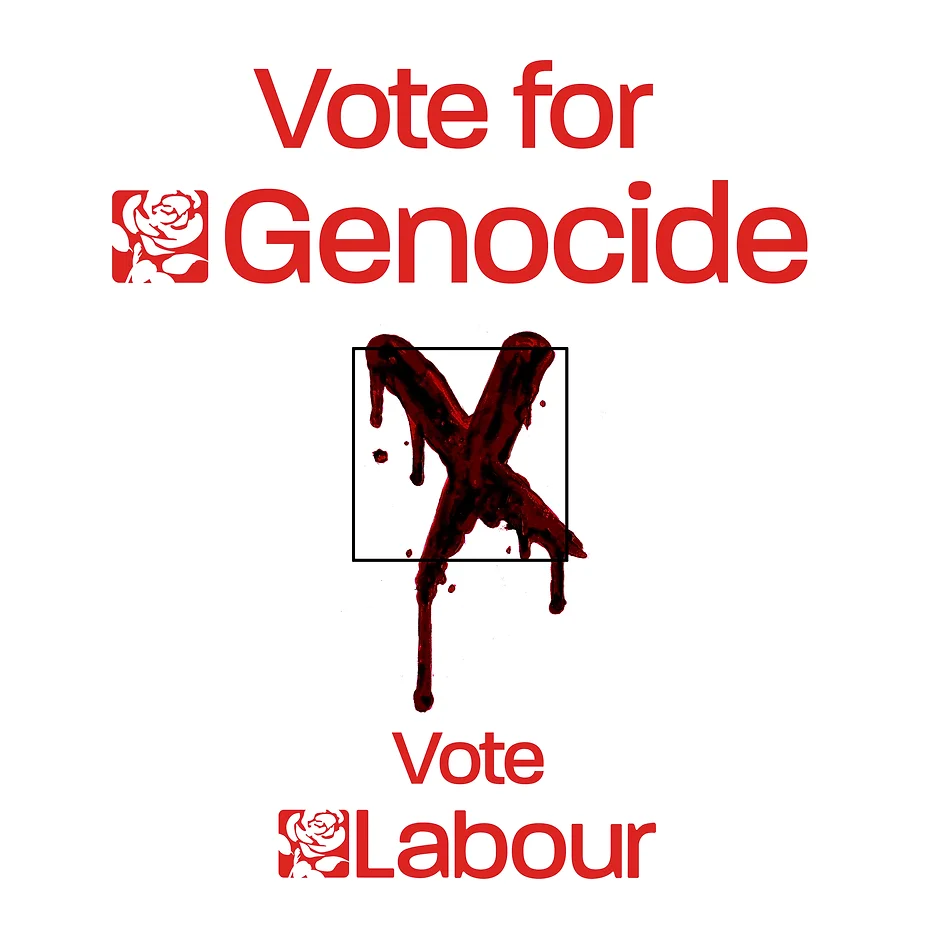
Vote For Genocide Vote Labour.
Continue ReadingThe infanticide that is inherent in Israel’s genocide

UNRWA: We are facing difficulties in bringing in the necessary winter supplies to the people of Gaza

Spread the love

Original article republished from Middle East Monitor is licensed under a Creative Commons Attribution-NonCommercial-ShareAlike 4.0 International License.

People are checking the destruction at a school run by the UN Relief and Works Agency for Palestine Refugees (UNRWA) that was previously hit by Israeli bombardment, in the Nuseirat camp in the central Gaza Strip on 15 July 2024 [ Majdi Fathi/NurPhoto via Getty Images]

The United Nations Relief and Works Agency for Palestine Refugees (UNRWA) said that it is making every possible effort for the people of the Gaza Strip to urgently provide them with the necessary winter supplies, including plastic sheets, tents, mattresses, mats, blankets and other basic supplies.

UNRWA explained in a press statement on Monday that it, along with all humanitarian organisations are facing great difficulties in bringing these supplies into the Gaza Strip, noting that once they arrive, they will be immediately distributed to those in need.

UNRWA urgently appealed for an immediate halt to the destruction of homes and shelters, demanding the opening of more crossings to the Gaza Strip to enable humanitarian agencies to deliver basic supplies to thousands of families in need.

UNRWA also stressed the need for an immediate ceasefire to ensure the safe and sustainable delivery of aid, and to give families a chance to rebuild their lives safely.

Israel is waging a devastating war on Gaza, killing and wounding about 135,000 Palestinians, most of them children and women. More than 10,000 are missing amid massive destruction and famine that has claimed the lives of dozens, in one of the worst humanitarian crises in the world.

READ: Netanyahu admits Israel’s failure to distribute aid in Gaza through tribes

Original article republished from Middle East Monitor is licensed under a Creative Commons Attribution-NonCommercial-ShareAlike 4.0 International License.

Continue ReadingUNRWA: We are facing difficulties in bringing in the necessary winter supplies to the people of Gaza

Conditions ‘Unspeakable’ as Israeli Onslaught Forces Over 1 Million to Flee Rafah

Spread the love

Original article by EDWARD CARVER republished from Common Dreams under Creative Commons (CC BY-NC-ND 3.0). 

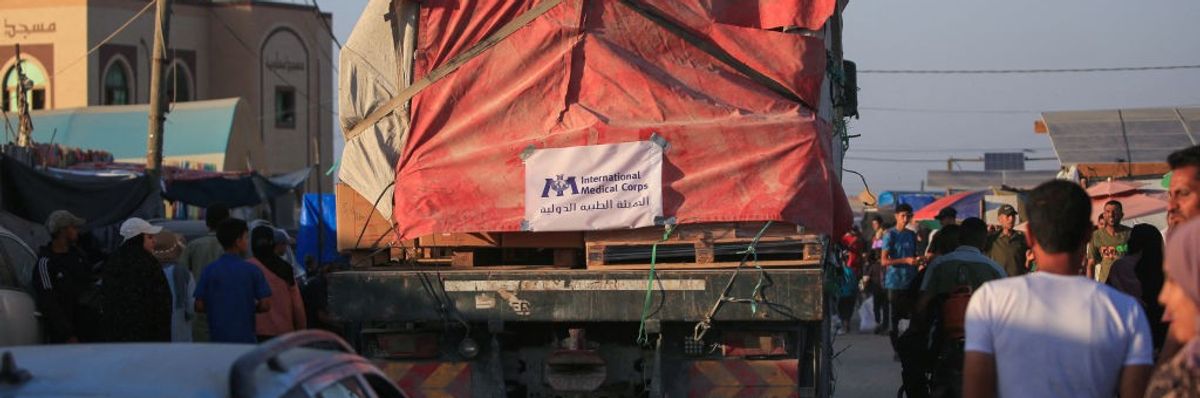
A truck is used to evacuate the International Medical Corps American field hospital in Rafah in the southern Gaza Strip on June 2, 2024.
 (Photo: Eyad Baba/AFP via Getty Images)

“Public health concerns are beyond crisis levels” in the areas where Palestinians have been forced to shelter, and “the sounds, the smells, the everyday life, are horrific and apocalyptic,” a U.N. official said.

More than 1 million Palestinians have fled Rafah as the city comes under a continued Israeli assault, forcing many to shelter in badly damaged buildings in the nearby city of Khan Younis, according to the United Nations.

The assault on Rafah, a city in the southern Gaza Strip, has left the displaced in “unspeakable” conditions, the United Nations Relief and Works Agency for Palestine Refugees in the Near East (UNRWA) said on social media. Approximately 1.7 million displaced people are now in Khan Younis and “Gaza Middle Areas,” according to UNRWA.

Khan Younis, which saw sustained fighting earlier in the war, still does not appear to be a safe zone: Israeli military vehicles entered the city in recent hours after advancing to two towns just east of Khan Younis with “heavy gunfire and artillery shelling,” Al Jazeerareported.

Since early May, the Israel Defense Forces (IDF) has issued evacuation orders for parts of Rafah, telling people to go to an “expanded humanitarian zone” in Al-Mawasi, located roughly 12 miles from the city.

Israeli forces subsequently launched attacks on designated safe zones, including in Al-Mawasi. Two strikes killed 45 and 21 people last week, mostly women and children. The first of the attacks, known as the “tent massacre,” was carried out with U.S. weapons, later analysis showed.

Many of the people fleeing Rafah are having to move for at least the second time during the war. Roughly 1 million Palestinians who’d been displaced elsewhere had gone to Rafah for refuge earlier in the war. They began to leave Rafah nearly four weeks ago as Israeli started its assault on the city. Before the war, Rafah’s population was about 275,000, but the governorate reached a population of 1.4 million by February as Israel ordered Palestianians to move there from northern Gaza. This meant squeezing more than half of Gaza’s prewar population of 2.3 million into one governorate, NPR reported.

More than 18,500 pregnant women have been forced to leave Rafah, while about 10,000 pregnant women remain in the city in “desperate conditions,” the U.N. reported.

“They’re exhausted, traumatized, dehydrated, and malnourished,” the U.N. Population Fund wrote on social media of pregnant women dealing with “Israel’s terrifying military operation in Rafah.”

“Pregnant women in Gaza are living in an unrelenting nightmare,” the agency added.

After successive operations last month, Israel now controls the entire Gaza-Egypt border. Humanitarian corridors have shut down, with many agencies and aid groups pausing operations in Rafah due to lack of supplies and security concerns.

“We are living and working precariously in the south,” Matthew Hollingsworth said, World Food Program (WFP) country director in Palestine, said late last week, the U.N. reported. The areas where the displaced have been forced to shelter are nightmarish, he said.

“Public health concerns are beyond crisis levels” and “the sounds, the smells, the everyday life, are horrific and apocalyptic,” Hollingsworth added.

More than half of the structures in the Gaza Strip have been damaged, destroyed, or possibly destroyed during the eight-month Israeli assault, the United Nations Satellite Centre (UNOSAT) concluded, in findings released Monday.

The mass displacement from Rafah continued as the Biden administration sought to arrange a cease-fire after after being pressured for months to end its military support for Israel’s onslaught. President Joe Biden called for an end to the war on Friday and backed a roadmap to a deal, which drew praise from Palestine defenders—the Council on American-Islamic Relations called it “long overdue” and a “positive step”—as well as criticism that it did not address the root causes of the conflict.

Israeli Prime Minister Benjamin Netanyahu said Monday that the deal would not stop the war, which could not end until “total victory” had been achieved, according to Israeli National News.

Original article by EDWARD CARVER republished from Common Dreams under Creative Commons (CC BY-NC-ND 3.0). 

Continue ReadingConditions ‘Unspeakable’ as Israeli Onslaught Forces Over 1 Million to Flee Rafah

Gaza war: ‘no evidence’ of Hamas infiltration of UN aid agency, says report – but US and UK dither on funding while famine takes hold

Spread the love
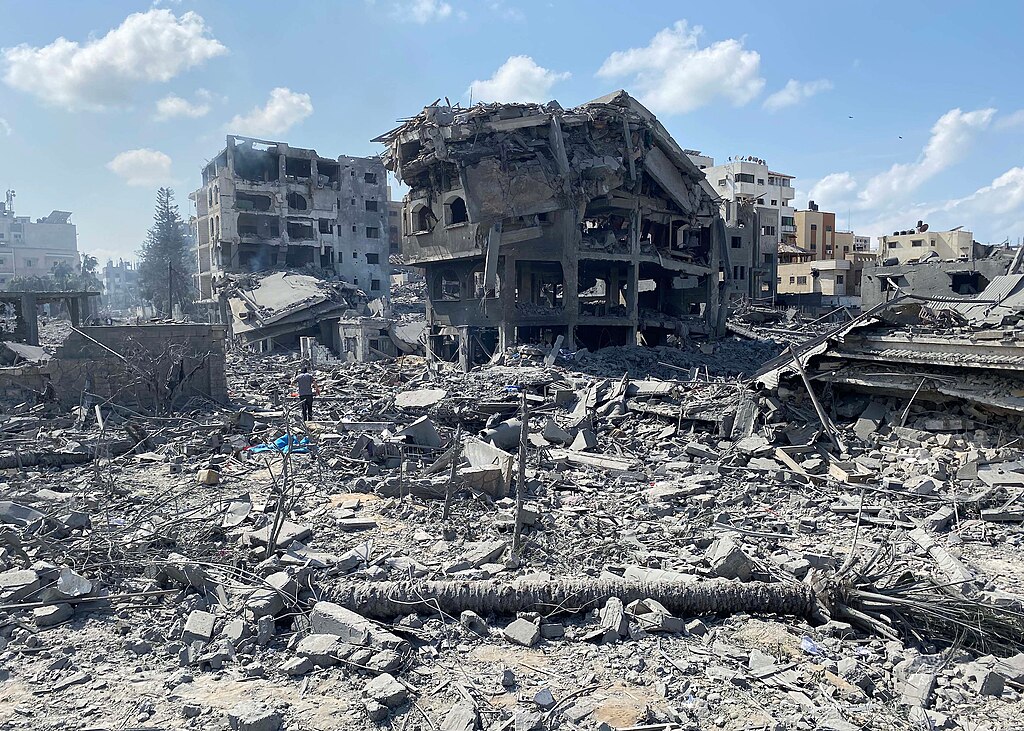
Palestinians inspect the damage following an Israeli airstrike on the El-Remal aera in Gaza City on October 9, 2023. Israel continued to battle Hamas fighters on October 10 and massed tens of thousands of troops and heavy armour around the Gaza Strip after vowing a massive blow over the Palestinian militants' surprise attack. Photo by Naaman Omar apaimages. licensed under the Creative Commons Attribution-Share Alike 3.0 Unported license.
Palestinians inspect the damage following an Israeli airstrike on the El-Remal aera in Gaza City on October 9, 2023. Israel continued to battle Hamas fighters on October 10 and massed tens of thousands of troops and heavy armour around the Gaza Strip after vowing a massive blow over the Palestinian militants’ surprise attack. Photo by Naaman Omar apaimages. licensed under the Creative Commons Attribution-Share Alike 3.0 Unported license.

Anne Irfan, UCL

Germany has become the latest country to resume its funding to Unrwa, the United Nations agency that provides essential relief services to nearly 6 million Palestinian refugees. The decision came after an independent review found no evidence to support Israel’s claim that the agency has been infiltrated by Hamas.

Germany is the agency’s second-biggest funder – and the move is especially striking in view of its extremely close political alignment with Israel, which is now coming under increasing strain.

All eyes are now on the US, the agency’s largest supporter, to see if it will reinstate the US$350 million (£280 million) it typically provides each year. Meanwhile in the UK, MPs have written to foreign minister David Cameron, demanding that funding is restored “without delay”.

Reaction from the Israeli government has been hostile. In a statement, Israel’s foreign ministry spokesman said that “this is not what a true and comprehensive investigation looks like”, adding “it is impossible to say where Unrwa ends and Hamas begins”. The Israeli government did not provide any further detail or evidence for this claim.

Israel alleged in January that 12 of Unrwa’s 13,000 employees in Gaza had participated in the October 7 attacks. Shortly afterwards, the government went on to claim that hundreds of Unrwa employees are members of Hamas or Islamic Jihad, in breach of the UN’s neutrality principles.

In response, Unrwa commissioner-general Philippe Lazzarini immediately fired nine of the accused 12 (of the other three, two are dead and one is missing). Meanwhile, the UN secretary-general, António Guterres, ordered an independent review into Unrwa’s neutrality practices.

That review was chaired by former French foreign minister Catherine Colonna and carried out by staff of Nordic research bodies – the Swedish-based Raoul Wallenberg Institute of Human Rights and Humanitarian Law, the Norwegian Chr. Michelsen Institute and the Danish Institute for Human Rights.

The report makes good reading for Unrwa. Colonna and her team described its work as an “indispensable lifeline” for Palestinians and noted the agency’s robust neutrality framework.

Crucially, they also found that Israel has provided no evidence for its allegations that a significant number of Unrwa employees belong to militant groups.

Donor response

In response to the original Israeli allegations, 16 governments paused or suspended funding to the agency. This threw Unrwa’s work into an escalating crisis. With the agency having already suffered from a serious financial deficit for many years, management warned that it could run out of money entirely in a matter of weeks.

The withdrawal of core funds heightened the humanitarian catastrophe in Gaza, where Unrwa provides essential services to 87% of the population, including food assistance to 1 million Palestinians. The UN special rapporteur on the right to food advised that the defunding made famine in Gaza inevitable.

Not long afterwards, a group of aid organisations confirmed that human-made famine has now taken hold.

With the Colonna report finding no evidence to support the allegations, serious questions are now raised about the speed with which so many states withdrew their funding. Many governments had already reinstated funding for Unrwa after Colonna’s interim report was released last month. These included Australia, Japan, Finland, Iceland,
Sweden and Canada.

Since the final report’s publication, EU humanitarian chief Janez Lenarcic has called on others to follow suit. But there are so far no signs that the US – Unrwa’s biggest donor for decades – will.

Congress recently passed a budget banning any financing of Unrwa for the next 12 months. This means there is little possibility of a policy reversal, even if the Biden administration was amenable to it. By the time that budget expires in March 2025, the next US presidential election may have returned the White House to Trump – who completely defunded the agency during his previous presidency.

The UK government has also so far resisted calls to reinstate funding to Unrwa, meaning there may be a limit to the Colonna report’s impact on this front.

Israel’s stance

The accusations levelled against Unrwa in January follow years of Israeli attacks on the agency. The prime minister, Benjamin Netanyahu, first called for Unrwa to be disbanded back in 2017 and has repeated his demand regularly since then.

Observing this, several observers, including Omar Shakir, the Israel-Palestine director at Human Rights Watch, have concluded that the Israeli discourse on Unrwa is really driven by the political objective of undermining Palestinian refugee rights.

They may now point to further evidence of this in the Colonna report, which notes that although Unrwa has provided Israel with its staff lists annually since 2011, the government had never previously raised any concerns.

The report also throws further doubt on Netanyahu’s post-war plan for Gaza, which proposes that Unrwa be shut down and replaced by other international aid groups. It is unclear how this would work in practice, as Israel has provided no specifics.

What’s more, Colonna and her team found that Unrwa actually has “a more developed approach to neutrality than other similar UN or NGO entities” – raising questions about whether neutrality is really the issue here.

Amid the political discussions, it is crucial not to lose sight of what is at stake. A man-made famine is threatening lives across the Gaza Strip. More than 2 million Palestinians are struggling to survive after Israeli attacks have killed more than 34,000 people over the past six months.

With Unrwa providing a critical lifeline, any decision about its funding has serious repercussions – with the most vulnerable people in Gaza paying the ultimate price.The Conversation

Anne Irfan, Lecturer in Interdisciplinary Race, Gender and Postcolonial Studies, UCL

This article is republished from The Conversation under a Creative Commons license. Read the original article.

Continue ReadingGaza war: ‘no evidence’ of Hamas infiltration of UN aid agency, says report – but US and UK dither on funding while famine takes hold