Tag: US

  • As Venezuela Court Probes Election Results, US Declares Victory for Right-Wing Opposition

    Spread the love

    Original article by JAKE JOHNSON republished form Common Dreams under Creative Commons (CC BY-NC-ND 3.0).
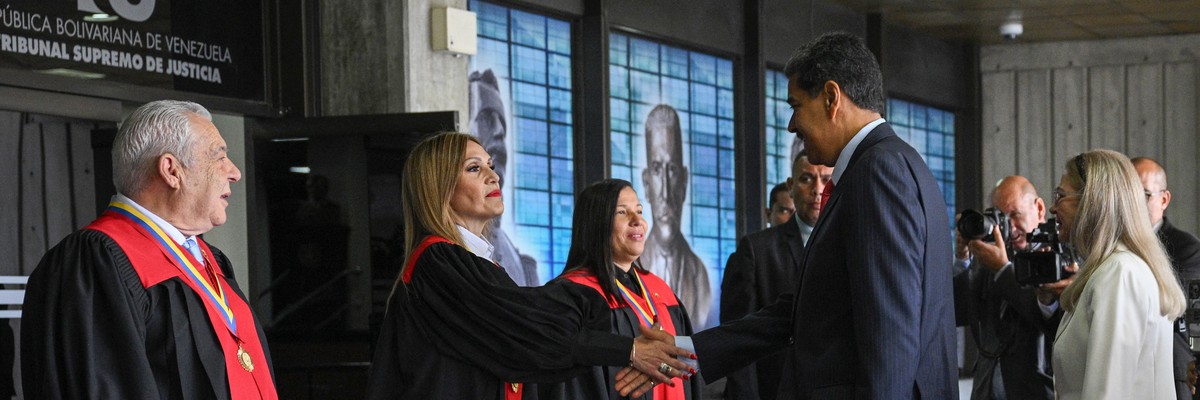
    Venezuelan President Nicolás Maduro greets the president of the country’s Supreme Court of Justice, Caryslia Rodríguez, in Caracas on July 31, 2024. (Photo: Federico Parra/AFP via Getty Images)

    Venezuela’s foreign ministry hit back at the U.S. State Department, accusing it of spearheading a “coup attempt.”

    The U.S. State Department has formally recognized opposition candidate Edmundo González as the winner of Venezuela’s election as the nation’s highest legal body began an investigation of the vote at the request of President Nicolás Maduro, who says he prevailed in the contest that is now under intense global scrutiny.

    In a statement released days after Venezuela’s election authority, Consejo Nacional Electoral (CNE), declared Maduro the winner with just over 51% of the vote, U.S. Secretary of State Antony Blinken claimed late Thursday that “it is clear to the United States and, most importantly, to the Venezuelan people that Edmundo González Urrutia won the most votes in Venezuela’s July 28 presidential election.”

    “Now is the time for the Venezuelan parties to begin discussions on a respectful, peaceful transition in accordance with Venezuelan electoral law and the wishes of the Venezuelan people,” said Blinken, the top diplomat of a country that has repeatedly attempted to overthrow the Maduro government and hammered the country’s economy with sanctions. “We fully support the process of reestablishing democratic norms in Venezuela and stand ready to consider ways to bolster it jointly with our international partners.”

    Venezuela’s Foreign Affairs Ministry quickly hit back, saying Friday that it “rejects the serious and ridiculous statements attributed to United States Secretary of State Antony Blinken, in which he pretends to assume the role of the Venezuelan electoral authorities, demonstrating that the U.S. government is leading the coup attempt against Venezuela, promoting a violent agenda against the Venezuelan people and their institutions.”

    Blinken’s statement accepting the right-wing opposition’s claim of a decisive victory came a day after Maduro asked Venezuela’s Supreme Tribunal of Justice on Wednesday to audit the presidential contest in the face of vocal concerns from regional leaders, election observers, and leading human rights organizations.

    In a joint statement issued Thursday, the presidents of Brazil, Colombia, and Mexico said they are “closely following” the vote-counting process and called on the CNE to “move forward expeditiously and publicly release the data broken down by voting station”—something the Maduro government indicated it will do but has yet to provide.

    Meanwhile, the Carter Center—an organization whose founder, former U.S. President Jimmy Carter, once praised Venezuela’s election system as “the best in the world”—argued that the 2024 contest “did not meet international standards of electoral integrity and cannot be considered democratic.”

    “In the limited number of polling centers they visited, Carter Center observer teams noted the desire of the Venezuelan people to participate in a democratic election process, as demonstrated through their active participation as polling staff, party witnesses, and citizen observers,” the group said in a statement earlier this week. “However, their efforts were undermined by the CNE’s complete lack of transparency in announcing the results.”

    The Carter Center also preemptively raised doubts about the legitimacy of the Venezuelan high court’s assessment of the election.

    “You have another government institution, which is appointed by the government, to verify the government numbers for the election results, which are in question,” Jennie Lincoln, who led the Carter Center’s election delegation to Venezuela, told The Associated Press. “This is not an independent assessment.”

    The tense and high-stakes dispute over the rightful winner of Venezuela’s election has set off violence in the streets of the nation’s capital and sparked fierce debate over the path forward for the Latin American nation’s government.

    Some on the progressive left, both in Venezuela and internationally, view the right-wing opposition’s claims to victory as yet another in a long line of attacks on Venezuelan democracy by pro-corporate and fascist forces, while others—including left-wing regional leaders such as Chilean President Gabriel Boric—have expressed deep suspicions about the legitimacy of the contest, particularly given the CNE’s lack of transparency surrounding the vote count. CNE has attributed the delayed rollout of full results to a cyberattack.

    “The international community, and especially the Venezuelan people, including the millions of Venezuelans in exile, demand total transparency of the election records and the process, and that international observers not affiliated with the government report on the accuracy of the results,” Boric wrote on social media. “From Chile, we will not recognize any result that is not verifiable.”

    Others in Latin America have stood by Maduro, including Bolivia’s government, which is led by a left-wing president who recently faced an attempted coup.

    Venezuela’s opposition, led by María Corina Machado, continues to insist it won Sunday’s election, producing its own website purporting to demonstrate that González defeated Maduro with 67% of the vote.

    On Thursday, Machado—who was barred from participating in the presidential contest—took to the pages of the U.S. business press to proclaim that she can “prove Maduro got trounced.”

    “Maduro didn’t win the Venezuelan presidential election on Sunday. He lost in a landslide to Edmundo González, 67% to 30%,” Machado wrote in an op-ed for The Wall Street Journal. “I know this to be true because I can prove it. I have receipts obtained directly from more than 80% of the nation’s polling stations.”

    Maduro has pledged to release the full election results in the coming days and blamed Machado and the U.S. for stoking unrest and violence.

    “If the U.S. government is willing to respect sovereignty and stop threatening Venezuela, we can return to dialogue,” Maduro wrote in a social media post on Thursday.

    “Venezuela is not your colony,” Maduro said.

    Original article by JAKE JOHNSON republished form Common Dreams under Creative Commons (CC BY-NC-ND 3.0).
  • Trump vs. Harris: what each presidency would mean for the green transition

    Spread the love

    https://www.energymonitor.ai/features/trump-vs-harris-what-each-presidency-would-mean-for-the-green-transition/

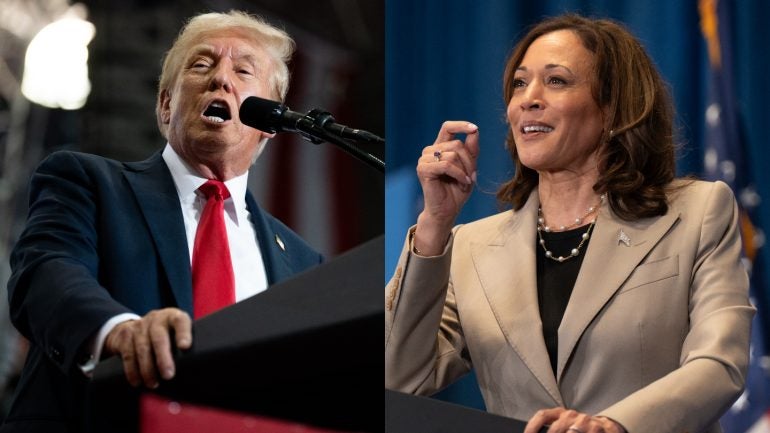
    Trump and Harris’s environmental policies chart starkly different climate futures for the US and the world. Credit (from left): Stephen Maturen/Getty Images and Allison Joyce/AFP via Getty Images

    The presidential candidates for the world’s largest fossil fuel producer have starkly different climate policies.

    All eyes are on the US elections in November this year, with the decision of the 160+ million voters in the country to play a major role in determining the world’s trajectory towards a net-zero future.

    According to the United Nations Environment Programme (UNEP), even with current pledges for emissions reduction, the planet is hurtling towards a rise of up to 2.9°C above pre-industrial levels by the end of the century. This would be catastrophic, and, one report indicates that the crisis could cost $178trn in global economic loss by 2070.

    Projected 2030 emissions must fall by an additional 28-42% to limit warming to 2°C, per UNEP estimates. This means that global decisions on decarbonisation in this decade will have ramifications for this century of humanity.

    …

    Trump dismisses ‘green new scam’

    Under a Trump administration, net-zero goals are expected to be in severe jeopardy.

    During his former presidency, Trump not only reversed more than 100 Obama-era environmental protections but also pulled the US out of the landmark 2016 Paris Agreement, through which countries are working together to keep global emissions below the threshold of a 2°C rise.

    During his campaign for re-election, Trump has dismissed rising environmental regulations as a “green new scam” and made no secret of his intentions to support the fossil fuel industry yet again.

    Speaking to a Fox News journalist at a town hall event in Iowa, he shared plans to expand oil drilling on “day one” and also promised to “drill, baby, drill” in his presidential nomination speech on 18 July.

    Moreover, at an April dinner at Trump’s Mar-a-Lago resort, he was reported to have asked oil industry executives to donate $1bn to aid his presidential campaign, citing benefits for them on avoided taxation and regulation as he plans to reverse environmental rules.

    The projections are dire. According to analysis by Carbon Brief, a climate policy and science website, Trump’s likely policies would add four billion tonnes of greenhouse gas emissions to the atmosphere, which would cause global climate damages worth more than $900bn, as per the latest US government evaluations.

    …

    Harris hailed a ‘climate champion’

    Harris, on the other hand, has a long history of enforcing climate action and is widely expected to carry on the legacy of the IRA.  

    She was an early co-sponsor for the Green New Deal, a comprehensive proposal for systemic decarbonisation in the US, including creating a 100% renewable energy grid and millions of green jobs.

    Most notably, ahead of her brief presidential election campaign back in 2019, Harris unveiled a $10trn plan to reduce US greenhouse gas emissions to zero by 2045, including policies such as working to eliminate fossil fuel subsidies.

    She also pledged to tax polluting industries and said she would establish an independent Office of Climate and Environmental Justice Accountability that would represent and support frontline communities, and monitor government compliance.

    “Success in the presidential election in November would likely lead to Harris continuing to build on this existing climate legislation and defend against Republican criticism,” says Gregory.

    …

    https://www.energymonitor.ai/features/trump-vs-harris-what-each-presidency-would-mean-for-the-green-transition/

  • Racist Donald Trump Says Kamala Harris ‘Happened to Turn Black’

    Spread the love

    Original article by JESSICA CORBETT republished from Common Dreams under Creative Commons (CC BY-NC-ND 3.0).
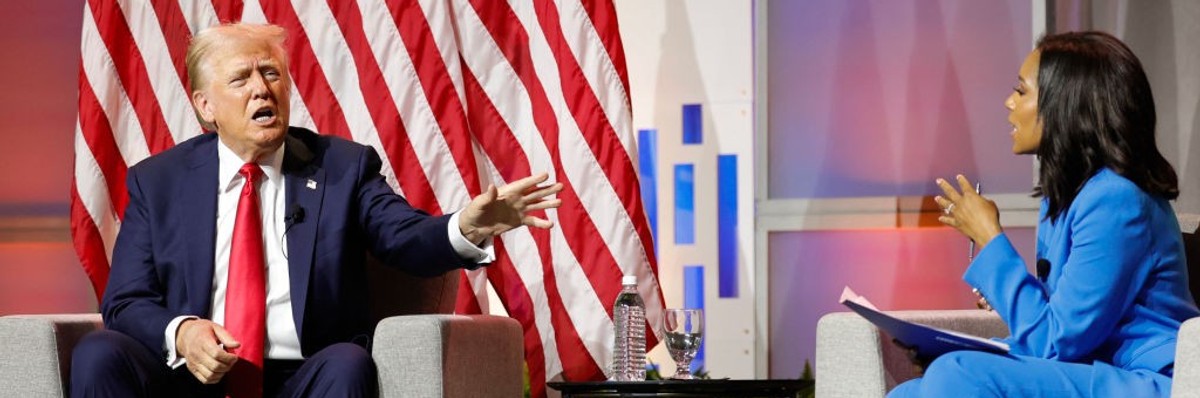
    Former U.S. President Donald Trump, the 2024 Republican presidential nominee, answers questions from moderator and journalist Rachel Scott during the National Association of Black Journalists convention in Chicago, Illinois, on July 31, 2024. (Photo: Kamil Krzaczynski/AFP via Getty Images)

    “This unhinged and shameful person should never be near the presidency again,” said Congressman Robert Garcia. “He’s a disgrace.”

    Former U.S. President Donald Trump’s long and well-documented history of racism garnered fresh attention on Wednesday after the Republican nominee’s comments about Vice President Kamala Harris, his presumptive Democratic opponent, at a convention for Black reporters.

    During Trump’s appearance at the National Association of Black Journalists (NABJ) event in Chicago, he was asked about racist claims from some Republicans that Harris is a “DEI hire,” a reference to the diversity, equity, and inclusion policies targeted by the GOP.

    “She was always of Indian heritage and she was only promoting Indian heritage,” Trump said. “I didn’t know she was Black, until a number of years ago, when she happened to turn Black, and now she wants to be known as Black. So I don’t know, is she Indian or is she Black?”

    Harris, whose nomination process is set to begin Thursday, was born to an Indian mother and Jamaican father. As she recalled in a 2019 debate, she was “a little girl in California who was part of the second class to integrate her public schools, and she was bused to school every day.” She went on to graduate from the historically Black Howard University.

    Washington Post columnist Karen Attiah, who announced on social media Tuesday that she “decided to step down as co-chair from this year’s #NABJ24 convention,” reported Wednesday that “the crowd has actually been gasping and upset at Trump’s attacks on NABJ, Kamala Harris’ racial identity, etc.”

    While some right-wing figures celebrated Trump’s comments about Harris’ identity, there was also significant backlash beyond the convention.

    Sharing a video on social media, Nebraska state Sen. Megan Hunt (D-8) said: “Unreal, racist, worth watching, and I have to say it’s a good thing that he’s out on the record in serious spaces talking about how he really feels. Keep it up, here’s your guy, conservatives.”

    Congressman Robert Garcia (D-Calif.) declared: “This unhinged and shameful person should never be near the presidency again. He’s a disgrace.”

    Harris campaign communications director Michael Tyler said in a statement that “the hostility Donald Trump showed on stage today is the same hostility he has shown throughout his life, throughout his term in office, and throughout his campaign for president as he seeks to regain power and inflict his harmful Project 2025 agenda on the American people.”

    “Trump lobbed personal attacks and insults at Black journalists the same way he did throughout his presidency—while he failed Black families and left the entire country digging out of the ditch he left us in,” Tyler continued, echoing the campaign’s comments ahead of the Wednesday event. “Donald Trump has already proven he cannot unite America, so he attempts to divide us.”

    “Today’s tirade is simply a taste of the chaos and division that has been a hallmark of Trump’s MAGA rallies this entire campaign. It’s also exactly what the American people will see from across the debate stage as Vice President Harris offers a vision of opportunity and freedom for all Americans,” he added. “All Donald Trump needs to do is stop playing games and actually show up to the debate on September 10.”

    Harris supporters and anti-racism advocates have anticipated such comments from Trump and his allies and expect them to continue. Sung Yeon Choimorrow, executive director of the National Asian Pacific American Women’s Forum, wrote Monday in a Common Dreams opinion piece, “As a society, we cannot simply brush off verbal attacks and racist misogyny as acceptable speech.”

    “Working towards real systemic change in a world that recognizes and addresses the real harm caused by anti-Asian and racialized misogyny,” she argued, “will take all of us speaking up against these kinds of attacks that have been allowed to go on for far too long.”

    Original article by JESSICA CORBETT republished from Common Dreams under Creative Commons (CC BY-NC-ND 3.0).
  • 7 Green Groups That Didn’t Back Biden Just Endorsed Harris as ‘Our Only Choice’

    Spread the love

    Original article by JESSICA CORBETT republished from Common Dreams under Creative Commons (CC BY-NC-ND 3.0). 

    Vice President Kamala Harris speaks at the American Federation of Teachers’ 88th National Convention on July 25, 2024 in Houston, Texas. (Photo: Montinique Monroe/Getty Images)

    “With a President Harris, we will have a chance to build the political power to move the bold climate initiatives we need.”

    Progressive climate and environmental advocacy groups on Wednesday stressed the threat posed by the Republican presidential ticket and endorsed Vice President Kamala Harris, the presumptive Democratic nominee for the November election.

    One coalition of six groups—350 Action, Center for Biological Diversity Action Fund, Clean Water Action, Climate Hawks Vote, Food and Water Action, and 350 Action, Center for Biological Diversity Action Fund, Clean Water Action, Climate Hawks Vote, Food and Water Action,350 Action, Center for Biological Diversity Action Fund, Clean Water Action, Climate Hawks Vote, Food and Water Action, and Friends of the Earth Action—cited Harris’ record as vice president and a U.S. senator from California.

    Despite his months as the presumptive Democratic nominee, none of the organizations had endorsed President Joe Biden before he dropped out of the race and backed Harris earlier this month.

    “Vice President Harris is a visible leader in the Biden-Harris administration’s successful work to address environmental injustice, tackle the climate crisis, hold polluters accountable, reduce water pollution, and ensure clean drinking water for all,” said Clean Water Action president and CEO Jeff Carter, emphasizing that her actions “have made a real difference in people’s lives.”

    Jeff Ordower of 350 Action highlighted that in addition to being “part of the administration that invested in renewable energy through the historic Inflation Reduction Act,” Harris “has a history of taking on Big Oil and advocating for environmental justice.”

    “As a global climate movement, we know Harris represents not just the ability to make progress in the U.S., but globally as well,” he added. “For those… who care about democracy, climate, and decreased corporate capture of our government, Kamala Harris is our only choice.”

    “For those… who care about democracy, climate, and decreased corporate capture of our government, Kamala Harris is our only choice.”

    Kierán Suckling, president of the Center for Biological Diversity Action Fund, similarly urged “everyone who cares about our planet, environmental justice, women’s rights, civil rights, and our democracy to get out and vote for Kamala Harris to be our next president.”

    Suckling also took aim at former President Donald Trump, the Republican nominee, declaring that “Harris will lead us toward a brighter future for our children and grandchildren, and put the nightmare of Trump behind us.”

    Trump—who earlier this month announced Big Oil-backed Sen. JD Vance (R-Ohio) as his running mate—has vowed to “drill, baby, drill” and roll back the Biden-Harris administration climate policies if fossil fuel executives pour money into his campaign.

    Although the U.S. is among five wealthy countries that have led a global surge in oil and gas development this year, Harris’ campaign has warned that “oil barons are salivating” over Trump’s potential return to the White House.

    A March study found that Trump’s plans for a second term would lead to 4 billion more tons of carbon dioxide being released into the atmosphere by 2030 when compared with the policies of Biden—who has passed the torch to Harris, whose online nomination process is set to start on Thursday.

    “Kamala Harris’ record provides a stark contrast with Donald Trump and the far-right, pro-polluter Project 2025,” said Wenonah Hauter, founder and executive director of Food and Water Action. “Of course, much more needs to be done, and Harris’ positions do not yet go far enough to tackle the existential threats to our food, water, and climate.”

    “But with a President Harris, we will have a chance to build the political power to move the bold climate initiatives we need,” Hauter emphasized. “Four more years of Trump and Project 2025 will further accelerate an already escalating climate crisis and eviscerate important protections for our food and water.”

    The six groups that backed Harris but not Biden were among the campaigners and scientists angered by the president supporting the Willow project and Mountain Valley Pipeline, continuing fossil fuel lease sales, skipping last year’s United Nations summit, and declining to declare a national climate emergency.

    As HEATED, which scooped the endorsement news, reported late Tuesday:

    Harris has already received endorsements from the so-called “Big Green” groups—the political arms of the League of Conservation Voters, the Natural Resources Defense Council, the Sierra Club, and Clean Energy for America. But those weren’t much of a surprise, as each group had already backed Biden’s reelection bid, and are traditionally loyal to Democratic Party politicians.

    The groups endorsing Harris on Wednesday, however, had so far held off on throwing their support behind Biden while he was running for reelection—in part because of the sitting president’s mixed record on climate policy.

    “It was very much a debate” on whether to endorse Biden, said one of the group’s staffers, who spoke on background because the Harris announcement is not yet public. But with Harris, the calculus has changed.

    “Because of her work in California and when she was a senator—a lot of us worked with her on creating the Environmental Justice for All Act—it gives us hope,” the staffer said. “She’s just a different person [than Biden], and has a stronger track record.”

    “Friends of the Earth Action is excited to endorse Kamala Harris for president of the United States,” the group’s president, Erich Pica said Wednesday. “We are not going back to an era dominated by fossil fuel interests, corporate greed, and disenfranchisement. Instead, we’re looking forward to building a healthy and just future with Vice President Harris.”

    For Climate Hawks Vote, this is the organization’s first presidential endorsement since its founding over a decade ago.

    “We’re breaking our usual rule of not endorsing in presidential elections, given our strong history with Kamala Harris (we endorsed her in her 2016 Senate race), her track record in taking on Big Oil and holding polluters accountable, and the extraordinary moment of this election,” explained RL Miller, the group’s president. “We are climate hawks who vote, and we’ll be flocking together for Kamala Harris.”

    The Green New Deal Network—which also never endorsed Biden—separately threw its support behind Harris on Wednesday.

    “What the Green New Deal really is, is understanding that everything’s connected,” the network’s national director, Kaniela Ing, toldInside Climate News. “Making sure our tax dollars aren’t just going to kill children abroad, but to build schools and hospitals here at home… Local control of resources, self-determination of our communities. That’s the vision Kamala Harris, given her background—being bused to schools, really being a product of a lot of our social programs—really understands.”

    One group that has not yet endorsed Harris but has certainly been attentive to both major party tickets is the youth-led Sunrise Movement. The organization warned earlier this month that the Republicans would cause “catastrophic and irreversible damage” to the climate if elected, and some members were arrested for a Monday protest Vance’s Senate office on Capitol Hill.

    That same day, Sunrise rallied outside of the Democratic National Committee headquarters in Washington, D.C. to urge Harris “to put forward a comprehensive plan on the economy and climate.”

    Sunrise is also part of a youth-led coalition—which includes Gen-Z for Change, March for Our Lives, and United We Dream Action—that wrote to Harris last week, “This is your chance to energize young people and our communities to vote, mount one of the greatest political comebacks in decades, and deliver a resounding defeat to the far-right agenda of Trump and Vance.”

    Original article by JESSICA CORBETT republished from Common Dreams under Creative Commons (CC BY-NC-ND 3.0). 

  • For decades, governments have subsidised fossil fuels. But why?

    Spread the love
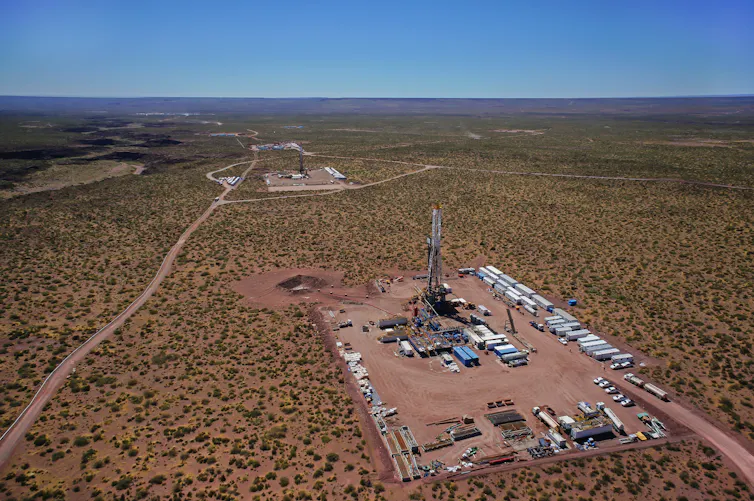
    Sobrevolando Patagonia/Shutterstock

    Bernard Njindan Iyke, La Trobe University

    Even now, decades after we first began trying to avert the worst of global warming, more than 80% of the world’s total energy comes from fossil fuels.

    You might think this would make fossil fuel production extremely profitable. But it’s not always the case. Much of the most accessible oil has already been extracted and burned. Many countries want to shore up domestic sources of fossil fuels to boost energy security. Energy price fluctuations and competition from new energy sources such as solar, wind and fossil gas have made it harder for some fossil fuel companies to make money, especially in coal.

    This is where fossil fuel subsidies come in. Australia gave A$14.5 billion in subsidies to major fossil fuel producers and consumers in 2023–24 alone.

    You might have wondered – why would some of the largest companies on Earth need subsidies? Here’s why.

    LNG tanker
    Australia’s surging liquefied natural gas industry has been boosted by government funding. KDS Photographics/Shutterstock

    Private companies, public money

    Globally, private companies dominate fossil fuel production, though fossil fuel-rich nations often have state-owned companies, such as Saudi Arabia’s Aramco and Russia’s Rosneft.

    Why would governments give fossil fuel companies money? Many reasons. But the most important is that wealthy countries have historically needed huge volumes of fossil fuels for manufacturing, transport and power. Many countries have some sources of fossil fuels inside their borders, but only a few are self-sufficient. This has enabled fossil fuel giants such as Saudi Arabia to become wealthy beyond belief.

    Many governments have used subsidies to boost their energy security and encourage local producers to seek out new sources of coal, gas and oil. These subsidies can make all the difference in making fossil fuel companies competitive internationally. For instance, Canada spent billions on subsidies to boost its oil sands and fracking projects.

    Subsidies were essential in the United States’ fracking revolution. Novel approaches to extracting fossil gas and oil – boosted by major tax incentives – turned the US from a major importer of oil and gas into a net exporter by 2019.

    You can see why the US did this. At a stroke, it went from being dependent on energy provided by foreign nations to being independent.

    Once subsidies are in place, they become very hard to remove. Indonesia’s lavish fuel subsidies now account for 2% of the nation’s GDP. When the national government tried to walk these back, there were riots.

    And there’s another reason, too. Fossil fuels are still playing an important role in boosting the economy in most nations. Subsidising them has long been seen as a way to maintain economic growth and stability.

    Globally, these subsidies are estimated at a staggering $10.5 trillion each year.

    This figure has grown sharply in recent years, after Russia’s invasion of Ukraine. As European nations tried to wean themselves off Russia’s gas, energy prices surged worldwide. In response, some countries introduced new subsidies to support businesses and consumers.

    The top-line figure of $10.5 trillion includes two types of subsidy – explicit (meaning real dollars change hands) and implicit (for example, governments building roads and railways to encourage crude oil transport).

    Explicit subsidies

    Explicit fossil fuel subsidies are direct financial incentives from governments to fossil fuel producers and consumers. These incentives come in different forms, such as tax breaks, direct payments, grants and price controls. All of them aim to reduce the financial burden associated with fossil fuel production and use.

    In Australia, explicit subsidies include fuel tax credits and exploration tax reductions. Fossil fuel companies can get subsidies to offset the losses they make during the years it takes to find and begin extracting new fossil fuels.

    In the US, oil and gas companies benefit from the oil depletion allowance, which permits them to deduct a percentage of their gross income from oil and gas sales as an expense. They can also claim tax deductions for intangible drilling costs, such as the wages of workers and material needed to find new sources of oil and gas.

    China, too, uses direct subsidies, discounted land-use fees, and preferential loans as explicit subsidies to boost coal production and consumption. The national government also supports fossil fuel consumption through direct payments to consumers.

    coal miners China
    China has used subsidies to encourage exploitation of its large coal resources. zhaoliang70/Shutterstock

    Implicit subsidies

    Implicit subsidies are often described as “imaginary”. That doesn’t mean they don’t exist, just that they’re not a direct transfer to directly paid to fossil fuel producers.

    For instance, the cost of burning fossil fuels is borne by the global community and the natural world, in the form of climate change, damage to human health and other harms. Most fossil fuel companies don’t have to pay a cent for the pollution their products cause – so in effect, they are being granted an indirect subsidy.

    Implicit incentives also include government investment in facilities such as transport networks, pipelines, oil refineries and port infrastructure, which will accelerate fossil fuel production and delivery. Think of the Middle Arm development in Darwin, funded by both the federal and territory government.

    Why are these subsidies still being paid?

    As the world grapples with a worsening climate crisis, fossil fuel subsidies are under great scrutiny.

    It’s politically difficult to withdraw subsidies once given. This is why governments around the world have instead begun to give subsidies and tax incentives to green energy developers, including the enormous $500 billion Inflation Reduction Act in the US, the European Union’s Green Deal, and China’s massive subsidies of green technologies such as electric vehicles and solar panels.

    The goal here is to make renewable energy and electrified transport steadily more affordable and competitive – just as fossil fuel subsidies did for oil, gas and coal.

    Bernard Njindan Iyke, Lecturer in Finance, La Trobe University

    This article is republished from The Conversation under a Creative Commons license. Read the original article.