Tag: wake-up call

  • ‘A Wake-Up Call’: Scientists Behind Study on Climate Feedback Loops Demand Global Action

    Spread the love

    Article by Jessica Corbett republished from Common Dreams under Creative Commons (CC BY-NC-ND 3.0).
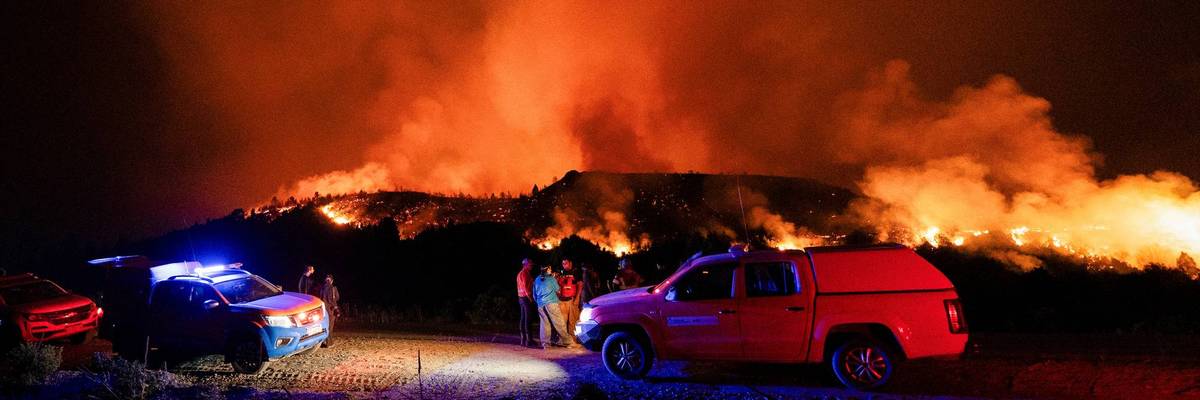
    Volunteers and firefighters work to extinguish a forest fire burning in the mountains of the rural area of Epuyen, in the Patagonian region of Chubut province, Argentina, on February 1, 2026.
     (Photo by Gonzalo Keogan/AFP via Getty Images)

    “This research makes clear that the Earth and climate system doesn’t stand still while we debate policy,” said a co-author of the new paper.

    On the heels of the United States setting new summer heat records and United Nations scientists warning that at least a temporary overshoot of the Paris Agreement’s 1.5°C target can no longer be avoided, researchers on Thursday published an alarming new study on climate feedback loops.

    For years, experts have feared that humanity’s continued reliance on fossil fuels that heat the Earth could lead to several “positive” feedback loops—or changes to natural systems that amplify global warming. The scientists behind the new paper in the journal Environmental Research focused on carbon dioxide and methane emissions from inland freshwaters, permafrost thaw, wetlands, and wildfires.

    RECOMMENDED…

    President Donald Trump posted on his Truth Social platform a map showing the US flag over not only the United States but also Canada, Greenland, Iceland, the Caribbean, Mexico, and multiple countries in Central America.​

    ‘Absolutely Bonkers’ and ‘Unacceptable’: Trump Posts Map Showing US Takeovers of Other Nations

    US-TRUMP-9/11-CEREMONY

    ‘Stolen Valor’: Trump’s Fabricated 9/11 Story Draws Immediate Scorn

    “Continued warming from greenhouse gases emitted from human activities threatens to feed further warming as permafrost, wetlands, and wildfires destabilize and respond by releasing carbon dioxide, methane, and nitrous oxide,” said co-author Ben Poulter, warming-induced emissions program director at Spark Climate Solutions, in a statement.

    “This study provides a critical look at the magnitude of the temperature response,” he explained, “and a call to action to accelerate the accounting and monitoring of warming-induced emissions to support pathways that phase out fossil emissions to stabilize the planet’s climate.”

    Lead author and Spark research scientist Sam Abernethy noted that “what surprised us was the size of the feedback.”

    “We found that natural systems could amplify global warming by 20-30%,” he said. In other words, these natural systems could add an estimated 0.2-0.4ºC of warming this century to any temperature rise tied to human activity.

    “This hidden multiplier is missing from the models guiding climate policy, so those models are likely underestimating how much warming is coming—and overestimating how much carbon we can still afford to emit,” Abernethy added.

    Permafrost is ground that remains fully frozen for at least two consecutive years, and the scientists who study it “have long warned that thawing soils would become a significant emissions source as the planet warms,” said co-author Christina Schädel, senior research scientist at the Woodwell Climate Research Center.

    “This paper shows that permafrost thaw accounts for half of the anticipated warming-induced emissions,” she pointed out. “Warming-induced emissions are already in motion, and they scale with every fraction of a degree. Every little bit of warming we can avert today matters for what the climate looks like in the long term.”

    Co-author Robert Jackson, a Stanford University professor and chair of the Global Carbon Project, similarly stressed that “the results are a wake-up call, and it’s imperative that they be included in the next generation of climate policies. Failure to do so will make meeting the world’s climate goals less and less likely.”

    The paper’s publication came just two months away from the next United Nations Climate Change Conference (COP31) in Türkiye, where firefighters are currently battling deadly blazes that have fueled calls for the country’s government to fight for rapidly phasing out coal, gas, and oil on a global scale.

    “This research makes clear that the Earth and climate system doesn’t stand still while we debate policy,” said Brian Buma, a co-author of the new study and senior climate scientist at Environmental Defense Fund.

    “Emissions from permafrost, wetlands, and wildfire could meaningfully erode our remaining time to warming thresholds—and they are unaccounted for in most scenarios,” Buma reiterated. “This means rapid fossil fuel emissions reductions are even more urgent than current projections suggest.”

    “The good news,” he added, “is that it’s in our hands—lower emissions now limit how severe these feedbacks become.”

    Article by Jessica Corbett republished from Common Dreams under Creative Commons (CC BY-NC-ND 3.0).

    Donald Trump urges you to be a Climate Science denier like him. He says that he makes millions and millions for destroying the planet, Burn, Baby, Burn and Flood, Baby, Flood.
    Donald Trump urges you to be a Climate Science denier like him. He says that he makes millions and millions for destroying the planet, Burn, Baby, Burn and Flood, Baby, Flood.
    Nigel Farage urges you to ignore facts and reality and be a climate science denier like him and his Deputy Richard Tice. He says that Reform UK has received £Millions and £Millions from the fossil fuel industry to promote climate denial and destroy the planet.
    Nigel Farage urges you to ignore facts and reality and be a climate science denier like him and his Deputy Richard Tice. He says that Reform UK has received £Millions and £Millions from the fossil fuel industry to promote climate denial and destroy the planet.
    Elon Musk urges you to be a Fascist like him, says that you can ignore facts and reality then.
    Elon Musk urges you to be a Fascist like him, says that you can ignore facts and reality then.
  • Greens urge government action in spending review to tackle dire warning on climate crisis

    Spread the love
    Green Party Co-leader Adrian Ramsay. Wikipedia CC.
    Green Party Co-leader Adrian Ramsay. Wikipedia CC.

    Green Party co-leader Adrian Ramsay MP said

    “The dire warning today from the World Meteorological Organization should serve as a wake-up call. With global temperatures predicted to breach internationally agreed safe limits in at least one of the next five years due to global inaction, we are facing a future filled with increasingly severe climate impacts.

    “The Spending Review is the government’s chance to act. It must prepare for the climate consequences we can no longer avoid while also accelerating the path to net zero.

    “In our submission, the Green Party has called for an additional £7 billion annually to be invested in making the changes we need to face the impact of climate change on all our lives – from flood defences to future-proofing homes and buildings. This is no longer an optional extra. It’s vital to protect lives and livelihoods.

    “Delaying now means greater costs, deeper disruption, and irreversible damage. The science couldn’t be clearer, and the warning couldn’t be louder — the Government must respond with urgency and ambition. The Spending Review is the chance to do it.”

    Orcas comment on killer apes destroying the planet by continuing to burn fossil fuels.
    Orcas comment on killer apes destroying the planet by continuing to burn fossil fuels.
  • UN Puts Out ‘Truly Damning Report Card’ for Climate Action Before Global Summits

    Spread the love
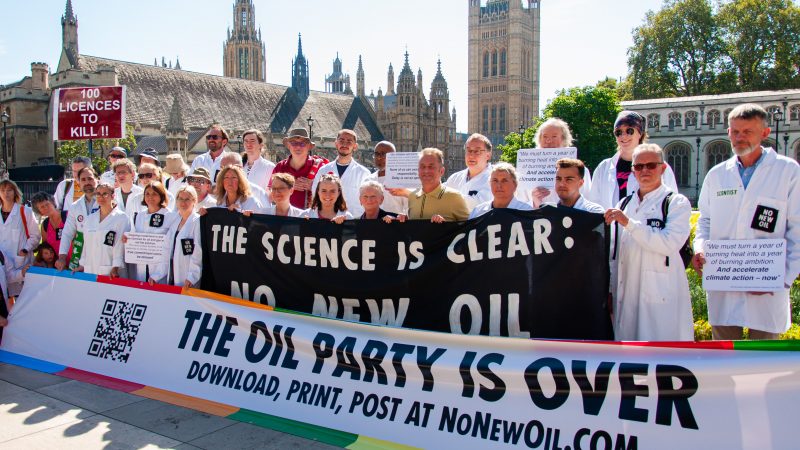
    Scientists protest at UK Parliament 5 September 2023.
    Scientists protest at UK Parliament 5 September 2023.

    Original article by JESSICA CORBETT republished from Common Dreams under Creative Commons (CC BY-NC-ND 3.0). 

    “This report is a wake-up call to the injustice of the climate crisis and a pivotal opportunity to correct course,” said one expert.

    “The United Nations’ polite prose glosses over what is a truly damning report card for global climate efforts. Carbon emissions? Still climbing. Rich countries’ finance commitments? Delinquent. Adaptation support? Lagging woefully behind.”

    That’s how Ani Dasgupta, president and CEO of the World Resources Institute, began his response to a “global stocktake” report released Friday by the U.N. Framework Convention on Climate Change (UNFCCC) ahead of two global summits.

    “This report is a wake-up call to the injustice of the climate crisis and a pivotal opportunity to correct course,” Dasgupta continued. “We already knew the world is failing to meet its climate goals, but leaders now have a concrete blueprint underpinned by a mountain of evidence for how to get the job done.”

    “There are a few bright spots worth celebrating,” he noted. “But overall, the report finds there are more gaps than progress—gaps that can only be erased by transformational change across systems like energy, food, land, and transport. The future of our planet depends on whether national leaders use this stark assessment as a catalyst for bold systems transformation.”

    “This report makes clear that President Biden is squandering precious time every second he fails to take bold action on fossil fuels.”

    The UNFCCC report comes nearly eight years after countries finalized the Paris climate agreement, which aims to keep global temperature rise this century below 2°C, relative to preindustrial levels, with a more ambitious target of 1.5°C.

    “The global stocktake was designed under the Paris agreement to assess our global response to the climate crisis and chart a better way forward,” the UNFCCC explained Friday. “The global stocktake is held every five years and is intended to inform the next round of nationally determined contributions to be put forward by 2025.”

    Data collection began in 2021, ultimately resulting in more than 170,000 pages of written submissions and over 252 hours of meetings and discussions. The new synthesis report summarizes 17 key technical findings from the discussions.

    “I urge governments to carefully study the findings of the report and ultimately understand what it means for them and the ambitious action they must take next,” said U.N. Climate Change Executive Secretary Simon Stiell. “It’s the same for businesses, communities, and other key stakeholders. While the catalytic role of the Paris agreement and the multilateral process will remain vital in the coming years, the global stocktake is a critical moment for greater ambition and accelerating action.”

    As University College London professor of climatology Mark Maslin explained, the report “makes it clear that the Paris agreement was a game-changer” but also countries’ greenhouse gas (GHG) emission reduction pledges are not in line with the 1.5°C target.

    “The U.N. estimates that… we need to reduce global GHG emissions by 43% by 2030 and further by 60% by 2035 compared to 2019 levels and reach net-zero [carbon dioxide] emissions by 2050 globally,” Maslin summarized. “This is a huge ask given that greenhouse gas emissions were at their highest level ever in 2022.”

    “All the technology exists to undergo the net-zero transformation but the huge increases in renewables, [electric vehicles], and batteries [have] to be even more rapid to make the huge cuts suggested by the U.N.—estimates are we need everything to happen five times faster,” he added.

    The UNFCCC publication was released in preparation for the U.N. Climate Change Conference (COP28)—scheduled for November and December in Dubai, United Arab Emirates—where the first global stocktake will conclude.

    “This global stocktake report provides clear direction on how we can meet the expectations of the Paris agreement by taking decisive action in this critical decade,” said COP28 President-Designate Sultan Al Jaber—whose selection for the summit post is controversial because he also heads the UAE’s Abu Dhabi National Oil Company. “We must urgently disrupt business as usual and unite like never before to move from ambition to action and from rhetoric to real results.”

    The report also comes just ahead of U.N. Secretary-General António Guterres’ Climate Ambition Summit scheduled to begin on September 20 in New York City. In response, activists have planned the March to End Fossil Fuels on September 17.

    Organizers of the NYC march are calling on U.S. President Joe Biden to stop federal approvals for new fossil fuel projects and repeal permits for “climate bombs” like the Willow project and the Mountain Valley Pipeline; phase out oil and gas drilling on public lands and waters; declare a climate emergency; and provide a just transition.

    Advocacy groups supporting the march issued fresh demands for action on Friday in response to the UNFCCC publication.

    “This report makes clear that President Biden is squandering precious time every second he fails to take bold action on fossil fuels,” said the Center for Biological Diversity’s Jean Su, who previously authored a document detailing how an emergency declaration would empower the administration to tackle the climate crisis. “Every day we’re seeing and feeling the harms of fossil-fueled climate change from extreme heat to deadly wildfires and devastating floods.”

    “As leader of the world’s largest oil and gas producer, Biden has more power than anyone to stop expanding the fossil fuels driving this deadly crisis,” Su added. “Ahead of the U.N.’s Climate Ambition Summit, thousands of people will be in the streets of New York on September 17 for the March to End Fossil Fuels. This is the perfect opportunity for Biden to declare a climate emergency, use all his executive powers to phase out fossil fuels, and finally secure a legacy as a climate leader.”

    “We need the biggest players to use their power to avert climate chaos, and to flex their muscle to protect human life rather than protecting corporate polluters.”

    Greenpeace International policy coordinator Kaisa Kosonen on Friday called out governments across the globe, declaring that “our house is burning down and the people with the power to save us are still sipping coffee pretending it’s not happening.”

    “No government can claim they didn’t know how to fix the climate problem,” she said. “They’ve been thrown a lifesaver again and again by scientists, and now we have this report. What the world is waiting for is action; leadership. We need the biggest players to use their power to avert climate chaos, and to flex their muscle to protect human life rather than protecting corporate polluters.”

    Looking toward COP28, Kosonen argued that “at this year’s U.N. climate summit, governments must agree to end the use of oil, gas, and coal in a fast and fair way and make the polluters pay. Leaders can no longer smile and claim they support the Paris agreement and its 1.5°C warming limit, if they fail to give fossil fuels an end date and continue their expansion.”

    “The solutions are ready—renewables are now the cheapest power source—but we’ve got to push the fossil fuel industry out of the way,” she stressed. “Fossil fuel corporations are holding us hostage, but their time’s up.”

    The UNFCCC report and resulting calls for action follow a series of scientific findings throughout the week that also generated demands for a swift end to fossil fuels, including that Antarctica is warming more quickly than models project, this summer is the hottest on record, and last year greenhouse gas concentrations, global sea level, and ocean heat content all hit record highs.

    Original article by JESSICA CORBETT republished from Common Dreams under Creative Commons (CC BY-NC-ND 3.0).