16 killed by police in Kenya on anniversary of historic anti-Finance bill protests

Spread the love

Original article by Nicholas Mwangi republished from peoples dispatch under a Creative Commons Attribution-ShareAlike 4.0 (CC BY-SA) license.
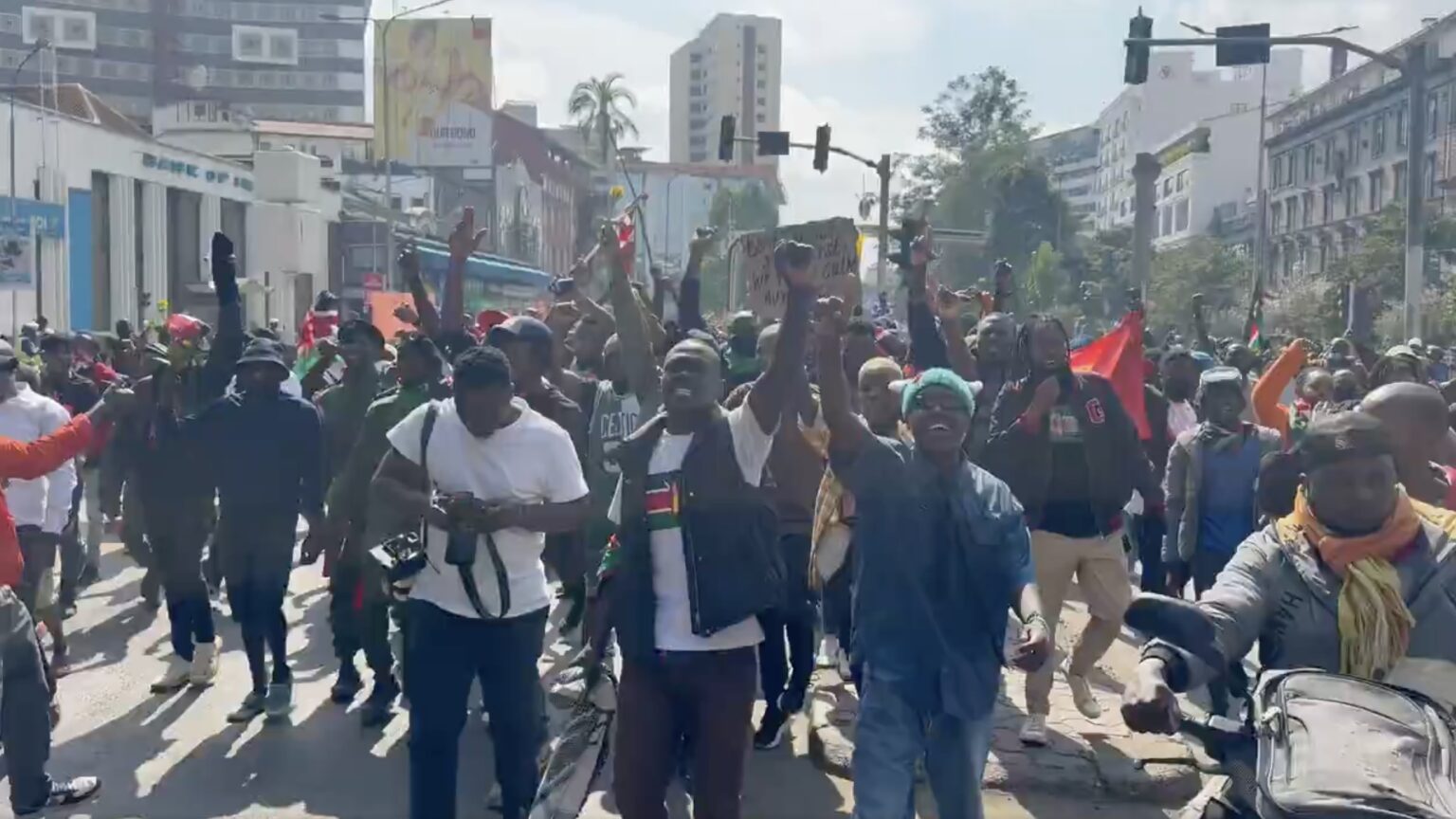
Revolutionary Youth League of Kenya on the streets of Nairobi on June 25. Photo: Screenshot

What was meant to be a solemn commemoration of the first anniversary of the historic anti-Finance Bill protests in Kenya turned chaotic on Tuesday as police clashed with demonstrators across several cities. Police used tear gas and water cannons against largely peaceful protesters, who had gathered to honor those killed during last year’s unrest and to demand justice over recent cases of police brutality and enforced disappearances.

At least 16 people were confirmed dead, with hundreds injured, after law enforcement agencies used excessive force to suppress the gatherings.

“The protests now symbolize indictments of the system itself – a system defined by authoritarianism, police violence, austerity, foreign domination, and the privatization of every public good. The state responded as expected – not with dialogue, but with bullets,” Rodgers, a grassroots organizer with the Nairobi chapter of the Social Justice Movement, told Peoples Dispatch.

The 2024 Finance Bill protests

Last year’s demonstrations, which began in response to the controversial Finance Bill 2024, led to a brutal crackdown that left over 60 young people dead, hundreds injured, and many arrested. The bill, championed by the government of President William Ruto, was widely criticized for introducing punitive taxes on essential goods and services amidst a cost-of-living crisis.

This year’s protests were organized to honor those who lost their lives during the 2024 demonstrations. However, they also served as a platform to raise alarm over recent developments, including the killing of a popular blogger in police custody and a worrying surge in abductions of activists and dissenters.

Read more: Amid economic hardship and repression, Kenyans reject the Finance Bill 2024

Media blackout raises alarm

In what many have called a blatant attempt to stifle freedom of the press, the Communications Authority of Kenya (CA) ordered a suspension of live TV coverage of the protests. Several local stations, including Citizen TV, NTV, KTN were either switched off or restricted, preventing real-time reporting of the police response and protest.

Many people also condemned the presence of infiltrators and hired goons among the protestors. These individuals were allegedly used to discredit the demonstrations by engaging in looting and property destruction tactics used as part of a wider strategy to delegitimize grassroots mobilization and participation in protests.

Despite the violent disruptions, the anniversary protests saw thousands of Kenyans across the country take to the streets. Demonstrators carried placards bearing the names of those killed in 2024 and chanted slogans demanding accountability, justice, and police reform.

Voices from the protests

In dialogue with Peoples Dispatch, Rodgers, a grassroots organizer with the Nairobi chapter of the Social Justice Movement, reflected on the deeper meaning behind the protests:

“The June 25 protest went beyond just being a memorial. It was a continuity of a political statement from the people that they will not fear to remain defiant in the face of systemic oppression. Exactly one year since mass uprisings shook the country in opposition to the punitive Finance Bill 2024 and broader economic injustice, the people came back to the streets with even more clarity and unity.”

We just arrived where comrade Alex Maasai was murdered by Ruto thugs and the Kenya Police, in the morning we visited Central police where Albert Ojwang’ was murdered my Lagat and his criminal gangs #OccupyUntilVictory pic.twitter.com/87b6SI5UiR

— Booker Ngesa Omole ☭ (@BookerBiro) June 25, 2025

Rodgers emphasized that what distinguished this year’s protests was not only their scale – reaching 27 of Kenya’s 47 counties – but the emergence of a clearly articulated political program from below.

Citing reports confirming that between 8 and 16 people were killed and over 400 injured, Rodgers also condemned the regime’s attempt to suppress the truth by shutting down live broadcasts, which he said “exposed repression on free speech and its fear of truth, transparency, and the voice of the people.”

“The people are now conscious that the crisis in Kenya is political as much as it is systemic. It is a crisis of legitimacy, where the ruling class governs through force and deception, abandoning constitutional obligations like Article 43 on economic and social rights.”

He described the protest movement as part of a broader class struggle – pitting a parasitic elite backed by global capital against a rising mass of organized working poor and peasants demanding land, food, dignity, freedom, and power.

“Yesterday was important because it proved this movement is not spontaneous. It is becoming strategic, conscious, and unafraid.”

Unmet demands and growing anger

In the days leading up to the anniversary, momentum had been building both online and offline. Young people, civil society groups, university students, and artists held vigils, digital campaigns, and forums across the country. Yet many of the core grievances that sparked the protests in 2024 remain unresolved:

  • Runaway corruption
  • A bloated government
  • Growing public debt
  • Youth unemployment
  • The erosion of democratic space

As the country grapples with the fallout of this week’s events, people are calling for an independent investigation into the killings, injuries, and abductions. They are also demanding the immediate reinstatement of press freedoms and the prosecution of those responsible for unlawful police actions.

The anniversary protests have made it clear: Kenya’s youth are not willing to be silent, and the demand for social justice is far from over.

Original article by Nicholas Mwangi republished from peoples dispatch under a Creative Commons Attribution-ShareAlike 4.0 (CC BY-SA) license.
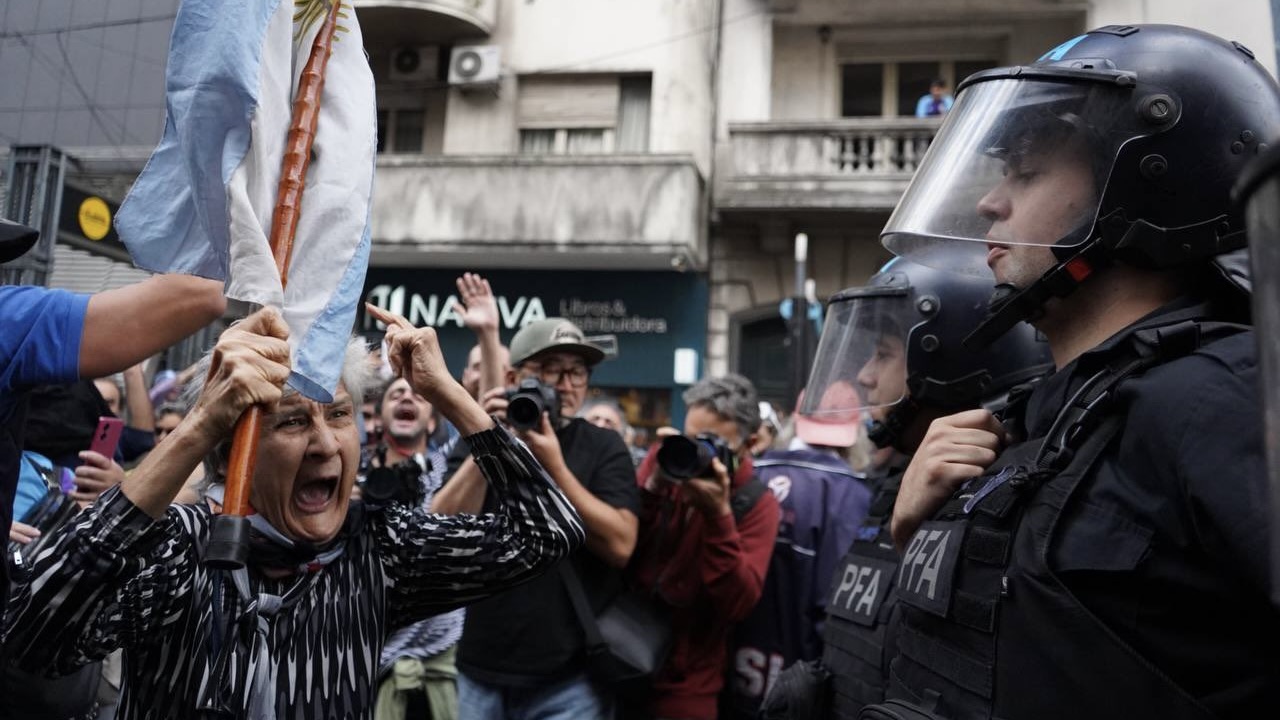
Continue Reading16 killed by police in Kenya on anniversary of historic anti-Finance bill protests

Milei’s government represses retirees’ march with extreme force

Spread the love

Original article by Pablo Meriguet republished from peoples dispatch under a Creative Commons Attribution-ShareAlike 4.0 (CC BY-SA) license.
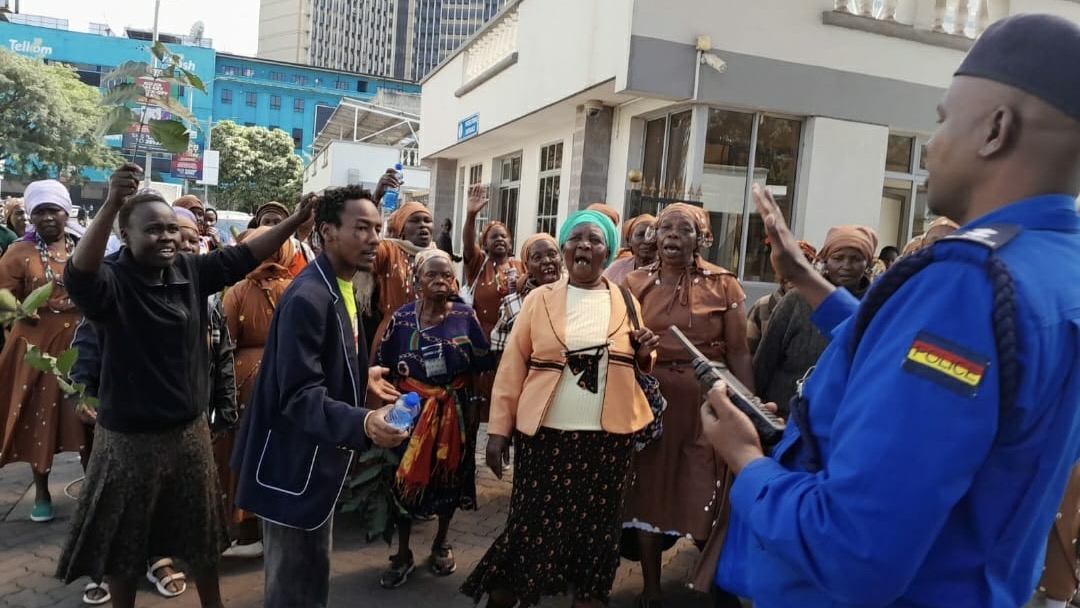
Interaction between a pensioner and a cop in Buenos Aires on March 12. Photo: Argentina Humana / X

More than a hundred people were arrested and dozens were injured in the police repression. Movements and press organizations have called for the resignation of the Secretary of Security, Patricia Bullrich.

On March 12, Javier Milei’s right-wing government brutally repressed a demonstration of retirees and their supporters, including fan clubs of football teams, demanding better living conditions. The Buenos Aires Police reported that at least 124 people were arrested in the protests outside Congress. For its part, the Emergency Medical Attention System (SAME) reported that, at the end of the day of protests, 46 people were injured.

Early on March 13, a judge in Buenos Aires, Karina Andrade, ruled to free 114 of the detainees arguing that the constitutional rights to protest, to manifest in democracy, and free speech, had been put at risk. She added that elderly people are “one of the most vulnerable sectors of our country” and they are protected.

Retirees demand to live with dignity

For the past several months, retirees have been protesting every Wednesday to demand an improvement in their living conditions. Thanks to Milei’s neoliberal adjustments, their quality of life has drastically declined.

According to data from the Ombudsman’s Office for the Elderly, a pensioner needs at least 1,200,523 pesos (USD 1,066) per month to cover their basic expenses. However, the minimum pension in February was 343,086 pesos (USD 321), including a bonus of 70,000 pesos (USD 65). The glaring gap between the cost of living and the income of pensioners has been the key motivating factor driving adults of 70-90 years old to take to the streets every week and risk brutal repression from Milei’s right-wing government.

According to Florencia Abreju, an Argentine journalist, “The cuts to medicines, the reduction of medical assistance, and the excessive increase of basic services have aggravated the situation even more. Why always with the retirees? The answer is clear: Milei’s government destroys the rights of all, starting with the weakest.”

Repression was ordered by Milei’s government

This Wednesday was not the first time that the Minister of Security Patricia Bullrich had ordered repression, but the level of force used by the police was certainly more extreme. Tear gas, rubber bullets, water cannons, pepper spray, blows with batons, etc., were some of the means of repression used by the Argentine police to confront the demonstrators, who were mostly retirees.

Pensioner dousing his face with milk after being tear gassed. Photo: Argentina Humana / X

One of the victims is photographer Pablo Grillo, who suffered a serious head injury while taking pictures of the protest and the repression. As seen in a video, the police fired a tear gas bomb at him which directly impacted his head, causing a severe wound that kept him on the verge of death at the Ramos Mejía hospital in Buenos Aires.

The Executive justified the widespread repression of the protests by citing the participation of several fan organizations of various Argentine soccer clubs, such as Chacaritas, Boca Juniors, River Plate, and Rosario Central, among others. According to Bullrich, the members of the so-called “barras bravas” are dangerous groups and this justified the forceful response of the National Police, even though several of the injured and detained do not belong to such groups. On her X account, the Security Secretary wrote “Our forces are deployed to enforce the protocol: traffic is not cut and the barras bravas, on the sidewalk.”

However, for Florencia Abreju, this type of rhetoric seeks to discredit the legitimate claims of the protesters. “The most alarming thing is that the government, through Bullrich and her officials, justified the repression and stigmatized the protesters… This discourse seeks to criminalize social protest and delegitimize the demands of people who take to the streets to defend their rights. The stigmatization of militancy and fierce repression are tools typical of an authoritarian government that is willing to do anything to stay in power.”

Several journalists demand Bullrich’s resignation

In response to the repression ordered by the Secretary of Security and in solidarity with the injured journalist, several journalists have begun calling for Patricia Bullrich’s resignation. The Association of Graphic Reporters of Argentina expressed in a communiqué “Institutional violence and impunity for crimes committed by the security forces have increased…Today [we demand] that the President [Milei] immediately remove [Patricia Bullrich] and place her and her subordinates at the disposal of the justice system. Otherwise, we make him morally, politically, and criminally complicit in the crimes committed by his [Security] Secretary.”

“They shot a colleague in the Congress…Tomorrow all the journalists in Argentina must be asking for the resignation of whoever ordered the shooting of the colleague,” said a journalist on the Crónica TV Show as images of the repression flashed on the screen.

For now, Milei shows no signs of backing down from his internal security policy of openly and forcefully repressing demonstrators opposing his neoliberal agenda. In this regard, Abreju points out “Repression, stigmatization, and authoritarian discourse are signs of a government that is in decline but does not hesitate to resort to excessive force to impose its agenda through terror. It is time to be alert and united in the face of this subjugation of rights. What is at stake is not only the future of retirees but democracy and the future of the nation. Today, as never before, it is necessary to defend what has been conquered and repudiate the systematic violence that seeks to install fear in the people with an already known recipe.”

Original article by Pablo Meriguet republished from peoples dispatch under a Creative Commons Attribution-ShareAlike 4.0 (CC BY-SA) license.
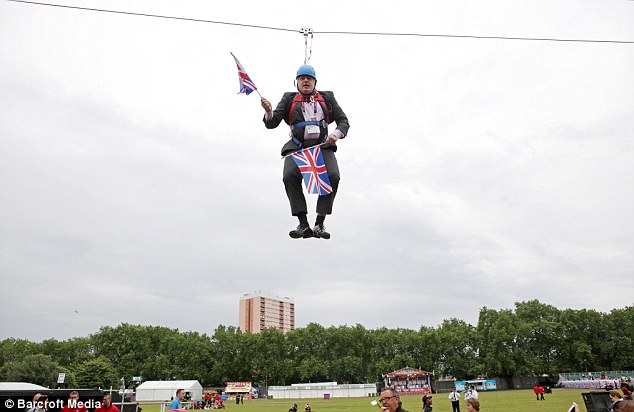
Continue ReadingMilei’s government represses retirees’ march with extreme force

Amid economic hardship and repression, Kenyans reject the Finance Bill 2024

Spread the love

Original article by Nicholas Mwangi republished from peoples dispatch under a Creative Commons Attribution-ShareAlike 4.0 (CC BY-SA) license.

Police heavily repressed the protests against the Finance Bill 2024 on Tuesday June 18. Photo: Mathare Justice Center

Hundreds were arrested and brutalized in Nairobi by police forces during protests against the government’s finance bill

On Tuesday June 18, the streets of Kenya’s capital were the site of a major showdown, as peaceful protesters advocating for the rejection of the Finance Bill 2024 were met with brutal repression by state forces. According to human rights groups in Kenya, between 300-400 protesters were arrested as they rallied against the punitive tax measures proposed by the government. The protest organized by a wide variety of civil society organizations and left groups was violently disrupted by police forces attempting to prevent the demonstrators from reaching the parliament building, where organizers had planned to launch a sit-in at 2 pm.

Despite the heavy-handed police attacks with water cannons, and tear gas, the protesters persisted throughout the day, ensuring their voices were heard by those in power and not allowing their right enshrined in article 37 of the constitution – “Assembly, demonstration, picketing and petition” to be compromised. This article outlines that every person has the right, peaceably and unarmed, to assemble, to demonstrate, to picket, and to present petitions to public authorities.”

The tension and public dissent exerted considerable pressure on the government. This was evident as President William Ruto convened an early meeting with members of parliament. The outcome of this meeting saw some “compromises” in the government’s stance on the contentious finance bill. The parliamentary finance committee announced the government’s U-turn at a press briefing on Tuesday, attended by the president and ruling party lawmakers. They announced the decision to withdraw certain proposed taxes, including those on cooking oil, mobile money services, and motor vehicles. The concession was clearly a direct response to the mounting public outcry nationwide.

However, the selective removal of these taxes has done little to appease the masses. Many view it as a strategic move by the government to placate the population while still pushing through other unpopular measures. The finance bill of 2024, in its entirety, remains widely rejected by the masses. The protesters’ message is clear: they demand a complete overhaul of the proposed financial policies, not just a piecemeal reduction of specific taxes.

Ruto’s neoliberal Finance Bill

The Finance Bill 2024, much like its predecessor in 2023, has stirred controversy and discontent across Kenya due to its stringent and, many argue, draconian proposals. This widespread dissatisfaction is deeply rooted within the broader context of an already high cost of living, which will be increased by the proposed new taxes. Beginning last week, Kenyans have voiced their disapproval with the finance bill by taking to social media, where they posted the contacts of Members of Parliament (MPs) and encouraged each other to reach out to their leaders, urging them to reject the bill.

The Finance Bill 2024, officially published by the National Assembly on May 9, 2024, outlines the Government of Kenya’s proposed tax measures for the financial year 2024-2025. Among the numerous changes proposed are significant amendments to Income Tax, Value Added Tax (VAT), and Excise Duty, as well as modifications to the administration of taxes in Kenya. One of the most contentious proposals in the bill is the imposition of a 16% Value Added Tax on financial transactions, and among basic commodities.

Many protested as they believe this will worsen their financial hardships rather than alleviate them. The protests are set to continue, with the third round of Parliament scheduled for June 20th.

The government’s justification for raising taxes, claiming it is necessary for Kenya to live within its means, is hypocritical given its extensive and often unnecessary expenditures. For instance, the government has increased its borrowing target for the fiscal year starting in July to Sh 597 billion, a substantial sum that raises questions about fiscal responsibility. A closer look at government spending reveals significant outlays that contrast sharply with its message.

According to Business Daily, the latest budget control data show a significant rise in travel perks for foreign and local trips, with an increase of Sh 1.62 billion from the Sh 12.4 billion spent in a similar period the previous year. The Parliamentary Service Commission’s spending has also surged by 18.5% to Sh 1.86 billion, and the bill for Members of Parliament (MPs) has grown by 4% to Sh 4 billion. Such figures highlight a pattern of lavish expenditure that stands in stark contradiction to the government’s narrative of financial prudence.

Further, the bill has received backing from the International Monetary Fund (IMF), despite widespread public outcry against it. This support from the IMF is not surprising as they did the same last year, and many Kenyans feel that the country has been effectively mortgaged to the institution. Historically, the IMF’s involvement has brought about economic policies and austerity measures that are seen as an attack on the working class and the marginalized peasants alike, often leading to increased economic strain for the average citizen.

Organized resistance poses more serious challenge to government

What distinguishes the current wave of protests from previous ones is the nature of their organization. Unlike past protests that were primarily mobilized by opposition party leader Raila Odinga against the government, these demonstrations have been driven by different organizations and particularly on online platforms, which have successfully translated their digital activism into tangible, on-the-ground action. This movement has seen an unexpectedly high level of participation from “Gen Z” and the middle class, groups that have traditionally been less involved in these demonstrations.

As the protests continue, the Kenyan government will continue to face mounting pressure to address the economic concerns of the masses. In the last two months there have been three major protests organized by grassroots movements among them against state demolitions on the informal settlements of the downtrodden coming to terms with the recent flood crisis that killed many and destroyed properties of unknown value. The fight for total liberation continues.

Nicholas Mwangi is a member of the Ukombozi Library in Kenya.

Original article by Nicholas Mwangi republished from peoples dispatch under a Creative Commons Attribution-ShareAlike 4.0 (CC BY-SA) license.

Continue ReadingAmid economic hardship and repression, Kenyans reject the Finance Bill 2024

Boris Johnson’s crap water cannons

Spread the love

Boris Johnson’s water cannon farce reveals why he will never be prime minister by Adam Bienkov

“…

The inspectors found the weapons have as little as two years’ operational life left before they have to be turned into scrap. Recurrent problems with the pump and the “critical failure” of the tank would be hugely costly to repair and there could be significant problems finding spare parts for vehicles that are now at the end of their operational life. Day-to-day operation and maintenance of the weapons would also be complicated by the lack of any manuals available in English. Meanwhile the time needed to make essential repairs could leave the weapons out of service for significant periods of time.

Bullingdon Tory idiot Boris Johnson

In short, the Home Office found the weapons to be seriously dangerous, hugely difficult and expensive to maintain and operate, and shortly in need of a trip to the scrap yard.

Given the majority of these problems were public knowledge in Germany before Johnson agreed to buy the weapons, it is incredible that he still went ahead anyway. It is especially baffling given that he was repeatedly warned against buying the weapons, not just by his opponents, but by his own former policing deputy and his own party on the London Assembly. Last year, when Johnson pushed ahead with their purchase anyway, a senior member of his City Hall team told me that Boris would “live to regret” his decision. How right they were.

In fact, Johnson’s more sensible advisers aside, the only people to have come out of this sorry saga well are the negotiators of the German police force. The ingenuity and financial sense of the Germans has been somewhat called into question in recent weeks. However, they can hardly be faulted for their prudent management of this particular deal. It is difficult at the best of times to dispose of obsolete and life-threatening military hardware. But for the Germans to get a foreign politician to actually pay 300,000 euros for the privilege of disposing of the defunct weapons for them was a particularly impressive feat.

…”

Continue ReadingBoris Johnson’s crap water cannons