This work by Middle East Monitor is licensed under a Creative Commons Attribution-NonCommercial-ShareAlike 4.0 International License.
Israeli forces carrying weapons, raid Nablus city of West Bank, Palestine on April 23, 2026. [Nedal Eshtayah – Anadolu Agency]
A top Democrat on the Senate Foreign Relations Committee, Sen. Jeanne Shaheen, has placed a hold on a $2.8 billion weapons sale to Israel, The Hill reported on Friday.
Shaheen has voiced frustration that Israeli Prime Minister Benjamin Netanyahu has not addressed concerns raised by Democratic lawmakers over civilian deaths in Gaza, Israeli strikes in Syria, and growing violence against Palestinians by extremist Israeli occupiers in the West Bank.
The proposed weapons package includes 40,000 one-ton bombs. The Biden administration had previously withheld similar munitions due to concerns over their use in Gaza and the resulting civilian casualties.
Palestinian health officials estimate that around 70,000 Palestinians have been killed during the three-year war between Israel and Hamas since October 2023, though the figures do not distinguish between civilians and militants.
As the Senate Foreign Relations Committee’s top Democrat, Shaheen can place a hold on major arms sales while the State Department addresses lawmakers’ concerns. Semafor first reported that she imposed the hold in July.
Her House of Representatives counterpart, Rep. Gregory Meeks, also announced Wednesday that he had placed a hold on the sale, citing concerns about whether Netanyahu’s government would use US-supplied weapons in accordance with international humanitarian law and US law.
Asked by CNN about Meeks’ decision, Shaheen said: “All of us share concern about what Israel is doing … what they’re doing in Gaza, their bombing in places like Syria, and what that means for any peaceful solution in the Middle East.”
“Netanyahu needs to hear from America that we don’t like what he’s doing. We don’t like what’s happening in the West Bank where settler violence is killing Palestinians, sending them out of their homes, disrupting basic infrastructure. And the Netanyahu administration has basically done nothing to address that,” she added.
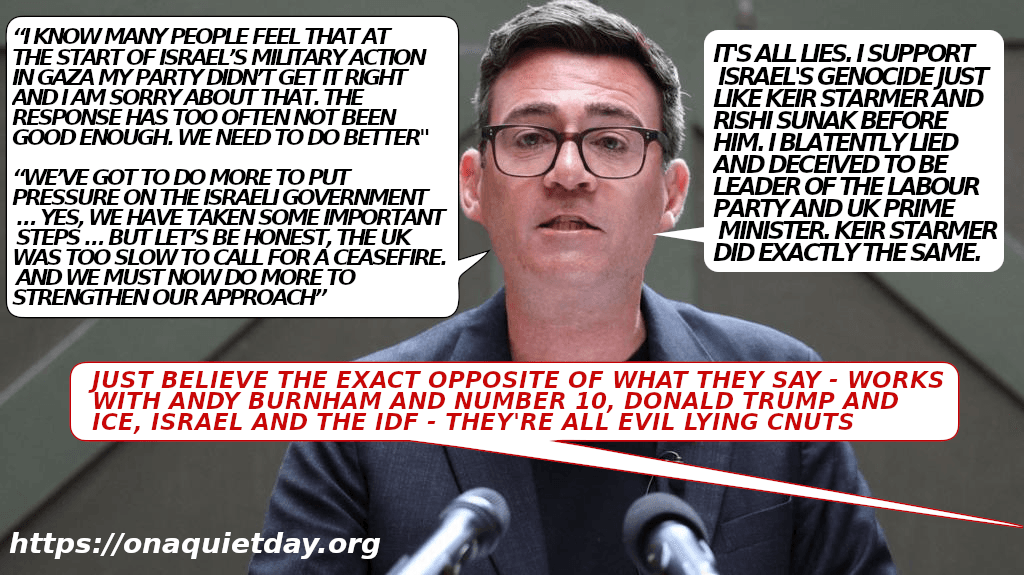
UK Prime Minister Andy Burnham admits to blatently lying and engaging in deception to become leader of the UK Labour Party and Prime Minister.Orcas discuss rotting brain, front Orca says Sundown Syndrome is a dead givaway and he wishes someone would Lock Him Up
The UK government has been urged to go further on sanctions against Israeli settlements in the West Bank, with senior lawyers warning that current measures “fall far short” of Britain’s obligations under international law.
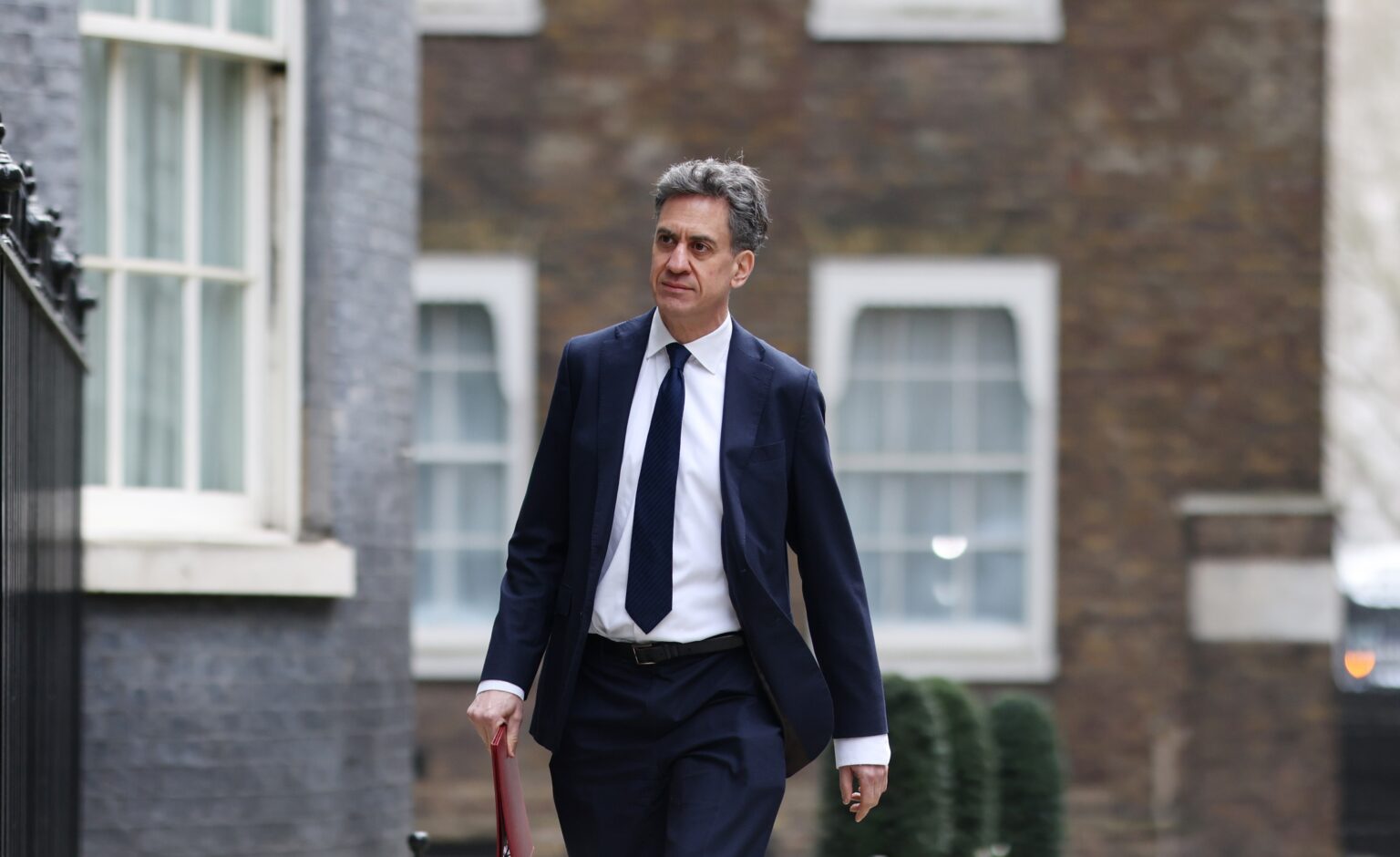
Foreign secretary Ed Miliband last week announced a ban on the trade of goods with illegal Israeli settlements in the occupied West Bank, a move seen as a major shift in UK-Israel relations. Canada and France announced similar actions the same day.
But 130 top lawyers and legal academics have written to prime minister Andy Burnham to say the measures do not meet the UK’s legal obligations, including those set out in a 2024 ruling by the International Court of Justice.
…
They said they welcomed the new measures but that the UK must now extend sanctions to more sectors of Israel’s economy, prevent public bodies investing in settlements and enforce a full arms embargo.
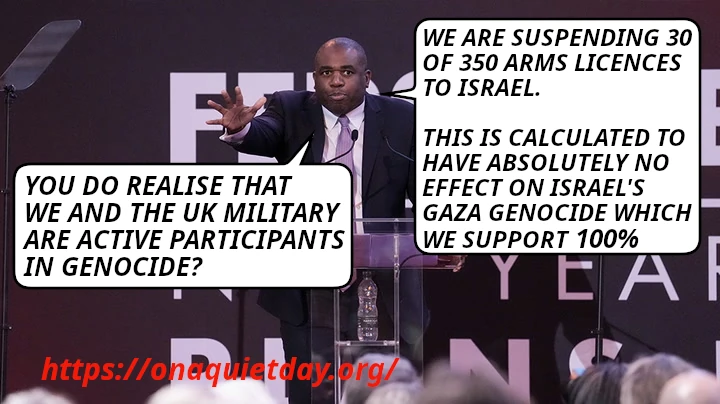
UK Prime Minister Andy Burnham admits to blatently lying and engaging in deception to become leader of the UK Labour Party and Prime Minister.Genocide denying [former] UK Foreign Secretary David Lammy says that UK is suspending 30 of 350 arms licences to Israel. He also confirms the UK government’s support for Israel’s Gaza genocide and the UK government and military’s active participation in genocide.Orcas discuss Genocide-supporting and complicit Zionists. Donald Trump, Keith Starmer, David Lammy, Rachel Reeves, Angela Rayner and Wes Streeting are acknowledged as evil genocide-complicit and supporting cnuts.
10 September 2026 – Please find below a letter from Dr Natalie Roberts, Executive Director of Médecins Sans Frontières / Doctors Without Borders to the Prime Minister Andy Burnham and the Foreign Secretary Ed Miliband.
Dear Prime Minister and Foreign Secretary,
Congratulations on your appointments as Prime Minister and Foreign Secretary of the United Kingdom. I am writing to you as the Executive Director of Médecins Sans Frontières / Doctors Without Borders (MSF) in the United Kingdom to request an urgent meeting regarding the ongoing genocide and ethnic cleansing in the West Bank and in Gaza.
Since 1 November 2023, we have repeatedly written to your predecessors to provide evidence of atrocities directly witnessed and experienced by our 1,500 colleagues working in Gaza, to remind the UK of its power and its obligation to act, and to request an urgent high-level meeting. We have never received clear acknowledgement of the evidence that we have provided, nor have we ever been offered that meeting. In July last year we concluded that the UK Government just did not want to acknowledge what everybody else can see: that genocide is being committed in Gaza, and it is being committed with the military, diplomatic, and material support of the UK.
We therefore greatly welcome your decision to sanction illegal Israeli settlements in the West Bank, to recognise that what is happening in the West Bank is ethnic cleansing, and to align with the 2024 advisory opinion of the International Court of Justice that the Israeli occupation of Palestinian territory is unlawful. Thank you for finally taking some first tangible steps towards action, rather than claiming that the UK could only powerlessly stand by while a foreign government committed war crimes with complete impunity. But while the new UK sanctions are a welcome, and necessary, response to the illegal occupation and spiralling violence in the West Bank, it is difficult for us to understand how they will have any tangible impact on the catastrophic situation in Gaza.
On that subject, we urge you to hear directly from MSF. MSF is the UK’s largest medical humanitarian organisation still operating in Gaza. Since January 2026, we have been prevented by the Israeli authorities from bringing international staff and supplies into Palestine, yet we continue to work at scale across Gaza and the West Bank. Around 1,500 Palestinian MSF staff are providing surgical support, wound care, physiotherapy, maternity and paediatric care, general healthcare, vaccination, and mental health services as well as water production and distribution, under extraordinarily difficult conditions. My Palestinian colleagues see every day, in our hospitals and clinics, the human consequences of political decisions taken far from the Occupied Palestinian Territories.
Despite the October 2025 ceasefire, Palestinians in Gaza continue to face daily violence, repeated displacement, severe restrictions on humanitarian access, and appalling living conditions. The situation is characterised by the systematic erosion of Palestinians’ possibility to survive with dignity.
MSF teams witness catastrophic medical needs: traumatic injuries, malnutrition in infants and pregnant women, and rampant infectious disease. The Israeli military is now estimated to occupy at least 60 percent of the Strip, as Gaza has been divided by an unclearly marked and constantly shifting Israeli-military-controlled “yellow line”. MSF teams continue to treat patients suffering from blast injuries, fragment wounds, and blunt trauma caused by explosions and gunshot wounds, including people who are shot by Israeli forces when approaching the shifting boundary. Israeli forces continue to issue sudden displacement orders, forcing Palestinians to flee with almost no warning. Palestinians in Gaza are also dying from preventable diseases and untreated health conditions, as communicable diseases spread amid severe Israeli restrictions on essential supplies and a lack of access to basic services. Israeli authorities are leaving Palestinians to suffer and die through its illegal blockade, and Israel’s deliberate policies of violence, destruction, and denial of basic needs have created a deadly cycle of extreme deprivation, suffering, and death, fuelling its genocidal campaign and violating international humanitarian law. More than two and a half years of global inaction and complicity in the face of genocide have allowed this catastrophe to persist.
Israeli forces have arbitrarily detained hundreds of Palestinian healthcare workers from Gaza since October 2023, holding many without charge and routinely denying access to those imprisoned. They include our colleague, MSF orthopaedic surgeon Dr Mohammed Obeid, who was arrested during an Israeli military raid on Kamal Adwan Hospital in October 2024. Dr Obeid is still detained by Israel without charge, and we are very concerned for his safety and wellbeing.
Fifteen Palestinian colleagues have been killed in Gaza since October 2023, and many more injured. Yet the Israeli military has denied any criminal investigation into the killing or injury of MSF staff. Last month, the Israeli Military Advocate General decided to close without investigation the cases MSF submitted for review: the multiple attacks on an MSF convoy in Gaza City in November 2023 that killed two, and the February 2024 strike on an MSF shelter in Khan Younis that killed two and injured six. With this decision, the Israeli authorities made it clear that there is no prospect of accountability within the Israeli legal system for the killing of our staff, just as there has been no accountability for Israel’s ongoing genocide against Palestinians. Although we support the efforts of the International Courts in pursuing accountability for war crimes, our colleagues, their families, and the Palestinians living in Gaza cannot wait for the outcome of lengthy processes – processes which the Israeli government has anyway stated it considers invalid.
Over a year ago we asked that the UK Government:
Acknowledges and respects the rulings of the International Court of Justice (ICJ), and acts decisively to end the war crimes, crimes against humanity, and genocide committed by the Israeli government in Gaza
Ends all military cooperation with Israel and suspends all arms transfers to its government
Ends all material and diplomatic support to the Israeli government
Speaks out to acknowledge and condemn the genocide in Gaza
Pushes to end the siege and allow unfettered access of humanitarian aid, including medical supplies, into Gaza
Creates a pathway for the evacuation of medical patients from Gaza to the UK to be treated
While the recent shift in UK policy makes progress in responding to those asks, and we once again thank you for showing moral leadership, we would like to meet to discuss further steps the UK Government should take to uphold fully its obligations to act under International Humanitarian Law to protect all civilians in Gaza.
Yours sincerely,
Dr Natalie Roberts
Executive Director of Médecins Sans Frontières / Doctors Without Borders (MSF) UK
This work by Middle East Monitor is licensed under a Creative Commons Attribution-NonCommercial-ShareAlike 4.0 International License.
Israeli authorities continue construction activities for settlement projects in the Maale Arugot area, expanding the broader land policy agenda across the territory following recent administrative decisions in West Bank on September 3, 2026. [Wisam Hashlamoun – Anadolu Agency]
Eleven European countries plus Canada announced plans on Tuesday to introduce national restrictions on trade in goods with Israeli settlements that are illegal under international law, French Foreign Minister Jean-Noel Barrot announced, Anadolu reports.
“Today, France, the United Kingdom, Canada, Denmark, Spain, Finland, Ireland, Iceland, Norway, Poland, Portugal and Sweden confirm their intention to impose national restrictions on trade in goods with settlements that are illegal under international law and/or to support European restrictions to this effect,” said a joint declaration issued by Barrot.
The statement reaffirmed that the 12 countries are “seriously considering” adopting such restrictions or other measures in accordance with their national procedures.
“In this regard, France, the United Kingdom and Canada welcome the significant measures already taken by Ireland, Spain, the Netherlands, Norway and Belgium, and will propose national measures to prohibit trade in goods originating from settlements,” it added.
The declaration decried actions taken by the Israeli government in the West Bank that undermine the possibility of a two-state solution.
“The situation is rapidly deteriorating as settler violence and settlement expansion have reached unprecedented levels, including the unacceptable decision to issue tenders for the E1 settlement project,” it underscored.
They also stressed the need for protecting the possibility of a two-state solution and vowed their determination to work for a just and lasting peace.
“We firmly oppose any action resulting in the annexation of Palestinian land and the forced displacement of Palestinian populations,” the declaration said.
It further urged Israel to immediately halt the expansion of illegal settlements and civilian administrative powers while ensuring that settlers responsible for violence are held accountable for their actions and investigating allegations involving Israeli forces.
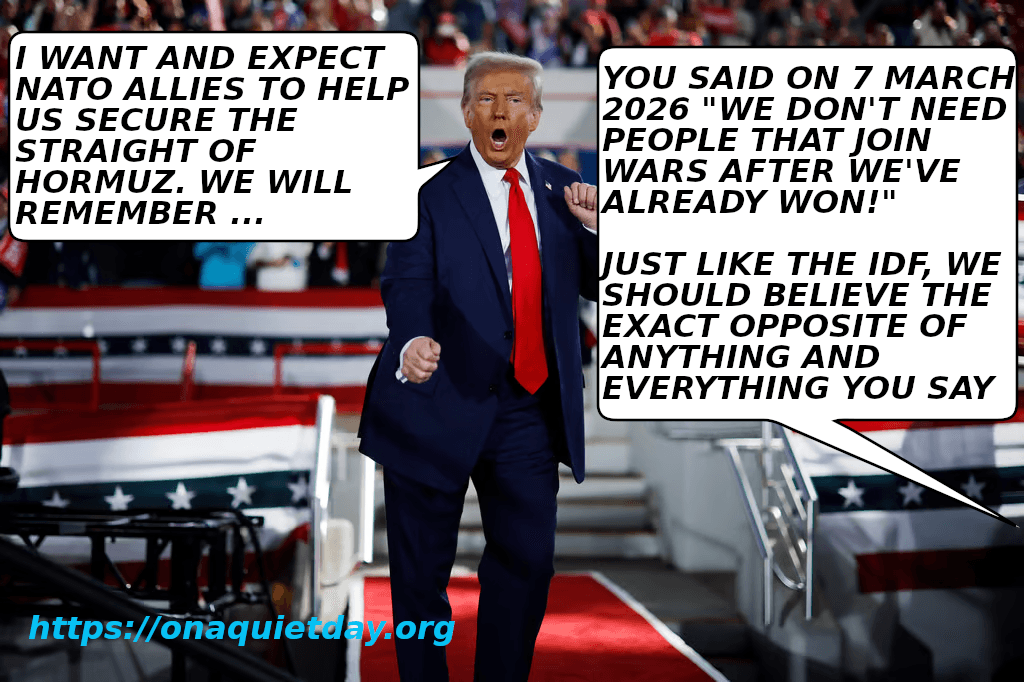
Donald Trump calls for help from NATO allies in securing the Strait of Hormuz despite saying on 7 March 2026 that they don’t need people to join wars after they’ve already won. He’s challenged with the claim that he lies as much as the IDF.Climate science denier Donald Trump confirms that he knows nothing about democracy and that more liquid gold is being secured according to his policy of policy of global privateering.
This work by Middle East Monitor is licensed under a Creative Commons Attribution-NonCommercial-ShareAlike 4.0 International License.
Palestinians march carrying flags and symbolic keys representing the right of return during a demonstration marking the 78th anniversary of the Nakba in Ramallah, West Bank, Palestine, on May 12, 2026. [Issam Rimawi – Anadolu Agency]
To live in the occupied West Bank today is to exist within a finely tuned apparatus of deliberate friction.
When people outside Palestine think of the Israeli occupation, their minds focus on military incursions, violent raids, and harrowing images of warfare. Those realities are undeniably real and constant. But there is another, quieter layer of control shaping every second of our lives—an insidious policy of administrative and physical strangulation degrading the basic mechanics of human survival.
From gas station queues and dry water pipes to unpaid paychecks, blocked roads, trapped bank deposits, and choked border crossings, life here has been rendered so excruciatingly difficult that the underlying message becomes undeniable: there is no future for you—the Palestinians—here. This message isn’t subtle; it is spelled out on billboards erected by settlers across the West Bank with the army’s approval.
The Fuel Bottleneck: Waiting Hours to Move a Few Miles
Last week, I spent an hour waiting in a line of idling cars stretching nearly a kilometer outside a petrol station. Engines were off to conserve remaining fuel, turning car cabins into ovens. Around me, taxi drivers, ambulances, and parents with children sat in shared, helpless exhaustion.
This is not an accidental shortage; it is a structural squeeze. Under the 1994 Paris Economic Protocol, the Palestinian Authority (PA) is kept completely dependent on Israeli energy suppliers. In recent months, Israel systematically slashed fuel quotas delivered to Palestinian distributors. Standard daily deliveries of gasoline and diesel—normally around 4.5 million liters—have been throttled down to 3.5 million liters or less.
Prevented from maintaining a strategic fuel reserve, local stations hold only a few days of inventory. The moment Israel curtails the quota, the entire West Bank freezes. Transport halts, municipal services grind to a standstill, and filling your tank turns into an ordeal of anxiety.
Financial Siege: The Clearance Revenue Crisis and Unpaid Salaries
The friction is not just physical; it is profoundly financial. For almost three years, the economic foundation of nearly every Palestinian household has buckled under a systematic financial blockade.
Under long-standing agreements, Israel collects custom duties and import taxes—clearance revenues—on behalf of the PA, deducting a 3% fee before transferring the remainder. These revenues constitute 65% to 70% of the PA’s budget, funding healthcare, education, infrastructure, and salaries for over 140,000 public sector workers.
Since October 2023, the Israeli government escalated its withholding of these tax transfers, freezing billions of shekels. Transfers have been halted or subjected to crippling political deductions.
For me and hundreds of thousands of public servants, this is not an abstract macroeconomic headline—it is the reality of unpaid grocery bills and bank accounts in perpetual overdraft. Civil servants—teachers, nurses, doctors—have not received a full salary in nearly three years, surviving on partial payments of 50% or 60% every few months. Small business owners cannot make sales, creating widespread economic paralysis.
The Shekel Trap: Cash Accumulation and Banking Strangulation
In a surreal twist of monetary warfare, our economy suffers simultaneously from a lack of digital liquidity and an unmanageable overload of physical cash. Forced to use the Israeli Shekel (NIS), hundreds of thousands of laborers, merchants, and shops trade in physical banknotes daily, pouring an estimated 30 billion shekels into Palestinian banks yearly.
However, the Bank of Israel places an arbitrary annual cap of 18 billion shekels on physical paper money Palestinian banks can transfer back into the Israeli banking system. Israeli correspondent banks routinely refuse to clear excess cash, citing absurd bureaucratic excuses while political figures champion economic strangulation.
The outcome is agonizing: over 15 billion shekels in physical bills sit trapped in Palestinian bank vaults, unusable for international trade or digital transfers. Local banks have run out of vault space and imposed monthly deposit limits. When a gas station owner or grocer cannot deposit cash earnings to pay for their next shipment, the entire distribution chain collapses.
Inside my home, another clock is constantly ticking: the water tank level. Access to clean, running water is governed by a system of stark discrimination.
Under the 1995 Oslo II agreement—supposed to last five years but enforced three decades later—Israel controls 80% of the Mountain Aquifer’s water. The Israeli national water company, Mekorot, controls pipelines supplying Palestinian towns. During summer months, Mekorot routinely throttles water supplies to Palestinian municipalities—like Hebron, Bethlehem, and Jenin—to ensure uninterrupted supply to nearby illegal settlements.
According to human rights organizations and the Palestinian Hydrology Group, West Bank Palestinians consume an average of 70 liters of water per day—well below the WHO minimum standard of 100 liters. Meanwhile, Israeli domestic consumers receive roughly 300 liters per day, and settlers in illegal outposts consume up to 800 liters.
In my neighborhood, running water comes through pipes once a week for a 24-to-48-hour window. We live around those brief hours: filling rooftop tanks, running laundry, and scrubbing floors. When tanks run dry, we purchase water from private mobile tankers at extortionate prices—water pumped from our aquifers sold back at five times the cost. Looking from my roof, I see a nearby settlement where lawn sprinklers run all afternoon. Looking down at my sink, not a single drop comes out.
The Grid of Control: Checkpoints, Closures, and Settler Violence
Movement in the West Bank has long been restricted, turning the territory into an open-air maze of isolated enclaves. Over 560 permanent obstacles—manned military checkpoints, iron gates, earthen mounds, and concrete blocks—carve up the land.
A trip from Ramallah to Qira, my hometown, historically a 45-minute drive, now consumes four to six hours. At any moment, an Israeli soldier can swing an Iron Gate shut, locking thousands inside a valley or blocking access to healthcare, universities, or jobs.
Compounding this is the relentless rise of settlers terrorism. Protected by armed forces, state-backed settler groups descend upon villages, burning olive groves, attacking homes, smashing vehicles, and closing agricultural lands.
Just recently, settlers arrived in my hometown of Qira. They entered without permission to survey local archaeological sites, later publishing two videos set to Hebrew music showing them inspecting the ancient Roman pool next to my home and an old shrine down the valley. While there were no direct attacks or property damage this time, such incursions rarely remain passive; watching them walk through our spaces leaves a lingering fear that this quiet scouting is only the precursor to something far worse.
For me as a Palestinian farmer, tending family land held for generations has become a high-risk endeavor where I face beatings or live fire simply for harvesting my olives. The message is simple: your space is shrinking, and you are never safe.
The Choked Exit: The Al-Karameh Crossing Bottleneck
For 3 million Palestinians in the West Bank, there is no accessible commercial airport. Barred from using Israel’s Ben Gurion Airport, our sole window to the world is the Allenby Bridge (Al-Karameh / King Hussein Bridge crossing) connecting the West Bank to Jordan.
Recently, the Israeli Crossings Authority dramatically slashed operating hours at Al-Karameh. The terminal—once operating around the clock during peak travel—has seen its processing window severely restricted, closing early on weekdays and remaining closed on weekends.
Traveling abroad has become a nightmare of bureaucratic cruelty. Thousands gather at dawn in sweltering waiting halls. Digital registration slots sell out weeks in advance. Families are turned back after waiting all day because the border closed at 13:30 sharp. Trapping millions inside a landlocked enclave by choking their only exit is not security; it is a psychological cage.
Coercive Displacement: The Strategy of Making Life Unbearable
When you connect these dots—fuel lines, payless months, the shekel trap, dry water pipes, unpredictable checkpoints, settler violence, and locked borders—a clear, chilling pattern emerges.
None of these pressures operates in isolation. They form a deliberate architecture of friction designed to exhaust the human spirit—a policy of quiet, coercive displacement. The objective is to make daily existence so intolerable, expensive, and hopeless that people—especially the young, educated, and ambitious—eventually leave on their own.
Every queue we stand in, every dry tap we open, and every closed gate sends the same implicit signal: there is no room for you to thrive here.
For decades, our response to oppression has been Sumud—holding onto our land, our heritage, and our dignity. But as the occupation systematically grinds down the mechanics of daily survival, holding on grows harder by the day. We remain here not out of ease, but out of necessity—wondering how much longer steadfastness can endure before we are stripped of everything and displaced by force.
Climate science denier Donald Trump confirms that he knows nothing about democracy and that more liquid gold is being secured according to his policy of global privateering.Orcas discuss Donald Trump and the killer apes’ concept of democracy. Front Orca warns that Trump is crashing his country’s economy and that everything he does he does for the fantastically wealthy.