Original article by Teresa Tomassoni republished from Inside Climate News under Creative Common License (CC BY-NC-ND 3.0)
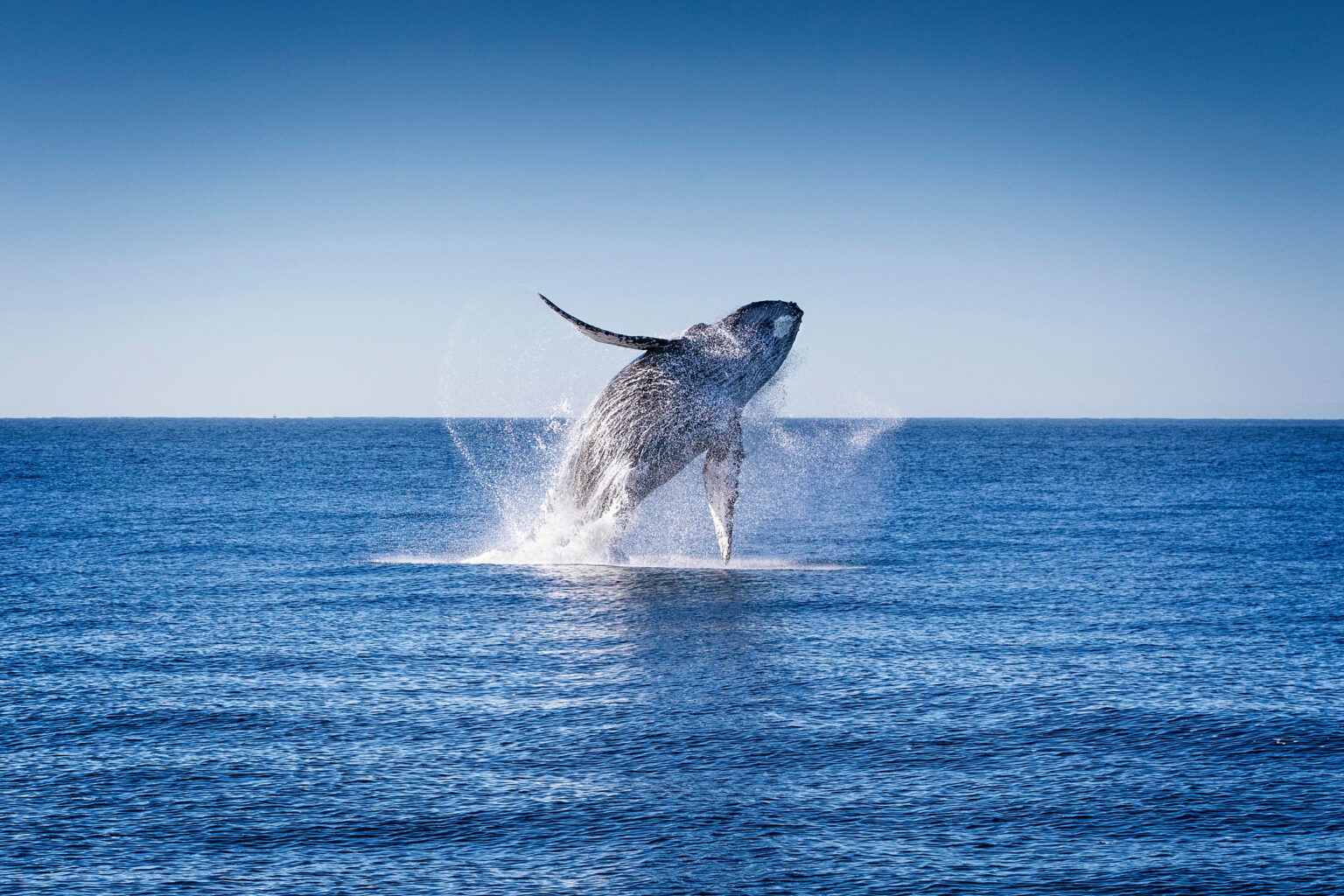
Rising ocean temperatures, heatwaves and dwindling prey are forcing marine mammals into new and more dangerous waters, scientists warn.
For millennia, some of the world’s largest filter-feeding whales, including humpbacks, fin whales and blue whales, have undertaken some of the longest migrations on earth to travel between their warm breeding grounds in the tropics to nutrient-rich feeding destinations in the poles each year.
“Nature has finely tuned these journeys, guided by memory and environmental cues that tell whales when to move and where to go,” said Trisha Atwood, an ecologist and associate professor at Utah State University’s Quinney College of Agriculture and Natural Resources. But, she said, climate change is “scrambling these signals,” forcing the marine mammals to veer off course. And they’re not alone.
Earlier this year, Atwood joined more than 70 other scientists to discuss the global impacts of climate change on migratory species in a workshop convened by the United Nations Convention on the Conservation of Migratory Species of Wild Animals. The organization monitors and protects more than 1,000 species that cross borders in search of food, mates and favorable conditions to nurture their offspring.
More than 20 percent of these species are on the brink of extinction. It was the first time the convention had gathered for such a purpose, and their findings, published this month in a report, were alarming.
“Almost no migratory species is untouched by climate change,” Atwood said in an email to Inside Climate News.
From whales and dolphins, to arctic shorebirds and elephants, all are affected by rising temperatures, extreme weather and shifting ecosystems, which are disrupting migratory routes and reshaping critical habitats across the planet.
Asian elephants, for instance, are being driven to higher ground and closer to human settlements as they search for food and water amidst intensifying droughts, fueling more frequent human-elephant conflicts, the report found. Shorebirds are reaching their Arctic breeding grounds out of sync with the insect blooms their chicks depend on to survive.
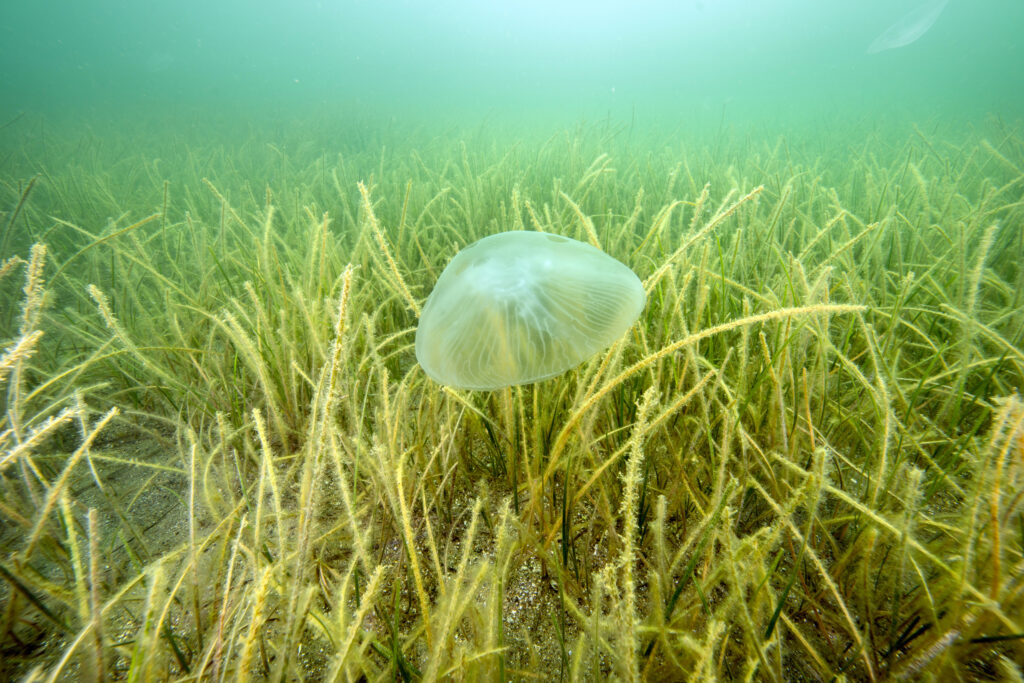
The seagrass meadows that migrating sea turtles and dugongs feed on are disappearing due to warmer waters, cyclones and sea level rise, according to the report. To date, around 30 percent of the world’s known seagrass beds have been lost, threatening not only the animals that depend on them, but also humans. These vital ecosystems store around 20 percent of the world’s oceanic carbon, in addition to supporting fisheries and protecting coastlines.
Together, these examples reveal how climate change is tipping the delicate balance migratory species have long relied on to survive.
“Climate change is disrupting this balance by altering when and where resources appear, how abundant they are, the environmental conditions species must endure, and the other organisms they interact with, reshaping entire networks of predators and competitors,” Atwood said.
Especially amongst marine life.
On the United States’ West Coast, for instance, Atwood said, warming waters are pushing juvenile great white sharks out of their traditional southern habitats. This shift has led to a sharp rise in sea otter deaths in Monterey Bay, California, where they are increasingly getting bitten by the sharks.
Whales and dolphins are particularly vulnerable species as rising temperatures threaten both their prey and their habitat, according to the report.
Heatwaves in the Mediterranean are projected to reduce suitable habitat for endangered fin whales by up to 70 percent by mid-century as their prey dwindles or moves due to rising temperatures. In some places, such as the Northern Adriatic Sea, hotter temperatures may eventually prove intolerable for bottlenose dolphins. “Rising water temperatures could exceed the species’ physiological tolerance,” the report says, which also acknowledges that this is already happening in other parts of the world, such as the Amazon River.
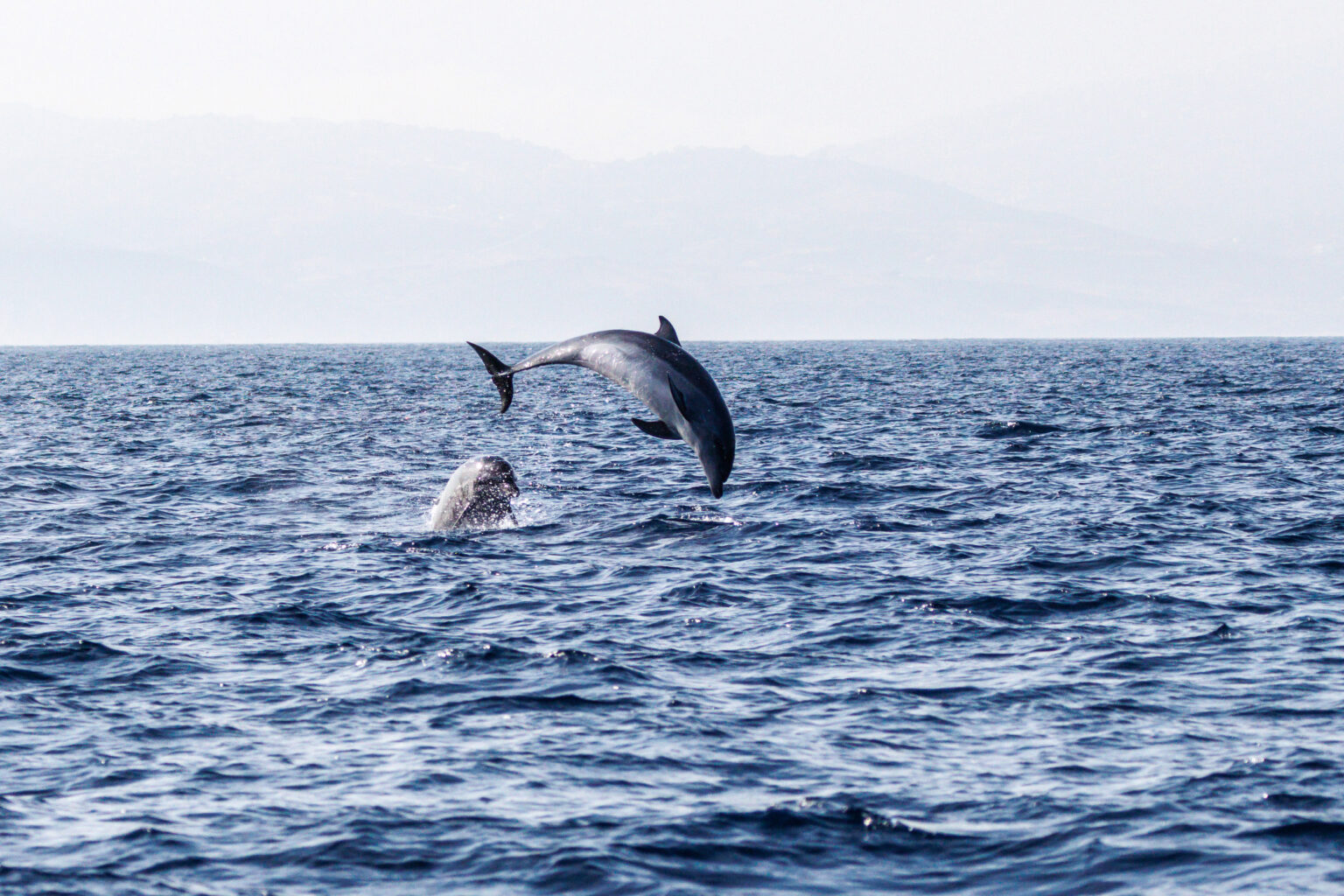
In 2023, more than 200 river dolphins, which migrate seasonally between tributaries and lagoons in the Amazon, died due to record-high temperatures, along with much of their prey. In some areas, their shallow aquatic habitats exceeded 100 degrees Fahrenheit. “The river systems were unusually empty and dry and the animals got isolated,” said Mark Simmonds, scientific councilor for marine pollution for the U.N. convention, who led some of the discussions around climate change impacts on cetaceans at the workshop in February. “They lost the water that they would have been living in.”
Loss of prey in traditional habitats is of particular concern for migrating marine mammals that are forced to follow their prey into new, and sometimes more perilous, waters.
This is particularly evident in the case of critically endangered North Atlantic Right whales, which the report says are especially prone to ship strikes and entanglement in fishing gear as they pursue their prey—tiny crustaceans called copepods—which are moving towards cooler waters. There are fewer than 400 of the whales left.
The North Pacific humpback whales that feed off the coast of California are also at risk.
Original article by Teresa Tomassoni republished from Inside Climate News under Creative Common License (CC BY-NC-ND 3.0)