Author: dizzy

  • Diseased chicken entered UK after post-Brexit delays to border checks

    Spread the love

    Original article by Andrew Wasley republished from TBIJ under a Creative Commons Attribution-NonCommercial-NoDerivs 3.0 Unported License.

    British consumers were exposed to drug-resistant salmonella because border checks took years to come into force

    UK health chiefs privately admitted that a lack of border inspections in the wake of Brexit left British consumers exposed to diseased meat, the Bureau of Investigative Journalism (TBIJ) can reveal.

    Delays in implementing checks on imported food meant hundreds of people, including children, were poisoned by imported meat during a series of major salmonella outbreaks.

    Previous TBIJ investigations uncovered a host of failings in the government’s handling of outbreaks of drug-resistant salmonella spread by supermarket chicken from Poland. Illnesses connected to the outbreaks – which also affected eggs – peaked at different points between 2020 and 2024, and Poland has since continued to export contaminated meat to the UK.

    Documents now reveal that in a series of high-level meetings in late 2023, food safety and health bosses admitted that the UK’s borders could have been allowing infected meat to enter the country unchecked.

    Minutes from the meetings attended by the UK Health Security Agency (UKHSA), the Food Standards Agency (FSA) and its devolved partners acknowledge there were “no current border controls in place”, and that paperwork and physical checks on imported goods were not due to start until the following year.

    “This could change,” officials noted. “However, [the] FSA have decided that they can’t wait for border controls to come in as a control measure.”

    Following the UK’s departure from the EU, Boris Johnson’s government announced that hygiene inspections on meat imports from Europe would begin in 2021. However the checks were repeatedly delayed and weren’t implemented until 2024.

    “We didn’t do any checks on EU imports at our border control posts for three years,” said Helen Buckingham, a trade policy expert. She pointed to a recent report published by the National Audit Office that was highly critical of the UK’s post-Brexit border controls. She added: “Delays on introducing a new regime of incoming checks for EU goods [were seen as being] risky for the UK in public and animal health terms, because our borders were weak.”

    Although checks on some UK meat and poultry imports – typically between 1% and 30% – are now being carried out, concerns have been raised that funding cuts to inspection staff at some ports could see large volumes of substandard meat coming into the UK, as reported in the Grocer.

    Tim Lang, professor emeritus of food policy at City St George’s, University of London, said: “Food flows depend on trust. And that depends on believing that systems are in place to protect us from known harm. Five years from Brexit, we see not fewer, but persistence of problems. We’ve put up borders but haven’t invested in the inspection.”

    Following the publication of details of the government’s planned border controls in 2023, the FSA chair Susan Jebb said that border controls were “critical to maintaining the UK’s high food and feed safety standards” and that they “must be a priority”. The FSA had previously raised concerns that food products imported from the EU were not being subjected to inspections.

    According to Buckingham, the post-Brexit inspections phased in last year do represent a more stringent system than was previously in place. “Pre-Brexit, we didn’t check EU products of animal origin because […] the principle of ‘free circulation of goods’ applied between member states.”

    TBIJ’s revelations come as Parliament’s environment, food and rural affairs select committee prepares to launch an inquiry into animal and plant health next Tuesday. Imported animal products will be a central focus of an initial evidence gathering session that will assess the effectiveness of import controls on biosecurity, food hygiene and public health.

    The internal UKHSA records obtained by TBIJ also reveal that while a ban on Polish poultry products was among the measures being considered by the FSA, concerns remained about its potential effects on the meat industry. They included the possibility that the UK could import chicken from other countries with food safety “hazards”. No ban was subsequently implemented.

    Although earlier FSA interventions brought about a reduction in reported cases, rates were still “outside of the tolerance that the FSA Board can accept of salmonella entering the UK from the EU”.

    Officials were also worried that the salmonella contamination had become more widespread, involving multiple producers from Poland and a greater number of food products, the documents show. While attention had initially focussed on breaded chicken and other highly processed products, testing had revealed that fresh chicken and raw pet food was also implicated.

    Richard Griffiths, chief executive of the British Poultry Council, said: “We expect our trading partners to meet their responsibilities with regard to safe food. If they cannot, and their own authorities cannot enforce the appropriate controls, then we want our own regulators to have the powers and resources to stop unsafe meat entering the country.”

    The BPC previously called for every consignment of Polish poultry to be checked at UK borders.

    Tests revealed that in 2024, at least 138 consignments of exported poultry from Poland contained salmonella, including variants that can be highly harmful to human health, according to EU data. The UK was among the affected countries. The figures were only slightly down from 2023, when there had been 149 recorded cases of contaminated products.

    In June 2023, TBIJ reported that some of the salmonella linked to Polish poultry that poisoned UK consumers was resistant to multiple antibiotics, limiting treatment options for those falling seriously ill. The UK government was found to have allowed food companies linked to the outbreak to continue supplying supermarkets even after contaminated meat had been linked to the deaths of four people, and the poisoning of hundreds more.

    Investigations also found that even though some of the salmonella was known to be antibiotic resistant, food safety and health officials did not disclose this to frontline health workers, including those treating victims. Nor did they inform the Polish authorities, impeding possible investigations into practices on the farms involved.

    Bacteria such as salmonella can easily spread on poultry farms, particularly where there are unhygienic or overcrowded conditions, and go on to infect the wider supply chain.

    The use of antibiotics on farms can enable potentially lethal bacteria to develop resistance, meaning the drugs will no longer work to treat infections. Antibiotic use in Polish livestock production has been a cause for concern in recent years, with increases in usage of some types of drugs important for humans.

    Anjali Juneja, director of UK and international affairs at the FSA, said it has been working with the Polish authorities on measures to enhance the safety and compliance of imported poultry meat and eggs. These include increased testing and other interventions at the farm and manufacturer level.

    “We continue to actively monitor the situation, including through in-country audits of Polish food safety controls and of poultry producers exporting to the UK. If we see any information of concern, we will take the necessary action,” Juneja said.

    She added that the FSA welcomed the enhanced border checks implemented last year, which have become “a crucial part of our food safety system” that she said helps uphold the UK’s high standards.

    A Defra spokesperson said: “This government will never waver in its duty to support the UK’s biosecurity and preserve our food supply.”

    The Polish Veterinary Inspectorate told TBIJ that food safety alerts relating to poultry from Poland decreased from 2020-2024, demonstrating that it had been taking appropriate and effective action.

    It said that a thorough investigation is undertaken whenever a salmonella case is detected and, in the event, will withdraw the food in question, as well as taking measures to minimise recurrence. And it said antibiotics are only used on farm animals when prescribed by a vet.

    Kath Dalmeny, chief executive of the Sustain food and farming alliance said the latest findings expose “just how vital it is for the government to uphold high food standards in international trade deals, especially for high-risk foods such as Polish chicken”.

    “They must also ensure there are enough vets and food hygiene inspectors to check that British and imported meat is fit to eat – health protection roles that have been in worrying decline for several years,” she added.

    Ron Spellman, a veteran meat inspector, said the issue ultimately needed to be tackled at source. “The European Commission, as well as the Polish authorities and poultry industry, carry responsibility to protect all consumers who buy Polish poultry products, they must resolve this problem.”

    Explainer What is antimicrobial resistance?

    Original article by Andrew Wasley republished from TBIJ under a Creative Commons Attribution-NonCommercial-NoDerivs 3.0 Unported License.
  • Reeves’s Heathrow third runway report was commissioned by London airport

    Spread the love

    https://www.theguardian.com/environment/2025/feb/01/reevess-heathrow-third-runway-report-was-commissioned-by-london-airport

    The chancellor is under fire after a study cited as evidence for expanding the terminal to boost the UK’s economic growth was ordered by Heathrow itself

    Rachel Reeves was facing criticism on Saturday night as it was confirmed that a report she cited as evidence that a third ­runway at Heathrow would boost the UK economy was commissioned by the airport itself.

    Experts and green groups also challenged Reeves’s view that advances in the production of ­sustainable aviation fuel (SAF) had been a “gamechanger” that would substantially limit the environmental damage of flying, ­saying the claims were overblown and did not stand up to scrutiny.

    …

    Alex Chapman, senior economist at the NEF, said: “It is very concerning that the chancellor appears to be basing her support for Heathrow expansion on a figure from a report commissioned by Heathrow airport.

    “Even more worrying is the fact that the methodology they have applied is one that the Department for Transport has previously decided is not fit for purpose, and that the report uses forecast data supplied by the airport itself.

    “Heathrow expansion represents a major threat to the UK’s climate goals and flies in the face of scientific advice. To ensure that the claimed economic benefits are concrete, assessments should be carried out by independent government economists following best-practice methodology.

    “NEF’s analysis has identified a wide range of weaknesses in the economic case, which have emerged since it was last fully appraised in 2015. Not least, the decline of business air travel, the surge in outbound leisure travel and the negative impacts on wider regions of the UK – all of which erode the potential growth benefit.”

    Analysis by climate crisis website Carbon Brief suggests that, using the government’s own figures, SAF will barely cut emissions by 2040, and any reduction will be wiped out by rising flight numbers.

    …

    https://www.theguardian.com/environment/2025/feb/01/reevess-heathrow-third-runway-report-was-commissioned-by-london-airport

  • Labour’s rush to Thatcherism: what’s going on?

    Spread the love

    https://morningstaronline.co.uk/article/labours-rush-thatcherism-whats-going

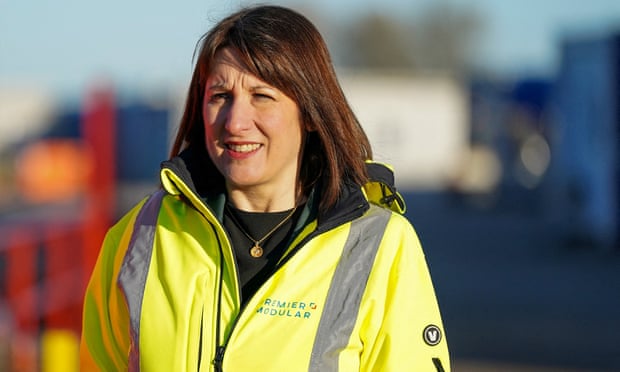
    Chancellor of the Exchequer Rachel Reeves during a visit to Premier Modular in Driffield, Humberside, January 30, 2025

    SOLOMON HUGHES examines how Labour has gone from blaming Tory deregulation for our economic woes to betting the nation’s future on more of it

    WHEN Keir Starmer finally got his prime ministerial phone call with President Trump on Sunday, according to Number 10 the two “discussed trade and the economy, with the Prime Minister setting out how we are deregulating to boost growth.”

    Which is odd, because the word “deregulation” isn’t in the Labour manifesto. In fact, before the election Business Secretary Jonathan Reynolds argued deregulation was a Tory sin that didn’t bring growth.

    Starmer was telling Trump the truth — Labour are pressing regulators to let business do what it wants in the desperate hope they will get some “growth” to drag up their low polling. But why does Keir tell Trump the truth before British voters?

    Perhaps aware that they had stumbled into openly admitting they are a “deregulation” government, despite previous promises, Starmer finally decided to lay this out by writing in The Times, making a Tory argument in the Tory press.

    In his Times article Starmer admitted: “This may seem like an unusual goal for Labour politicians. But deregulation is now essential for realising Labour ambitions in this era.”

    He referred admiringly to Thatcher’s deregulation and launched into purple prose about the need to hack at “thickets of red tape” to “clear out the regulatory weeds and allow a new era of British growth to bloom” and “curb regulator overreach.”

    …

    https://morningstaronline.co.uk/article/labours-rush-thatcherism-whats-going

    Keir Starmer, Angela Rayner and Rachel Reeves wear the uniform of the rich and powerful. They have all had clothes bought for them by multi-millionaire Labour donor Lord Alli. CORRECTION: It appears that Rachel Reeves clothing was provided by Juliet Rosenfeld.
    Keir Starmer, Angela Rayner and Rachel Reeves wear the uniform of the rich and powerful. They have all had clothes bought for them by multi-millionaire Labour donor Lord Alli. CORRECTION: It appears that Rachel Reeves clothing was provided by Juliet Rosenfeld.
  • Optics over outcomes: How the Chancellor’s airport expansion plans don’t add up

    Spread the love

    https://neweconomics.org/2025/01/optics-over-outcomes-how-the-chancellors-airport-expansion-plans-dont-add-up

    By the government’s own analysis, expansion will not improve outcomes for communities across the UK

    …

    Source: Civil Aviation Authority and ONS Travelpac

    Of the 70-odd million additional passengers the proposed expansions of Heathrow, Gatwick, and Luton would put in the air at their peak, we can expect between two-thirds and three-quarters (or 45 – 50 million) to be UK residents on their way out of the country. Making air travel cheaper while the cost of domestic leisure, hospitality, and overland travel remains prohibitively high leaves many squeezed households with little choice. Between 25 – 50% of travellers report ​‘cost’ as a key factor in their decision whether to stay in the UK or travel abroad.

    …

    From a high point in 2022, the UK’s domestic tourism industry has now seen two years of decline, contributing to the very stagnation that troubles the Chancellor. At the same time UK residents have poured overseas in record numbers, taking their hard-earned cash with them. New NEF analysis suggests trips to Mediterranean resort destinations and the Canary Islands hit a new record in 2024. Our top 20 direct routes saw passenger numbers rise from their 2019 peak of 52 million to 56 million last year.

    The last line of economic defence of the proposed expansion of Heathrow is perhaps the weakest of them all. Many desire to increase Heathrow’s standing as a hub airport, this means capturing ​”international to international” passengers changing flights in the UK. As these passengers stop in the UK for a matter of a few hours at most they leave little economic value behind. They also pay no air passenger duty so the benefit to the Treasury is minimal. Their flights do, however, come under the UK’s climate responsibilities. Transfer passengers are a boon for the airports and airlines, and the predominantly foreign-domiciled entities which own them, but of little value to the rest of us.

    Today’s airport decisions hint of desperation from a government seemingly more interested in optics for a select group of wealthy international investors than actual improvements in economic outcomes for communities all across the UK.

    https://neweconomics.org/2025/01/optics-over-outcomes-how-the-chancellors-airport-expansion-plans-dont-add-up

  • ‘We’d go absolutely nuts’: PM warned of Labour fight if he backs huge oilfield

    Spread the love

    https://www.theguardian.com/environment/2025/jan/31/keir-starmer-warned-against-approving-rosebank-oilfield-labour-unease-heathrow

    [Guardian] Exclusive: MPs and ministers say they would oppose Starmer if he tries to approve Rosebank development

    Senior Labour figures are warning of a serious fight if Keir Starmer tries to give the go-ahead to a giant new oilfield off Shetland later this year.

    MPs and ministers have told the Guardian they are prepared to oppose the UK prime minister should he try and give final consent to the Rosebank development, which is Britain’s biggest untapped oilfield.

    Many in the party see the battle over Rosebank as the next front in the struggle between its environmental wing and those around Rachel Reeves who want to push for economic growth above all else. The chancellor signalled her support for a third runway at Heathrow this week as part of the government’s latest push to stimulate the economy.

    One ally of the energy secretary, Ed Miliband, who is leading the government’s climate agenda, said the former Labour leader would have a “punchy” response for any attempt to give consent to Rosebank. The ally said: “Ed will come to that fight armed with a lot of evidence about what Rosebank will do to our carbon emissions.”

    A spokesperson for Miliband declined to comment.

    …

    https://www.theguardian.com/environment/2025/jan/31/keir-starmer-warned-against-approving-rosebank-oilfield-labour-unease-heathrow

    Orcas are pleased that Rosebank and Jackdaw oil fields are blocked.
    Orcas are pleased that Rosebank and Jackdaw oil fields are blocked.