Author: dizzy

  • A quarter of freshwater animals threatened with extinction, finds major new study

    Spread the love

    Iwan Jones, Queen Mary University of London

    For far too long, the decline in the biodiversity of our rivers and lakes has been out of sight and out of mind. As a freshwater ecologist I have long felt frustrated as conservation and research is dominated by land and sea species, even though our rivers, lakes, ponds and other wetlands host a hugely disproportionate amount of the world’s biodiversity in their relatively small area.

    The first comprehensive assessment of the risk of extinction of freshwater species, now published in the journal Nature, is set to change this. The scientists involved in the new study used the recently completed “red list” for freshwater fishes, and the one for dragonflies and damselflies.

    Red lists are official inventories of conservation status compiled by the International Union for Conservation of Nature (IUCN). They combined this with data from the previously published red list for freshwater crabs, crayfishes and shrimps. In total, they assessed more than 23,000 species.

    The authors conclude that close to a quarter (24%) of freshwater species are threatened with extinction. That is, they have been officially assessed as vulnerable, endangered, critically endangered or extinct in the wild.

    These include the critically endangered European eel, and the endangered white-clawed crayfish, both of which were abundant in the streams of my childhood.

    small crayfish on river weed
    Once abundant, now endangered: a juvenile white clawed crayfish. valda butterworth / shutterstock

    There is some uncertainty in the estimates, especially as there is insufficient data to establish the extinction risk for some species. The authors use an accepted and robust method to address this uncertainty but note that this lack of data affects a substantially larger proportion of freshwater species than those that live on land.

    In fact, despite indications that a greater proportion of freshwater mollusc species are at risk of extinction, the authors could not include molluscs in their analysis as so many species are data deficient.

    Furthermore, we have only the most rudimentary understanding of the status of the wide array other freshwater species, particularly invertebrates such as mayflies, stoneflies, or various beetles, many of which are highly sensitive to pollution. Although this new study represents an important step forward in our understanding, it should also act as a clarion call to galvanise efforts to fill these critical data gaps.

    Freshwater species overlooked

    While shocking, this figure of 24% of freshwater species threatened with extinction is comparable with the estimate for predominantly land-based amphibians, reptiles, birds and mammals, of which 23% are threatened. Comprehensive assessments of birds, amphibians and mammals have been available for over 20 years, with repeat assessments now available.
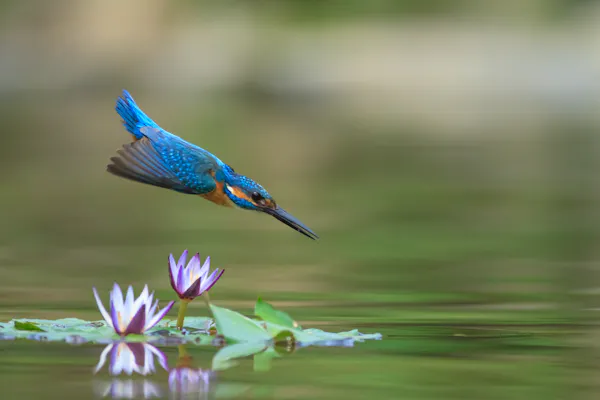
    Rivers and lakes support whole ecosystems with all sorts of species. Martine Liu 58 / shutterstock

    As the IUCN’s red lists are used to document trends in biodiversity and therefore to inform national and global strategy, data on terrestrial vertebrates has dominated conservation science and policy. Hence, to date, global environmental governance has focused on land and sea ecosystems, despite evidence that freshwaters require distinct management needs.

    With this assessment, it is now clear that policy will have to be developed that protects and delivers improvements for freshwater species. That means thinking about entire river basins as a whole, rather than the immediate area occupied by the species.

    It also means considering things like how rivers and lakes are connected and how the water available varies from season to season. Bodies of freshwater are like islands in a sea of land. Facilitating movement between these islands can help preserve species, particularly where they disappear seasonally.

    Most species face multiple threats

    In the new study, pollution, dams, water abstraction, land-use change, over-exploitation, invasive species and disease feature prominently as threats, with most species impacted by more than one. Freshwaters in areas of limestone and other porous calcium-rich rocks host consistently more threatened species than would be expected, highlighting the importance of chalk streams for example, where pressure due to exploitation of water resources and pollution is pronounced.

    Chalk streams are valuable habitats for salmon, trout, otters, kingfishers and many other species. Tony Martin Long / shutterstock

    While current efforts to hold UK water companies responsible for reducing inputs of sewage to rivers and lakes are commendable, water use efficiency and run-off should be considered throughout the decision-making process, from building design and town planning though to our individual daily use of water. Nature-based solutions such as tree planting or wetland protection offer a way forward that simultaneously benefit biodiversity and human well-being.

    A lack of understanding can no longer be used as an excuse for inaction. As the authors of the new study point out, freshwaters support more than 10% of all known species, including about a third of vertebrates and half of fishes, while covering less than 1% of the surface of the Earth.

    Many of the freshwater species considered in this study are socially and economically important. Freshwater fish provide an important source of protein for many human societies, and species such as Atlantic salmon support a fishing-tourism industry critical to many areas with limited opportunities to generate income.

    Other species, while superficially unimportant to human society, thrive in clean water. The widespread decline in these species reflects increasing pollution and other pressures, which does not bode well for our society in the face of climate change and diminishing water availability.

    Iwan Jones, Freshwater Ecologist and Head of the River Communities Group, Queen Mary University of London

    This article is republished from The Conversation under a Creative Commons license. Read the original article.
  • ‘This Is Unprecedented’: Several Horrific Wildfires Ravage Los Angeles

    Spread the love

    Original article by Jake Johnson republished from Common Dreams under Creative Commons (CC BY-NC-ND 3.0).

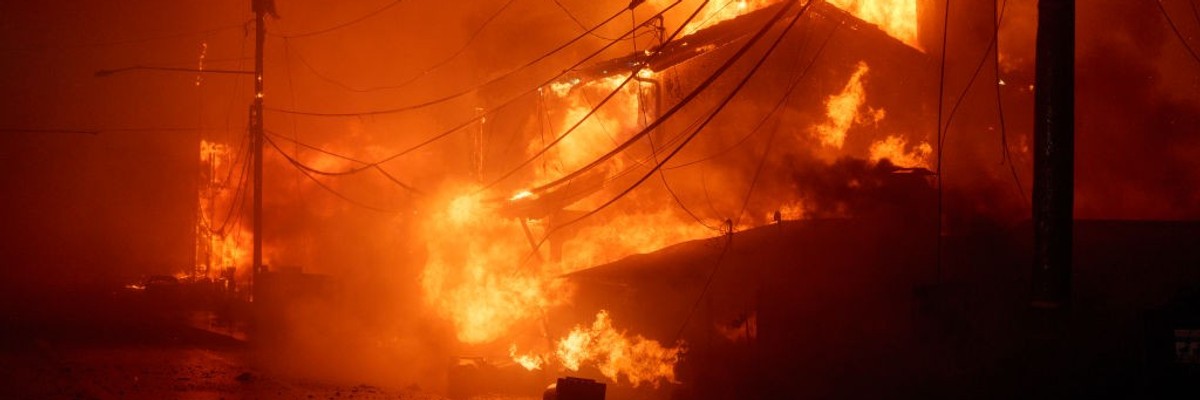
    Flames from the Palisades fire burn homes on January 7, 2025 in the Pacific Palisades neighborhood of Los Angeles, California. (Photo: Eric Thayer/Getty Images)

    “There is no ‘firefighting’ in these kinds of conditions,” said one meteorologist. “There is only saving as many lives as possible and getting the heck out of the fire’s way.”

    Several major wildfires burned out of control in California’s Los Angeles County on Wednesday as roaring winds fueled the rapid spread of the blazes, forcing tens of thousands to evacuate as state, local, and federal officials mobilized resources to confront the emergency.

    Los Angeles Mayor Karen Bass wrote on social media late Tuesday that the city is “working aggressively” to stem the wildfires, which scientists and government officials characterized as uniquely devastating.

    “Emergency officials, firefighters, and first responders are all hands on deck through the night to do everything possible to protect lives,” California Gov. Gavin Newsom said early Wednesday. The governor noted that more than 1,400 firefighting personnel have been deployed to “combat these unprecedented fires.”

    The Palisades, Eaton, and Hurst fires broke out on Tuesday. It quickly exploded amid what the National Weather Service described as “extremely critical fire weather,” with wind gusts up to 99 mph propelling the devastating blazes. The extreme winds forced emergency crews to ground aircraft that were working to contain the fires.

    “For some context, fire crews are up against near hurricane-force winds occurring mid-winter in rugged terrain during a drought at night,” wrote meteorologist Eric Holthaus. “There is no ‘firefighting’ in these kinds of conditions. There is only saving as many lives as possible and getting the heck out of the fire’s way.”

    “The emergence of extreme wintertime wildfires in California presents one of those classic ‘this is climate change’ moments.”

    The Eaton fire, which broke out Tuesday evening in the Pasadena area, “spread so rapidly that staff at a senior living center had to push dozens of residents in wheelchairs and hospital beds down the street to a parking lot,” The Los Angeles Times reported.

    “The residents waited there in their bedclothes as embers fell around them until ambulances, buses, and even construction vans arrived to take them to safety,” the newspaper added.

    The three fires have together burned thousands of acres so far and destroyed or endangered tens of thousands of homes and buildings, according to Newsom’s office. So far, at least 19 school districts have announced complete or partial closures due to the fires.

    Video footage posted to social media showed residents watching in horror as flames surrounded their homes:

    https://twitter.com/i/status/1876845562328146405

    Sorry, this content could not be embedded.
    X

    Another video shows residents attempting to salvage as many belongings as possible before fleeing:

    https://twitter.com/i/status/1876845004745748780

    Sorry, this content could not be embedded.
    X

    “There has been a recent massive increase in wildfires in California but really, a fire this big in January? This is unprecedented,” scientist Hayley Fowler wrote on social media. “One of many extreme events fueled by the climate crisis.”

    Holthaus wrote Tuesday that Southern California is “facing a rare and dangerous juxtaposition of extreme winds and midwinter drought,” the meteorologist described as “a worrying example of the state’s expanding wildfire threat as climate change worsens.”

    “The National Weather Service defines ‘extremely critical’ fire weather as sustained winds over 30 mph and relative humidity of less than 10% in drought conditions and temperatures warmer than 70 degrees,” Holthaus observed. “This is the first time in history these criteria have been met anywhere in the United States during January.”

    “The emergence of extreme wintertime wildfires in California,” he added, “presents one of those classic ‘this is climate change’ moments: A specific set of weather conditions are now occurring in such a way to produce the potential for rare disasters to become much more common.”

    Original article by Jake Johnson republished from Common Dreams under Creative Commons (CC BY-NC-ND 3.0).

  • Ireland files declaration it will join International Court of Justice genocide case against Israel

    Spread the love

    https://www.middleeastmonitor.com/20250107-ireland-files-declaration-it-will-join-international-court-of-justice-genocide-case-against-israel

    A view of International Court of Justice (ICJ) on August 07, 2024 [Dursun Aydemir/Anadolu Agency]

    Ireland has submitted a declaration to join South Africa’s genocide case against Israel, the International Court of Justice (ICJ) said Tuesday, Anadolu Agency reports.

    “Ireland, invoking Article 63 of the Statute of the Court, filed in the Registry of the Court a declaration of intervention in the case concerning Application of the Convention on the Prevention and Punishment of the Crime of Genocide in the Gaza Strip,” or South Africa versus Israel, the Court said in a statement.

    Irish Foreign Minister, Micheal Martin, announced last month that they would join the case after they secured government approval for the move under the Genocide Convention.

    Under Article 63, any state party to a convention that is under judicial consideration has the right to intervene, making the ICJ’s interpretation of that convention binding on them as well.

    In December 2023, South Africa filed an application instituting proceedings against Israel, claiming violations of the Genocide Convention in relation to Palestinians in the Gaza Strip. Several countries have since joined the case, including Nicaragua, Colombia, Libya, Mexico, Palestine, Spain and Turkiye.

    Israel has continued its brutal offensive on Gaza since a Hamas attack in October 2023 despite a UN Security Council resolution demanding an immediate ceasefire.

    Nearly 46,000 people, mostly women and children, have since been killed and over 105,000 injured, according to local health authorities.

    The Israeli onslaught has displaced almost the entire population of the Territory amid an ongoing blockade that has led to severe shortages of food, clean water and medicine.

    READ: Hamas stands by demand for end to Gaza war under hostage deal, as Trump deadline approaches

    This work by Middle East Monitor is licensed under a Creative Commons Attribution-NonCommercial-ShareAlike 4.0 International License.

  • Morning Star Editorial: We can and must force the government to change course on Israel

    Spread the love

    https://morningstaronline.co.uk/article/editorial-we-can-and-must-force-the-government-to-change-course-on-israel

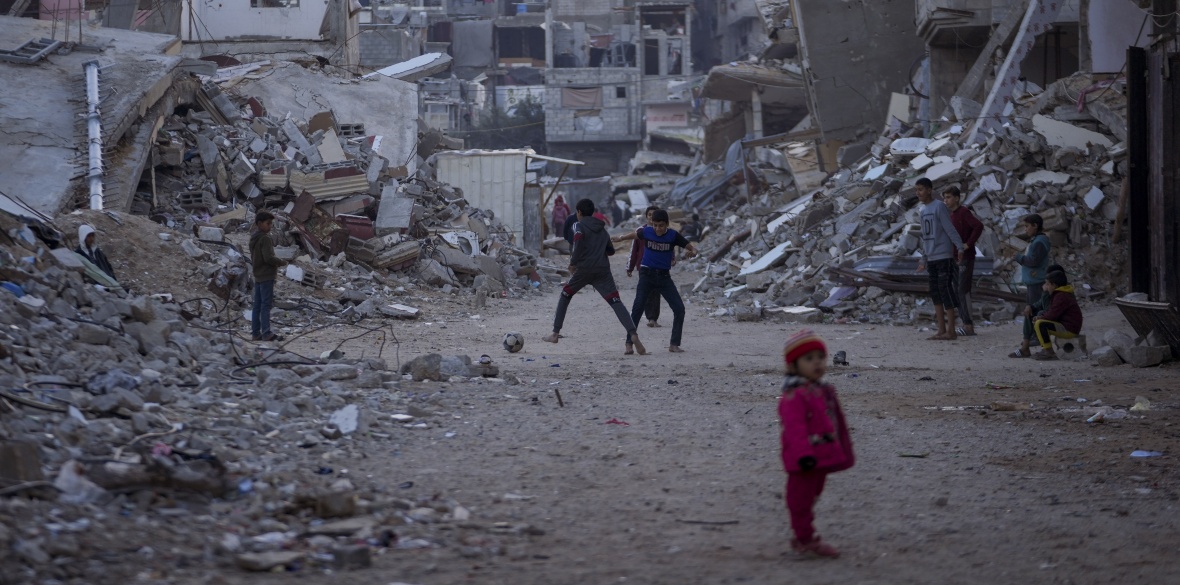
    Palestinian children play next to buildings destroyed by Israeli army strikes in Khan Younis, Gaza Strip, January 7, 2025

    PRESSURE continues to mount on the government over its backing for Israel and its failure to take any serious measures to impede its genocide of the Palestinian people.

    MPs from all parts of the Commons united at the first opportunity in the new year to demand that ministers act.

    Even many Tory backbenchers — although not Kemi Badenoch’s front bench — seem disgusted at Britain’s continuing complicity with Israeli war crimes.

    Vocal support for Israel seems to be draining away on the Labour back benches, while Liberal Democrat, SNP, Green and independent MPs are more-or-less united in urging a change of course.

    There are several concrete actions they are demanding that the government should take.

    First is an end to all arms sales to the Israeli regime. So far the government has only suspended a minority of the licences which permit the export of British military equipment to Israel.

    Yet there is now little room for doubt that the Israeli military is engaging in war crimes daily and is in continual breach of international law.

    Continuing to supply the Israeli war machine with equipment makes ministers themselves culpable for the consequences.

    …

    Article continues at https://morningstaronline.co.uk/article/editorial-we-can-and-must-force-the-government-to-change-course-on-israel

    Experiencing issues with this image not appearing. I suspect because it's so critical of Zionist Keir Starmer's support of and complicity in Israel's genocides.
    Genocide denier and Current UK Prime Minister Keir Starmer is quoted that he supports Zionism without qualification. He also confirms that UK air force support has been essential in Israel’s mass-murdering genocide. Includes URLs https://www.declassifieduk.org/keir-starmers-100-spy-flights-over-gaza-in-support-of-israel/ and https://youtu.be/O74hZCKKdpA
    UK Foreign Minister David Lammy confirms that UK government and military are active participants in Israel’s genocides and that the F-35 parts that they suspended from supplying to Israel are instead simply diverted via the United States. He says see https://youtu.be/QILgUHrdWRE
    UK Foreign Minister David Lammy confirms that UK government and military are active participants in Israel’s genocides and that the F-35 parts that they suspended from supplying to Israel are instead simply diverted via the United States. He says see https://youtu.be/QILgUHrdWRE
  • UN World Food Program Denounces Israeli Attack on ‘Clearly Marked’ Convoy in Gaza

    Spread the love

    Original article by Jake Johnson republished from Common Dreams under Creative Commons (CC BY-NC-ND 3.0). 

    Humanitarian aid trucks belonging to the World Food Program arrive in Gaza on September 26, 2024.  (Photo: Hasan Zaain/Anadolu via Getty Images)

    “This unacceptable event is just the latest example of the complex and dangerous working environment that WFP and other agencies are operating in today,” said the United Nations agency.

    The United Nations World Food Program said Monday that Israeli forces opened fire on one of the organization’s aid convoys at a checkpoint in central Gaza over the weekend, an attack that the organization condemned as “horrifying.”

    “This unacceptable event is just the latest example of the complex and dangerous working environment that WFP and other agencies are operating in today,” the organization said in a statement, noting that the convoy was “clearly marked” and that it had “received all of the necessary clearances from Israeli authorities” prior to Sunday’s attack.

    “Security conditions in Gaza must urgently improve for lifesaving humanitarian assistance to continue,” WFP said, urging “all parties to respect international humanitarian law, protect civilian lives, and allow safe passage for humanitarian aid.”

    At least 16 bullets struck the WFP convoy on Sunday, but none of the eight staffers traveling in the three vehicles that came under Israeli attack on Sunday were killed or wounded, WFP said.

    It was nonetheless a “terrifying encounter” that underscored the dangers facing aid workers attempting to deliver food and other necessities to starving and desperate people across the Gaza Strip.

    Last year was the deadliest on record for aid workers around the world, according to the U.N. Office for the Coordination of Humanitarian Affairs, with Israeli attacks in Gaza fueling a surge in killings.

    Philippe Lazzarini, commissioner-general of the U.N. Relief and Works Agency for Palestine Refugees in the Near East (UNRWA), said in an October speech to the U.N. Security Council that Gaza is “the most dangerous place in the world for aid workers.”

    Sunday wasn’t the first time Israeli forces have fired on a WFP convoy in Gaza during their 15-month assault on the Palestinian enclave. Last August, the WFP was forced to temporarily halt employee movements in Gaza after Israeli soldiers fired on one of the U.N. agency’s vehicles.

    Stéphane Dujarric, spokesman for U.N. Secretary-General António Guterres, said Monday that WFP is “trying to get the answers” from Israeli forces on why they once again fired on an aid convoy, an attack that came as a new round of cease-fire talks began in Doha, brokered by Qatar and Egypt.

    “I don’t think there’s an explanation for shooting at a clearly marked convoy from the World Food Program, whose movements had been completely coordinated with the Israeli security forces,” said Dujarric.

    Original article by Jake Johnson republished from Common Dreams under Creative Commons (CC BY-NC-ND 3.0).