Image of InBedWithBigOil by Not Here To Be Liked + Hex Prints from Just Stop Oil’s You May Find Yourself… art auction. Featuring Rishi Sunak, Fossil Fuels and Rupert Murdoch.
… UK political parties’ plans for climate and the environment have been jointly assessed by Greenpeace and Friends of the Earth in a new election scorecard published today, which ranks Labour far ahead of the Conservatives across all key green policy categories.
Published just 10 days before voters head to the polls on July 4th, the scorecard assesses the Labour, Conservative, Liberal Democrat and Green Party manifestos released in the past fortnight against 40 policy recommendations set out by the two environmental campaign groups.
Overall, the Green Party topped the league table with a near-perfect 39 score out of a possible 40 recommended policies, ahead of the Liberal Democrats in second place with 31.5.
Labour, meanwhile, scored 20.5 against the 40 green policy recommendations, over four times higher than the Conservatives’ which scored only five points.
Rishi Sunak on stopping Rosebank says that any chancellor can stop his huge 91% subsidy to build Rosebank, that Keir Starmer is as bad as him for sucking up to Murdoch and other plutocrats and that we (the plebs) need to get organised to elect MPs that will stop Rosebank.
Neither Keir Starmer nor Rishi Sunak has any real plan to improve the lives of Disabled people | Jonathan Hordle – ITV via Getty Images
So far, we’ve heard more about Starmer and Sunak’s parents than the UK’s 16 million Disabled people
“This election is about who our country works for — the patriotic belief that Britain can be better and must be better,” said Kier Starmer concluding the first leaders’ debate earlier this month.
Yet every leadership debate so far has given more time to talking about Starmer and Rishi Sunak’s parents than these problems, which face millions of Disabled people up and down the country.
The general election campaign has solidified that neither the Labour leader nor his rival, incumbent Conservative prime minister Rishi Sunak, has any interest in improving our lives.
It is not as if the Conservatives or Labour don’t know about the issues we face. A United Nations report published in April confirmed that the UK is violating our human rights; a parliamentary committee last month found that “Disabled people undeniably encounter unnecessary and severe barriers to accessing suitable housing in England”; and the Department of Work and Pensions is under investigation by the Equality and Human Rights Commission over its treatment of Disabled claimants.
Disabled people in the UK are not a homogenous group. Some of us experience greater injustice than others. But we also have many things in common. We all want to live in an inclusive society where everyone has a fulfilling life and feels connected and valued.
We know politicians do not place the same worth on our lives as others; every day we experience discrimination, oppression and barriers to our inclusion and full participation in society because they won’t take the action needed to change it.
Years of deep cuts to services and neglect mean societal infrastructure, such as housing, transport and street environment, consistently fails to meet our needs. This structural decline has coincided with anti-migrant, anti-trans and racist policies, leaving ever-increasing numbers of us in poverty, homeless, incarcerated or dead.
The UN report was clear: “There has been no significant progress for Disabled people throughout the UK concerning their right to living independently and being included in the community.
“While some reforms and policies have been undertaken to provide financial support, accessible housing, and transport, this has been inadequate considering the cost-of-living crisis.”
One would expect this damning conclusion to be a key feature of the election campaign. But over the past four weeks, Labour and the Tories have both failed to provide anything of substance to help Disabled people.
Sunak’s Conservatives have instead pledged to shave £12bn a year from the cost of benefits, much of which would come from a crackdown on the personal independence payment (PIP) given to people with extra care or mobility needs. The party also seeks to tighten the work capability assessment (WCA), which would see more Disabled people declared fit to work and denied their benefit.
Labour’s manifesto, meanwhile, is notable for what it lacks. Previous promises to overhaul the welfare system, end punitive sanctions and co-produce disability-related policy with Disabled people are all missing – as are commitments to end care charges, increase carers’ allowance and ensure better provision of accessible housing.
Labour’s vows to improve SEN (special education needs) provision in schools and introduce changes to support Disabled people to gain and retain jobs are sticking plasters at best. Its manifesto sports a glaring lack of immediate investment in disability and carer benefits and social care – and we all know you can’t fix things without investment.
With so little real change on offer, Disabled people must unite and fight back. We can draw inspiration from the experiences of UK-based Disabled activists and the radical disabled resistance of the past 40 years. No changes affecting us have come through without collective struggle and organising.
As part of the DPO Forum England, a collective of Disabled people’s organisations in England, we are committed to joining forces nationwide and unifying our demands. That’s why we came together to create the Disabled People’s Manifesto, which contains radical policy demands for systemic overhaul and transformation.
We, as Disabled people, must now come together and demand our politicians take up the manifesto and commit to creating a country that values equity, dignity, respect, trust, and support as much as we value anything else. Our political system should be focused on supporting Disabled people to live the lives we have a right to, which no candidate sweating under the bright studio lights can deliver on their own.
Together, we can create space for ourselves and our ideas, and integrate the energy, dedication and skills of our community to create a new future.
Thousands of people marched through central London to urge political leaders to take more decisive action in tackling the UK’s wildlife crisis.
…
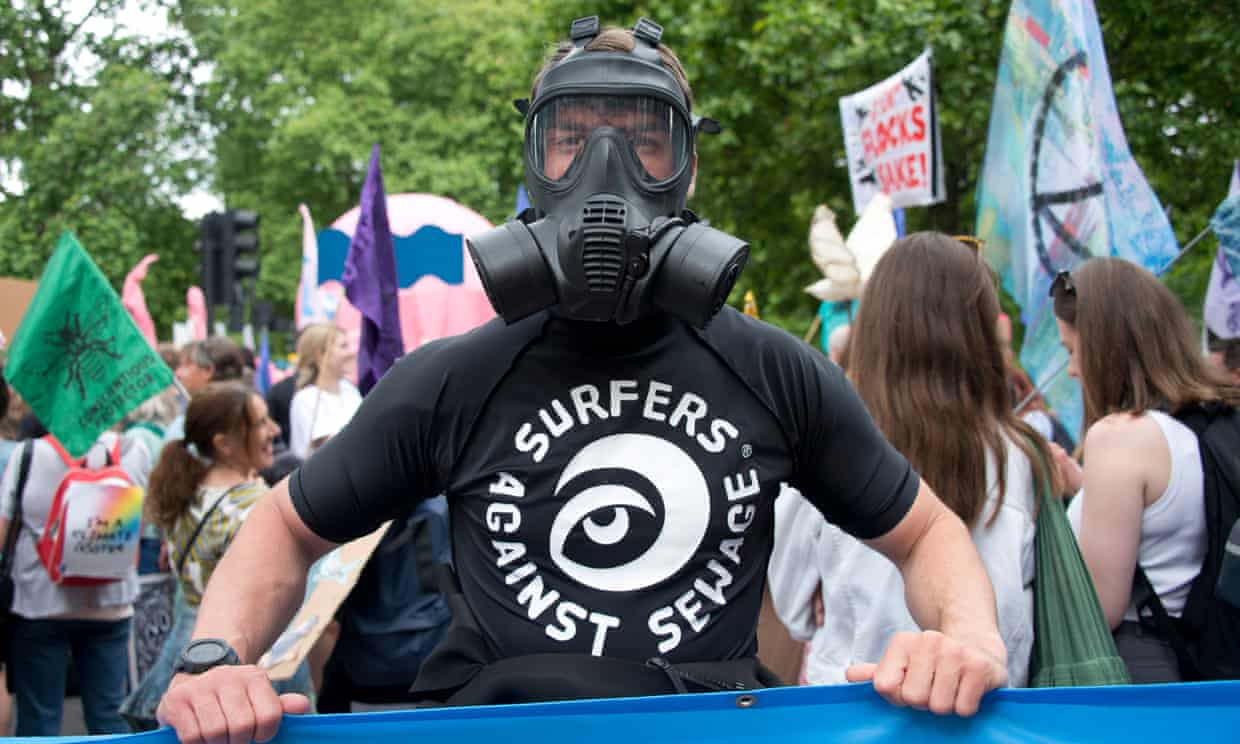
Demonstrators descended on the capital wearing glittery outfits, elaborate animal costumes and intricate face paint. Protesters were calm but the placards they held up revealed an undercurrent of frustration and anger. One read: “We have been swimming in shit.” There were also chants of “less faeces more species”.
A total of 350 environmental groups came together to pressure the government to act more robustly and decisively against the biodiversity crisis. Charities including the National Trust, the Wildlife Trusts, the RSPB and Friends of the Earth stood side by side with direct action groups such as Just Stop Oil, Extinction Rebellion and Animal Rising.
Henry Swithinbank from Surfers Against Sewage. Photograph: Sophia Evans/The Observer
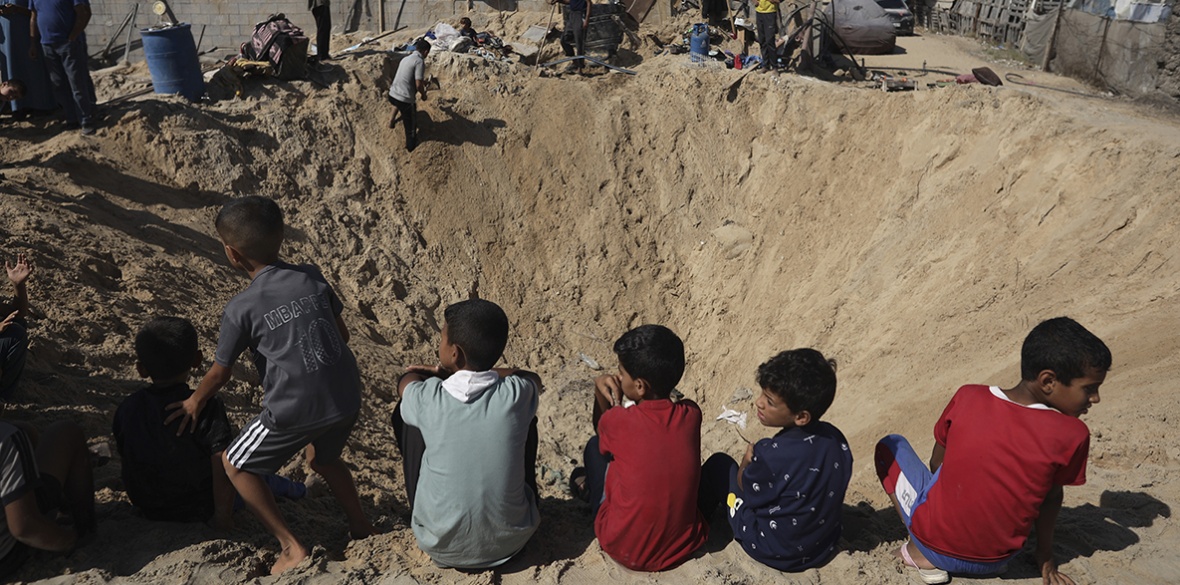
Palestinian children sit at the edge of a crater after an Israeli airstrike in Khan Younis, southern Gaza Strip, June 21, 2024
‘By sending weapons, parts, components and ammunition to Israeli forces,’ the above risk being ‘complicit in serious violations of international human rights laws,’ UN experts warn
STATES and companies must end arms sales to Israel immediately or risk responsibility for human rights violations, UN experts have warned.
The transfer of weapons and ammunition to Israel may “constitute serious violations of international humanitarian laws and risk complicity in international crimes, possibly including genocide,” UN Special Rapporteurs for the Human Rights Council said in a statement on Thursday night.
The experts also called on BAE Systems, Boeing, Caterpillar, Lockheed Martin, Rolls-Royce Power Systems, and many other arms firms to end sales to Israel even if they have been granted licences to do so.
“These companies, by sending weapons, parts, components and ammunition to Israeli forces, risk being complicit in serious violations of international human rights and international humanitarian laws,” the experts said.
“This risk is heightened by the recent decision from the International Court of Justice ordering Israel to immediately halt its military offensive in Rafah, having recognised genocide as a plausible risk, as well as the request filed by the prosecutor of the International Criminal Court seeking arrest warrants for Israeli leaders on allegations of war crimes and crimes against humanity,” the statement said.
“In this context, continuing arms transfers to Israel may be seen as knowingly providing assistance for operations that contravene international human rights and international humanitarian laws and may result in profit from such assistance.”
The experts also warned that financial institutions investing in arms companies could also be held accountable, and called on Bank of America, BlackRock, Citigroup, JP Morgan Chase, Morgan Stanley, and many others to take urgent action.
Original article by Vijay Prashad republished from peoples dispatch under a Creative Commons Attribution-ShareAlike 4.0 (CC BY-SA) license.
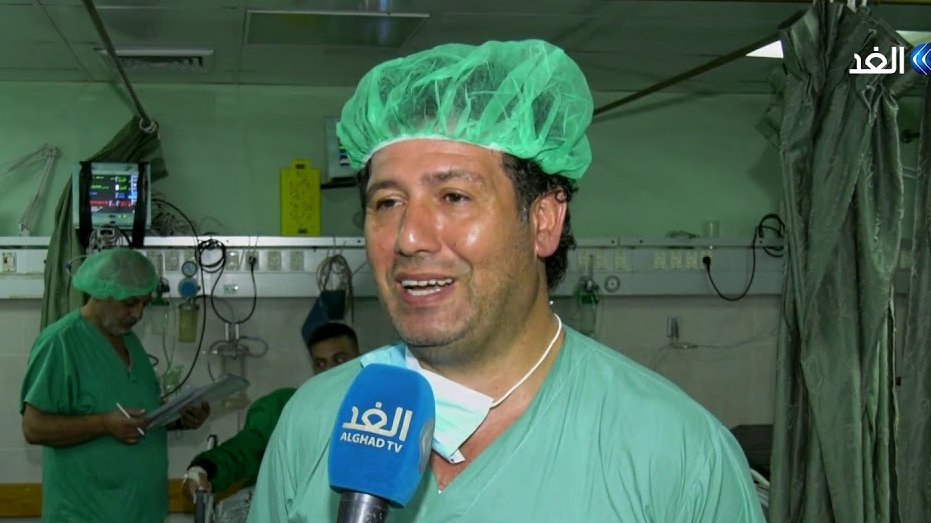
Dr. Adnan Al-Barsh giving an interview.
Israel has systematically attacked Gaza’s health system and killed over 700 health workers, a flagrant violation of international law
In the first week of June 2024, the Palestine office of the World Health Organization (WHO) released figures about the atrocious attacks on health care facilities and workers in Gaza since October 7, 2023. Thus far, according to the WHO, the Israelis have attacked 464 health care facilities, killed 727 health care workers, injured 933 health care workers, and damaged or destroyed 113 ambulances. “Health care,” the WHO’s Palestine office argues, “is not a target.” And yet, during the past seven months, health care workers have faced relentless attacks by the Israeli military. Each of the stories about the deaths is heartbreaking, the names of the dead are too long to list in any article (although a group called Healthcare Workers for Palestine did read the names of their dead colleagues as a protest against this war). But some of the stories are worth reflecting on because they tell us about the commitment of the workers and the great loss to humanity from their murder.
Dr. Iyad Rantisi, who was 53 years old, ran the Kamal Adwan Hospital in Beit Lahiya, which lies in the northern part of Gaza. There are many Rantisis in Gaza, but they are not native to that part of Palestine. Like many Palestinians who live in Gaza, they have roots in other parts of Palestine from which they had been expelled in the Nakba of 1948; the Rantisis come from the village of Rantis, northwest of Ramallah.
On November 11, 2023, during the Israeli military assault inside northern Gaza, Dr. Rantisi was taken into custody at an Israeli military checkpoint when he tried to leave northern Gaza for the south, following the orders of the Israeli military. Since then, his family had not heard anything about his whereabouts. Now, months later, the Israeli newspaper Haaretz reports that he was taken to the Shikma Investigation Center of the Shin Bet (Israel Security Agency), which is inside the Ashkelon Prison. Dr. Rantisi was tortured and then killed six days into his detention. His family was not informed of this until the Haaretz report. Then, Dr. Rantisi’s daughter Dima wrote of the death of her father, a social media post that she paired with photographs of him in medical scrubs performing surgery on a patient.
Dr. Adnan Al-Barsh, also 53, trained in Romania before he returned home to Gaza to head the orthopedic department at Al-Shifa Hospital. He has a reputation of being a very loved doctor, whose office was crowded with his diplomas (from Jordan, from Palestine, from the United Kingdom). When the Israeli military attacked al-Shifa, Dr. Al-Barsh was forced to leave his post, but he did not leave his work. He first went to Kamal Adwan Hospital, where Dr. Rantisi worked, and then to Al-Awda Hospital in the area east of the Jabaliya refugee camp in northern Gaza, which was also attacked several times by the Israelis. On December 18, 2023, the Israeli military raided Al-Awda and took Dr. Al-Barsh and other hospital personnel into custody. Included among those arrested was the manager of the hospital and another very popular doctor, Dr. Ahmed Muhanna. On October 15, 2023, Dr. Muhanna made a video—which went viral—in which he pleaded to the world for help and for an immediate ceasefire. It is now reported that on April 19, 2024, Dr. Al-Barsh was killed by the Israelis in Ofer Prison. Tlaleng Mofokeng, the UN Special Rapporteur on the right to health, said, “Dr. Adnan’s case raises serious concerns that he died following torture at the hands of Israeli authorities.”
Dr. Hammam Alloh, age 36, was killed when an Israeli missile struck his home near his ward in Al-Shifa Hospital on November 12, 2023. Trained in Yemen and Jordan, Dr. Alloh was Gaza’s only nephrologist, a kidney specialist. Concerned about his patients who were on dialysis, particularly with the lack of electricity and the constant attacks, Dr. Alloh—who was known as “The Legend” during his residency in Jordan—refused to leave the hospital. On October 31, Dr. Alloh was asked why he did not abandon his post and go to southern Gaza. “If I go,” he replied calmly, “who would treat my patients? We are not animals. We have the right to receive proper health care. You think I went to medical school and for my postgraduate degrees for a total of 14 years so I think only about my life and not my patients?” This was the caliber of Dr. Alloh. Less than two weeks later, when he left his post to have a rest at home with his parents, his wife (pregnant with a child), and his two children, the Israelis struck his home. He died alongside his father.
At the International Court of Justice in January 2024, the Irish lawyer Blinne Ní Ghrálaigh made the closing arguments for South Africa’s claim of genocide against Israel. In the course of her statement, Ní Ghrálaigh showed an image of a whiteboard with the following written on it: “Whoever stays until the end will tell the story. We did what we could. Remember us.” These lines had been written by 38-year-old Dr. Mahmoud Abu Najaila, who worked as a physician for Médecins Sans Frontières (MSF) at Al-Awda Hospital in northern Gaza. On November 21, 2023, the Israeli military bombed the third and fourth floors of the hospital, where Dr. Najaila worked with Dr. Ahmad Al-Sahar and Dr. Ziad Al-Tatari. All three of them were killed.
On her LinkedIn page, Reem Abu Lebdeh, a physiotherapist who was an associate trustee on the board of MSF’s UK branch, wrote, “Such a devastating loss for the medical community and humanity.” These doctors, whom she knew, she said, “were true embodiments of selfless service and humanitarian dedication, tirelessly saving lives in the most urgent conditions.” Then a few weeks later, sometime in December, the Israelis attacked a residential area in Khan Younis and killed Reem Abu Lebdeh, whose own messages of solidarity now sit on the web like Dr. Najaila’s whiteboard note: Remember us.