Author: dizzy

  • Iran War Trump Said Would Be Quick Has Now Lasted 6 Months With ‘No End In Sight’

    Spread the love

    Article by Brad Reed republished from Common Dreams under Creative Commons (CC BY-NC-ND 3.0).

    President Donald Trump and Secretary of Defense Pete Hegseth attend a dignified transfer for US service members killed during operations in the Middle East, at Dover Air Force Base in Dover, Delaware, on July 22, 2026. (Photo by Saul Loeb/AFP via Getty Images)

    Trump has “lost the Iran War in every way possible in less than six months,” said one critic.

    The illegal war with Iran that President Donald Trump said would be over in a matter of weeks entered its sixth month on Friday, and there is little sign of it wrapping up in the near future.

    A Friday report in The Washington Post marking the six-month anniversary of the illegal war noted that Trump’s ability to decisively win the conflict declined markedly “after Iranian leaders discovered that they could withstand intense bombardment and slowly degrade the world’s most powerful military with a cheap combination of mines and drones.”

    RECOMMENDED…
    IRAN-US-ISRAEL-WAR

    Expert: Trump’s Trying to Exert Control With Claim He Canceled Iran Strikes Over Progress on Deal

    US-IRAN-ISRAEL-WAR-TRUMP

    ‘He Has No Choice. He Lost’: Expert Delivers Brutal Obituary for Trump’s Failed Iran War

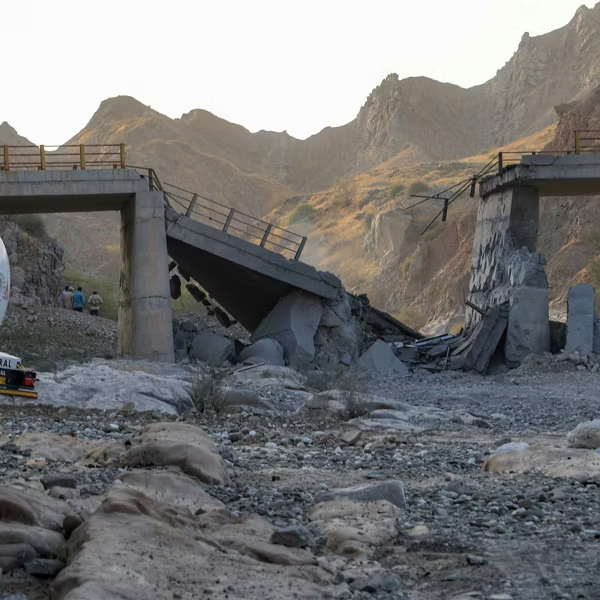
    The biggest weapon in Iran’s arsenal has been its ability to shut down the Strait of Hormuz, a vital shipping lane for petroleum. Since the strait’s closure, oil and gas prices have soared, costing US consumers an estimated $71.5 billion more to fill up their cars than they otherwise would have paid.

    Trump this week has tried to claim that the strait has actually been reopened, but the Post found that the president’s proclamations do not match reality.

    “More than 100 ships traversed the Strait of Hormuz on average every day before the war,” the Post wrote. “Just five went through on one day this week, according to Kpler, a commodities and shipping tracker.”

    A Friday report in The Associated Press focused on the White House’s announcements this week of new measures to put economic pressure on Iran, which are a sign that the administration no longer thinks it can use military force to force Tehran’s hand.

    “The turn to using sanctions as the cudgel of choice,” wrote the AP, “comes as the administration weighs diminished munitions stockpiles after months of war, sparking concerns that the prolonged conflict could undermine US military readiness in other parts of the globe.”

    The AP also flagged a shift in rhetoric from Trump, who once promised the war would end quickly but now says he’s “not in a hurry” to end the campaign.

    Harrison Mann, a former US Defense Intelligence Agency officer, wrote in an analysis published by Zeteo on Thursday that Trump has “lost the Iran War in every way possible in less than six months,” which he said would mark “the arrogant, violent end of American dominance in the Middle East.”

    In fact, Mann argued that Trump lost the Iran War three different ways: The first in his failed attempt to force regime change in Tehran, the second in an aborted campaign to incite an Iranian Kurdish uprising, and finally in his desperate efforts to reopen the Strait of Hormuz.

    All of these failures have combined to put Iran in a decisively stronger position than it was in before the war began, Mann wrote.

    “After another four months of Trump threats, half-hearted bombing runs, and not one but two US blockades of Iran, Tehran’s military exercises formal authority over at least a third of the ships transiting the strait,” he wrote. “Plus, it now regularly shoots at ‘unauthorized’ ships with impunity.”

    US Rep. Don Breyer (D-Va.) summed up the failure of Trump’s war in a Friday social media post.

    “When Trump began his illegal, unpopular war with Iran, he said it would last a week,” Breyer wrote. “SIX MONTHS later: The administration has lied about our casualties and the deaths of civilians, the stated objectives haven’t been met, Iran has a new economic weapon in the Strait of Hormuz, the region is less stable, our prices are higher, our allies are angry, our adversaries are emboldened, and there’s no end in sight.”

    Article by Brad Reed republished from Common Dreams under Creative Commons (CC BY-NC-ND 3.0).

    Climate science denier Donald Trump confirms that he knows nothing about democracy and that more liquid gold is being secured according to his policy of global privateering.
    Climate science denier Donald Trump confirms that he knows nothing about democracy and that more liquid gold is being secured according to his policy of global privateering.
    Donald Trump calls for help from NATO allies in securing the Strait of Hormuz despite saying on 7 March 2026 that they don't need people to join wars after they've already won. He's challenged with the claim that he lies as much as the IDF.
    Donald Trump calls for help from NATO allies in securing the Strait of Hormuz despite saying on 7 March 2026 that they don’t need people to join wars after they’ve already won. He’s challenged with the claim that he lies as much as the IDF.
    Orcas discuss Donald Trump and the killer apes' concept of democracy. Front Orca warns that Trump is crashing his country's economy and that everything he does he does for the fantastically wealthy.
    Orcas discuss Donald Trump and the killer apes’ concept of democracy. Front Orca warns that Trump is crashing his country’s economy and that everything he does he does for the fantastically wealthy.

  • Labour rejects Zack Polanski’s call to ‘slam brakes’ on building AI datacentres

    Spread the love

    https://www.theguardian.com/uk-news/2026/aug/28/labour-green-party-zack-polanski-ai-datacentres

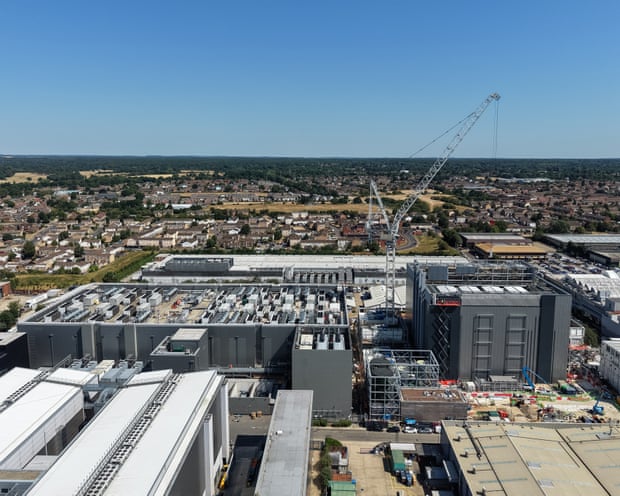
    Equinix datacentre under construction (right) and an operational datacentre (left) in Slough. Photograph: Bloomberg/Getty Images

    Government says Green leader’s proposed moratorium on ‘energy-guzzling’ AI projects would be disaster for economy

    Labour has rejected calls to pause construction of major AI infrastructure in Britain after the Green party leader, Zack Polanski, said it was time to “slam the brakes on these energy-guzzling, water-guzzling datacentres”.

    The government hit back at the opposition party’s proposal of a “moratorium other than [for] local-scale datacentres for the local community”, saying it “would be a disaster for jobs and national security”.

    The Greens’ call for a pause comes amid one of the UK’s worst droughts in years and predictions that datacentres’ electricity use, now standing at about 2.5% of the UK’s supply, will rise fourfold by 2030.

    Datacentres contain the processing chips that power billions of AI prompts every day and Labour has designated them as critical national infrastructure, a decision Polanski called “outrageous”. “To most people critical infrastructure means hospitals, water, electricity,” he said. “It doesn’t mean artificial intelligence.”

    He added: “Right now the government is putting our communities, our water security and our climate ambitions second to the demands of tech giants.”

    …

    https://www.theguardian.com/uk-news/2026/aug/28/labour-green-party-zack-polanski-ai-datacentres

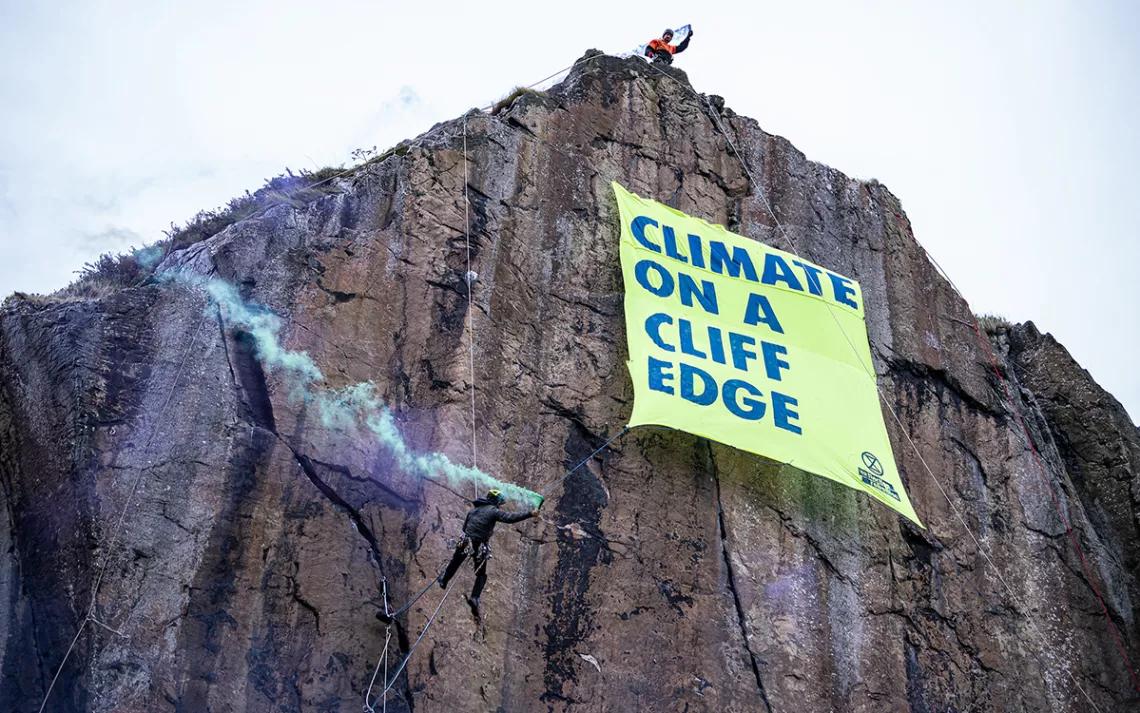
    Experienced climbers scale a rock face near the historic Dumbarton castle in Glasgow, releasing a banner that reads “Climate on a Cliff Edge.” One activist, dressed as a globe, symbolically looms near the edge, while another plays the bagpipes on the shores below. | Photo courtesy of Extinction Rebellion and Mark Richards
    Experienced climbers scale a rock face near the historic Dumbarton castle in Glasgow, releasing a banner that reads “Climate on a Cliff Edge.” One activist, dressed as a globe, symbolically looms near the edge, while another plays the bagpipes on the shores below. | Photo courtesy of Extinction Rebellion and Mark Richards
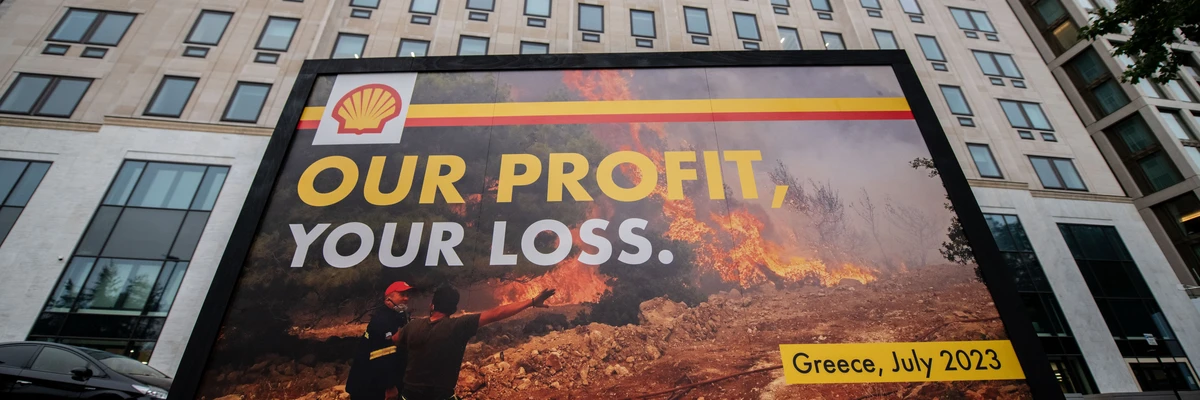
    Greenpeace activists display a billboard during a protest outside Shell headquarters on July 27, 2023 in London.
    Greenpeace activists display a billboard during a protest outside Shell headquarters on July 27, 2023 in London. (Photo: Handout/Chris J. Ratcliffe for Greenpeace via Getty Images)
    Donald Trump urges you to be a Climate Science denier like him. He says that he makes millions and millions for destroying the planet, Burn, Baby, Burn and Flood, Baby, Flood.
    Donald Trump urges you to be a Climate Science denier like him. He says that he makes millions and millions for destroying the planet, Burn, Baby, Burn and Flood, Baby, Flood.

    Climate Breakdown is here: Why won’t governments act?

  • Climate Breakdown is here: Why won’t governments act?

    Spread the love

    Article by Paul Rogers republished from Open Democracy under a Creative Commons Attribution-NonCommercial 4.0 International licence. 

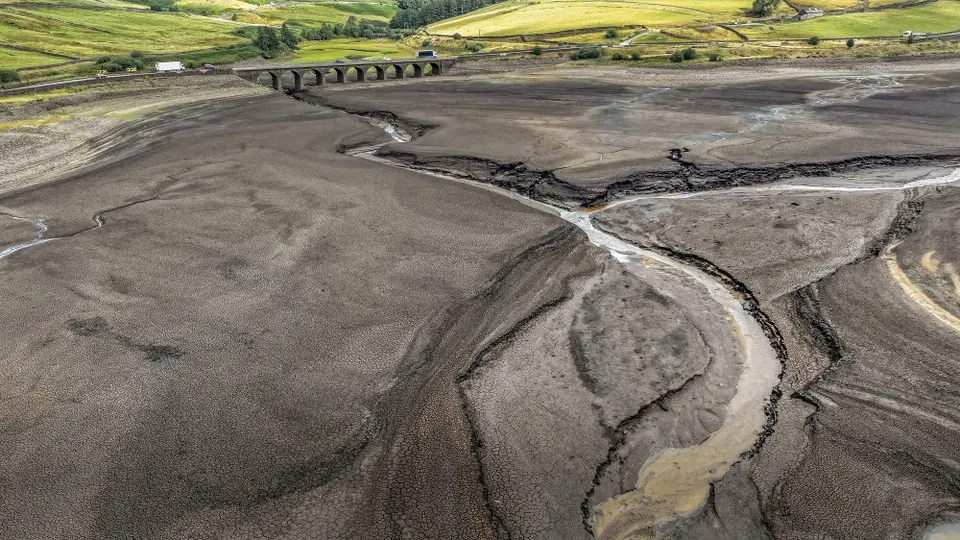
    Last month was the driest July ever recorded in the country since records began in 1836 | Christopher Furlong/Getty Images

    Adapting to an over-heated planet means very little unless it is accompanied by addressing the root causes of climate breakdown.

    Will the succession of heatwaves across Europe and the UK compel governments of all complexions to take climate breakdown more seriously? While much of the news and public conversation this summer has focused on the tragic deaths of people caught in wildfires, floods, and storms,  less attention has been paid to how heat waves kill people directly.

    When the temperature rises to the point where the body can no longer cool itself, this is termed “uncompensable heat stress”, or UHS, and has long been known to have a disproportionate risk for the over sixties:  The older you are, the less you can sweat; your heart works harder and your blood vessels are less able to widen, all adding to the risk of heat stress and early death.  In an ageing and warming world, people older than sixty will increase in numbers to 2.1 billion by 2050 and are more likely to succumb to UHS.

    Last year, one of the hottest ever on record in Britain, analysis from the UK Health Security Agency put excess deaths due to heat-related factors at 1,504.  As of June this year, most of the country had already experienced four heatwaves, causing 2,877 excess deaths.  Since then, there have been more heat waves with early indications of another in September, meaning a huge increase in heat-related deaths as compared to the previous year. 

    This rapid escalation in heat-related deaths is worth considering in a context where previous forecasts on the rate of climate change have proved to be too optimistic: Heavily populated Europe appears to be heating up much faster than the average, and research on the ability of forests to soak up greenhouse gases and help prevent climate breakdown has turned out to be less than expected. 

    Meanwhile, the naturally occurring El Niño/La Niña climate cycle is entering a “heating phase”, which is likely to further increase global heating and disruptive weather in the coming months.  On Friday, the Met Office warned that this year’s El Nino is likely to be the most intense in recent memory. “We should be clear that this is an unprecedented event,” Prof Adam Scaife, head of long-range forecasting at the UK Met Office, told the BBC. “I have never seen an El Niño signal this intense in our forecasts.”

    Sleep-walking towards disaster

    Why are we sleepwalking towards disaster in this way when it simply does not make sense?  Of the many reasons, three stand out; each requiring concerted governmental effort and leadership.

    First, what needs to be done is a mammoth task.  Not only will we have to radically decarbonise our economies, but we will need major changes in behaviour including a much less meat-based diet, far less use of air travel and far greater use of electricity generated from renewable resources, and a far more circular economy.  

    Second, the current economic system where neoliberal economics in its various forms is simply not fit for purpose.  Crucially, when it comes to climate breakdown the need to act a decade or more ahead of impact is incompatible with free market ideology that believes that the market works best when it has the minimum of regulation. The kind of economic planning and management that the risk of climate breakdown requires is anathema to the very idea of a free market.

    Moreover, this is in addition to the runaway wealth that the current free market system favours. So endemic to the system is the accumulation of wealth and political power in the hands of an elite few, that any attempt at an environmentally sustainable economy “for the many, not the few” will be strongly resisted by the few.

    Finally, there are the well-resourced right-wing think tanks and lobbies determined to maintain the status quo.  The Atlas Foundation alone “provides training, networking, and grants for libertarian, free-market and conservative groups around the world” working with nearly 800 groups in over a hundred countries.

    Especially culpable in this regard, are the activities of the fossil carbon lobbies.   Some of these, including Exxon, researched the risk of climate breakdown fifty years or more ago, uncovered the dangers of doing nothing, and then carried on as before.   Greenpeace was even able to develop a decades long obfuscation timeline. 

    Adaptation is not enough

    There is already support in the UK and many other countries for adapting to a warmer world, including much better funded emergency services, improved housing and better ventilation, but a core problem remains.

    Adaption currently envisaged means very little unless it is accompanied by addressing the root causes of climate breakdown, especially the burning of fossil carbon in the form of coal, oil or gas.  All that adaptation does is give us a few extra years before we are overwhelmed by even higher temperatures and wilder weather, and that goes on, and on, with far more of the world becoming uninhabitable.

     The heat excesses of the past year will have killed many tens of thousands of people across the world, especially among the poorest. It is vital to shift the political mood enough to  truly accelerate the necessary changes.  There is a small chance that further devastation caused by El Nino might focus minds on the reality of climate breakdown,  but the likes of Trump and most of the global oligarchy will do all they can to prevent that.

    Article by Paul Rogers republished from Open Democracy under a Creative Commons Attribution-NonCommercial 4.0 International licence. 

    Donald Trump urges you to be a Climate Science denier like him. He says that he makes millions and millions for destroying the planet, Burn, Baby, Burn and Flood, Baby, Flood.
    Donald Trump urges you to be a Climate Science denier like him. He says that he makes millions and millions for destroying the planet, Burn, Baby, Burn and Flood, Baby, Flood.
    Experienced climbers scale a rock face near the historic Dumbarton castle in Glasgow, releasing a banner that reads “Climate on a Cliff Edge.” One activist, dressed as a globe, symbolically looms near the edge, while another plays the bagpipes on the shores below. | Photo courtesy of Extinction Rebellion and Mark Richards
    Experienced climbers scale a rock face near the historic Dumbarton castle in Glasgow, releasing a banner that reads “Climate on a Cliff Edge.” One activist, dressed as a globe, symbolically looms near the edge, while another plays the bagpipes on the shores below. | Photo courtesy of Extinction Rebellion and Mark Richards
    Greenpeace activists display a billboard during a protest outside Shell headquarters on July 27, 2023 in London.
    Greenpeace activists display a billboard during a protest outside Shell headquarters on July 27, 2023 in London. (Photo: Handout/Chris J. Ratcliffe for Greenpeace via Getty Images)

    Labour rejects Zack Polanski’s call to ‘slam brakes’ on building AI datacentres

    dizzy: UK government’s inaction and support of climate-destroying datacentres suggests that Burnham & Co are likely to permit the Rosebank and Jackdaw North Sea oil and gas fields further destroying the planet.

  • Star Trek at 60: the secret of this pioneering series was its exploration of humanity, not aliens

    Spread the love

    Stephen McVeigh, Swansea University

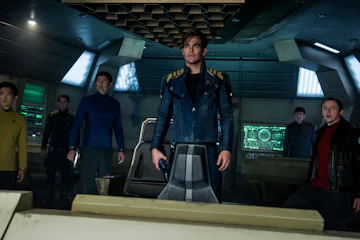
    Captain James T. Kirk, played in the original Star Trek series by William Shatner. RGR Collection/Alamy

    When Star Trek first appeared on television screens 60 years ago, audiences expected science fiction to offer aliens, monsters and futuristic technology. What they encountered was something far more ambitious.

    From its very first broadcast episode on September 8 1966, Star Trek established that its true subject was the exploration of humanity itself. For all its reputation as an action-packed space adventure, the franchise has endured because it repeatedly returned to a universal question: what does it mean to be human?

    In that first episode, entitled The Man Trap, the alien antagonist survives by appearing to each observer as the person they most wish to see. Dr Leonard “Bones” McCoy meets a lost love from his past; others see figures shaped by memory, expectation, desire and longing.

    The creature, soon dubbed the “salt vampire” by fans of the series, is not simply a shape-shifter. Its power lies in exploiting human perception. Rather than asking viewers to fear an alien with superior strength or advanced weaponry, the episode asks a more profound question: can we trust our experience of reality?

    Preview of The Man Trap, the first Star Trek episode to air in September 1966. Video: RetroAlexander.

    Sixty years on, this question looks remarkably prescient. Modern neuroscience increasingly suggests that perception is not a passive recording of the external world. According to theories of predictive processing, the brain continually generates expectations and compares them with incoming sensory information.

    The philosopher Andy Clark has described the brain as a “prediction machine”. Neuroscientist Anil Seth argues that our experience of reality can be understood as a form of “controlled hallucination”, generated by the brain but constrained by evidence from the senses.

    Long before such ideas were articulated, The Man Trap imagined a world in which people confront the same reality, but perceive it in profoundly different ways – based not only on what they see, but what they want to see.

    This insight links the episode to a much older intellectual tradition. The ancient Greek philosopher Plato’s allegory of the cave imagined people mistaking shadows for reality, confusing appearance with truth.

    The USS Enterprise crew’s first alien encounter offers a 20th-century variation on the same theme. They actively participate in their own deception because the creature reflects their hopes, memories and desires.

    This helps explain why The Man Trap feels strikingly contemporary. In today’s world, shaped by algorithmically curated information, political polarisation and increasingly personalised media environments, disagreement is often less about opinions than competing versions of reality itself.

    The nature of humanity

    Star Trek’s memorable debut was not an isolated exploration of a philosophical problem. It was the beginning of a broader inquiry into the nature of humanity.

    The Devil in the Dark (first aired March 1967) explores empathy and the challenge of understanding the unfamiliar. The apparently monstrous Horta is revealed to be an intelligent life-form protecting its offspring, forcing viewers to reconsider assumptions about difference and otherness.

    The Enemy Within (October 1966) shifts the inquiry inward, splitting Captain James T. Kirk into opposing aspects of his personality and challenging the assumption that human beings can divide their virtues from their vices.

    The episode argues that the qualities that make Kirk an effective leader – courage, decisiveness and resolve – are inseparable from darker instincts such as aggression and desire. Rather than presenting humanity as a triumph over these impulses, the episode suggests that human identity itself depends upon their integration.

    The City on the Edge of Forever (April 1967), regarded by many as the series’ masterpiece, shifts the focus to ethics. Kirk discovers that saving the woman he loves would alter history catastrophically, forcing him to choose between personal happiness and moral responsibility.

    Together, these and many more of the 79 original Star Trek episodes form a remarkable investigation into human nature. The progression reveals a series less interested in strange new worlds than the human beings who encounter them.

    The City On the Edge of Forever is regarded as one of the series’ finest episodes. Video: Robin Sellex.

    Philosophical inquiry

    While many science-fiction programmes have aged with their technologies, Star Trek has endured because its deepest questions remain unresolved. We still debate perception, identity, empathy, consciousness and moral responsibility, because they are permanent features of human existence.

    At its best, Star Trek engaged science fiction as a form of philosophical inquiry. Alien civilisations became thought experiments about prejudice and empathy. Time travel became a vehicle for exploring ethics. Artificial intelligence became a means of questioning consciousness and identity. The future it imagined served as a laboratory for understanding ourselves.

    The closing moments of The Man Trap illustrate this perfectly. Reflecting on the death of the salt vampire, Kirk recalls his conversation with the archaologist Robert Crater, who has long been working on the planet, about the fate of the American bison – driven to the brink of extinction by humans.

    This comparison transforms what might have been a conventional monster story into something morally complex. The creature is dangerous yet is also the last of its kind. Is it merely a predator, or the victim of a larger tragedy?

    The episode, like many others, offers no simple answer. Crater views the creature from a perspective of compassion and preservation. Kirk simply sees an immediate threat to his crew. Both are responding to the same reality, yet they arrive at different conclusions.

    The original Star Trek’s lasting legacy is not technological prophecy, but a sustained exploration of what it means to be human. Its enduring achievement lies not in predicting mobile phones, iPads or video calls, but in recognising that the most fascinating and vexing mystery remains humanity itself.

    The final frontier, it suggests, lies not among the stars but within ourselves.

    Stephen McVeigh, Professor of History, Faculty of Humanities and Social Sciences, Swansea University

    This article is republished from The Conversation under a Creative Commons license. Read the original article.

    How ‘Star Trek’ almost failed to launch

    Star Trek’s version of time travel is more realistic than most sci fi

    Television screen grab of white man kissing Black woman.

    The story behind ‘Star Trek’ actress Nichelle Nichols’ iconic interracial kiss

    The cast of Aliens stand together with Sigourney Weaver at the front.

    How Aliens became the rare sequel that was as good as – or better than – the original

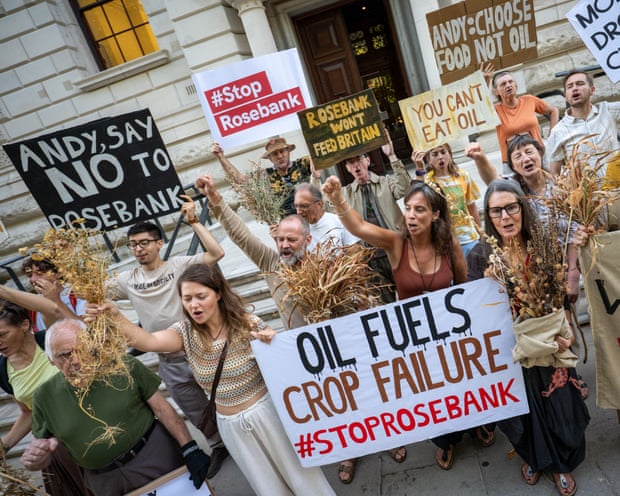
  • Climate damage would obliterate any economic benefits of new North Sea fields, analysis shows

    Spread the love

    https://www.theguardian.com/environment/2026/aug/25/climate-damage-economy-north-sea-oil-gas-fields-rosebank-jackdaw

    The argument that approving Rosebank and Jackdaw would cut bills and improve energy security is a ‘delusion’, say experts. Photograph: James Willoughby/SOPA Images/Shutterstock

    Exclusive: Economic harm of CO2 pollution from Rosebank and Jackdaw forecast to far outweigh any boost to UK

    The climate damage caused by developing the Rosebank and Jackdaw oil and gas fields under consideration by the UK government would destroy their economic benefits many times over, according to an analysis.

    It estimates the economic damage caused by the carbon pollution from the oil and gas produced would be between £119bn and £336bn in the coming decades, compared with the £28.7bn in value to the UK estimated by Adura, the fossil fuel company promoting the new fields.

    The assessment applies peer-reviewed research on how rising temperatures harm economies to the production estimates for the fields from the company. The figures are likely to be underestimates, as they do not include losses from amplified extreme weather, sea level rise or climate deaths. The analysis has been submitted to the Rosebank consultation and to an academic journal.

    …

    The argument that approving Rosebank and Jackdaw would reduce UK bills and improve energy security is a “delusion”, according to energy experts, as they are internationally traded commodities. Proponents of new drilling argue it would boost the UK economy, but the new analysis indicates this would be outweighed by long-term economic damage.

    “The numbers presented here show there’s going to be a very strong destruction of [economic] value above and beyond what Rosebank and Jackdaw could generate for the UK,” said Luke Hatton, at Imperial College London, who conducted the analysis. “The alternative is to really double down on clean energy technologies.” The UK’s net zero sector has grown three times faster than the overall UK economy in recent years.

    …

    https://www.theguardian.com/environment/2026/aug/25/climate-damage-economy-north-sea-oil-gas-fields-rosebank-jackdaw

    Experienced climbers scale a rock face near the historic Dumbarton castle in Glasgow, releasing a banner that reads “Climate on a Cliff Edge.” One activist, dressed as a globe, symbolically looms near the edge, while another plays the bagpipes on the shores below. | Photo courtesy of Extinction Rebellion and Mark Richards
    Experienced climbers scale a rock face near the historic Dumbarton castle in Glasgow, releasing a banner that reads “Climate on a Cliff Edge.” One activist, dressed as a globe, symbolically looms near the edge, while another plays the bagpipes on the shores below. | Photo courtesy of Extinction Rebellion and Mark Richards
    Greenpeace activists display a billboard during a protest outside Shell headquarters on July 27, 2023 in London.
    Greenpeace activists display a billboard during a protest outside Shell headquarters on July 27, 2023 in London. (Photo: Handout/Chris J. Ratcliffe for Greenpeace via Getty Images)