Author: dizzy

  • Tories have taken £291,000 in gifts from airports as Sunak eyes runway U-turn

    Spread the love

    Original article by Adam Bychawski republished from Open Democracy under a Creative Commons Attribution-NonCommercial 4.0 International licence.

    Donations raise eyebrows with Rishi Sunak expected to reject Climate Change Committee advice on banning expansions

    Image of a dirty jet passenger aircraft
    A dirty jet passenger aircraft

    Airport operators have lavished Britain’s last three prime ministers with VIP services worth more than £200,000 since the 2019 election, analysis by openDemocracy has found.

    Liz Truss, Boris Johnson and Theresa May are among the Conservative MPs who have accepted more than £275,000 in donations-in-kind from airport operators, while Conservative Party HQ has also taken more than £13,500 in donations from airport operators.

    It comes as the government signals its backing for airport expansions, in contrast with advice from its own climate advisers that adding runways to Heathrow and Gatwick would be incompatible with the UK’s net zero goals. The Department of Transport told openDemocracy it was “supportive of airport expansion where it can be delivered in a sustainable way”.

    Peter Barclay, the chair of Gatwick Area Conservation Campaign, said gifts to the Conservative Party were “all part of the industry’s efforts to oil the government machine in their favour”.

    “It makes you very suspicious of politicians,” he said.

    Sarah Clayton, coordinator of climate campaign group AirportWatch said: “Rishi Sunak has no interest in the environment, his only interest is keeping the Conservative Party going.

    “The airports will use every little trick in the book in order to make sure that the law isn’t changed so they can get their expansion plans through.”

    Truss, Johnson and May have accepted tens of thousands of pounds in donations in kind from Heathrow Airport Ltd and Gatwick Airport Ltd in the last four years. Both airports are hoping to open additional runways.

    Theresa May alone accepted donations in kind worth more than £183,000 for the use of the VIP Windsor suite at Heathrow Airport a staggering 44 times, according to declarations made on the Register of Members’ Financial Interests.

    Heathrow advertises the private suite as a “unique and luxurious service” that includes a chauffeur and dinner prepared by a Michelin starred chef “served by your own personal butler”.

    Boris Johnson also used the suite at least 34 times, accepting stays worth £58,000 from the airport, four of them while still in office. In addition, he made use of a VIP suite at Gatwick Airport for him and his family on three occasions after leaving office, a donation in kind worth more than £4,000.

    His short-lived successor Liz Truss also made use of VIP suites at Heathrow and Gatwick, accepting 14 stays worth more than £24,000 after resigning as prime minister.

    Theresa May accepted donations in kind worth more than £183,000 for the use of the VIP Windsor suite at Heathrow Airport a staggering 44 times

    Tory Party HQ also accepted a £12,500 cash donation from London City Airport Ltd just days after it won the 2019 election, according to the Electoral Commission’s records, while Heathrow Airport Ltd made a “non-cash” donation worth the equivalent of £1,680.00 to the party in October 2022. It did not respond to questions about what the donation actually was.

    A further six Conservative MPs have accepted gifts worth almost £7,000 in total from London City Airport Ltd since 2019. Orpington MP Gareth Bacon declared in the Register of Members’ Financial Interests that he received tickets to sporting fixtures worth £1,849 from the airport last year, which is the closest to his constituency.

    Tory MPs Nigel Evans, Robert Neill, Paul Scully, Kevin Hollinrake and Gagan Mohindra also declared that they had accepted tickets to sporting events from the airport.

    London City had an application to increase the size of its terminal refused by Newham Council in July, but has appealed the decision.

    Operators of British airports including Heathrow and Gatwick, as well as the Airport Operators Association (AOA), also sponsor the Future of Aviation All-Party Parliamentary Group of MPs by donating £10,000 a year to pay for its secretariat.

    Karen Dee, the chief executive of AOA, recently wrote that she had been “working with MPs on the Future of Aviation All Party Parliamentary Group to lobby the prime minister and chancellor to allow airports to establish arrivals duty-free stores and to restore VAT-free shopping for international tourists”.

    Original article by Adam Bychawski republished from Open Democracy under a Creative Commons Attribution-NonCommercial 4.0 International licence.
  • Another Sunak pledge lies in ruins after NHS waiting lists hit a new record high

    Spread the love
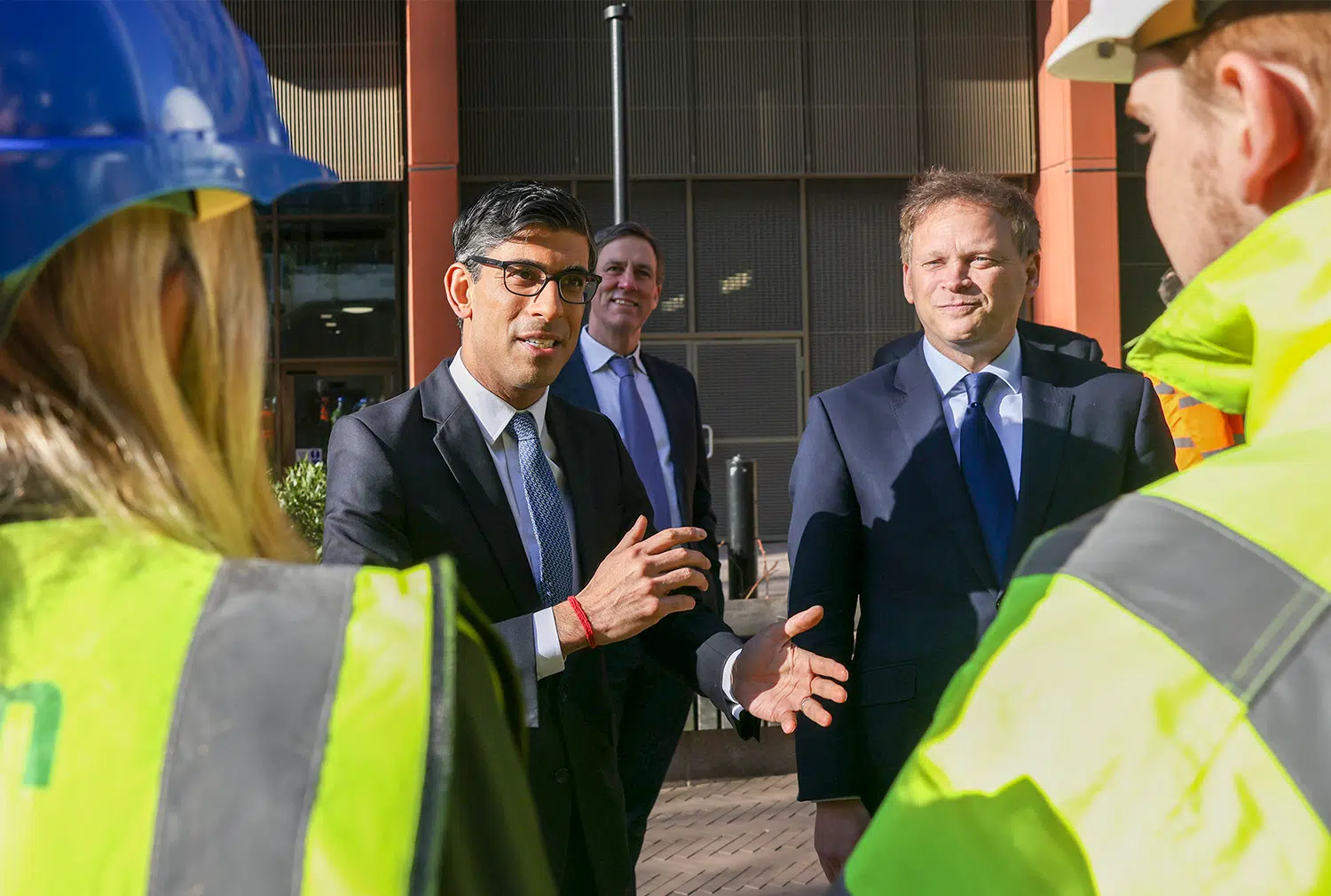
    UK Prime Minister Rishi Sunak and Energy Security and Net Zero Secretary Grant Shapps.
    Prime Minister Rishi Sunak and Energy Security and former Net Zero Secretary Grant Shapps. Credit: Simon Dawson / 10 Downing Street, CC BY-NC-ND 2.0

    https://leftfootforward.org/2023/09/another-sunak-pledge-lies-in-ruins-after-nhs-waiting-lists-hit-a-new-record-high/

    ‘It’s part of their plan to run down the NHS by underfunding it and then to claim that the only answer is more privatisation.’

    In January this year, Rishi Sunak set out his five key priorities for 2023 and among them was a pledge to reduce NHS waiting lists.

    Well yet another one of Sunak’s pledges lies in ruins, after figures released today showed that NHS waiting lists have hit a record high. An estimated 7.68 million people were waiting to start treatment at the end of July, up from 7.57 million in June.

    It is the highest number since records began in August 2007 and marks the eighth consecutive month of increases.

    …

    https://leftfootforward.org/2023/09/another-sunak-pledge-lies-in-ruins-after-nhs-waiting-lists-hit-a-new-record-high/

  • UK economy shrinks at quickest pace in seven months

    Spread the love

    https://leftfootforward.org/2023/09/uk-economy-shrinks-at-quickest-pace-in-seven-months/

    “Another dismal day for growth in the UK economy. Appalling Tory decisions (and failures to make decisions) have left us stuck in a low growth, high tax trap.”

    The UK economy shrank at its fastest pace in seven months in July, contracting by 0.5% amid industrial action and extremely wet weather, further increasing fears of a recession.

    While economists had expected the economy to shrink by 0.2% in July, the economic performance was worse than expected, after the latest figures were released by the Office for National Statistics (ONS).

    The ONS said that strikes by junior doctors reduced health service activity, while retailers who had benefited from a warm June suffered in July, which was the sixth wettest on record.

    Strike action saw senior doctors and radiographers striking over pay on two days each, and junior doctors walking out on five days in the month. The repeated refusal of Tory ministers to reopen pay talks led to strikes.

    …

    https://leftfootforward.org/2023/09/uk-economy-shrinks-at-quickest-pace-in-seven-months/

  • Nigel Farage turns attention to right-wing capture of National Trust

    Spread the love

    https://leftfootforward.org/2023/09/nigel-farage-turns-attention-to-right-wing-capture-of-national-trust/

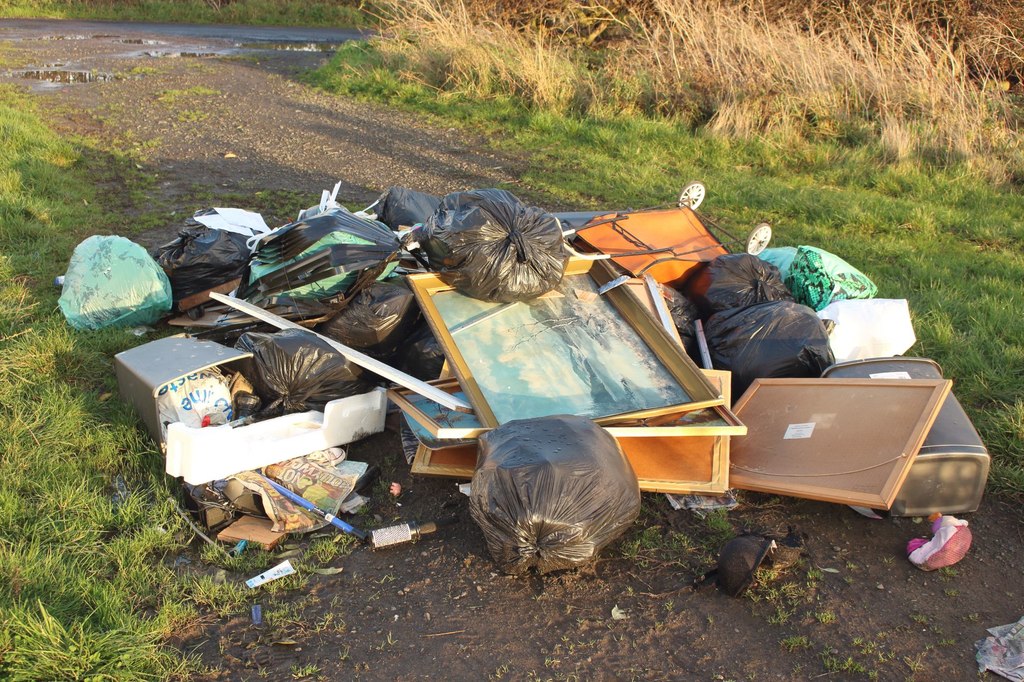
    Flytipped rubbish. Image: Graham Robson, CC Attribution-ShareAlike 2.0 Generic (CC BY-SA 2.0) https://creativecommons.org/licenses/by-sa/2.0/
    Flytipped rubbish. Image: Graham Robson, CC Attribution-ShareAlike 2.0 Generic (CC BY-SA 2.0) https://creativecommons.org/licenses/by-sa/2.0/

    The Restore Trust has a new list of candidates for the upcoming council elections and, this time, they’ve been endorsed by Nigel Farage.

    Arch Brexiteer Nigel Farage has a new target in his sights: The National Trust. The former UKIP leader has now thrown his weight behind a renewed attempt by anti-woke activists to capture the Trust, which owns more than 1,300 farms, 775 miles of coastline and 250,000 hectares of land, making it Britain’s largest private landowner.

    In October 2021, the charity and membership organisation for heritage conservation warned of an ideological campaign being waged against it by self-styled ‘anti-woke insurgents’ belonging to Restore Trust (RT). Last year’s AGM saw the Trust subjected to a well-coordinated campaign by RT.

    The Restore Trust campaign began in 2021, in the wake of the publication of a report by the National Trust that highlighted connections between 93 of its historic places and slavery. The dossier of sites linked to ‘colonialism and slavery’ and included Winston Churchill’s former family home, citing the former prime minister’s role in the Bengal famine and his opposition to Indian independence. RT took exception to the report claiming it “presents a strongly negative view of Britain, and which does not properly represent the scholarly consensus.”

    Now the RT has a new list of candidates for the upcoming council elections and, this time, they’ve been endorsed by Nigel Farage, who is a family friend of one of the candidates. Earlier this month, seven-time failed parliamentary candidate Nigel Farage said: “I hope that Restore Trust knocks a bit of common sense into what was once the great National Trust.”

    …

    https://leftfootforward.org/2023/09/nigel-farage-turns-attention-to-right-wing-capture-of-national-trust/

  • Greece’s record rainfall and flash floods are part of a trend – across the Mediterranean, the weather is becoming more dangerous

    Spread the love


    Ioanna Stamataki, University of Greenwich

    Recent images of the devastating flash floods caused by Storm Daniel in Greece hit close to home literally and figuratively. As a Greek who has completed a PhD and worked for the past eight years on flash floods, the scenes unfolding across my homeland are painfully real: a stark reminder of the broader environmental challenges we face both on a local and a global scale.

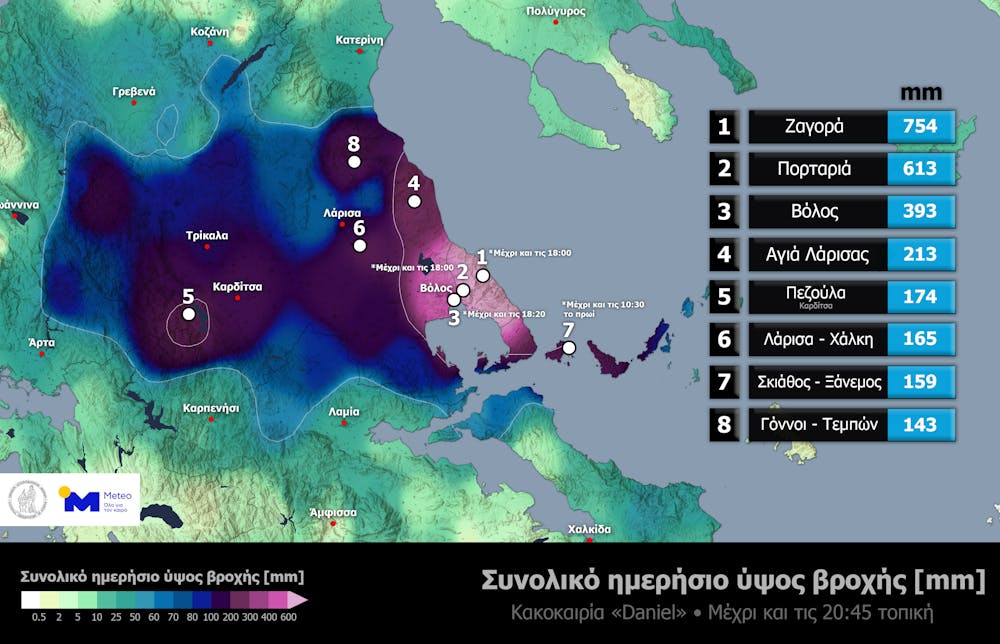
    These unprecedented flash floods were triggered by rainfall from the arrival of Storm Daniel on Monday September 4 which also affected Turkey and Bulgaria. The following day, in the village of Zagora, a record-breaking 754mm of rain fell in just 18 hours, leaving parts of the region of Thessaly in crisis and unable to respond.

    To put this in perspective, London gets about 585mm of rain over the course of a year while Thessaly gets 495mm, meaning that on Tuesday September 5, about 1.5 years’ worth of rain fell in 18 hours. Imagine the most torrential rain you have ever experienced, perhaps a cloudburst lasting 20 minutes or so. Now imagine it raining that hard but without pause for an entire day.

    Flash flooding is short in duration but extremely intense, and typically happens within six hours of heavy rainfall. Unlike regular floods, which develop more slowly and can be predicted in advance, flash floods catch people off guard due to their rapid onset and are rarely recorded in the field.

    Annotated map of central Greece
    Greece’s daily rainfall record was broken with 754 mm of rain in the village of Zagora – more than double the UK’s equivalent record.
    National Observatory of Athens/meteo.gr, CC BY-SA

    Catastrophic effects

    Across the three affected countries the floods have killed at least 18 people, with many others seeking refuge on their rooftops. There are ongoing power and water outages, infrastructure has been damaged, houses and even entire villages have been completely submerged.

    I asked Andrew Barnes, an academic at the University of Bath with expertise in using AI to analyse extreme events why this event was so exceptional. He told me that throughout Tuesday, a strong low-pressure centre formed across the south of Greece creating a large rotating weather system known as a cyclone.

    This cyclone carried large rain clouds from both the Mediterranean and Aegean Sea between Greece and Turkey. But it did not dissipate, and instead its low-pressure centre moved southwest and settled just south of Italy, with its bands of rain clouds also moving south and covering most of mainland Greece.

    Trending across the region

    It is crucial to emphasise that flash floods are not confined to Greece alone. They are in fact part of a broader pattern of extreme weather that has become more intense and frequent across the Mediterranean region.

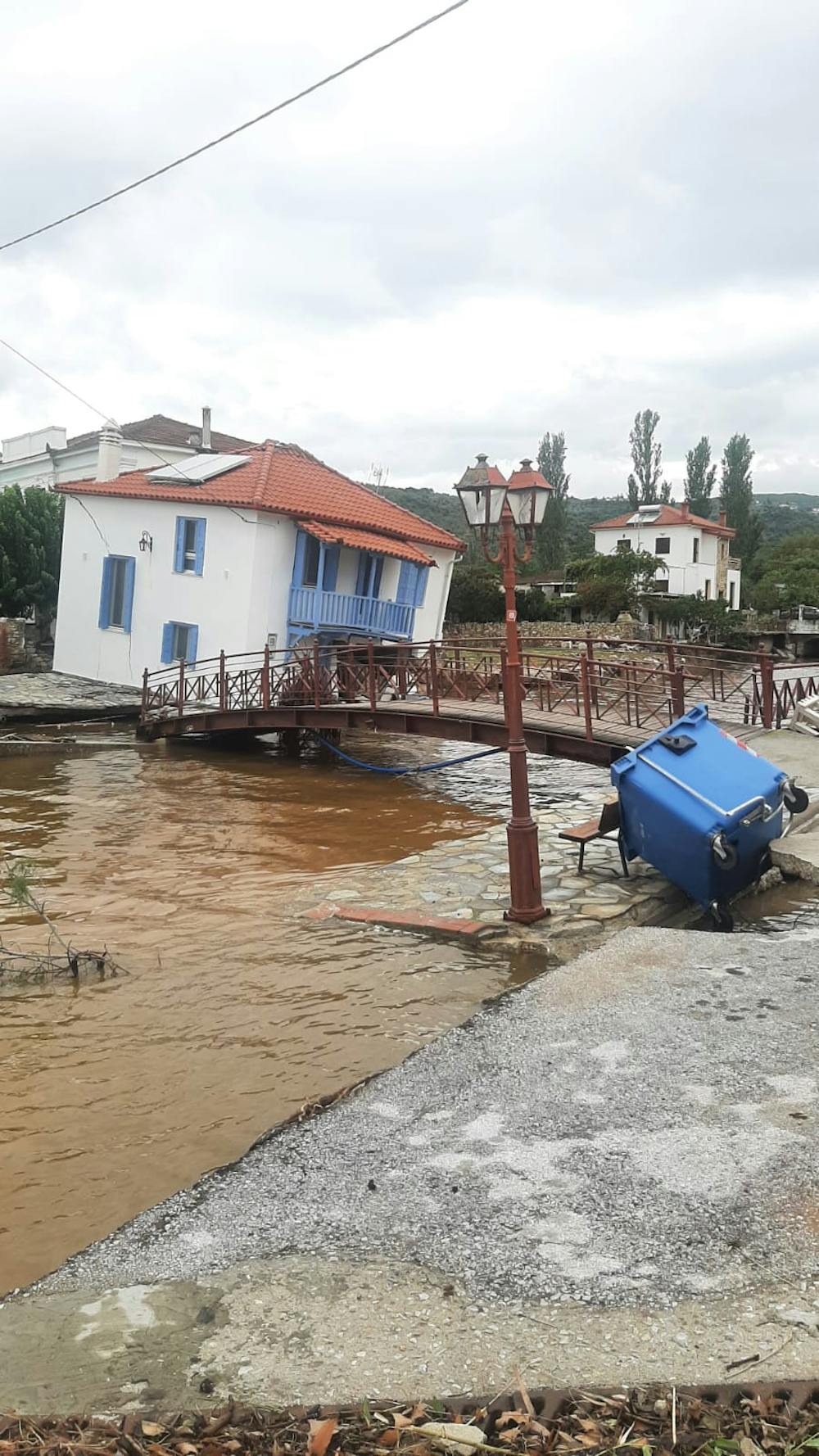
    The author’s friend saw this flooding in the village of Chorto.
    Irini Arabatzi

    Researchers who looked at 150 years of flood data in the Mediterranean found that most were flash floods, with their highest occurrence during the summer and autumn months. The region is particularly susceptible to these floods due to the combined effects of climate change and urbanisation. The latter has increased urban development in flood-prone areas and increased impervious surfaces (like roads and pavements), preventing the natural absorption of water into the ground.

    The Intergovernmental Panel on Climate Change’s chapter on the Mediterranean region issued a warning that extreme rainfall events are going to occur more often and be even more intense, elevating the risk of flash floods. This warning, in combination with records of flash floods in 2023 in Spain, Italy, Turkey, Bulgaria, France and Greece, underscores the urgent need for proactive measures to address these climate-related challenges.

    Research is advancing

    Flash floods might be rare, but they are severe enough to be a matter of significant concern. Fortunately, research has advanced considerably in recent years. We’re now better able to forecast when flash floods might happen, which areas might be susceptible, and to assess their impact in real-time.

    My colleagues and I are working on a project that combines historical documentary sources and modern hydraulic modelling. This way we can shed light on past floods and better understand the risks they pose, helping us design effective mitigation strategies for the future. Practically, in the case of a flash flood some basic but very important actions can be found on the poster below.

    infographic with important actions to take
    Tips from a flash floods expert.
    Ioanna Stamataki

    A complete eradication of flooding is neither technically feasible nor economically affordable. Instead on a larger scale it is key to start identifying flash-flood prone areas especially in catchments with historical flash floods. We should then focus on advocating for climate action and resilience measures, which can be anything from “hard” defences like new flood walls, through to policies and better public awareness of the risks. Only this will offer hope of a safer and more resilient future.


    Imagine weekly climate newsletter

    Don’t have time to read about climate change as much as you’d like?

    Get a weekly roundup in your inbox instead. Every Wednesday, The Conversation’s environment editor writes Imagine, a short email that goes a little deeper into just one climate issue. Join the 20,000+ readers who’ve subscribed so far. The Conversation


    Ioanna Stamataki, Lecturer in Hydraulics and Water Engineering, University of Greenwich

    This article is republished from The Conversation under a Creative Commons license. Read the original article.

    Related: Faster disaster: climate change fuels ‘flash droughts’, intense downpours and storms