NHS news review

Spread the love

Celebrations of the 63rd birthday of the NHS today are concerned for its future. The TUC highlights concerns about the Health and Social Care Bill (Destroy the NHS Bill) while Ozzy Osbourne pays tribute to the NHS and says that without the NHS’s dedication he could not have continued his career as the Prince of Darkness.
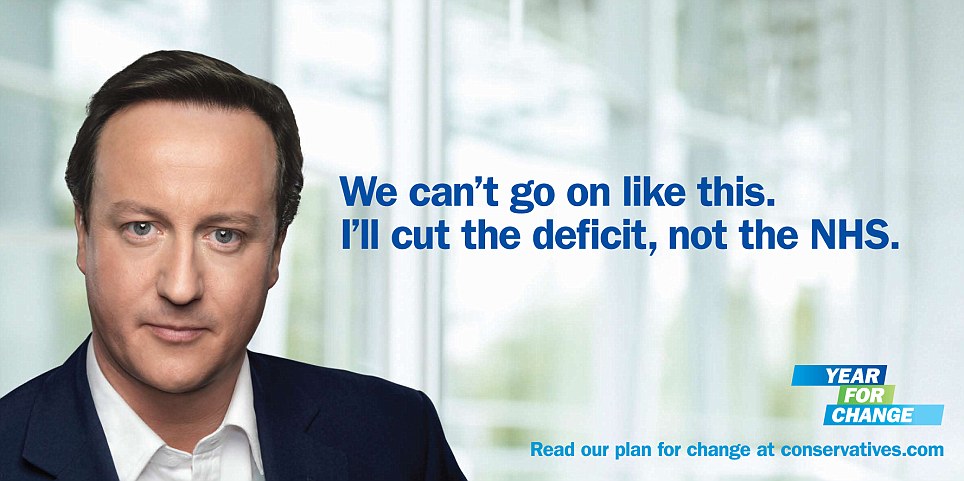
Conservative election poster 2010

A few recent news articles concerning the UK’s Conservative and Liberal-Democrat coalition government – the ConDem’s – brutal attack on the National Health Service.

Trades Union Congress – Campaigners celebrate the 63rd birthday of the National Health Service


Despite the government’s response to the recent NHS Future Forum report, unions still have key concerns about the Health and Social Care Bill. These include fears about a vast and damaging extension of competition, and concerns that the abolition of the private patient income cap will see NHS patients pushed to the back of the queue as waiting lists grow and trusts prioritise care for paying patients.

Unions also have concerns relating to the clinical commissioning process. Many groups of staff will still have no voice within the process and it is also likely to mean mass subcontracting to private companies, and an overly complex system at local level.

Transparency and accountability remain a concern. Although the Bill requires trusts to hold their meetings in public, no such requirement will exist for private and voluntary sector providers of health services.

Commenting on the birthday celebrations, TUC General Secretary Brendan Barber said: ‘Despite some amendments to the controversial NHS reforms, many of the most damaging aspects of the Health and Social Care Bill remain. The changes presented to us by the government after its recent listening exercise amount to little more than smoke and mirrors.

Ozzy in tribute to ‘dedicated’ NHS – Scotsman.com News


The former Black Sabbath frontman, who was born five months after the service was created on this day in 1948, was one of the first generation of NHS babies.

The singer was also treated by NHS staff in 2003 after a near-fatal accident at his Buckinghamshire home left him with a fractured neck vertebra, eight fractured ribs and a broken collarbone.

He said: “If it wasn’t for the hardworking staff of the NHS following my serious quad bike accident, I may not be here today to continue my career as the Prince of Darkness.

“I want to say a big thank you to all of the dedicated doctors, nurses and everyone else who makes up the NHS across the country – from Birmingham to Berkshire. Just like me, it’s still going strong after 63 years. Long may we both keep it up.”[!]

Britain/Health service – An update on the British government’s piecemeal privatisation of healthcare

[NB This is a long article very useful for background]

[9.45a.m. 5/7/11edit:  This article while mostly accurate is partly outdated by changes following the Future Forum’s ‘listening exercise’

e.g. this section is outdated re: exclusion of hospital doctors and nurses

Instead the Bill proposes that £80 billion of commissioning budgets are to be devolved to local consortia of GPs, which will decide how best to spend the money. The Bill lays down no specific requirements in terms of the size of population to be covered by a consortium, the organisational structure of a consortium, or for any public or non-GP involvement. The Bill specifically excludes hospital doctors however senior, and nursing staff and other health professionals from any specific role in this new management structure.]

The situation in England’s health care system reflects the broader picture on the European and a world scale. Healthcare is the world’s biggest industry with a turnover in excess of $5 trillion annually, 85% of which is spent in the wealthiest countries, in most of which the majority of spending takes place through tax funded systems all through social health insurance. The private sector, looking to rebuild its profit margins, is determined to recapture a larger share of this health budget, especially in Europe.

But because of the political obstacles to most European governments being seen to break up and privatise healthcare systems, which currently deliver near- universal care – in general with few copayments or charges at point of use – the privatisation process has been of a special kind.

This is very different from the process of privatisation in the UK and in other countries in the 1980s, in which whole utilities such as gas and telecoms and electricity were sold off to shareholders and became private for-profit businesses.

There are three reasons for this: the first is the political sensitivity of the issue for parties, which in general are trying to appear different from the old style Thatcherite neoliberal parties of the 1980s: and in a political climate in which there is little sympathy for the private sector and privatisation.

The second rason is that the private sector itself has limited interest in taking over the whole of healthcare systems: their focus is primarily on cherry picking those parts of the system which appeared to offer them a profit, primarily uncomplicated elective surgery – the mainstay of private medicine around the world. Certainly in England there has been very little pretence from private sector companies of any interest in taking over for example work on accident and emergency services, complex and risky surgery, or chronic care for older people and community services of any type.

And finally there is the issue of resources in the private sector: healthcare systems are far larger than the utilities of the 1980s, while the private health care sector is centred on small-scale hospitals and providing services to an elite wealthy minority of the population: it therefore has nowhere near the management or capital resources required to contemplate a takeover of the entire health systems.

In England the process of slicing off particular sections of health care for privatisation began in the mid-1980s with Margaret Thatcher’s government deciding to put non-clinical hospital services such as cleaning, catering, porters and other services out to competitive tender. The result of this was to stimulate the emergence of a new range of small-scale and untested private companies, and in the context of labour intensive and generally low paid work, these companies attempted both to undercut existing costs to win contracts and at the same time make a profit focused on employing fewer staff, working harder, and offering them worse pay and conditions.

This in turn brought the virtual casualisation of hospital cleaning in much of the UK, but also undermined staffing levels and standards of cleaning and hygiene, even in those hospitals where services remained in-house, since public sector managers were obliged to compete with the low standards and low wages of the private sector.

A generation later the legacy of this privatisation is still haunting the National Health Service in much of the UK, and especially in England, where fewest services have been brought back in-house in recent years. Hospital-borne infections, poor standards poor morale and gaps in staffing levels continue to create problems and often to dump work which should be done by private companies onto nursing and other staff who have other responsibilities as well.

BBC News – Social care costs ‘should be capped at £35,000’

Social care costs in England should be capped so people do not face losing large chunks of their assets, an independent review says.

Council-funded home help and care home places for the elderly and adults with disabilities are currently offered only to those with under £23,250 of assets.

The Dilnot report said the threshold should rise to £100,000 and a £35,000 lifetime cap on costs would be “fair”.

UNISON Press | Press Releases Front Page

UNISON, the UK’s largest union, said today that the Dilnot Commission’s report could be a stepping stone in the right direction towards an NHS style model of care for the elderly, free at the point of use. Raising the means-testing threshold and capping private contributions draws a line in the sand, but the public will want to see that cap move downwards towards tax-funded care, otherwise it will always be a hostage to political fortunes.

The union called on the government to act now on the recommendations, making sure every penny goes towards public care not private profit, and urged it to tackle the wider issues of quality in the system. And warned that public trust in an insurance based model will be low, given the poor track record of the financial services industry.

Healthcare Locums probes two execs over ‘misconduct’ | Business

Two senior recruiters at crisis-riven healthcare employment agency Healthcare Locums have been suspended pending investigations into serious misconduct allegations that will fuel criticism of the use of profit-driven private contractors by the NHS.

One executive, Christian Mansfield-Osborne, is being investigated for alleged “irregular invoicing” in an affair which has involved the company reimbursing one NHS trust in Birmingham with £200,000.

The other, Scott Whitehead, is being probed over allegations that ancillary staff were sent out to work for the NHS without having undergone the required checking procedures.

It is not clear which checks were allegedly not carried out, but the kind of paperwork required for such contractors include Criminal Records Bureau searches, right-to-work documentation and professional qualifications.

Continue ReadingNHS news review

NHS news review

Spread the love

Conservative election poster 2010

A few recent news articles concerning the UK’s Conservative and Liberal-Democrat coalition government – the ConDem’s – brutal attack on the National Health Service.

Union draws up NHS wish list / Britain / Home – Morning Star

Unison general secretary Dave Prentis will urge the government to pick presents from the union’s wish list for the NHS’s 63rd birthday tomorrow or the health service may not be celebrating next year.

Mr Prentis will warn the government that unless it takes heed of the wish list, plans set out in the Health and Social Care Bill will lead to the break-up of the NHS.

Profits will be put before patients, as private companies are set to gnaw through a huge slice of the birthday cake.

Mr Prentis will join other union heads at the Department of Health at 9.30am to present giant birthday cards.

“For the last 63 years hard-working health service staff have saved millions of lives and built it up to be the national treasure it is today. The government wants to tear all this down and turn the NHS into little more than a logo,” he said.

“The best present the government could give is to recognise the good work carried out by doctors, nurses, cleaners and other health staff. By picking the presents laid out in our birthday wish list it could stop the Health and Social Care Bill becoming a recipe for chaos and privatisation.

“Plans set out in the Bill will simply turn the NHS into a business, where more of our taxes will pay for profit-driven companies to provide our health care.

“All of this when satisfaction of the NHS is at an all-time high.

“NHS staff, campaigning groups and the public will fight to keep a service that puts patients before profits. We must stop a similar crisis to Southern Cross and make sure that there is a 64th birthday to look forward to.”

UNISON Press | Press Releases Front Page

UNISON’s NHS birthday wish list:

Keep services in the public domain – the move to a policy of ‘Any Qualified Provider’ will see private companies get their claws into services – it will then be impossible to bring them back. New commissioning consortia will outsource to unaccountable companies, while the NHS will be legally blocked from being the ‘preferred provider’ of care.

Retain the cap on private patient income – the existing cap is designed to stop Trusts prioritising more profitable private patients over those in the NHS. As waiting lists continue to grow, NHS patients will be pushed to the back of the queue. The NHS is built on fairness and equity – this policy exemplifies the Government’s disdain for its founding principles.

Halt the move to make Monitor an economic regulation – despite claiming to have ‘listened’ to the barrage of criticism, the government still envisages the regulator Monitor as an NHS version of Ofgem or Ofwat, with the power to enforce competition law and prevent “anti-competitive behaviour”. This will move the focus away from scrutinising the quality of care, potentially putting patients in danger.

Keep staff in their jobs – the Government’s own figures anticipate 20,000 redundancies across the NHS – patient services are bound to suffer. Redundancy payments alone will cost £1bn, which is a colossal waste of money when the NHS is under huge pressure to make ‘efficiency savings’ elsewhere.

Strengthen accountability and openness – the Government still plans to put responsibility for the NHS at arm’s length from the health secretary, meaning that Parliament will find it harder to hold the NHS to account. Loopholes will allow commissioning consortia and foundation trusts to block the public from full access to their meetings and decision-making processes.

Continue ReadingNHS news review

NHS news review

Spread the love

The BMA have passed a resolution opposing changes to doctors’ pensions. The BMA is to ballot for industrial action if necessary. It has been calculated that doctors would be better off using a private pension scheme than the proposed changes.

Conservative election poster 2010

A few recent news articles concerning the UK’s Conservative and Liberal-Democrat coalition government – the ConDem’s – brutal attack on the National Health Service.

BMA Calls For Talks With Government As Doctors Attack Myth Of “Gold-Plated” Pensions, UK

The BMA today repeated its call for talks with the government on pensions, as new figures show that many junior doctors could be better off investing in a private pension than joining the reformed NHS scheme. The call for dialogue comes as doctors and medical students attending the BMA’s annual conference in Cardiff passed a motion calling for a possible ballot of BMA membership on industrial action.*

Initial figures from illustrative modelling commissioned by the BMA* show that the potential pension a doctor embarking on a career as a GP could expect to build up in the NHS scheme – assuming it undergoes key reforms proposed by the government – could be lower than the pension built up by investing in a personal scheme (in which there are no employer contributions.)


*Notes

The new figures are illustrative examples only, based on initial information from the government on possible future changes to pensions benefits. Any doctor considering decisions on their pensions is advised to contact the BMA Pensions Department or an independent financial adviser.

The wording of the motion debated at the BMA Annual Representative Meeting today was as follows:

That this Meeting:-

i) believes that increasing the normal pension age for NHS staff will not be in the interest of the NHS; carried

ii) believes a final salary pension scheme for hospital doctors should be the favoured affordable option for the NHS as it provides a major incentive for recruitment and retention of high calibre NHS hospital doctors; carried

iii) believes that a CARE NHS pension system will give hospital doctors a significantly worse pension on retirement due to their pay structure increasing right to the end of their careers; carried

iv) believes that a revised CARE scheme for GPs will be unacceptable and may result in up to a third of GPs retiring prematurely; carried as a reference

v) believes that tiered pension contributions are unacceptable in a CARE scheme for doctors; carried as reference

vi) calls on the BMA, in the event that there is a government plan to halt the final salary pension scheme and replace it with an unfavourable career average (CARE) scheme for doctors, to ballot the BMA membership regarding all forms of industrial action; carried

Source:
British Medical Association

Continue ReadingNHS news review

NHS news review

Spread the love

Ed Miliband highlights the huge increase in quangos and costs associated with the ConDems’ destruction of the NHS – quangos are to increase from 163 to 521. The RNIB reports that operations are not being performed because of cuts. Tower Hamlets GPs support striking public sector workers.

Conservative election poster 2010

A few recent news articles concerning the UK’s Conservative and Liberal-Democrat coalition government – the ConDem’s – brutal attack on the National Health Service.

NHS redundancies to cost public £852m – UK Politics, UK – The Independent

Taxpayers face an £852m bill for redundancies as a result of the Government’s shake-up of the National Health Service.

The Labour Party leader Ed Miliband, who challenged David Cameron over the figure at Prime Minister’s Questions, warned that many of the staff being sacked by strategic health authorities and primary care trusts (PCTs) would be re-employed by the GP commissioning consortiums replacing PCTs.

Mr Miliband said the U-turn over the original reforms would increase the number of statutory organisations in the NHS from 163 to 521, instead of cutting bureaucracy as the Government suggested. “Is this what you meant by a bonfire of the quangos?” Mr Miliband asked.

The Prime Minister insisted the shake-up would save £5bn by cutting bureaucracy. He told Mr Miliband: “What we inherited was a situation where the number of managers was going up four times as fast as the number of nurses. What’s happened since we took over? The number of doctors has gone up, the number of bureaucrats has gone down.”

Patients denied sight-saving ops as NHS tries to save cash, RNIB warns – mirror.co.uk

PATIENTS are being denied sight-saving operations in an effort to save money, a charity claimed yesterday.

More than half of primary care trusts have introduced arbitrary tests for those who want cataracts removed, research by the RNIB found.

It said: “Patients are being forced to live with unnecessary sight loss. It is pretty clear this is cost-cutting.”

The RNIB found 70 of 133 PCTs that responded applied their own rules and ignored surgery guidelines. It said hip, teeth and knee operations are also under threat.

Pulse – GPs take to the streets to support public sector pension strikes

Dozens of GPs and practice staff in east London are to publicly protest in support of teachers, civil servants and other public sector colleagues striking over pension cuts.

Around 600,000 public sector workers are expected to walk out tomorrow over the Government’s proposed changes to pensions. It comes as the BMA’s annual representative meeting in Cardiff prepares to debate a motion calling for a ballot on ‘all forms of industrial action’ if consultants’ final-salary pensions are replaced by a career average scheme.

GPs and staff from practices across Tower Hamlets are planning two protests in high-visibility spots in the borough: one outside the council offices on Roman Road, the other on a traffic island in the middle of the A13.

Dr Anna Livingstone, a GP in Tower Hamlets and member of City and East London LMC, told Pulse: ‘We in Tower Hamlets feel very strongly against the [health] bill and in support of public service workers.’

‘GPs normally work through their lunch break, but tomorrow we won’t be doing so. Tomorrow we’ll use the time to make a statement in solidarity with those on strike.’

She added that the stark inequalities between rich and poor communities in the borough, which ranked in the top ten areas listed in the 2010 Indices of Deprivation, compelled herself and her colleagues to act.


27/11/13 Having received a takedown notice from the Independent newspaper for a different posting, I have reviewed this article which links to an article at the Independent’s website in order to attempt to ensure conformance with copyright laws.

I consider this posting to comply with copyright laws since
a. Only a small portion of the original article has been quoted satisfying the fair use criteria, and / or
b. This posting satisfies the requirements of a derivative work.

Please be assured that this blog is a non-commercial blog (weblog) which does not feature advertising and has not ever produced any income.

dizzy

Continue ReadingNHS news review

NHS news review

Spread the love

Shadow Health Secretary John Healey criticises the Destroy the NHS Bill as introducing … “more bureaucracy, more complex decision making and more wasted cost.”

Crapita complains about not getting enough business from intended and proposed NHS privatisation.

ConDems release plans to replace NHS trust management with private managers. There is an obvious danger here – that NHS trusts will be deemed to be failing so that they can be replaced by private managers. It’s the “failed states” scenario of international politics played out in the NHS.

The Hospital Consultants and Specialists Association warns of a perfect storm in the NHS.

Conservative election poster 2010

A few recent news articles concerning the UK’s Conservative and Liberal-Democrat coalition government – the ConDem’s – brutal attack on the National Health Service.

Government ‘learned little’ from Health Bill pause, says Labour | GPonline.com

Shadow health secretary John Healey said the changes to the Health Bill had been a ‘political fix’ designed to ‘buy off’ the widespread opposition to the NHS reform plans.

He said the closer people look at the amended Health Bill ‘the less they will like the changes’ and ‘the more concerned they will become’.

But he warned that the government is ‘railroading’ the Bill through parliament, allowing little time for scrutiny of the changes. He also raised concerns that only 64 of the 299 clauses are being sent back to the House of Commons for further debate by MPs.

‘The government has only allowed 10 scrutiny sessions… which means there will be around seven minutes for each amendment for scrutiny,’ he said.

Mr Healey meanwhile said that the cost of reorganisation is likely to rise as a result of the changes to the Health Bill.

He said: ‘The government is introducing more bureaucracy, more complex decision making and more wasted cost.

‘Commissioning, which is currently being done by PCT, will soon be split with at least five bodies.’

He also warned that the government is unlikely to carry out a new impact assessment of the updated Bill, meaning the NHS is being asked to implement a ‘far reaching set of changes’ without knowing the costs or the wider implications.

He said ‘Far from removing confusion and uncertainty in the NHS about the plans for the future, the government with its announcements and amendments is making that confusion and uncertainty greater.’

HealthInvestor – Article: NHS not making use of outsourcing partnerships, says Crapita’s Bryant

Delays to the government’s Health Bill and short-sighted policies in NHS trusts are holding back Crapita’s outsourcing operations in the sector, the company’s managing director for health has said.

Beverley Bryant, who joined Crapita last year after a stint at the Department of Health, said that despite the need to make huge efficiency savings under the government’s QIPP agenda, trusts were generally failing to reorganise their back office functions accordingly.

“Trusts are still working on their budgets on a year-by-year basis, when in reality if they want to make savings next year and the year after they are going to have to come out to market this year,” she told HealthInvestor.

“We’re trying to get the message across that if you centralise and streamline back office services across a number of NHS trusts, you can make big savings. But at the moment there aren’t many big projects doing that.”

Bryant also suggested that NHS bodies might not be “as used to the partnership approach to outsourcing as local authorities are”. But she added: “We’re confident that once a few start to do it, more will follow.”

Outrage over plan to use private managers in the NHS | Public Finance — official CIPFA magazine

Unions have reacted with fury to government plans to bring in private sector firms to run failing NHS trusts, while health service professionals have accused the Department of Health of recycling old failed policies.

In a June 4 document, Developing the NHS performance regime, health minister Ben Bradshaw set out plans for minimum standards of quality, safety and financial management.

Trusts failing to meet the standards – part of a performance management framework that will be distinct from the Healthcare Commission’s inspection regime – will be deemed to be ‘challenged’ and given a set timescale to improve.

Those that fail to lift their performance will have their management team replaced in one of three ways: by a fresh team of NHS managers; takeover by a foundation trust; or by the introduction of a private sector management team under contract.

Dr Jonathan Fielden, chair of the British Medical Association’s consultants committee, speaking at the BMA consultants’ conference, asked: ‘How much do they want to offend their backbenchers? How much do they want to demoralise the talent in the NHS that can do so much if not always played down and insulted by ministers? How little do they know of the complexities of the NHS? You can’t just fly in management.’

Unison senior national officer Mike Jackson agreed that it was ‘unlikely that private sector managers would have the necessary experience of delivering acute and emergency services to bring long-term benefits’.

He added: ‘There is a strong public service ethos in the NHS which would be severely damaged by bringing in private management.’

Climate is ripe for a perfect storm in the NHS » Hospital Dr

The Hospital Consultants and Specialists Association (HCSA) is a trade union that represents the interests of senior hospital and medical staff

Many trusts are openly saying that they can’t pay the bills and are resorting to draconian measures to balance the books. At the same time NHS staff remain under a pay freeze, redundancies are becoming the norm and staff are being asked to accept higher pension contributions in return for a lower pension income. Morale is low; and goodwill rapidly destroyed as the NHS is forced to manage a financial crisis not of the staff’s making.

Where does patient care stand in this mess? Many treatments are being put on hold or restricted. Care of the elderly is regularly reported as being sub-standard. Waiting times are lengthening; tensions within the NHS increasing.

Reform can only be built upon a solid platform and I fear that the sinking sands will inevitably lead to structural collapse. Raiding surplus pension funds to bail out the business is Maxwellian, dangerous and ill-conceived. How often are we told: “Staff are the greatest NHS asset?” Well now is the time for politicians to put their support for the NHS to the test.

The perfect storm is not a cheap sound bite. Until or unless NHS staff are valued, respected and treated fairly, the storm clouds will loom large.

Continue ReadingNHS news review