NHS news review

Spread the love

NHS news: This posting covers yesterday’s news. I’ll do a further NHS news review for today.

Three Labour MPs – Grahame Morris, Diane Abbott and Michael Meacher – object to the bill to destroy the NHS, Conservative pro-‘reforms’ Dr. Jonathan Munday warns “I am now getting seriously worried that the political pressure on Lansley is such that the government may abort GP commissioning entirely…” and cuts.
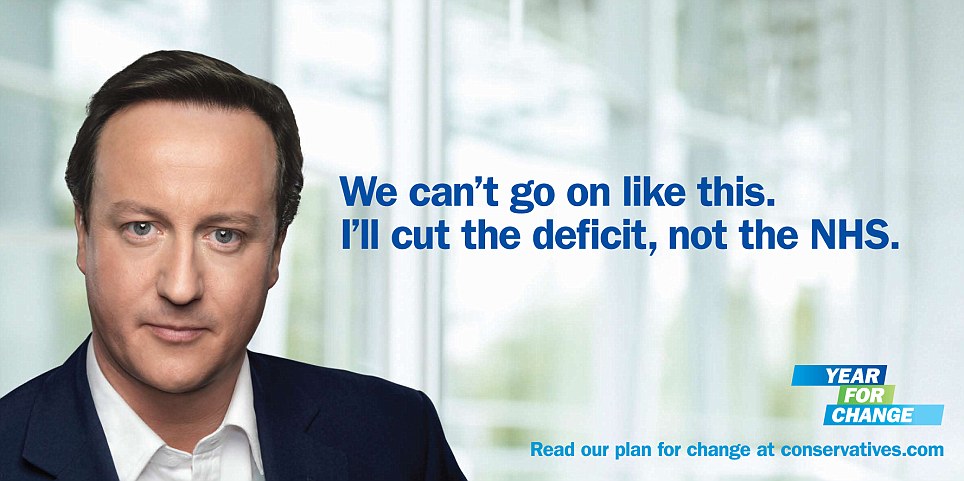
Conservative election poster 2010

A few recent news articles concerning the UK’s Conservative and Liberal-Democrat coalition government – the ConDem’s – brutal attack on the National Health Service.

Nothing more than a hollow political stunt / Features / Home – Morning Star

Radical plans to shake up the NHS have been put on hold for what has been spun as a natural break and an opportunity to “pause, listen, reflect and improve” the Health and Social Care Bill.

This cynical step by the coalition’s leaders is a strategy destined to fail.

The prospect of Andrew Lansley’s flagship policy receiving royal assent must now be constrained by the fact that minor tweaks will not change the thrust and direction of travel charted by the Bill.

Lansley’s plans are not simply another reorganisation but a root-and-branch upheaval, which over time will lay the foundations for private health care to compete against in-house NHS provision throughout the entire health service.

Much has been made of the need to make new GP-led commissioning consortiums more inclusive and accountable.

As the Bill currently stands, primary care trusts will be replaced by statutory private bodies with GPs acting as figureheads.

These bodies will be able to conduct their affairs behind closed doors.

Freedom of information requests will not apply to them and there will be no legislative safeguards against conflicts of interests between commissioning and providing NHS services.


Grahame Morris is Labour MP for Easington and a member of the health select committee.

Cost of change ‘out of control’ / Britain / Home – Morning Star

An influential group of MPs fuelled the row over the coalition’s NHS shake-up today by warning that ministers have “no control” over many of the costs.

Pushing through the changes at the same time as seeking £20 billion in “efficiency savings” by 2014/15 could also put patient care at risk, the Commons public accounts committee warned.

It raised the concerns in a report into the unpopular changes, which are opposed by unions and the public and threaten to drive a wedge between the coalition partners.

One of Deputy Prime Minister Nick Clegg’s closest advisers, Norman Lamb, has hinted he could quit unless implementation of the package – which would put GPs in charge of commissioning services – is slowed down.

Committee chairwoman Margaret Hodge said: “Whilst the reforms could complement the imperative of achieving £20bn efficiency gains, the reorganisation might also distract those responsible for making the savings while safeguarding standards of patient care.

“Furthermore, if the Department of Health estimate of the one-off costs associated with reorganisation turns out to have been too low, it will make the challenge of achieving savings for reinvestment even tougher.”

Lansley accused on NHS reforms ‘pause’: ePolitix.com

The health secretary has faced criticisms from Labour MPs over his pledge to “pause and listen” to concerns over planned reforms the NHS, ahead of next week’s local elections.

Shadow health minister Diane Abbott asked how the public are expected to take the discussions and the listening exercise on the Health and Social Care Bill “seriously”.

Speaking during departmental questions in the Commons, Andrew Lansley said the government is united in its commitment to strengthen the NHS.

Abbott told MPs the pause was merely “a device” to get the coalition through the May elections, with the health secretary determined to “get away with as little substantive change” as possible.

Oldham News | News Headlines | Meacher blasts NHS changes – Chronicle Online

Oldham West and Royton MP Michael Meacher has written to health secretary Andrew Lansley to oppose what he describes as lunatic changes to the NHS which he believes are unconstitutional.

He said that abolishing local Primary Care Trusts (PCTs) — which run community health services — will have “significant detrimental consequences on patient care”.

And he believes that it puts the whole provision of health care at risk.

The change is part of the move giving GPs rather than PCTs the power to commission community health services.

As part of the transition, a temporary Greater Manchester PCT serving around three million people will be in place by June.

In his letter, Mr Meacher writes: “These arrangements have been made with no consultation at any level and, for the first time in NHS history, there will be no decision-making at local level.

Protest to save NHS is gathering momentum|30Apr11|Socialist Worker

NHS campaigners across London are in a buoyant mood as they prepare for a major demonstration in May against the government’s health service “reforms”.

Prime minister David Cameron and his health secretary Andrew Lansley are still reeling from a stream of attacks on their health bill.

And last week around 40 activists met to plan the next phase of their assault.

“It was a brilliant meeting. Full of life and lots of people committed to making the protest a success,” said Jordan, an occupational therapist and Unison union rep at Hackney’s Homerton hospital.

“Trade unionists from my part of east London agreed to distribute 10,000 postcards for the demo that my union branch is sponsoring. By this weekend we’d already given out 2,000 of them.

Step back from NHS, Tory boy|30Apr11|Socialist Worker

A doctor who runs a sparsely-supported campaign in support of the government’s health “reforms” has been revealed as a leading Tory—and the head of a body that expects to profit from the changes.

Dr Jonathan Munday, the former Conservative mayor of Kensington and Chelsea, is leading an operation to rescue Andrew Lansley’s health bill.

He also runs a GP commissioning consortia, Victoria, found in the new NHS “cluster” of north west London.

In a leaked email, he told the heads of GP consortia that the political climate against reforms is “getting worse by the day”.

“I am now getting seriously worried that the political pressure on Lansley is such that the government may abort GP commissioning entirely or, almost worse, may so water it down and constrain it so that GP consortia will have the worst of all worlds—a lot of effort, political responsibility for any cuts but no ability to wrest initiatives or make needed reforms,” he moaned.

Southport Hospital axes first of three wards – Skelmersdale Advertiser

A MERSEYSIDE hospital will close a 28-bed ward as part of a £30m cuts plan.

Ward 7b, at Southport and Formby District General Hospital, will shut before the end of May.

Southport and Ormskirk Hospital NHS Trust said the move would save £1m, with health bosses insisting that patient care would not be compromised.

The trust must save £8.5m this year and £30m over a four-year period. It has already announced plans to cut 125 jobs.

Massive NHS cuts will help save £77million (From Basildon Recorder)

NHS services will face huge cuts as health chiefs admit they have to save an unprecedented £77.6 million over the coming financial year.

Measures are being drawn up to scale back yet more services and change the way patients are treated – effectively meaning fewer people will be referred to hospital.

Millions will be sliced off budgets for elderly care, end of life services, hospital referrals and medication, raising fears healthcare in south Essex will be cut to the bone.

The health trust which serves Basildon and Thurrock, has now merged with its counterpart in Southend and Castle Point to make savings.

Together they saved £52million in order to end the 2010/11 financial year in the black – but this was as a result of a swathe of cuts to services being made. Now more are looming.

Despite having a combined budget of £1.2billion for the coming financial year, health bosses say their costs are rising at an alarming rate.

They must save a total of £117million over the next four years, with £77.6million having to be saved in this financial year –- 2011/2012.

Continue ReadingNHS news review

NHS news review

Spread the love

There’s been very little NHS news over the bank holiday weekend. Today’s NHS news is about cuts, the denial of services and drugs and an article by the Morning Star about how the listening exercise is a sham.

Conservative election poster 2010

A few recent news articles concerning the UK’s Conservative and Liberal-Democrat coalition government – the ConDem’s – brutal attack on the National Health Service.


Patients still paying for free cancer drugs – Health and beauty – Lifestyle – getreading – Reading Post

Health bosses in Berkshire have said it is “very disappointing” to hear many cancer patients in the area are paying for much needed medication which they could get for free.

Figures released from a National Cancer Patient Experience Survey show around 37 per cent of people surveyed who are receiving treatment for cancer with the Royal Berkshire NHS Foundation Trust have not been told they are eligible for free prescriptions.

Since April 2009, cancer patients have been eligible for exemption certificates for medication relating to their illness, its treatment and the effects of the treatment.

However, according to the survey, conducted by the Department of Health last year, many cancer patients are still not aware of the free cancer treatment available to them, and are said to be cutting back on essential items such as food or heating to cover the cost.

But the boy’s father, Max, has now learned the request has been unsuccessful and has vowed to lodge an appeal. Without the drug, he says his son will suffer permanent mental and physical disabilities.

Effort to cut £150m from health budgets – East Hampshire – The News

NHS trusts across the area are looking to save a staggering £150m-plus this year, The News can reveal.

The trust which runs Portsmouth hospitals has already this week announced plans to axe up to 99 jobs in a bid to save £30.5m. But now NHS Hampshire – which funds healthcare across the county – has declared it needs to shave £105m off its budget.

NHS Portsmouth – which pays for city healthcare – has to save £15.2m, while the area’s ambulance service needs to save £6m.

The reason for the massive savings is down to reduced government spending. Also the health service as a whole was last year told it needed to make efficiency savings of £20bn by 2014.

Don’t swallow Lansley’s pre-election pause / Features / Home – Morning Star

Don’t believe the headlines about a pause or a so-called “listening exercise.” Cameron and Lansley are forging ahead with their plans to break up the NHS into a competitive market, and to slice off a growing share of the NHS budget for private providers.

The pause in the process is designed to give Lib Dems long enough to see their party massacred in the local elections and scare them into agreeing to support Lansley’s Health Bill for fear that they trigger the collapse of the coalition.

To front up the so-called “listening” exercise, an NHS Future Forum has been set up. It is stuffed with high-profile supporters of Lansley’s plans. All five of the GPs on the panel are among the minority of GPs who signed up for Lansley’s suggested commissioning consortiums. The whole forum is under the chairmanship of Professor Steve Field, who controversially supported Lansley’s white paper back in July and has since been replaced as president of the Royal College of GPs by Dr Clare Gerada, who has criticised much of the Lansley plan.

The forum on “choice and competition” will be led by Sir Stephen Bubb, a one-time Labour councillor and now at the head the Association of Chief Executives of Voluntary Organisations.

Bubb is a vigorous advocate of competition and greater private-sector involvement in delivering healthcare. He led a challenge to Labour’s attempts to designate the NHS as preferred provider of community health services.

Other doctors, trust bosses, primary care trust and strategic health authority bosses and senior council officers among the 40 hand-picked appointees on the forum are likely to be influenced by their career aspirations. They are unlikely to listen to any articulate critics of the Lansley plan.

The whole process has been set up to waste a month, to give the impression of responding to public opinion – and then to press through the key elements of the plan with little if any actual change.

There is no indication that the principal objections raised at the Lib Dem conference a few weeks ago have been taken on board by the Tories, not least because the suggestion that the private sector can somehow be prevented from “cherry-picking” the most profitable services from the NHS is pure fantasy.

Woman to pay thousands for brain tumour op which NHS wouldn’t fund

A WOMAN will this week spend £16,500 undergoing surgery on three brain tumours which the NHS refused to fund.

Lynn Payne, 62, of Radcliffe-on-Trent, was diagnosed with the tumours in February after she lost feeling to her right leg.

Following the diagnosis she applied for funding to have the tumours treated with radioactive gamma rays.

But the East Midlands Specialised Commissioning Group turned down her request as did her primary care trust, NHS Notts County, forcing her to pay £16,500 to have the surgery done privately.

Continue ReadingNHS news review

The Plot Against the NHS #1

Spread the love
The plot against the NHS

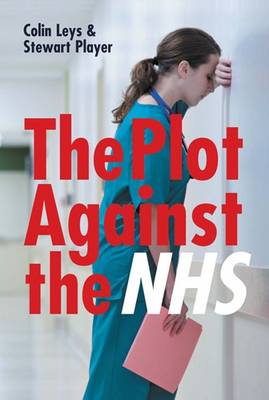
Selected excerpts from ‘The Plot Against the NHS’ by Colin Leys and Stewart Player. Chapter One is available here. I highly recommend this book available from Merlin Press for £10.

I got my copy yesterday so I have yet to complete it. The book identifies intense lobbying by commercial interests resulting in the privatisation of ancilliary NHS services under Thatcher, covert privatisation of the NHS under Blair’s New Labour administration and Andrew Lansley’s overt privatisation under the current Conservative and Liberal-Democrat coalition government. It draws a picture of the private sector unable to compete with the NHS in terms of cost or quality and the private sector being given excessive, hugely favourable terms. Patricia Hewitt, Alan Milburn and John Reid are identified as covert privateers ‘marketers’ under the Blair administration.

p51

By late 2008 the crisis was at it’s height. Lehmann Brothers was history, Northern Rock had been nationalized along with Lloyds and the Royal Bank of Scotland, and the government’s debt was on course to reach 70 per cent of national income, up from around 40 per cent for most of the decade. In this situation it was obvious that public spending was going to suffer. How would this affect the NHS?

According to the Department of Health, the management consultants McKinsley (where Dr Dash was by now a partner in the company’s London office) were instructed in February 2009 ‘to provide advice on how commissioners might achieve world class NHS productivity to inform the second year of the world class commissioning assurance system and future commissioner development. The advice from McKinsley … was provided in March 2009.’ But the advice McKinsley gave actually tells a different story.

We don’t know what assumptions they were told to make but it looks as if they were told or at least encouraged to assume that NHS spending would remain constant for the next five years, and asked how productivity could be increased to cope with the rise in demand over that time. Their conclusion was that in order to find enough savings to meet the rising cost of providing health care over those years the NHS might have to shed ten per cent of it’s staff. When the press got  hold of the  report in September 2009 there was a furious reaction from the NHS workforce.

Health ministers then said that the report had been rejected, and even then it had been commissioned without their authority.

p54

In October 2010 the coalition government announced that it would continue to raise NHS spending in real terms (based on the general consumer price index) over the next four years – the figure actually claimed was an annual rise of 0.1 per cent. As a result most people outside the NHS assumed that the cuts would now stop. But the reality was different. For one thing, the NHS was told to transfer £2.1 billion to local authorities over the next five years as part of a drive to move patients out of hospitals and into more ‘cost-effective’ social or community care. So the NHS budget was actually being cut. And the NHS’s costs (for drugs, equipment, electricity, etc) would go on rising faster than the general cost of living, so that even if its budget stayed more or less constant it would soon be too small to cover all the bills.

On top of this, people’s healthcare needs (or ‘patient demand’, as today’s policy-makers call patients’ needs) would also go on rising as  people got older, or more obese, or more depressed – and as more of them became unemployed. The economic crisis was thus also a healthcare crisis, in which drastic measures could be presented as being unavoidable, measures of ‘last-resort’ – even if they implied the end of a high-quality health service equally available to all.

Which was pretty much what the new Secretary of State for Health, Andrew Lansley, decided to do, with proposals for yet another NHS reorganization – a reorganization not only un-mentioned in the election campaign, but one that flatly contradicted David Cameron’s pledge not to undertake any more ‘top-down reorganizations’ in the NHS. Everyone noticed, of course: but the coalition’s argument that the financial crisis meant that all previous bets were off proved effective – even if at first most people couldn’t quite see what Lansley was driving at. All comentators agreed in calling his proposals the most important changes in the NHS since it was set up – but what exactly did the changes mean? And were they really so different from what had been covertly planned for ten years or more under New Labour?

p68

By the time of the 2010 election a fairly clear picture of what the future NHS market would be like had emerged amoung health policy insiders. Influenced by a decade of exposure to US policy advice, and especially by the link with Kaiser Permanente, they envisaged an NHS that was already much closer to being a kitemark attached to a wide variety of provider organizations and systems than people outside the policy-making circle realized.

They imagined a radically reduced NHS hospital sector, with the surviving NHS foundation trusts focused intently on financial success. They envisaged the bulk of outpatient care being transferred out of hospitals into local, cheaper settings, which would be privately built and owned (as so many NHS hospitals already were, through PFI), or jointly owned with ‘entrepreneurial’ clinicians. They envisaged a growing number of the remaining NHS hospitals being run by private companies. They imagined specialist clinicians becoming increasingly self-employed, rather than working on a salary for a single foundation trust, and selling their services to a mix of public and private organizations.

They expected a growing proportion of patients with chronic illnesses to have fixed budgets for their care, and they accepted that top-ups, for which insurance companies would provide insurance plans, would become a normal form of co-payment, as they already were for some life-prolonging cancer drugs. They expected PCTs to be using private healthcare corporations to help them commission services in a more sophisticated way, or doing it for them, and so driving foundation trusts to become more focused on economy and driving more work to private providers. Fundamentally, they anticipated a replication of many of the structures and values of US managed care.

No one who was familiar with this imagined future could have been surprised by the contents of Lansley’s White Paper of July 2010, or the Health and Social Care Bill of January 2011. The only people likely to be surprised were the public, with whom the marketizers had chosen not to share their vision.

Continue ReadingThe Plot Against the NHS #1