Author: dizzy

  • Democracy vs. intervention: Honduras votes amid US pressure campaign

    Spread the love

    This article by Zoe Alexandra republished from peoples dispatch under a Creative Commons Attribution-ShareAlike 4.0 (CC BY-SA) license.

    Progressive candidate Rixi Moncada voting on Sunday, November 30, 2025. Photo: LIBRE Party / X

    The US escalation of interventionist discourse regarding the polls in Honduras reveals the deep-seated fear of the victory of a progressive project in the Americas

    The people of Honduras are voting in general elections to decide their next president, 128 deputies to the Honduran Congress, 20 deputies to the Central American Parliament, 298 mayors, and more than 2,000 councilors. Most of the attention has been focused on the presidential election, which will be decided in a single round. The three frontrunners for the presidency are progressive candidate for the LIBRE Party Rixi Moncada; right-wing Liberal Party candidate Salvador Nasralla; and far-right National Party candidate Nasry Asfura.

    Read more: Between progressivism and neoliberalism: Honduras decides its future

    Six million Hondurans are eligible to vote in these general elections which have become the subject of debate of far-right figures from across the world, who are all warning about the possible “triumph of communism” in the Central American country. However, the external intervention in the elections has gone beyond comments on social media about the “danger” represented by progressive candidate from the LIBRE Party Rixi Moncada.

    In a move shocking many, on Friday, November 28, US President Donald Trump announced that he would pardon former Honduran president Juan Orlando Hernández (JOH), adding, “according to many people that I greatly respect, [he has been] treated very harshly and unfairly. This cannot be allowed to happen, especially now, after Tito Asfura wins the Election, when Honduras will be on its way to Great Political and Financial Success.” In the message, Trump reiterated his support to National Party candidate Tito Asfura and declared that if he doesn’t win the US will “not be throwing good money after bad, because a wrong Leader can only bring catastrophic results to a country.”

    Is communism really on the ballot? Why has the electoral process in the Central American country become a focus of the right wing internationally? Peoples Dispatch spoke to Camilo Bermúdez, the Director of Strategic Litigation and Management of the Civic Council of Popular and Indigenous Organizations of Honduras (COPINH) about what is at stake in this political moment in the country.

    Beyond who, what is on the ballot?

    As previously mentioned, the candidates polling the highest ahead of the elections are Rixi Moncada, Salvador Nasralla, and Tito Asfura. For Bermúdez, while there are three candidates, there are “clearly two political models in confrontation”.

    He explains that at the base of the political project represented by LIBRE veteran Moncada is “a strong criticism of the economic system and the economic elites in Honduras”. Moncada, he emphasizes, “has been very open in criticizing, from her positions as Finance Minister and other roles she has held, the control of the country’s economy by ten families and about 26 economic groups that have [historically] controlled the main sectors of the country’s economy. She has criticized this control, the lack of tax justice, and the lack of economic democratization.” In addition to her critiques of the neoliberal economic model dominant in the country, Rixi represents “a project of continuity with President Xiomara Castro’s social program and LIBRE Party, who are heirs to the resistance and opposition to the 2009 coup d’état that overthrew Manuel Zelaya Rosales.” It is a progressive project which calls itself socialist, but mired with “many internal contradictions due to the same contradictions in LIBRE Party’s composition,” Bermúdez adds.

    The other model is represented by Asfura and Nasralla, who, despite running with the country’s historically opposed parties, represent a very similar political project. This is “a traditional project of the Honduran right” which is one aligned with “private enterprise, aligned with the interests of large landowners, of large national and international corporations, and that seeks the approval of the United States Embassy in order to govern.”

    The difference, Bermúdez underscores, is that Asfura is “more related to the post-coup regime, an authoritarian regime very linked to organized crime and drug trafficking. He’s from the party of President Juan Orlando, who was extradited and sentenced to 45 years in prison in the United States for drug trafficking.”

    Meanwhile, Nasralla, while maintaining similar political and economic proposals to the National Party, has attempted to distance himself from organized crime, declaring himself “clean” and corruption free. Nevertheless, the COPINH organizer warns, “the political support and backing for candidate Nasralla clearly also comes from that background – for example, from business groups, corporate media groups, and also financial companies like Banco FICOHSA, which is linked to the assassination of Berta Cáceres and also to money laundering from drug trafficking.”

    Under the National Party rule following the coup d’état in 2009, an all out neoliberal offensive was unleashed in the country to accelerate natural resource plundering in Indigenous and Garifuna territories, establish Special Economic Development Zones ( ZEDES) to favor international investment with the suspension of labor laws, and the privatization of state companies. Rolling back this model, which caused environmental devastation, social conflict, territorial breakdown, deep inequality and poverty, and the extraction of the country’s wealth by national and international private companies, was a cornerstone of Xiomara Castro’s 2021 campaign.

    This effort has been the basis of much of the opposition she faces both by Honduran elites and international capital that, for years, had heeded the call of “Honduras is open for business” and profited immensely from the country’s cheap labor, natural resources, and relaxed labor and environmental laws. In 2017, the National Party committed outright electoral fraud, recognized even by the Organization of American States (OAS) in order to maintain their grasp on power.

    Is fraud or non-recognition on the table?

    The 2017 fraud is fresh in people’s minds, not only for how US President Donald Trump provided the necessary stamp of approval to his ally Juan Orlando Hernández to consolidate the fraud, but also how the event provoked mass protests and unrest across the country and the death of at least 35 protesters, with dozens imprisoned.

    This time around, the possibilities for the right wing to influence the outcome of the polls are different. The leading scenario that analysts predict is an attempt by the right wing to orchestrate a non-recognition in the case of Moncada’s victory, which for Bermúdez has the sole purpose of “triggering a process of instability”. Suspicion has already been raised both within Honduras and outside the country by right-wing actors questioning the effectiveness of the electoral system for the mere reason that there is a progressive government in office. Some analysts warn that right-wing media and figures may seek to heavily promote exit polls and any results from the rapid count that would contradict the official results that will take some time to be released. Some may remember this formula from the 2019 Bolivian elections which were followed by a month of right-wing street protest against “fraud”, and ended with the overthrow of Evo Morales. Last year’s elections in Venezuela, saw a similar formula implemented: right-wing fraud allegations, echoed by the United States, which fed and fomented violent street protests a day after the elections, yet popular mobilization by Chavismo was successful in defeating this coup attempt.

    Bermúdez explains, “We believe this could be what the opposition wants, with the backing of the United States government: a process of instability in which they seek to delegitimize Rixi Moncada’s victory and try to apply pressures similar to what has happened in Venezuela, trying to destabilize a progressive project, a possible progressive government project like Rixi Moncada’s.”

    In this scenario, the COPINH organizer underlines, “The position taken by the Honduran Armed Forces will be very important, since they are supposedly called upon to defend the electoral process – but in 2009 they carried out the coup.” Notably though, “the current Xiomara Castro government has had a very close relationship with this Armed Forces sector.”

    Bermúdez highlights that the streets will become the most important scenario in coming days if actions of non-recognition and attempts to destabilize the country after a Rixi Moncada victory go forward. In this case, “the Libre Party militants will take to the streets, because this is a militancy that emerged in the streets, from the post-coup resistance movement, and it’s a party and militancy accustomed to social protest. So we foresee that faced with any such action, there will also be a response of popular mobilization.”

    “What will be very important won’t really be election day itself, because there isn’t an immediate vote counting system – moreover, it has been denounced as a system that could have been hacked or is unreliable. So the results won’t come on the same day; results will possibly come the following day, a couple of days later, after all the tally sheets from the polling stations have arrived at a location for manual counting of each sheet, and then that becomes the official result,” Bermúdez emphasizes.

    US interference

    A constant in Honduran politics, has been the outsized role of the United States leaders, in shaping the country’s present and future. Yet, Trump’s recent statements and actions have gone a step further.

    “There is great concern in the country about that statement from the United States government…Obviously the US Embassy and State Department have great influence in Central American countries and great influence in Honduras, but we’ve never seen such blatant and interventionist pronouncements, which demonstrate the nature of US government policy,” Bermúdez remarks.

    This in reference to the pardon of JOH couched in the endorsement of National Party candidate Asfura.

    JOH was arrested on February 16, 2022, by Honduran police following an extradition request from the United States for conspiring to traffic drugs in the US. Two months later, on April 21, 2022, Hernández was extradited to the United States. In June 2024, JOH was sentenced by a US judge to 45 years in prison for the crime of exporting more than 400 tons of cocaine to the United States and for the possession of “destructive devices”. At the time, the judge, Kevin Castel, called Hernández “a two-faced politician” because, on the one hand, he claimed to fight drug trafficking in his country, while, on the other hand, he supported the drug cartels. Prosecutors alleged that the former president built a “Narco-State” in which he personally received millions of dollars in bribes from drug traffickers.

    Read more: Hondurans intensify protests demanding JOH’s resignation after report links him to drug trafficking

    Bermúdez believes that the explicit support from Trump and other US officials for Asfura, and the explicit rejection of Moncada and LIBRE, “has to do with an international campaign to fight against any kind of progressive perspective in Latin America, under the outdated discourse of communism linked to a supposed fight against drug trafficking and what they call ‘narcoterrorism.’” “Narcoterrorism”, he explains, “is the policy the United States government develops to attack Venezuela, to enter into deep contradiction with the governments of Colombia, Mexico, and Brazil. So we believe this fits within this dynamic of the growth of the right-wing that we are seeing internationally, of these authoritarian and extreme-right discourses that seek shelter in this narcoterrorism discourse, attempting to link it to the revolutionary processes in Venezuela and Cuba.”

    Yet, the outright violations of Honduran sovereignty and rule of law by the US president and their potential to sow chaos, are also telling. Bermúdez said, such actions show “the fear they have of a progressive project that could be executed by candidate Rixi Moncada, and also the expectation and perspective they have that she could be the candidate favored by the popular vote – because if that weren’t the case, we believe they wouldn’t take such a decisive, forceful, and strong position like that of the US president, who, it goes without saying, very possibly doesn’t even know where Honduras is, yet is speaking in favor of one of the candidates.”

    Bermúdez states that at the end of the day, “no matter how blatant this interference is and no matter how powerful Donald Trump’s government is, the decision lies with the people. And I think it’s also a call to awareness for the people to take the reins and make decisions about their future.”

    This article by Zoe Alexandra republished from peoples dispatch under a Creative Commons Attribution-ShareAlike 4.0 (CC BY-SA) license.

    Donald Fuhrump says that Amerikkka doesn't bother with crimes or charges anymore, not being 100% Amerikkkan and opposing his real estate intentions is enough.
    Donald Fuhrump says that Amerikkka doesn’t bother with crimes or charges anymore, not being 100% Amerikkkan and opposing his real estate intentions is enough.

  • Racism never went away – it simply changed shape

    Spread the love
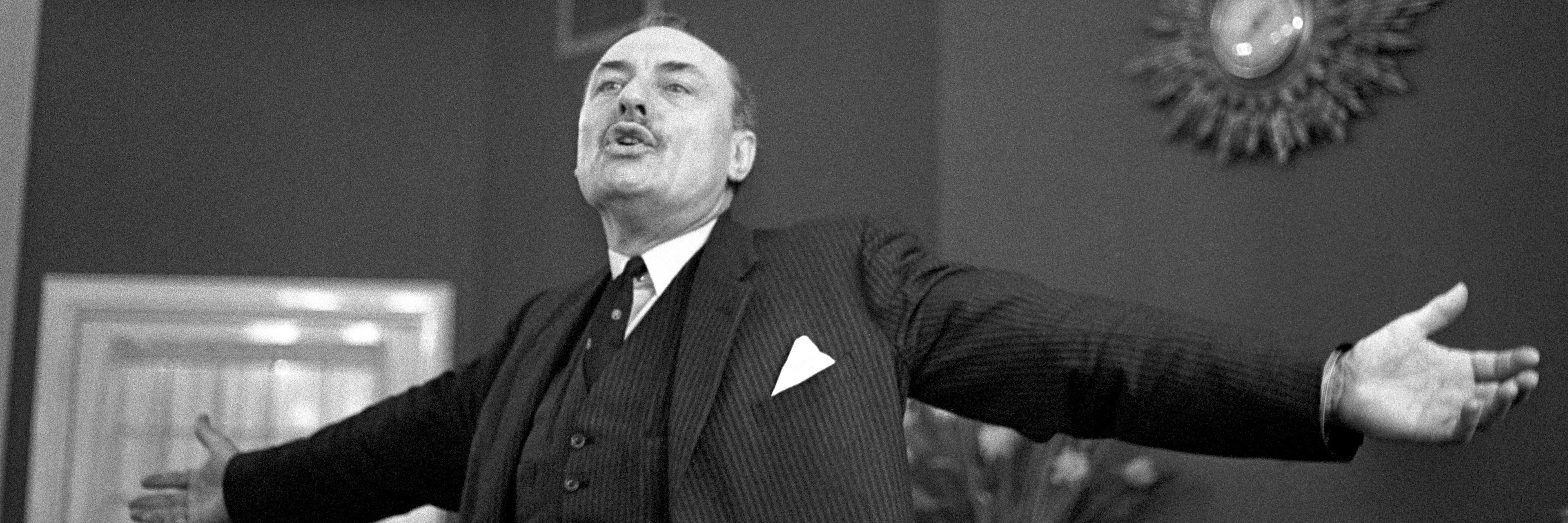
    ‘We are winning’, claims politician Enoch Powell to students at York University in 1969 following his notorious ‘rivers of blood’ speech. Alamy/PA Images

    Lars Cornelissen, Manchester Metropolitan University; Independent Social Research Foundation

    Prime Minister Keir Starmer thinks that racism is returning to British society. He has accused Nigel Farage’s Reform UK of sowing “toxic division” with its “racist rhetoric”.

    Starmer’s comments follow a trend that has seen senior Labour party officials portray their political opponents on the far-right as sowing division with racist rhetoric.

    Recently, Wes Streeting, the Labour health secretary, warned that an “ugly” racism is on the rise again, pointing to worrying figures showing an increase of race-based abuse of NHS staff.

    And in October, senior Labour officials attacked Farage’s plans to strip millions of legal migrants of their Indefinite Leave to Remain status as a racist policy. Home Secretary Shabana Mahmood said that Farage’s plans sounded like a “very loud dog whistle to every racist in the country”.

    Labour officials portray the rise in racist incidents and rhetoric as the return of attitudes that had all but disappeared from British society. Streeting expressed his worry that “1970s, 1980s-style racism has apparently become permissible again in this country”. Starmer similarly stated that “frankly I thought we had dealt with” the problem of racist abuse “decades ago”.

    This is an appealing story because it conveys a neat and simple message: racism was defeated decades ago and it is now being revived by racist agitators. But in truth, the history of post-war racism is much more complex.

    In my new book, I investigate how ideas of race and racism have changed since the second world war. History shows that racism never disappeared from public life. Rather, it assumed different shapes, some of which are harder to discern than others.

    The experience of fascism

    The defeat of Nazism in 1945 marked a key moment in the history of racism. Prior to the second world war, ideas of racial difference and even racial hierarchy were firmly entrenched in elite society.

    In Victorian Britain, for example, a belief in the racial superiority of Europeans was decisive to maintaining colonial rule across large parts of central and east Asia, Africa, and the Caribbean. This sentiment was famously captured in Rudyard Kipling’s 1899 poem, The White Man’s Burden, which depicted colonial rule as the moral duty of white nations.


    The Insights section is committed to high-quality longform journalism. Our editors work with academics from many different backgrounds who are tackling a wide range of societal and scientific challenges.


    Likewise, pseudosciences like eugenics and physical anthropology enjoyed significant prestige among British elites well into the 20th century. The British Eugenics Society, dedicated to improving the genetic stock of the British population, flourished in the interwar period. At this time the eugenics movement was an ideological broad church, appealing to progressive as much as conservative elites.

    But the second world war irrevocably changed this landscape. The experience of fascism made it clear for all to see just how dangerous the concept of racial superiority was. Ideas of racial purity, racial hierarchy, and eugenics had driven the Nazis to commit genocide. It had led to a world war that many experienced as a straightforward conflict between good and evil.

    At the same time, anti-colonial movements were gaining momentum all over the world. In south-east Asia, Africa, and the Caribbean, there emerged powerful critiques of European colonialism and the racist views that supported it. Some of these critiques linked fascism to colonialism, arguing that Nazism represented the “boomerang effect” of colonial violence curving back onto the people of Europe.

    The great sociologist W.E.B. Du Bois worded this view powerfully in 1947:

    There was no Nazi atrocity – concentration camps, wholesale maiming and murder, defilement of women or ghastly blasphemy of childhood – which Christian civilization or Europe had not long been practicing against colored folk in all parts of the world in the name of and for the defense of a Superior Race born to rule the world [sic].

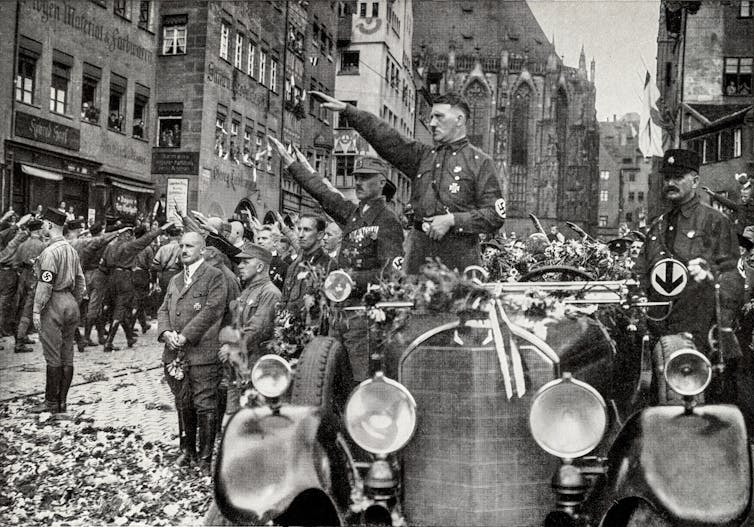
    Adolf Hitler gives the Nazi salute from his car.
    Adolf Hitler on the third day of the Nazi party conference Nuremberg, Germany, in 1929. Shutterstock/Andreas Wolochow

    The cumulative effect of these experiences was that ideas of racial superiority came to be seen an unscientific relic of the past.

    Squashing ‘scientific racism’

    This was exemplified by the United Nations, which in November of 1945 established Unesco (United Nations Educational, Scientific and Cultural Organisation) with the explicit aim of battling racism. Unesco’s constitution, adopted on November 16 of that year, drew a direct connection between racism and the second world war:

    The great and terrible war which has now ended was a war made possible by the denial of the democratic principles of the dignity, equality and mutual respect of men, and by the propagation, in their place, through ignorance and prejudice, of the doctrine of the inequality of men and races.

    In 1949, Unesco appointed a panel of prominent scientists to formulate a critique of scientific racism. Reporting in 1950, the panel concluded that there is no scientific basis for any claims of racial superiority of one group over another. As the panel wrote, “the likenesses among men are far greater than their differences”.

    While a small number of academics remained committed to race science and eugenics, they were forced into the margins of the academic world. The Eugenics Society, though it continued to exist, lost much of its prestige.

    Going forward, race science or political appeals to racial superiority were no longer deemed acceptable, even among ruling elites. The language of race lost the scientific legitimacy and political purchase it once had.

    This did not mean that racism disappeared, however. Rather, it changed shape.

    Immigration and culture

    Explicit appeals to race remained politically unacceptable for many decades after the war. This forced intellectuals and politicians on the right, especially those with divisive views about racial and ethnic differences, to develop an alternative language in which to express their ideas.

    In Britain, one such language crystallised in the 1960s. During this period, tensions grew over the number of migrants coming to Britain from Commonwealth countries. Migration from former colonial areas had been on the rise in preceding years, made possible by the 1948 British Nationality Act, which conferred citizenship on all former imperial subjects.

    The backlash against these migration trends was exemplified by Enoch Powell, a Conservative MP and former Minister of Health. In the late 1960s, Powell developed a vocal critique of immigration numbers.

    Powell’s rhetoric was inflammatory and racially charged. In his infamous ‘Rivers of Blood’ speech, delivered in 1968 in Birmingham, Powell claimed that unless immigration was restricted, people of colour would soon have “the whip hand over the white man”. In another speech, from 1970, Powell complained that it was no longer politically acceptable to say that “the English are a white nation”.

    Powell made no appeal to the idea of biological difference. Instead, his emphasis was on cultural difference. He claimed that migrants and white British people were culturally too dissimilar for assimilation to be possible in large numbers.

    Powell’s speeches on immigration cost him his political career. He was dismissed from the Shadow Cabinet following his “Rivers of Blood” comments. Yet his views were soon echoed by other political figures.

    In 1976, Ivor Stanbrook, a Conservative MP, said in the House of Commons: “Let there be no beating about the bush. The average coloured immigrant has a different culture, a different religion and a different language. That is what creates the problem.”

    And in 1978, Margaret Thatcher said in a TV interview that British “people are really rather afraid that this country might be rather swamped by people with a different culture”. Migration was a threat to Britain’s national identity.

    Thatcher added: “We are a British nation with British characteristics. Every country can take some small minorities and in many ways they add to the richness and variety of this country. The moment the minority threatens to become a big one, people get frightened.”

    In the 1979 general election, which Thatcher won with a landslide, the Conservative party manifesto pledged to tighten immigration controls and restrict citizenship. This pledge was enacted in 1981.

    The denial of racism

    The rhetoric of people like Powell, Stanbrook, and Thatcher represented a new kind of racial vocabulary. What is striking about this rhetoric is that it pretended not to concern race at all. Each of them explicitly denied that their rhetoric appealed to racist sentiment.

    Powell often distanced his critique of immigration from concerns over race. In a 1970 interview, Powell said:

    I’m not talking about race at all. I am talking about those differences, some of which are related to race, between the members of different nations which make the assimilation of the members of one nation into another nation more difficult or less difficult.

    Stanbrook also denied that his comments about “coloured immigrants” were racist. In a parliamentary debate, he insisted that to highlight problems with cultural integration “is not racialism, if by that one means, as I do, an active hostility to another race”. This was because, in his view, “a preference for one’s own race is as natural as a preference for one’s own family”. A dislike of immigration, therefore, is not based on racist animosity. “It is simply human nature,” Stanbrook added.

    Even Thatcher complained that whenever she tried to address concerns about immigration she was “falsely accused of racial prejudice” by her political opponents. She claimed that because mainstream political parties were not willing to talk about immigration, voters were instead turning to the far-right National Front. “If we do not want people to go to extremes, and I do not, we ourselves must talk about this problem and we must show that we are prepared to deal with it,” she said.

    These denials of racism indicate that during this period, the language of race itself remained socially unacceptable. Powell, Stanbrook and Thatcher all felt the need to distance themselves from it.

    This helps to explain why they preferred to focus on ideas of cultural difference and national identity. These ideas did not carry the same negative connotations as race, yet could be used to convey a similar message – namely that some groups did not belong in Britain.

    Researchers have called these ideas “cultural racism”. This is a form of racism that discriminates between groups on the basis of cultural or religious traditions rather than biological traits.

    Though it can be harder to pin down, cultural racism can be just as harmful to marginalised groups.

    Normalisation of racist rhetoric

    The rise of inflammatory rhetoric surrounding immigration in the 1960s and 70s had an immediate impact on policy. During this period, successive governments responded to the growing clamour over immigration by selectively tightening migration controls and nationality legislation.

    However, this rhetoric has also had a more gradual, long-term effect on racism’s place in society. Powell’s and Thatcher’s views on immigration have been echoed again and again, often framed in the same vocabulary. This continues to this day.

    Last month, Katie Lam, the shadow home office minister, appeared to argue that Ukrainian and Gazan refugees should be treated differently because the former are better able to assimilate to British culture, as well as being more likely to go back to rebuild their country of origin.

    And earlier this month, nationalist writer and academic Matthew Goodwin, who is formally linked to Reform, wrote in his personal newsletter that the “cultures that our hapless politicians are now importing into our country at speed are not just radically different and incompatible to our own; they are inferior, primitive, stuck in cultural codes and practices we moved on from centuries ago”.

    Over time, public debate on immigration has soured, and dehumanising language has become more commonplace. In 2015, The Sun columnist Katie Hopkins compared migrants to “cockroaches”, while Farage refers to migration as a “flood”.

    In 2022, the then home secretary Suella Braverman spoke of an “invasion” of Channel migrants, directly echoing Thatcher’s rhetoric 50 years earlier. Strikingly, again echoing Thatcher, Braverman also denies that her anti-immigration rhetoric is racist. Instead, she describes the word “racist” as a “slur” used by the left “to silence debate”.

    The gradual normalisation of this kind of rhetoric has allowed it to re-enter mainstream public discourse. This has caused the erosion of the anti-racist norms established in the wake of the second world war. For many years after the war, these social norms meant that public figures who expressed views that were considered racist paid a high social or professional cost. Powell’s dismissal from the shadow cabinet following his Rivers of Blood speech is a forceful example of this.

    Today, these anti-racist norms are under increasing pressure. To be sure, they have not fully disappeared. In recent years, anti-racist movements like the Black Lives Matter have enjoyed broad popular support in Britain and elsewhere.

    Likewise, officials who express inflammatory rhetoric can still expect to be challenged. Politicians including Starmer, Robert Jenrick and Katie Lam have recently been met with criticism for divisive comments or policies on race, migration, and culture.

    Starmer, for instance, was criticised for saying that migration numbers are turning Britain into an “island of strangers”. This comment was likened to Powell’s rhetoric on immigration, who also said that immigration left Britons feeling like “strangers in their own country”. When confronted with criticism, Starmer said he deeply regretted using that phrase.

    Meanwhile, Farage has faced pressure to distance himself from racist comments he is alleged to have made in the past – allegations which he has strongly denied.

    Yet, the prospect of a politician being dismissed from a cabinet role for racially inflammatory comments is very remote today. Neither Jenrick nor Lam has been dismissed from the shadow cabinet for their comments, with Conservative Party leader Kemi Badenoch expressly defending Jenrick.

    More worryingly, on the fringes of public debate, the erosion of anti-racist norms has created conditions in which racist rhetoric can flourish. Researchers have shown that on online platforms like X (formerly Twitter) and Parler, racist abuse has sharply increased in recent years. Under the ownership of Elon Musk, himself notorious for his right-wing views, X has systematically amplified right-wing messaging.

    In some circles, racist rhetoric not only receives little to no challenge but is actively incentivised. Far-right groups constitute a lucrative market for racist ideas. Authors expressing right-wing ideas, for example English nationalist Tommy Robinson, have access to large speaker circuits, podcasts, digital publishers, and many other markets.

    Even in academia, recent years have seen a resurgence in race theory and eugenics. While mostly restricted to fringe groups, some authors have been able to publish work with prestigious university presses admiring the ideas of Francis Galton – the man who has been called the “father of eugenics”.

    Hiding in plain sight

    Various forms of racism persist. Today, cultural racism is the most widespread and politically consequential kind. Derogatory and stereotyped views on cultural differences and national identity are now an everyday feature of public discourse, especially in debates over immigration.

    Yet cultural racism remains poorly understood. In most media reporting and political discourse, the term “racism” continues to refer primarily to individual prejudice based on outward appearance or group belonging. When Streeting talks about “1970s, 1980s-style racism” he specifically means “abuse based on people’s skin colour”.

    While it is undeniably a good thing that racist abuse is being vocally challenged by politicians, this narrow definition of racism obscures as much as it reveals. It fails to challenge forms of racism that do not appeal to physical traits but to cultural traditions. And it gives political agitators intent on sowing division on themes like immigration the opportunity to deflect criticism by denying that their ideas are racist.

    Similarly, the notion that racism was already dealt with “decades ago”, in Starmer’s words, ignores the fact that racism never went away. It also downplays the extent to which the harm of past racism lives on in the present in structural issues like wealth and income gaps, uneven access to work or housing, unequal health outcomes, and police profiling.

    To tackle racism, a widening of focus is needed. Our conception of racism cannot be restricted to instances of individual prejudice but must also include these structural effects.

    At the structural level, racism causes certain individuals or communities to be more vulnerable to violence, exclusion, marginalisation, poverty, and other harmful outcomes on the basis of their membership of a particular racial, cultural, or religious group. Rhetoric that intensifies this vulnerability feeds racism, even when it is not expressed in the language of “race” or when there is no prejudicial intent.

    So long as these structural factors are not taken into consideration, more subtle forms of racism will continue to hide in plain sight and exert a corrosive influence on the health and wellbeing of those it targets.


    For you: more from our Insights series:

    To hear about new Insights articles, join the hundreds of thousands of people who value The Conversation’s evidence-based news. Subscribe to our newsletter.

    Lars Cornelissen, Lecturer in Politics, Manchester Metropolitan University; Independent Social Research Foundation

    This article is republished from The Conversation under a Creative Commons license. Read the original article.

    Elon Musk urges you to be a Fascist like him, says that you can ignore facts and reality then.
    Elon Musk urges you to be a Fascist like him, says that you can ignore facts and reality then.
    A parody ‘Tesla – The Swasticar’ advert posted at a London bus stop. Photograph: People vs Elon
    A parody ‘Tesla – The Swasticar’ advert posted at a London bus stop. Photograph: People vs Elon
    Keir Starmer refuses to be outcnuted by Nigel Farage's chasing the racist bigot vote.
    Keir Starmer refuses to be outcnuted by Nigel Farage’s chasing the racist bigot vote.

    dizzy: I tend to regard racism and misogyny as inherent and necessary to Capitalism, part of the divide and rule strategy providing an implied differentiation and continuum of perceived statuses. “No dogs, blacks or Irish”. It’s so ridiculously stupid and obviously transparent really.

    I sometimes experience racism as a Welshman in England and as a perceived Englishman in Wales. It must be strange when I say the odd Welsh phrase “Diolch yn fawr” (most Welsh people will recognise and understand that). FM,(*1) an Englishman who’s learned Welsh, what’s the World coming to?

    Strange hypocrisy that these Labour politicians can so readily condemn racism while supporting the explicitly racist and genocidal Israel apartheid regime …

    *1

    Orcas discuss the formation of UK's new Socialist party and ask if the killer apes have finally come to their senses.
    Orcas discuss the formation of UK’s new Socialist party and ask if the killer apes have finally come to their senses.

  • A billionaire emits a million times more greenhouse gases than the average person

    Spread the love
    Image of a private jet by Andrew Thomas from Shrewsbury, UK. Licensed under the Creative Commons Attribution-Share Alike 2.0 Generic license.
    Image of a private jet by Andrew Thomas from Shrewsbury, UK.

    Billionaire investments in polluting industries such as fossil fuels and cement double the average for the Standard and Poor group of 500 companies – Oxfam  

    The investments of just 125 billionaires emit 393 million tonnes of CO2 each year – the equivalent of France – at an individual annual average that is a million times higher than someone in the bottom 90 percent of humanity.

    Carbon Billionaires: The investment emissions of the world’s richest people, is a report published by Oxfam based on a detailed analysis of the investments of 125 of the richest billionaires in some of the world’s biggest corporates and the carbon emissions of these investments. These billionaires have a collective $2.4 trillion stake in 183 companies. 

    The report finds that these billionaires’ investments give an annual average of 3m tonnes of CO2e per person, which is a million times higher than 2.76 tonnes of CO2e which is the average for those living in the bottom 90 percent. 

    The actual figure is likely to be higher still, as published carbon emissions by corporates have been shown to systematically underestimate the true level of carbon impact, and billionaires and corporates who do not publicly reveal their emissions, so could not be included in the research, are likely to be those with a high climate impact.

    “These few billionaires together have ‘investment emissions’ that equal the carbon footprints of entire countries like France, Egypt or Argentina,” said Nafkote Dabi, Climate Change Lead at Oxfam “The major and growing responsibility of wealthy people for overall emissions is rarely discussed or considered in climate policy making. This has to change. These billionaire investors at the top of the corporate pyramid have huge responsibility for driving climate breakdown. They have escaped accountability for too long,” said Dabi.

    Jeff Bezos's superyacht 'Koru' often travels accompanied by a smaller 'support' superyacht. Image by Conmat13 under the Creative Commons Attribution-Share Alike 4.0 International license via wikimedia.
    Jeff Bezos’s superyacht ‘Koru’ often travels accompanied by a smaller ‘support’ superyacht. Image by Conmat13 under the Creative Commons Attribution-Share Alike 4.0 International license via wikimedia.

    “Emissions from billionaire lifestyles, their private jets and yachts are thousands of times the average person, which is already completely unacceptable. But if we look at emissions from their investments, then their carbon emissions are over a million times higher,” said Dabi.

    Contrary to average people, studies show the world’s wealthiest individuals’ investments account for up to 70 percent of their emissions. Oxfam has used public data to calculate the “investment emissions” of billionaires with over 10 percent stakes in a corporation, by allocating them a share of the reported emissions of the corporates in which they are invested in proportion to their stake. 

    The study also found billionaires had an average of 14 percent of their investments in polluting industries such as energy and materials like cement. This is twice the average for investments in the Standard and Poor 500. Only one billionaire in the sample had investments in a renewable energy company.  

    The choice of investments billionaires make is shaping the future of our economy, for example, by backing high carbon infrastructure – locking in high emissions for decades to come. The study found that if the billionaires in the sample moved their investments to a fund with stronger environmental and social standards, it could reduce the intensity of their emissions by up to four times.

    “The super-rich need to be taxed and regulated away from polluting investments that are destroying the planet. Governments must put also in place ambitious regulations and policies that compel corporations to be more accountable and transparent in reporting and radically reducing their emissions,” said Dabi.

    Oxfam has estimated that a wealth tax on the world’s super-rich could raise $1.4 trillion a year, vital resources that could help developing countries – those worst hit by the climate crisis – to adapt, address loss and damage and carry out a just transition to renewable energy. According to the UNEP adaptation costs for developing countries could rise to $300 billion per year by 2030. Africa alone will require $600 billion between 2020 to 2030. Oxfam is also calling for steeply higher tax rates for investments in polluting industries to deter such investments.

    The report says that many corporations are off track in setting their climate transition plans, including hiding behind unrealistic and unreliable decarbonization plans with the promise of attaining net zero targets only by 2050. Fewer than one in three of the 183 corporates reviewed by Oxfam are working with the Science Based Targets Initiative. Only 16 percent have set net zero targets. 

    Donald Trump urges you to be a Climate Science denier like him. He says that he makes millions and millions for destroying the planet, Burn, Baby, Burn and Flood, Baby, Flood.
    Donald Trump urges you to be a Climate Science denier like him. He says that he makes millions and millions for destroying the planet, Burn, Baby, Burn and Flood, Baby, Flood.
    Nigel Farage urges you to ignore facts and reality and be a climate science denier like him and his Deputy Richard Tice. He says that Reform UK has received £Millions and £Millions from the fossil fuel industry to promote climate denial and destroy the planet.
    Nigel Farage urges you to ignore facts and reality and be a climate science denier like him and his Deputy Richard Tice. He says that Reform UK has received £Millions and £Millions from the fossil fuel industry to promote climate denial and destroy the planet.
    Keir Starmer commits to play the caretaker role for Capitalism through the "hard times".
    Keir Starmer commits to play the caretaker role for Capitalism through the “hard times”.

  • Zarah Sultana calls for Capitalism to be replaced

    Spread the love

    Zarah Sultana, Your Party MP for Coventry South speaks at Your Party’s founding conference.