Author: dizzy

  • Thousands protest in The Hague ahead of NATO summit

    Spread the love

    Original article by Ana Vračar republished from peoples dispatch under a Creative Commons Attribution-ShareAlike 4.0 (CC BY-SA) license.

    Thousands marched in The Hague on June 22 against the NATO Summit. Photo: PTB

    Thousands of people took to the streets of The Hague on June 22 to protest against a looming increase in NATO contributions by European member states. A day before, activists gathered for a counter-NATO conference, while European leaders prepared to arrive in the Netherlands for the alliance’s meeting. Their aim, according to the European Left, one of the event’s co-organizers, was to envision “a peaceful and just Europe rooted in cooperation – not confrontation.”

    “As world leaders prepare to meet behind closed doors on June 24-25, voices from across the globe came together in the streets to demand a different future,” the European Left stated. That future, they explained, requires slashing military budgets, ending perpetual wars, and prioritizing diplomacy over destruction.

    Hundreds of international activists joined the protest, bringing their respective struggles to the streets of The Hague. Students from the Collettivo Autorganizzato Universitario (CAU) joined the mobilization just one day after mass protests in Rome had called for an end to war, militarization, and Italian complicity in the genocide in Palestine.

    “After the United States bombed Iran overnight, the need to call for an exit from NATO has become even more urgent,” CAU said from the march. “We denounce NATO and US complicity in driving us toward a permanent war economy and a climate of conflict. For this reason, we must continue to organize and mobilize.”

    The protests came only hours after US President Donald Trump bragged about airstrikes on Iranian nuclear sites, drawing even more criticism of US influence over NATO and Europe. “They [the US] have joined the illegal attack on Iran, killing Iranians, illegally attacking nuclear sites,” MEP Marc Botenga of the Workers’ Party of Belgium (PTB-PVDA) told Peoples Dispatch. “If you bomb nuclear sites, you risk provoking a nuclear catastrophe, killing mass numbers of civilians.”

    So far, European politicians and institutions have failed to condemn the US attacks on Iran, with some even voicing support, once again revealing their unwillingness to break from Trump’s agenda. In contrast, The Hague demonstrations called for a decisive change in direction and for Europe to take action to prevent further attacks. “The people from Palestine, the people from Iran, these innocent civilians that are being hurt today, they have our full solidarity,” Botenga said. “We will continue to mobilize here to stop EU complicity in these crimes.”

    Original article by Ana Vračar republished from peoples dispatch under a Creative Commons Attribution-ShareAlike 4.0 (CC BY-SA) license.
  • Now in its third year, war in Sudan is “is far from over”

    Spread the love

    Original article by Pavan Kulkarni republished from peoples dispatch under a Creative Commons Attribution-ShareAlike 4.0 (CC BY-SA) license.

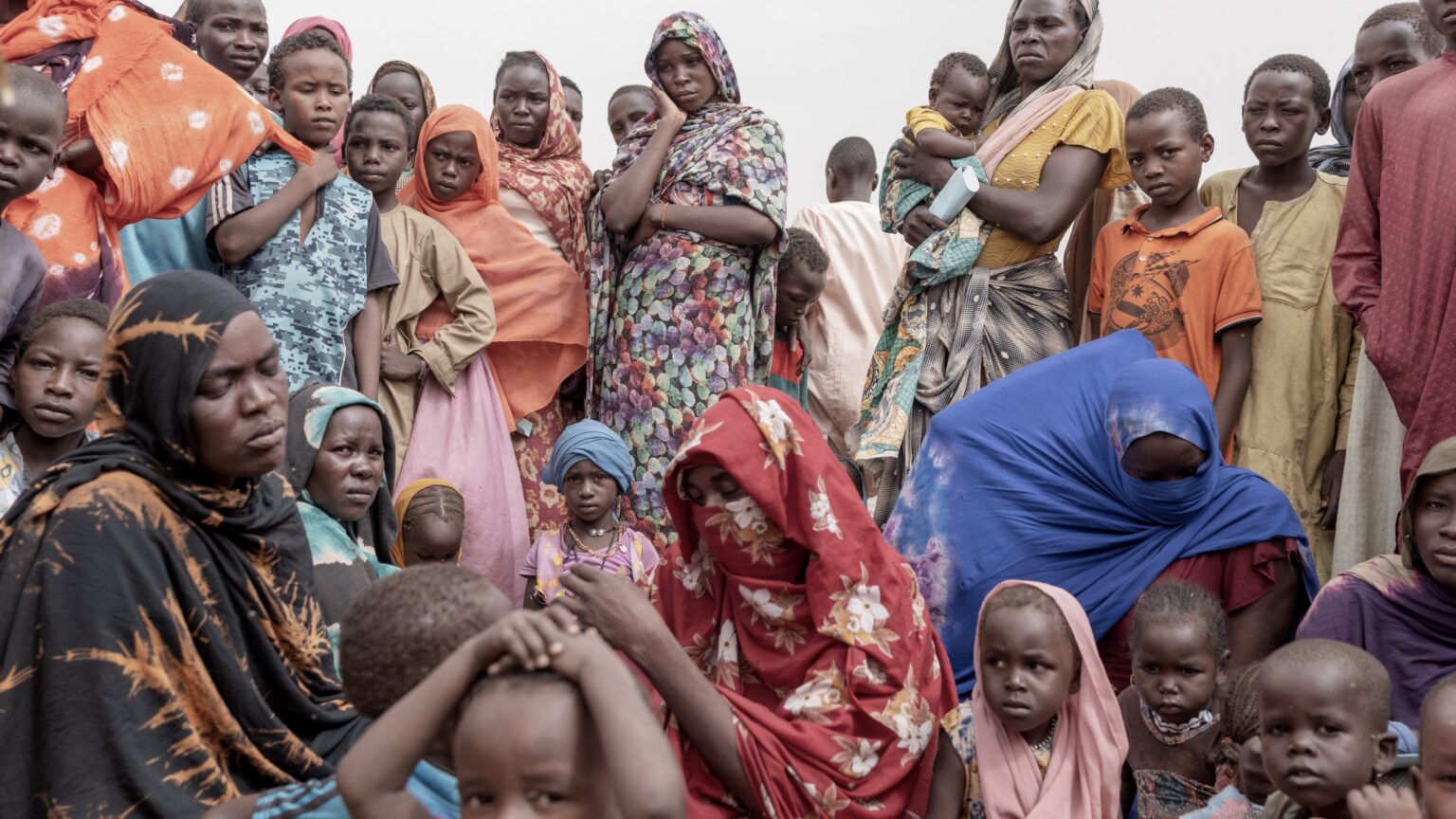
    The violence in Sudan has pushed North Darfur’s Zamzam camp, home to over 500,000 people, into famine. Photo: WHO

    “The world has completely forgotten the crisis in Sudan” where “a slow death” has become the plight of millions, decried Adam Rojal, spokesperson of the General Coordination of Darfur Displaced People and Refugees.

    As the fighting between the Sudanese Armed Forces (SAF) and the paramilitary Rapid Support Forces (RSF) intensifies in North Darfur state and the Kordofan region, UN Human Rights Chief Volker Türk warned on Friday, June 20 of a “further aggravation in an already brutal and deadly conflict.”

    The war, which began in April 2023, has created the world’s worst humanitarian disaster, displacing nearly 13 million, leaving Sudan with the highest number of displaced people globally. 30 million, almost two-thirds of the population, need humanitarian aid, including food assistance.

    The worst affected are children, amounting to half of the hungry and displaced population, the UN said last week, decrying a severe fund shortage, leaving it unable to assist over 80% of the children in need.

    Children under the age of five are the largest group of victims of the measles outbreak, amounting to over 60% of the 2,200 suspected cases since the start of this year. Another 230 children have been killed and 7,300 suspected to have been infected by cholera, which broke out last July, killing over 2,000 and suspectedly infecting over 80,000 people.

    The number of cholera cases sharply spiked earlier this year in Sudan’s capital region of Khartoum where over 34,000 displaced people returned mainly since March after the SAF retook control from the RSF.

    Damaged in the fighting, most of the homes to which they returned lacked water or sanitation. In May, the RSF launched a series of drone strikes on water purification units and power plants, further curtailing water supply, and forcing residents to resort to unsafe sources, which caused over a nine-fold rise in cholera cases in the second half of that month.

    Read more: Cholera ravages Sudan’s war-torn capital 

    Last week, Doctors Without Borders (MSF) raised the alarm that the cholera wave had now reached the western semi-arid region of Darfur for the first time since the war began.

    In a press statement on Sunday, June 22, the General Coordination of Darfur Displaced People and Refugees warned that diseases may spread rapidly as monsoon season has begun in Darfur, with rains lashing over the displaced sheltering only under plastic sheets with no sanitation facilities.

    Particularly vulnerable to the deadly diseases are the children and the pregnant and breast-feeding women who are already suffering from malnutrition, its spokesperson Adam Rojal told Peoples Dispatch, “The world has completely forgotten the crisis in Sudan” where “a slow death” has become the plight of millions, he decried.

    The Darfur region consists of five states, of which North Darfur remains the only state where the SAF has retained a foothold in its capital El Fasher. The RSF, which controls the rest of the region, has laid a siege on the city for over a year now, cutting off its supply of food and other essentials, and frequently bombarding the famine-stricken displaced peoples camp on its outskirts. Activists have warned that El Fasher itself is on the verge of famine.

    Now in its third year, the war that has caused a humanitarian catastrophe on such a scale “is far from over”, a UN fact-finding mission warned last week.

    After seizing the border triangle region between Sudan, Libya, and Egypt on June 14, the RSF also announced on June 16 that it captured the strategic oasis town of Karb al-Toum in the north-western desert region. This effectively severs the supply route to the SAF in North Darfur while paving the way for the RSF to advance in the Northern State.

    The RSF – which the SAF claims to have killed 28,613 and wounded 43,575 since the start of the war – is also making advances in the Kordofan region in the center and southern region of Sudan. Civilians in South Kordofan’s city of El-Dibeibat – a crucial crossroad linking the state with North Kordofan and West Darfur – have been caught up in the crossfire for over two years.

    Fleeing this city, thousands sought refuge in North Kordofan’s capital El-Obeid, under SAF’s control. However, the RSF has surrounded El-Obeid, “and may attack it in the coming days, as announced by the RSF commander,” the UN Human Rights Office of the High Commissioner said on June 20. 

    Original article by Pavan Kulkarni republished from peoples dispatch under a Creative Commons Attribution-ShareAlike 4.0 (CC BY-SA) license.

  • Pro-Palestine activists declare victory after shipping giant Maersk divests from Israeli settlements

    Spread the love

    Original article by Peoples Dispatch republished from peoples dispatch under a Creative Commons Attribution-ShareAlike 4.0 (CC BY-SA) license.

    Photo via Wikimedia Commons

    Maersk’s decision follows over a year of pressure by the “Mask off Maersk” campaign, led by the Palestinian Youth Movement

    Danish shipping giant Maersk has become the first global shipping company to divest from companies in Israeli settlements following a concerted pressure campaign by pro-Palestine activists across the globe. The company has stated that it will cut ties with companies linked to Israeli settlements in the West Bank.

    This decision follows over a year of pressure by the “Mask off Maersk” campaign, led by the Palestinian Youth Movement (PYM), an international Palestinian diaspora organization. Since launching the campaign in the summer of 2024, the PYM has aimed to shed light on Maersk’s role in supplying Israel with military shipments as it continues its genocide in Gaza. In January of 2025, PYM released a report detailing Maersk’s role in facilitating exports from Israeli settlements. 

    PYM noted in a statement that “this marks the first time in history that a global shipping company has committed to full compliance with the UN Office of the High Commissioner for Human Rights (OHCHR) database,” which documents “all business enterprises involved in certain specified activities related to the Israeli settlements in the Occupied Palestinian Territory, including East Jerusalem,” according to the OHCHR. 

    Divestment from Israeli settlements has been a popular demand of the pro-Palestine movement for decades. “Maersk’s decision proves that divestment from occupation is not only possible – it’s necessary,” said Aisha Nizar of the Palestinian Youth Movement. “This sends a clear message to the global shipping industry: compliance with international law and basic human rights is not optional. Doing business with Israel’s illegal settlements is no longer viable, and the world is watching to see who follows next.” 

    “Still, as Israel escalates its military aggression across the region, Maersk continues to profit from the genocide of our people – regularly shipping F-35 components used to bomb and massacre Palestinians,” Aisha added. “The Mask Off Maersk campaign is far from over. We will continue to build pressure and mobilize people power until Maersk cuts all ties to genocide and ends the transport of weapons and weapons components to Israel.” 

    Since its launch, the “Mask Off Maersk” campaign has spread across the globe, with Palestine solidarity protests in Morocco delaying a Maersk ship reportedly bound for Israel back in April. In February, activists shut down Maersk headquarters in Copenhagen through a demonstration of nearly 1,000 people. Last fall, the Spanish government decided to block Maersk ships bound to Israel following pressure from activists.

    Original article by Peoples Dispatch republished from peoples dispatch under a Creative Commons Attribution-ShareAlike 4.0 (CC BY-SA) license.

  • Labour MPs launch major rebellion to stop welfare bill

    Spread the love

    https://www.theguardian.com/politics/2025/jun/23/labour-mps-launch-major-rebellion-to-stop-benefits-cuts-bill

    Liz Kendall urged her colleagues to support the bill; however, dozens of backbenchers have already signed the amendment seeking to kill it off. Photograph: James Veysey/Shutterstock

    Amendment intended to kill off legislation that would cut benefits could be backed by up to 100 Labour MPs including senior figures

    …

    Dozens of backbench MPs have signed the amendment. Government whips have already been steeling themselves for a rebellion on the welfare bill when it is first voted on next week.

    A senior MP said: “The government hasn’t listened to private concerns so now will have to address these very public ones.”

    The aim would be to pass a so-called “reasoned amendment”, which halts the passage of a bill. It means the bill would not pass its second reading, saying that provisions “have not been subject to a formal consultation with disabled people, or co-produced with them, or their carers”.

    It also says the bill should not pass until the Office for Budget Responsibility can publish its analysis of the employment impact of the changes this autumn. The amendment adds that most of the additional employment support funding will not be in place until the end of the decade.

    It notes the government’s own impact assessment estimates that 250,000 people will be pushed into poverty as a result of the provisions, including 50,000 children. It calls for an assessment of the impact of the changes on health or care needs and for the conclusion of other reviews.

    …

    Original article at https://www.theguardian.com/politics/2025/jun/23/labour-mps-launch-major-rebellion-to-stop-benefits-cuts-bill

    Keir Starmer says that the Labour Party under his leadership all feel a small part of Scunthorpe.
    Keir Starmer says that the Labour Party under his leadership all feel a small part of Scunthorpe.

  • Unions welcome Labour action to cut industrial energy costs – but Unite presses for public ownership

    Spread the love

    https://morningstaronline.co.uk/article/unions-welcome-labour-action-cut-industrial-energy-costs-unite-presses-public-ownership

     A view of the Little Cheyne Court Wind Farm amongst existing electricity pylons on the Romney Marsh in Kent

    MORE than 7,000 manufacturing businesses will have up to 25 per cent cut from their electricity costs under the government’s 10-year industrial strategy.

    Under a new British Industrial Competitiveness Scheme announced today, they will be exempted from levies on bills including the renewables obligation, feed-in tariffs and the capacity market from 2027 — reducing bills by up to £40 per megawatt hour.

    Around 500 of the most energy-intensive firms, including the steel industry, will also see their network charges cut with bigger energy discounts, along with measures to speed up the time it can take to connect new factories and projects to the energy grid.

    …

    Unite general secretary Sharon Graham welcomed the moves to cut energy costs, but said: “Unite would like to have seen the government go further.

    “Our energy system is broken beyond repair; it will never function in the interests of business and consumers until it is brought back into public ownership.

    “That must start with the National Grid to ensure industry can get the power it needs when it needs it and is not left waiting forever for new connections.”

    …

    Original article at https://morningstaronline.co.uk/article/unions-welcome-labour-action-cut-industrial-energy-costs-unite-presses-public-ownership