NAKBA 78: Protesters on the huge London rally on the anniversary of the Nakba in May
History suggests apartheid ends not through appeals to conscience alone but through sustained economic and political pressure, says HUGH LANNING
…
With every red line it crosses from the Nakba to genocide, Israel reveals its contempt for international law. It revels in the impunity the Western world grants that result partly from guilt rightly felt for the horrific crimes we inflicted on Jewish people in our countries, not just in the second world war, but over centuries of antisemitism, which is still ongoing.
But also, because Israel is a major part of the West’s colonial and now neoliberal strategy in the Middle East.
Under the protective wing of an increasingly authoritarian US and led by the ever-stronger fascist and racist tendencies within, Israel believes it has a generational opportunity to conquer Palestine completely and establish the zionist dream of a “greater Israel” from the river to the sea.
The mentality is: “If we got away with genocide in Gaza, we can get away with anything.”
How is this avalanche of violence, death and atrocity to be stopped? Well, not by the mealy mouthed “sanctions” recently announced by Yvette Cooper. When is a sanction not a sanction? When it does nothing to the perpetrators of the crime. Under international law the official role of sanctions is to bring pressure to bear on the miscreants to achieve compliance.
The token measures announced “target individuals and entities involved in financing and enabling settler violence in the occupied West Bank.” No mention of the Israeli state.
The Israeli government is a settler government; the forcible settlement of the West Bank is its official policy. It legalises and legitimises even the outlier settlements illegal under Israeli law. The IDF either stands idly by or actively protects and supports the settlers as they go about their violent business. Not surprisingly as many of the soldiers are themselves settlers — brothers and sisters of those committing the crimes.
The government itself is riddled by members of extreme settler parties. Indeed, Israel is a settler colonial entity, all but a few of its citizens are settlers.
…
Apart from an arms embargo on the two-way trade with Israel, the new Burnham government ought to institute an audit of all government, local and national, expenditure, contracts and co-operation to identify and stop any support for companies engaged in supporting the settlements and the occupation — Oracle and Palantir being obvious examples.
As the US has done with Russia and supporters of Palestine — follow the money. The war, the occupation, the settlements are all funded with much investment and finance coming from abroad and being channelled through British financial institutions. This should be stopped.
The EU has a positive trade agreement with Israel treating it an as associate member which Britain is trying to replicate following Brexit. These trade agreements should be ended.
The government and its representatives ought to support, not block, moves in international bodies to ban and boycott Israel — be it Fifa or Eurovision — Israel should be treated as the apartheid state it is.
So complicit has the British state been for decades, the list of what could be done is almost endless.
…
Hugh Lanning will be among the speakers at a Labour and Palestine online event on Tuesday July 7 looking at ending Britain’s role in crimes against the Palestinian people. Find out more and register for the meeting at bit.ly/endukcomplicity.
Join the National March for Palestine July 18 in central London at noon. Visit palestinecampaign.org for more details.
Keir Starmer explains that UK is actively supporting Israel’s genocidal expansion and repeats his previous quotation that he supports Zionism “without qualification”. Keir Starmer said “I said it loud and clear – and meant it – that I support Zionism without qualification.” here: https://www.jewishnews.co.uk/keir-starmer-interview-i-will-work-to-eradicate-antisemitism-from-day-one/Genocide denying UK Foreign Secretary David Lammy says that UK is suspending 30 of 350 arms licences to Israel. He also confirms the UK government’s support for Israel’s Gaza genocide and the UK government and military’s active participation in genocide.Keir Starmer objects to criticism of the IDF. He asks how could anyone object to them starving people to death, forced marches like the Nazis did, bombing Gaza’s hospitals and universities, mass-murdering journalists, healthworkers and starving people queuing for food, killing and raping prisoners and murdering children. He calls for people to stop obstructing his genocide for Israel.
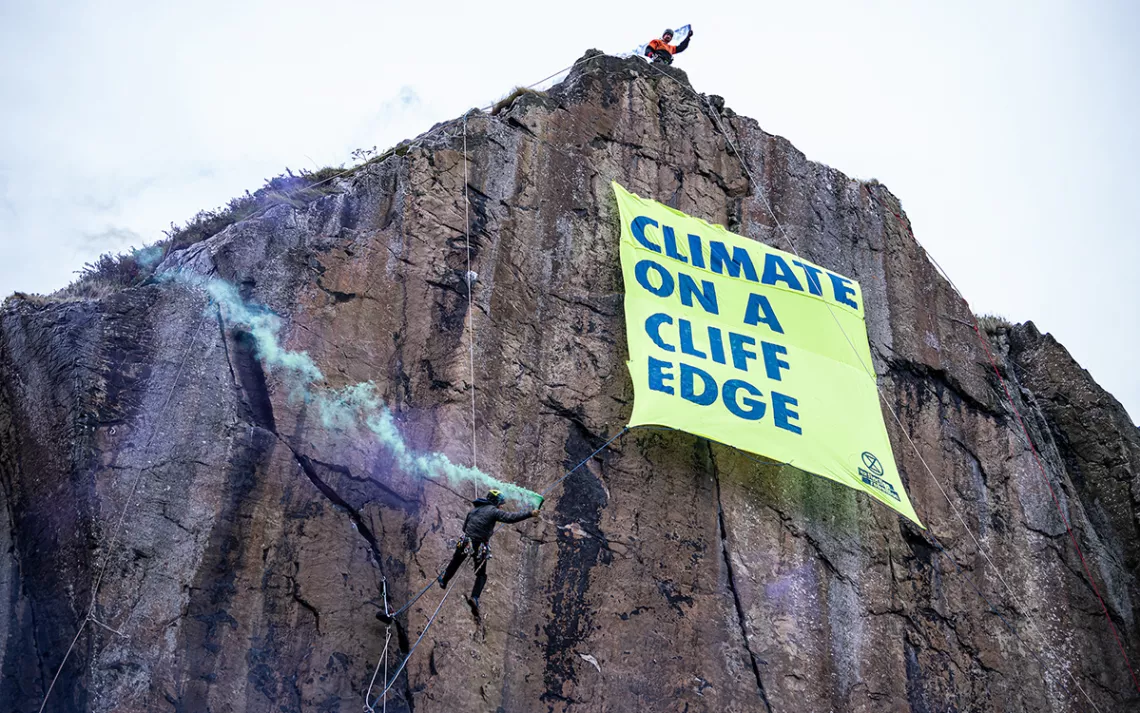
Activists stage a demonstration near the Houses of Parliament asking the government to reject any proposed plans for Rosebank oilfield. Photograph: Denise Baker/Getty Images
Critics debunk economic claims as research finds Rosebank development would produce estimated 250m tonnes of CO2
Scores of Labour MPs have urged the prospective prime minister Andy Burnham to rule out the “tin-eared” and “deluded” development of the Rosebank oilfield in the North Sea, which new research indicates would produce as much carbon dioxide as the UK does in 10 months.
Estimates seen by the Guardian show that Rosebank, which mainly contains oil, would produce about 250m tonnes of CO2 over its lifetime. That is the equivalent of about 70% of the UK’s annual emissions.
Last week’s record-breaking heatwave, which may return next week as the weather turns hotter again, showed the folly of exploiting the field, according to many MPs, who argue it would not bring down the price of fuel and would do little for the UK’s economy.
Mike Reader, the Labour MP for Northampton South, said: “Opening up the North Sea would be tin-eared while we’re dealing with record-breaking heat, and the second energy spike in four years caused by our over-reliance on oil and gas. Anyone who thinks this is a good time to take our focus off clean, secure power is frankly deluded.”
Nigel Farage urges you to ignore facts and reality and be a climate science denier like him and his Deputy Richard Tice. He says that Reform UK has received £Millions and £Millions from the fossil fuel industry to promote climate denial and destroy the planet.Donald Trump urges you to be a Climate Science denier like him. He says that he makes millions and millions for destroying the planet, Burn, Baby, Burn and Flood, Baby, Flood.Orcas comment on killer apes destroying the planet by continuing to burn fossil fuels.
UK’s weak lobbying laws leave public in the dark about Flint Global’s vast access to government under James Purnell
Flint Global, the lobbying firm run by Andy Burnham’s incoming chief of staff, James Purnell, held extensive meetings with ministers, senior officials and special advisers with minimal disclosure, openDemocracy can reveal.
Our analysis of public transparency releases revealed Flint’s staff members met with officials from at least nine government departments on 38 occasions – for meetings, breakfasts, lunches, dinners and roundtables – since Labour took office. Attendees included cabinet ministers Jonathan Reynolds, Douglas Alexander and Nick Thomas-Symonds. This figure is likely an undercount as records of such meetings are published months in arrears.
While Flint Global opts not to reveal its client list in the UK, EU transparency disclosures reveal it has lobbied politicians in Brussels on behalf of Microsoft, Apple, BP and Uber. In the UK, the firm is known to have advised Thames Water – the utility Burnham has said “should be” nationalised.
Our findings raise fresh questions about the interests of Purnell, a former Blair-era cabinet minister who is poised to become one of the UK’s most powerful unelected officials when Burnham enters No 10, and have sparked fresh calls for the UK’s weak lobbying laws to be reformed.
One government log appears to confirm just how routine its engagements with Flint were.
A September 2024 meeting between the lobbying firm and the Department for Business and Trade’s then top-ranking civil servant, Gareth Davies, is described as a “regular meeting to discuss latest business updates”. Purnell is also recorded as having hosted “evening drinks to discuss latest business updates” with Davies in March this year.
Yet despite this regular access to government officials, Flint’s quarterly entries to the Office of the Registrar of Consultant Lobbyists have only ever declared lobbying for two clients. The firm said it lobbied on behalf of the British Standards Institution, which produces technical standards on a range of products and services, in late 2024, and Hellen Systems, a tech firm working on long-range navigation, between July and September 2025.
Across the remaining six quarters that Labour has been in office – covering a total of 18 months – Flint declared having made “no communications which meet the definition of consultant lobbying”.
There is no suggestion that Flint has broken any rules. Rather, its near-empty register reflects major flaws in Westminster’s lobbying transparency rules. While few companies enjoy such extensive access to such wide-ranging government departments, much of Flint’s lobbying activity does not meet the threshold for statutory registration.
The 2014 Lobbying Act requires consultant lobbyists to register only direct communications with ministers or permanent secretaries made on a client’s behalf. They do not have to declare meetings with government special advisers, director generals and senior officials, nor roundtables and briefings that they attend or organise, nor strategic advice they give clients about who to speak to in government, what to say, and when to say it.
The result is that a firm such as Flint Global can maintain a regular presence across Whitehall – breakfasting with officials, dining with ministers, pre-briefing advisers – while lawfully declaring that it does no consultant lobbying at all. Many similar lobbying firms sign up to the industry body’s voluntary code of conduct, which requires them to publish a client list, but Flint has not opted to do so.
This means the public has no way of knowing whether decisions that cross Purnell’s desk in No 10 could benefit his former clients.
Duncan Hames, senior director of policy at Transparency International UK, told openDemocracy: “That a lobbying company can have dozens of meetings across government with so little public information about the purpose of these engagements shows how opaque Westminster remains.
“If the next prime minister wants change from the broken politics-as-usual, they should recognise that keeping things behind closed doors and poorly managing conflicts of interest are recipes for disaster.
“Government should create a firewall between any new appointments and their past interests in the private sector, as well legislating to bring lobbying out of the shadows.”
Vast access to Whitehall
Purnell, who resigned from Flint Global last week, joined the company as chief executive in June 2024 – weeks before Labour’s election win. Although the lobby firm had previously secured meetings with Conservative government officials, its engagement with the government appears to have ramped up that summer.
In July 2024, the firm hosted a roundtable with then-business secretary Jonathan Reynolds alongside Barclays, Google and Virgin Atlantic to discuss “opportunities and challenges relating to business growth”. It is not known whether Flint counts these firms among its UK clients, though EU transparency records reveal it has lobbied for Google in Brussels.
Over the following 20 months, Flint met ministers or officials from the Department for Business and Trade at least 13 times, including three meetings with trade minister Douglas Alexander and repeated meetings, breakfasts, dinners and drinks with civil servant Gareth Davies.
Over at the Treasury, Flint discussed the contents of the chancellor’s January 2025 growth speech with a senior official the day it was delivered, attended a roundtable on financial services policy with then City minister Emma Reynolds, and met a senior official to “discuss policy for Autumn Budget” in October 2025.
Department for Transport special adviser Stef Lehmann, who previously worked in Flint’s transport team, accepted lunch or dinner from Flint on three separate occasions, while the department’s permanent secretary, Bernadette Kelly, recorded a “speaking commitment” with the firm.
Flint also hosted or briefed senior officials at the Department for Science, Innovation and Technology on digital policy; met officials from the Department for Energy, Security and Net Zero to discuss new publicly owned energy investment firm Great British Energy; and discussed planning “blockers” with Chris Stark, the head of the government’s clean power mission.
The firm also had contact with the Cabinet Office, the Department for Education, the Ministry of Housing, Communities and Local Government and the Department for Health and Social Care, whose special adviser, Heather Iqbal – another ex-Flint employee – was taken to breakfast by Purnell in August 2025.
Several of the engagements were roundtables organised around Flint’s corporate network. A March 2025 meeting with Douglas Alexander to discuss “the current trading environment” brought together more than 20 companies, including Amazon, Uber, Diageo, Unilever, GSK and Quadrature – the hedge fund that donated £4m to Labour before the 2024 election. The British Standards Institution, one of the only two clients Flint has ever been required to declare, was also present, although Flint did not declare any consultant lobbying for the company in this quarter.
Following Purnell’s resignation, Flint Global said Purnell “has recused himself from all client activity and has no ongoing financial interest in the company of any kind.”
Flint Global and Andy Burnham’s team were approached for comment.
As free speech becomes a culture war battleground, Labour must defend principles, not pick sides
Editor’s note: The following piece was commissioned in the wake of last month’s local election results, before the conviction of the young man who killed student Henry Nowak. The subsequent protests over Nowak’s death, sparked by accusations of “two-tier policing”, have made more urgent the issues of government responsibility and free speech that are explored in this article by Liberty.
As the Labour Party sought to gather its resolve after bruising local election results in May, prime minister Keir Starmer wrote of a need to take a “unifying rather than dividing” approach. Now, his government must move quickly to keep that promise – particularly in the wake of recent events.
We have seen deep fault lines emerge across a range of issues. How people express their views – whether on social media, at protests or in everyday interactions – and how these views are heard or censored has become the new battleground of the culture wars.
Free speech is in the news every day, from the recent travel bans to the chants at protests.
Depending on who you speak to, you might hear that you “can’t say anything anymore”, or that protest has been restricted through successive pieces of legislation, or that counter-terror powers were used to proscribe Palestine Action.
Some have rallied to the cause of people arrested for communication offences on social media. Others have defended speakers who have been denied entry into the UK. Accusations abound of silencing and two-tier policing, like those made by senior politicians this week.
Throughout, three things are clear.
The first is that most people and organisations are selective about defending speech, only doing so when the speech or the speaker in question aligns with their political views and affiliations. This typically plays out very publicly, meaning they open themselves up to the charge of hypocrisy.
This weakens our tolerance of speech that we find challenging or offensive, because not enough people are defending the principle of free speech itself. The net result is that it becomes easier to argue that there is a fundamental problem with free speech in the UK.
Secondly, the laws governing free speech in the UK are very poorly understood.
Free speech is not unfettered – it is a qualified right that needs to be balanced alongside others.
Our freedom of expression is protected under Article 10 of the European Convention on Human Rights, even if our views are deeply unpopular or could upset or offend others. It’s not a privilege, it’s a right – one that is critical to our democracy, and needs to be as wide as possible. But it is not an absolute right; dozens of criminal offences separate lawful from unlawful speech in the UK.
One of the tests to determine whether or not speech is unlawful is context. That’s why a cursory analysis of one recent high-profile legal case may come across as unfair when compared to another – because with speech, context is everything. But again, if this is not well understood, then the charge that there is a problem with free speech in the UK is able to gain traction.
Thirdly, the government’s response has been unhelpful at best, paving the way for more troubles.
The suite of cluttered and restrictive protest laws and the expansion of counter-terror powers have changed the legislative landscape. Freedom of expression, as articulated through protests, has been curtailed. But the government has also found itself trying to get ahead of politically unhelpful headlines through inconsistent policy positions, instead of standing up for the principle of free speech.
The government has a critical role to play in safeguarding freedom of expression. Its duty is to protect our right to express differences of opinion and share them with others without state intervention, while balancing that with our collective right to live free from fear and violence.
In the UK, we have an imperfect but relatively coherent legislative framework around free speech, which reflects the political settlement of a plural, liberal democracy.
Some of it does need to change. Our protest laws need an immediate overhaul, public interest speech must be protected through the repeal of SLAPPs (Strategic Lawsuits Against Public Participation), and the application of our free speech laws must be adapted to a digital age. But broadly speaking, we don’t need ‘new’ free speech laws. We need existing ones to be applied consistently, and the government to take a lead on finding a better balance between navigating public order concerns and upholding freedom of expression.
Why does this matter? In the run-up to the 2029 general election, we can expect to hear that the UK is in a ‘free speech crisis’. This narrative has long been peddled by those who want to lay the groundwork for repealing human rights laws and removing legal restrictions in a way that would effectively decriminalise hate speech.
Setting out a clear and robust defence of free speech – backed up by a clear and consistent approach – is an imperative for the government if it wants to hold the political terrain.
In the coming months, this Labour government has to show urgent leadership on this issue by taking a non-partisan approach to freedom of expression. If it continues down the path of heavier policing and greater restrictions on lawful speech, it will not unite our divided country, but may create a more fragmented, alienated and polarised society – setting a dangerous political precedent for future governments that may want to go much further.
Palestinians walk along a street surrounded by buildings destroyed in Israeli military strikes during the Israel-Hamas war, in Gaza City, July 2, 2026
INCOMING PM Andy Burnham must finally put an end to arms sales with Israel, anti-war campaigners demanded today as they marked 1,000 days of genocide in Gaza.
The Palestine Solidarity Campaign (PSC), Stop the War Coalition (StWC) and the BDS movement renewed their calls for the government to take a clear stance against Israel as Britain prepares for a new leader.
PSC deputy director Peter Leary said activists should use this “horrifying milestone” and Mr Burnham’s likely crowning as PM to call for an end to economic and political enabling of the genocide.
He told the Morning Star: “As Britain braces for a new Prime Minister, we must use this horrific landmark to reaffirm our demand that the British government finally puts an end to all arms trade with Israel and calls a halt to its ongoing economic and political support for Israel’s crimes.
“One thousand marks a horrifying milestone since the start Israel’s genocide against the Palestinian people in the Gaza Strip – 1,000 days in which more than 73,000 Palestinians have been killed, millions displaced and homes, schools, hospitals and other essential infrastructure destroyed.”
Mr Leary highlighted the ongoing nature of attacks on Palestinians, adding that “despite the so-called ceasefire, that genocide continues with over a thousand Palestinians violently killed by Israel in Gaza since it supposedly took effect.”
Jeremy Corbyn said: “For 1,000 days, Britain has armed and enabled the worst crime of our time.
“Keir Starmer may have gone, but his shameful record on Palestine remains.
“This issue is not going away – and we will carry on for as long as it takes until we have exposed the full scale of the British government’s complicity in genocide.”
Keir Starmer explains that UK is actively supporting Israel’s genocidal expansion and repeats his previous quotation that he supports Zionism “without qualification”. Keir Starmer said “I said it loud and clear – and meant it – that I support Zionism without qualification.” here: https://www.jewishnews.co.uk/keir-starmer-interview-i-will-work-to-eradicate-antisemitism-from-day-one/Keir Starmer objects to criticism of the IDF. He asks how could anyone object to them starving people to death, forced marches like the Nazis did, bombing Gaza’s hospitals and universities, mass-murdering journalists, healthworkers and starving people queuing for food, killing and raping prisoners and murdering children. He calls for people to stop obstructing his genocide for Israel.Orcas discuss Genocide-supporting and complicit Zionists. Donald Trump, Keith Starmer, David Lammy, Rachel Reeves, Angela Rayner and Wes Streeting are acknowledged as evil genocide-complicit and supporting cnuts.