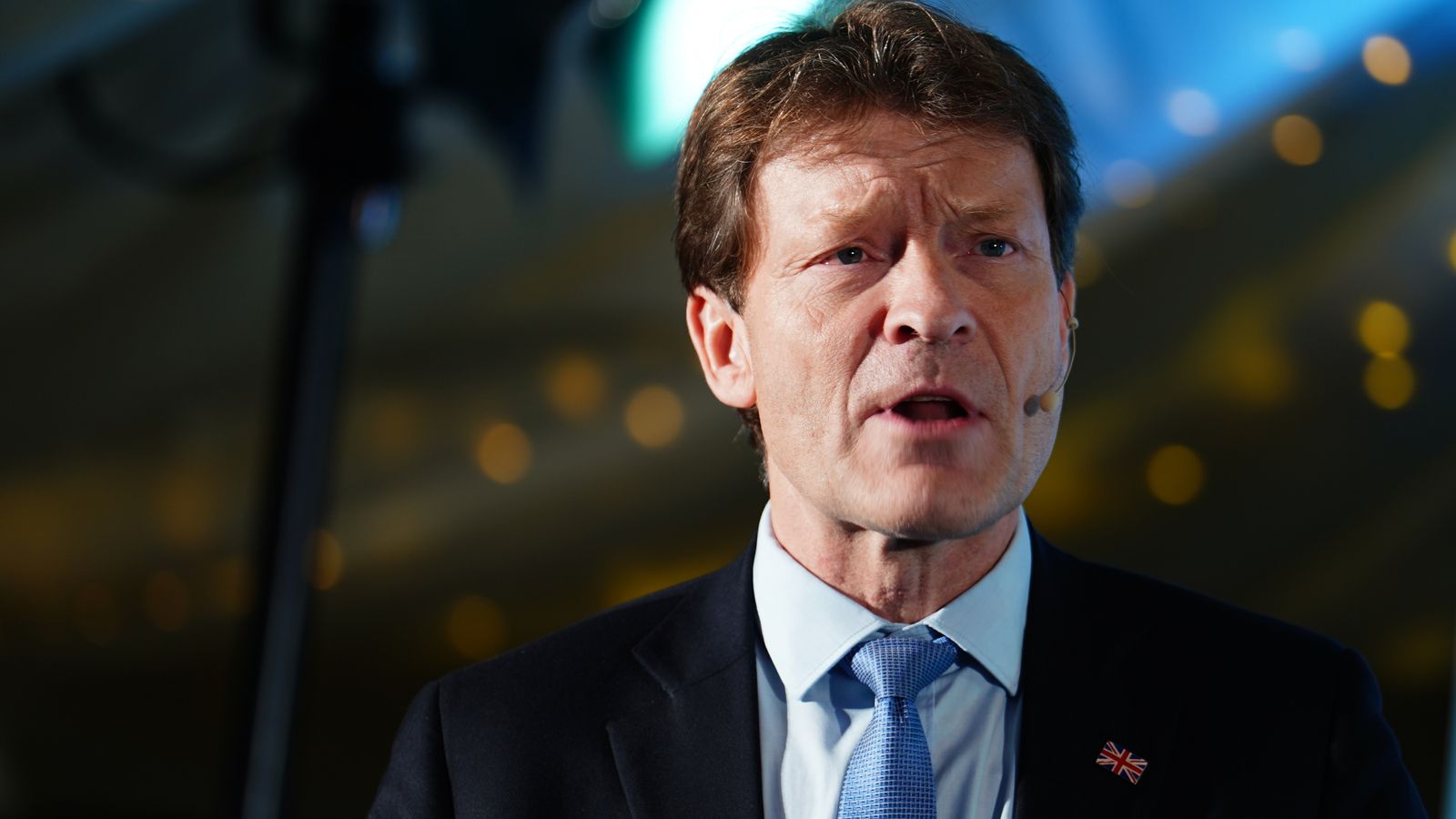
Richard Tice claimed there are “thousands” of scientists who agreed with him Pic: PA
Richard Tice also said the scientists who agreed with him were “not a minority”, though his view is contrary to major consensus.
Scientists have spoken out after Reform UK’s deputy leader dismissed scientific consensus on man-made climate as “garbage”.
Richard Tice MP told Sky’s political correspondent Ali Fortescue: “There’s no evidence that man-made CO2 is going to change climate change. Given that it’s gone on for millions of years, it will go on for millions of years.”
Fortescue challenged him with the findings of more than 200 international scientists that humans activities like burning fossil fuels are to blame for the recent hotter climate.
Human influence is “unequivocal”, said the report, which was signed off by all governments, including fossil-fuel-rich Russia, USA and Saudi Arabia.
“No, that’s absolute garbage,” Mr Tice said. “The climate changed for millions of years before man-made CO2.”
Dr George Adamson from King’s College London said the idea that Richard Tice had “discovered something that climate scientists don’t know about is of course preposterous”.
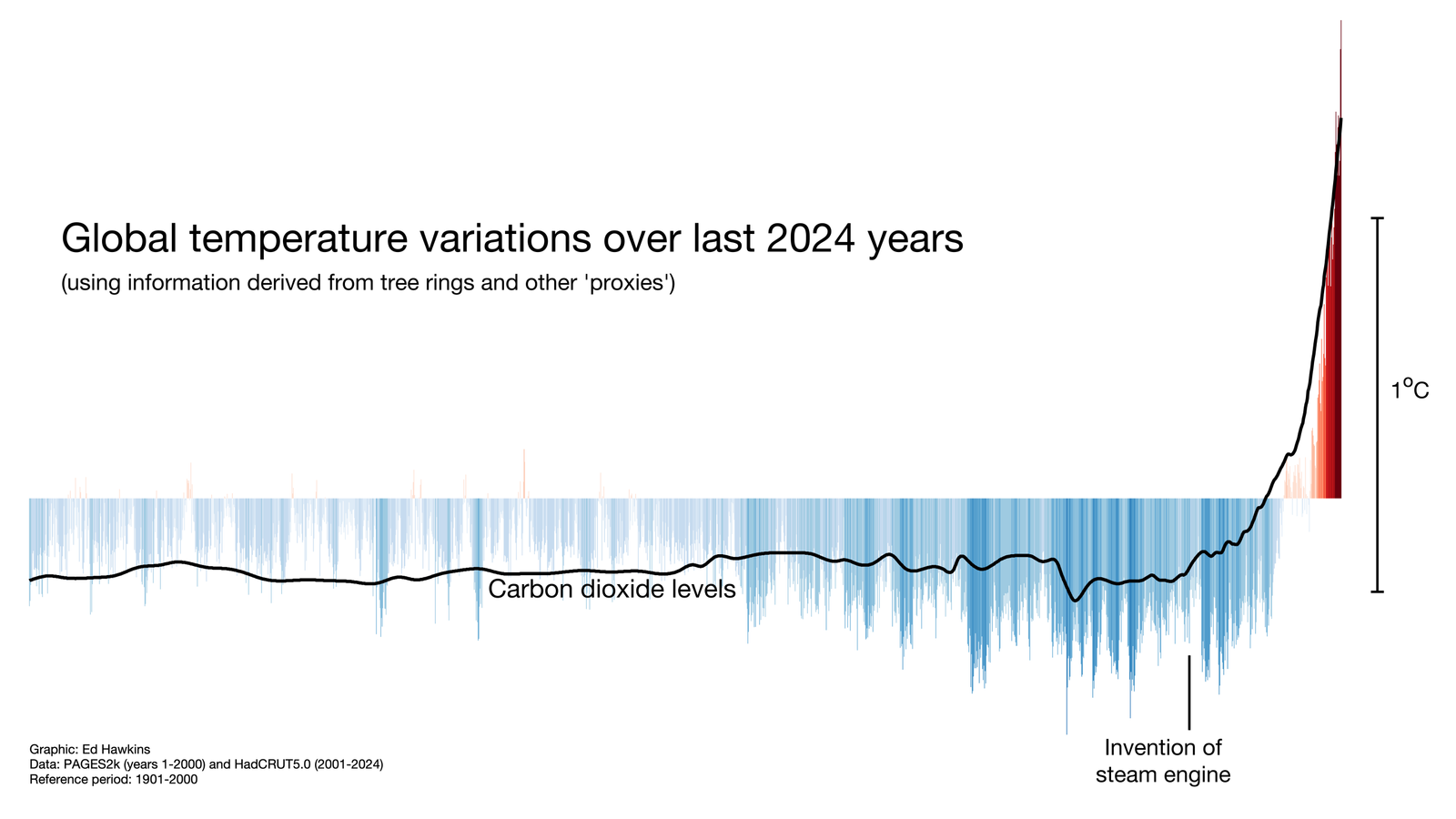
The climate did change for years before humans began burning fossil fuels at scale.
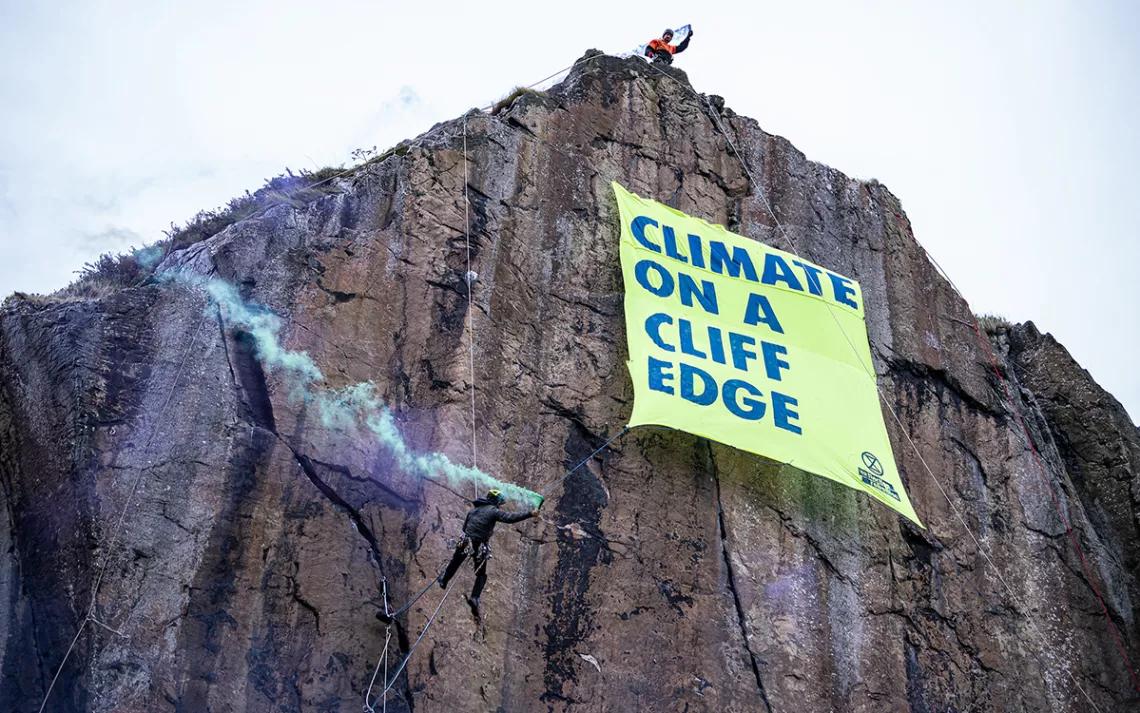
Nigel Farage explains the politics of Reform UK: Racism, Fake anti-establishmentism, Deregulation, Corporatism, Climate Change Denial, Mysogyny and Transphobia.Experienced climbers scale a rock face near the historic Dumbarton castle in Glasgow, releasing a banner that reads “Climate on a Cliff Edge.” One activist, dressed as a globe, symbolically looms near the edge, while another plays the bagpipes on the shores below. | Photo courtesy of Extinction Rebellion and Mark Richards
Original article by Rob Soutar republished from TBIJ under a Creative Commons Attribution-NonCommercial-NoDerivs 3.0 Unported License.
Oil companies’ move to double down on fossil fuels should come as no surprise to anyone – not least its financers
Last week, BP’s CEO Murray Auchincloss said his company had gone “too far, too fast” in its plan to transition away from fossil fuels. BP still says it aims to be a net zero company by 2050 but it will now take a different path to the one it set out in 2021 … doubling down on fossil fuels in the meantime.
Perhaps the move shouldn’t have come as a surprise. After all, BP is a commercial enterprise with a responsibility to deliver returns for its shareholders. And since Russia’s invasion of Ukraine, which led many countries to prioritise energy security over long-term sustainability, oil and gas have remained reliably lucrative.
What’s more, the company made a similar announcement two years ago, saying it would be ramping up its investments in oil and gas.
But if BP had indicated such a significant change in direction so long ago, how did it continue to raise billions from banks that said they’d only do business with “net zero” companies?
Milestone moment?
At the 2021 climate talks in Glasgow, a number of the world’s leading banks made landmark pledges: to slash the footprint of their own operations and, crucially, the emissions of their lending and investment portfolios.
It was hailed as a watershed moment. In theory, the vast stockpiles of money that had supported fossil fuel expansion would now be cut off for companies without net zero ambitions. The same year, the International Energy Agency warned that there must be no new oil and gas projects if the world is to reach net zero by 2050.
The deals illustrate a core problem with the banks’ net zero commitments. A key condition for companies they agreed to do business with was the existence of a “credible” transition plan. But it wasn’t always clear how the banks were assessing that credibility.
Even before Auchincloss’ announcement last week, the world-leading Grantham Research Institute assessed the credibility of oil and gas companies’ transition plans – and found that BP’s fell well short.
That lack of clarity on what was “credible” left the banks with enough wriggle room to maintain relationships with huge fossil fuel companies.
And those relationships have proved profitable. Since May 2021, global banks that have committed to net zero have poured almost $1 trillion into companies pursuing expansion of oil and gas projects that would push the world beyond its survivable limits.
Looking long-term
The policy environment has changed since Glasgow, when both fossil fuel companies and banks launched net zero targets. BP is not the only company of its kind to have “reset” its core business to oil and gas. But critics say that recent moves to boost fossil fuels and ensure quick returns are alarmingly short-sighted.
In the UK, the costs of getting to net zero are cheaper than was anticipated just five years ago, according to a recent report by the Climate Change Committee. And in a low-carbon economy, fossil fuels could nosedive – leaving the oil and gas fields currently in development as “stranded assets” with little value.
But crucially, the banks face considerable risks too. Their previous promises to work only with clients committed to the transition were made for a reason: they were feeling the pressure from climate-conscious investors.
If the banks are found to have broken these promises, they could well be held to account by regulators – not to mention see their credibility shattered in the eyes of their investors.
Reporter: Rob Soutar Deputy editor: Chrissie Giles Editor: Franz Wild Fact checker: Ero Parksakoulaki Production editor: Alex Hess
TBIJ has a number of funders, a full list of which can be found here. None of our funders have any influence over editorial decisions or output.
Original article by Rob Soutar republished from TBIJ under a Creative Commons Attribution-NonCommercial-NoDerivs 3.0 Unported License. Corrected a reference to “oil company’s” in the subheading in this version.
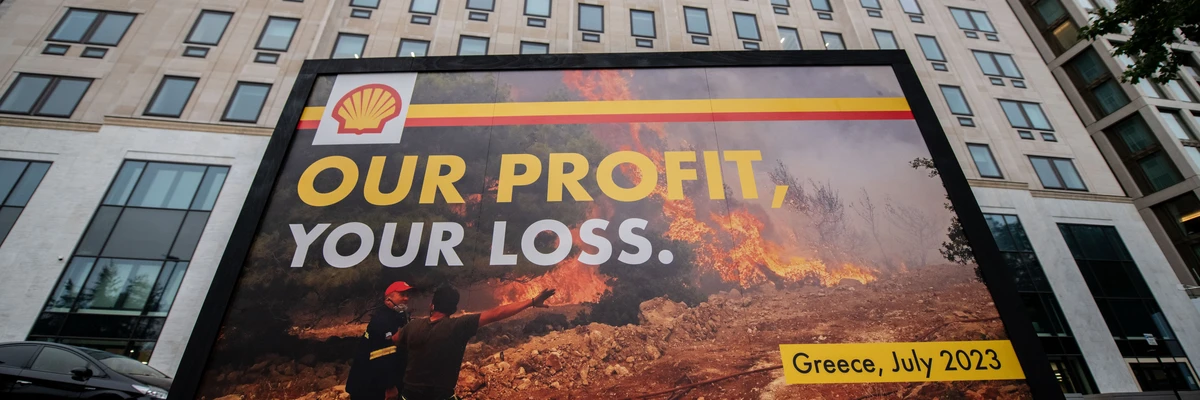
Experienced climbers scale a rock face near the historic Dumbarton castle in Glasgow, releasing a banner that reads “Climate on a Cliff Edge.” One activist, dressed as a globe, symbolically looms near the edge, while another plays the bagpipes on the shores below. | Photo courtesy of Extinction Rebellion and Mark RichardsGreenpeace activists display a billboard during a protest outside Shell headquarters on July 27, 2023 in London. (Photo: Handout/Chris J. Ratcliffe for Greenpeace via Getty Images)Neo-Fascist Climate Science Denier Donald Trump says Burn, Baby, Burn.
Extinction Rebellion activists protest outside the Royal Courts of Justice against the long sentences handed out to climate activists, March 7, 2025
Just six years cut from 41-year jail sentence for Just Stop Oil activists
THIRTY people turned their backs on judges today to reveal T-shirts reading “corruption in court,” after it was announced that only six years would be shaved off a 41-year prison sentence for climate protesters involved in peaceful action.
In January, a rare mass appeal was held for 16 Just Stop Oil (JSO) protesters who were handed the draconian sentences last year.
Today, only six of them saw their sentences reduced in a ruling that has been condemned as having “no place in a democracy that upholds the right to protest.”
Among them were the “Whole Truth Five,” who sparked outrage after being given record-breaking sentences for “conspiracy to cause a public nuisance” after organising a protest on the M25 over Zoom.
JSO founder Roger Hallam, who was handed the longest sentence, five years, saw his jail time reduced to four.
Cressia Gethin, Louise Lancaster, Daniel Shaw and Lucia Whittaker De Abreu, who were originally handed four years each, saw their sentences moderately cut to between 2.5 and three years.
The only other protester who saw a reduction was 78-year old Gaie Delap, whose sentence for participating in an M25 protest was cut from 20 to 18 months.
All 16 protesters had been taking part in non-violent actions calling on the government stop issuing new oil and gas licences, a demand which has now been met.
Among the challenges thrown out were that of Phoebe Plummer and Anna Holland, who were sentenced to two years and 20 months for throwing soup on glass covering Vincent van Gogh’s Sunflowers.
After the ruling, Ms Plummer said in a statement that Britain’s democracy is being “sold off to the highest bidder,” with the nation’s courts “corrupted by the oil and arms industries.”
The harsh sentences were imposed last year after now-sacked extremism adviser Lord Walney released a report agitating for tougher punishments on activists while pocketing money from arms and fossil fuel companies as a paid lobbyist.
At today’s ruling, Lady Chief Justice Baroness Carr acknowledged that “conscientious motivation” was a “factor relevant to sentencing in each case,” but that this “did not preclude a finding that any appellant’s culpability was still high.”
Last year, in cases such as the Whole Truth Five, activists were repeatedly prevented from talking about climate change during trial.
The claimants’ lawyer, Raj Chada, said his team would be reviewing the judgement and considering an appeal to the Supreme Court.
Neo-Fascist Climate Science Denier Donald Trump says Burn, Baby, Burn.Greenpeace activists display a billboard during a protest outside Shell headquarters on July 27, 2023 in London. (Photo: Handout/Chris J. Ratcliffe for Greenpeace via Getty Images)
Spread the love
Experienced climbers scale a rock face near the historic Dumbarton castle in Glasgow, releasing a banner that reads “Climate on a Cliff Edge.” One activist, dressed as a globe, symbolically looms near the edge, while another plays the bagpipes on the shores below. | Photo courtesy of Extinction Rebellion and Mark RichardsNeo-Fascist Climate Science Denier Donald Trump says Burn, Baby, Burn.
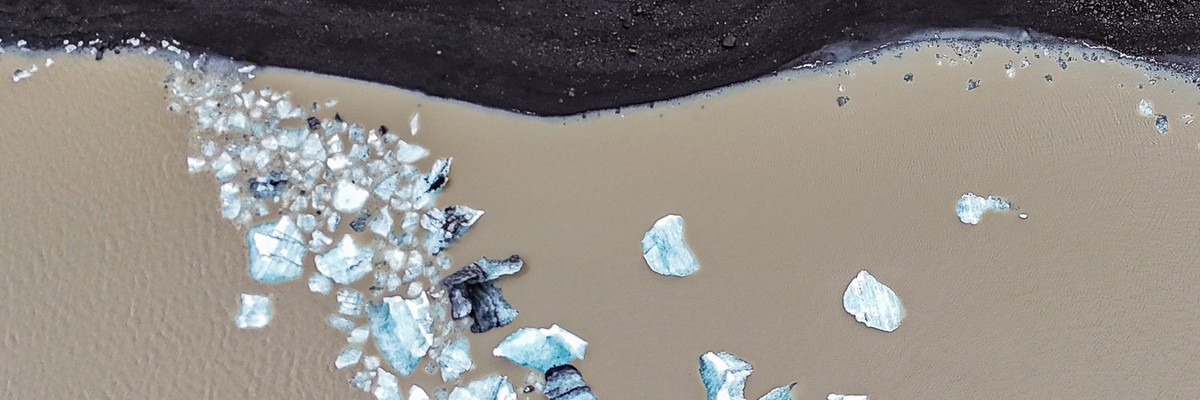
An aerial view shows the Vatnajokull glaciers in Iceland are melting into the ocean or forming lagoons due to global warming and climate change on February 23, 2025. (Photo: Evrim Aydin/Anadolu via Getty Images)
“The environment does not care about politics. Keep spewing greenhouse gases and face the consequences.”
European Union officials said the Copernicus Climate Change Service had issued its latest “stark reminder of why climate action is urgent” when the bloc’s program announced that it observed less sea ice covering the Earth’s oceans last month than at any other point in recorded history.
In the Arctic, sea ice reached its lowest monthly extent on record, at 8% below average, in early February, and it remained below the previous record for the rest of the month.
The oceans were missing an area of ice roughly the size of the United Kingdom last month, according to Copernicus (C3S), and the finding was not an anomaly in recent sea ice observations.
February marked the third consecutive month in which record low sea ice levels for the corresponding month were observed in the Arctic.
C3S reported that in the Antarctic, sea ice levels have rapidly declined in 2025 after appearing to recover to near-record levels in December 2024.
Last month, sea ice near the South Pole reached its fourth-lowest monthly extent, at 26% below average.
C3S said the daily sea ice extent in the Antarctic may have also reached its annual minimum toward the end of the month, which will be confirmed later in March; if confirmed, it would be the second-lowest annual minimum in the satellite record.
“February 2025 continues the streak of record or near-record temperatures observed throughout the last two years,” said Samanatha Burgess, strategic lead for climate at the European Center for Medium-Range Weather Forecasts. “One of the consequences of a warmer world is melting sea ice, and the record or near-record low sea ice cover at both poles has pushed global sea ice cover to an all-time minimum.”
The melting sea ice was recorded as global average temperatures rose 1.59°C (2.8°F) above the pre-industrial average last month, making it the third-warmest February on record.
In Europe, the temperatures that most exceeded averages were recorded last month in parts of Scandinavia, Iceland, and the Alps. Outside of Europe, “temperatures were most above average over large parts of the Arctic.”
The low extent of sea ice will lead to “more solar heat absorbed by the darker oceans,” and “faster warming,” said Simon Oldridge, a climate campaigner.
Grim news for the climate. Less reflective ice means more solar heat absorbed by the darker oceans—faster warming.
It’s time for politicians to take their heads out the sand and brief the public on the seriousness of this crisis. https://t.co/fvkoudUKb1
The loss of sea ice can also lead to the collapse of ocean currents that are crucial for marine life to thrive.
C3S reported on the record-low sea ice levels as campaigners in the U.S. and around the world condemned recent anti-climate actions taken by U.S. President Donald Trump and the Republican Party, including the country’s exit from the Paris climate agreement, the GOP’s passing of a bill to end a federal program aimed at reducing planet-heating methane emissions, and Trump’s push to fast-track fossil fuel projects—as scientists warn that new extractive projects have no place on a pathway to limiting planetary heating and avoiding its worst impacts.
“The environment does not care about politics,” said public health expert Ali Khan. “Keep spewing greenhouse gases and face the consequences.”
Experienced climbers scale a rock face near the historic Dumbarton castle in Glasgow, releasing a banner that reads “Climate on a Cliff Edge.” One activist, dressed as a globe, symbolically looms near the edge, while another plays the bagpipes on the shores below. | Photo courtesy of Extinction Rebellion and Mark RichardsNeo-Fascist Climate Science Denier Donald Trump says Burn, Baby, Burn.