Category: Climate Crisis

  • U.S. Energy Secretary Chris Wright Backs Coal and Attacks ‘Sinister’ Climate Targets at ARC Conference 

    Spread the love

    Original article by Adam Barnett republished from DeSmog.

    U.S. Energy Secretary Chris Wright speaking at the 2025 Alliance for Responsible Citizenship conference. Credit: ARC / YouTube

    The Trump appointee and fossil fuel executive called the transition to renewable energy “lunacy” at an event packed with climate science deniers.

    Donald Trump’s new energy secretary has today vowed to “get out of the way” of coal, oil and gas, and called the UK’s 2050 net zero target “a sinister goal” that would “impoverish” people.

    Chris Wright, an oil and gas industry executive appointed by U.S. President Trump, was speaking via video link at the Alliance for Responsible Citizenship (ARC) conference in London, a right-wing forum run by fierce opponents of climate policies. 

    He also downplayed the threat from extreme weather, and suggested that climate action is part of a plot to “grow government power” and “shrink human freedom”. 

    The ARC conference, taking place this week at the ExCel centre in east London, includes speeches by Conservative Party leader Kemi Badenoch, Republican Party Speaker of the House Mike Johnson, Reform UK leader Nigel Farage, and Canadian psychologist and ARC founder Jordan Peterson. 

    As DeSmog revealed on Monday, a leaked guest list for the event includes executives from oil and gas giants, including BP, Koch Inc., Valero Energy, and Energy Transfer. 

    Until his appointment, Wright was the CEO of the fracking services company Liberty Energy. According to its 2023 tax filing, Wright was also a director of the Western Energy Alliance (WEA), a trade group representing more than 300 companies in the oil and gas industry. WEA has historically lobbied against oil and gas industry restrictions. 

    In a video posted to LinkedIn in January 2023, Wright said, “There is no climate crisis”.

    ‘Sinister Agenda’

    Wright told the ARC audience today that he wanted to “increase the supply of affordable, reliable energy” by lifting the pause on natural gas and scrapping regulations on nuclear energy. 

    When asked about coal, oil and gas, he said: “Oh absolutely. The world today runs on coal oil and gas, and it’s been a tremendous success. I should have said number one [of his plan] is get out of the way of the production, export and enhancement of our volumes of coal, oil and gas.” 

    The energy secretary also attacked the UK’s legally-binding target of cutting emissions to net zero by 2050.

    “Net zero 2050 is a sinister goal”, he said. “It’s a terrible goal. It’s both unachievable by any practical means, but the aggressive pursuit of it – and you’re sitting in a country that has aggressively pursued this goal – has not delivered any benefits, but it’s delivered tremendous cost.”

    He added: “This is not energy transition, this is lunacy. This is impoverishing your own citizens in a delusion that this is somehow gonna make the world a better place. It’s not.”

    The world’s foremost climate science body, the UN’s Intergovernmental Panel on Climate Change (IPCC), has stated that – without achieving net zero by 2050 and limiting warming to 1.5C – the world will struggle to contain the worst effects of climate change. These include droughts, flooding, poverty, and mass displacement. 

    Wright went on to claim that “We’re scaring children all the time with stories of extreme weather” when “deaths from extreme weather have plummeted for 100 years”. 

    Better forecasting and preparation have cut extreme weather deaths over this period, but the number and intensity of extreme weather events have increased, and they continue to be disproportionately fatal in the least developed countries. 

    The energy secretary also claimed that “climate-obsessed people […] know very little about the climate data”, before alluding to the conspiracy theory that climate change is being used to impose a green tyranny. 

    “I think the agenda might be different here than climate change”, he said. “It’s certainly been a powerful tool used to grow government power, top down control, and shrink human freedom. This is sinister.”

    Oil and Gas at ARC

    Senior representatives from several major fossil fuel producers will be at the ARC event, according to a leaked list of attendees viewed by DeSmog.

    Billed as an effort to “re-lay the foundations of civilization,” the conference will feature panels about energy and environment that are filled with prominent deniers of the climate crisis.

    That includes Vivek Ramaswamy, a former contender for the U.S. Republican presidential nomination, who has referred to the “climate agenda” as a “hoax,” as well as Nigel Farage, who has called for the UK’s 2050 net zero emissions policies to be “scrapped” entirely. 

    They will be joined by representatives of prominent climate denial organizations including the CO2 Coalition, and libertarian anti-climate think tanks such as the Cato Institute.

    “I had a chance to sit down one-on-one with Chris in 2022 in his Denver office,” claimed Gregory Wrightstone, executive director of the CO2 Coalition, in a newsletter in late 2024. 

    Wrightstone “was impressed with his [Wright’s] knowledge and views on energy philosophy, which aligned closely with those of the CO2 Coalition.”

    “The key takeaway is that he’s a big supporter of the continuing use of fossil fuels, including coal, oil, and natural gas,” Wrightstone said. 

    ARC is backed by the UAE-based investment firm Legatum Group and British hedge fund millionaire Paul Marshall, who together own the right-wing broadcaster GB News. Marshall provided £1 million in funding to ARC in 2023, which is run by Conservative peer and UK government advisor Baroness Philippa Stroud.

    Speaking to the Financial Times ahead of the conference, Marshall claimed that Britain is “going bust” in its pursuit of net zero. As revealed by DeSmog, Paul Marshall’s hedge fund held £1.8 million worth of shares in fossil fuel companies – including in oil and gas giants Chevron, Shell, and Equinor – as of June 2023. One of Marshall Wace’s biggest investors, U.S. private equity firm KKR, also has a large fossil fuel portfolio, including 188 assets in oil, gas, and coal.

    Original article by Adam Barnett republished from DeSmog.

    Neo-Fascist Climate Science Denier Donald Trump says Burn, Baby, Burn.
    Neo-Fascist Climate Science Denier Donald Trump says Burn, Baby, Burn.
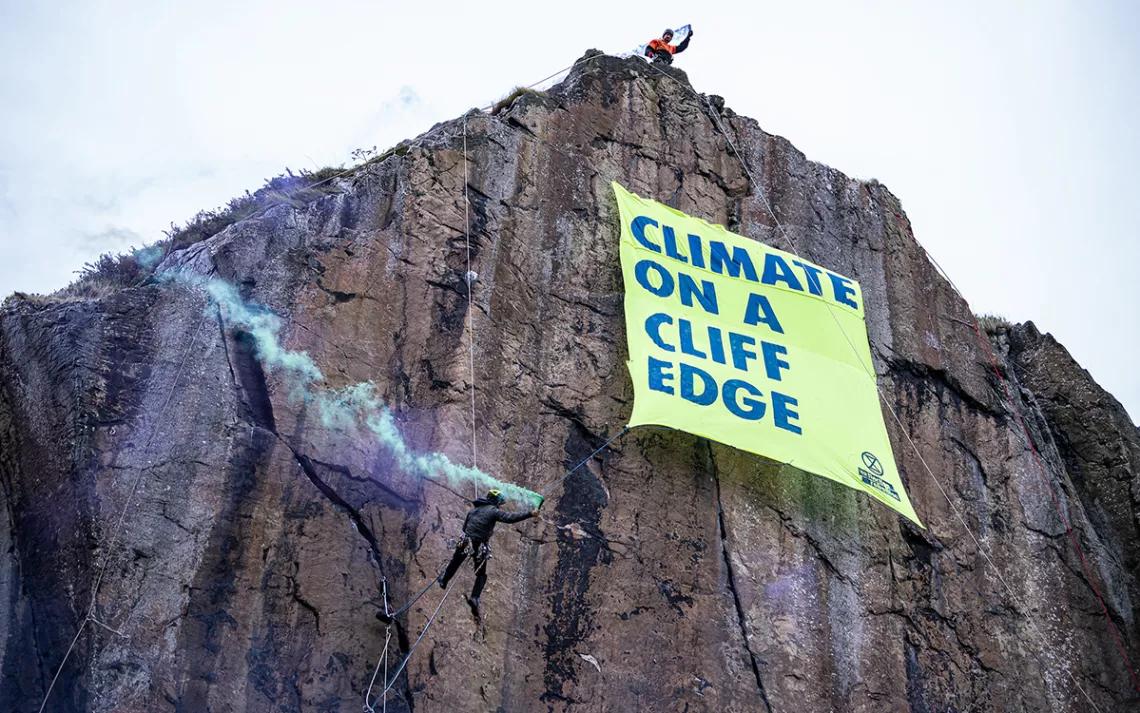
    Experienced climbers scale a rock face near the historic Dumbarton castle in Glasgow, releasing a banner that reads “Climate on a Cliff Edge.” One activist, dressed as a globe, symbolically looms near the edge, while another plays the bagpipes on the shores below. | Photo courtesy of Extinction Rebellion and Mark Richards
    Experienced climbers scale a rock face near the historic Dumbarton castle in Glasgow, releasing a banner that reads “Climate on a Cliff Edge.” One activist, dressed as a globe, symbolically looms near the edge, while another plays the bagpipes on the shores below. | Photo courtesy of Extinction Rebellion and Mark Richards
  • Plants Are Losing Their Ability to Absorb Carbon Dioxide as Emissions Rise

    Spread the love

    https://www.ecowatch.com/plants-co2-sequestration-rate.html

    Burned trees from the Palisades Fire and dust blown by winds seen from Will Rogers State Park in the Pacific Palisades neighborhood in Los Angeles, California on Jan. 15, 2025. Apu Gomes / Getty Images

    Our planet’s plants and soils reached the peak of their ability to absorb carbon dioxide in 2008, and their sequestration rate has been falling ever since, according to a new analysis by a father-and-son team in the United Kingdom.

    At first, the added carbon led to warmer temperatures, vegetation growth and a longer growing season. Once a tipping point was reached, however, the combination of heat stress, wildfires, drought, flooding, storms and the spread of new diseases and pests led to a reduction in the amount of carbon plants can soak up.

    “The rate of natural sequestration of CO2 from the atmosphere by the terrestrial biosphere peaked in 2008. Atmospheric concentrations will rise more rapidly than previously, in proportion to annual CO2 emissions, as natural sequestration is now declining by 0.25% per year,” the authors of the study wrote. “This effect will accelerate climate change and emphasises the close connection between the climate and nature emergencies. Effort is urgently required to rebuild global biodiversity and to recover its ecosystem services, including natural sequestration.”

    Once the tipping point was reached, the chances of unchecked climate breakdown became more likely, reported The Guardian.

    Former Chief Executive of the Scottish Environment Protection Agency James Curran, with help from his son Sam, took a detailed look at the world’s changing carbon concentration levels. Their analysis revealed that, since 2008, plants have been absorbing an average of 0.25 percent less carbon dioxide each year.

    “The findings are very stark. Emissions now need to fall by 0.3% per year, just to stand still. That’s a tall order since they typically increase by 1.2% per year,” James Curran said, as The Guardian reported.

    …

    https://www.ecowatch.com/plants-co2-sequestration-rate.html

    Experienced climbers scale a rock face near the historic Dumbarton castle in Glasgow, releasing a banner that reads “Climate on a Cliff Edge.” One activist, dressed as a globe, symbolically looms near the edge, while another plays the bagpipes on the shores below. | Photo courtesy of Extinction Rebellion and Mark Richards
    Experienced climbers scale a rock face near the historic Dumbarton castle in Glasgow, releasing a banner that reads “Climate on a Cliff Edge.” One activist, dressed as a globe, symbolically looms near the edge, while another plays the bagpipes on the shores below. | Photo courtesy of Extinction Rebellion and Mark Richards
    Neo-Fascist Climate Science Denier Donald Trump says Burn, Baby, Burn.
    Neo-Fascist Climate Science Denier Donald Trump says Burn, Baby, Burn.

  • Chancellor Reeves’s speech disrupted over Drax subsidies

    Spread the love

    https://morningstaronline.co.uk/article/chancellor-reeves-speech-disrupted-over-drax-subsidies

    A climate activist interrupts Chancellor Rachel Reeves’s keynote speech at the Yorkshire Labour Party Conference in protest against new subsidies for Drax Power Station, March 1, 2025

    CLIMATE activists disrupted Rachel Reeves’s speech to the Yorkshire Labour Party Conference on Saturday, condemning new subsidies for the tree-burning Drax power station.

    As the Chancellor spoke, the two protesters stood up and condemned the environmental damage caused by Drax, which claims to be sustainable, allowing it to receive billions of pounds in green subsidies, but remains Britain’s biggest carbon emitter.

    A BBC investigation previously exposed Drax for sourcing wood from rare forests, yet Labour has extended its subsidies until at least 2031 — costing taxpayers an estimated £2 billion.

    Rosie, of campaigner group Axe Drax, said: “Labour has once again shown that they are on the side of the lobbyists, choosing to hand billions … to Drax, which has just announced over £1bn in earnings, while slashing winter fuel payments and presiding over yet another energy bill price hike.

    “Rather than funding Drax’s shareholders profits, we desperately need investment in real green energy and climate action that will bring down emissions and bills — like home insulation.”

    The disruption led to Ms Reeves pausing her speech while the protesters were ejected by security staff.

    https://morningstaronline.co.uk/article/chancellor-reeves-speech-disrupted-over-drax-subsidies

    Keir Starmer says pensioners can freeze to death and poor children can starve and be condemned to failure and misery all their lives.
    Keir Starmer says pensioners can freeze to death and poor children can starve and be condemned to failure and misery all their lives.
    Orcas comment on killer apes destroying the planet by continuing to burn fossil fuels.
    Orcas comment on killer apes destroying the planet by continuing to burn fossil fuels.
  • Exclusive: Norway’s Equinor Forced to Withdraw Key Carbon Capture Claim

    Spread the love

    Original article by Edward Donnelly republished from De Smog.

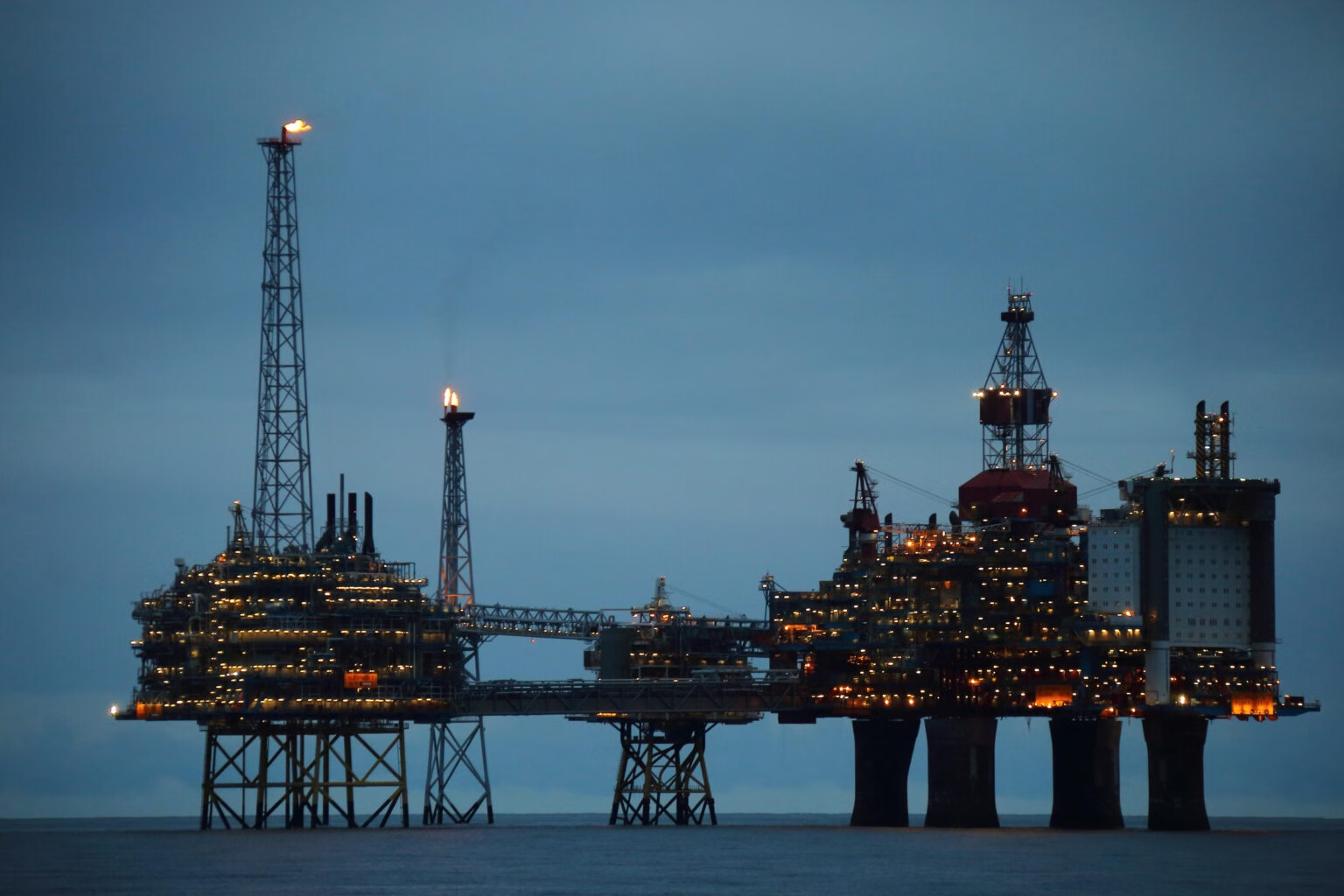
    Equinor’s Sleipner offshore gas field. Philip Stephen/ Nature Picture Library / Alamy Stock Photo.

    Oil company was storing a fraction of advertised amount of CO2 at offshore project, data shows.

    This story is the tenth part of a DeSmog series on carbon capture and was developed with the support of Journalismfund Europe.

    Equinor has retracted a claim that it stores about a million tonnes of carbon dioxide annually at its flagship carbon capture project after DeSmog obtained data showing the real figure was as little as a tenth of that amount. 

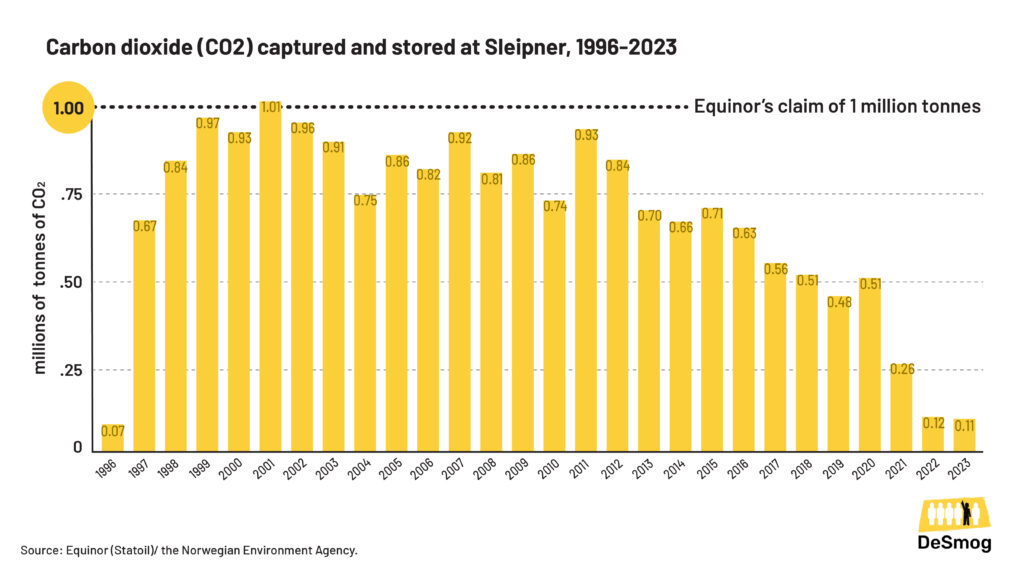
    The Norwegian oil company scrubbed the estimate from its website in November, when presented with official figures showing that it captured 106,000 tonnes of carbon dioxide (CO2) at its Sleipner carbon capture and storage (CCS) facility in 2023. 

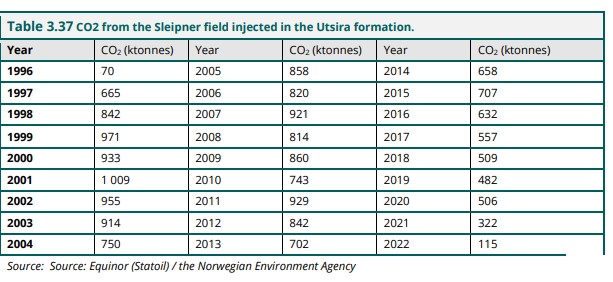
    Equinor has not captured 1 million tonnes of CO2 per year at the site since 2001, according to the data, provided by the Norwegian Environment Agency.  

    The company put the reason for the discrepancy between the official figures and its public-facing claim to be capturing “about 1 million” tonnes of CO2 a year down to a failure to update a “static” webpage.

    “We have now removed this error from our website and updated this section with the correct information,” Equinor spokesman Gisle Ledel Johannessen said via email. 

    Equinor has been capturing CO2 from a gas processing plant at the Sleipner gas field in the North Sea since 1996. The field has particularly high concentrations of CO2, which Equinor filters out during the gas purification process and then injects below the seabed. 

    The project has been cited by carbon capture advocates, and Equinor itself, as evidence that the technology is reliable enough to help meet global climate goals, despite its long history of cost-overruns and failed targets.

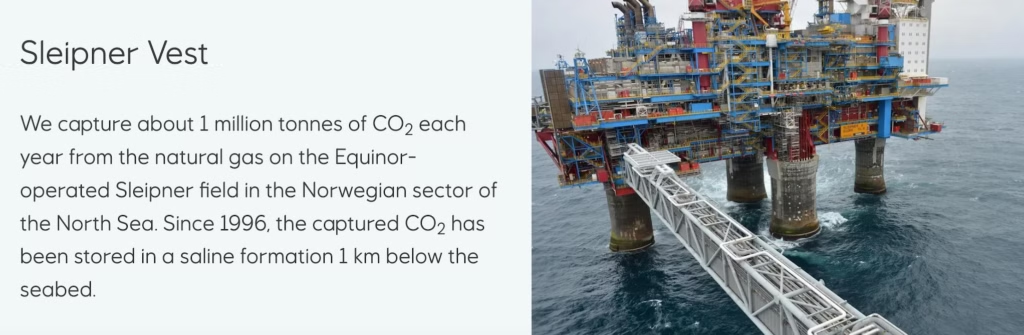
    A screenshot of Equinor’s website, taken on 13 October, 2024 Credit: Edward Donnelly.
    The claim has since been removed.

    Expansion Plans

    Equinor is positioning itself to play a key role in the European Union’s plans to massively increase carbon capture. The bloc has adopted an official target to deploy an annual 50 million tonnes of CO2 storage capacity by 2030 from roughly three million tonnes available across the continent today, though the pace of the existing roll-out is nowhere near on track to achieve that goal.

    Norway, not an EU member, is home to almost all of Europe’s operational carbon capture capacity, which is comprised of Sleipner and a similar project also operated by Equinor at its Snøhvit gas field in the Barents Sea. The two sites stored a total of 763,000 tonnes of CO2 in 2023, according to the Norwegian Environment Agency figures, less than half of their combined capacity of 1.7 million tonnes of CO2.

    Equinor’s statement that it was capturing “about 1 million tonnes of CO2 each year” at Sleipner alone appears to have first been published on the company’s “carbon capture and storage (CCS)” webpage in 2022, according to archived internet data. That year, the Sleipner field captured 260,000 tonnes of CO2, according to the Norwegian Environment Agency, which regulates the oil and gas industry.

    DeSmog asked Equinor for its data on carbon capture at Sleipner in October. When the company declined to provide it, DeSmog obtained the figures from the Norwegian Environment Agency, which collates companies’ self-reported data. 

    Equinor spokesman Johannessen said that Sleipner had been capturing less CO2 in recent years because of declining gas production at the site.

    Credit: Sabrina Bedford.

    Broken Equipment

    Equinor had previously acknowledged that faulty monitoring equipment at Sleipner caused it to over-estimate the amount of CO2 it was capturing at the field for several years, as DeSmog reported in October. During a more than four-year period from January 2017 through March 2021, the company said that it had captured a cumulative total of about 2.7 million tonnes of CO2 at the site. Equinor later amended the figure to 2.1 million tonnes, about a 28-percent decrease. 

    The gulf between Equinor’s public claims and Sleipner’s actual performance underscores concerns among climate advocates that the oil industry is hyping the potential of carbon capture as a climate solution to deflect pressure to cut production of fossil fuels. 

    At least 480 carbon capture lobbyists attended the latest annual UN climate conference in Azerbaijan in November, according to the nonprofit Center for International Environmental Law. In October, DeSmog revealed that Equinor had been holding more meetings with ministers to lobby the UK government over CCS than any other company, part of its plans to play a leading role in the country’s carbon capture plans. 

    Equinor suggested that carbon capture could be the “best-kept secret” for climate action in a 2019 video, concluding that renewable energy sources such as wind and solar were “not enough.” In sponsored content currently viewable on the Financial Times website, Equinor says that CCS “has emerged as one of the key technologies in mitigating global warming” and addresses “misconceptions,” such as concerns over high costs and links to continued oil and gas production. 

    Ketan Joshi, an Oslo-based climate consultant, said that the way Equinor presents its CCS operations as a climate solution is “misleading” because its existing projects only capture a small proportion of emissions, while total fossil fuel emissions in Norway remain high. 

    “Equinor uses ‘ambitious’ CCS targets as a way of simulating action without actually performing it,” Joshi said. “They report the amount of CO2 they capture each year and it does not increase.” 

    *A screenshot of a table showing the amount of CO2 captured at Sleipner provided to DeSmog by the Norwegian Environment Agency. The agency noted in an email that the 2021 volume should be 260 kilotonnes and not 322 kilotonnes, and that it will correct the figure in the next edition. The 106 kilotonne figure (106,000 tonnes) for 2023 was provided separately by email.

    CO2 Tax

    The Sleipner CCS project was devised by Equinor (then Statoil) in the mid-1990s as a way to reduce its exposure to Norway’s newly implemented CO2 emissions tax. The company established its CCS project at Snøhvit in 2008 also to reduce its tax burden from CO2 released during gas processing.

    “Sleipner and Snøhvit are CCS projects with high quality that rightly enjoy worldwide recognition from academia, industry, governmental bodies and science institutions as proven and safe CO2 storages over decades where Equinor and our partners so far have stored over 25 million tonnes of CO2 since 1996,” said Equinor spokesman Johannessen.

    He added that over the past five years, the company has “injected 99.7 percent of the CO2 that has been captured on Sleipner into the ground.”

    The amount of CO2 captured by Equinor’s two CCS projects is dwarfed by the emissions released by burning the oil and gas sold by the company. In 2023, Equinor recorded a total of 262 million tonnes of CO2 emissions — including the emissions produced by its operations, and the emissions from burning the oil and gas those operations extracted, according to company sustainability data. 

    In contrast, the company captured and stored a total of about 0.8 million tonnes of CO2 at Sleipner and Snøhvit, more than 300 times less than the amount emitted into the atmosphere by burning its products. 

    And even with a functioning carbon capture facility onsite, net CO2 emissions at Sleipner far exceeded the amount of the gas that was stored. 

    The Sleipner offshore platform provides power to several nearby gas fields by burning gas in turbines — a process that released 658,000 tonnes of CO2 into the atmosphere in 2023, according to the company’s sustainability reporting. That’s more than six times the 106,000 tonnes of CO2 that Equinor captured and stored from gas processing at Sleipner that year. 

    To reduce the offshore platform’s CO2 footprint, Equinor announced last April that it would introduce an electrification plan for Sleipner, rather than opting to expand CCS operations at the field. The company is also planning an electrification project to reduce emissions from the gas export facility at Snøhvit.

    Government Subsidies

    In September, Equinor and partners Shell and TotalEnergies inaugurated the Northern Lights CO2 transport and storage facility near the Norwegian port of Bergen, which the companies say will store 1.5 million tonnes of CO2 a year from industrial sources on the Norwegian mainland at full capacity when it starts operations.

    The project is mostly financed by $1.2 billion in Norwegian government subsidies, with an additional $141 million pledged by the European Union.  

    By 2035, Equinor says it aims to store 30 to 50 million tonnes of CO2 a year from new projects announced in Norway, Denmark, the UK, and the United States — an exponential increase from its current capacity.

    While Equinor has signalled that it will need substantial subsidies to go forward with its CCS plans, the company continues to direct most of its investments into extracting more fossil fuels. In August, chief executive Anders Opedal announced up to $6.7 billion a year to fund new Norwegian oil and gas drilling until 2035.

    In contrast, Equinor said in November that it will cut its renewable energy division’s workforce by 20 percent — about 250 jobs — citing economic headwinds in the sector.

    “At the most basic level, Equinor presents CCS in a similar way to many other major oil and gas companies: a ‘necessary’ part of the climate solutions mix,” said Joshi, the climate consultant. “This is presented alongside the company’s aggressive expansionist agenda: opening many new oil and gas fields.”

    Original article by Edward Donnelly republished from De Smog.

    Orcas comment on killer apes destroying the planet by continuing to burn fossil fuels.
    Orcas comment on killer apes destroying the planet by continuing to burn fossil fuels.
  • Rail fares rise by 4.6% in England and Wales

    Spread the love

    https://www.theguardian.com/money/2025/mar/01/rail-passengers-england-wales-fares-rise

    Rail fares in England and Wales are rising by 4.6% from Sunday and most railcards going up by £5. Photograph: Geoffrey Swaine/Rex/Shutterstock

    Campaigners say if government can find money to freeze fuel duty for motorists they can do similar for railways

    Rail passengers in England and Wales face a steep increase in the cost of travel from Sunday, with fares rising by 4.6% and most railcards going up by £5.

    The government said the rise is needed because of the dire financial state of the railway, but transport campaigners contrasted it with Labour prolonging the freeze on fuel duty for motorists.

    This weekend’s fare increase is only the second time the government has raised fares above the rate of inflation since 2013 – the other being in 2021 when the Covid pandemic had stopped most rail revenue.

    London Underground and other rail fares in the capital will also match the national rise, going up by an average of 4.6% across the network, although bus fares will be frozen.

    …

    https://www.theguardian.com/money/2025/mar/01/rail-passengers-england-wales-fares-rise