Climate campaigners, MPs, and ex-Olympians held a boat race along the Thames earlier this month to promote the bill. Photograph: Peter Nicholls/Getty Images
Guardian Exclusive: Supporters of bill say Labour has already insisted on removal of clauses requiring UK to meet targets agreed at Cop and other summits
A landmark bill that would make the UK’s climate and environment targets legally binding seems doomed after government whips ordered Labour MPs to oppose it following a breakdown in negotiations.
Supporters of the climate and nature bill, introduced by the Liberal Democrat MP Roz Savage, say Labour insisted on the removal of clauses that would require the UK to meet the targets it agreed to at Cop and other international summits.
Although it is a private member’s bill, more than 80 Labour MPs, including several ministers, had publicly signed up to support it.
Some Labour MPs have been ordered to attend the bill’s second reading on Friday morning and to prepare speeches, to deliberately make it run out of time and avoid a vote. Another possibility would be a three-line whip to vote against the bill, leaving any rebels at risk of disciplinary action, including losing the party whip.
Unpaid or under-paid internships persist in spite of law changes since 2018, making up 61% of those on offer. Photograph: OJO Images/Rex Features
UK charity calls for positions of four weeks or longer to be banned to help close social mobility gap
Young people from working-class or disadvantaged backgrounds are being “locked out” of careers by unpaid or low-paid internships that benefit middle-class graduates, according to a social mobility charity.
Research by the Sutton Trust found that middle-class graduates made more use of internships as stepping stones into sectors such as finance or IT, even in cases where the internships paid nothing or below the minimum wage as required by legislation.
Nick Harrison, the chief executive of the Sutton Trust, said: “Internships are an increasingly critical route into the best jobs, and it’s shocking that in this day and age, many employers still pay interns below the minimum wage, or worse, nothing at all. They should be ashamed.
“The government has pledged to ban unpaid internships, which is absolutely the right thing to do. Clearly not all young people can get support from the ‘bank of Mum and Dad’, so banning this outdated practice will help to level the playing field for these valuable opportunities. It’s a no-brainer and should be implemented without delay.”
A survey of 1,200 recent graduates commissioned by the trust revealed that 55% of middle-class young people had undertaken internships, compared with just 36% from working-class families – and that the gap between the two groups had widened “substantially” since its previous survey in 2018, from 12 to 19 percentage points.
Unpaid or underpaid internships had persisted in spite of law changes since 2018, making up 61% of those on offer and forcing interns to “subsidise themselves during their placements, which locks many of those who can’t afford it out of these vital opportunities”, the trust said.
A Downing Street spokesperson said the government’s position “will be set out at second reading”.
Nature and climate charities have urged ministers to adopt Savage’s bill, saying it would introduce vital concrete steps to tackle nature depletion and the climate crisis.
The UK government is set to back plans for a third runway at Heathrow, the country’s busiest airport, and to expand two other airports near London: Gatwick and Luton. The move is designed to support the government’s “mission” to grow the economy.
Air transport is notoriously hard to decarbonise. Unlike the energy system, or even road transport, there is no renewable alternative to switch to immediately. If electric or hydrogen planes become reality, it won’t be for many years yet. Therefore it’s not clear this airport expansion can fit within the UK’s legal and arguably moral requirement to cut emissions and remain within its carbon budget.
It certainly goes against what the government’s official advisory body the Committee on Climate Change (CCC) recommends. The CCC’s 2023 report to parliament stated that: “No airport expansions should proceed until a UK-wide capacity management framework is in place to annually assess and, if required, control sector GHG [greenhouse gas] emissions and non-CO₂ effects.”
Those non-CO₂ effects of aviation include water vapour, soot and other gases like nitrous oxides and sulfur dioxide, all released directly into the high atmosphere where they help form heat-trapping clouds. Estimates suggest they could triple the greenhouse impact of aviation.
In 2019, the last year of available data pre-COVID, domestic and international aviation accounted for around 8% of the UK’s total emissions. The non-CO₂ effects makes aviation a larger contributor to climate change than that number suggests.
The sector itself struggles to build a coherent decarbonisation roadmap based solely on “supply-side” improvements to things like fuel efficiency or, in a recent example from EasyJet, thinner paint. The demand side – taking fewer flights, frequent flyer levies, or restrictions on domestic flights as have been introduced in France – is rarely mentioned.
Unfortunately aviation is a prime example of the Jevons effect where any improvement in efficiency has been wiped out by increased demand. With a growing global middle class pursuing a higher consumption lifestyle, aviation emissions continue to grow even while other sectors have shows some efforts to reduce their own.
A third runway at Heathrow was first proposed back in the 2000s. This photo is from a 2016 protest. Dinendra Haria / shutterstock
The UK has mandated that synthetic aviation fuel (SAF), a more sustainable alternative to regular jet fuel, must make up 10% of aviation fuel by 2030. But only 1.2% of aviation fuel is currently SAF and the industry has not published any plans to show it can scale up in time. Indeed, the sector’s own plans for growth will outstrip efforts to decarbonise through synthetic fuel, delivering a neutral effect at best.
The consumer-facing airport sector has also been accused of greenwash. For instance, Luton Airport recently published adverts making the claim that its own expansion would be stopped if it did not meet stringent environmental targets. However, the Advertising Standards Authority found that consumers would naturally believe that would include air traffic and not just terminal operations (a terminal’s heating or lighting is, of course, largely irrelevant when its core business is as emissions-intensive as flying).
The difficulty of decarbonising aviation while the sector still grows is exemplified by the government’s recently launched consultation on adopting the Corsia carbon offsetting scheme for international flights and how it might work with existing cap and trade schemes. All of which encourage or excuse excess emissions through a charging mechanism.
Growing pains
“Kickstarting economy growth” and “Make Britain a clean energy superpower” are two of the UK government’s six “missions”. However, by expanding airports in support of the former, it risks failing the latter.
A new report by thinktank the New Economics Foundation shows that airport expansion could balance out all of the emissions saved by the government’s clean power plans by 2050.
There is evidence that airport expansion can bring some of the economic benefit that government needs. However, another New Economics Foundation report has found that air travel is no longer a catalyst for productivity growth. So the economic benefits of a new runway are really confined to the airport operation itself – projects for engineers and builders, service jobs for people living near Heathrow, and so on.
Aviation is the privilege of the richer part of society, both globally and within the UK. Figures from Our World in Data shows the richest 50% of the global population produces 90% of the aviation emissions.
While many more UK residents have experienced flying than in the past, most flights are still taken by a small, wealthy subset of the population, which will typically capture the largest share of any new capacity. Each year, around half of British residents do not fly at all.
The focus on London airports for the largest scale expansions will shift the balance of the economy further towards south-east England, and increase inequality within the UK economy. And while these plans might bring some of the GDP gains the government is desperate to deliver, all the evidence shows they will be at the expense of its environmental targets.
The study was published as President Donald Trump was blasted for an executive order that one critic said shows he wants to turn the Alaskan Arctic into the “the world’s largest gas station.”
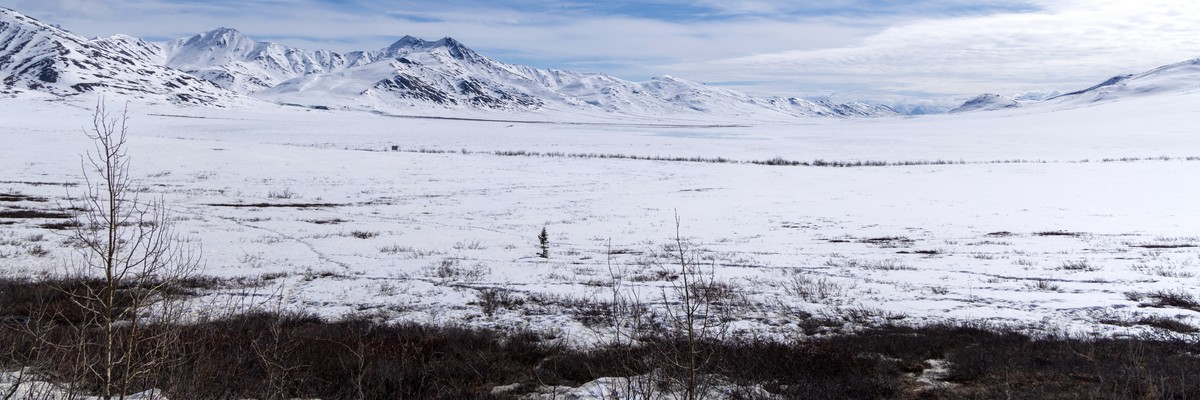
For thousands of years, the land areas of the Arctic have served as a “carbon sink,” storing potential carbon emissions in the permafrost. But according to a study published in the journal Nature Climate Change Tuesday, more than 34% of the Arctic is now a source of carbon to the atmosphere, as permafrost melts and the Arctic becomes greener.
“When emissions from fire were added, the percentage grew to 40%,” according to the Woodwell Climate Research Center, which led the international team that conducted the research.
The study, which was first reported on by The Guardian, was released the day after President Donald Trump issued multiple presidential actions influencing the United States’ ability to confront the climate crisis, which is primarily caused by fossil fuel emissions, including one directly impacting resource extraction in Alaska, a section of which is within the Arctic Circle.
Sue Natali, one of the researchers who worked on the study published in Nature Climate Change, told NPR in December (in reference to similar research) that the Arctic’s warming “is not an issue of what party you support.”
“This is something that impacts everyone,” she said.
As the permafrost—ground that remains frozen for two or more years—holds less carbon, it releases CO2 into the atmosphere that could “considerably exacerbate climate change,” according to the study.
“There is a load of carbon in the Arctic soils. It’s close to half of the Earth’s soil carbon pool. That’s much more than there is in the atmosphere. There’s a huge potential reservoir that should ideally stay in the ground,” said Anna Virkkala, the lead author of the study, in an interview with The Guardian.
The dire warning was released on the heels of Trump’s executive order titled “Unleashing the Alaska’s Extraordinary Resource Potential” that calls for expedited “permitting and leasing of energy and natural resource projects in Alaska,” as well as for the prioritization of “development of Alaska’s liquefied natural gas (LNG) potential, including the sale and transportation of Alaskan LNG to other regions of the United States and allied nations within the Pacific region.”
The order also rolls back a number of Biden-era restrictions on drilling and extraction in Alaska, which included protecting areas within the Arctic National Wildlife Refuge from oil and gas leasing.
“Alaska is warming four times faster than the rest of the planet, a trend that is wreaking havoc on communities, ecosystems, fish, wildlife, and ways of life that depend on healthy lands and waters,” said Carole Holley, managing attorney for the Alaska Office of the environmental group Earthjustice, in a statement Monday.
“Earthjustice and its clients will not stand idly by while Trump once again forces a harmful industry-driven agenda on our state for political gain and the benefit of a wealthy few,” she added.
Trump wants to turn the Alaskan Arctic into the “the world’s largest gas station,” said Athan Manuel, director of Sierra Club’s Lands Protection Program, in a statement Monday. “Make no mistake, Trump’s rushed and sloppy actions today are an existential threat to these lands and waters, and the communities and wildlife that depend on them.”
Then-U.S. President Donald Trump listened to California Gov. Gavin Newsom at Sacramento McClellan Airport in McClellan Park, California on September 14, 2020. (Photo: Brendan Smialowski/AFP via Getty Images)
“The fossil fuel industry invested $75 million to secure Trump’s victory, and now they’re expecting a return,” said the executive director of Oil Change International.
The fossil fuel industry pumped tens of millions of dollars into President-elect Donald Trump’s successful bid for a second White House term—and it could begin seeing a return on its investment on his very first day in office.
Trump pledged on the campaign trail to be a “dictator” on day one in the service of accelerating U.S. fossil fuel production, which is already at record levels as nations around the world—including the United States—face the devastating consequences of planet-warming emissions.
Soon after his inauguration on Monday, Trump is expected to begin signing executive orders—some of them likely crafted by fossil fuel industry lobbyists—revoking climate-protection rules implemented by his predecessor and paving the way for new liquefied natural gas export permits, among other gifts to the industry.
Citing “several fossil fuel industry lobbying groups helping shape Trump’s energy agenda,” Business Insiderreported Thursday that Trump “could direct federal agencies to approve new terminals to export liquefied natural gas (LNG) and start unwinding restrictions on oil and gas leasing on federal lands and waters.”
The president of the American Petroleum Institute, the oil and gas industry’s powerful lobbying group, said earlier this week that his organization is “excited” about the prospect of Trump lifting the LNG pause.
A study published Friday warns that a flurry of LNG terminal approvals would “deliver a windfall for U.S. fracking companies and exporters of liquefied methane” while “extending an export explosion that’s pushing up prices for American consumers while harming the climate and vulnerable communities.”
“Trump is handing these companies a blank check to expand their operations at precisely the moment we need to end fossil fuel extraction.”
Trump, whose Cabinet is set to be packed with fossil fuel industry allies, has also said he would immediately move to roll back President Joe Biden’s ban on offshore oil and gas drilling across more than 625 million acres of U.S. coastal territory—even though the law Biden used does not give presidents the power to undo previous offshore drilling bans.
In a statement on Friday, Oil Change International (OCI) listed a number of other actions Trump could take on day one, including withdrawal from the Paris climate accord, an emergency declaration to boost fossil fuel production, an expansion of drilling on public lands, and an attempt to revive the Keystone XL pipeline.
OCI dubbed the agenda “Trump’s day one climate destruction package.”
“The fossil fuel industry invested $75 million to secure Trump’s victory, and now they’re expecting a return,” said Elizabeth Bast, OCI’s executive director. “By appointing fossil fuel CEOs to key Cabinet positions and planning to dismantle critical environmental protections, Trump is handing these companies a blank check to expand their operations at precisely the moment we need to end fossil fuel extraction.”
“As Trump returns to office, we’re witnessing the deadly price tag of fossil fuel industry control over our democracy,” Bast said. “From the still-burning wildfires in Los Angeles to the destruction left by Hurricane Helene in Asheville, to the unprecedented droughts and floods devastating Southern Africa, the climate crisis is accelerating. These deadly disasters are driven by fossil fuel executives who put their profits ahead of our future.”
E&E News reported Friday that Trump “could sign somewhere between 50 and 100 executive orders” on the first day of his second term. One of the first targets, according to the outlet, will be Biden’s early executive order directing federal agencies to take part in a “government-wide approach to the climate crisis.”
Trump is also expected to take aim at renewable energy initiatives, including wind projects and an electric vehicle tax credit implemented under the Inflation Reduction Act.
In response to Trump’s planned actions, climate activists said the movement for a livable future must mobilize around the world and fight back in every way possible.
“One man and one election may temporarily cloud the horizon, but they cannot halt the relentless momentum of climate action,” Dean Bhekumuzi Bhebhe, senior just transitions and campaigns adviser at Powershift Africa, said Friday. “If anything, such moments are an invitation for historically polluting nations to step forward, not with the rhetoric of obstruction, but with the deeds of redemption. The world is watching, and we’ve seen enough bluster, now it’s time for genuine action. The stakes are no longer abstract, lives are being lost every day.”