Category: Climate Crisis

  • Critics Warn Media Outlets Failing to Explain Climate Cause Behind Los Angeles Fires

    Spread the love

    Original article by Eloise Goldsmith republished from Common Dreams under Creative Commons (CC BY-NC-ND 3.0).
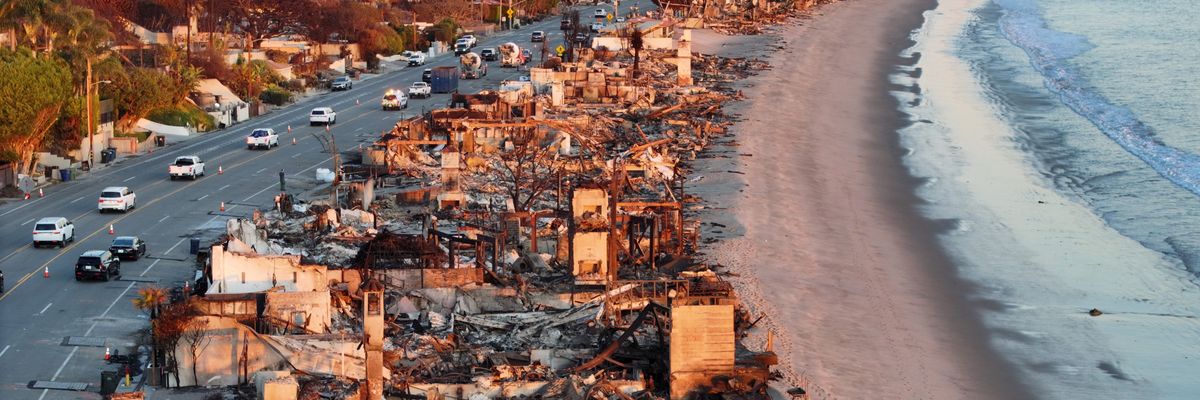
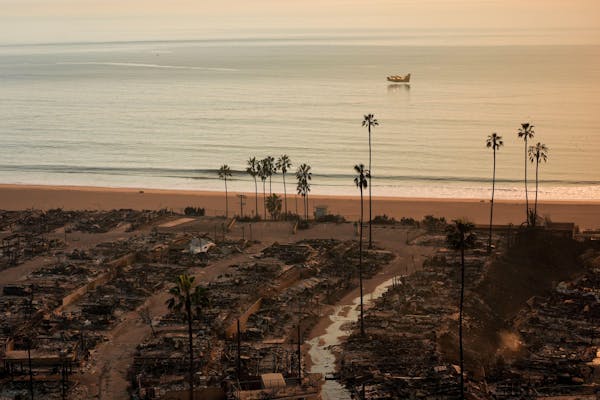
    An aerial view of repair vehicles at sunset passing near beachfront homes that burned in the Palisades Fire on January 15, 2025 in Malibu, California. (Photo: Mario Tama/Getty Images)

    “Too much of the coverage has simply ignored the climate crisis altogether, an inexcusable failure when the scientific link between such megafires and a hotter, dryer planet is unequivocal,” wrote the founders of Covering Climate Now.

    Covering the who, what, when, where, and why is journalism 101. So why are too few media outlets explaining the role that the climate crisis plays in the “why” behind the fires ravaging the Los Angeles region?

    That’s the central question posed in an opinion piece published in The Guardian and elsewhere on Thursday authored by Mark Hertsgaard and Kyle Pope, the founders of Covering Climate Now, a global collaboration of over 500 news outlets aimed at improving climate coverage, of which Common Dreams is a part.

    Hertsgaard and Pope wrote that “too much of the coverage has simply ignored the climate crisis altogether, an inexcusable failure when the scientific link between such megafires and a hotter, dryer planet is unequivocal.”

    They added: “Too many stories have framed the fires as a political spat between U.S. President-elect Donald Trump and California elected officials instead of a horrifying preview of what lies ahead if humans don’t rapidly phase out fossil fuels. Too often, bad-faith disinformation has been repeated instead of debunked.”

    Misinformation, in many instances stemming from right-leaning sources, have proliferated since the blazes broke out last week. Trump in a social media post appeared to point the finger at California’s statewide water management plans for fire hydrants running dry as firefighters fought the blazes last week. Southern California does have plenty water stored, but the city’s infrastructure was not designed to respond to a fire as the large as the ones that broke out, experts told PBS. Another user on the platform X falsely claimed that California turned away fire trucks from Oregon because of their emission levels, according to KQED.

    Hertsgaard and Pope also called for outlets to name names. “Rarely have stories named the ultimate authors of this disaster: ExxonMobil, Chevron, and other fossil fuel companies that have made gargantuan amounts of money even as they knowingly lied about their products dangerously overheating the planet,” they wrote.

    While the fires are still burning, researchers are already drawing the links between climate change and the blazes. In a thread on Bluesky, the climate scientist Daniel Swain explained the concept of climate “hydroclimate whiplash”—which southern California experienced in 2024—and how this can create ideal conditions for fires to spread.

    The authors of the opinion piece noted that there have been bright spots when it comes to covering the fires with an eye toward the climate emergency and debunking false and misleading claims about the fires. The duo highlight a Time story that is titled “The LA fires show the reality of living in a world with 1.5C of warming” and a column written by the Los Angeles Times’ Sammy Roth, which began: “Los Angeles is burning. Fossil fuel companies laid the kindling.”

    Hertsgaard and Pope wrote, “When a house is on fire, by all means let journalism show us the flames.”

    “But tell us why the house is burning, too,” they added.

    Original article by Eloise Goldsmith republished from Common Dreams under Creative Commons (CC BY-NC-ND 3.0).

    Orcas comment on killer apes destroying the planet by continuing to burn fossil fuels.
    Orcas comment on killer apes destroying the planet by continuing to burn fossil fuels.
  • Greens urge faster transition away from fossil fuels

    Spread the love
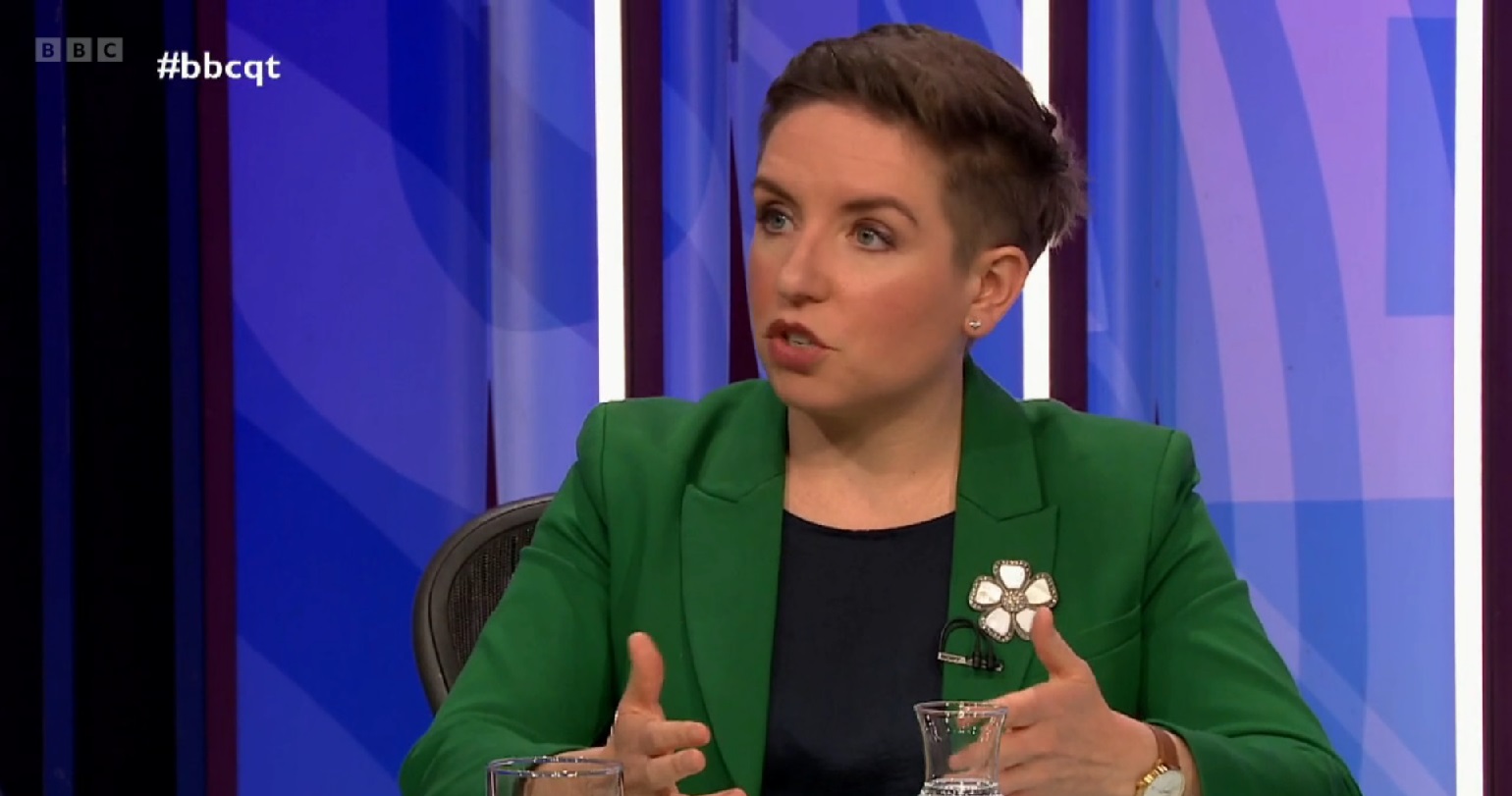
    Image of the Green Party's Carla Denyer on BBC Question Time.
    Image of the Green Party’s Carla Denyer on BBC Question Time.

    Responding to new data from the Copernicus Climate Change Service showing that the average temperature in 2024 was 1.6C above preindustrial levels, Green Party co-leader Carla Denyer MP said:

    “This news comes as uncontrollable wildfires rage in Los Angeles, and just months after unprecedented flooding in Spain killed over 200 people.

    “The target of limiting warming to below 1.5 degrees was an attempt to prevent the deadliest effects of the climate crisis. Breaching that limit is catastrophic for humanity – and yet our leaders are sleepwalking into this deadly new future.

    “We need to massively speed up the transition away from fossil fuels – that is the bottom line. In a world of 1.5 degree warming it’s unconscionable that the government is still letting some new North Sea oil and gas drilling go ahead – Starmer must revoke those consents and licenses immediately.

    “But we also need to start thinking about how we make our communities more resilient in the face of the extreme weather that is now unavoidable. From flooding to extreme heat, our homes and neighbourhoods need to be fit for the future.”

  • Just Stop Oil supporters paint ‘1.5 is dead’ on Charles Darwin’s grave

    Spread the love

    https://morningstaronline.co.uk/article/just-stop-oil-supporters-paint-1-5-is-dead-charles-darwins-grave

    Just Stop Oil protesters with a police officer outside Westminster Abbey in central London after they spray painted “1.5 is dead” on the grave of Charles Darwin, in the north aisle of the nave of the Abbey, January 13, 2025

    JUST STOP OIL activists painted the grave of British naturalist Charles Darwin today to demand an end to reliance on fossil fuels by 2030.

    Two activists entered Westminster Abbey and sprayed “1.5 Is Dead” on the grave after it was confirmed that 2024 was the first year on record with a global average temperature exceeding 1.5°C above pre-industrial levels.

    During the action, the supporters said: “We have passed the 1.5° threshold that was supposed to keep us safe

    “Darwin would be turning in his grave to know we are in the midst of the sixth mass extinction.

    “The government’s plans will take us to over 3 degrees of warming.

    “This will destroy everything we love. World leaders must stop burning oil, gas and coal by 2030.”

    …

    https://morningstaronline.co.uk/article/just-stop-oil-supporters-paint-1-5-is-dead-charles-darwins-grave

  • LA fires show the human cost of climate-driven ‘whiplash’ between wet and dry extremes

    Spread the love
    Allison Dinner / EPA

    Doug Specht, University of Westminster

    October to April is normally considered to be the wet season in California, yet this January, the region is experiencing some of the most devastating fires it’s ever seen.

    As of January 10, five major fires in and around Los Angeles have burned over 29,053 acres, leading to the evacuation of more than 180,000 people, the destruction of over 2,000 buildings (mainly homes), and an estimated damage cost of at least US$52 billion (£42.5 billion). Ten lives have been lost, and these numbers are expected to rise as the fires continue to burn.

    The exact causes of each fire are still under investigation. However, several factors have contributed to their rapid spread and intensity.

    The seasonal Santa Ana winds are particularly strong this year, bringing low humidity, dry air and high wind speeds. Southern California has received less than 10% of its average rainfall since October 2024, creating dry conditions that make the area highly vulnerable to fire.

    Unusually wet winters in both 2022-23 and 2023-24 led to increased vegetation growth, providing more fuel for the fires. This cycle of wet and dry extremes, known as “hydroclimate whiplash”, is part of the increasingly intense climate cycles caused by climate change.

    Hydroclimate whiplash can occur virtually anywhere. These cycles can cause extreme wildfires, such as those in California, where rapid vegetation growth is followed by drying. They can also exacerbate flooding when unusually heavy rains hit the dry-baked ground, then run off over the land rather than seeping in, leading to flash flooding.

    In Los Angeles, some neighbourhoods have been almost entirely destroyed. Jae C. Hong / Alamy

    The human impact of hydroclimate whiplash

    Rapid transitions between extreme wet and dry conditions have significant and wide-ranging impacts on people, a focus of my academic research, affecting everything from public health to economic stability and social equity.

    As we have seen in California, there is the immediate impact of loss of life, property and livelihoods. We have also seen this during whiplash-induced floods and landslides, such as those experienced across California in 2023 and east Africa in 2024, when years of drought were followed by weeks of rain.

    Fires exacerbate respiratory and cardiovascular diseases through their polluting smoke. Flooding creates conditions for waterborne illnesses such as cholera, leptospirosis or norovirus to rip through populations. Extreme swings in temperature can also create more heat-related illnesses, as human bodies struggle to adapt quickly. It is estimated that the health-related impacts of climate change will cost US$1.1 trillion by 2050.

    But this number pails into insignificance against the projected US$12.5 trillion in economic losses worldwide due to climate change by 2050. Critical infrastructure, including water supply systems, wastewater treatment plants and transportation networks, is at risk of damage or destruction. Food insecurity and scarcity will also increase during hydroclimate whiplash events.

    And these impacts are not evenly distributed. While this month’s wildfires are affecting some of the richest communities in the US, it is generally low-income communities and vulnerable populations that are disproportionately affected, with limited resources to prepare for or recover from extreme events. Across the world, poorer populations are experiencing a 24%-48% increase in drought-to-downpour events, exacerbating their vulnerability and widening the health equity gap.

    All these events and concerns also lead to mental health issues such as anxiety, depression and post-traumatic stress disorder (PTSD), resulting from displacement and trauma. Such human impacts are harder to measure, and often under-reported.

    Adaptation and resilience

    As climate change intensifies hydroclimate whiplash events, the human impacts are expected to grow more severe. Addressing these challenges will require coordinated efforts across multiple sectors, with a focus on both mitigation and adaptation strategies to protect human health, economic stability and social equity.

    Governments and local authorities will need to implement co-management approaches for both drought and flood risks, alongside developing more flexible water management systems and infrastructure. Investing in natural infrastructure to enhance biodiversity and ecosystems will reduce risks to humans, both by restricting the effects of climate change and lowering the risks of fire and flooding.

    As individuals we can often feel powerless, but environmental campaigns and movements have been highly successful in changing government policies. In the UK, the 2008 Climate Change Act and the net zero by 2050 legislation were the direct result of citizen lobbying and action, and the same can be said for numerous renewable energy transition policies around the world.

    In California, we have seen the devastating effect of hydroclimate whiplash – and this won’t be the last we see. By calling on our governments to produce adaptation and resilience strategies that recognise climate change as a long-term human and economic risk factor, we can be more prepared for these events.

    Doug Specht, Reader in Cultural Geography and Communication, University of Westminster

    This article is republished from The Conversation under a Creative Commons license. Read the original article.

  • The politics of Reform UK—despair wrapped in racism

    Spread the love
    Nigel Farage explains the politics of Reform UK: Racism, Fake anti-establishmentism, Deregulation, Corporatism, Climate Change Denial, Mysogyny and Transphobia.
    Nigel Farage explains the politics of Reform UK: Racism, Fake anti-establishmentism, Deregulation, Corporatism, Climate Change Denial, Mysogyny and Transphobia.

    https://socialistworker.co.uk/anti-racism/the-politics-of-reform-uk-despair-wrapped-in-racism/

    …

    Racism is central to Reform UK, but the party is also entangled with anti‑establishment fakery, climate change denial, transphobia, ­misogyny and ­pro‑­corporate policies.

    The anti-establishment fakery was on display last November, when Farage posted on social media, “Big business and big government work together. There is nothing about Sir Keir Starmer that represents change.”Adding to this already vile ­concoction of politics is misogyny and ­transphobia. This was on display at Reform UK’s recent regional conference in Leicester, where Tice opened his speech with a transphobic joke about pronouns. The result is an over-arching package of the politics of division. This is hardly a surprise from a party whose senior members say they look to Marine Le Pen’s fascist National Rally (RN) and the far right Alternative for Germany (AfD) as inspiration.

    Farage likes to paint Reform UK as the insurgent force in British politics. He claims that Reform UK is “very much on the side of the little guy or woman”. Its MPs often denounce the two-party system and ­multinational corporations in favour of “real entrepreneurship”. This language is an attempt to mobilise the historic base of the far right, which has typically built among small ­producers and independent professionals.

    But Reform UK is as establishment as it gets. Four out of the five Reform UK MPs—Nigel Farage, Richard Tice, Rupert Lowe and Lee Anderson—are millionaires.

    Its policies are a mish-mash of ­pro-corporate proposals. Tax cuts for business, austerity measures totalling £50 billion a year, a massive programme of deregulation, tax relief for private healthcare, abolishing inheritance tax for property under £2 million and      scrapping net zero climate targets.

    It’s clear the party stands for putting more money in the pockets of the bosses and the rich.

    And it uses climate denial to drive further division. Deputy leader Richard Tice is one of the worst for this. At one point he stated “there is no climate crisis” and claimed “CO2 isn’t a poison. It’s plant food”.

    Adding to this already vile ­concoction of politics is misogyny and ­transphobia. This was on display at Reform UK’s recent regional conference in Leicester, where Tice opened his speech with a transphobic joke about pronouns. The result is an over-arching package of the politics of division. This is hardly a surprise from a party whose senior members say they look to Marine Le Pen’s fascist National Rally (RN) and the far right Alternative for Germany (AfD) as inspiration.

    …

    https://socialistworker.co.uk/anti-racism/the-politics-of-reform-uk-despair-wrapped-in-racism/