Climate and environmental protest is being criminalised and repressed around the world. The criminalisation of such protest has received a lot of attention in certain countries, including the UK and Australia. But there have not been any attempts to capture the global trend – until now.
We recently published a report, with three University of Bristol colleagues, which shows this repression is indeed a global trend – and that it is becoming more difficult around the world to stand up for climate justice.
This criminalisation and repression spans the global north and south, and includes more and less democratic countries. It does, however, take different forms.
Our report distinguishes between climate and environmental protest. The latter are campaigns against specific environmentally destructive projects – most commonly oil and gas extraction and pipelines, deforestation, dam building and mining. They take place all around the world.
Climate protests are aimed at mitigating climate change by decreasing carbon emissions, and tend to make bigger policy or political demands (“cut global emissions now” rather than “don’t build this power plant”). They often take place in urban areas and are more common in the global north.
The intensifying criminalisation and repression is taking four main forms.
1. Anti-protest laws are introduced
Anti-protest laws may give the police more powers to stop protest, introduce new criminal offences, increase sentence lengths for existing offences, or give policy impunity when harming protesters. In the 14 countries we looked at, we found 22 such pieces of legislation introduced since 2019.
2. Protest is criminalised through prosecution and courts
This can mean using laws against climate and environmental activists that were designed to be used against terrorism or organised crime. In Germany, members of Letzte Generation (Last Generation), a direct action group in the mould of Just Stop Oil, were charged in May 2024 with “forming a criminal organisation”. This section of the law is typically used against mafia organisations and had never been applied to a non-violent group.
Criminalising protest can also mean lowering the threshold for prosecution, preventing climate activists from mentioning climate change in court, and changing other court processes to make guilty verdicts more likely. Another example is injunctions that can be taken out by corporations against activists who protest against them.
3. Harsher policing
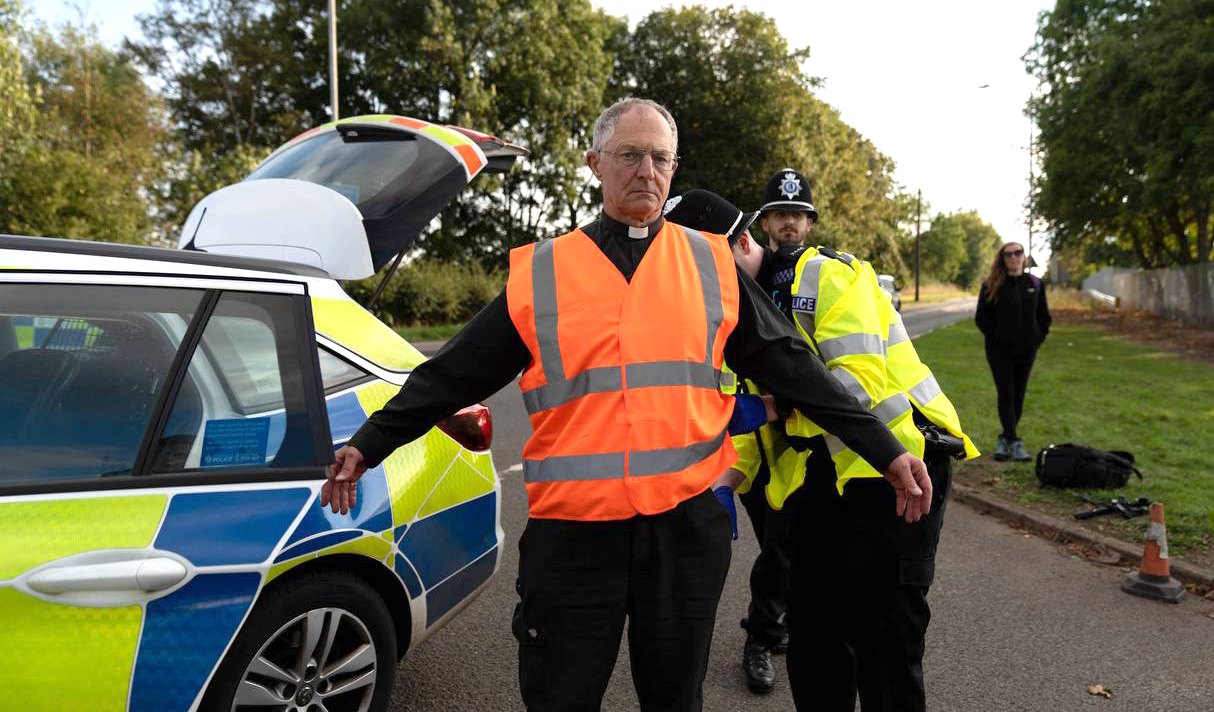
This stretches from stopping and searching to surveillance, arrests, violence, infiltration and threatening activists. The policing of activists is carried out not just by state actors like police and armed forces, but also private actors including private security, organised crime and corporations.
In Germany, regional police have been accused of collaborating with an energy giant (and its private fire brigade) to evict coal mine protesters, while private security was used extensively in policing anti-mining activists in Peru.
4. Killings and disappearances
Lastly, in the most extreme cases, environmental activists are murdered. This is an extension of the trend for harsher policing, as it typically follows threats by the same range of actors. We used data from the NGO Global Witness to show this is increasingly common in countries including Brazil, Philippines, Peru and India. In Brazil, most murders are carried out by organised crime groups while in Peru, it is the police force.
Protests are increasing
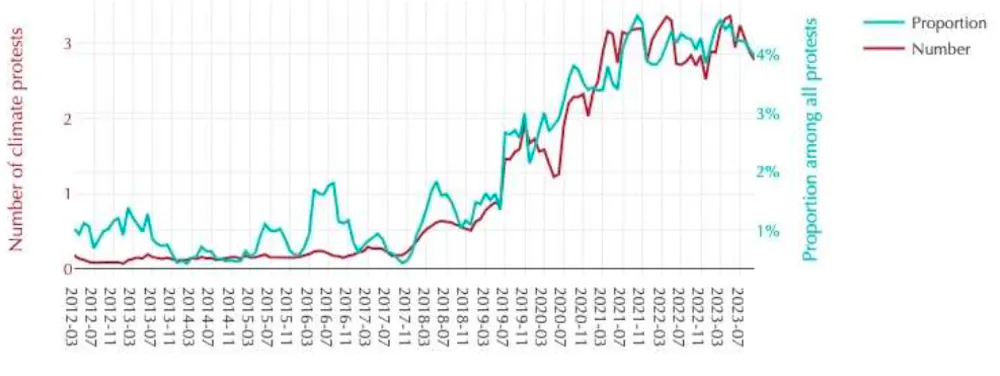
To look more closely at the global picture of climate and environmental protest – and the repression of it – we used the Armed Conflicts Location Event database. This showed us that climate protests increased dramatically in 2018-2019 and have not declined since. They make up on average about 4% of all protest in the 81 countries that had more than 1,000 protests recorded in the 2012-2023 period:
Climate protests increased sharply in the late 2010s in the 14 countries studied. (Data is smoothed over five months; number of protests is per country per month.) Berglund et al; Data: ACLED, CC BY-SA
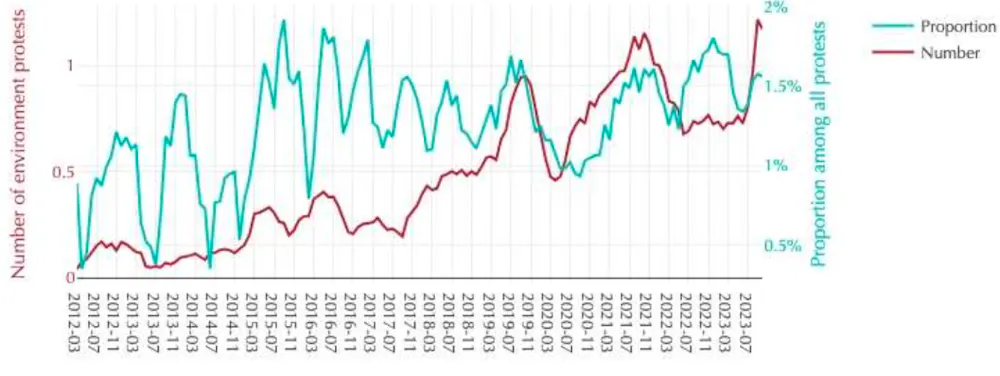
This second graph shows that environmental protest has increased more gradually:
Environmental protests in the same 14 countries. Data: ACLED, CC BY-SA
We used this data to see what kind of repression activists face. By looking for keywords in the reporting of protest events, we found that on average 3% of climate and environmental protests face police violence, and 6.3% involve arrests. But behind these averages are large differences in the nature of protest and its policing.
A combination of the presence of protest groups like Extinction Rebellion, who often actively seek arrests, and police forces that are more likely to make arrests, mean countries such as Australia and the UK have very high levels of arrest. Some 20% of Australian climate and environmental protests involve arrests, against 17% in the UK – with the highest in the world being Canada on 27%.
Meanwhile, police violence is high in countries such as Peru (6.5%) and Uganda (4.4%). France stands out as a European country with relatively high levels of police violence (3.2%) and low levels of arrests (also 3.2%).
In summary, while criminalisation and repression does not look the same across the world, there are remarkable similarities. It is increasing in a lot of countries, it involves both state and corporate actors, and it takes many forms.
This repression is taking place in a context where states are not taking adequate action on climate change. By criminalising activists, states depoliticise them. This conceals the fact these activists are ultimately right about the state of the climate and environment – and the lack of positive government action in these areas.
Retired teacher Gaie Delap, of Bristol, outside the Royal Courts of Justice in central London
THE family of a 77-year-old climate activist who has been recalled to prison after officers failed to fit a suitable tag have accused the electronic monitoring service (EMS) of completely misrepresenting the incident.
Just Stop Oil (JSO) activist Gaie Delap was sentenced to 20 months after taking part in peaceful action on the M25 in 2022 demanding an end to all new oil and gas licences.
Ms Delap was released in November on a home detention curfew, requiring her to wear an electronic tag.
But Serco, the company operating EMS, was unable to attach the tag to her ankle due to previous deep vein thrombosis.
JSO says that EMS was unable to alternatively fit a tag to her wrist as they did not have one small enough.
As a result, the grandmother was arrested at her home in late December and recalled to prison.
Ms Delap’s family have now called for an investigation after discovering that EMS claimed in the activist’s recall papers that she “refused” to allow equipment to be installed.
Her brother Mick Delap said: “Reading this, Gaie is speechless and angry — they are completely misrepresenting what happened.
“She has never, ever refused a tag. She feels like she is caught up in a web of deceit, and is powerless to tell the truth.
“It now seems to us that Gaie has been recalled to prison due to fabricated reports. This raises serious issues about Serco EMS conduct. At best it is manifest incompetence. At worst it is mendacious and borders on the fraudulent.”
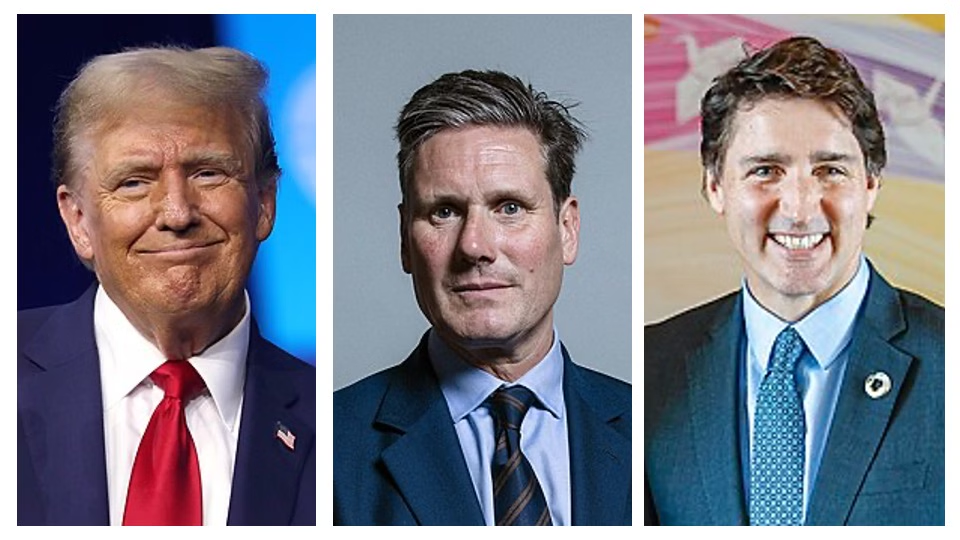
As 2024 closes, Donald Trump (left) is taking over in the U.S., Keir Starmer (center) in the UK, and Canada’s Justin Trudeau (right) ends the year on shaky ground. Credit: DeSmog/Wikimedia Commons
Our editors and reporters weigh in on a year of seismic political events, and what they’re paying close attention to in 2025.
It’s no exaggeration to say that the global political terrain fundamentally shifted this year.
Donald Trump is heading to the White House, Keir Starmer helped end 14 years of Conservative rule in the U.K. and Justin Trudeau is ending the year on shaky ground in Canada.
It was one of the most volatile and consequential years for climate action we’ve ever tracked at DeSmog. To help you make sense of it, we’ve asked our editors and contributors to weigh in on what they see as the year’s biggest takeaways – and the trends they’re paying attention to heading into 2025.
‘We discovered a lot of new documents’
Brendan DeMelle, executive director: Whenever someone on the DeSmog team finds a new document demonstrating what the fossil fuel industry knew long ago, and we reflect on the fact that humans possessed clear knowledge of climate risks and yet made decisions to deny the science and delay action, it gives us great pause to consider the power of corporate interests over basic self-preservation of our species.
In 2024, we discovered a lot of new documents and evidence demonstrating industry’s early knowledge of climate science dating to the 1950s, and a subsequent pivot to denial and delay strategies that seem unfathomable now. They knew better, they ignored responsible actions for decades, and here we are witnessing the devastating consequences which are in line with Exxon’s own models. People are suffering and dying. And what are the oil majors doing? Doubling down on production.
Publishing this evidence of denial and deception always gives me hope that we can make an impact far greater than our size. Climate justice has the wind in its sails, and every document and data point we can add only quickens the velocity of accountability.
I’m also excited that documents that we found and published years ago continue to have great impact, both in climate liability lawsuits and in civil society. We’re thrilled about the news that Geoff Dembicki’s book ‘The Petroleum Papers’ — which was based on Imperial Oil documents DeSmog found — has been optioned for a TV series.
What I’m paying attention to in 2025: With our recent appointment of Geoff Dembicki as global managing editor, our team will be increasingly connecting the dots between international themes and actors in our global work to expose false solutions and shine light on the reach of climate denial and extreme right-wing attacks on the public interest across the world.
We’ll be tracking the international spread of MAGA and the ongoing work of what we call the architecture of denial — networks like Jordan Peterson’s Alliance for Responsible Citizenship (ARC), Atlas Network, Koch Network, Tim Dunn’s America First Policy Institute (AFPI), Project 2025 and other players. We’ll expose their coordinated efforts to undermine environmental protections and criminalize dissent to crush the public interest. We will not stop fighting for the future. And the way we do that at DeSmog is through hard-hitting investigative journalism that centers accountability for climate delay and denial.
‘A resurgence of old-school climate denial’
Geoff Dembicki, global managing editor: I spent a lot of 2024 reporting on a single person – the Canadian conservative influencer Jordan Peterson, who’s evolved over the past few years into one of the world’s most consequential deniers of the climate crisis. In the spring, I went to sold-out Peterson performances in New York City and Fort Worth, where I learned that he’s using religious appeals to undermine public faith in science. My key takeaway: that anti-climate messages are becoming increasingly central to the worldview of the religious right, complicating political efforts to enlist the public in climate action with appeals to economic self-interest.
What I’m paying attention to in 2025: It’s impossible to ignore the most turbulent political event of 2024 – the reelection of Donald Trump. As we move into 2025, I’ll be paying special attention to the ways that a second Trump administration alters the global landscape of climate disinformation and fossil fuel expansion.
I fear that with Trump’s selection of Chris Wright as Energy Secretary – a fracking executive who’s been eagerly endorsed by the CO2 Coalition and other anti-science organizations – we are set to see an aggressive resurgence of old-school climate denial. And I will be closely looking at the influence Trump’s win has on Canada, where the Conservative Party leader – and fossil fuel populist – Pierre Poilievre is campaigning to unseat Prime Minister Justin Trudeau in a federal election scheduled for 2025.
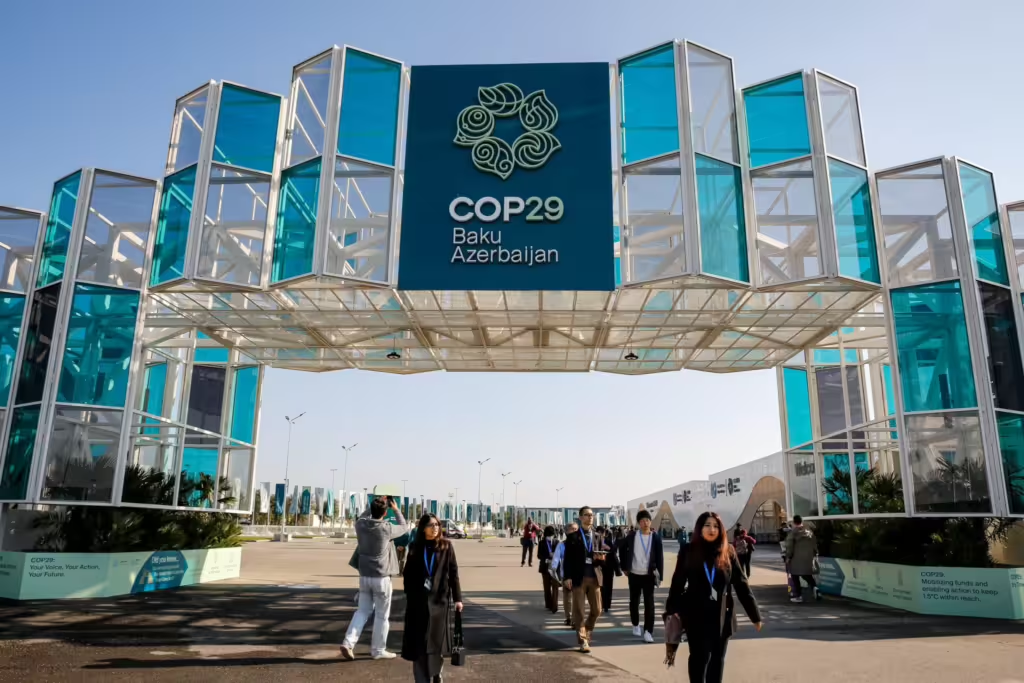
The COP29 entrance in Baku, Azerbaijan. Credit: Michal Busko / Alamy
Polluting industries’ new front against nature protection
Hazel Healy, UK editor-in-chief: In 2024 I travelled to the UN biodiversity talks in Colombia, with DeSmog reporter Rachel Sherrington. It was DeSmog’s first-ever nature-protection summit, and we’d heard mixed reports about whether there was any business lobbying going on at all. In Cali, along with tropical birds and old-school salsa, we were shocked to find oil and gas majors present, showcasing their biodiversity credentials with no hint of irony, with other usual suspects who used their participation to block regulations, such as the pesticide lobby.
We did what DeSmog did best – mapped, analysed, and counted the delegates, learning that business lobbyists had doubled since the last summit. We applied the same lens, for the third year running to shine a light on ag lobbying at the climate COP less than a month later. My takeaway? That anti-climate agribusiness lobbying is not only here to stay, it’s taking aim at both nature and climate – and both must be tackled together.
What I’m paying attention to in 2025: I will be keeping an eye on how the big ag lobby is organising ahead of the COP30 climate summit in Brazil – seen as a beacon of hope by many in the movement for sustainable food and farming, but subject to powerful meat interests. We will be listening carefully to big ag’s talking points and challenging disinformation when we hear it. It’s also going to be really interesting to see the evolution of fledgling EU laws against greenwashing by corporations, and see whether any more cities follow the lead of Dutch city the Hague in banning fossil fuel ads altogether.
‘Far-right parties gaining a new foothold’
Sam Bright, UK deputy editor: The UK general election dominated my coverage in 2024 – a six-week blitz of stories about the parties and politicians vying for our votes. We followed the money and found that, between the last election and the beginning of the 2024, the ruling Conservative Party had accepted £8.4 million from fossil fuel interests, climate science deniers, and polluting industries. We applied the same methodology to Reform UK, the radical right-wing party led by Trump fanatic Nigel Farage, and found that 92 percent of its funding during the period had come from dirty donors. This was somewhat ironic, given that Farage and his deputy Richard Tice now represent two of the constituencies most exposed to climate change.
What I’m paying attention to in 2025: I will be closely following the tentacles of the Trump administration in 2025 – tracking the ways in which his climate denial agenda is being exported to the UK and Europe. For years, DeSmog has been mapping the connections between dark money libertarian groups on both sides of the Atlantic. With Trump in the White House, Farage climbing in the polls, and far-right parties gaining a new foothold in Europe, these political connections are likely to intensify – posing a major threat to global climate action.
‘Astroturfing and disinformation campaign’
TJ Jordan, investigative reporter (PR/Advertising, False Solutions): I worked for a global PR agency for four years, so I have a headstart in knowing where to look when investigating how these companies quietly protect the fossil fuel industry. In 2024 I analysed agency board directors’ ties to polluting companies; challenged the sustainability award shows rewarding agencies that work for oil producers; and went inside the elite PR firm fostering oil-reliant Azerbaijan’s image as a climate innovator ahead of hosting COP29. But my most challenging (and rewarding) project was a six-month investigation into the dirty tactics of a British-owned PR agency called MetropolitanRepublic.
Protestors from student human rights group Justice Movement Uganda opposing the East Africa Crude Oil Pipeline. Credit: Bruce Nahabwe
The agency “squashed” (their word, not mine) the voices of Ugandan environmental land defenders on behalf of French oil giant TotalEnergies — which is building the world’s longest heated crude oil pipeline across Uganda and Tanzania — with a carefully constructed astroturfing and disinformation campaign called “Action for Sustainability.”
What I’m paying attention to in 2025: U.S.-based ad and PR holding company Omnicom is about to become the biggest provider of marketing, advertising, public relations, and lobbying services to the fossil fuel industry, after it bought fellow industry giant IPG. Outside pressure from the UN and campaign groups like Clean Creatives is increasing on big holding companies to reassess their work protecting the reputations of oil and gas producers. I’ll be keeping a close eye on how the Omnicom-IPG consolidation affects the individual agencies in these holding company networks and their ability to make decisions on who they work for.
‘The fallout of Canada’s new anti-greenwashing law’
Sarah Berman, Canada editor: Our reporters closely followed misleading fossil fuel ads and the fallout of Canada’s new anti-greenwashing law, which targets environmental claims that can’t be backed with evidence. The new legislation pushed the fossil fuel lobbyist group Pathways Alliance to immediately scrub its website of all content. The Canadian Association of Petroleum Producers followed suit, removing a section of its website devoted to carbon capture and storage.
Canada Action, a third-party advertiser that claimed Canadian liquified natural gas (LNG) would help cut global carbon emissions on transit shelter ads, cut references to the environmental benefits of LNG on its website. Canadian oil sands companies even blamed the new law for delayed sustainability reports. Now, major cities like Toronto are looking to ban misleading fossil fuel ads on transit.
What I’m paying attention to in 2025: We’ve seen fewer greenwashing claims on transit in the second half of 2024, but the fight over Canada’s anti-greenwashing legislation is not over and DeSmog will continue to follow the latest developments. Our reporters expect oil sands companies and their allies to fight any effort to hold them accountable for spreading misinformation. Will this new legislation further push emitters to distance themselves from false solutions? Or will a Canadian election bring in a new government that is more favourable to polluters?
Our series revealed links between hard-right farming groups and the Viktor Orbán-funded MCC Brussels think tank, dissected the false claims made ahead of the elections as well as the political candidates spreading them, and shone a light on the diverse stances between farming groups on protests. In Ireland, our work mapping the connections of the powerful farming lobby was cited in the parliament (Oireachtas) and became a major talking point ahead of a critical decision by the EU on whether to extend the country’s nitrates derogation.
What I’m paying attention to in 2025: This will be a crucial year for the newly elected European Commission to transform its agriculture and food sectors and to beef up its climate targets. As 720 MEPs get to work, we’ll investigate the populist politicians looking for ways to weaken key legislation, and continue to scrutinise the lobbying tactics of powerful corporations. With elections on the horizon in Germany and Poland, we’ll look to work in partnership with European journalists to enhance our cross-border coverage at this pivotal time.
‘Trump-oriented politics within Canada’
Mitchell Anderson, Canada contributor: I spent much of 2024 focusing on the evolving situation in Alberta, which produces almost 40 percent of Canada’s emissions with only 12 percent of the population. This work included itemizing unfunded environmental liabilities associated with fossil fuel extraction, particularly expanding oil sands operations. Alberta is also pushing the Pathways carbon capture scheme, a twice-rejected coal mine expansion in the foothills of the Rockies, and funded a $7 million “scrap the cap” ad campaign that would likely violate new federal competition regulations if the province was a company.
All of these issues have been fertile ground for Desmog commentary that seeks to highlight cracks and contradictions within populist Alberta politics.
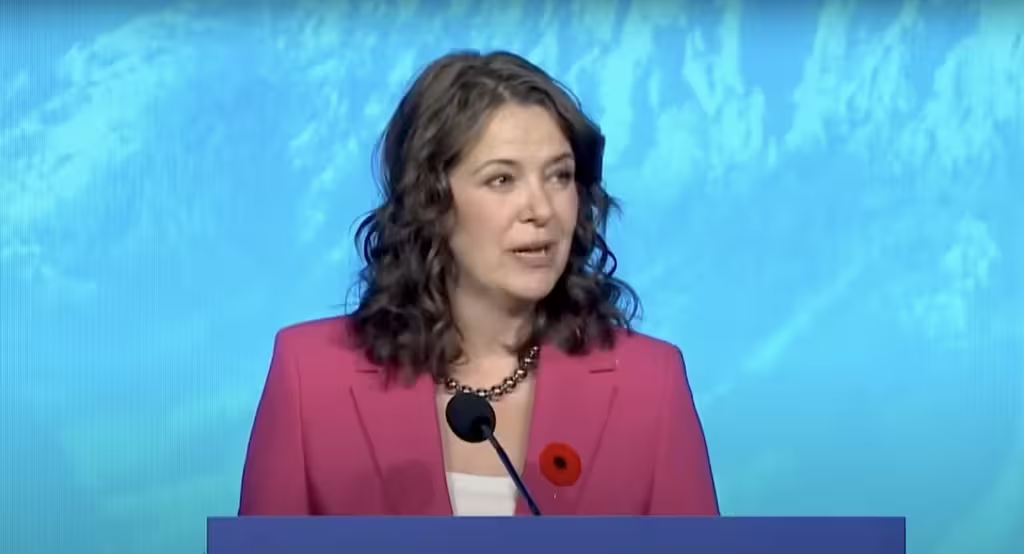
Alberta Premier Danielle Smith speaks at the UCP annual meeting, where delegates voted for an erroneous resolution claiming atmospheric CO2 is at a 1,000-year low. Credit: Danielle Smith / YouTube
What I’m paying attention to in 2025: The second Trump administration promises to upend many norms within society, politics, and the energy sector. DeSmog is well positioned to highlight how this chaotic political period will impact renewable technology, the fossil fuel industry, and our climate future. I will continue to focus on stories about the evolving situation in Alberta, which in many ways has become a cultural beachhead for Trump-oriented politics within Canada.
Neighbouring British Columbia has become a political counterweight by aggressively scaling up renewable energy, creating numerous opportunities for contrasting case studies that highlight these diverging trajectories. A Canadian election in 2025 will add additional interest to a turbulent year as Pierre Poilievre seeks to centre his campaign against carbon pricing – often in the absence of facts.
‘The DeSmog team will be very busy’
Taylor C. Noakes, Canada contributor: My focus areas in 2024 were principally industry and political reactions to new anti-greenwashing legislation; debunking industry-friendly (and often politically expedient) false solutions to the climate crisis (like LNG, hydrogen, and carbon capture); and Canada’s ongoing culture war against renewables, which has resulted in nonsensical political decisions (like instituting a solar and wind power moratorium in Canada’s sunniest and windiest province).
As in years past, I covered a number of major industry conferences in Canada and the United States (including annual carbon capture, hydrogen, LNG, and oil/gas industry conferences, mostly in Alberta). Highlights from these events include a ten minute one-on-one scrum with the Premier of Alberta on the failures of carbon capture, and reporting on Jane Fonda leading an anti-LNG protest (whose turnout was larger than the number of conference attendees).
What I’m paying attention to in 2025: I anticipate the new American president’s energy policies will have profound effects on Canada – whether it’s tariffs that sink what’s left of Canada’s oil and gas sector, American resource nationalism that prioritizes local resource exploitation over Canadian imports (or some combination thereof), or a Canadian reaction to U.S. trade war sabre rattling that emphasizes either an accelerated transition or the subsidized development of new markets for old technology.
Whatever course it takes, I suspect the DeSmog team will be very busy. I’m looking forward to how this shakes out at the series of annual conferences I typically attend. In addition, I plan on keeping a close eye on hydrogen and carbon capture projects, as well as the growing grassroots resistance to fossil fuels, pipelines, and the industry in general. Successful Indigenous resistance to fossil fuel projects offers exciting opportunities for optimistic climate-change related reporting. Similar efforts by cities to ban fossil fuel advertising, and the use of gas for cooking, as well as rural communities banning CO2 pipelines, indicate real momentum and tangible results from the ground up.
The immovable object that is the fossil fuel sector is meeting the unstoppable force that is people’s innate desire to live on a healthy planet. 2025 is going to be a thrilling year for environmental reporting.
‘Focusing on the financial’
Sharon Kelly, U.S. reporter: One of the oldest adages in investigative reporting is to follow the money. In seeking to understand what’s driving fossil fuel companies to double down on greenwashing and environmentally damaging projects, it helps to have a clear picture of what their incentives are and how those incentives are created. My work for DeSmog in 2024 focused on the financial: examining federal subsidies for carbon capture, created in the name of combatting climate change but with the effect of making it worse; reporting on evidence shale drillers attempted price-fixing to inflate oil prices, and on price-gouging by corporations when climate-fueled disasters strike; and seeking to understand oil and gas industry liabilities like abandoned wells – and what happens on the ground when companies fail to pay to clean up.
What I’m paying attention to in 2025: The risks and uncertainties surrounding fossil fuels are, if anything, amplified by the incoming administration. Despite the Trump administration’s ties to the oil and gas industry, Trump’s first term was marked by upheaval and disruptions for fossil fuel companies (and the rest of us). Autocratic impulses are often, at their core, a telling sign of fragility.
Whatever 2025 brings, we intend at DeSmog to keep the heat on the industry by examining the financial side of the climate crisis and the companies that have fueled it – whether that’s investigating the role false solutions play in oil and gas companies’ plans for the future, scrutinizing how over-hyped investments can cause outsized environmental damage while falling short for communities and investors alike, or staying watchful for fossil fuel companies seeking to benefit from the political power of the far-right (and vice versa).
‘Mapping the big money and political connections’
Adam Barnett, UK reporter
2024 was a target rich environment for anyone looking to cover climate denial, with a mountain of smog descending on the UK. So much, in fact, that I had to compile a map of the donors, media, think tanks, and fossil fuel companies pushing the Conservative government to turn against net zero. I also debunked the big climate myths peddled during the UK general election campaign, since the British media wasn’t going to.
I gave the post-election Tory leadership contest the same treatment, exposing the climate record of the candidates and the dirty money pumped into the campaign – along with the Tories’ growing ties to Donald Trump’s Project 2025.
What I’m paying attention to in 2025: With Conservative Party leader Kemi Badenoch flying to Washington to build ties with the incoming Trump team, a U.S. ambassador to the UK with oil and gas interests (both also covered in 2024), and Reform’s Nigel Farage curling up at the feet of Elon Musk, I expect to be covering the growing influence of Trumpian climate denial on the UK — along with transatlantic groups like Jordan Peterson’s Alliance for Responsible Citizenship (ARC), which is headed by a Tory peer.
Over the past year, books like Less by Patrick Grant and documentaries like Buy Now: The Shopping Conspiracy have encouraged consumers to rethink their internalised beliefs that more consumption equals better living.
As we enter a new year, it’s the perfect time to reflect on and leave behind some consumer myths that are detrimental to ourselves and to the planet.
Myth 1: Buying more is better for consumers and society
Retail therapy is a common practice to cope with negative emotions and might seem easier than actual therapy. However, research has consistently shown that materialistic consumption leads to lower individual and societal wellbeing. In fact, emerging studies are pointing out that low consumption lifestyles might bring greater personal satisfaction and higher environmental benefits.
Some might argue that buying more stimulates the economy, creates jobs and supports public services through taxes. However, the positive impact on local communities is often overstated due to globalised supply chains and corporate tax avoidance.
To ensure that your spending really does support your community and does not contribute to economic inequalities, it is helpful to learn more about the story behind the labels and the businesses you support with your money.
Myth 2: New is always better
While certain cutting-edge tech may indeed offer improvements over older versions, for most items new might not always be better. As Grant argues in his book Less, product quality has declined over the past few decades as manufacturers prioritise affordability and engage in planned obsolescence practices. That is, they purposely design products that will break after a certain number of uses to keep the cycle of consumption going and hit their sales targets.
But older products were often built to last, so choosing secondhand or repairing older items can save you money and actually secure you better-quality products.
New isn’t always better – sometimes older goods have stood the test of time. New Africa/Shutterstock
Myth 3: Being sustainable is expensive
It’s true that some brands have used the term “sustainable” to justify premium prices. However, adopting sustainable consumer practices can often be free or even bring in some extra cash if you sell or donate the things you no longer need.
Instead of “buying new”, consider swapping unused items with others by hosting a “swapping party” for things like toys or clothes with your friends, family, or neighbours. Decluttering your home could free up space, bring you some joy, and could also help you to connect with others by exchanging items.
Myth 4: Buying experiences are better than buying material things
Previous research has found that spending money on experiences brings more happiness primarily because these purchases are better at bringing people together. But material purchases that help you to connect with others, such as a board game, could bring as much joy as an experience.
When spending money, my research has shown that the key is to understand whether the purchase will help you to connect with others, learn new things or help your community. It’s not about whether we spend our money on material items or experiences.
It is also worth remembering that there are plenty of activities that can help you to achieve those goals with no spending required. So, instead of instinctively reaching to our wallets, perhaps in the new year we could think about whether a non-consumer activity like a winter hike or doing some volunteering could bring us closer to those intrinsic goals like personal growth or developing relationships. These goals have been consistently linked to better wellbeing.
Myth 5: Buying a gift is the best way to express love
Marketers often promote the message that expensive financial gestures are the best way of expressing love and appreciation for others. Spreading this idea will help them to sell more products. However, my research suggests that embracing consumerist ideals might in fact distance us from others.
Research has shown that investing in things that can buy us more time as well as spending money on others can lead to higher levels of wellbeing. Combining these insights suggests that gifting our time to others might be a great way to show affection and could have a positive ripple effect.
For instance, offering to babysit for a busy friend or a family member, helping a relative with a home project or offering your skills to advise or teach someone something new or useful can be incredibly valuable to others.
For 2025, consider a new year’s resolution that is gentle on the wallet and kinder to the planet: it’s possible to resist the commercial pressures to over-consume and find ways to enjoy the simpler pleasures of life, many of which are free anyway.
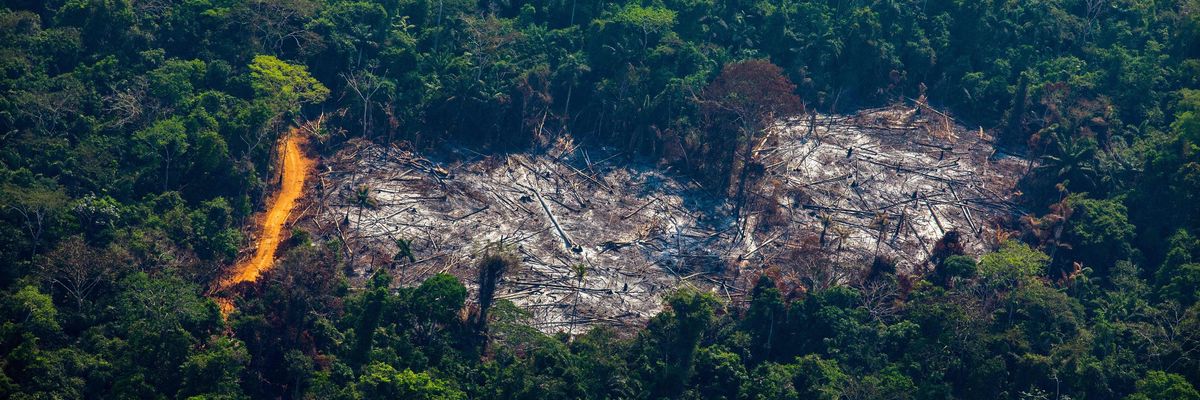
This aerial view shows Amazon forest degradation in the Menkragnoti Indigenous Territory in Altamira, Pará state, Brazil, on August 28, 2019. (Photo: Joao Laet/AFP/Getty Images)
The world’s largest rainforest showed “ominous indicators,” including wildfires and extreme drought, in 2024.
The Amazon, sometimes called the “lungs of the planet,” this year showed signs of further inching toward a much-feared tipping point, threatening the very existence of the world’s largest rainforest.
Rampant wildfires and extreme drought ravaged large parts of the Amazon in 2024. The fires and dry conditions were fueled by deforestation and the El Niño weather pattern, and also made worse by climate change, according to the World Economic Forum. “The number of fires reached its highest level in 14 years this September,” the group reported in October.
Drought has also impacted the Amazon River, causing one of the river’s main tributaries to drop to its lowest level ever recorded, according to October reporting from The Associated Press. The drop in the river has negatively impacted local economies and food supplies.
Andrew Miller, advocacy director at Amazon Watch, told the AP last week that the fires and droughts experienced across the Amazon in 2024 “could be ominous indicators that we are reaching the long-feared ecological tipping point.”
“Humanity’s window of opportunity to reverse this trend is shrinking, but still open,” he said.
The Amazon plays a vital role in keeping the planet healthy. 150-200 billion tons of carbon are stored in the Amazon, and it also carries 20% of the earth’s fresh water to sea.
According to the World Economic Forum, if the Amazon tipping point is reached, “it will release billions of tonnes of CO2 into the atmosphere through fires and plants dying off. This would further exacerbate climate change and make the 1.5°C goal impossible to achieve. It would also alter weather patterns, which would impact agricultural productivity and global food supplies.”
A paper published in the journal Nature in February indicates that up to half of the rainforest could hit a tipping point by the middle of the century. “We estimate that by 2050, 10% to 47% of Amazonian forests will be exposed to compounding disturbances that may trigger unexpected ecosystem transitions and potentially exacerbate regional climate change,” explained the researchers behind the paper.
However, it wasn’t all bad news out of the Amazon in 2024. According to the AP, the amount of deforestation in Brazil and Colombia declined in this year. In Brazil, which houses the largest chunk of the Amazon, forest loss dropped 30.6% compared to the year prior, bringing it to the lowest level of destruction in nearly a decade.
The improvement is an about-face from a couple of years ago, when the country registered 15-year high of deforestation during the leadership of former far-right President Jair Bolsonaro. Brazil is now led by the left-wing President Luiz Inácio Lula da Silva, who—despite presiding over this drop in deforestation—has also come under scrutiny, as AP noted, by environmentalist for backing projects that they argue could harm the environment.