Category: Climate Crisis

  • Scientists, Experts Demand ‘Immediate End’ to EU Fossil Fuel Subsidies

    Spread the love

    Original article by Julia Conley republished from Common Dreams under Creative Commons (CC BY-NC-ND 3.0). 
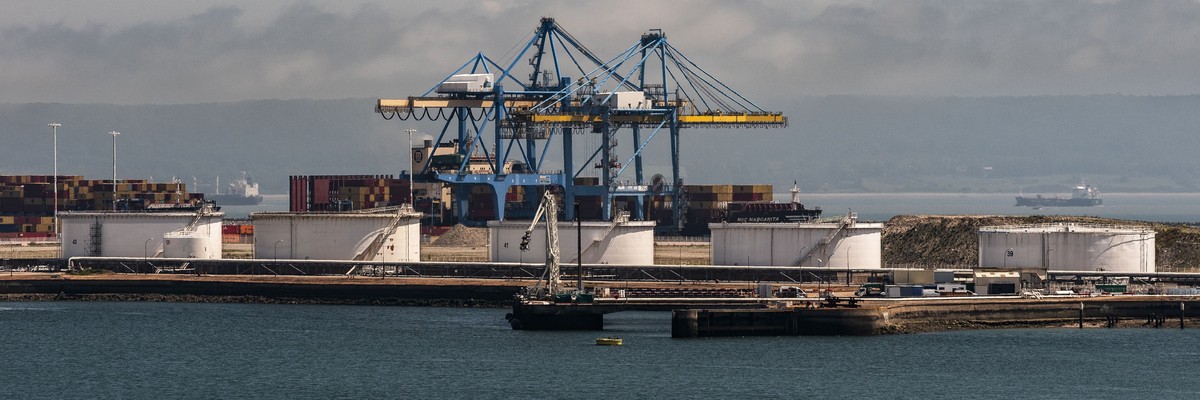
    Oil storage tanks and a container terminal are seen in the Port of Le Harve, northern France on June 12, 2023. (Photo: Peter Titmuss/UCG/Universal Images Group via Getty Images)

    “E.U. leaders must make a choice: Stand with the people and the planet, or continue propping up an economy that’s driving us towards climate catastrophe,” said one advocate.

    Warning that policymakers in the European Union are undermining the bloc’s own climate goals by continuing to subsidize fossil fuel extraction, climate scientists and other experts from across Europe were among the signatories of an open letter released Wednesday, demanding that officials redirect hundreds of billions of dollars in subsidies to “turbocharge climate solutions.”

    The coalition United for Climate Justice spearheaded the letter, which comes ahead of a planned march in Brussels on Saturday, October 5.

    “These subsidies go against Europe’s plans for a sustainable and just transition and fuel the devastating heatwaves we have seen this past summer in our continent,” reads the letter. “Europe is now the fastest warming continent; we have reached a turning point and cannot afford to delay any further.”

    Groups including Extinction Rebellion, 350.org, and Greenpeace E.U. pointed to goals the bloc has set in recent years, including the 8th Environmental Action Program, which entered into force in 2022 and included a commitment to “phasing out fossil fuel subsidies.”

    The subsidies, which were estimated at more than €400 billion ($441 billion) in 2023, also stand in the way of meeting climate targets put forward in the European Green Deal, said the signatories. The plan aims to make Europe “the first climate-neutral continent,” with no net emissions of greenhouse gases by 2050 and “interim targets of reducing greenhouse gas emissions by 55% by 2030 and by 90% by 2040,” notes the letter.

    “This will not happen without an immediate phaseout of fossil fuel subsidies,” said the groups bluntly, “as a step towards a fossil-free Europe.”

    By continuing to subsidize fossil fuel projects, they added, the E.U. is also flouting its own Parliament’s declaration of a climate emergency in 2019.

    To act in line with the declaration and its climate commitments, said the groups, the E.U. must:

    • Set a timeline for the phaseout of fossil fuel subsidies by 2025, providing technical and financial assistance to member states
      facing challenges in meeting phaseout deadlines and offer incentives for achieving milestones ahead of schedule;
    • Adopt comprehensive methodological guidance for member states that accurately and transparently accounts for both explicit and implicit subsidies associated with fossil fuels; and
    • Develop a binding framework to monitor and report on member states’ progress towards phasing out fossil fuel subsidies, with noncomplying members facing consequences such as financial penalties and reduced access to E.U. funding.

    The bloc’s fossil fuel subsidies “distort energy demand, perpetuate dependence on polluting energy sources, and undermine European energy security, while subsidizing industries that contribute significantly to greenhouse gas emissions,” said the groups.

    Phasing out the subsidies would “future-proof the European economy, reducing climate-related financial risks,” they added.

    The letter comes weeks after Storm Boris dumped record-breaking rains on European countries including Romania, Austria, and Poland, leading to deadly flooding.

    “The E.U. cannot claim leadership on climate action while continuing to support polluting industries with billions,” said Angela Huston Gold, spokesperson for United for Climate Justice. “E.U. leaders must make a choice: Stand with the people and the planet, or continue propping up an economy that’s driving us towards climate catastrophe. The recent disastrous floods in Central and Eastern Europe are yet another wake-up call. We must end our fossil fuel dependency and therefore eliminate all fossil fuel subsidies.”

    Also last month, the Portuguese government declared a “state of calamity” over wildfires that killed at least seven people. Last year, the World Meteorological Organization (WMO) and the E.U.’s Copernicus Climate Change Service (C3S) determined the Europe is the fastest-warming continent.

    “Year after year, commitments have been made and left unfulfilled, and we can no longer accept inaction,” said the signatories of Wednesday’s letter, who also included Luca Mercalli, president of the Italian Meteorological Society, and Paul Stubbs of the Institute of Economics in Croatia. “Until these necessary changes occur, people will continue to take to the streets to make our voices heard and hold you accountable.”

    Original article by Julia Conley republished from Common Dreams under Creative Commons (CC BY-NC-ND 3.0). 

  • South America on fire

    Spread the love

    Original article by Pablo Meriguet republished from peoples dispatch under a Creative Commons Attribution-ShareAlike 4.0 (CC BY-SA) license.

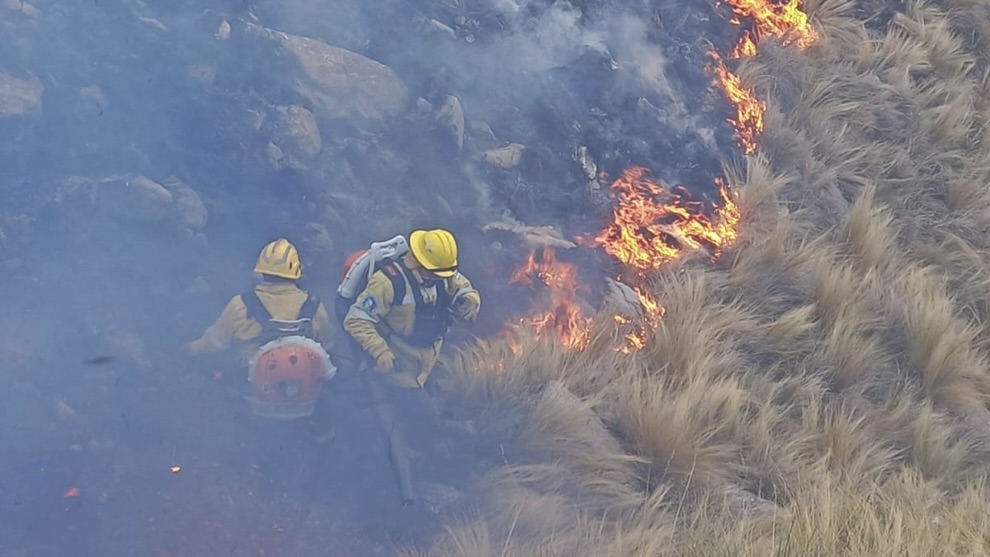
    Fires in Córdoba, Argentina have been raging for the past month. Photo: Córdoba Government

    More than 300,000 fires have been reported so far in 2024 across South America. The blazes have displaced hundreds and killed several. The causes of this tragedy must be sought in deep geopolitical injustices.

    South America is facing one of the most serious environmental crises in recent decades. In the last two months, there has been a dramatic increase in the outbreak of forest fires that have devastated thousands of square kilometers across Colombia, Ecuador, Brazil, Perú, Paraguay, Bolivia, and Argentina. The impacts of the blazes are exponential, not only seen in the direct destruction to the forests and wildlife and surrounding communities, but in many countries the dangerous smoke has traveled far beyond the site of the fire.

    The tragedy of fires in South American countries

    So far in 2024, more than 300,000 fires have been registered across South America.

    In Brazil, the number of fires in southern Brazil (Pantanal and the Amazon) have increased by 92% compared to last year. In the whole country, more than 170,000 have been registered so far and more than 11 million hectares have been lost in this year so far. The fires have required massive state investments in order to alleviate the destruction. In the State of São Paulo alone, more than 15,000 people from the civil guard, firefighters and others have been mobilized to try to put out the fires.

    In the El Chaco area, encompassing Bolivia and Paraguay, fires continue to consume thousands of hectares. More than 60,000 fires have been reported in Bolivia this year, with the regions of Rio Blanco and Palestina, in the east of the country, being the most affected and hundreds of people were evacuated. President Luis Arce has declared a national state of emergency to better address the environmental catastrophe. For now, Chile and Venezuela have offered assistance to Bolivia, which has not been able to quell the flames on its own.

    In Córdoba, Argentina, fire continues to destroy millions of plants and animals despite the efforts of almost 1,000 firefighters who are trying to extinguish the flames. The strong winds in the central region of the country have made it even more difficult for hundreds of firefighters to extinguish the two large fires. In several cities in Córdoba, hundreds of people were urgently evacuated due to the threat of the flames.

    In Colombia, more than 31 forest fires devastated 10,000 hectares of forest. The most affected region is the southwest encompassing the departments of Tolima, Valle del Cauca, and Huila. In these places, Petro’s government ordered the deployment of military troops to help in the rescue tasks and to alleviate the fires. Over a dozen fires are still raging in the country that threaten the lives of hundreds of people.

    In Peru, the serious fires have already claimed the lives of over 20 people and experts estimate that it will take about 500 years for Peru’s ecosystems to recover from the latest fires. More than 49 active fires have reported by the National Emergency Operations Center, and are mainly located in Tumbes, Ayacucho, Amazonas, Cuzco, San Martin, and Cajamarca. The army has also been deployed in these areas, which are suffering from the ongoing forest fires.

    Some underlying causes of fires 

    The eruption of fires across the region and the widespread devastation to the continent’s flora and fauna has once again brought many to ask why these fires are breaking out. In some cases, the fires are literally sparked by “human intervention”, yet even in these cases, they could not have reached large proportions if it were not for the generalized state of drought in the region, as well as the high temperatures.

    According to experts, the leading cause behind the fires is the climate change-induced drought in the region. The lack of rainfall is devastating in an ecosystem that especially requires water during certain periods of the year to subsist. Most of the environmental changes that have occurred worldwide due to global warming are due in particular to large companies that devastate ecosystems, and developed countries, which consume most of the world’s goods and generate most of the world’s CO2 emissions and waste.

    In this case, the South American region, rich in flora and fauna (and therefore one of the most fragile areas), is one of the most affected by the economic inequality and production imbalance between developed and developing countries, with many countries on the continent producing overwhelmingly raw materials for export.

    The production of monoculture crops for agro-export business in many regions of the continent often requires the destruction of native plants to clear land. The vast forests of the continent are also often taken advantage of by large timber companies whose felling of trees also desertifies vast areas of land. The extraction of minerals by multinational mining companies also requires large amounts of water for processing and has severe impacts on the surrounding region also because of the chemicals used in the process.

    In addition, it must be taken into account that the fires, already a product of global warming, release thousands of tons of additional CO2 into the environment, which worsens global warming. It is a vicious circle that endangers not only the affected regions but also the existence of all species on Earth.

    For now, South American states are quite simply not prepared to face these challenges, especially because many of them have decided to reduce the size of the state, further liberalize the economy by allowing large companies to do whatever they want in rural areas and with their countries’ natural resources, and defund various emergency and rescue groups such as firefighters and forest rangers. The drought is also preventing hydroelectric plants from producing the energy needed to supply its citizens. In addition, wildfire emergencies are not being adequately addressed by firefighting groups that often do not have adequate funding to hire more recruits and acquire better equipment. This is without taking into account the millions of animals (many of them endangered) that are dying every day in the flames, or that have to flee their natural habitat without the certainty that they will be able to survive in a new environment.

    Climate change has long ceased to be a theoretical hypothesis. Old speculations about the consequences of a radically unjust world now take the form of flares that can be seen for hundreds of kilometers (only a blind man does not see them); developed countries pollute poor countries and in doing so are destroying the natural wealth of the people, which, in many ways, is all they have. Climate change in South America (this environmental projection of colonialism) is killing people and devastating life and is today a hell that seems to have no end.

    Original article by Pablo Meriguet republished from peoples dispatch under a Creative Commons Attribution-ShareAlike 4.0 (CC BY-SA) license.

  • Unprecedented rains cause floods and landslides in Nepal, killing nearly 200 people

    Spread the love

    Original article by Abdul Rahman republished from peoples dispatch under a Creative Commons Attribution-ShareAlike 4.0 (CC BY-SA) license.

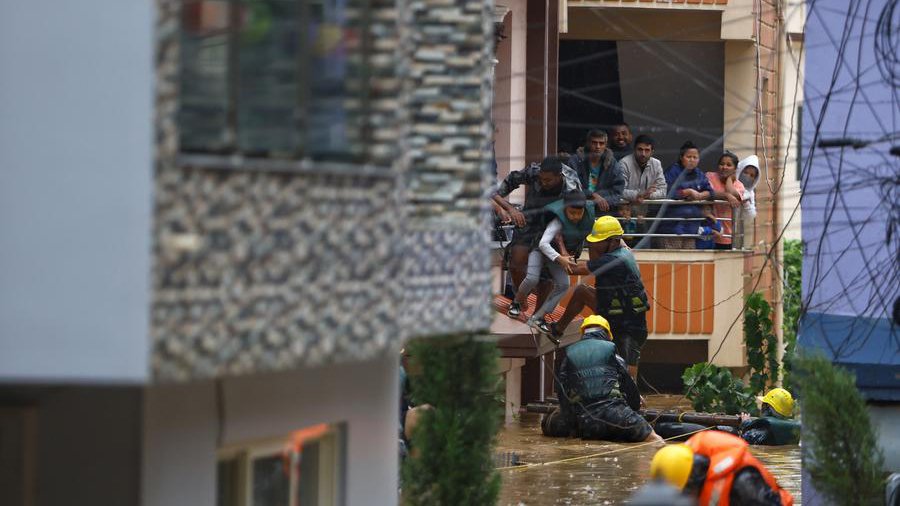
    Rescuers evacuate flood victims in Lalitpur, Nepal ((Photo: Sulav Shrestha/Xinhua)

    Meteorologists in the Himalayan nation have observed a pattern of change in the local climate in the last few years, with monsoon season lasting longer than usual and erratic rains affecting millions

    Over 200 people have been killed or missing in the floods and landslides caused by unprecedented rains lashing Nepal for the last five days. Thousands have been displaced in different parts of the mountainous country.

    On Monday, authorities announced the shutting down of all educational institutions. Several school and university buildings have also been damaged after facing the brunt of the torrential rains.

    The capital Kathmandu has been one of the most affected regions in the country with a large number of neighborhoods flooded or covered with the mud due to rain water, which has also caused the water levels in the Bagmati river to rise. The flood and landslides have destroyed numerous homes, bridges, roads, and vehicles, leaving a large number of people stranded.

    Many flooded areas are localities where poor and working class people live. Their houses have been inundated with water and mud, which may take longer to clear, raising the risk of the breakout of epidemics after the water recedes.

    According to Nepal’s Ministry of Transport, 47 out of 80 highways in the country have been affected by the rains and landslides, greatly impacting transportation. Over one hundred flights were canceled due to heavy rains, and the Kathmandu airport stopped operating on Friday and Saturday for several-hour-long periods. It re-started operations again on Sunday morning.

    Several power plants have also been damaged due to the flooding and landslides, disrupting the power supply to different parts of the country.

    The Communist Party of Nepal (UML) issued a statement earlier asking the government to increase its efforts to relief and rescue work. The party also asked cadres to participate in flood relief efforts.

    The heavy rains in Nepal could also have a significant impact in India. In Indian states like Bihar, the flooding was already worsening in the last couple of weeks. Thousands of people have been displaced in several bordering regions in Bihar in the last couple of days, with most of the rivers in the region flowing far above the danger mark.

    According to official data, at least 1.6 million people on the Indian side of the border are already severely affected due to the floods. Several schools and other public services have been affected. Local power grids are also shutting down due to flooding, leaving thousands without electricity.

    Effects of climate change

    Heavy rains during the monsoon season in South Asia are normal. However, in the last few years, local meteorological officials have claimed the severity of rains has increased and the monsoon has been significantly prolonged. The monsoon has shifted its usual duration. Its withdrawal, stretching until the month of October, is quite unusual, resulting in larger repercussions on the region’s agriculture.

    From Thursday to Saturday, Kathmandu received 322 mm rainfall against an annual average of around 2,700 mm, causing a sudden rise in the water levels in the region’s rivers. On Saturday alone, some parts of the city received 240 mm rainfall within 24 hours, a record in over two decades.

    Several studies indicate that Nepal has emerged as one of the most vulnerable countries in the context of climate change. The rise in the country’s average temperature is much higher than that of the global average (0.056 degrees Celsius against the global average of 0.03 degree Celsius), for example. The rise in temperature has caused the melting of several glaciers in the country, again endangering the local climate as well as the livelihoods of millions of people.

    Despite the seriousness of the climate situation in Nepal, most of the developed world has largely been indifferent to its concerns in the climate negotiations so far. Raising the issue, Prime Minister KP Sharma Oli, while speaking during the ongoing UN General Assembly’s 79th session on Thursday said that the world needs to pay attention to the possible effects of climate change in a country such as Nepal which is a “natural climate stabilizer” vital for maintaining balance in the global environment.

    Given its significance for global climate concerns, “it is essential that the mountain agenda receive due attention in climate negotiations,” Oli said.

    Original article by Abdul Rahman republished from peoples dispatch under a Creative Commons Attribution-ShareAlike 4.0 (CC BY-SA) license.

  • Youth Arrested Demanding VP Debate Question on Climate Emergency

    Spread the love

    Original article by Jessica Corbett republished from Common Dreams under Creative Commons (CC BY-NC-ND 3.0).

    The Sunrise Movement wants CBS moderator Norah O’Donnell to ask Republican JD Vance “if his prayers outweigh the millions he takes from Big Oil to deny the climate crisis.”

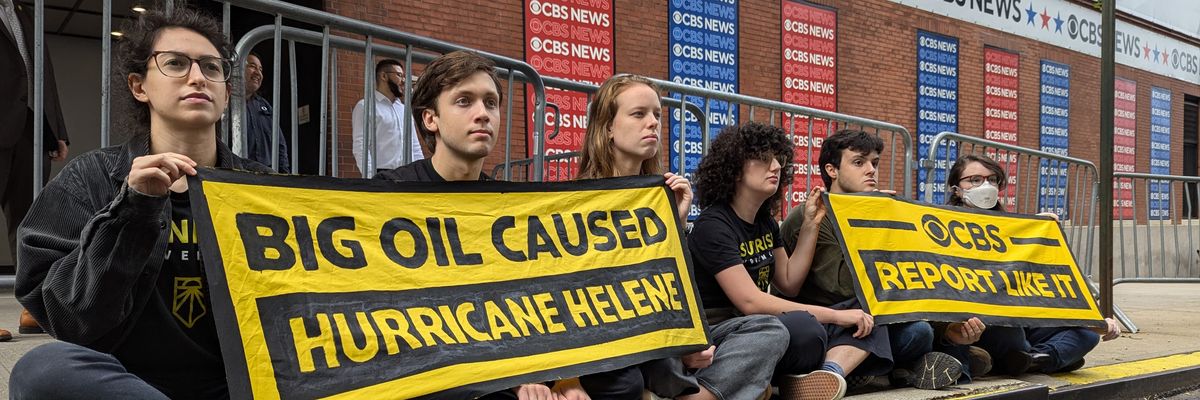
    Just hours away from the U.S. vice presidential debate on Tuesday, six members of the youth-led Sunrise Movement were arrested for blocking the street outside CBS News headquarters in New York City to demand moderator Norah O’Donnell ask both candidates what they would do to take on the fossil fuel-driven climate emergency.

    The sit-in and blockade came as the death toll from Hurricane Helene, which left a path of destruction across several southeastern states, hit at least 137. Sunrise has responded to the Category 4 storm with renewed calls to hold fossil fuel giants accountable.

    “In North Carolina, I have watched buildings in my hometown be submerged in water, have seen entire towns washed away, trees and power lines covering the streets, people asking for help finding their loved ones, and friends reaching out for aid after losing their homes and livelihoods,” Talia Wilson of Asheville said in a Sunrise statement.

    “Norah O’Donnell has a huge responsibility to require JD Vance to have a real conversation about the climate crisis on national TV.”

    Wilson took aim at the Republican ticket of former President Donald Trump and Sen. JD Vance (R-Ohio), who will face his Democratic counterpart, Minnesota Gov. Tim Walz, in Tuesday night’s debate.

    “It couldn’t be clearer that we need to act. Big Oil has known for years that its actions would cause disasters like these, but JD Vance and Donald Trump keep promising Big Oil power in exchange for campaign contributions,” the 18-year-old campaigner said. “I know my friends and neighbors want to hear from both candidates on how they plan to address the climate crisis and work to prevent even worse disasters from striking our communities in the future.”

    Sunrise’s Jordan Reif said that “my mom sent me pictures from our family in Georgia. Hurricane Helene destroyed roads, yards, and homes. There was damage like we had never seen before.”

    “The climate crisis is worsening and climate denier politicians like JD Vance are selling out our communities for donations from Big Oil,” the 24-year-old added. “CBS News and the media must report Hurricane Helene for what it is—Big Oil’s greed destroying our communities.”

    Sunrise is circulating a petition that notes Big Oil-backed Vance’s response to the death and devastation. In a Saturday social media post, the Republican said, “Please say a prayer for everyone affected by the storms.”

    The petition says, “Sign this letter to demand that CBS News anchor and vice presidential debate moderator Norah O’Donnell add a question to Tuesday’s debate asking JD Vance if his prayers outweigh the millions he takes from Big Oil to deny the climate crisis.”

    The group’s letter to O’Donnell highlights Politico‘s recent reporting that “Vance changed his tune on climate change. Oil cash flowed.” As the news outlet detailed:

    As recently as 2020, [Vance] spoke at Ohio State University about society’s “climate problem” and said using natural gas as a power source “isn’t exactly the sort of thing that’s gonna take us to a clean energy future.”

    Vance’s climate and energy views took a 180 once he was running for the Senate. The oil and gas industry spent more than $283,000 on Vance’s 2022 campaign—more than they gave to all but 18 other members of Congress, according to the campaign finance watchdog OpenSecrets.

    Trump’s selection of Vance as his VP candidate alarmed green groups that are overwhelmingly backing Democratic Vice President Kamala Harris and Walz, given the Republican ex-president’s pledge to roll back Biden-Harris administration climate policies if Big Oil pours just $1 billion into his campaign, and research showing planet-heating pollution would soar if he returned to the White House.

    “Donald Trump and JD Vance are responding to the unimaginable devastation of Helene by tweeting prayers and by doubling down on their climate denial. That’s wholly unacceptable,” said Sunrise communications director Stevie O’Hanlon, whose group is working to mobilize 1.5 million swing state voters in support of Harris.

    “Scientists have been extremely clear: Climate change made Helene stronger and more deadly, and if we don’t urgently act, storms like this will become the new normal,” O’Hanlon added. “Norah O’Donnell has a huge responsibility to require JD Vance to have a real conversation about the climate crisis on national TV.”

    The 90-minute debate is set to begin at 9:00 pm ET on Tuesday, airing on the CBS broadcast television station and streaming for free on CBSNews.com, the CBS News TV and smartphone applications, Paramount+, and YouTube.

    Original article by Jessica Corbett republished from Common Dreams under Creative Commons (CC BY-NC-ND 3.0).

    From Your Site Articles

  • Climate Movement Says ‘Hurricane Helene Must Be a Wake-Up Call’

    Spread the love

    Original article by Jessica Corbett republished from Common Dreams under Creative Commons (CC BY-NC-ND 3.0). 

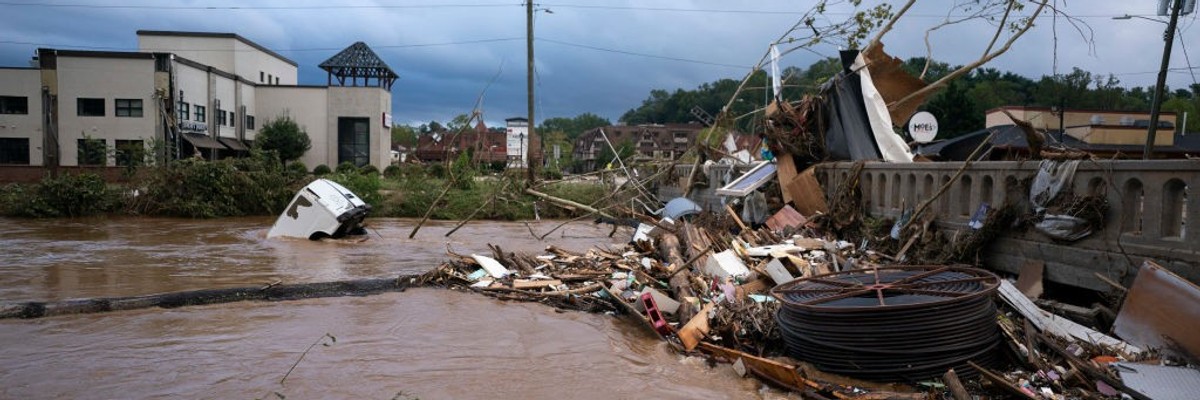
    A van flows in floodwaters near the Biltmore Village in the aftermath of Hurricane Helene on September 28, 2024 in Asheville, North Carolina. (Photo: Sean Rayford/Getty Images)

    “To those insisting that, ‘This is not the time!’ to have those other conversations, I say: This is *exactly* when we need to be having them,” said one climate scientist.

    As emergency crews have worked through the weekend to rescue people and restore essential services across several southeastern U.S. states, green groups in recent days have pointed to the death and damage from Hurricane Helene as just the latest evidence of the need for sweeping action on the climate emergency.

    Helene made landfall as a Category 4 hurricane with 140 mph winds in Florida’s Big Bend region late Thursday, then left a path of destruction across hundreds of miles of Georgia, the Carolinas, and Tennessee. As of early Sunday, at least 64 people are confirmed dead—including at least two people in Virginia—though that figure is expected to rise.

    “Moody’s Analytics said it expects $15 billion to $26 billion in property damage,” The Associated Press reported Sunday on what is now a post-tropical cyclone. “AccuWeather‘s preliminary estimate of the total damage and economic loss from Helene in the U.S. is between $95 billion and $110 billion.”

    The youth-led Sunrise Movement said Sunday that “any reporting about Hurricane Helene needs to be clear—this is not normal. This is not just a tragedy. This is a crime. Fossil fuel companies have known this would happen for the last 50 years. They lied to the public and bought out our government just to make a profit. Make them pay.”

    Greenpeace USA similarly declared on social media Saturday that “#HURRICANE HELENE MUST BE A WAKE-UP CALL FOR CLIMATE JUSTICE!”

    “We are heartbroken,” the group said, noting the dozens of people killed. “Communities have been devastated. The corporations heating the climate must be held accountable.”

    Dozens of communities across the United States have already launched climate liability lawsuits against Big Oil, which knew for decades that fossil fuels would heat the planet but promoted disinformation and raked in huge profits. Recently there have been calls for legal action by the U.S. Department of Justice and potential homicide cases brought by state and local prosecutors.

    “Our hearts and solidarity go out to everyone facing the devastation. Please support mutual aid relief efforts and demand oil companies #StartDrillingStartPaying!” Greenpeace said Saturday.

    Sunrise executive director Aru Shiney-Aja on Sunday offered a “friendly reminder that fossil fuel companies get 20 BILLION dollars in [government] subsidies every year,” while the Federal Emergency Management Agency (FEMA) “runs out of money to respond to disasters like Helene.”

    Both Shiney-Aja and Greenpeace shared footage from Asheville, North Carolina, which endured what Ryan Cole, the assistant director of Buncombe County Emergency Services, described as “biblical flooding.”

    Just two years ago, The New Lede reported that “from wildfires racing through the drought-stricken West, to heavy flooding in the central and eastern regions of the United States, extreme weather events are spurring many Americans to seek refuge in more environmentally stable cities, so-called ‘climate havens,’” including Asheville.

    This weekend, Asheville—which is over 2,000 feet above sea level and more than 250 miles from the coast—and surrounding communities are contending with disrupted water, power, and communications services due to what officials are reportedly calling “Buncombe County’s own Hurricane Katrina.”

    Noting Asheville’s elevation and distance from the coast, Lucky Tran, director of science communications and media relations at Columbia University in New York City, said Sunday that “no place is safe from climate change. We all suffer the consequences. We must all take action. We are all in this together.”

    https://twitter.com/alixabeth/status/1840218797942140960?ref_src=twsrc%5Etfw%7Ctwcamp%5Etweetembed%7Ctwterm%5E1840218797942140960%7Ctwgr%5E7dbf1c26106a7e3716bda71eeb630f7eafe840b0%7Ctwcon%5Es1_c10&ref_url=https%3A%2F%2Fwww.commondreams.org%2Fnews%2Fhurricane-helene

    As The New York Times reported Sunday:

    People across western North Carolina chainsawed their way to loved ones and drove for hours Saturday on dwindling gas tanks in search of food and power, in what one resident described as a “mini-apocalypse” after Hurricane Helene.

    Authorities said the region was facing a historic disaster a day after the powerful storm swept through the Southeast, downing power lines and washing out highways. Landslides, spotty cellphone service, and a gas shortage complicated rescue and recovery efforts. Some stranded people were being airlifted to safety.

    Antonia Juhasz, a leading climate and energy journalist and author, said Saturday that “Asheville, North Carolina is being wiped off the map by the worst storm to hit the region in a generation. This is what the climate crisis looks like: the production and use of fossil fuels changes the climate, intensifying extreme weather events and making them more frequent.”

    As hurricane scientist Jeff Masters detailed Friday, fossil fuel-driven climate change “makes the strongest hurricanes stronger,” boosts rainfall from such storms, leads to more rapid intensification, and causes sea-level rise that increases storm surge damage.

    In an effort to emphasize the climate change connection to extreme weather, from heatwaves to hurricanes, some climate campaigners have suggested naming such events after oil and gas companies.

    “What did a Helene ever do to deserve getting this horrific hurricane named after her? We should be naming hurricanes after fossil fuel CEOs instead. How about Hurricane Darren?” said Fossil Free Media director Jamie Henn, taking aim at ExxonMobil’s Darren Woods.

    Daniel Swain, a climate scientist focused on extreme weather, said on social media Saturday, “The images and stories just beginning to emerge from eastern TN and western NC in the aftermath of widespread catastrophic flooding wrought by Helene are genuinely horrifying, and the full scale of the disaster is likely as yet untold.”

    “This was, by far, the most extreme rain event in observed record across much/most of the region, where reliable records date back over 100 [years]. Unsurprisingly, the flooding which resulted has also been widespread, historic, and generally catastrophic across a broad region,” he explained. “These floods, which were concentrated in valleys containing rivers and typically modest creeks and streams, involved extremely large volumes of water moving downhill at high velocity. This was not a gradual or ‘gentle’ inundation by any means.”

    Swain stressed that “sometimes ‘worst-case’ scenarios really do come to pass, and I think we often lack the collective imagination to fully envision what that looks like. That’s a problem, because being honest about risks that exist is [the] first step toward mitigating them and preventing harm!”

    “Ultimately, there many folks in FL, GA, NC, and TN who are in need of urgent assistance—and that is/should be foremost priority,” he added. “But to those insisting that, ‘This is not the time!’ to have those other conversations, I say: This is *exactly* when we need to be having them.”

    The AP reported that “in Atlanta, 11.12 inches (28.24 centimeters) of rain fell over 48 hours, the most the city has seen over two days since record-keeping began in 1878,” while “in Florida’s Big Bend, some lost nearly everything they own, emerging from the storm without even a pair of shoes.”

    Along Florida’s Gulf Coast, “Helene shoved a wall of water estimated at least 10 feet high into the lowest-lying areas of Steinhatchee,” according to USA Today.

    South of there, in Pinellas County, officials have identified over 18,000 homes damaged by Helene—and at least 11,000 are “uninhabitable,” as the Tampa Bay Times put it.

    Highlighting the connection between climate change and more intense hurricanes, Congressman Maxwell Frost (D-Fla.) said Thursday that “the climate crisis is here. We must act to save lives.”

    Original article by Jessica Corbett republished from Common Dreams under Creative Commons (CC BY-NC-ND 3.0).