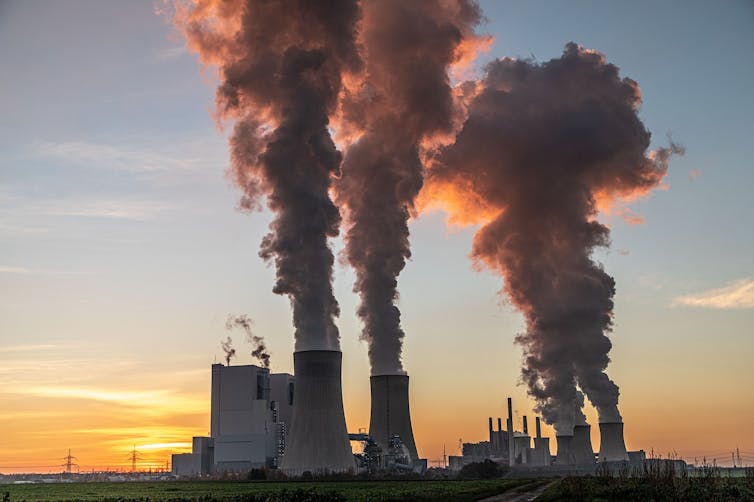
Category: Climate Crisis

  • BBC Accused of Doing PR for Major Polluters

    Spread the love

    Original article by Sam Bright republished from DeSmog.

    BBC New Broadcasting House in central London. Credit: Credit: Alexander Svensson (CC-BY-2.0)

    The broadcaster’s in-house content studio has been paid to promote fossil fuel firms and petrostates with a history of persecuting journalists.

    The BBC has produced dozens of films and articles for oil and gas companies, agricultural giants, fossil fuel states, and high-emission transport firms in recent years, DeSmog can reveal. 

    Experts say the BBC has been “greenwashing” the image of companies and countries contributing to global emissions by trumpeting their dubious climate credentials and promoting their favoured solutions to the crisis. 

    The content was produced by BBC StoryWorks, a studio that produces videos, podcasts, and articles paid for commercial clients, which it publishes on BBC channels outside the UK. 

    On its website, BBC StoryWorks boasts that it leverages the reputation of the BBC – “our century-long pedigree as the world’s most trusted storytellers” – to create content for commercial clients “that moves and inspires curious minds, across platforms and across the globe”.

    BBC StoryWorks produces traditional adverts for its clients, as well as content “with an editorial style” (known as “branded” or “native” content).

    Branded content appears outside the UK on the BBC website – the most viewed news platform in the world – and on its non-UK broadcast channels, in a similar format to normal editorial output. However, branded content promotes the paying client and typically features interviews with the client’s senior executives. It is only distinguished by a disclaimer that it has been paid for by an external organisation.

    BBC Studios – which includes StoryWorks – generated £1.8 billion of sales in the year 2023/24, according to the broadcaster’s annual accounts. The BBC‘s financial deficit is projected to reach nearly £500 million next year, with the licence fee – its primary funding source – having been frozen for several years by the last Conservative government.

    In recent months, the BBC has created content for a number of oil and gas companies, including the French fossil fuel company Engie, which owns a number of coal-fired power plants and relies heavily on gas for its energy production. 

    BBC StoryWorks has also produced content for liquified natural gas (LNG) companies, and has touted the energy source as a cleaner alternative to other fossil fuels. This is despite experts warning that the booming LNG industry could contribute more heavily to the climate crisis than the ongoing use of coal, the most carbon-intensive fossil fuel. 

    Agriculture accounts for 21 percent of global greenhouse gas emissions, and BBC StoryWorks has produced films for some of the world’s biggest food and farming firms, including Nestlé and Bayer, often promoting the disputed green technologies backed by the industry. As previously revealed by DeSmog, BBC StoryWorks has produced dozens of documentaries sponsored by the pesticide giant Corteva, publicising the technologies developed and sold by the firm.

    Petrostates with a history of human rights abuses – including the imprisonment of journalists – have also been promoted by BBC StoryWorks.

    An investigation by DeSmog and Drilled previously revealed that many of the world’s most trusted English-language news outlets regularly promote the fossil fuel industry’s narratives on climate-related topics. Bloomberg, The Economist, the Financial Times, the New York Times, Politico, Reuters, and the Washington Post all have internal commercial studios that create advertising content for fossil fuel firms.

    The BBC is committed to science-led climate reporting and in 2021 signed the Climate Content Pledge, promising to do “more and better climate story-telling on screen across all genres.”

    However, critics say that BBC StoryWorks is using the broadcaster’s reputation – including its role as a public service broadcaster – to make money from commercial content that often flouts its editorial values.

    “The contracts to make this sort of content are won on the back of the BBC’s reputation as an honest and impartial broadcaster,” Patrick Howse, the BBC’s former Baghdad bureau chief, told DeSmog. “Accepting money from sources like this, to make content like this, risks undermining the BBC’s own hard-won reputation and will ultimately put it on the wrong side of history.

    “This is a huge disservice to the BBC’s audiences, and a betrayal of the many brave and conscientious BBC journalists around the world who see holding power to account and telling the truth as their raison d’etre.”

    Last year was the warmest year since global records began in 1850. The world’s foremost climate science body, the UN’s Intergovernmental Panel on Climate Change (IPCC), has said that “immediate and deep emissions reductions” are needed “across all sectors” to limit global warming to 1.5C – the global target established by the 2015 Paris Agreement.

    In June 2024, UN Secretary-General António Guterres said that advertising agencies had “aided and abetted” the fossil fuel industry, “acting as enablers to planetary destruction”. 

    “Fossil fuels are not only poisoning our planet – they’re toxic for your brand,” he said. 

    A BBC StoryWorks spokesperson said that the studio “operates entirely separately from the BBC’s editorial operations” and that its output “is clearly labelled as commercial content”.

    However, content labelling doesn’t always help readers and viewers to understand that it has been paid for by a commercial client. A 2018 Boston University study found that only one in 10 people recognised native advertising – which includes branded content – as advertising rather than reporting.

    The BBC StoryWorks spokesperson added that, “BBC StoryWorks operates under robust and established governance and is required to comply with the BBC’s guidelines as set out in the publicly available Advertising and Sponsorship Guidelines. 

    “Central to these guidelines is a commitment to factual accuracy in any piece of content. All of the content cited in this article was approved as compliant with the BBC’s advertising guidelines prior to its publication.”

    Fossil Fuel Firms and False Solutions

    In April and June, BBC StoryWorks published two articles paid for by Engie, a global energy company with annual revenues of $60 billion, which is part-owned by the French state. The articles promoted Engie’s green credentials, claiming it has a mission “to accelerate the energy transition”, despite the firm’s extensive fossil fuel interests.

    Though ENGIE has ambitious renewable development objectives, it plans to expand its LNG terminals in Europe, is one of the top European developers of gas power plants globally, and has agreed to import American shale gas beyond 2040. 

    Between 2016 and 2022, the firm sold 16 of its coal plants – a 60 percent reduction in its coal capacity. However, Engie chose to sell these assets rather than close them down. This transferred the polluting plants to different owners, meaning that the plants will still contribute to global emissions.

    The BBC StoryWorks articles didn’t provide information about the company’s existing polluting activities, or the global need to rapidly scale-down oil, gas, and coal production. 

    Professor Peter Newell, an academic at the University of Sussex specialising in environmental politics, told DeSmog: “Because branded content looks like regular BBC journalism which the public trust as independent, it compromises the integrity of the organisation and its public role, including to help society respond seriously to the climate crisis.”

    In 2021, the broadcaster launched a “Humanising Energy” series “presented by” the World Energy Council, a global forum for sustainable energy development, followed by a second series in 2023.

    The two series featured dozens of five-minute films paid for by individual firms, showcasing their supposed climate solutions. These films typically involved one-on-one interviews with people either creating or benefiting from these green innovations, as well as cinematic shots of the technologies being deployed. 
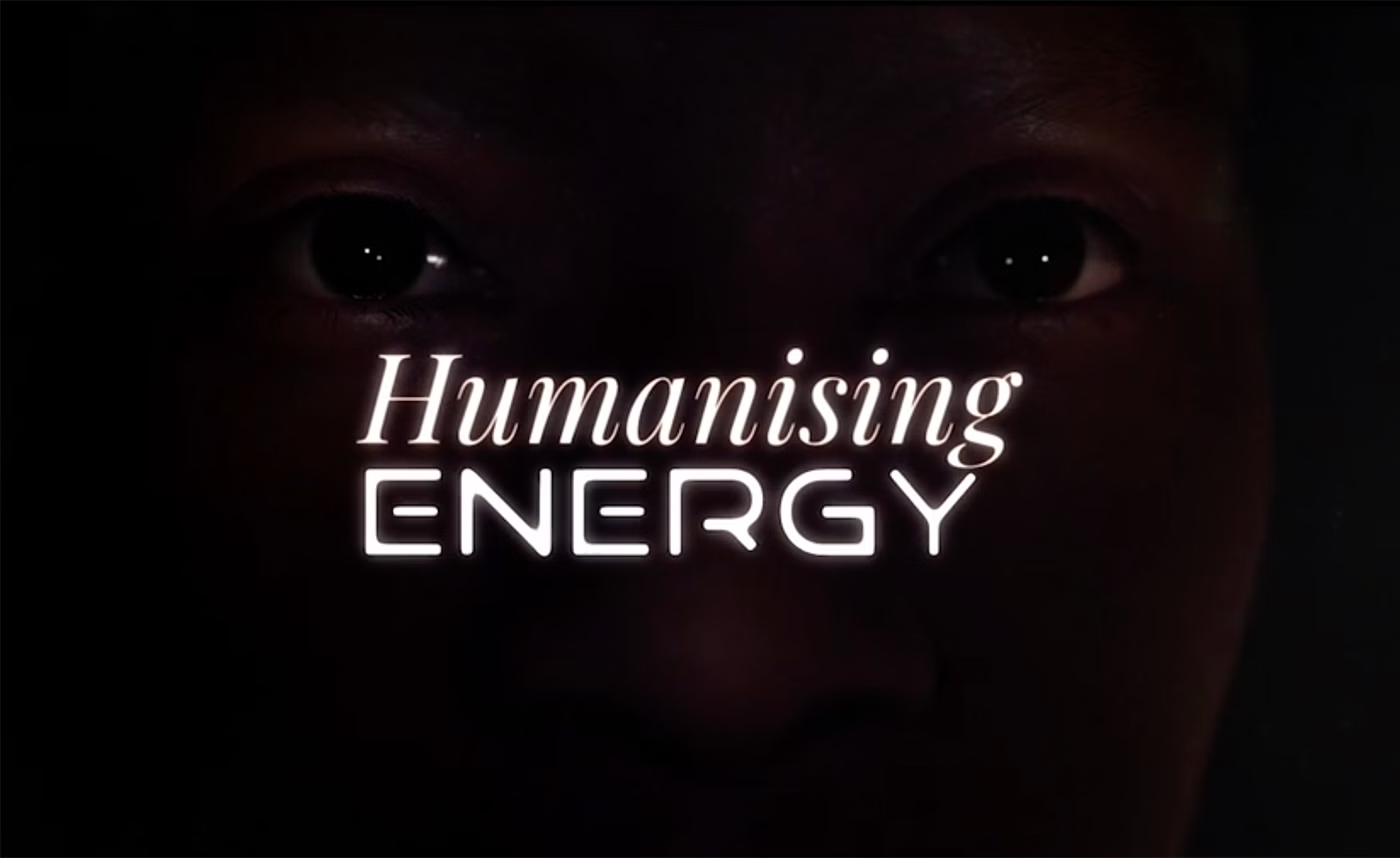
    A screenshot of a BBC StoryWorks film from its ”Humanising Energy“ series. Credit: BBC

    Sponsors of films in the two Humanising Energy series included the fossil fuel companies Engie Brazil, Gasum (the largest distributor of LNG in the Nordic countries), CLP Holdings (which has said it won’t phase out its coal assets before 2040, and hasn’t committed to phasing out its gas assets), Mabanaft, and Invenergy, the energy services firm Voith, and the engine manufacturer Cummins.

    All of these films touted the supposed climate credentials of the featured companies, without examining their contribution to global emissions or the viability of the featured technologies.

    In January 2024, Cummins agreed to pay a record $1.7 billion fine – the second largest environmental penalty ever in the U.S. – after facing charges that it equipped roughly one million vehicles with devices that bypassed emissions sensors. The company didn’t admit wrongdoing. 

    Just a few months earlier, BBC StoryWorks produced a film for Cummins boasting of the firm’s efforts to help decarbonise commercial vehicles.

    The Invenergy film focused on its construction of an LNG plant in El Salvador. While the content attempted to show how the plant was providing energy and jobs to the local community, it also tried to tout the environmental benefits of natural gas.

    During the film, an Invenergy spokesperson suggested that natural gas generates 30 percent less carbon dioxide than other fossil fuels, neglecting the fact that natural gas is composed largely of methane, which is over 80 times more potent than CO2 across a 20 year period. Even relatively small methane leaks during the process of extracting, shipping, and processing natural gas contribute significantly to global emissions.

    One of the films in the Humanising Energy series – “The evolution of home energy” – promoted the role of hydrogen in supplying home heating. Yet, while green hydrogen is widely accepted as necessary for decarbonising heavy industry and other sectors where alternative renewable energy sources are unworkable, it is not considered viable for heating homes.

    A peer-reviewed assessment of over 50 independent studies in 2024 concluded that hydrogen use in domestic heating is inefficient, costly and resource-intensive compared to other low-carbon options such as heat pumps.

    The BBC StoryWorks film was paid for by DNV, a Norwegian company that claims to be “the world’s leading resource of independent energy experts and technical advisors”, including the oil and gas sector. DNV says on its website that it “delivers broad technical expertise and experience to enable hydrogen to play a key role in the energy transition”. 

    A DNV spokesperson said that, “While DNV does work with oil and gas companies and organisations across renewable energy production, it is not involved in the direct production or distribution of energy… Our approach to energy solutions is rooted in comprehensive research and rigorous testing, and our position as an independent third party is a central part of our identity and our work.”

    The Humanising Energy series also featured two films advocating for the development and deployment of sustainable aviation fuels (SAFs) – one paid for by the aviation giant Boeing, and one paid for by the energy and chemicals company Sasol alongside the gas company Linde.

    A screenshot of a BBC StoryWorks film, sponsored by Boeing, from its ”Humanising Energy“ series. Credit: BBC

    SAFs have been criticised as being environmentally damaging and currently economically unviable. The Advertising Standards Authority this month banned a Virgin Atlantic advert for making the “misleading” claim that it had developed a “100 percent sustainable aviation fuel”.

    In August 2022, the International Council on Clean Transportation (ICCT) said that the amount of money invested by airlines in SAFs was “insufficient” and that it seemed as though the technology was simply “about burnishing airlines’ images” by inflating their environmental credentials.

    Sasol told DeSmog that its SAF initiatives were not an example of greenwashing and that it believes SAFs hold the “promise to be an enabler of our own decarbonisation and contribute to decarbonising aviation.”

    Aviation contributes approximately 2.5 percent of worldwide greenhouse gas emissions, yet BBC StoryWorks has produced content for a number of airlines in recent months and years, including Uzbekistan Airways (March 2024), China Southern Airline (2022), and Korean Air (2017).

    BBC StoryWorks has also worked extensively with other polluting transport companies. 

    It produced an advertising campaign for the shipping and cruise company Cunard that appeared on BBC StoryWorks social media pages in July 2024. Europe’s 218 cruise ships emitted as much sulphur oxides as one billion cars in 2022.

    BBC StoryWorks has also produced branded content for the car company Hyundai, as well as for Lexus, Volkswagen, and Jaguar. In addition, the studio has produced a six-part series paid for by the Indian multinational motorcycle company Royal Enfield. 

    Transport contributes roughly one quarter of all energy related greenhouse gas emissions, while outdoor air pollution is estimated to cause more than 3.2 million premature deaths worldwide every year.

    “This important investigation reveals that BBC StoryWorks has been doing the greenwashing work of major polluting firms driving the climate crisis by obscuring their role and promoting their preferred ‘solutions’, however discredited by science,” Professor Newell told DeSmog.

    Greenwashing is when a company falsely brands something as eco-friendly, green or sustainable. In 2017, the BBC itself produced a guide to the “seven ways to spot businesses greenwashing”.

    Big Ag Polluters

    BBC StoryWorks has also been paid to produce content for major agricultural polluters and their lobbyists. This content has often promoted the technological hacks that food and farming giants claim will reduce the sector’s emissions, rather than the more fundamental changes in production and consumption that scientists say will be crucial in limiting Big Ag’s climate impact. 

    In 2023, BBC StoryWorks produced an advertising campaign for the pesticides giant Bayer, the world’s second largest crop chemicals company, boasting of the firm’s efforts to facilitate “scientific breakthroughs”.

    In addition, as part of a branded content series in late 2023 entitled “The Climate and Us”, BBC StoryWorks was paid by Bayer to produce a film on the digital apps helping farmers to monitor and reduce their emissions. 

    The film, which featured an interview with Bayer’s vice president of digital farming operations, promoted the firm’s technologies with no additional comment from experts on its efficacy, or Bayer’s stance on climate change. 
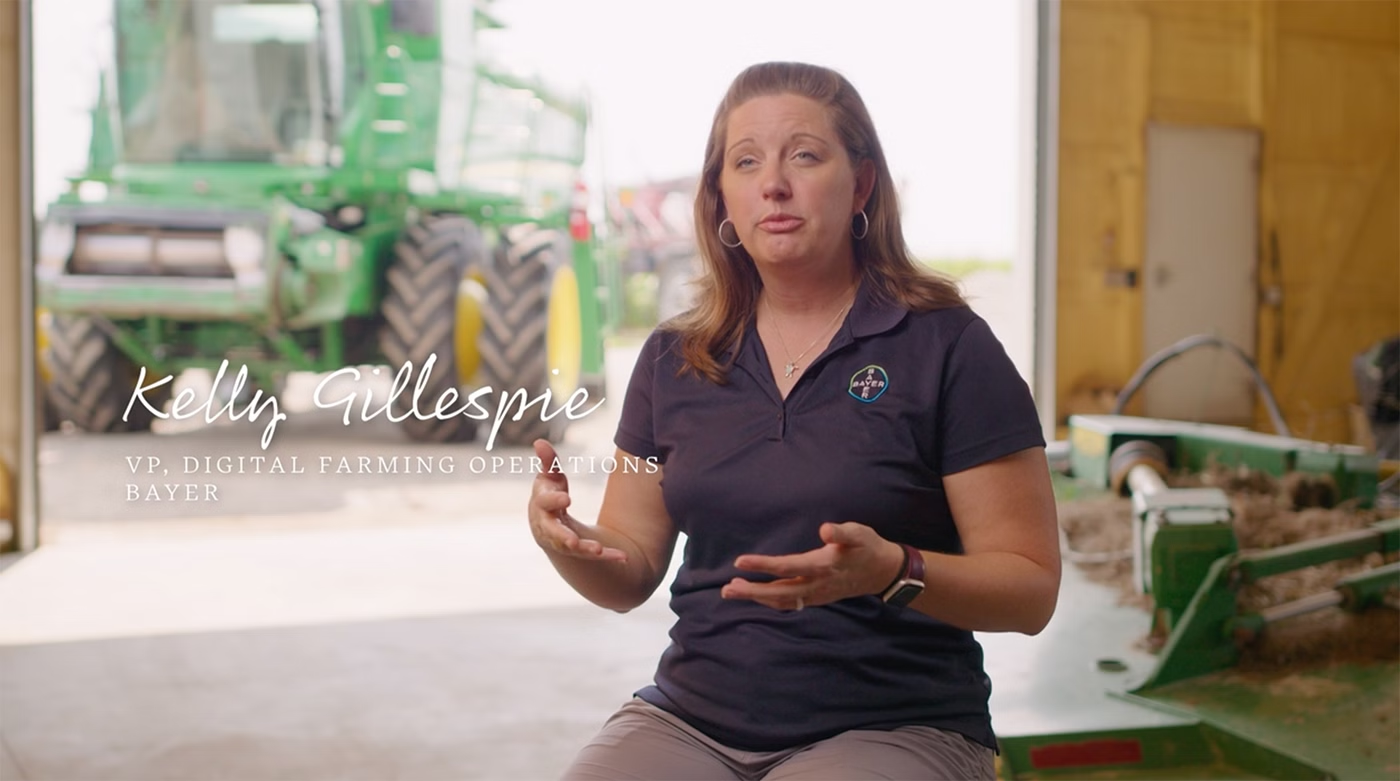
    A screenshot of a BBC StoryWorks film, sponsored by Bayer. Credit: BBC

    According to the Pesticides Action Network, over a third of Bayer’s sales derive from products that are highly hazardous to the environment, animal or human health. (The methodology for this classification is strongly disputed by Bayer on the grounds that it uses different criteria to internationally accepted rules).

    Bayer told DeSmog that it is “committed to ambitious sustainability goals and has a positive track record while recognising the ongoing challenge.”

    Experts say that the overuse of chemical pesticides is harming the future of food production. Biodiversity is in sharp decline across the world, and numbers of birds and pollinators are plummeting in Europe.

    Bayer, which makes almost $10 billion in agrochemical sales every year, has also faced millions of dollars in lawsuits over health issues allegedly related to its products, including from farmers. 

    In 2023, DeSmog revealed that BBC StoryWorks had produced three documentary series and 26 articles – viewed at least 65 million times – sponsored by Corteva, one of the world’s largest pesticide firms. 

    The BBC said that the Corteva-sponsored content, which focused on sustainable food production, was editorial in nature and not influenced by its corporate client. However, experts said the documentaries gave a “totally biased” picture of global food problems, while the content promoted a number of the technologies developed by Corteva.

    BBC StoryWorks also produced two articles in 2023 paid for by Australian Dairy – the country’s industry trade group.

    The first article promoted the supposed contribution of milk and dairy to a healthy diet, while the second advocated for “precision farming” – in other words, using technology to ensure that resources are used efficiently and to track climate impacts. 

    Scientists and health professionals agree that dairy products are not necessary for a healthy diet, and they agree that for people who are able to have a varied diet, lower meat and dairy consumption is healthier than diets higher in milk and dairy.

    Experts also doubt that precision farming can be rolled out widely enough to meaningfully reduce agricultural emissions. The environmental group Friends of the Earth has said that: “Faced with global climate and biodiversity emergencies, better ‘optimisation’ of existing production processes cannot possibly go far enough to meet the challenges we face.”

    According to a March 2024 Harvard Law paper, which surveyed more than 200 environmental and agricultural scientists, meat and dairy production must be drastically reduced – and fast – to align with the Paris Agreement. The report concluded that global emissions from livestock production need to decline by 50 percent during the next six years, with “high-producing and consuming nations” taking the lead.

    Sophie Nodzenski, a senior campaign strategist on food and agriculture at Greenpeace International told DeSmog: “Tinkering with the status quo is no longer an option. Meat and dairy companies are climate killers. The livestock sector is one of the leading sources of human-made methane emissions, which move us faster and further past the 1.5C threshold, worsening global heating. 

    “Meat and dairy companies must stop misleading the public with pseudo solutions and focus on reducing their livestock herds drastically to bring down emissions instead. This reduction can give us a fighting chance against climate chaos.”

    In 2023, BBC StoryWorks also produced content for the world’s largest food and drink company Nestlé, boasting of the company’s efforts to support sustainable farming through “regenerative agriculture”. 

    The film failed to acknowledge that Nestlé – whose 87.5 million tonnes of annual emissions are similar to those of Chile – spent 14 times more on “marketing and administration” in the last year than it did on regenerative agriculture over the previous five years combined.

    A screenshot of a BBC StoryWorks film, sponsored by Nestlé. Credit: BBC

    “Nestlé’s strong focus on using regenerative agriculture to compensate for the greenhouse gas emissions from livestock farming – one of Nestlé’s main strategies to achieve net zero – is not backed by robust scientific evidence,” Nodzenski said.

    “Increasing carbon storage in soils, as well as forests and other vegetation, is necessary, but should not replace a drastic reduction of greenhouse gas emissions from livestock farming – one of the main sources of Nestlé’s emissions.”

    The Nestlé film was part of a “Food for Thought” series backed by the trade body FoodDrink Europe, whose members feature major polluters including Cargill, Coca-Cola, and Unilever. 

    A Nestlé spokesperson said: “We continue to invest in and deliver on our net zero roadmap. By the end of 2023, we had reduced our greenhouse gas (GHG) emissions by 13.5 percent in absolute terms since 2018. Our GHG reduction targets are third-party approved by the Science Based Targets initiative and include a 20 percent absolute cut by 2025 and 50 percent by 2030 covering all sources of agricultural emissions in our supply chain. 

    “We continue to ramp up our climate efforts using world class research and development, including via the Nestlé Institute for Agricultural Sciences.

    “Nestlé has committed to invest $1.2 billion to pay premiums to farmers for ingredients grown using regenerative agriculture practices, provide technical assistance and support investment.”

    Petrostates

    Over recent years, BBC StoryWorks has also produced content for some of the world’s leading fossil fuel states, many of which have a poor record on human rights and press freedom. 

    This year’s flagship COP29 climate summit will be held in Baku, Azerbaijan. The country is a petrostate with oil and gas production accounting for roughly half of its GDP and over 90 percent of its exports. The country, run under an authoritarian system with little effective political opposition, plans to increase fossil fuel production by a third over the next decade.

    Azerbaijan’s government has also been accused by of a media crackdown by the advocacy group Human Rights Watch ahead of November’s summit, arresting 25 journalists and activists in the past year.

    However, since November 2023, BBC StoryWorks has produced several adverts promoting Azerbaijan as a place to visit, while greenwashing its image. 

    For example, in December 2023, the studio released an advert paid for by the country’s space agency Azercosmos, attempting to show “How digitisation is changing the game for Azerbaijan’s quest for renewable energy.”

    The advert was accompanied by an article claiming that Azerbaijan plans to transition “from an oil- and gas-based economy into a thriving modern hub.” The article did not mention the country’s plan to expand fossil fuel production, which contravenes globally agreed efforts to limit rising temperatures. 
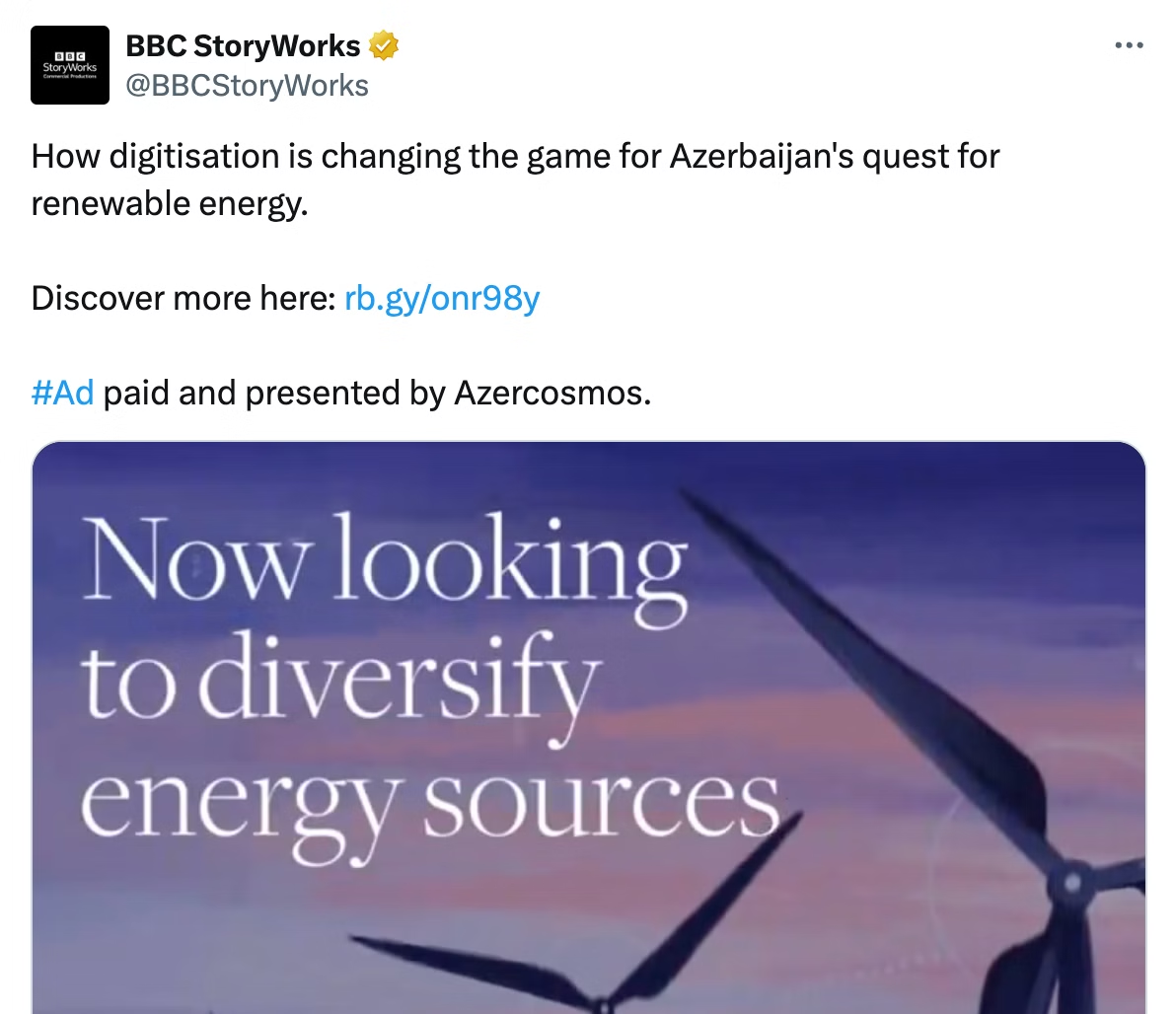
    A screenshot of a BBC StoryWorks advert, sponsored by Azercosmos. Credit: BBC

    BBC StoryWorks has also produced content promoting the United Arab Emirates (UAE), the host of the 2023 COP28 climate summit and another petrostate with a poor human rights record. 

    In 2023, the studio produced a branded content podcast series on behalf of Abu Dhabi Tourism, featuring five 20-minute episodes each “highlighting the message that Abu Dhabi [the capital of the UAE] is a destination for every kind of traveller”.

    The series was shortlisted for a 2023 World Media Award and, in the award submission, the BBC said it “challenged preconceived notions and [positioned] the city as a cultural gem worth exploring”. The series was downloaded 115,000 times, according to the BBC. 

    The UAE derives roughly 40 percent of its income from oil and gas, and this isn’t the only time that BBC StoryWorks has produced content promoting the petrostate.

    The Humanising Energy series featured an article entitled, “The rise of renewable energies in oil-rich regions”, which greenwashed the image of Gulf states.

    The story stated that the UAE is “planning to increase oil production to more than five million barrels a day by 2030”, but said that the country “has been looking toward more sustainable energy sources”. It went on to say that “Clean energy projects are coming of age” in the UAE, “from record-breaking solar parks and green hydrogen to waste-to-energy plants”.

    The UAE’s overall climate action has been rated as “critically insufficient” by the Climate Action Tracker, an independent scientific project that monitors government climate action and measures it against the Paris Agreement.

    Weeks before COP28, the country’s national oil company, ADNOC, awarded contracts worth $17 billion for the development of new offshore gas fields.

    The Gulf state also has a poor record on human rights and press freedom. The UAE continues to arrest and imprison activists, academics, and lawyers who speak out against its monarchic rulers. UAE authorities also continue to discriminate against women, LGBTQ communities, and migrants. 

    According to Reporters Without Borders, “The government prevents both local and foreign independent media outlets from thriving by tracking down and persecuting dissenting voices.”

    “The rise of renewable energies in oil-rich regions” article also attempted to promote the ways in which “women are playing an increasing role in the renewable energy sector”. The story cited the fact that women are leading green initiatives in Kuwait, and Jordan. 

    However, many Gulf states routinely discriminate against women. In Kuwait for example, the country’s personal status laws discriminate against women in matters of marriage, divorce, and child custody.

    Despite this, BBC StoryWorks has frequently promoted the country. In December 2023, the studio published an advert from the Kuwait Fund, the country’s state-run development agency, boasting of its efforts to help “disadvantaged regions, women and minorities”.

    Reporters Without Borders states that Kuwait’s censorship laws prohibit journalists “from criticising the government, the emir, the ruling family, its allies or religion”. In particular, it is “difficult for journalists to tackle migrant worker rights, women’s rights and corruption.”

    Oil and gas revenues account for roughly 60 percent of Kuwait’s GDP. 

    BBC StoryWorks has also produced content for the petrostate Qatar, promoting the country as a tourist destination despite its record of discriminating against women and minorities. 

    BBC StoryWorks has a history of working for repressive regimes, including China. The U.S. publication Deadline reported in December 2022 that BBC StoryWorks had partnered with at least nine Chinese state-affiliated bodies, including a media outlet banned from broadcasting in the UK. 

    “Those commissioning and paying for this content are deliberately using the BBC’s brand to greenwash or whitewash their own reputations. It’s an exercise of cynical manipulation,” the BBC’s former Baghdad bureau chief Patrick Howse told DeSmog.

    “Commissions like this are lucrative and therefore attractive to a corporation that has been deliberately and severely financially squeezed by the UK government over a long period. This has forced the BBC to seek money from wherever it can find it, and this poses a risk to its editorial independence and honesty, which will ultimately undermine the trust of the BBC’s audience.”

    Original article by Sam Bright republished from DeSmog.

  • The overshoot myth: you can’t keep burning fossil fuels and expect scientists of the future to get us back to 1.5°C

    Spread the love
    Melting Antarctic glacier. Shutterstock/Bernhard Staehli

    James Dyke, University of Exeter; Robert Watson, University of East Anglia, and Wolfgang Knorr, Lund University

    Record breaking fossil fuel production, all time high greenhouse gas emissions and extreme temperatures. Like the proverbial frog in the heating pan of water, we refuse to respond to the climate and ecological crisis with any sense of urgency. Under such circumstances, claims from some that global warming can still be limited to no more than 1.5°C take on a surreal quality.

    For example, at the start of 2023’s international climate negotiations in Dubai, conference president, Sultan Al Jaber, boldly stated that 1.5°C was his goal and that his presidency would be guided by a “deep sense of urgency” to limit global temperatures to 1.5°C. He made such lofty promises while planning a massive increase in oil and gas production as CEO of the Abu Dhabi National Oil Company.

    We should not be surprised to see such behaviour from the head of a fossil fuel company. But Al Jaber is not an outlier. Scratch at the surface of almost any net zero pledge or policy that claims to be aligned with the 1.5°C goal of the landmark 2015 Paris agreement and you will reveal the same sort of reasoning: we can avoid dangerous climate change without actually doing what this demands – which is to rapidly reduce greenhouse gas emissions from industry, transport, energy (70% of total) and food systems (30% of total), while ramping up energy efficiency.

    A particularly instructive example is Amazon. In 2019 the company established a 2040 net zero target which was then verified by the UN Science Based Targets initiative (SBTi) which has been leading the charge in getting companies to establish climate targets compatible with the Paris agreement. But over the next four years Amazon’s emissions went up by 40%. Given this dismal performance, the SBTi was forced to act and removed Amazon and over 200 companies from its Corporate Net Zero Standard.

    This is also not surprising given that net zero and even the Paris agreement have been built around the perceived need to keep burning fossil fuels, at least in the short term. Not do so would threaten economic growth, given that fossil fuels still supply over 80% of total global energy. The trillions of dollars of fossil fuel assets at risk with rapid decarbonisation have also served as powerful brakes on climate action.

    Overshoot

    The way to understand this doublethink: that we can avoid dangerous climate change while continuing to burn fossil fuels – is that it relies on the concept of overshoot. The promise is that we can overshoot past any amount of warming, with the deployment of planetary-scale carbon dioxide removal dragging temperatures back down by the end of the century.

    This not only cripples any attempt to limit warming to 1.5°C, but risks catastrophic levels of climate change as it locks us in to energy and material-intensive solutions which for the most part exist only on paper.

    To argue that we can safely overshoot 1.5°C, or any amount of warming, is saying the quiet bit out loud: we simply don’t care about the increasing amount of suffering and deaths that will be caused while the recovery is worked on.


    This article is part of Conversation Insights.
    Our co-editors commission long-form journalism, working with academics from many different backgrounds who are engaged in projects aimed at tackling societal and scientific challenges.


    A key element of overshoot is carbon dioxide removal. This is essentially a time machine – we are told we can turn back the clock of decades of delay by sucking carbon dioxide directly out of the atmosphere. We don’t need rapid decarbonisation now, because in the future we will be able to take back those carbon emissions. If or when that doesn’t work, we are led to believe that even more outlandish geoengineering approaches such as spraying sulphurous compounds into the high atmosphere in an attempt to block out sunlight – which amounts to planetary refrigeration – will save us.

    The 2015 Paris agreement was an astonishing accomplishment. The establishment of 1.5°C as being the internationally agreed ceiling for warming was a success for those people and nations most exposed to climate change hazards. We know that every fraction of a degree matters. But at the time, believing warming could really be limited to well below 2°C required a leap of faith when it came to nations and companies putting their shoulder to the wheel of decarbonisation. What has happened instead is that the net zero approach of Paris is becoming detached from reality as it is increasingly relying on science fiction levels of speculative technology.

    There is arguably an even bigger problem with the Paris agreement. By framing climate change in terms of temperature, it focuses on the symptoms, not the cause. 1.5°C or any amount of warming is the result of humans changing the energy balance of the climate by increasing the amount of carbon dioxide in the atmosphere. This traps more heat. Changes in the global average temperature is the established way of measuring this increase in heat, but no one experiences this average.

    Climate change is dangerous because of weather that affects particular places at particular times. Simply put, this extra heat is making weather more unstable. Unfortunately, having temperature targets makes solar geoengineering seem like a sensible approach because it may lower temperatures. But it does this by not reducing, but increasing our interference in the climate system. Trying to block out the sun in response to increasing carbon emissions is like turning on the air conditioning in response to a house fire.

    In 2021 we argued that net zero was a dangerous trap. Three years on and we can see the jaws of this trap beginning to close, with climate policy being increasingly framed in terms of overshoot. The resulting impacts on food and water security, poverty, human health, the destruction of biodiversity and ecosystems will produce intolerable suffering.

    The situation demands honesty, and a change of course. If this does not materialise then things are likely to deteriorate, potentially rapidly and in ways that may be impossible to control.

    Au revoir Paris

    The time has come to accept that climate policy has failed, and that the 2015 landmark Paris agreement is dead. We let it die by pretending that we could both continue to burn fossil fuels and avoid dangerous climate change at the same time. Rather than demand the immediate phase out of fossil fuels, the Paris agreement proposed 22nd-century temperature targets which could be met by balancing the sources and sinks of carbon. Within that ambiguity net zero flourished. And yet apart from the COVID economic shock in 2020, emissions have increased every year since 2015, reaching an all time high in 2023.

    Despite there being abundant evidence that climate action makes good economic sense (the cost of inaction vastly exceeds the cost of action), no country strengthened their pledges at the last three COPs (the annual UN international meetings) even though it was clear that the world was on course to sail past 2°C, let alone 1.5°C. The Paris agreement should be producing a 50% reduction in greenhouse gas emissions by 2030, but current policies mean that they are on track to be higher than they are today.

    Greenhouse gas emissions continue to rise. Catazul/Pixabay, CC BY

    We do not deny that significant progress has been made with renewable technologies. Rates of deployment of wind and solar have increased each year for the past 22 years and carbon emissions are going down in some of the richest nations, including the UK and the US. But this is not happening fast enough. A central element of the Paris agreement is that richer nations need to lead decarbonisation efforts to give lower income nations more time to transition away from fossil fuels. Despite some claims to the contrary, the global energy transition is not in full swing. In fact, it hasn’t actually begun because the transition demands a reduction in fossil fuel use. Instead it continues to increase year-on-year.

    And so policymakers are turning to overshoot in an attempt to claim that they have a plan to avoid dangerous climate change. A central plank of this approach is that the climate system in the future will continue to function as it does today. This is a reckless assumption.

    2023’s warning signs

    At the start of 2023, Berkeley Earth, NASA, the UK Met Office, and Carbon Brief predicted that 2023 would be slightly warmer than the previous year but unlikely to set any records. Twelve months later and all four organisations concluded that 2023 was by some distance the warmest year ever recorded. In fact, between February 2023 and February 2024 the global average temperature warming exceeded the Paris target of 1.5°C.

    The extreme weather events of 2023 give us a glimpse of the suffering that further global warming will produce. A 2024 report from the World Economic Forum concluded that by 2050 climate change may have caused over 14 million deaths and US$12.5 trillion in loss and damages.

    Currently we cannot fully explain why global temperatures have been so high for the past 18 months. Changes in dust, soot and other aerosols are important, and there are natural processes such as El Niño that will be having an effect.

    But it appears that there is still something missing in our current understanding of how the climate is responding to human impacts. This includes changes in the Earth’s vital natural carbon cycle.

    Around half of all the carbon dioxide humans have put into the atmosphere over the whole of human history has gone into “carbon sinks” on land and the oceans. We get this carbon removal “for free”, and without it, warming would be much higher. Carbon dioxide from the air dissolves in the oceans (making them more acidic which threatens marine ecosystems). At the same time, increasing carbon dioxide promotes the growth of plants and trees which locks up carbon in their leaves, roots, trunks.

    All climate policies and scenarios assume that these natural carbon sinks will continue to remove tens of billions of tons of carbon from the atmosphere each year. There is evidence that land-based carbon sinks, such as forests, removed significantly less carbon in 2023. If natural sinks begin to fail – something they may well do in a warmer world – then the task of lowering global temperatures becomes even harder. The only credible way of limiting warming to any amount, is to stop putting greenhouse gasses into the atmosphere in the first place.

    Science fiction solutions

    It’s clear that the commitments countries have made to date as part of the Paris agreement will not keep humanity safe while carbon emissions and temperatures continue to break records. Indeed, proposing to spend trillions of dollars over this century to suck carbon dioxide out of the air, or the myriad other ways to hack the climate is an acknowledgement that the world’s largest polluters are not going to curb the burning of fossil fuels.

    Direct Air Capture (DAC), Bio Energy Carbon Capture and Storage (BECCS), enhanced ocean alkalinity, biochar, sulphate aerosol injection, cirrus cloud thinning – the entire wacky races of carbon dioxide removal and geoengineering only makes sense in a world of failed climate policy.

    Clouds in the sky.
    Is ‘cloud thinning’ really a possibility? HarmonyCenter/Pixabay, CC BY

    Over the following years we are going to see climate impacts increase. Lethal heatwaves are going to become more common. Storms and floods are going to become increasingly destructive. More people are going to be displaced from their homes. National and regional harvests will fail. Vast sums of money will need to be spent on efforts to adapt to climate change, and perhaps even more compensating those who are most affected. We are expected to believe that while all this and more unfolds, new technologies that will directly modify the Earth’s atmosphere and energy balance will be successfully deployed.

    What’s more, some of these technologies may need to operate for three hundred years in order for the consequences of overshoot to be avoided. Rather than quickly slow down carbon polluting activities and increasing the chances that the Earth system will recover, we are instead going all in on net zero and overshoot in an increasingly desperate hope that untested science fiction solutions will save us from climate breakdown.

    We can see the cliff edge rapidly approaching. Rather than slam on the brakes, some people are instead pushing their foot down harder on the accelerator. Their justification for this insanity is that we need to go faster in order to be able to make the jump and land safely on the other side.

    We believe that many who advocate for carbon dioxide removal and geoengineering do so in good faith. But they include proposals to refreeze the Arctic by pumping up sea water onto ice sheets to form new layers of ice and snow. These are interesting ideas to research, but there is very little evidence this will have any effect on the Arctic let alone global climate. These are the sorts of knots that people tie themselves up in when they acknowledge the failure of climate policy, but refuse to challenge the fundamental forces behind such failure. They are unwittingly slowing down the only effective action of rapidly phasing out fossil fuels.

    That’s because proposals to remove carbon dioxide from the air or geoengineer the climate promise a recovery from overshoot, a recovery that will be delivered by innovation, driven by growth. That this growth is powered by the same fossil fuels that are causing the problem in the first place doesn’t feature in their analysis.

    The bottom line here is that the climate system is utterly indifferent to our pledges and promises. It doesn’t care about economic growth. And if we carry on burning fossil fuels then it will not stop changing until the energy balance is restored. By which time millions of people could be dead, with many more facing intolerable suffering.

    Major climate tipping points

    Even if we assume that carbon removal and even geoengineering technologies can be deployed in time, there is a very large problem with the plan to overshoot 1.5°C and then lower temperatures later: tipping points.

    The science of tipping points is rapidly advancing. Late last year one of us (James Dyke) along with over 200 academics from around the world was involved in the production of the Global Tipping Points Report. This was a review of the latest science about where tipping points in the climate system may be, as well as exploring how social systems can undertake rapid change (in the direction that we want) thereby producing positive tipping points. Within the report’s 350 pages is abundant evidence that the overshoot approach is an extraordinarily dangerous gamble with the future of humanity. Some tipping points have the potential to cause global havoc.

    The melt of permafrost could release billions of tons of greenhouse gasses into the atmosphere and supercharge human-caused climate change. Fortunately, this seems unlikely under the current warming. Unfortunately, the chance that ocean currents in the North Atlantic could collapse may be much higher than previously thought. If that were to materialise, weather systems across the world, but in particular in Europe and North America, would be thrown into chaos. Beyond 1.5°C, warm water coral reefs are heading towards annihilation. The latest science concludes that by 2°C global reefs would be reduced by 99%. The devastating bleaching event unfolding across the Great Barrier Reef follows multiple mass mortality events. To say we are witnessing one of the world’s greatest biological wonders die is insufficient. We are knowingly killing it.

    We may have even already passed some major climate tipping points. The Earth has two great ice sheets, Antarctica, and Greenland. Both are disappearing as a consequence of climate change. Between 2016 and 2020, the Greenland ice sheet lost on average 372 billion tons of ice a year. The current best assessment of when a tipping point could be reached for the Greenland ice sheet is around 1.5°C.

    This does not mean that the Greenland ice sheet will suddenly collapse if warming exceeds that level. There is so much ice (some 2,800 trillion tons) that it would take centuries for all of it to melt over which time sea levels would rise seven metres. If global temperatures could be brought back down after a tipping point, then maybe the ice sheet could be stabilised. We just cannot say with any certainty that such a recovery would be possible. While we struggle with the science, 30 million tons of ice is melting across Greenland every hour on average.

    Melting ice flows.
    Ice sheets in Greenland and Antarctica are being affected by global warming. Pexels from Pixabay, CC BY

    The take home message from research on these and other tipping points is that further warming accelerates us towards catastrophe. Important science, but is anyone listening?

    It’s five minutes to midnight…again

    We know we must urgently act on climate change because we are repeatedly told that time is running out. In 2015, Professor Jeffrey Sachs, the UN special adviser and director of The Earth Institute, declared:

    The time has finally arrived – we’ve been talking about these six months for many years but we’re now here. This is certainly our generation’s best chance to get on track.

    In 2019 (then) Prince Charles gave a speech in which he said: “I am firmly of the view that the next 18 months will decide our ability to keep climate change to survivable levels and to restore nature to the equilibrium we need for our survival.”

    “We have six months to save the planet,” exhorted International Energy Agency head Fatih Birol – one year later in 2020. In April 2024, Simon Stiell, executive secretary of the United Nations Framework Convention on Climate Change said the next two years are “essential in saving our planet”.

    Either the climate crisis has a very fortunate feature that allows the countdown to catastrophe to be continually reset, or we are deluding ourselves with endless declarations that time has not quite run out. If you can repeatedly hit snooze on your alarm clock and roll over back to sleep, then your alarm clock is not working.

    Or there is another possibility. Stressing that we have very little time to act is intended to focus attention on climate negotiations. It’s part of a wider attempt to not just wake people up to the impending crisis, but generate effective action. This is sometimes used to explain how the 1.5°C threshold of warming came to be agreed. Rather than a specific target, it should be understood as a stretch goal. We may very well fail, but in reaching for it we move much faster than we would have done with a higher target, such as 2°C. For example, consider this statement made in 2018:

    Stretching the goal to 1.5 degrees celsius isn’t simply about speeding up. Rather, something else must happen and society needs to find another lever to pull on a global scale.

    What could this lever be? New thinking about economics that goes beyond GDP? Serious consideration of how rich industrialised nations could financially and materially help poorer nations to leapfrog fossil fuel infrastructure? Participatory democracy approaches that could help birth the radical new politics needed for the restructuring of our fossil fuel powered societies? None of these.

    The lever in question is Carbon Capture and Storage (CCS) because the above quote comes from an article written by Shell in 2018. In this advertorial Shell argues that we will need fossil fuels for many decades to come. CCS allows the promise that we can continue to burn fossil fuels and avoid carbon dioxide pollution by trapping the gas before it leaves the chimney. Back in 2018, Shell was promoting its carbon removal and offsets heavy Sky Scenario, an approach described as “a dangerous fantasy” by leading climate change academics as it assumed massive carbon emissions could be offset by tree planting.

    Since then Shell has further funded carbon removal research within UK universities presumably in efforts to burnish its arguments that it must be able to continue to extract vast amounts of oil and gas.

    Shell is far from alone in waving carbon capture magic wands. Exxon is making great claims for CCS as a way to produce net zero hydrogen from fossil gas – claims that have been subject to pointed criticism from academics with recent reporting exposing industry wide greenwashing around CCS.

    But the rot goes much deeper. All climate policy scenarios that propose to limit warming to near 1.5°C rely on the largely unproven technologies of CCS and BECCS. BECCS sounds like a good idea in theory. Rather than burn coal in a power station, burn biomass such as wood chips. This would initially be a carbon neutral way of generating electricity if you grew as many trees as you cut down and burnt. If you then add scrubbers to the power station chimneys to capture the carbon dioxide, and then bury that carbon deep underground, then you would be able to generate power at the same time as reducing concentrations of carbon dioxide in the atmosphere.

    Unfortunately, there is now clear evidence that in practice, large-scale BECCS would have very adverse effects on biodiversity, and food and water security given the large amounts of land that would be given over to fast growing monoculture tree plantations. The burning of biomass may even be increasing carbon dioxide emissions. Drax, the UK’s largest biomass power station now produces four times as much carbon dioxide as the UK’s largest coal-fired power station.

    Five minutes to midnight messages may be motivated to try to galvanise action, to stress the urgency of the situation and that we still (just) have time. But time for what? Climate policy only ever offers gradual change, certainly nothing that would threaten economic growth, or the redistribution of wealth and resources.

    Despite the mounting evidence that globalised, industrialised capitalism is propelling humanity towards disaster, five minutes to midnight does not allow time and space to seriously consider alternatives. Instead, the solutions on offer are techno fixes that prop up the status quo and insists that fossil fuel companies such as Shell must be part of the solution.

    That is not to say there are no good faith arguments for 1.5°C. But being well motivated does not alter reality. And the reality is that warming will soon pass 1.5°C, and that the Paris agreement has failed. In the light of that, repeatedly asking people to not give up hope, that we can avoid a now unavoidable outcome risks becoming counterproductive. Because if you insist on the impossible (burning fossil fuels and avoiding dangerous climate change), then you must invoke miracles. And there is an entire fossil fuel industry quite desperate to sell such miracles in the form of CCS.

    Four suggestions

    Humanity has enough problems right now, what we need are solutions. This is the response we sometimes get when we argue that there are fundamental problems with the net zero concept and the Paris agreement. It can be summed up with the simple question: so what’s your suggestion? Below we offer four.

    1. Leave fossil fuels in the ground

    The unavoidable reality is that we need to rapidly stop burning fossil fuels. The only way we can be sure of that is by leaving them in the ground. We have to stop exploring for new fossil fuel reserves and the exploitation of existing ones. That could be done by stopping fossil fuel financing.

    At the same time we must transform the food system, especially the livestock sector, given that it is responsible for nearly two thirds of agricultural emissions. Start there and then work out how best the goods and services of economies can be distributed. Let’s have arguments about that based on reality not wishful thinking.

    2. Ditch net zero crystal ball gazing targets

    The entire framing of mid and end-century net zero targets should be binned. We are already in the danger zone. The situation demands immediate action, not promises of balancing carbon budgets decades into the future. The SBTi should focus on near-term emissions reductions. By 2030, global emissions need to be half of what they are today for any chance of limiting warming to no more than 2°C.

    It is the responsibility of those who hold most power – politicians and business leaders – to act now. To that end we must demand twin targets – all net zero plans should include a separate target for actual reductions in greenhouse gas emissions. We must stop hiding inaction behind promises of future removals. It’s our children and future generations that will need to pay back the overshoot debt.

    3. Base policy on credible science and engineering

    All climate policies must be based on what can be done in the real world now, or in the very near future. If it is established that a credible amount of carbon can be removed by a proposed approach – which includes capture and its safe permanent storage – then and only then can this be included in net zero plans. The same applies to solar geoengineering.

    Speculative technologies must be removed from all policies, pledges and scenarios until we are sure of how they will work, how they will be monitored, reported and validated, and what they will do to not just the climate but the Earth system as a whole. This would probably require a very large increase in research. As academics we like doing research. But academics need to be wary that concluding “needs more research” is not interpreted as “with a bit more funding this could work”.

    4. Get real

    Finally, around the world there are thousands of groups, projects, initiatives, and collectives that are working towards climate justice. But while there is a Climate Majority Project, and a Climate Reality Project, there is no Climate Honesty Project (although People Get Real does come close). In 2018 Extinction Rebellion was formed and demanded that governments tell the truth about the climate crisis and act accordingly. We can now see that when politicians were making their net zero promises they were also crossing their fingers behind their backs.

    We need to acknowledge that net zero and now overshoot are becoming used to argue that nothing fundamental needs to change in our energy intensive societies. We must be honest about our current situation, and where we are heading. Difficult truths need to be told. This includes highlighting the vast inequalities of wealth, carbon emissions, and vulnerability to climate change.

    The time for action is now

    We rightly blame politicians for failing to act. But in some respects we get the politicians we deserve. Most people, even those that care about climate change, continue to demand cheap energy and food, and a constant supply of consumer products. Reducing demand by just making things more expensive risks plunging people into food and energy poverty and so policies to reduce emissions from consumption need to go beyond market-based approaches. The cost of living crisis is not separate from the climate and ecological crisis. They demand that we radically rethink how our economies and societies function, and whose interests they serve.

    To return to the boiling frog predicament at the start, it’s high time for us to jump out of the pot. You have to wonder why we did not start decades ago. It’s here that the analogy offers valuable insights into net zero and the Paris agreement. Because the boiling frog story as typically told misses out a crucial fact. Regular frogs are not stupid. While they will happily sit in slowly warming water, they will attempt to escape once it becomes uncomfortable. The parable as told today is based on experiments at the end of the 19th century that involved frogs that had been “pithed” – a metal rod had been inserted into their skulls that destroyed their higher brain functioning. These radically lobotomised frogs would indeed float inert in water that was cooking them alive.

    Promises of net zero and recovery from overshoot are keeping us from struggling to safety. They assure us nothing too drastic needs to happen just yet. Be patient, relax. Meanwhile the planet burns and we see any sort of sustainable future go up in smoke.

    Owning up to the failures of climate change policy doesn’t mean giving up. It means accepting the consequences of getting things wrong, and not making the same mistakes. We must plan routes to safe and just futures from where we are, rather where we would wish to be. The time has come to leap.


    For you: more from our Insights series:

    To hear about new Insights articles, join the hundreds of thousands of people who value The Conversation’s evidence-based news. Subscribe to our newsletter.

    James Dyke, Associate Professor in Earth System Science, University of Exeter; Robert Watson, Emeritus Professor in Environmental Sciences, University of East Anglia, and Wolfgang Knorr, Senior Research Scientist, Physical Geography and Ecosystem Science, Lund University

    This article is republished from The Conversation under a Creative Commons license. Read the original article.

  • City law firm sought ‘eye-watering’ £1.1m costs from climate protesters

    Spread the love

    Original article by Ed Siddons , Billie Gay Jackson republished from TBIJ under Creative Commons Attribution-NonCommercial-NoDerivs 4.0.

    DLA Piper’s demands from campaigners included £2,500 for a list of its own fees

    The UK’s largest law firm sought £1.1m in legal fees from climate campaigners to cover the costs of preventing their protests, the Bureau of Investigative Journalism can reveal.

    DLA Piper, a multibillion-pound law firm, tried to recoup eye-watering costs, including fees of £350 per hour for providing legal advice to its clients HS2 and National Highways Limited (NHL) – both publicly owned bodies. Other costs it tried to reclaim included £75,000 for a single hearing and £2,500 to prepare a document listing its own fees.

    The firm brought injunctions – court orders prohibiting certain actions – against more than 200 campaigners, primarily from Just Stop Oil and Insulate Britain. Most obeyed the NHL injunction and did not take part in the prohibited protests, but still each faced bills of thousands of pounds.

    In two of the cases, judges criticised the firm’s costs as “disproportionate” or “not … reasonable” and significantly reduced the amount it could claim, in one case by more than half.

    Barristers told TBIJ that costs incurred by City law firms such as DLA Piper far exceed those incurred by in-house solicitors at public bodies or local authorities, ratcheting up the risk of large costs being foisted onto protestors.

    DLA Piper has previously pledged to align its client work with “decisive action” on climate and committed to net zero by 2040.

    The firm was hired by NHL and the HS2 rail project in 2021 to provide legal services that included securing injunctions against protesters.

    Court files reviewed by TBIJ show that, on behalf of NHL and HS2, the firm sought costs from protesters totalling £1.1m. This figure, and the breakdowns below, include barristers’ fees – money paid to specialist external lawyers selected to argue the case in court.

    One woman who broke the injunction told TBIJ that her income meant it would take her eight years to pay off the costs of around £5,000 that had been sought against her.

    Another of those targeted was Louise Lancaster, who continued to protest and received a 42-day suspended sentence in 2022 alongside an order to pay £22,000 in costs. Last month, she was jailed for four years for coordinating protests on the M25.

    The award of a portion of legal costs to the winning side is standard procedure in civil court cases.

    But although the lengthy sentences handed down to a small group of protesters in July made headlines, the combination of criminal charges with civil injunction proceedings and potential costs orders was highlighted as a “grave concern” by the UN special rapporteur on environmental defenders.

    Adam Wagner, a barrister at Doughty Street Chambers, said: “You might have a protester who, for the same action, is convicted of a criminal offence, has an injunction taken out against them with the risk of contempt-of-court proceedings if they breach it, and faces huge costs. It’s like triple jeopardy.

    “We don’t take that approach to social ills like gang violence or drug dealing – they are dealt with through the criminal courts [alone] … Nobody’s looking at the wider picture and thinking, ‘Could this actually have gone too far?’”

    “The threat of costs in injunction proceedings is one of, if not the, biggest chilling effects on protests in Britain at the moment,” said Paul Powlesland, a barrister at Garden Court Chambers and founder of the environmental pressure group Lawyers For Nature.

    The use of injunctions has soared in recent years with the rise of civil disobedience groups such as Just Stop Oil and Insulate Britain. Analysis by the BBC found that 1,200 locations across the UK are now subject to injunctions banning protests.

    They have also increased in scope. Traditionally, injunctions prevented named individuals from undertaking a course of action, but new “persons unknown” injunctions mean anyone can be punished for breaking them.

    Proceedings take place in civil courts, where costs can be huge and initial injunction proceedings do not qualify for legal aid. The majority of campaigners subject to the National Highways injunctions had no legal representation and feared the potential costs. The result is that wealthy people who want to bully peaceful protesters “can do so with impunity,” Powlesland said.

    The largest single sum sought by DLA Piper was £727,573.84, which covered multiple claims on behalf of NHL against around 140 protesters who blocked the M25 and surrounding roads. That sum was eventually reduced by a judge to £580,000, and a later settlement offer sought about £3,000 from each campaigner to end the case.

    DLA Piper also pursued a further £75,891.84 from protesters who disputed the renewal of the injunction.

    Banners at the Bluebell Woods Protection Camp, an anti-HS2 protest site, in Staffordshire in 2021. An injunction later made protest illegal along the length of the HS2 railway line
    Martin Pope/Getty Images

    In separate proceedings, at which NHL pursued 12 protesters for contempt of court after they broke the M25 injunctions, an offence that can mean jail time, DLA Piper listed £229,525.35 in costs, bringing the total to around £1m.

    On behalf of Hs2, DLA Piper pursued £70,216 in costs against five defendants, all of whom broke injunctions.

    Jodie Beck, policy and campaigns officer at Liberty, said: “Injunctions operate alongside an already expansive web of restrictions and criminal offences introduced in recent years, carrying hefty penalties for making your voice heard.

    “When powerful companies and state-owned bodies use opaque legal processes and the threat of financial ruin with eye-watering costs being passed on, our fundamental right to protest is at risk.”

    DLA Piper is not the only City law firm to have threatened protesters with costs orders. It is not known how much money it ultimately succeeded in recouping.

    As well as its green pledges, the firm has boasted of its role as official provider of legal services to COP26 and highlighted its position as a founding member of the Legal Sustainability Alliance and the Net Zero Lawyers Alliance initiatives.

    A DLA Piper spokesperson said: “The firm supports the right to protest lawfully and recognises the need to build a sustainable future. But any change must be brought around in compliance with the law, for the protection of the country and protestors.

    The firm is one of the world’s largest legal advisers to the renewable energy industry and is recognised for advising on more renewable energy deals and projects than any other law firm.”

    A NHL spokesperson said: “Protesting on motorways and major A-roads is extremely dangerous for both the protesters and motorists … These orders are intended to dissuade people from risking lives, not to prohibit lawful protest. As a government-owned company funded by public money, costs recovery is an important aspect of ensuring public funds are protected.”

    A spokesperson for HS2 Ltd said: “We support the right to lawful protest. We have only taken legal action where there has been illegal direct action against HS2. Unlawful action against HS2 has cost taxpayers over £150m and put the lives of protestors, the public and our own workforce in great danger.

    “Since the High Court granted a route wide injunction to protect the HS2 project from unlawful activity we have seen a significant decline in illegal activity.”

    In June, DLA Piper was awarded a further contract worth more than £650,000 by NHL to provide legal services relating to injunctions against protestors.

    Photo: Climate protesters block the M25 as part of a campaign intended to push the UK government to make significant legislative change to start lowering emissions. Credit: Mark Kerrison/Alamy Live News


    Reporters: Ed Siddons and Billie Gay Jackson
    Additional reporting: Simon Lock
    Deputy editors: Katie Mark and Chrissie Giles
    Enablers editor: Eleanor Rose
    Impact producer: Lucy Nash
    Editor: Franz Wild
    Production editor: Frankie Goodway
    Fact checker: Somesh Jha

    Our Enablers project is funded by the Hollick Family Foundation, Sigrid Rausing Trust, the Joffe Trust, the Organized Crime and Corruption Reporting Project and TBIJ core funds. None of our funders has any influence over our editorial decisions or output.

    Original article by Ed Siddons , Billie Gay Jackson republished from TBIJ under Creative Commons Attribution-NonCommercial-NoDerivs 4.0.

  • Kemi Badenoch Accepts £10,000 From Chair of Tufton Street Climate Denial Group

    Spread the love

    Original article by Adam Barnett and Sam Bright republished from DeSmog.

    Conservative MP Kemi Badenoch. Credit: Credit: HM Treasury (CC BY-NC-ND 2.0)

    The former business secretary, who is running for Conservative Party leader, has defended net zero U-turns and backed new fossil fuel drilling.

    Conservative Party leadership hopeful Kemi Badenoch received £10,000 towards her campaign from the chair of a climate science denial group, DeSmog can reveal. 

    Neil Record, a millionaire Tory donor and founder of the investment firm Record Financial Group, is chair of Net Zero Watch (NZW), the campaign arm of the Global Warming Policy Foundation (GWPF). 

    Based in 55 Tufton Street, Westminster, the GWPF is the UK’s leading climate science denial group. The GWPF’s director Benny Peiser has suggested it would be “extraordinary anyone should think there is a climate crisis”, while the group has also expressed the view that carbon dioxide has been mis-characterised as pollution, when in fact it is a “benefit to the planet”. 

    Its NZW arm has called for “rapid” new North Sea oil and gas exploration, and for wind and solar power to be “wound down completely”. 

    Badenoch received £10,000 from Record in July, according to her official register of interests, which said that the donation was “in support of my campaign for the leadership of the Conservative Party”. 

    The North West Essex MP has previously criticised the UK’s climate targets, calling them “arbitrary” in a 2022 interview. Badenoch has previously suggested that she would be in favour of delaying the UK’s commitment to reach net zero by 2050. 

    While serving as business secretary in September 2023, Badenoch also defended the decision by then prime minister Rishi Sunak to water down and delay a number of net zero policies, and argued that new fossil fuel licences were compatible with the UK’s climate targets.

    “It’s no wonder that the Conservatives don’t want to act on the climate crisis when they are receiving donations from the people running groups like Net Zero Watch,” Adrian Ramsay, co-leader of the Green Party, told DeSmog. 

    “Just weeks on from the worst electoral defeat in their entire history, you’d hope they would be reflecting on why policies like U-turning on their climate commitments were so unpopular. Instead, it seems they are going to double down on their hostility to net zero and will remain both a threat to the planet and completely out of touch with the British public.”

    Polling by More in Common and E3G during the 2024 general election period found that a majority of people in every UK constituency are worried about climate change. Some 61 percent of 2024 Conservative voters said they are worried about climate change, matched by 76 percent of Labour voters, and 65 percent of the country overall. 

    Last month, which saw world temperatures reach their hottest levels ever measured, Record wrote in The Telegraph that it is “debatable in detail” whether burning fossil fuels increases carbon dioxide (CO2) and causes dangerous global warming.

    He went on to claim that achieving net zero by 2050 “will restrict our freedom, and is likely to be eye-wateringly expensive”, and should be replaced with the “realistic promise” for the UK not to contribute more than one percent of global emissions. 

    The world’s foremost climate science body, the UN’s Intergovernmental Panel on Climate Change (IPCC), has stated that CO2 “is responsible for most of global warming” since the late 19th century, which has increased the “severity and frequency of weather and climate extremes, like heatwaves, heavy rains, and drought”.

    The IPCC has also warned that climate action has been delayed by “rhetoric and misinformation that undermines climate science and disregards risk and urgency”.

    Record is a “life vice president” of the Institute of Economic Affairs (IEA) think tank, which he chaired until July 2023. The IEA has opposed state-led climate policies and has advocated for more fossil fuel extraction. The think tank received funding from the oil giant BP every year from 1967 to at least 2018. Record has given money to both the IEA and the GWPF. 

    The GWPF and the IEA are part of the Tufton Street network of think tanks and lobbying groups based in Westminster, all of which campaign for less government regulation, including on climate change.

    When questioned previously about his GWPF donations, Record said: “I personally regard the continuing contribution of the GWPF to the climate change debate as very positive in assisting balance and rationality in this contentious area.”

    The GWPF and the Tories

    A number of other Tory MPs have also recently received donations from funders of the GWPF. 

    One of the early funders of the GWPF, Lord Michael Hintze, donated £18,000 to a number of Tory MPs from May to August. A hedge fund manager, Conservative peer and major party donor, Lord Hintze has said that he believes “there is climate change” caused “in part due to human activity over the past century”. However, he has said that “all sides must be heard” on the issue “to reach the right conclusion for society as a whole”.

    A number of climate consensus studies conducted between 2004 and 2015 found that between 90 percent and 100 percent of experts agree that humans are responsible for climate change. A study published in 2021, which reviewed over 3,000 scientific papers, found that over 99 percent of climate science literature says that global warming is caused by human activity.

    Lord Hintze’s recent donations included £2,000 to Claire Coutinho, £5,000 to Iain Duncan Smith, £2,500 to Alison Griffiths, £2,500 to Kit Malthouse, £2,000 to Andrew Murrison, £2,500 to Patrick Spencer, and £2,500 to Nick Timothy.

    Former energy and net zero secretary Coutinho – who oversaw the weakening of a number of flagship climate policies – received another £2,000 from Lord Hintze in January. 

    Lord Hintze is one of the Conservative Party’s most prolific donors in recent years and has given more than £4 million to the party and its candidates since 2002. 

    Between the 2019 general election and the start of the 2024 campaign, the Conservatives received £8.4 million from fossil fuel interests, highly polluting industries, and climate science deniers.

    GWPF donor Lord Jon Moynihan has also given £12,000 to a number of Tory MPs in recent months, including £5,000 to Peter Fortune, £2,000 to Mark Francois, and £5,000 to Thomas Bradley. He has now donated more than £600,000 to the Conservatives and its candidates since 2001.

    Lord Moynihan gave £25,000 to the GWPF between 2018 and 2023, and has donated over £300,000 to other “free market” groups in the Tufton Street network in recent years, including the IEA. 

    Lord Moynihan also has substantial oil and gas investments. The peer’s register of interests shows that he holds shares worth more than £100,000 in each of the oil and gas majors BP, Shell, and TotalEnergies.

    The GWPF and NZW have a number of political ties. Labour MP Graham Stringer is a director of the GWFP, having joined its board of trustees in 2015. Lord David Frost, a Tory peer and the UK’s former chief Brexit negotiator, is a trustee of the organisation alongside Telegraph columnist Allison Pearson. Former Tory MP Andrea Jenkyns, who lost her seat in July’s general election, is a director of NZW.

    “The government may have changed, but it’s not clear much else has when it comes to climate crisis denialism,” Jolyon Maugham, executive director of the Good Law Project, told DeSmog. “Labour MP Graham Stringer continues to sit on the board of the GWPF and Neil Record, who chairs its subsidiary, is funding the would-be Tory leader Kemi Badenoch.”

    Following a review by the Charity Commission into the GWPF’s activities and structure, the group announced that it would soon be ending its formal ownership of NZW.

    All the MPs and donors mentioned in this article were approached for comment. 

    Original article by Adam Barnett and Sam Bright republished from DeSmog.

  • Net Zero Scrutiny Group Chair Urged Not to Resurrect ‘Failed’ Project

    Spread the love

    Original article by Adam Barnett and Sam Bright republished from DeSmog.

    Former Tory MP Craig Mackinlay, chair of the Net Zero Scrutiny Group. Credit: GB News / YouTube

    Despite growing public support for climate action, former Tory MP Craig Mackinlay has pledged to continue opposing green policies.

    Campaigners and politicians have warned a former Conservative MP against reviving an anti-net zero group which is allied to climate science denial. 

    Craig Mackinlay stepped down as MP for South Thanet before the general election after contracting sepsis in September. Tributes were paid in Parliament to Mackinlay’s personal courage in May after the illness required the amputation of his legs and arms.

    Mackinlay was nominated to the House of Lords on 4 July (the day of the election) by outgoing prime minister Rishi Sunak, and Mackinlay said he would use this position to campaign around sepsis and limb loss, “as well as sensible net zero”.

    In an interview last week with GB News – a broadcaster which frequently airs climate science denial and attacks on net zero – Mackinlay announced that he plans to continue to chair the Net Zero Scrutiny Group (NZSG), which he has led since its launch in 2021.

    “The Net Zero Scrutiny Group will continue”, he said. “We had a number of peers in it before. 

    “I intend it to continue – and perhaps even stand it up with some external funding – if we can fund it as a proper group, to actually tell the story to new parliamentarians about why the current thinking is so woolly and so wrong and so costly, and there’s a better way of doing this.”

    The NZSG has led the opposition to climate action in Parliament in recent years. The group has urged the government to scrap “environmental levies on domestic energy”, “expand North Sea exploration” for oil and gas, and support “shale gas extraction” by lifting the ban on fracking. 

    “Just a month on from the worst electoral defeat in its entire history, you’d think the Conservative Party might be reflecting on why policies that will trash the planet went down so badly,” Zack Polanski, deputy leader of the Green Party, told DeSmog.

    “If its remaining MPs decide to double down on their hostility to net zero then it will show that they have learnt absolutely nothing, are completely out of touch with the British public, and represent a threat to life on our planet.”

    Public Support for Net Zero

    The NZSG has extensive ties to the Global Warming Policy Foundation (GWPF), the UK’s main climate science denial group, sharing research and staff, and promoting each other’s work. 

    In March 2022, Mackinlay gave a supportive quote to a report by the GWPF’s campaign arm, Net Zero Watch, which called for “rapid” new North Sea exploration and for wind and solar power to be “wound down completely”. 

    As recently as May of this year, Mackinlay’s parliamentary aide was still Harry Wilkinson, head of policy at the GWPF, according to the official register of secretaries. 

    The GWPF frequently publishes reports that cast doubt on established climate science, explicitly rejecting the position of the world’s climate scientists. It has also actively campaigned against net zero policies, and in favour of new fossil fuel extraction. 

    As reported by DeSmog, two thirds (24 out of 37) of the NZSG’s supporters in the House of Commons lost their seats in the general election. The Conservative campaign adopted some of the language and policies of anti-net zero groups, as the party pushed for more fossil fuel extraction and to delay key net zero reforms. 

    Between the 2019 general election and the start of the 2024 campaign, the Conservatives received at least £8.4 million in donations from fossil fuel interests, climate science deniers, and polluting industries. 

    The Conservative Party won its lowest ever number of seats in July’s election, registering only 121 Commons constituencies, with Mackinlay’s former seat (albeit with reformed boundaries) falling to the Labour Party. 

    Sam Hall, director of the Conservative Environment Network, has urged the party’s leadership candidates to learn from Sunak’s mistakes. Writing for CapX on 29 July, he said: “Now in a new Parliament, aspiring Conservative leaders must learn the lessons from the campaign and set out a bold plan to stop climate change and restore nature… 

    “Further weakening environmental policies will not shift Reform voters, and will only serve to alienate current Conservative voters and the voters the party needs to win back from Labour, the Lib Dems and the Greens.”

    Polling by More in Common and E3G during the general election period found that a majority of people in every UK constituency are worried about climate change. Some 61 percent of 2024 Conservative voters said they are worried about climate change, matched by 76 percent of Labour voters, and 65 percent of the country overall. 

    Voters that switched from the Conservatives to Labour were highly engaged on climate issues, with 72 percent saying prior to the election that net zero would affect how they planned to vote.

    It also appears that support for climate action has risen since the election. A new poll by YouGov for Climate Barometer, which tracks public opinion on climate change, found that support for net zero had risen from 69 percent in April to 74 percent in July after the election.

    “This attempt to deny science and resurrect the failed Net Zero Scrutiny Group is bizarre against a background of the YouGov poll this week which showed that three quarters of the UK public support the drive to net zero,” said Jolyon Maughan, executive director of the Good Law Project. 

    The world’s leading climate science body, the UN’s Intergovernmental Panel on Climate Change (IPCC), has said that climate action has been delayed by “rhetoric and misinformation that undermines climate science and disregards risk and urgency”.

    Selwin Hart, the assistant secretary general of the UN, last week warned of a “massive mis- and disinformation campaign” to stop climate action. “There is this prevailing narrative – and a lot of it is being pushed by the fossil fuel industry and their enablers – that climate action is too difficult, it’s too expensive,” he said.  

    “It is absolutely critical that leaders, and all of us, push back and explain to people the value of climate action, but also the consequences of climate inaction.”

    Mackinlay said he had “nothing to add” when approached by DeSmog for comment.

    Original article by Adam Barnett and Sam Bright republished from DeSmog.