The UK government has today (Thursday) confirmed it will not challenge the judicial review brought against the Rosebank oil and gas development.
Campaign groups Uplift and Greenpeace launched legal action against the approval of the West of Shetland development late last year.
They claimed the decision made by the former UK government was “unlawful” as it failed to consider the impact of burning the fossil fuels extracted from the development during its lifetime.
Although the new Labour administration said it would not be contesting the legal case, it does not mean the licenses have been withdrawn.
However, it leaves questions for the future of the controversial development.
dizzy: The oil companies involved in the Rosebank (and Jackdaw) fields can contest the judicial review. However, this is still a huge step in defeating Rosebank. Well done, all those involved in stopping Rosebank.
Campaigners take part in a Stop Rosebank emergency protest outside the U.K. Government building in Edinburgh, after the controversial Equinor Rosebank North Sea oil field was given the go-ahead Wednesday, September 27, 2023. (Photo: Jane Barlow/PA Images via Getty Images)
Leaders of Pacific island nations gather in Nuku’alofa, Tonga on August 26, 2024 for the 53rd Pacific Islands Forum Leaders Meeting (PIFLM53). (Photo: Pacific Islands Climate Action Network/X)
U.N. Secretary-General António Guterres stressed that “the region urgently needs substantial finance, capacities, and technology to speed up the transition and to invest in adaptation and resilience.”
As more than 1,500 delegates from over 40 nations gathered in Tonga for the 53rd Pacific Islands Forum Leaders Meeting, climate defenders on Monday urged the world’s biggest polluters to do much more to phase out the fossil fuels that are driving a planetary emergency disproportionately affecting low-lying island countries, which are among the world’s lowest greenhouse gas emitters.
“Tonga’s vision for the 53rd Pacific Islands Forum Leaders Meeting (PIFLM53) is for the Pacific to move beyond policy deliberation to implementation—to achieve transformation by building better now,” summit organizers said in a statement affirming the event’s mission to “develop collective responses to regional issues and deliver on their vision for a resilient Pacific region of peace, harmony, security, social inclusion, and prosperity.”
“We may be small island countries but we are a force to be reckoned with.”
Addressing attendees at the summit’s opening ceremony in the Tongan capital of Nuku’alofa, Pacific Islands Forum (PIF) Secretary-General Baron Waqa of Nauru called for regional unity to tackle common challenges.
“We may be small island countries but we are a force to be reckoned with,” he said. “We are at the center of geostrategic interest, we are at the forefront of a battle against climate change and its impacts.”
Speaking at Monday’s opening session, United Nations Secretary-General António Guterres lamented that “humanity is treating the sea like a sewer. Plastic pollution is choking sea life. Greenhouse gases are causing ocean heating, acidification, and a dramatic and accelerating rise in sea levels.”
Humanity is treating the sea like a sewer.
Plastic pollution is choking sea life.
Greenhouse gases are causing ocean heating, acidification & accelerating rise in sea levels.
Pacific islands, dramatically impacted by the consequences of climate change, are showing the way to… pic.twitter.com/CEAjeNVpz5
Guterres—who warned in Samoa last week that low-lying island nations face the threat of climate “annihilation”—said that “Pacific islands are showing the way to protect our climate, our planet, and our ocean: By declaring a climate emergency and pushing for action, and with your declarations on sea-level rise, and aspirations for a just transition to a fossil fuel-free Pacific. But, the region urgently needs substantial finance, capacities, and technology to speed up the transition and to invest in adaptation and resilience.”
“The young people of the Pacific have taken the climate crisis all the way to the International Court of Justice,” Guterres added. “You have also rightly recognized that this is a security crisis—and taken steps to manage those risks together.”
Ouaaaa 🇹🇴 While leaders prepare for #PIFLM53, we joined 200 Tongan youth in visioning what the theme of “Build Better Now” could mean for our islands.
And what is a resilient Pasifiki without a safe livable climate and some good old island dance-offs? pic.twitter.com/YUjmNpLKGI
Mahoney Mori, who chairs the Pacific Youth Council and is the PIFLM53 youth representative from the Federated States of Micronesia, called out the international community’s failure to adequately fund climate mitigation initiatives like the loss and damage fund—which developing nations say will require an annual investment of at least $400 billion, or nearly 10 times the amount pledged at last year’s United Nations Climate Change Conference in Dubai.
“Despite the commendable pledges from the United Nations and world leaders such as the Paris agreement, the existing global finance mechanisms still hindered community-based and youth organizations from accessing critical support,” Mori said. “The Pacific’s grassroots organizations struggle to meet global standards amidst this crisis and time is running out.”
As leaders met for PIFLM53 amid torrential rains, a 6.9-magnitude earthquake rocked Tonga’s main island of Tongatapu. While there was no damage reported and no tsunami warning issued, summit attendees said the temblor underscored vulnerabilities faced by low-lying island nations.
Brilliant comment from one of Tonga's leading thinkers – what better time to have flood, wind and earthquake…. pic.twitter.com/HuVIYMP5Sa
Leaders and activists from Pacific island nations took aim at regional giant Australia—which has been perennially ranked as one of the world’s worst climate-wreckers in U.N.-backed Sustainable Development reports—for insufficient climate action.
“We recognize Australia’s desire to present itself as a climate leader and co-host the COP alongside the Pacific,” Pacific Islands Climate Action Network regional director Rufino Varea said in a statement, referring to Australia’s bid to help lead the 2026 United Nations Climate Change Conference, or COP31.
“However, true leadership must not merely be aspirational; it must be actionable,” Varea continued. “To date, Australia has expanded gas production instead of aligning its practices with the urgent needs of the Pacific. This does not reflect the leadership we need.”
“If Australia is to demonstrate genuine commitment, it must align its domestic and international climate policies with our goals and advocate earnestly for a fossil fuel-free Pacific,” he stressed. “It must also commit to ambitious climate actions, ensure effective climate finance is delivered to Pacific island countries, and contribute substantially to the loss and damage fund.”
“If these steps are not taken, we risk witnessing a COP that concedes failure—declaring that critical targets were missed, and that Pacific communities continue to be exploited as mere labor resources for the enrichment of others,” Varea added.
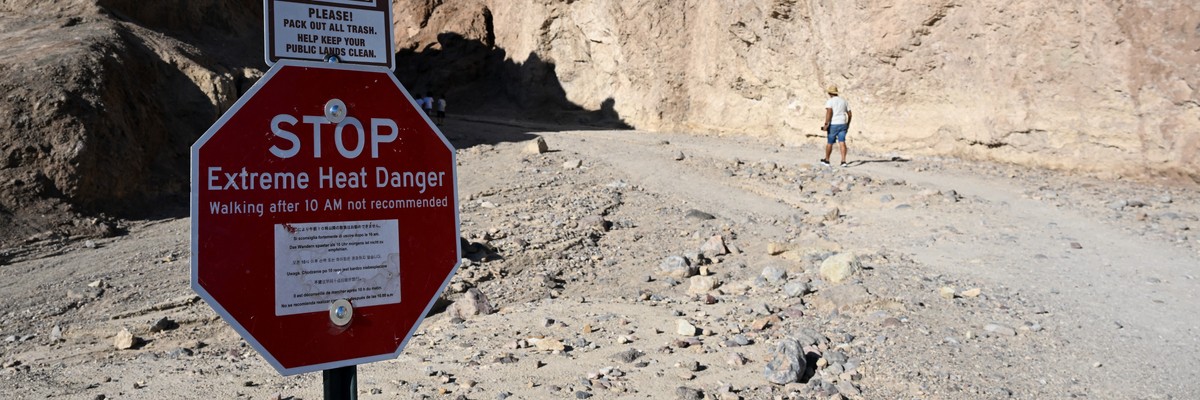
A sign says, “Stop: Extreme Heat Danger,” at the Golden Canyon Trailhead in Death Valley, California on July 9, 2023. (Photo: Tayfun Coskun/Anadolu Agency via Getty Images)
“It is likely that continued increases in average temperatures, the number of ‘hot days,’ and the frequency and intensity of heatwaves could be playing a role,” said one researcher.
As 55 million people in the U.S. Midwest faced heat alerts on Monday, research published in the peer-reviewed Journal of the American Medical Association showed that heat-related deaths in the country rose 117% between 1999 and 2023.
“The current trajectory that we’re on, in terms of warming and the change in the climate, is starting to actually show up in increased deaths,” lead author Jeffrey Howard, an associate professor of public health at the University of Texas at San Antonio, told USA Today. “That’s something that we hadn’t had measured before.”
Using a U.S. Centers for Disease Control and Prevention platform, Howard and co-authors from Pennsylvania State University and the Uniformed Services University of the Health Sciences analyzed all deaths from those 25 years coded for “hyperthermia of newborn,” “effects of heat and light,” or “exposure to excessive natural heat” as either a contributing or underlying cause of death.
They found 21,518 deaths for the full period, with 1,069 in 1999. The lowest annual figure was in 2004 (311) and the highest was in 2023 (2,325). Last year was the hottest on record globally and scientists are already warning that this year is expected to continue that trend.
“As temperatures continue to rise because of climate change, the recent increasing trend is likely to continue.”
Last year broke the record that was set in 2016—a year that’s also significant in the new study: “The number of heat-related deaths… showed year-to-year variability, with spikes in 2006 and 2011, before showing steady increases after 2016.”
Howard told CBS News that “it is likely that continued increases in average temperatures, the number of ‘hot days,’ and the frequency and intensity of heatwaves could be playing a role” in the rise since 2016.
“There is also a social and behavioral component as well,” he added, “including differences in access to air conditioning, outdoor work, the number of unhoused individuals, and things like that.”
The researcher noted that Arizona, California, Nevada, and Texas had the highest heat-related deaths—which he said is “not terribly surprising because we know that these are some of the hottest regions in the country, but it does reinforce that the risk varies regionally.”
The paper warns that “as temperatures continue to rise because of climate change, the recent increasing trend is likely to continue. Local authorities in high-risk areas should consider investing in the expansion of access to hydration centers and public cooling centers or other buildings with air conditioning.”
The authors also acknowledged limitations of their research—including “the potential for misclassification of causes of death, leading to possible underestimation of heat-related mortality rates; potential bias from increasing awareness over time; and lack of data for vulnerable subgroups”—meaning the true death toll could be higher.
A legal memo published in June by the watchdog Public Citizen detailed how local or state prosecutors could bring criminal charges against oil and gas companies for deaths from extreme heat made more likely by the fossil fuel-driven climate emergency.
“These victims deserve justice no less than the victims of street-level homicides,” said Aaron Regunberg, senior policy counsel for the group. “And this memo shows that prosecutors have a path to secure that justice, if they choose to pursue it.”
New research from the Badvertising campaign highlights an alarming trend.
As an insurgent sport among the sweat and strain of more traditional exertions, esports — short for electronic sports and synonymous with gaming — had a chance to chart a new course. Free from the sponsorship links with polluting industries that tarnish many established sports, and with an overwhelmingly young and growing player and fanbase, esports could have created a blueprint for sport in the 21st century and the critical climate issues it faces.
Unfortunately, esports have fallen into the same trap as football, cricket, and many other popular but easily exploited sports: It has become a playground for some of the world’s biggest polluters to promote themselves and mislead fans. Competitive gaming has made the leap from dimly lit bedrooms to the world stage, but, in the process, has slipped on an oil slick.
New research from the Badvertising campaign highlights the alarming trend of esportswashing. Taking a cue from the old tobacco industry playbook, major polluters are trying to co-opt a new generation and normalise climate polluting products and lifestyles. Since just 2017, at least 33 polluting sponsorship deals have been struck between the global esports industry and high-carbon polluters. Of these, 27 have been deals with car manufacturers, five with major fossil fuel companies, and two with the armed forces of the United States — the planet’s thirstiest consumer of oil.
Petrostates too, such as Saudi Arabia and Qatar, have sensed the opportunity and spent hugely into the esports sector, sponsoring teams of young gamers and even hosting tournaments in energy-hungry, air-conditioned arenas. In fact, the inaugural Esports World Cup is culminating in Riyadh, Saudi Arabia, where over 1,500 professional gamers have competed across 21 games, with over a million fans following online.
Despite its relative novelty, esports presents a huge opportunity for polluting companies feeling the heat on climate. It is a booming industry. There are already an estimated 500 million esports fans around the world. While this is just a fraction of the three billion active gamers, there is serious room for expansion — and polluters can see the opportunity to groom the next generation.
Shrewd Move
Alongside the massive growth of the industry is the esports loyal fanbase. It’s international, overwhelmingly young, and male. In the UK, over 50 percent of esports fans are aged between 18 and 34, and overwhelmingly male. Globally, in 2021, more than six in every 10 internet users watching esports were aged between 16 and 35 years old. To put this youthfulness in perspective, only one-in-four ‘die hard’ football fans globally are between 25 and 34 years old.
Built around this fanbase is a vibrant digital culture and community, buoyed by the proliferation of streaming platforms and threaded together through memes which are indecipherable to outsiders. Like with all great sports, it is the community that brings esports to life and makes it such a spectacle. Tapping into this community, and leveraging its global digital networks, is a shrewd move for companies clinging to a dwindling social license of public acceptance.
High-carbon industries targeting younger audiences is not new and comes in many forms, but esports presents an opportunity to communicate with hundreds of millions of young and loyal fans. It is an added irony that these young audiences will be the worst hit by climate breakdown — a crisis that the latest sponsor of their beloved esports is disproportionately responsible for.
Once again, regulators are asleep at the controls. The rise of esportswashing and its potential impact on younger minds requires bolder and better advertising regulation and coordination with the game franchises. But action to date has been limited.
The immersive nature of esports presents an added challenge for regulators and the limited scope they currently exercise to protect young people from exploitative influences. In-game advertising blurs the divide between what is advertising and what is the game. Take Shell’s foray into Fortnite in 2023, where players were encouraged to fill up their digital cars at a digital petrol station to promote its V-Power Nitro+ fuel. Here, the advertisement was part of the game. It is only a matter of time before other polluting companies take Shell’s lead.
With esports fans and athletes facing a precarious future in a warmer world, those responsible for this burgeoning sport and the community built around it must take the threat posed by polluting sponsorship seriously. To protect athletes, gamers and fans around the world, esports teams and governing bodies need to align their commercial partnerships with their values, duty of care to players and audiences, and policies for a liveable future and thriving environment. And when top gamers and streamers speak out about their fears of climate breakdown, they should be supported and nurtured.
Esports are on the cusp of repeating the mistake of other traditional sports in letting themselves be used as a billboard to promote polluters, but it is not too late to clean up. Those polluters that are gaming the climate should not be given free reign to game young minds too; or it could soon be game over for everyone.
Brian Niccol, seen here in a 2015 photo, is Starbucks’ new CEO. (Photo: Robin Marchant/Getty Images)
“These jets are a stark symbol of social and climate injustice, where a privileged few indulge in the most environmentally damaging form of travel for mere convenience,” said one Greenpeace campaigner.
Green groups’ anger percolated this week after it was revealed that Brian Niccol, Starbucks’ new CEO, will “supercommute” approximately 1,000 miles between one of his homes in California and the coffee giant’s Seattle headquarters three times a week.
A Starbucks spokesperson said earlier this week that “while Brian will have an office in Southern California, his primary office and a majority of his time will be spent in our Seattle Support Center.”
“When he is not traveling for work, he will be in our Seattle office at least three days a week, in alignment with our hybrid work policies,” the spokesperson added. “He will also have a home in Seattle.”
“A private jet flight causes about 10 times more CO2 emissions than a regular flight per flight per person.”
Greenpeace—which for years has been running a campaign to ban private jets and regularly stages protests against them at airports around the world—led condemnation of Niccol’s harmful commute.
“As the world faces unprecedented heatwaves, droughts, floods, and other dire consequences of an accelerating climate crisis, it is unjustifiable for companies to offer company aircraft as employee perks,” Greenpeace campaigner Clara Thompson told The Washington Post on Thursday.
“These jets are a stark symbol of social and climate injustice, where a privileged few indulge in the most environmentally damaging form of travel for mere convenience,” Thompson added.
While most of us are being encouraged to choose a bike or public transport for our commute, these guys are taking a private jet to get to work.
A private jet flight causes about 10 times more CO2 emissions than a regular flight per flight per person, and 50 times more than the average train ride. Eighty percent of the world’s population have never flown, yet they’re the ones most impacted by the climate crisis. In just one hour, a single private jet can emit two tons of CO2. The global average energy-related carbon footprint is around 4.7 tons of CO2 per person per year.
While private jets account for a tiny fraction of global greenhouse emissions, the world’s richest 1% produce more than double the emissions of the poorest 50%, and a single billionaire produces a million times more emissions than an average person, according to a 2022 Oxfam study.
Some critics accused Starbucks—which in 2020 set a goal of reducing carbon emissions by 50% this decade—of hypocrisy, with one social media user contrasting Niccol’s private jet commute with the company’s introduction of widely despised and environmentally dubious paper straws. Another eagle-eyed observer spotted a book titled How to Avoid a Climate Disaster on display in Niccol’s office in a Wall Street Journal article photo.
Shameful for @Starbucks & CEO to fly private jet 1000miles 3x each week. Our forest are on fire; oceans are dying and glaciers are melting. Performative sustainability of banning plastic straws isn't enough
Starbucks CEO faces backlash over 1000mile commute by private jet