People try to protect themselves from the sun and cool off in Najaf, Iraq on August 20, 2024. (Photo: Karar Essa/Anadolu via Getty Images)
“If you keep doing the same thing, you cannot expect to get any different result,” said the director of the Copernicus Climate Change Service. “Unless we limit greenhouse gases, we will only see an exacerbation of these temperatures.”
Scientists with the European Union’s climate service said Friday that Earth experienced its hottest summer on record for the second consecutive year in 2024 as unprecedented and deadly heatwaves scorched large swaths of the planet, intensifying the urgency of large-scale policy changes to phase out the fossil fuels that are driving temperatures to alarming new heights.
The Copernicus Climate Change Service (C3S) said the three-month period between June and August saw global-average temperatures that were 0.69°C, or 33.24°F, higher than the average summer temperatures seen from 1991 to 2020.
“During the past three months of 2024, the globe has experienced the hottest June and August, the hottest day on record, and the hottest boreal summer on record,” said C3S deputy director Samantha Burgess. “This string of record temperatures is increasing the likelihood of 2024 being the hottest year on record.”
“The temperature-related extreme events witnessed this summer will only become more intense, with more devastating consequences for people and the planet, unless we take urgent action to reduce greenhouse gas emissions,” Burgess added.
Summer 2024 just set a new benchmark – the hottest on record. With global temperatures now regularly exceeding the 1.5°C threshold, we’re in dangerous territory. Time for urgent action is right now – not tomorrow, not next year.https://t.co/sF1WxgNyrMpic.twitter.com/w2lhhEEST1
Temperatures in Europe were 1.54°C, or 34.77°F, above the 1991-2020 average, a record temperature surge that had deadly consequences in Greece, Italy, and other nations.
But The Washington Post‘s Sarah Kaplan noted that the consequences of the record-shattering summer heat “were felt by people on every continent, from world-class athletes competing in the Paris Olympics to refugees fleeing from wars.”
She continued:
Wildfires fueled by heat and drought raged through the Brazilian Pantanal, a vital wetland known to store vast amounts of carbon. A turbocharged monsoon triggered landslides that killed hundreds of people in India’s Kerala state. The Atlantic Ocean saw its earliest Category 5 hurricane on record, while deadly floods have wreaked havoc from Italy to Pakistan to Nigeria to China.”
It was a summer of unrelenting humidity and heat too extreme for the human body to withstand. In June, at least 1,300 pilgrims visiting the Muslim holy city of Mecca died amid temperatures of 50 degrees Celsius (122 degrees Fahrenheit). Another 125 people were reported dead in Mexico during a July streak of exceedingly hot nights that researchers say was made 200 times as likely because of climate change. And in the Arctic archipelago of Svalbard, one of the world’s northernmost inhabited areas, August temperatures soared more than 2.5 degrees Celsius (4.5 degrees Fahrenheit) above the previous record.
Carlo Buontempo, the director of C3S, told the Post that “if you keep doing the same thing, you cannot expect to get any different result.”
“Unless we limit greenhouse gases,” Buontempo added, “we will only see an exacerbation of these temperatures.”
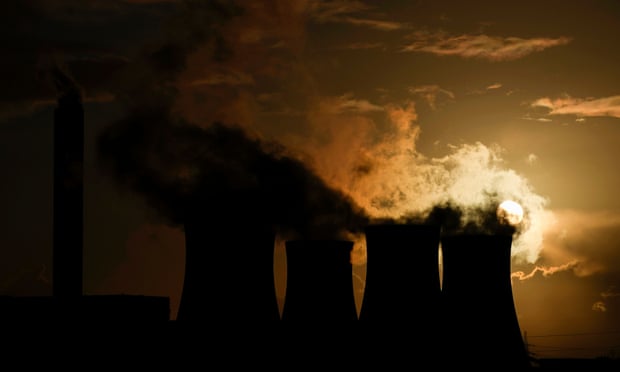
The Drax power station in Selby, England. The site was one of the UK’s worst methane hotposts. Photograph: Christopher Furlong/Getty Images
Greenpeace urges Labour to ‘fulfil international obligations’ as critics question accuracy of official data
…
The Guardian and Watershed Investigations analysed official methane emissions data from the National Atmospheric Emissions Inventory (NAEI) along with information on the Watershed pollution map to identify Britain’s methane hotspots.
Top of the list was a site near Glynneath in Wales, home to the Aberpergwm colliery, the UK’s last coalmine. Next was Selby, the location of industry including Drax power station, as well as a number of old landfills and farmland. The top 10 also includes power stations, oilwells and Slough trading estate, home to a wide range of industry.
…
Greenpeace’s chief scientist and policy director, Dr Doug Parr, said: “These alarming findings highlight that, despite the UK joining a global pledge to reduce methane emissions by nearly a third by 2030, a proper British action plan has yet to materialise.
“Given its potency, and the fact that it is in fact a short-lived greenhouse gas, reducing methane emissions could help rapidly slow the warming that is creating the climate crisis.
“The new government must fulfil the UK’s international promises, and has the opportunity to come up with an exemplary, internationally leading plan for tackling methane from both the energy and farming sectors.”
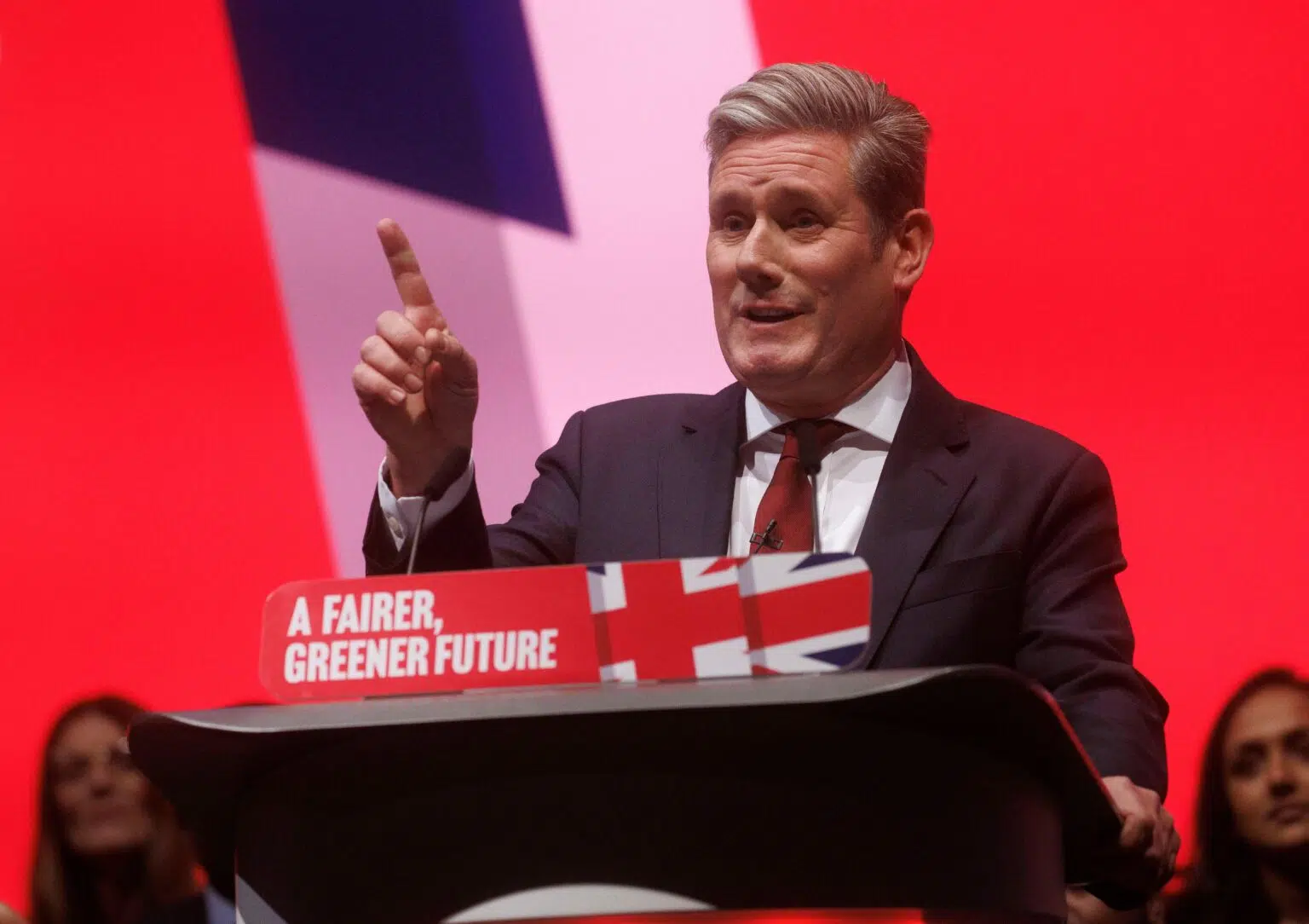
Labour leader, Keir Starmer, addresses delegates at the 2022 Labour Party conference in Liverpool. Credit: Karl Black/Alamy
Campaigners have accused the party of allowing “climate wreckers” to access its flagship annual conference.
This year’s Labour Party conference will feature events sponsored by an oil and gas trade group, the owner of the UK’s largest emitting power plant, and a gas distribution company, DeSmog can reveal.
The conference, which is being held from 22 to 25 September in Liverpool, is one of the largest political gatherings in Europe and will feature set piece speeches from Labour’s newly-elected Cabinet ministers.
Although the full conference agenda is yet to be released, the New Statesman magazine has published a list of firms that will be sponsoring its panel events. These include the controversial energy company Drax, the fossil fuel lobby group Offshore Energies UK, and the gas company Cadent.
Labour, which has been in power for less than three months, has already unveiled an ambitious raft of policies to tackle climate change, including plans to decarbonise electricity by 2030, facilitated by a state-owned company GB Energy.
Robert Noyes, Fossil Free Parliament campaigner, told DeSmog that the New Statesman was “selling its readers short” by accepting sponsorship from polluting companies and their lobbyists.
He added that “Labour must not allow its energy programme to be further captured by corporate interests. It pollutes our politics and dilutes their agenda… Climate wrecking sponsors have got to go.”
Labour’s annual conference hosts dozens of fringe events organised by external groups, which tend to feature a panel of speakers – including a representative from the corporate sponsor. All the events hosted within the official conference zone are reviewed and approved by the party.
“No other partnered event will get you as close to the biggest names and most important conversations in Labour politics,” the New Statesman says about its 2024 agenda.
The party faced protests at its conference in 2022, when the New Statesman hosted a debate on Britain’s net zero climate goals sponsored by Drax. The firm’s plant in Selby, Yorkshire, which burns wood pellets to generate electricity, is the single biggest source of carbon dioxide emissions in the country according to the climate think tank Ember. Drax disputes this claim.
Drax has received state subsidies worth more than £7 billion since 2012, and the government is currently considering whether to extend this financial assistance to 2027 so the firm can build facilities to capture and store carbon emissions.
The Labour Party accepted a £12,000 donation from Drax in September 2022, while the company has frequently sponsored events at both Conservative and Labour conferences.
The New Statesman is one of a number of major media companies to have come under fire for boosting the profiles of polluting companies through commercial partnerships. An investigation by DeSmog and Drilled previously revealed that many of the world’s most trusted English-language news outlets regularly promote the fossil fuel industry’s narratives on climate-related topics.
In May, former Green Party MP Caroline Lucas pulled out of the New Statesman’s energy and climate change conference over its sponsorship by the oil company Equinor. Days later, Labour MP Alex Sobel, who chairs the All-Party Parliamentary Group on Net Zero, also withdrew from a Politico energy and climate summit due to its Equinor sponsorship.
Drax, Cadent, OEUK, the New Statesman, and the Labour Party were approached for comment.
Drax
A number of investigations have shown that Drax harvests wood from some of the world’s most precious forests.
In August, the firm agreed to pay £25 million following an investigation from the energy watchdog Ofgem found that Drax had failed to supply enough evidence about the type of wood that it imports.
Drax says that its electricity is “carbon neutral” given that trees can be planted to reabsorb emissions – a claim that has been disputed by climate experts. More than 500 scientists signed a letter in 2021 stating that it would take decades for the carbon emitted by burning wood to be balanced with the planting of new trees.
The New Statesman published a sponsored article from Drax in May, written by the executive in charge of the firm’s bioenergy with carbon capture and storage (BECCS) project, claiming that it will “make a sizable contribution to the UK’s climate change targets”.
Almost all of the net zero emissions pathways modelled by the UN-backed Intergovernmental Panel on Climate Change (IPCC) and the International Energy Agency envision huge deployments of CCS technology by the middle of the century.
However, as DeSmog has shown, most large-scale CCS projects underperform or fail to meet their capture targets. As the November 2023 Production Gap Report, produced by climate experts, pointed out: “the track record for CCS has been very poor to date, with around 80 percent of pilot projects over the last 30 years ending in failure.”
Sally Clark from the campaign group Biofuelwatch said it’s “deeply concerning” that Drax is set to sponsor a fringe event at the Labour conference.
“Events like these give Drax the opportunity to influence decision-makers and greenwash its planet-wrecking tree burning at a time when the government is considering whether to grant huge new subsidies to continue funding Drax’s harm to forests, wildlife, communities and the climate,” she added.
“If we are to prevent the worst impacts of climate breakdown, we need to kick big polluters like Drax out of our politics and instead invest in real climate solutions, such as wind and solar power, and protect the world’s best carbon-storing technology – trees.”
OEUK
Offshore Energies UK (OEUK) is set to join Drax as a sponsor of the New Statesman’s 2024 Labour conference agenda. OEUK is the “leading representative body” for the country’s oil and gas industry, while its members include some of the world’s largest fossil fuel companies, such as Shell, ExxonMobil, and Equinor.
The group lobbies the government, both in public and private, to enact policies that benefit oil and gas companies.
DeSmog previously revealed that OEUK and its members met with ministers over 200 times in the year after the 2022 Russian invasion of Ukraine as part of a lobbying blitz to undermine the proposed windfall tax on energy company profits. The tax was launched in 2022 but contained loopholes including tax relief on investments in UK fossil fuel extraction.
OEUK has vocally opposed Labour’s policy of extending the windfall tax from 75 percent to 78 percent until 2029, claiming that it could cost 42,000 jobs – a figure that has been disputed by experts.
The group’s CEO David Whitehouse even went so far as to accuse Labour of being unable to “do the maths” over its windfall tax plans. Labour has also said that it won’t be granting any new North Sea oil and gas licences – a policy that has likewise been criticised by OEUK.
This isn’t the first time that the New Statesman has accepted sponsorship from OEUK. The lobby group sponsored a Labour conference event in 2023 hosted by the magazine and attended by Sarah Jones, Labour’s then shadow minister for decarbonisation and industry (who now holds this role in government).
“Cash-strapped media are increasingly easy prey for climate wreckers eager to launder their reputations,” said Robert Noyes. “When outlets like the New Statesman take funding from such lobby groups like OEUK, they sell their readers to the interests of that lobby.”
Cadent
The UK’s biggest gas distribution network, Cadent, which provides fuel to 11 million homes and businesses, is also listed as a sponsor for the upcoming conference.
Gas boilers are used to heat around 85 percent of UK homes, which together produce 14 percent of the UK’s greenhouse gas emissions.
Cadent sponsored a New Statesman event at last year’s Labour conference, attended by the firm’s chief strategy and regulation officer, Tony Ballance.
In response to a question from DeSmog, Ballance advocated for the role of hydrogen in home heating, and claimed there was “limited” scientific evidence opposed to the deployment of the fuel.
The gas industry has championed hydrogen as a replacement for gas in heating, arguing that it can easily replace existing methane gas and can use existing pipelines to transport and store the fuel.
However, heat pumps are up to five times more efficient than gas boilers according to the International Energy Agency, and can be run on electricity generated via renewable energy sources. A peer-reviewed assessment of over 50 independent studies in 2024 concluded that hydrogen use in domestic heating is inefficient, costly and resource-intensive compared to other low-carbon options such as heat pumps.
It is possible to produce ‘green’ hydrogen using solar and wind, which is widely seen as an important way to decarbonise industrial processes where it is hard to avoid greenhouse gas emissions. However, the overwhelming majority of hydrogen – around 95 percent worldwide – is currently produced using fossil fuels.
Even so, the gas industry has cast doubt on heat pumps, while talking up the merits of hydrogen.
An investigation by DeSmog in July 2023 found that the Energy and Utilities Alliance (EUA), which represents the vast majority of the UK’s gas boiler manufacturers and distributors – including Cadent – had paid for an extensive negative PR campaign to “spark outrage” against heat pumps in the British press.
Cadent was one of two gas networks to win a government contract to trial hydrogen for home heating ahead of the government’s decision on the policy, expected in 2026. But plans for the village of Whitby in Cheshire were scrapped in July after a sustained local campaign, which raised concerns over the safety of hydrogen in homes.
Hintze, who has donated more than £4 million to the Conservatives since 2002, also donated £10,000 in August to leadership hopeful Priti Patel, who was voted out of the contest by Tory MPs this week. Tugendhat also received £3,000 from Hintze in December.
The GWPF actively campaigns against the government’s climate policies and rejects established science on rising temperatures, calling carbon dioxide a “benefit to the planet”.
Lord Hintze has said he believes “there is climate change” caused “in part due to human activity over the past century”, but “all sides must be heard” on climate change “to reach the right conclusion for society as a whole”.
Authors working for the world’s foremost climate science body, the UN’s Intergovernmental Panel on Climate Change (IPCC), have said that “it is a statement of fact, we cannot be any more certain; it is unequivocal and indisputable that humans are warming the planet”.
The IPCC has stated that we are in the midst of “widespread and rapid [changes] … unprecedented over many centuries, to many thousands of years”.
Between the 2019 general election and the start of the 2024 campaign, the Conservatives received £8.4 million from fossil fuel interests, highly polluting industries, and climate science deniers.
Cleverly, Tugendhat, Patel are not the only Tory leadership hopefuls to have received donations from figures associated with the GWPF. DeSmog revealed in August that Kemi Badenoch had received £10,000 towards her campaign from Neil Record, a millionaire Tory donor and chair of Net Zero Watch (NZW), the GWPF’s campaign arm.
Record is also a “life vice president” of the Institute of Economic Affairs (IEA) think tank, which he chaired until July 2023. The IEA, which supports new fossil fuel production, has received funding from the oil giant BP every year from 1967 to at least 2018.
Record has given money to both the IEA and the GWPF, which are part of the Tufton Street network of think tanks and lobbying groups based in Westminster campaigning for less government regulation, including on climate change.
The latest register of interests also shows that Record donated £2,000 to Tory MP Jesse Norman, who is publicly supporting Badenoch’s campaign.
As DeSmog has reported, Tugendhat also received donations and gifts worth £7,000 during the general election campaign from Tory donor and former party treasurer Lord Michael Spencer, who is a fossil fuel investor.
Spencer is the largest shareholder in Deltic Energy, which this year received licences to explore the North Sea for oil and gas. He also holds shares in Pantheon Resources, a UK company exploring for oil in Alaska.
Spencer, who has donated £6 million to the Conservatives since 2005, previously told DeSmog that oil and gas investments are less than two percent of his portfolio.
Views on Net Zero
Tugendhat, Badenoch, and Patel have vocally criticised the UK’s climate policies.
In a July interview on GB News, Tugendhat said the UK’s target of achieving net zero emissions by 2050 was “not realistic”. Badenoch said in 2022 that it was “arbitrary” and last year suggested she would back delaying it, which would contravene the UK’s legally-binding climate commitments. Patel shares this position, and told GB News last year that net zero targets should be “paused” because the “public are not ready”.
Polling by More in Common and E3G during the general election period found that a majority of people in every UK constituency are worried about climate change. Some 61 percent of 2024 Conservative voters said they are worried about climate change, matched by 76 percent of Labour voters, and 65 percent of the country overall.
In his GB News interview, Tugendhat also defended the previous government’s support for new oil and gas extraction, saying: “Drilling our own oil in the North Sea is more carbon efficient than bringing it in from anywhere else.”
The claim that UK oil and gas has a lower carbon footprint than imports is “misleading” and can only be achieved “by comparing UK gas production to the very dirtiest gas imports”, according to the research and campaign group Uplift.
Cleverly has supported the 2050 target but has said he would favour a “competition-based approach” rather than using the power and funding of the state. However, the private sector has often acted to delay climate action. According to the non-profits groups NewClimate Institute and Carbon Market Watch, which surveyed 51 major companies, their median goal is to cut emissions by 30 percent by 2030 – well below the 43 percent reduction identified by the IPCC.
Cleverly’s leadership campaign told DeSmog that “We thank all of our donors for their support for James Cleverly as the best candidate to unite the Conservative Party and win the next general election.”
Tugendhat, Patel, and Hintze have been approached for comment.
Introducing a wealth tax would indicate this is a progressive government. But that seems unlikely
Taking as his theme the need to “fix the foundations” after “14 years of rot” under Tory rule, new Labour prime minister Keir Starmer this week delivered a message that should bring discomfort to everyone in the months and perhaps years to come.
Those “14 years of rot” are of no surprise to voters; indeed, they helped ensure a landslide Labour victory in the election in July. But Starmer’s plans to resolve them appear likely to be far harsher than many voters expected.
The chancellor of the Exchequer, Rachel Reeve, has made numerous hints that hard times are ahead. Her October budget will be uncompromising in its commitment to raising revenue to help fill a fiscal hole reckoned to be around £20bn – but much of this money seems likely to be taken from the poorer sections of society, not the rich.
Labour will retain unpopular policies introduced by the Conservatives – the ‘bedroom tax’ and limiting child benefit allowances to the first two children, for example – while introducing its own cost-cutting measures, such as reducing the winter fuel allowances for many pensioners.
These actions contribute to a growing sense that the Starmer government will prove to be decidedly right-of-centre in a country beset with deep divisions of wealth and poverty. Some areas may see an improvement, such as labour rights, but even there, it is a matter of the devil in the detail.
One area where the government does apparently have cash to spash, though, is military spending, which is set to be substantially increased despite the manifest failures in Afghanistan, Iraq and Libya, and the deeply unpopular Israeli wars on Gaza and the West Bank.
Labour’s attitude to Israel is certainly unlikely to change, with the Department for Business and Trade reporting on efforts to strike a new trade deal with the country, saying: “Our teams will be entering negotiating rooms as soon as possible, laser-focused on creating new opportunities for UK firms.” An official from the British Embassy in Israel also recently wrote of the “tremendous opportunity for collaboration between Israeli and British companies”.
A full-scale Strategic Defence Review is also underway, and there are few if any indications that it will start by addressing the grievous failures of the past two decades. If previous experience is anything to go by, it will likely also omit the main challenge to international security: climate breakdown. Without that, the review will not be worth the paper it is written on. Net zero secretary Ed Miliband may be doing his best to maintain the idea of a green transition but the issue would be sidelined by any major increase in government spending.
On the domestic front, less than two months into the new Labour government the contrast between Food Bank Britain and the ludicrous levels of runaway wealth is apparent. It was coincidentally yet powerfully illustrated just four days before Starmer’s pre-budget speech, by a full-page property advertisement from Sotheby’s in the Financial Times.
Of the seven properties on sale, one was a relatively modest three-bedroom apartment in Chelsea, on sale for a mere £5m, while the others included a six-bedroom house in Belgravia offered at £18m and a nine-bedroom/five-bathroom place near Regent’s Park for £20m. Another Regent’s Park number was on sale for £25m million, which at least had 7 bathrooms for the 6 bedrooms. Trumping all was a triplex number in Knightsbridge – £50m with exclusive access to Hans Place Gardens.
While we have to wait for the October budget announcements, we can be reasonably sure that there will be some attempts to raise modest amounts from the wealthier sectors of society, possibly involving changes in capital gains and inheritance taxes. But the best indicator of a changed government would be one willing to bring in wealth taxes, especially those directed at the super-rich.
Onee of Britain’s largest trade unions, Unite, recently proposed a 1% per annum tax on those with net assets of over £4m, which would include property, shares and bank holdings but not mortgaged property. That is estimated to yield £25bn a year but would be bitterly opposed, with the Daily Mail informing us that: “Millionaires are looking to flee the UK in their droves to escape Labour’s tax raids – with a record number of wealthy Britons tipped to leave the country this year.”
As things stand, the budget is expected to include substantial cuts in public spending that could be at least partly avoided by such a wealth tax, and it is worth noting that some European countries such as Switzerland and Spain have already introduced them. At least Britain’s wealthy won’t be fleeing “in their droves” to those countries.
If adopted in October, in even a modest form, a wealth tax would be a reasonable marker for a progressive government. If not, then an opportunity will be missed for placing Labour in a more progressive place in the political spectrum than currently seems at all likely.
Keir Starmer confirms that he is continuing Tory policies and that he’s proud to be a red Tory.Keir Starmer says pensioners can freeze to death and poor children can starve and be condemned to failure and misery all their lives.