‘The time is over for oily corporations to operate with impunity.’
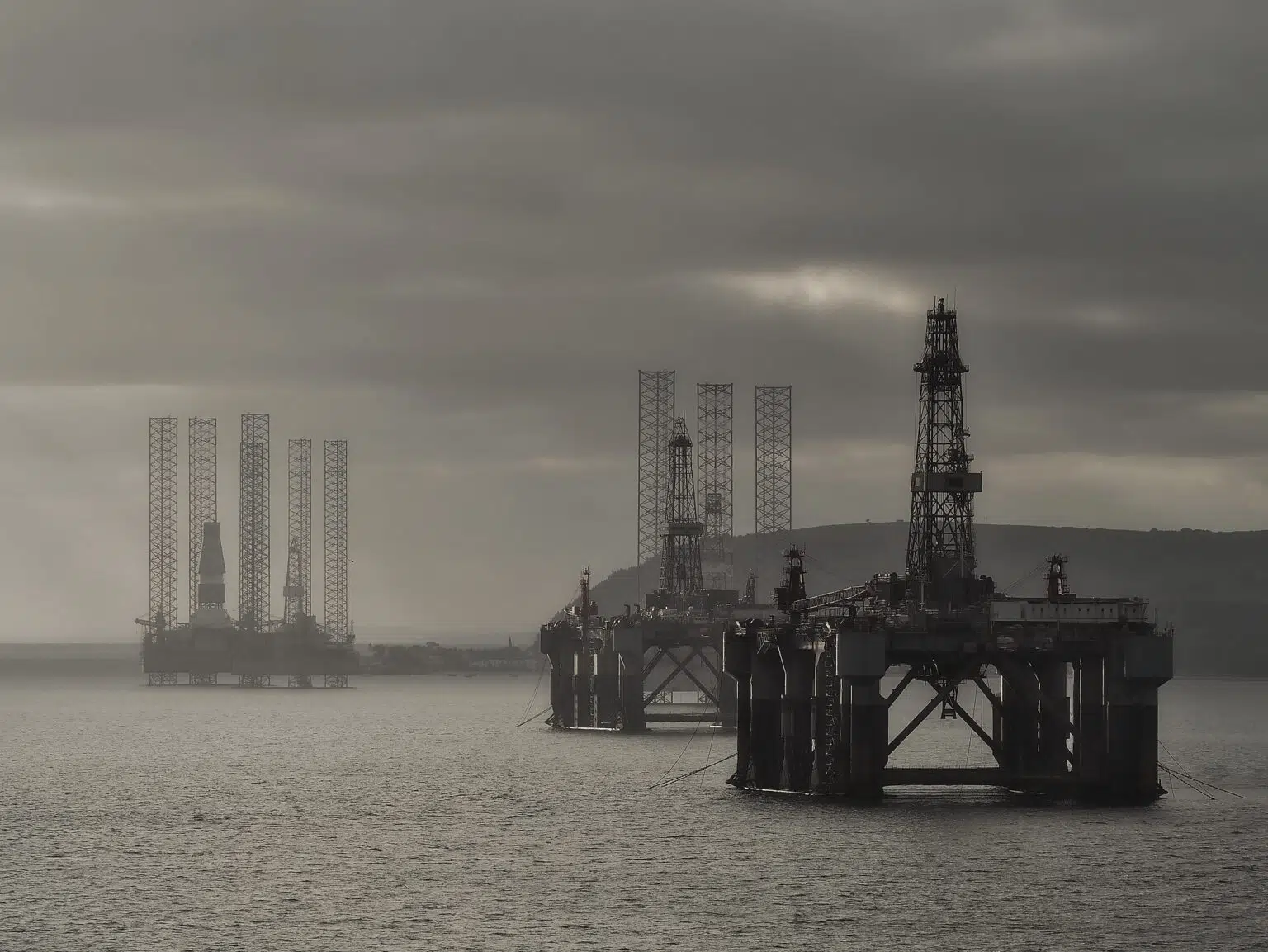
A group of 27 investors, owning around 5 percent of Shell’s shares, is demanding the multinational improves its environmental targets. The resolution is the biggest such drive to date and was coordinated by the activist group Follow This.
Similar motions have been organised by the group at Shell meetings since 2016. Last year, a resolution put forward by Follow This won the backing of 20 percent of shareholders in what was an eventful AGM where protesters tried to storm the stage.
However, support for the upcoming resolution has drawn the largest number of investment managers, said Mark van Baal, founder of Follow This. It includes Europe’s largest asset manager, Amundi.
The group calls on Shell to align its ‘medium term’ greenhouse gas emission target with the Paris Agreement, to limit global warming. The resolution will be brought to a vote at Shell’s annual general meeting later this year.
The bid to shore up pressure on Shell’s climate commitments comes as its CEO, Wael Sawan, aims to boost the company’s profits, partly by increasing fossil fuel production and slowing down investments in renewables. In October 2023, Shell announced it was to cut at least 15 percent of its low-carbon solutions division workforce and scale back on its hydrogen business.
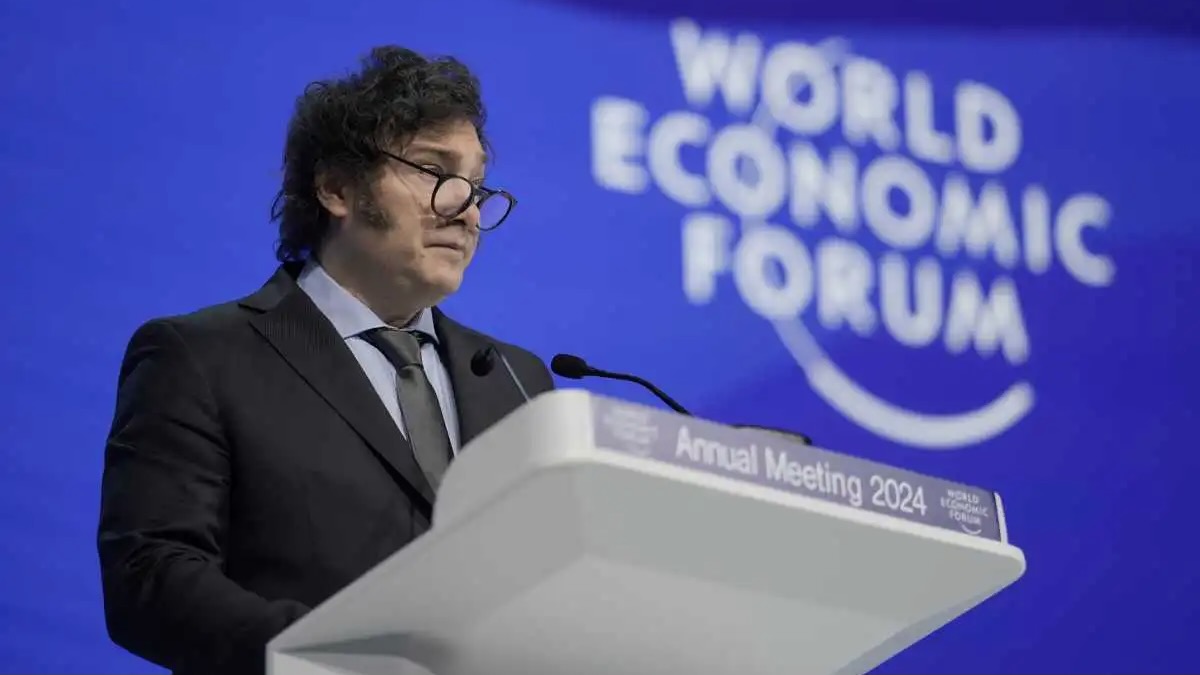
On the morning of January 17, Argentine President Javier Milei gave his first speech at the World Economic Forum in Davos, Switzerland. The far-right libertarian was sworn in on December 10, 2023 and since then has launched all-out attacks on the working class through presidential decrees and omnibus laws, all of which have been vehemently opposed on the streets.
Milei began his speech at Davos by telling those present: “I am here to tell you that the West is in danger. All over the world, leaders who must defend the values of capitalism assume a vision that leads to socialism and poverty. “The main leaders of the world have abandoned freedom for so-called collectivism, which is the cause of the problems.”
The strongest argument of his speech was going to be that capitalism is the only tool to end hunger and poverty in the world, although he added: “the leftist thinking attacks capitalism for being, according to them, unjust. They say it is bad because it is individualistic and they fight for social justice. This concept has become fashionable around the world, but social justice is an unfair, violent idea, because taxes are coercively collected. Nobody pays taxes voluntarily. The State is financed through coercion. If a company generates a good product it will do well, if the State punishes the capitalist for being successful it destroys their incentives, and the cake will be smaller. Collectivism ties the entrepreneur’s hands.”
He also spoke of enemies, who for him are those who use the State as a tool: “everyone. There are no substantive differences. Socialists, conservatives, communists, fascists, Nazis, social democrats, centrists. They are all the same.”
In this same sense, Milei attacked two of the most important agendas at the Davos Forum, gender inequality and climate change: “The first of these new battles was the ridiculous and unnatural fight between men and women. Libertarianism already establishes equality between the sexes. The founding stone of our creed says that all men are created equal, that we all have the same inalienable rights granted by the creator, among which are life, liberty and property,” he maintained.
He went further and said: “the only thing that became of this agenda of radical feminism is greater intervention by the state to hinder the economic process, giving work to bureaucrats who do not contribute anything to society, be it in the format of women’s ministries or international organizations dedicated to promoting this agenda.”
In the same sense, he denied human responsibility for climate change: “another one of the conflicts that socialists raise is that of man against nature. They maintain that human beings damage the planet and that it must be protected at all costs, even going so far as to advocate for population control mechanisms or the bloody agenda of abortion.”
Finally, the only praise in Javier Milei’s speech was for the businessmen, whom he treated as heroes and also told them: “do not let yourself be intimidated by the political caste that wants to remain in power. You are heroes, you are benefactors, let no one tell you that your ambition is immoral, do not give in to the advance of the State, The state is the problem itself, you are the protagonists of history. Long live fucking freedom!
The president returned to Argentina on Wednesday on a commercial flight, after a couple of meetings and a bold speech that was not very widely accepted in Davos. He will face a massive national strike on January 24, called for by all the major trade unions and confederations in Argentina in opposition to his pro-capitalist, pro-businessman policies.
This article was first published in Spanish on ARG Medios.
In the wake of an Iowa primary election chilled in a record blast of cold weather – which scientists say may, counterintuitively, have been worsened by global heating – Republican presidential candidates are embracing the fossil fuel industry tighter than ever, with little to say about the growing toll the climate crisis is taking upon Americans.
The remaining contenders for the US presidential nomination – frontrunner Donald Trump, along with Nikki Haley and Ron DeSantis – all used the Iowa caucus to promise surging levels of oil and gas drilling if elected, along with the wholesale abolition of Joe Biden’s climate change policies.
Trump, who comfortably won the Iowa poll, said “we are going to drill, baby, drill” once elected, in a Fox News town hall on the eve of the primary. “We have more liquid gold under our feet; energy, oil and gas than any other country in the world,” the multiply indicted former president said. “We have a lot of potential income.”
Trump also called clean energy a “new scam business” and went on a lengthy digression on how energy is important in the making of donuts and hamburgers.
…
Last year was, globally, the hottest ever recorded, and scientists have warned of mounting calamities as the world barrels through agreed temperature limits. Last year, the US suffered a record number of disasters costing at least $1bn in damages, with the climate crisis spurring fiercer wildfires, storms and extreme heat.
Such concerns were largely unvoiced in frigid Iowa, however, apart from by young climate activists who disrupted rallies held by Trump, Haley and DeSantis. On Sunday, a 17-year-old activist from the Sunrise climate group interrupted a Trump speech to shout: “Mr Trump your campaign is funded by fossil fuel millionaires. Do you represent them, or ordinary people like me?”
Guardian Exclusive: Rise in share of UK oil and gas that is exported challenges PM’s claim that fossil fuel extraction brings energy security
The share of UK’s oil and gas that is exported has increased from 60% to 80% over the last two decades, according to findings that will intensify pressure over the government’s claims that “maxing out” the North Sea will increase the UK’s energy security.
On Monday, the government will attempt to pass the oil and gas bill, which they say will boost energy security by creating a rolling annual licensing regime for new fossil fuel contracts. But critics argue that the fossil fuels extracted will be sold on the global market, and the vast majority will be exported.
…
Now analysis of government data by Global Witness has shown that in the 20 years between 2004 and 2023 the UK awarded 1,680 licences to companies to extract oil and gas in the North Sea. The analysis found that the share of UK oil and gas that was exported between 2004 and 2022 rose from 60% to more than 80%. During the same period domestic oil production fell by 60%.
…
Jonathan Noronha-Gant, a senior campaigner at Global Witness, said the new law would only prolong the UK’s energy problems. “People want long-term solutions to bring down their bills and fight the emissions damaging the climate,” he said. “New oilfields in the North Sea will line the pockets of rich fossil fuel execs; they won’t help the millions of Brits struggling to pay their bills.”
Skidmore said that the reason he had resigned over the bill was because “there is no future energy security in fossil fuels that are extracted by foreign companies, will only be sold on international markets and will have no impact on UK energy security”.
United Nations Secretary-General António Guterres speaks at the U.N. headquarters on February 22, 2023. (Photo: Lev Radin/Pacific Press/LightRocket via Getty Images)
“Geopolitical divides are preventing us from coming together around global solutions for global challenges,” said United Nations Secretary-General António Guterres.
At the World Economic Forum in Davos, Switzerland on Wednesday, United Nations Secretary-General António Guterres warned that multilateralism that includes often overlooked governments in the Global South is the only solution to the rapidly developing crises posed by the climate emergency and artificial intelligence—both of which are worsening “the global crisis in trust.”
“In the face of the serious, even existential threats posed by runaway climate chaos,” said Guterres, “and the runaway development of artificial intelligence without guardrails, we seem powerless to act together.”
While “droughts, storms, fires, and floods are pummeling countries and communities,” particularly in nations that have contributed the least planet-heating fossil fuel pollution, Guterres told the political and business elite assembled in Davos, “countries remain hellbent on raising emissions.”
He reserved particular scorn for the United States fossil fuel industry, which—amid the Biden administration’s approval of pollution-causing infrastructure including the Willow oil project and the Mountain Valley Pipeline—deceives the public with false climate solutions, misinformation, and greenwashing campaigns “to kneecap progress and keep the oil and gas flowing indefinitely.”
As suffering intensifies in communities that are most vulnerable to drought, damage from extreme weather, and other climate catastrophes, Guterres said, fossil fuel giants and powerful governments are risking lives to only delay an “inevitable” shift to renewable energy.
“The phaseout of fossil fuels is essential,” said the secretary-general. “No amount of spin or scare tactics will change that. Let’s hope it doesn’t come too late.”
As trust between the Global South and wealthy governments is frayed by fossil fuel-producing countries’ refusal to leave oil, gas, and coal behind, Guterres warned that the separate threat of “unintended consequences” of artificial intelligence evolution also looms—for people in rich economies as well as developing countries.
“This technology has enormous potential for sustainable development,” said the U.N. chief, while noting that “some powerful tech companies are already pursuing profits with a clear disregard for human rights, personal privacy, and social impact.”
Guterres’ comments came days after the International Monetary Fund (IMF) released a new analysis of AI’s expected impact on the global economy and workers, with nearly 40% of the labor market expected to be “exposed” to AI.
AI will affect almost 40% of jobs around the world, replacing some and complementing others, according to the IMF’s new AI Preparedness Index, with a breakdown by country. Read @KGeorgieva’s blog for more. https://t.co/LMpupRBKr1pic.twitter.com/eHLYeiZYfx
In wealthy countries, about 60% of jobs are projected to be impacted by AI, and about half of those workers are likely to see at least some of their primary tasks being completed by AI tools like ChatGPT or similar technology, “which could lower labor demand, leading to lower wages, and reduced hiring,” according to the IMF. “In the most extreme cases, some of these jobs may disappear.”
The analysis released Sunday noted that the rapidly changing field could worsen inequality within countries, as some higher earners may be able to “harness AI” and leverage its use for increases in their productivity and pay while those who can’t fall behind.
“In most scenarios, AI will likely worsen overall inequality, a troubling trend that policymakers must proactively address to prevent the technology from further stoking social tensions,” said the IMF. “It is crucial for countries to establish comprehensive social safety nets and offer retraining programs for vulnerable workers.”
Guterres called on policymakers to work closely with the private sector—currently “in the lead on AI expertise and resources”—to “develop a governance model” for AI that is focused on “monitoring and mitigating future harms.”
A systematic effort is also needed, said the secretary-general, “to increase access to AI so that developing economies can benefit from its enormous potential.”
Along with the IMF and Guterres, global human rights group Amnesty International this week raised alarm about AI and the “urgent but difficult task” of regulating the technology, noting that in addition to changing how people and companies work, AI has the potential to be “used as a means of societal control, mass surveillance, and discrimination.”
Police agencies in several countries have begun using AI for so-called “predictive policing,” attempting to prevent crimes before they’re committed, while officials have also deployed automated systems to detect fraud, determine who can and can’t access healthcare and social assistance, as well as to monitor migrants’ and refugees’ movement.
Amnesty credited the European Union with making headway in regulating AI in 2023, closing out the year by reaching a landmark agreement on the AI Act, which would take steps to protect Europeans from the automation of jobs, the spread of misinformation, and national security threats.
The AI Act, however, has been criticized by rights groups over its failure to ban mass surveillance via live facial recognition tools.
“Others must learn from the E.U. process and ensure there are not loopholes for public and private sector players to circumvent regulatory obligations, and removing any exemptions for AI used within national security or law enforcement is critical to achieving this,” said Amnesty.
In Davos on Wednesday, Guterres expressed hope that policymakers will agree on climate, AI, and other solutions that center human rights in the coming year, including at the U.N.’s Summit of the Future, planned for September.
“These two issues—climate and AI—are exhaustively discussed by governments, by the media, and by leaders here in Davos,” said Guterres. “And yet, we have not yet an effective global strategy to deal with either. And the reason is simple. Geopolitical divides are preventing us from coming together around global solutions for global challenges.”
“The only way to manage this complexity and avoid a slide into chaos,” he said, “is through a reformed, inclusive, networked multilateralism.”