Category: Climate Crisis

  • ‘This may be our last chance’: Cop28 talks enter final phase

    Spread the love
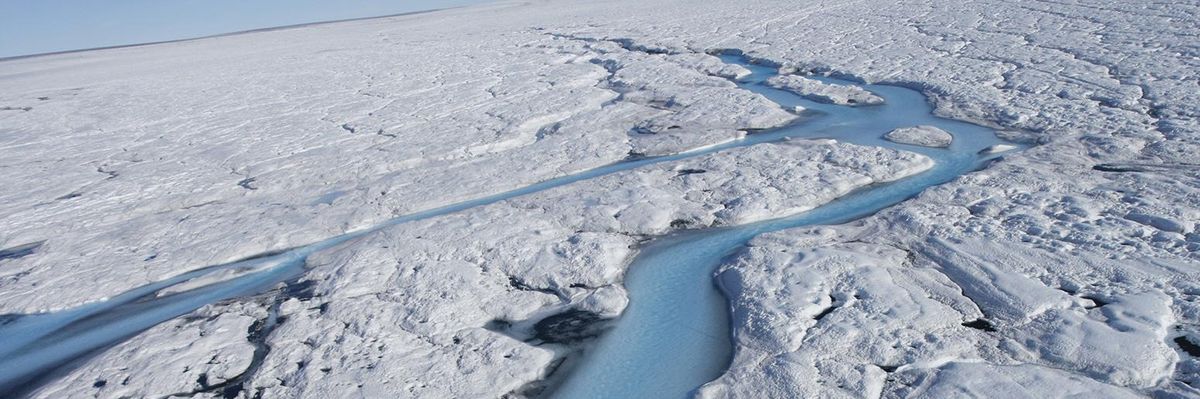
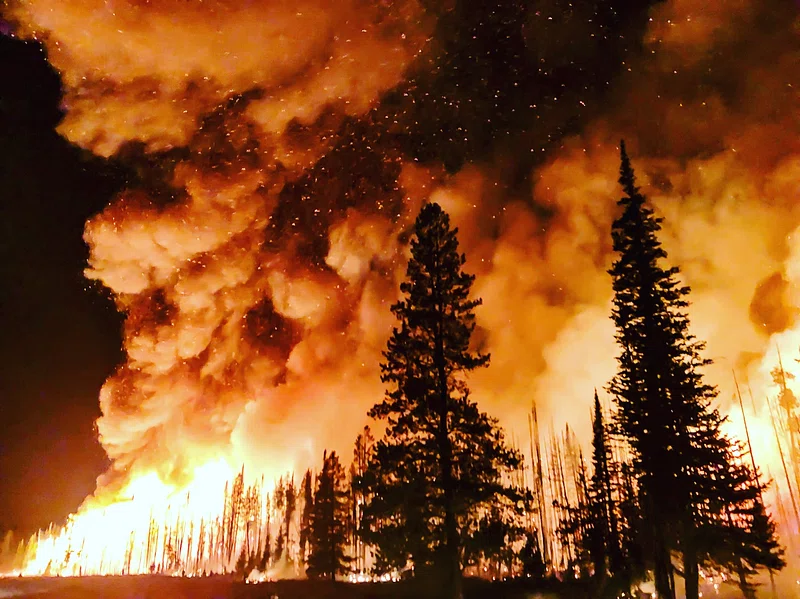
    Canadian wildfire 2023
    Canadian wildfire 2023

    https://www.theguardian.com/environment/2023/dec/08/this-may-be-our-last-chance-cop28-talks-enter-final-phase

    The next few days could be the world’s last chance of keeping global heating within safe limits, nations meeting for the Cop28 UN climate summit have been told.

    With talks in Dubai now entering their final phase, the world’s governments are still far apart on the central question of whether to phase out fossil fuels.

    Dan Jørgensen, Denmark’s climate minister, who has been charged with one of the key roles in forging an agreement among deeply divided governments, said: “We cannot negotiate with nature. The climate cannot compromise. No well meaning words will change a single thing unless we act. This week may be our last opportunity to bring us on course to keeping 1.5C alive.”

    Jørgensen, along with the South African minister Barbara Creecy, will chair negotiations on the global stocktake, a process under the 2015 Paris climate agreement that assesses progress – or the lack of it – towards meeting the treaty’s goals of holding global temperature rises “well below” 2C and “pursuing efforts” to keep them to 1.5C above pre-industrial levels.

    It is well established that the world is far off track to stay within those limits, which scientists say are vital to staving off the worst impacts of the climate crisis. Average temperatures for this year are likely to break records and come close to the 1.5C threshold, and on current trends the world will hit 3C of heating, rendering swathes of the planet effectively uninhabitable.

    For those reasons, the global stocktake will also contain recommendations to governments for a “course correction”, asking them to change policies and bring in measures that will reduce greenhouse gas emissions drastically. The latest draft was published on Friday, and is currently being examined, but there are likely to be more iterations of it before the end of the talks.

    …

    Romain Ioualalen, global policy manager at Oil Change International, a pressure group, said: “It shows unprecedented momentum for an agreement on phasing out all fossil fuels, owing to the relentless pressure from people and governments that are aligned with the science. The Cop president emphasised again today that 1.5C is his north star – and he must deliver on that promise with a Cop decision to build a fast, fair, full and financed fossil fuel phase-out rooted in equity, and enabled by governments redirecting trillions in finance from fossil fuel industry handouts to the real solution: renewable energy and energy efficiency.”

    As well as phasing down fossil fuels, countries are being asked to triple global renewable energy generation and to double energy efficiency. The former is already likely to be met, on current trends, and the latter should save money amid high fossil fuel prices and a cost of living crisis around the world.

    Developing countries are also concerned that a target to double the amount of finance they get to help them adapt to the impacts of the climate crisis has also not been met. Stiell called for more progress on this issue. “I don’t want to see diversions and political tactics that hold climate adaptation hostage,” he warned.

    …
    https://www.theguardian.com/environment/2023/dec/08/this-may-be-our-last-chance-cop28-talks-enter-final-phase

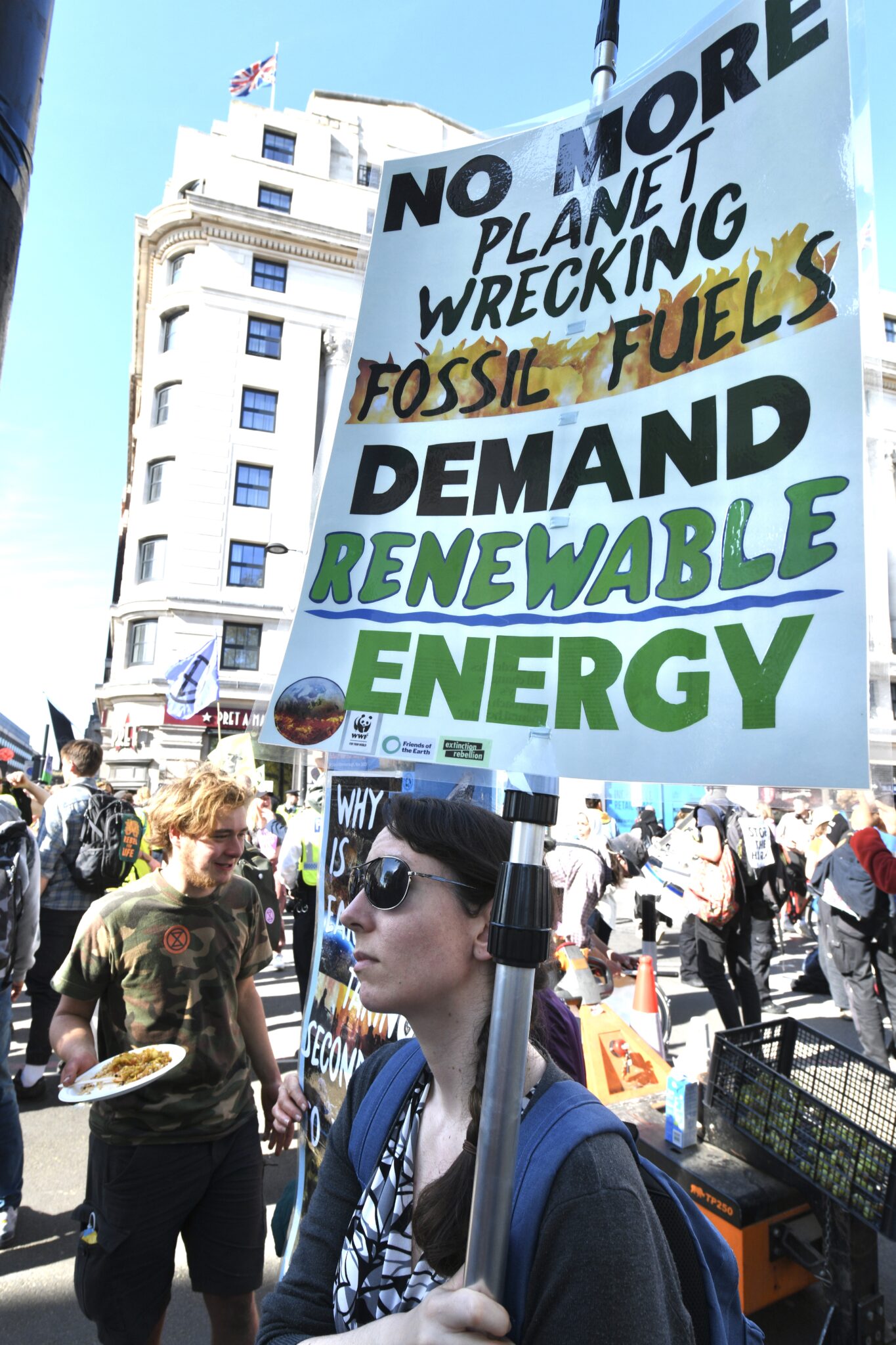
    Extinction Rebellion protest, banner reads NO MORE PLANET WRECKING FOSSIL FUELS DEMAND RENEWABLE ENERGY
    Extinction Rebellion protest, banner reads NO MORE PLANET WRECKING FOSSIL FUELS DEMAND RENEWABLE ENERGY

    Failure to agree fossil fuel phase-out at Cop28 ‘will push world into climate breakdown’

    Failure to agree a phase-out of fossil fuels at the UN Cop28 climate summit would push the world beyond the crucial 1.5C temperature limit and into climate breakdown, the UK’s former climate chief has warned.

    Alok Sharma, who was president of the Cop26 summit in Glasgow, said it was vital that governments made a clear commitment in the next few days to eliminate coal, oil and gas.

    “If you’re going to keep 1.5C alive, you’re going to have to have language on a phase-out of fossil fuels,” he told the Observer in an interview. “And you’re going to need to accompany that with a credible implementation plan.”

    He urged governments to act. “We are running out of time. The window on 1.5C is closing fast, and unless we are willing to act now, with the urgency that this issue demands, we will lose that 1.5C,” he said. “We are literally in the last chance saloon to save our children’s future.”

    More than 190 governments are meeting in Dubai for the final days of the Cop28 summit, which runs until Tuesday, with the question of whether to phase out fossil fuels at the top of the agenda. At least 100 countries are in favour of a phase-out, but some major fossil fuel producers – including Saudi Arabia, China and India – are opposed.

    Sharma was credited with keeping 1.5C “alive” against the odds at the Glasgow summit he led in 2021, when he managed to forge a deal among more than 190 squabbling countries that focused on the goal of limiting global temperature rises to 1.5C above pre-industrial levels.

    …

    https://www.theguardian.com/environment/2023/dec/09/failure-to-agree-to-phase-out-fossil-fuels-at-cop28-will-push-world-into-climate-breakdown

    Greenpeace: COP28 must answer the call for a fossil fuel phase out

    Dubai, UAE – As COP28 resumes for a second week, negotiators will be faced with answering the call for a commitment to a Fossil Fuel Phase Out in Dubai. Never before have we heard so many voices, coming from so many directions to seize the moment and commit to phasing out oil, coal and gas. And never before have alternative formulations on fossil fuel phase out made it this far into a draft text. But there are still no guarantees on a decision on fossil fuels, so all is in play.

    Kaisa Kosonen, Head of the Greenpeace COP28 delegation said: “We are here to make fossil fuels history. By now governments know they can’t leave this summit without an agreement to end fossil fuels, in a fast and fair manner. Now the question is what is the package of solutions, support and cooperation that will get us over the finishing line. It’s clear that developed countries are the ones that need to take the lead here.

    The solutions are ready – a fast and fair transition to renewable energy is possible – but it won’t happen fast enough unless we push the fossil fuel industry out of the way.
    George Monbiot: Cop28 is a farce rigged to fail, but there are other ways we can try to save the planet

  • ‘Call to Action’: CO2 Now at Levels Not Seen in 14 Million Years

    Spread the love

    Original article by OLIVIA ROSANE republished from Common Dreams under Creative Commons (CC BY-NC-ND 3.0). 

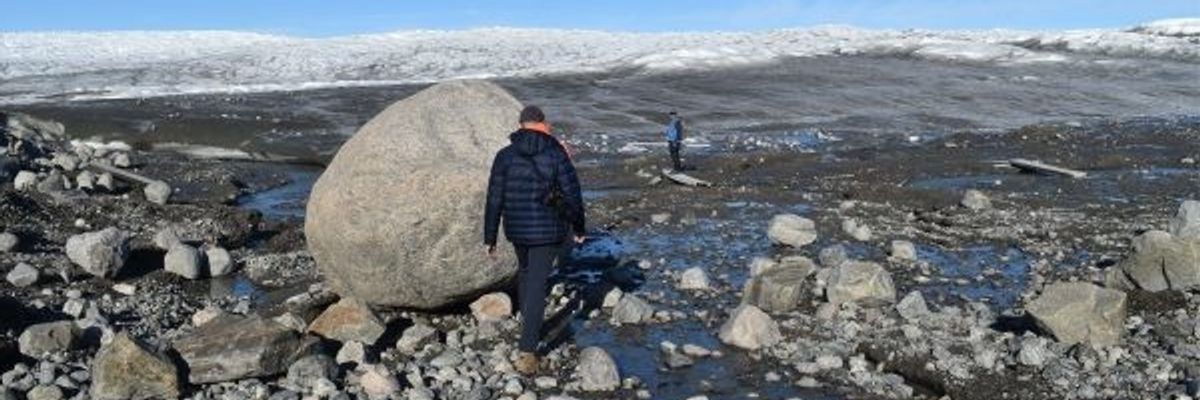
    An image shows the edge of the Greenland ice sheet, where recent melting has left bare ground.  (Photo: Kevin Krajick/Columbia University)

    “It really brings it home to us that what we are doing is very, very unusual in Earth’s history,” the lead author of a new study said.

    The last time that levels of atmospheric carbon dioxide were as high as they are today, Greenland was free of ice and the savanna and grassland ecosystems where humans evolved didn’t exist yet.

    That’s the conclusion of a study published in Science Friday, which researchers say compiles “the most reliable data available to date” on atmospheric carbon dioxide levels over the last 66 million years.

    “It really brings it home to us that what we are doing is very, very unusual in Earth’s history,” lead author Baerbel Hoenisch of the Columbia Climate School’s Lamont-Doherty Earth Observatory toldAgence France-Presse.

    “We’ve already pushed the atmosphere way beyond anything we’ve seen as a species.”

    By burning fossil fuels and clearing natural carbon sinks like forests, industrial capitalism has raised global carbon dioxide levels to 419 parts per million (ppm) today from around 280 ppm at the beginning of the industrial revolution.

    “Rising atmospheric CO2 is the most obvious and startling expressions of our impact on the global environment,” study corresponding author and University of Utah geologist Gabe Bowen wrote on social media. “The concentration has risen by ~50% in the past 100 years. Every year is now marked by the highest CO2 levels *ever observed* by humans!”

    https://twitter.com/bumbanian/status/1732897217558761726?ref_src=twsrc%5Etfw%7Ctwcamp%5Etweetembed%7Ctwterm%5E1732897217558761726%7Ctwgr%5E9d2adf4c509a751a46ba844c58d670922c80fba4%7Ctwcon%5Es1_c10&ref_url=https%3A%2F%2Fwww.commondreams.org%2Fnews%2Fc02-levels-14-million-years

    To understand how such a spike in carbon dioxide might impact Earth’s climate and ecosystems, it’s helpful to look at the pa st. This presents challenges, however, because the most reliable record of past carbon dioxide concentrations—gas bubbles preserved in ice cores—only goes back to around 800,000 years ago, when atmospheric concentrations of carbon dioxide were still at around preindustrial levels.

    “Once you lose the ice cores, you lose direct evidence. You no longer have samples of atmospheric gas that you can analyze,” Bowen said in a University of Utah press release. “So you have to rely on indirect evidence, what we call proxies. And those proxies are tough to work with because they are indirect.”

    Proxies are evidence in the geologic record that can stand in for carbon dioxide levels, such as mineral isotopes or the shape of fossilized leaves. Scientists have looked at these proxies before, but the current study represents the most comprehensive effort to date. A team of around 90 researchers from 16 countries spent seven years synthesizing and reviewing previous work under the banner of the Cenozoic CO2 Proxy Integration Project, according to the University of Utah and AFP.

    The new study represents the scientific consensus on the carbon dioxide record, and it concludes that the last time carbon dioxide levels were around 419 ppm was 14 million years ago. That’s much earlier than previous estimates of 3 to 5 million years ago.

    However, the record goes back further than that to the Cenozoic Era, when the dinosaurs died and mammals began to emerge.

    That record revealed a very clear pattern, Bowen tweeted: “CO2 goes up, the world warms. CO2 down, and things get icy.”

    https://twitter.com/bumbanian/status/1732897230368194885?ref_src=twsrc%5Etfw%7Ctwcamp%5Etweetembed%7Ctwterm%5E1732897230368194885%7Ctwgr%5E9d2adf4c509a751a46ba844c58d670922c80fba4%7Ctwcon%5Es1_c10&ref_url=https%3A%2F%2Fwww.commondreams.org%2Fnews%2Fc02-levels-14-million-years

    The record enabled the scientists to predict the consequences of current and projected carbon dioxide levels.

    “This is an incredibly important synthesis and has implications for future climate change as well, particularly the key processes and components of the Earth system that we need to understand to project the speed and magnitude of climate change,” University of Utah biology professor William Anderegg said in the press release.

    One of the report’s messages, Bowen tweeted is that “the future is now.”

    “We’ve already pushed the atmosphere way beyond anything we’ve seen as a species,” Bowen continued, “and if it stays this way we’re in for big changes in the environment we live in.”

    If policy-makers don’t restrict the burning of fossil fuels, atmospheric carbon dioxide could reach 600 to 800 ppm by 2100, AFP reported. According to the record, the last time levels were this high was 30 to 40 million years ago, when Antarctica was also ice-free and the Earth was home to giant insects.

    Even today’s concentrations are bound to have lasting consequences. For example, when carbon dioxide levels rapidly increased around 56 million years ago, it significantly altered ecosystems and took around 150,000 years to decrease again.

    “We are in this for a very long time,” Hoenisch told AFP, “unless we sequester carbon dioxide, take it out of the atmosphere, and we stop our emissions sometime soon.”

    However, the that doesn’t mean the most extreme changes are locked-in. Instead, Bowen tweeted that the report was a “call to action.”

    “The geological changes we studied lasted for thousands and millions of years,” Bowen said, “and if human-induced CO2 change is short-lived it won’t have as big an impact on the climate.”

    Original article by OLIVIA ROSANE republished from Common Dreams under Creative Commons (CC BY-NC-ND 3.0). 

  • Canada May Soon Give a $15.3B ‘Carbon Bomb’ Subsidy to Big Oil, Experts Say

    Spread the love

    Original article by Geoff Dembicki republished from DeSmog

    Business leader says government tax credit for oil and gas ‘extends the life of Canada’s largest industrial sector.’

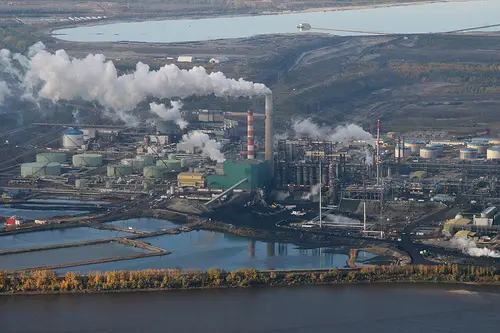
    The government of Alberta, home to the tar sands pictured here, has announced taxpayer funding in the range of $3.5 billion to $5.3 billion for CCS projects. Credit: (CC BY-NC-ND 2.0)

    As world leaders meet in Dubai for the COP28 climate negotiations, federal and provincial governments in Canada are preparing to give an estimated $15.3 billion in new subsidies to oil and gas companies, and other heavy emitters, for expanding the production of fossil fuels, according to climate experts. 

    Those subsidies are taking the form of massive new tax credits for carbon capture and storage (CCS), which is a technology that companies use to grow their extraction of oil and gas while burying a fraction of their greenhouse gas emissions underground. 

    “I completely agree that Canada’s tax credit for carbon capture and storage is a subsidy to the oil and gas industry,” Jason MacLean, an adjunct professor who studies climate policy at the University of Saskatchewan, told DeSmog in an email. 

    The federal Canadian government is close to announcing details on a tax credit that will go to top oil and gas companies like Suncor, Cenovus, and Imperial Oil, along with other major industrial polluters. Policymakers previously estimated the value of these investment tax credits to be $10 billion. The government of Alberta, home to the tar sands, has meanwhile announced taxpayer funding in the range of $3.5 billion to $5.3 billion for CCS projects.

    The Pathways Alliance, an industry lobbying and marketing group representing 95 percent of tar sands production, says these tax credits are essential for oil and gas producers to lower their emissions in line with achieving “net-zero emissions” by 2050. Reaching “net-zero” entails stabilizing global temperature rise at 1.5 degrees Celsius, a level beyond which scientists warn the impacts to humankind could be catastrophic. 

    Yet, in submissions to the federal government, the Pathways Alliance explained that lowering a portion of oil sands emissions via carbon capture will create opportunities for the industry to expand globally — even as other countries move away from fossil fuels. “We believe Canada should seek to increase its market share for responsibly produced, lower emissions energy, even if global market demand, as a whole, begins to decline,” the group said in one submission. 

    “We need to keep in mind that this is about reducing emissions and not reducing production,” the organization said last year in a separate submission, as revealed by DeSmog. 

    Representatives of the Pathways Alliance are among the 35 people with ties to the fossil fuel sector who are part of Canada’s official delegation to COP28 this year. At the climate talks, they are pushing for policies supporting global deployment of carbon capture, which will allow companies to keep producing oil as countries get stricter about regulating emissions.   

    “It is really important for the energy industry in Canada because it extends the life of Canada’s largest industrial sector and maintains our competitiveness over the long term,” Scott Crockatt of the Business Council of Alberta told the Calgary Herald last month.

    However, tax credits supporting carbon capture risk accelerating already dangerous levels of global temperature rise, MacLean argues. Even if the technology can fully capture emissions from the production of oil and gas in Canada — which is an expensive and uncertain proposition — the vast majority of climate impacts occur when fossil fuels are burned in places like car and truck engines and house furnaces. 

    “No possible innovation or improvement to [carbon capture technology] can change the fact that it applies only to the direct and upstream greenhouse gas emissions arising from the production of oil and gas, not the downstream emissions resulting from the combustion of oil and gas, which represent approximately 85 percent of the total emissions,” MacLean told DeSmog.  

    Allowing oil and gas to expand while relying on carbon capture could result in the release of 86 billion additional tonnes of greenhouse gas emissions worldwide between 2020 and 2050, according to a new analysis from the organization Climate Analytics. This “86 billion tonne carbon bomb” could derail efforts to keep global warming from exceeding dangerous thresholds, the group argues. 

    The Canadian government earlier this year unveiled detailed plans to remove “inefficient” oil and gas subsidies, with Environment and Climate Minister Steven Guilbeault saying at the time that “the simple reality is that it’s no longer free to pollute in Canada.” 

    But climate campaigners say that promise risks being completely undermined by the new carbon capture tax credits. 

    Original article by Geoff Dembicki republished from DeSmog

  • Scientists Say Risk of 5 Climate Tipping Points Means ‘Business as Usual Is Now Over’

    Spread the love

    Original article by OLIVIA ROSANE republished from Common Dreams under Creative Commons (CC BY-NC-ND 3.0). 

    The collapse of the Greenland ice sheet, shown here, is one of five tipping points that could be triggered by current levels of warming. (Photo: Patrick Robert/Corbis)

    “Averting this crisis—and doing so equitably—must be the core goal of COP28 and ongoing global cooperation,” one expert said.

    An earlier version of this article said the sea levels could rise by 656 feet by 2100 if the Antarctic ice sheet started to melt. It has been corrected to reflect the fact that they would rise by 6.6 feet.

    Current levels of global heating from the burning of fossil fuels and the destruction of nature risk triggering five tipping points that could throw Earth’s systems further out of balance, with three more at risk of toppling in the next decade.

    The Global Tipping Points Report, released Wednesday at the United Nations Climate Change Conference (COP28) in the United Arab Emirates, argues that policymakers have delayed climate action long enough that “linear incremental change” will no longer be enough to protect ecosystems and communities from the worst impacts of the climate crisis. However, world leaders can still choose to take advantage of positive tipping points to drive transformative change.

    “The existence of tipping points means that ‘business as usual’ is now over,” the report authors wrote. “Rapid changes to nature and society are occurring, and more are coming.”

    “Crossing these thresholds may trigger fundamental and sometimes abrupt changes that could irreversibly determine the fate of essential parts of our Earth system for the coming hundreds or thousands of years.”

    The report defines a “tipping point” as “occurring when change in part of a system becomes self-perpetuating beyond a threshold, leading to substantial, widespread, frequently abrupt and often irreversible impact.” A group of more than 200 researchers assessed 26 different potential tipping points in Earth’s systems that could be triggered by the climate crisis.

    “Tipping points in the Earth system pose threats of a magnitude never faced by humanity,” report leader Tim Lenton of Exeter’s Global Systems Institute said in a statement. “They can trigger devastating domino effects, including the loss of whole ecosystems and capacity to grow staple crops, with societal impacts including mass displacement, political instability, and financial collapse.”

    Because current emissions trajectories put the world on track for 1.5°C of warming, this is likely to trigger five tipping points, the report authors found. Those tipping points are the melting of the Greenland and Antarctic ice sheets, the mass die-off of warm-water coral reefs, the thawing of Arctic permafrost, and the collapse of the North Atlantic Subpolar Gyre circulation.

    The melting of just the Antarctic ice sheet, for example, could raise global sea levels by 6.6 feet by 2100, Carbon Brief reported, meaning 480 million people would face yearly coastal flooding. Three more tipping points could be triggered in the 2030s if temperatures rise past 1.5°C. These include the mass death of seagrass meadows, mangroves, and boreal forests, according to The Guardian.

    “Crossing these thresholds may trigger fundamental and sometimes abrupt changes that could irreversibly determine the fate of essential parts of our Earth system for the coming hundreds or thousands of years,” co-author Sina Loriani of the Potsdam Institute for Climate Impact Research told The Guardian.

    Contributor Manjana Milkoreit of the University of Oslo said in a statement that “our global governance system is inadequate to deal with the coming threats and implement the solutions urgently required.”

    But that doesn’t mean the report authors believe that hope is lost. Rather, they see it as a call to ambitious action at the current U.N. climate talks and beyond.

    “Averting this crisis—and doing so equitably—must be the core goal of COP28 and ongoing global cooperation,” Milkoreit said.

    One way to do this is to take advantage of positive tipping points.

    “Concerted actions can create the enabling conditions for triggering rapid and large-scale transformation,” the report authors wrote. “Human history is flush with examples of abrupt social and technological change. Recent examples include the exponential increases in renewable electricity, the global reach of environmental justice movements, and the accelerating rollout of electric vehicles.”

    The report authors made six recommendations based on their findings:

    1. Immediately phasing out fossil fuels and emissions from land use changes like deforestation;
    2. Strengthening plans for adaptation and loss and damage in the face of inevitable tipping points;
    3. Taking tipping points into account in Paris agreement mechanisms like the global stocktake and national climate pledges;
    4. Collaborating to trigger positive tipping points;
    5. Organizing a global summit on tipping points; and
    6. Increasing research on tipping points, including through a special report by the Intergovernmental Panel on Climate Change.

    “Now is the moment to unleash a cascade of positive tipping points to ensure a safe, just, and sustainable future for humanity,” Lenton said.

    Original article by OLIVIA ROSANE republished from Common Dreams under Creative Commons (CC BY-NC-ND 3.0).