Category: Climate Crisis

  • How oil and gas company tax reliefs could lose the UK billions

    Spread the love
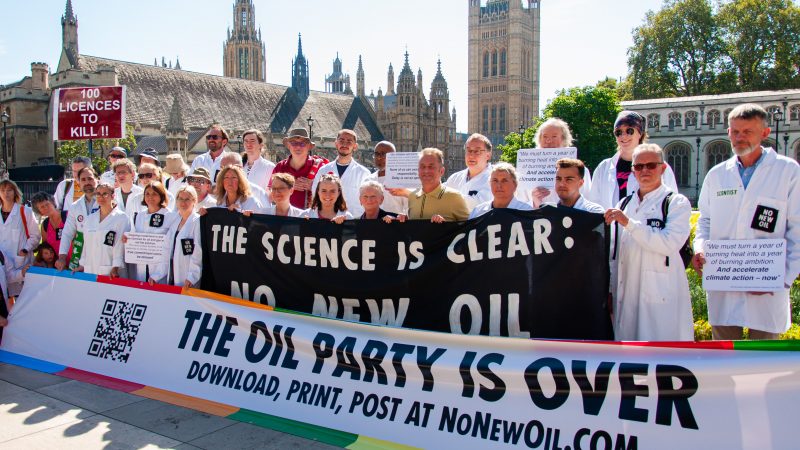
    Scientists protest at UK Parliament 5 September 2023.
    Scientists protest at UK Parliament 5 September 2023.

    Karl Matikonis, University College Dublin

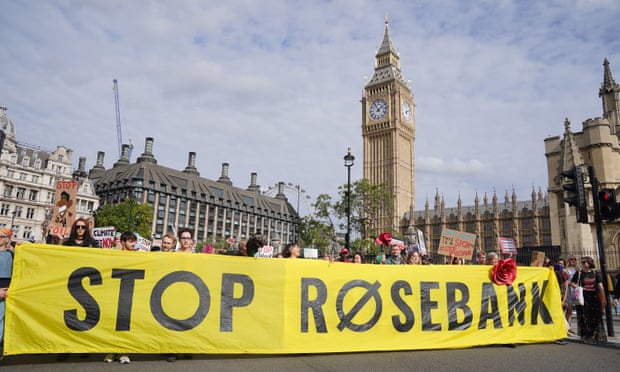
    The recently-approved Rosebank oil field in the North Sea has been touted as a way to boost the UK economy and its energy security. But even with its windfall tax on energy company profits, the project is a good example of how the UK could miss out on billions in taxes over the life of an oilfield.

    Energy companies Equinor and Ithaca expect to invest £8.1 billion in Rosebank from development, during its operation and when they decommission the field once they’ve finished extracting its oil. Of this, 78% will be invested in UK-based businesses, and the project will support 1,600 jobs at the height of construction and around 450 UK-based jobs over its entire lifetime.

    The UK charges a headline 75% rate of tax on all UK energy production and so, at first glance, a major project like Rosebank would be expected to generate billions in tax payments for the UK Treasury over the years. But, according to my research, it could instead create billions in tax savings for the companies involved.

    Of the 75% tax that energy companies are currently charged, profits from oil and gas extraction in the UK are charged a corporate tax of 30%, supplemented by an extra 10% charge. The other 35% in taxes comes from the UK’s windfall tax.

    Such levies are typically used to redistribute profits when a company benefits from external circumstances. For example, energy companies have recently seen profits soar as prices rose due to concerns about satisfying global oil and gas demand during Russia’s invasion of Ukraine.

    The UK rolled out an additional 25% windfall tax in 2022 for oil and gas companies in response to this profit spike. On January 1 2023, the government increased it to 35% until at least the spring of 2028. The UK government raised £2.6 billion from the windfall tax alone last year.

    When the windfall tax is added to the 30% rate and the 10% extra, that makes for a whopping 75% tax on energy companies. This seems like a lot, but the reliefs and other tax breaks open to companies often help a lot of these charges disappear. When a business invests its profits, it can benefit from first-year capital allowances, subtract costs related to daily operations and gain additional investment allowances that can be saved up to reduce taxes on future profits.

    Crunching the numbers

    If an oil company makes £10 million, for example, current tax rules would claim £7.5 million from this. But if the company reinvests the earnings in oil and gas extraction, it wouldn’t just zero out its tax, it could also set aside an extra £1.6 million against future gains – or £3.4 million if it invests in decarbonisation.

    Project this on to Equinor and Ithaca’s multibillion-pound Rosebank investment and it could generate up to £8.4 billion in tax savings for the companies involved, based on my analysis of levies on energy producers,

    A spokesperson for Equinor told The Conversation: “These are numbers we don’t recognise.” Adding that estimates by energy consultancy Wood Mackenzie found Rosebank would bring £26.8 billion to the UK through tax payments and investments, he continued: “Over the years, oil and gas taxation in the UK has changed many times. It is impossible to estimate with any certainty exactly how large tax revenue and value creation this project will generate for the UK.” Ithaca did not respond to a request for comment.

    Many players in the UK’s oil and gas sector can take advantage of a range of capital and investment allowances, deductions and taxation reliefs. In fact, before the windfall tax, companies often got back more from the UK government than they paid in taxes.

    The windfall tax will expire in 2028 or if energy prices fall below a certain level for six months. And so while it has forced some companies pay tax on some recent bumper profits, it won’t always be around to make even that happen.
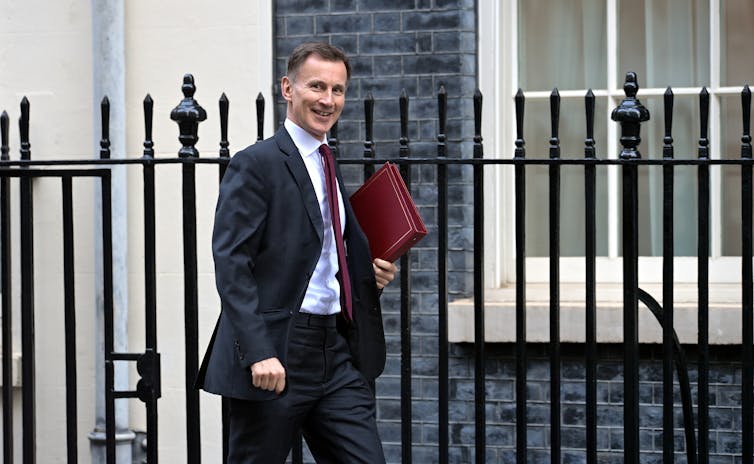
    Jeremy Hunt walking along Downing Street, London.
    UK chancellor Jeremy Hunt increased and extended a UK windfall tax on oil and gas companies last year.
    Sean Aidan Calderbank/Shutterstock

    Shortsighted or strategy?

    Compared to nations like Norway that offer more long-standing corporate tax regimes, the UK’s history is riddled with policies that have been swayed by short-term political urgencies. This sidelines long-term vision and provides a very weak signal to companies considering investment in the UK.

    A revolving door of UK prime ministers in recent times hasn’t helped and has also seen investors lose some confidence in the country’s economy. A slew of lucrative tax reliefs might seem like the perfect way to counterbalance recent policy oscillations.

    Central to the UK’s energy strategy is an intent to ramp up extraction, ostensibly to enhance national energy security. But will this happen with Rosebank?

    When asked about this, the Equinor spokesperson said: “Rosebank will strengthen our contributions to UK energy security. The field is estimated to start producing in 2026/2027 and produce for more than 20 years. The gas will go into the UK pipeline system. The oil will be offloaded offshore. It is a light, sweet crude oil that can be used in refineries in the UK. If the UK needs the oil, when the field starts producing, the UK will get it.”

    But Equinor, like other energy companies drilling in UK oilfields, doesn’t have to sell what it drills back to the UK.

    The UK continues to feed the oil and gas industry with reliefs, while renewable energy projects (but not gas-generation) face the electricity generator levy – a 45% charge on power generated above a £75 per megawatt hour (MWh) threshold. As much of the rest of the world moves towards more sustainable energy solutions, the UK should realign its tax priorities with the broader, greener global vision. The Conversation

    Karl Matikonis, Assistant Professor, University College Dublin

    This article is republished from The Conversation under a Creative Commons license. Read the original article.

  • Sunak’s climate back-pedalling “just so cynical” – Cambridge economist

    Spread the love

    https://www.energymonitor.ai/policy/net-zero-policy/sunaks-net-zero-backpedalling-just-so-cynical-cambridge-economist/?cf-view&cf-closed

    Energy Monitor talks to leading climate change economist Dimitri Zenghelis about an open letter from 100 economists lamenting UK Prime Minister Rishi Sunak’s recent net-zero U-turns.

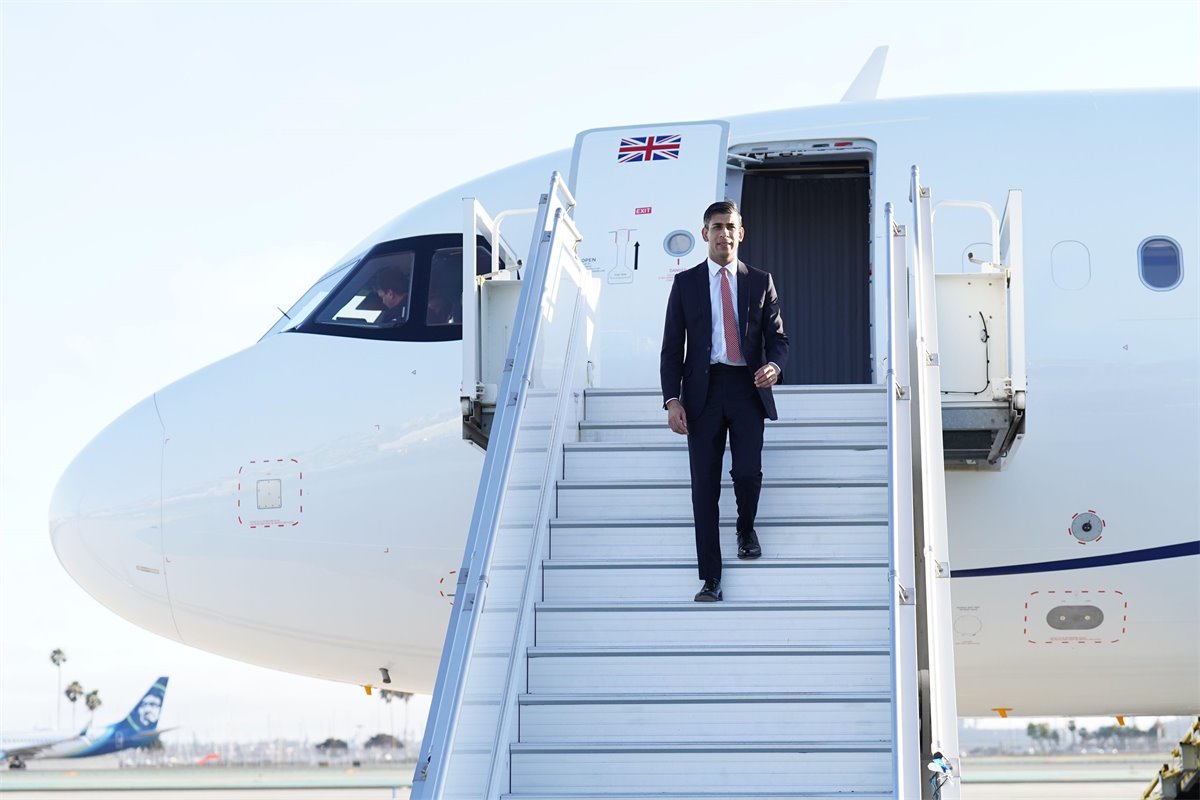
    One of the many occasions UK Prime Minister Rishi Sunak uses a private jet.
    One of the many occasions UK Prime Minister Rishi Sunak uses a private jet.

    …

    So, what’s behind Sunak’s net-zero moves then?

    It’s got nothing to do with cost; it’s pure politics. It’s dog-whistle stuff. He thinks he can turn this issue into an identity politics story. Hence, the “seven bins”. He’s talking about these cosmopolitan elite liberals with their fetishistic recycling (hence the seven bins) and how they’re wanting to take away our cars – from hard-working people who don’t have access to transport. It’s another “us against them” story.

    It is true that if you live next to public transport in central London, you can afford to legislate against dirty vehicles, but if you live in a suburb with a terrible bus line, and you can’t afford the latest electric vehicle, yes, it is potentially quite punitive. So, this has to be done in a very careful and fair way. But just removing legislation that doesn’t impose costs sends a signal to the electorate that you’re taking a position, but to businesses that you absolutely haven’t a clue what you’re doing. Because on the one hand, you’re saying you’re committed to net zero by 2050; and on the other hand, you’re providing absolutely zero policy certainty because even when you do apply policies, you then rescind them. It’s economic short-termism.

    Sunak’s playing politics with people’s livelihoods, and he’s selling it as if he’s actually trying to help people’s livelihoods instead of actually grappling with the issues of net-zero disruption and figure how we make it easier for people to adjust, how we support people in making their house as energy efficient as possible and transition to heat pumps, how we support people with bad public transport who at the moment can’t afford electric vehicles. But he’s thinking of what happened with ULEZ [Ultra Low Emission Zone] in the Uxbridge vote and what those culture wars can do to turn around his chances in the upcoming election. And if the economy suffers, well that won’t be his problem, because he probably won’t be in government by then. It’s just so cynical.

    It’s hard for him to argue this is what economists are saying when both the OBR [Office for Budget Responsibility] and the Treasury have provided numbers that show the cost of delaying this transition is more expensive than the cost of pursuing it, as has the independent Climate Change Committee (CCC).

    …

    [This is only a short excerpt of the article]

    https://www.energymonitor.ai/policy/net-zero-policy/sunaks-net-zero-backpedalling-just-so-cynical-cambridge-economist/?cf-view&cf-closed

  • “The show can’t go on”- Just Stop Oil supporters cause ‘Les Mis’ to be abandoned

    Spread the love

    Five Just Stop Oil supporters have disrupted a staging of the iconic musical ‘Les Misérables’ at the Sondheim Theatre in Westminster last night. Just like revolutionaries featured in the story, they are calling on everyone to take a stand against the government’s criminal plans to “max out our oil and gas reserves” and to join in civil resistance against new fossil fuels.

    During the performance of ‘Do You Hear The People Sing?’, five Just Stop Oil supporters entered the stage carrying orange banners reading ‘Just Stop Oil’ and ‘The Show Can’t Go On’. They emerged during the song’s crescendo, amongst actors bearing revolutionary red flags. At around 8:50pm they locked themselves to the set using flexible bicycle locks, which theatre technicians were unable to remove. The performance was halted, and the theatre was evacuated by 9:10pm.

    23 year old community worker Hannah Taylor is one of those who took action today. They said:

    “The show starts with Jean Valjean stealing a loaf of bread to feed his sister’s starving child. How long before we are all forced to steal loaves of bread? How long before there are riots on the streets? The show cannot go on. We are facing catastrophe. New oil and gas means crop failure, starvation and death. It is an act of war on the global south and an utter betrayal of young people.”

    “Rishi Sunak has just approved Rosebank, a new oil project in the north sea which will produce as much carbon as the annual emissions of the 28 lowest-income countries combined. It will lead to hundreds of thousands of deaths due to starvation as crops fail in the increasingly extreme weather conditions.”

    “Am I not, like Jean Valjean, justified in breaking the law to oppose this criminal government and its murderous policies? Ask yourself, will you, like the citizens of Paris in the play, stand by and watch, or will you stand up against our governments’ criminal plans and call for an end to new oil and gas?”

  • Pope Francis Urges Climate Action as World Nears ‘Breaking Point’

    Spread the love

    Original article by OLIVIA ROSANE republished from Common Dreams under Creative Commons (CC BY-NC-ND 3.0). 

    Pope Francis during the act of appointment of cardinals in the Vatican Basilica of St. Peter, on September 30, 2023, in Rome, Italy.
     (Photo: Stefano Spaziani/Europa Press via Getty Images)

    “The necessary transition towards clean energy sources such as wind and solar energy, and the abandonment of fossil fuels, is not progressing at the necessary speed,” he said.

    In his second major address on the climate crisis, Pope Francis called for urgent global action ahead of the COP28 United Nations climate conference.

    The pontiff’s remarks came in a papal exhortation published Wednesday morning titled “Laudate Deum” or “praise God.”

    “We must move beyond the mentality of appearing to be concerned but not having the courage needed to produce substantial changes,” Francis said.

    The pope made waves in 2015 when he published an encyclical on climate and the environment titled Laudato Si, shortly before world leaders negotiated the Paris agreement. An exhortation is a shorter, less prestigious document, according to The Washington Post. In Wednesday’s document, the first he has published on the climate crisis in eight years, Francis reflected on how far the world hadn’t come.

    “With the passage of time, I have realized that our responses have not been adequate, while the world in which we live is collapsing and may be nearing the breaking point,” he said.

    As the world prepares for COP28, he said that international agreements had not so far led to effective action.

    “The necessary transition towards clean energy sources such as wind and solar energy, and the abandonment of fossil fuels, is not progressing at the necessary speed,” he said. “Consequently, whatever is being done risks being seen only as a ploy to distract attention.”

    “In conferences on the climate, the actions of groups negatively portrayed as ‘radicalized’ tend to attract attention. But in reality they are filling a space left empty by society as a whole.”

    He also addressed concerns about the conference being hosted in a major oil-producing country, though he acknowledged that the United Arab Emirates had made significant investments in renewable energy.

    “Meanwhile, gas and oil companies are planning new projects there, with the aim of further increasing their production,” he said.

    The pope warned about the consequences of inaction:

    We know that at this pace in just a few years we will surpass the maximum recommended limit of 1.5° C and shortly thereafter even reach 3° C, with a high risk of arriving at a critical point. Even if we do not reach this point of no return, it is certain that the consequences would be disastrous and precipitous measures would have to be taken, at enormous cost and with grave and intolerable economic and social effects. Although the measures that we can take now are costly, the cost will be all the more burdensome the longer we wait.

    Yet he also counseled against abandoning hope, saying it “would be suicidal, for it would mean exposing all humanity, especially the poorest, to the worst impacts of climate change.”

    Instead, he argued that hope should be found in structural changes rather than relying entirely on technological fixes like carbon capture.

    “We risk remaining trapped in the mindset of pasting and papering over cracks, while beneath the surface there is a continuing deterioration to which we continue to contribute,” he wrote. “To suppose that all problems in the future will be able to be solved by new technical interventions is a form of homicidal pragmatism, like pushing a snowball down a hill.”

    Throughout the text, he emphasized climate justice, pointing out that the wealthy world had contributed more to the crisis, while the Global South suffered disproportionately from its impacts. In particular, he called on the United States to alter its energy-intensive lifestyle.

    “If we consider that emissions per individual in the United States are about two times greater than those of individuals living in China, and about seven times greater than the average of the poorest countries, we can state that a broad change in the irresponsible lifestyle connected with the Western model would have a significant long-term impact,” he said.

    “Global leaders meeting in Dubai for COP28 must heed the pope’s call to agree to a just and equitable phaseout of all fossil fuels and a transition to renewable energy, with adequate financial support for impacted countries.”

    He also defended climate activists who have been criticized for disruptive tactics.

    “In conferences on the climate, the actions of groups negatively portrayed as ‘radicalized’ tend to attract attention,” he said. “But in reality they are filling a space left empty by society as a whole, which ought to exercise a healthy ‘pressure,’ since every family ought to realize that the future of their children is at stake.”

    Several long-time climate advocates welcomed Pope Francis’ remarks.

    “The pope’s intervention ahead of the Dubai climate talks is welcome and adds to an increasingly loud chorus of voices demanding that countries tackle the root cause of the climate crisis: fossil fuels,” Mariam Kemple Hardy, global campaigns manager at Oil Change International, said in a statement. “The pope is right to point out the growing gap between the urgent need to phase out all fossil fuels and the fact that countries and the oil and gas industry are doubling down on new production that is incompatible with a livable climate.”

    Hardy also echoed the pope’s emphasis climate justice, calling out wealthy nations for continuing to exploit fossil fuels.

    “Global leaders meeting in Dubai for COP28 must heed the pope’s call to agree to a just and equitable phaseout of all fossil fuels and a transition to renewable energy, with adequate financial support for impacted countries. Unless it does so, COP28 will be a failure,” Hardy said.

    350.org and Third Act co-founder Bill McKibben hoped that the pope’s message might succeed where others had failed.

    “The work of spiritual leaders around the world may be our best chance of getting hold of things,” McKibben toldThe Guardian. “Yes, the engineers have done their job. Yes, the scientists have done their job. But it’s high time for the human heart to do its job. That’s what we need this leadership for.”

    Original article by OLIVIA ROSANE republished from Common Dreams under Creative Commons (CC BY-NC-ND 3.0). 

  • Slow route to net zero will worsen global climate crisis, IPCC chief warns

    Spread the love

    https://www.theguardian.com/environment/2023/oct/02/slow-route-to-net-zero-will-worsen-global-climate-crisis-ipcc-chief-warns

    Protesters demonstrate against the British government’s approval of the Rosebank oil field’s development. Photograph: Lucy North/PA

    Even if the 2050 goal is still met, postponing action – as the UK has done – will cause more heat and damage

    Postponing action and taking a slower route to net zero emissions by 2050 will worsen the climate crisis even if the goal is still reached by that date, the new chair of the Intergovernmental Panel on Climate Change (IPCC) has warned.

    Prof Jim Skea also said that approving new oil and gas fields only increased the already large amount of reserves that will have to be kept in the ground if global heating limits are to be reached.

    The IPCC is the world’s foremost authority on climate change, under which thousands of the world’s best experts give advice to the 195 nations that founded the body. It does not comment on the climate policies of individual nations, but Skea’s comments on Monday clearly indicate that the recent actions of the UK government has slowed climate action, despite IPCC scientists warning of “a rapidly closing window of opportunity to secure a livable and sustainable future for all”.

    Rishi Sunak weakened or abolished a number of green measures recently, including pushing back a ban on the sale of new petrol cars from 2030 to 2035. The UK also approved the exploitation of the large Rosebank oil field near Shetland on Wednesday.

    …

    https://www.theguardian.com/environment/2023/oct/02/slow-route-to-net-zero-will-worsen-global-climate-crisis-ipcc-chief-warns