Category: Climate Crisis

  • Was the freak ‘medicane’ storm that devastated Libya a glimpse of North Africa’s future?

    Spread the love

    Mike Rogerson, Northumbria University, Newcastle; Belkasem Alkaryani, University of Tobruk, and Mahjoor Lone, Northumbria University, Newcastle

    Storm Daniel landed on the Libyan coastal town of Toukrah in the early hours of September 10 and started moving east. Soon the wind was rising and heavy rain falling, forcing people to stay indoors. By afternoon the rain was clearly out of the ordinary.

    Albaydah city on the coast would receive 80% of its annual rain before midnight, according to records from a local weather station that we have accessed. In less than 24 hours, thousands of people were dead, hundreds of thousands were missing, and towns and villages across Jebel Akhdar (the Green Mountain) in north-eastern Libya resembled a Hollywood disaster movie.

    Storm Daniel was a Mediterranean cyclone or hurricane (a so-called medicane) which struck Greece, Bulgaria, Libya, Egypt and Turkey over the course of a week. Medicanes are not rare. Such large storms happen in this part of the world every few years. But Daniel has proved to be the deadliest.

    At the time of writing, the World Health Organization estimates that at least 3,958 people have died across Libya as a result of the floods, with more than 9,000 people still missing.

    Daniel was not an exceptionally big storm though. The medicane with the highest wind speeds was medicane Ianos in September 2020, which killed around four people and caused more than €224 million (£193 million) of damage. So what made Storm Daniel different?

    Less frequent, but stronger

    Like tropical cyclones, medicanes form in hot conditions at the end of summer. Most medicanes form to the west of the islands of Corsica and Sardinia. As they tend to strike the same regions each time, the people living in the western Mediterranean, southern Italy and western Greece, have built structures to deal with these storms and the occasional downpours they bring.

    Daniel formed relatively far to the east and struck north-eastern Libya, which is rare. Dozens of people were killed in communities across Cyrenaica, the eastern portion of the country.

    In the mountain gorge above the city of Derna, two dams failed in the middle of the night. Thousands of people, most of whom were asleep, are thought to have perished when the wave of water and debris swept down to the coast, destroying a quarter of the city.

    A composite image of two aerial photographs of a city taken by satellite.
    Derna, a city in eastern Libya, before and after Storm Daniel.
    Google Earth/Holly Squire, CC BY

    Since medicanes are formed in part by excess heat, events like this are highly sensitive to climate change. A rapid attribution study suggested greenhouse gas emissions made Daniel 50 times more likely.

    Despite this, the sixth assessment report from the UN Intergovernmental Panel on Climate Change (IPCC) concluded that medicanes are becoming less frequent but larger. Storm Daniel suggests where medicanes form and make landfall might be more important than their frequency and size.

    So does Libya need to brace itself for more of these events in the future than it has in the past, even if they affect the western Mediterranean less often?

    Clues from the past

    An important clue might lie deep underground, inside caves within north-eastern Libya. Although the caves are often dry today, they contain stalagmites which formed when rain passed through the soil, into the rock and dripped into the cave below thousands of years ago.

    These rock formations attest to times in the past when this region was considerably wetter. The caves in Libya – and in Tunisia and Egypt too – form these stalagmites when the global climate is warm.

    These bygone warm periods are not quite the same as the warm periods IPCC forecasts suggest modern climate change will usher in. But the way a hot world, a relatively ice-free Europe and North America and a wet northern Africa have regularly coincided in the past is striking. Striking and difficult to understand.

    Pointed rocks hanging from a cave ceiling.
    Stalagmites formed in the distant past contain clues about the ancient climate.
    InFocus.ee/Shutterstock

    That’s because the experiments that suggest medicanes will become less frequent as the climate warms belong to a pattern described by IPCC climate assessments, in which wet parts of the world are expected to get wetter and dry parts drier. So it is hard to understand why stalagmites tell us warmer periods in the past involved wetter conditions across the northern margin of the Sahara – one of the driest regions on Earth.

    Fortunately, scientists can learn more from the way stalagmites sometimes grow imperfectly, leaving tiny blobs of water trapped between the crystals.

    The stalagmite we recovered from Susah Cave on the outskirts of Libya’s Susah city, which was severely damaged in the storm, had quite a lot of water in it from wet periods dating to 70,000 to 30,000 years ago. The oxygen and hydrogen isotopes in this water are suggestive of rain drawn from the Mediterranean. This could indicate more medicanes were hitting the Libyan coast then.

    Our finding that more rain was falling above Susah Cave during warm periods suggests we should get more storms hitting eastern Libya as the climate warms. This is not quite what the IPCC forecasts, with their prediction of fewer but larger storms, show.

    But storm strength is measured in wind speed, not rainfall. The caves could well be recording an important detail of past storminess which we’re not yet able to forecast.

    Are stalagmites warning us that North Africa must prepare for future medicanes shifting further east? Our ongoing research aims to answer that question.

    The pattern of ancient desert margins receiving more rain during warm periods despite the “dry gets drier” pattern of global climate models is not unique to northern Africa but found around the world. Over millions of years, globally warm periods almost always correspond with smaller deserts in Africa, Arabia, Asia and Australia.

    This “dryland climate paradox” is important to unravel. Understanding the differences between climate models and studies of ancient rain will be key to navigating the future as safely as possible.


    Imagine weekly climate newsletter

    Don’t have time to read about climate change as much as you’d like?

    Get a weekly roundup in your inbox instead. Every Wednesday, The Conversation’s environment editor writes Imagine, a short email that goes a little deeper into just one climate issue. Join the 20,000+ readers who’ve subscribed so far. The Conversation


    Mike Rogerson, Senior Lecturer in Earth System Science, Northumbria University, Newcastle; Belkasem Alkaryani, Lecturer in Geology, University of Tobruk, and Mahjoor Lone, Postdoctoral Research Associate in Palaeoclimatology, Northumbria University, Newcastle

    This article is republished from The Conversation under a Creative Commons license. Read the original article.
  • Cop28 president-designate hits back at critics even as his company increases oil drilling investments

    Spread the love

    https://morningstaronline.co.uk/article/cop28-president-designate-hits-back-at-critics-even-as-his-company-increases-oil-drilling-investments

    THE Emirati president-designate for the upcoming United Nations Cop28 climate conference hit back on Saturday at critics of his appointment, even as the firm he leads increases investment in fossil fuel extraction.

    Climate activists have roundly criticised Sultan al-Jaber’s appointment as the president-designate of the talks because he serves as the CEO of the Abu Dhabi National Oil Company.

    But Mr Jaber dismissed the critics as people who “just go on the attack without knowing anything, without knowing who we are.”

    Speaking to an audience in the UAE capital Abu Dhabi, Mr Jaber pointed to his 20 years of work on renewable energy as a sign that he and the Emirates represent the best chance to reach a consensus to address climate change worldwide.

    …

    Although Mr Jaber, a trusted confidant of UAE leader Sheikh Mohammed bin Zayed al-Nahyan, has been behind tens of billions of dollars spent or pledged toward renewable energy, he also leads an oil company that extracts some four million barrels of crude every day.

    …

    https://morningstaronline.co.uk/article/cop28-president-designate-hits-back-at-critics-even-as-his-company-increases-oil-drilling-investments

  • ‘Gross Denial of Reality’: Biden Infuriates With Approval of More Offshore Drilling

    Spread the love

    Original article by JULIA CONLEY republished from Common Dreams under Creative Commons (CC BY-NC-ND 3.0). 

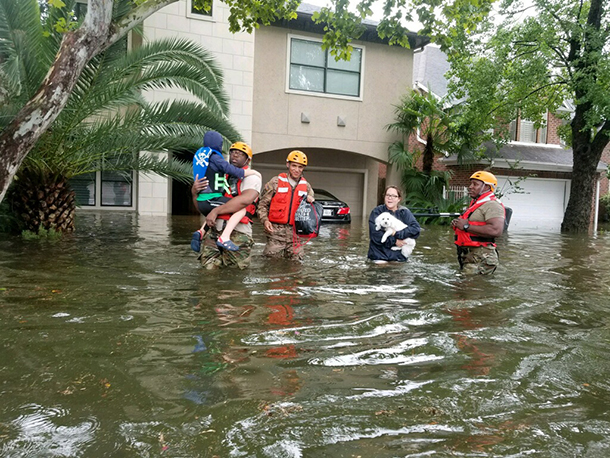
    While the aftermath of hurricanes continue to affect residents, such as those in Houston, Texas devastated by Hurricane Harvey (see image), research has found that the frequency and intensity of these latest storms have done little to shift public opinion about their connection with global warming. (Photo: Texas Military Department, Flickr CC BY-ND 2.0)
    While the aftermath of hurricanes continue to affect residents, such as those in Houston, Texas devastated by Hurricane Harvey (above), research has found that the frequency and intensity of these latest storms have done little to shift public opinion about their connection with global warming. (Photo: Texas Military Department, Flickr CC BY-ND 2.0)

    “End Fossil Fuels is pretty clear,” said one advocate. “Not ‘hold slightly fewer lease sales,’ not ‘talk about climate action’—End. Fossil. Fuels.”

    Rejecting the corporate media’s narrative that U.S. President Joe Biden’s newly-released offshore drilling plan includes the “fewest-ever” drilling leases, dozens of climate action and marine conservation groups on Friday said the president had “missed an easy opportunity to do the right thing” and follow through on his campaign promise to end all lease sales for oil and gas extraction in the nation’s waters.

    The U.S. Interior Department announced Friday its five-year plan for the National Outer Continental Shelf Oil and Gas Leasing Program, including three new areas in the Gulf of Mexico where fossil fuel companies will be permitted to drill.Biden promised “no new drilling, period” as a presidential candidate, and the plan was announced six months after climate advocates were incensed by the administration’s approval of the Willow oil drilling project in Alaska.The new leases will be added to more than 9,000 drilling leases that have already been sold, and is “incompatible with reaching President Biden’s goal of cutting emissions by 50-52% by 2030,” said the Protect All Our Coasts Coalition, citing the findings of Biden’s own Environmental Protection Agency (EPA) and its Office of Atmospheric Protection earlier this year.

    https://twitter.com/EndangeredOcean/status/1707746231446094160?ref_src=twsrc%5Etfw%7Ctwcamp%5Etweetembed%7Ctwterm%5E1707746231446094160%7Ctwgr%5Eb0d33f3028672bc4465832f0b07995fe0a9f7ca8%7Ctwcon%5Es1_c10&ref_url=https%3A%2F%2Fwww.commondreams.org%2Fnews%2Fbiden-offshore-drilling-plan

    While the final plan scales back from the eleven sales that were originally proposed, said the coalition, “the plan is a step backwards from the climate goals the administration has set and for environmental justice communities across the Gulf South, who are already experiencing the disproportionate impact of fossil fuel extraction across the region.”

    The coalition includes the Port Arthur Community Action Network, which has called attention to the risks posed to public health in the Gulf region by continued fossil fuel extraction.

    “Folks in Port Arthur, Texas die daily from cancer, respiratory, heart, and kidney disease from the very pollution that would come from more leases and drilling,” said John Beard, the founder, president, and executive director of the group. “If Biden is to truly be the environmental president, he should stop any further leasing and all forms of the petrochemical build-out, call for a climate emergency, and jumpstart the transition to clean green, renewable energy, and lift the toxic pollution from overburdened communities.”

    Kendall Dix, national policy director of Taproot Earth, dismissed political think tanks that applauded the “historically few lease sales” on Friday.

    “The earth does not recognize political ‘victories,’” said Dix, pointing to an intrusion of saltwater in South Louisiana’s drinking water in recent weeks, which has been exacerbated by the fossil fuel-driven climate crisis.

    “As the head of the United Nations and has said, continued fossils fuel development is incompatible with human survival,” he added. “We need to transition to justly sourced renewable energy that’s democratically managed and accountable to frontline communities as quickly as possible.”

    Along with groups in the Gulf region, national organizations on Friday condemned a plan that they said blatantly ignores the repeated warnings of international energy experts and the world’s top climate scientists who say no new fossil fuel expansion is compatible with a pathway to limiting planetary heating to 1.5°C.

    “Sacrificing millions of acres in the Gulf of Mexico for oil and gas extraction when scientists are clear that we must end fossil fuel expansion immediately is a gross denial of reality by Joe Biden in the face of climate catastrophe,” said Collin Rees, United States program manager at Oil Change International. “Doubling down on drilling is a direct violation of President Biden’s prior commitments and continues a concerning trend.”

    Rees noted that 75,000 people marched in New York City last week to demand that Biden declare a climate emergency and end support for any new fossil fuel extraction projects.

    “End Fossil Fuels is pretty clear,” said Rees, referring to campaigners’ rallying cry. “Not ‘hold slightly fewer lease sales,’ not ‘talk about climate action’—End. Fossil. Fuels.”

    Despite Biden’s campaign promises, Rees noted, the U.S. is currently “on track to expand fossil fuel production more than any other country by 2050.”

    “I feel disgusted and incredibly let down by Biden’s offshore drilling plan. It piles more harm on already-struggling ecosystems, endangered species and the global climate,” said Brady Bradshaw, senior oceans campaigner at the Center for Biological Diversity, another member of the Protect All Our Coasts Coalition. “We need Biden to commit to a fossil fuel phaseout, but actions like this condemn us to oil spills, climate disasters, and decades of toxic harm to communities and wildlife.”

    The lease sales, said Sarah Winter Whelan of the Healthy Ocean Coalition, also represent a missed opportunity by the administration to treat the world’s oceans “as a climate solution, not a source for further climate disaster.”

    Under the Inflation Reduction Act, negotiated by the White House last year, the government is required to offer at least 60 million acres of offshore gas and oil leases before developing new wind power projects of similar scope.

    “A single new lease sale for offshore oil and gas exploration is one too many,” said Whelan. “Communities around the country are already dealing with exacerbating impacts from climate disruption caused by our reliance on fossil fuels. Any increase in our dependence on fossil fuels just bakes in greater impacts to humanity.”

    Gulf communities, added Beard, “refuse to be sacrificed” for fossil fuel profits.

    “We say enough is enough,” he said.

    Original article by JULIA CONLEY republished from Common Dreams under Creative Commons (CC BY-NC-ND 3.0). 

  • Questions for climate denier and UK prime minister Rishi Sunak :: Question 2

    Spread the love

    Apologies, this is an incomplete draft, I have to rush off and do something important.

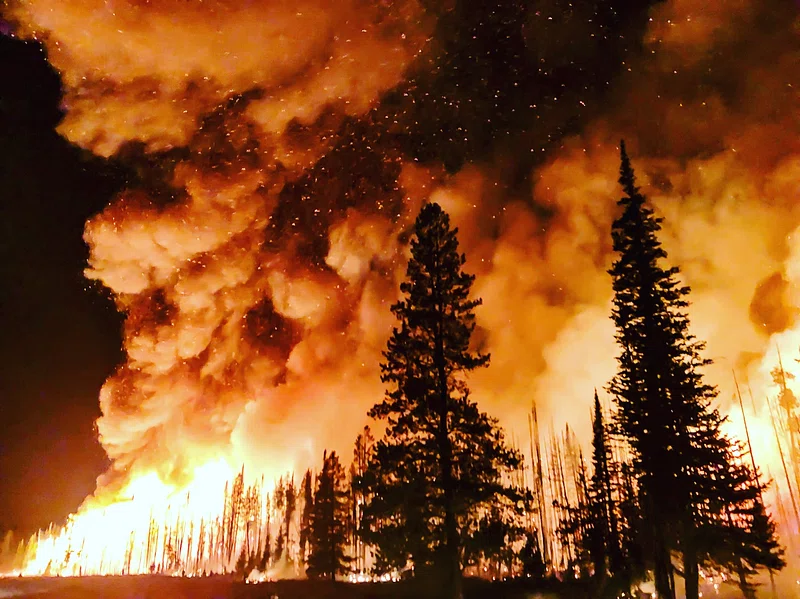
    Canadian wildfire 2023
    Canadian wildfire 2023

    The first question is here.

    While very responsible people and organisations are saying that no more fossil fuel projects are possible because our planet is burning to a crisp – I’ve paraphrased that a little but it’s certainly near enough.

    For example:

    …

    This part to be completed, but it really is very easy to find examples …

    …

    So, my second question to climate denier Rishi Sunak is since all these responsible people and organisations – often scientists and reports based on scientific knowledge of the scientific community – why is he going against their advice and despite the extreme weather events as a result of the warming climate that we’ve been experiencing in recent years, how can he simply reject this huge body of evidence and subsequently, how can we have any faith in his sanity?

  • Hydrogen Lobby Sets Sights On Labour Party

    Spread the love

    Original article by Phoebe Cooke and Hazel Healy republished from DeSmog.

    Emails seen by DeSmog show a PR lobby funded by gas companies is looking to influence the opposition party as likely winners of the next general election.

    By Phoebe Cooke and Hazel Healy on Sep 26, 2023 @ 10:11 PDT

    Labour Leader, Keir Starmer, addresses delegates at the 2022 Labour Party conference in Liverpool. Credit: Karl Black/Alamy
    Labour Leader, Keir Starmer, addresses delegates at the 2022 Labour Party conference in Liverpool. Credit: Karl Black/Alamy

    Hydrogen lobbyists are targeting the Labour Party after betting on the opposition winning next year’s general election, DeSmog can reveal.

    Energy policy will be a major focus at the October conferences of both major parties, which fall weeks after Prime Minister Rishi Sunak dramatically announced plans to water down the UK’s green targets.

    Emails seen by DeSmog reveal that the hydrogen lobby is now pivoting to Labour as the party most likely to win the next election. It comes after campaigners last year accused the hydrogen lobby of targeting the Labour conference with false solutions.

    The communications were sent by Beyond2050, a PR agency and consultancy, which represents the UK’s biggest gas distributors and will be coordinating a “Hydrogen Zone” at the Labour and Conservative party conferences.

    A number of the agency’s clients are expected to use their stands in the zone to promote the controversial and widely discredited use of hydrogen for home heating, which is favoured by the industry as it can combine with natural gas, and its existing infrastructure.

    The Beyond2050 newsletter has also shared that “key politicians” may attend the networking drinks it is hosting at the Conservative meeting in Manchester (1-4 October) and at Labour’s conference in Liverpool (8-11 October). 

    “The coming months are a key timeframe for the hydrogen industry to engage with the Labour Party,” wrote Beyond2050 founder and director Rob Dale in a newsletter sent to industry figures, politicians and journalists earlier this month.

    “Labour continue to maintain a strong lead in the opinion polls and are on track to gain enough seats to win a majority at the next election.” 

    Latest polling shows Labour increasing its lead ahead of the Conservatives. An Ipsos poll also found that 86 percent of British people believe the UK needs a fresh team of leaders. 

    Experts have warned that exaggerating the potential of hydrogen could delay action on tackling climate change by obstructing the rollout of renewables and keeping the fossil fuel industry alive. Steve Goodrich, head of research and investigations at Transparency International UK, has warned politicians to be wary of industry influence.

    “As the prospect of a general election looms, business interests will be redoubling their efforts to influence any potential government or minister,” Goodrich told DeSmog.

    “Many of the groups behind this effort remain largely unchecked by formal rules. Without greater transparency over lobbying, much of what happens in these groups will remain behind closed doors.”

    Blue, Green and Grey

    Beyond2050 describes itself as the “leading strategy and political relations agency on hydrogen”, working with “some of the UK’s most innovative hydrogen businesses and entrepreneurs”.

    The website makes no mention of gas, though gas companies make up half of its clients featured in the ‘Hydrogen Zone’. They include gas distributors Cadent, SGN, Wales & West Utilities and Northern Gas Networks, British Gas owner Centrica, Britain’s gas network owner National Gas, and gas boiler manufacturer Baxi. 

    All these companies became Beyond2050 clients this year, according to the UK’s main lobbying registers, despite growing concerns over the use of hydrogen to replace gas in heating. At present neither the UN’s leading climate body the Intergovernmental Panel on Climate Change (IPCC) or the UK’s climate change committee see a major role for hydrogen in decarbonising homes.

    Nearly a quarter of the UK’s total greenhouse gas emissions (22 percent) come from heat in buildings. Experts say insulation along with the installation of electricity-powered heat pumps are the safest, most energy efficient way to heat homes – and up to three times cheaper than using hydrogen.

    The UK government is due to make a decision in 2026 on whether to allow ‘hydrogen-ready’ boilers. However, in July then energy secretary Grant Shapps cast doubt over whether hydrogen will ever be a viable form of heating. The Department for Energy Security and Net Zero has not yet responded to DeSmog’s request for an update.

    In a statement to DeSmog, a Beyond2050 spokesperson said the company “work[s] with companies that are also solely focused on the production of green hydrogen, as well as others across the hydrogen value chain”. Clients working solely on green hydrogen to decarbonise industrial processes include JCB, Ryze and Johnson Matthey. 

    Producing ‘green’ hydrogen involves using electrolysis powered by solar and wind to split water and create the final product, and is widely seen as an important way to decarbonise industrial processes where it is hard to avoid greenhouse gas emissions. However, it is more scarce, expensive and energy intensive than other forms of hydrogen. As a result, ‘grey’ fossil-based hydrogen made with natural gas or coal makes up 96 percent of existing supplies globally.

    A Beyond2050 spokesperson said those participating in the zone “represent the breadth of the UK’s hydrogen industry and include hydrogen production, hydrogen transportation, storage and mobility, as well as those working on hydrogen for heat”.

    Carla Denyer, co-leader of the Green Party, told DeSmog: “There is a role for green hydrogen in a zero-carbon future but given supplies will remain limited for the foreseeable future, it’s a very small and specific role.

    “In particular, hydrogen must be kept out of our homes. It is a highly inefficient and expensive method of heating.”

    ‘Across The Value Chain’

    The ‘Hydrogen Zone’ has advertised a networking drinks with “key politicians”, open to “all those interested in the UK’s hydrogen industry”, according to the weekly HY Newsnewsletter circulated by Beyond2050.

    “As a reminder, last year Prime Minister Liz Truss attended the zone for a private drinks reception at Conservatives,” says one newsletter, which was sent on 8 September. 

    The email notes that Alan Whitehead, Shadow Secretary for Energy Security and Net Zero, and Bill Esterson, Shadow Business Minister, were also present at the “informal drinks” held last year at Labour’s Hydrogen Zone.

    HY Newsalso reported extensively on the Labour reshuffle in early September, concluding that the current line-up may become senior government figures. The next general election is due to take place next year, with a vote predicted for sometime around May.

    “This reshuffle matters because a large proportion of the shadow ministers in these roles today would become ministers in a Starmer administration,” Beyond2050’s Director Rob Dale wrote. 

    He added that this meant they now had “a suitable amount of time to develop their plans for government, meaning the coming months are a key timeframe for the hydrogen industry to engage with the Labour Party”.

    Insights into policy-making is a specialty of the company, whose claim that its team has worked “at the highest levels of politics” appears to be well-founded.

    Policy and strategy director Rita Wadey led the development of the UK’s government’s Hydrogen Strategy before taking a position at Beyond2050 in April 2022. In July, she left the company to start a new position as hydrogen strategic advisor at the National Grid.

    The UK hydrogen strategy, which doubled in ambition last year to deliver 10GW of domestic production by 2030, involves a “twin-tracked” approach of promoting both renewables-powered ‘green’ hydrogen and ‘blue’ hydrogen, where the emissions from fossil hydrogen are stored and captured underground.

    But ‘blue’ hydrogen is also controversial. A 2022 report by the Institute for Energy Economics and Financial Analysis (IEEFA) found its  production in the UK to be risky, ineffective, and to offer a poor financial investment.

    The Labour Party was asked by DeSmog to clarify its plans for hydrogen in the UK’s decarbonisation, but had not responded by the time of publication.

    Major Hydrogen Presence

    DeSmog reported last week that a number of oil and gas firms are set to be present at the Conservative Party conference, including Beyond2050 clients Cadent, National Gas and Centrica.

    National Gas will also be hosting an event at the Labour Party conference on October 9 with the New Statesman, titled: “Stronger, Fairer, Greener: How Can Hydrogen Protect Industry, Create Jobs and Power Us to Net Zero?” Bill Esterson, shadow business minister, will be speaking on the panel.

    Trade association Hydrogen UK and Ineos also have exhibitor stands at both conferences. Petrochemicals company Ineos has pivoted towards hydrogen – which it describes as a  “game-changing source of energy that can be used as both a raw material for industry and as a power source for transport and the home”.

    Oil and gas major BP, which joined Beyond2050 as a client in March this year, also has a stand at the Conservatives conference. According to the conference agenda, the company will demonstrate how it is “in action on the challenge… transforming Teesside and tackling emissions with CCS and hydrogen”. BP is currently consulting on its proposal for H2Teesside. The planned project with UAE state-owned company Adnoc aims to be one of the biggest blue hydrogen production facilities in the UK.

    In a statement to DeSmog, Rob Dale quoted Chris Stark, the chief executive of the Climate Change Committee, who tweeted earlier this year that hydrogen would play “an absolutely essential role in the 2035 energy system”.

    “We work with businesses who are seeking to achieve this aim,” Dale said, adding that: “Conference delegates will be able to speak with industry about all aspects of the Government’s UK Hydrogen Strategy.” 

    However, campaigners say the promotion of certain types of hydrogen could be a “dangerous distraction” from solutions needed to decarbonise and increase energy security.

    “Hydrogen for home heating has become the emperor’s new clothing for the oil and gas industry,” said Alice Harrison, fossil fuels campaign lead at Global Witness. “It is a thinly veiled attempt for these companies to stay profitable, and to carry on polluting while pretending to be green.”

    The hydrogen lobby often used public affairs firms backed by significant fossil fuel money to achieve their aims, Harrison said.

    “It’s a classic tactic straight from the fossil fuel playbook that risks eroding our democracy,” she said. “Our decision-makers should be wary of lobbyists who come bearing gifts and promise the world.”

    Original article by Phoebe Cooke and Hazel Healy republished from DeSmog.