Category: Climate Crisis

  • Major Polluters In ‘Ludicrous’ Push For Carbon Capture at Party Conferences

    Spread the love

    Original article by Adam Barnett and Rachel Sherrington republished from DeSmog.

    The technology could provide cover for fossil fuel companies to explore more oil and gas drilling, campaigners say.

    By Adam Barnett and Rachel Sherrington on Sep 29, 2023 @ 05:14 PDT

    Prime Minister Rishi Sunak and Labour leader Keir Starmer. Credit: DeSmog via UK Parliament (CC BY 3.0)
    Prime Minister Rishi Sunak and Labour leader Keir Starmer. Credit: DeSmog via UK Parliament (CC BY 3.0)

    A trade group for contested carbon capture with close ties to major oil and gas companies is sponsoring over a dozen events at the Conservative and Labour conferences over the next fortnight. 

    Fossil fuel companies are using the technology as “a fig leaf” to pursue oil and gas drilling, campaigners have warned, as industry lobbyists across the energy sector seek to win over policymakers.

    The Carbon Capture and Storage Association (CCSA), a trade body promoting carbon capture utilisation and storage (CCUS), is due to host 15 events across the Conservative and Labour gatherings, which begin on Sunday in Manchester.

    The London-based CCSA describes itself as the “lead” European organisation for CCUS, promoting the “rapid” and “commercial” deployment of the technology. The process involves capturing CO2 emissions from industrial production and storing it underground. Some technologies allow the captured CO2 to be re-used by converting it into plastics, concrete or biofuel. 

    The group says that its members are “companies across the CCUS industry” including “support services in the energy sector” such as law, banking and consultancy.  

    Nearly a fifth of the CCSA’s 100 members are oil and gas companies, including BP, Exxon, Shell and Equinor. Fossil fuels are the largest contributor to climate change, producing 75 percent of global greenhouse gas emissions and nearly 90 percent of all carbon dioxide emissions.

    The CCSA board is also dominated by key figures at oil and gas companies, including BP, Equinor, TotalEnergies and Shell. 

    Lorne Stockman, research co-director at the campaign group Oil Change International, told DeSmog: “It’s very clear what carbon capture serves and who it’s a solution for, and that’s the fossil fuel industry. 

    “This isn’t about the best way of addressing the climate crisis, it’s about keeping the industry in business.”

    He said the companies were trying to hedge their bets by winning over both the Conservatives and Labour, in the hope of continued government funding to support the high infrastructure costs.

    “They pay both parties as much as they can,” said Stockman. “They’ve got the resources, they’ve got the money, they’ve got the influence, and of course they’re showing up to ensure that the fossil fuel industry continues to get public support even while we try to confront the climate emergency.”

    Carbon capture and storage, and the extension of the technology, CCUS, has been touted by major polluters as a way to cut their production emissions to meet climate targets. 

    But the role of carbon capture in the energy transition is hotly contested. Climate scientists point to the failure of CCS to remove significant amounts of CO2 emissions while campaigners warn of the high costs compared to renewable energy. The vast majority of companies use the captured CO2 to extract more oil through a process called “enhanced oil recovery”.

    A DeSmog analysis published this week found the majority of large-scale global CCS projects have spectacularly failed to deliver what they promised, overran budgets and targets, and resulted in a net increase in emissions.

    A CCSA spokesperson told DeSmog: “We are proud to bring a wide variety of our members to party conferences this year to engage with politicians, delegates and the media on the vital role carbon capture and storage technology will play in the net zero transition. 

    “This technology will ensure industry can continue to support jobs making critical products such as steel and cement in the UK, rather than importing them from abroad, as well as creating 70,000 new jobs in green industries. 

    “Carbon capture technology will be an important part of the solution, alongside reducing energy use and rolling out renewable electricity as we all work together to reach net zero.”

    Fossil Fuel Presence

    The UK government has committed £20 billion of investment for carbon capture and storage over the next 20 years, and aims to capture and store 20-30 million tonnes of CO2 per year by 2030 and over 50 million by 2035. 

    The “CCUS Investor Roadmap”, updated this year, sets out plans to deliver four CCUS “low-carbon” industrial clusters by 2030, and capture and store nine million tonnes of CO2 from industrial CCS by 2035.

    Despite well-documented concerns over carbon capture, industry executives will look to increase the government’s commitments further and showcase its “key role in decarbonising industry”, when they join the Conservatives in Manchester next week, and Labour in Liverpool later in the month. 

    Experts and MPs – yet to be named – have been invited to the group’s ticketed drinks receptions, while a number of talks are dedicated to promoting the technology as a crucial part of the UK’s “green industrial revolution”.

    “Our politics are shot through with oil and gas lobbyists, it’s just at party conferences they come into the light a little bit more,” Tessa Khan, executive director of fossil fuel campaign group Uplift, told DeSmog.

    “This is a ludicrous amount of special pleading for a technology, carbon capture and storage, that, on the current trajectory, will play a marginal role in reducing industrial emissions and at worst is a fig leaf for more oil and gas drilling.”

    The CCSA reception in Liverpool at the Labour Party conference will feature food, drinks and speeches from industry leaders, with members of the shadow cabinet expected to attend.

    Doug Parr, chief scientist and policy director at Greenpeace, told DeSmog that CCS “has been used and continues to be used as a cover for fossil fuel exploitation”. 

    “If the CCS crew are out and about at party conferences, one has to have a suspicion, given the number of fossil fuel industries that continue to be involved with them, that that’s what’s being attempted in the UK”, he said. 

    Board Members and Political Influence

    Individuals from the fossil fuel industries are well represented on the CCSA board, as well as the group’s membership. 

    Oil and gas companies TotalEnergies, Wintershall Dea, Uniper, Phillips 66 UK, Neptune Energy and Eni are also members of the CCSA, alongside Drax, the UK’s single largest emitter of CO2. Drax is seeking an estimated £31.7 billion in subsidies for its proposed biomass energy carbon capture and storage (BECCS) plant, which is being trialled in its CCUS “incubation area” in North Yorkshire.

    The CCSA board is also dominated by career oil and gas executives who have spent decades working in the industry.

    Chair of the CCSA, Jonathan Briggs, is director of a CCS project run by Vitol, a Dutch multinational energy and commodity company which trades oil, gas and coal. Briggs works on the “Humber Zero” project to decarbonise VPI Power’s Combined Cycle Gas Turbine in Immingham, North Lincolnshire.

    The board includes Rowaa Ahmar, group head of public affairs, policy and bioenergy with carbon capture and storage (BECCS) at biomass company Drax, the UK’s largest single emitter of CO2. 

    Other board members include Graeme Davies, a project director at Harbour Energy; Shirley Oliveira, vice president for hydrogen and CCUS advisory services at BP; Dan Sadler, UK vice president for low carbon solutions at Equinor; Gaël Le Parc, UK CCS director for TotalEnergies; and Steve Schofield, head of climate and carbon policy and advocacy at the corporate relations department of Shell. 

    The CCSA also has political connections. CCSA president, Baroness Liddell, was a Labour minister under former prime ministers Tony Blair and Gordon Brown. Joe Butler-Trewin, CCSA’s Public Affairs and Communications Officer in London, worked on Keir Starmer’s 2020 campaign for the Labour leadership. 

    The Conservative and Labour parties did not respond when contacted for comment. 

    Original article by Adam Barnett and Rachel Sherrington republished from DeSmog.
  • Questions for climate denier and UK prime minister Rishi Sunak

    Spread the love
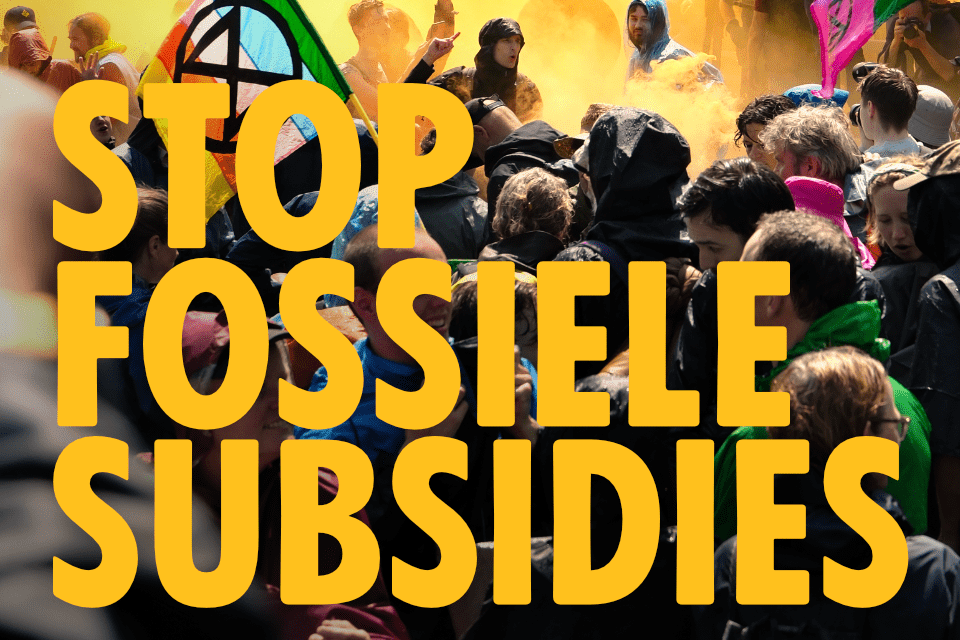
    Extinction Rebellion NL image reads STOP FOSSIELE SUBSIDIES
    Extinction Rebellion NL image reads STOP FOSSIELE SUBSIDIES

    I’ll return to Rishi Sunak being a climate denier – there’s not much worse you can say about someone is there? totally divorced from reality? able to simply deny scientific argument? It’s really disappointing in a prime minister since they’re supposed to be responsible and dependable.

    I’m not the first to call Sunak a climate denier – it’s good to see that Scottish First Minister Humza Yousaf has beaten me to it.

    So my first question to climate denier Rishi Sunak is why is he intending to massively subsidize the proposed Rosebank oil and gas field instead of massively subsidizing my energy bill? If he subsidized my energy bill to the same extent, my monthly bill would be reduced from £110 to £10 so why is he financing Norwayians more than UKians?

    More questions to follow

  • Youth Challenge 32 European Nations in ‘Truly Historic’ Climate Trial

    Spread the love

    Original article by Isabella Kaminski republished from De Smog.

    Portuguese young people claim their human rights have been violated, while accused countries argue the lawsuit should be thrown out.

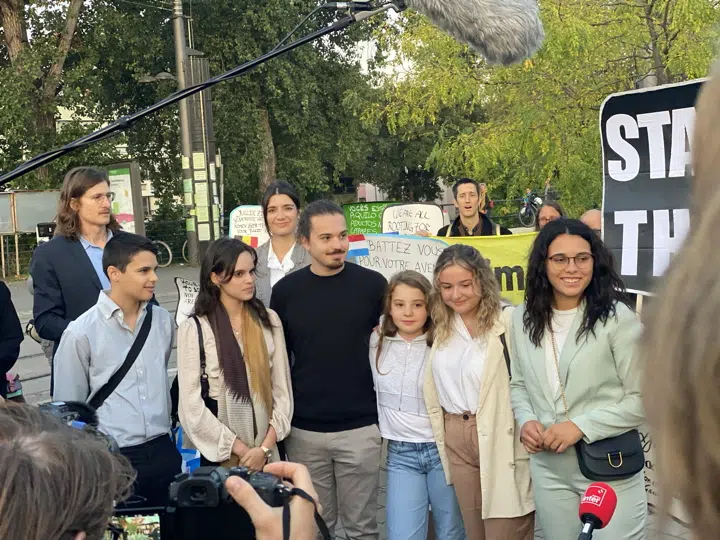
    Portuguese youth, from left, André dos Santos Oliveira, Sofia dos Santos Oliveira, Martim Duarte Agostinho, Mariana Agostinho, Cláudia Duarte Agostinho and Catarina dos Santos Mota talk to the press before their landmark hearing in front of the European Court of Human Rights in Strasborg, France. Credit: Courtesy of the Global Legal Action Network (GLAN)
    Portuguese youth, from left, André dos Santos Oliveira, Sofia dos Santos Oliveira, Martim Duarte Agostinho, Mariana Agostinho, Cláudia Duarte Agostinho and Catarina dos Santos Mota talk to the press before their landmark hearing in front of the European Court of Human Rights in Strasborg, France. Credit: Courtesy of the Global Legal Action Network (GLAN)

    After Portugal experienced massive wildfires and extreme heat waves this summer, six children and youth from the nation appeared in the European Court of Human Rights Wednesday for a landmark lawsuit against 32 European nations charged with violating their human rights due to the impacts of climate change.

    At the hearing in Strasbourg, France, lawyers representing six Portuguese young people said the youth were being discriminated against by state inaction in cutting greenhouse gas emissions, the effects of which have been “foreseeable for decades.” 

    Inadequate action to curb global emissions, the lawyers argue, violates the youths’ rights to life, privacy and family life, and to be free from torture, inhuman or degrading treatment. Additionally, it violates their rights to be free from discrimination on grounds of their age, the lawyers said. All of these are enshrined in the European Convention on Human Rights, which the court is responsible for upholding. 

    This case is “truly historic,” said Sébastien Duyck, senior attorney at the Center for International Environmental Law. It forces the national governments in the suit “to lay out a legal defense justifying the gap between their climate policies and what science says is needed to avoid climate breakdown.”

    Cláudia Duarte Agostinho, age 24, Catarina dos Santos Mota, 23, Martim Duarte Agostinho, 20, Sofia dos Santos Oliveira, 18, André dos Santos Oliveira, 15, and Mariana Agostinho, 11, are suing 32 countries, including all EU member states, the United Kingdom, Norway, Turkey, Switzerland and Russia, for failing to act on the climate crisis. It is unprecedented  that so many governments have to defend themselves in front of any court in the world.

    In 2017, damaging wildfires in Portugal, made worse by climate change, killed more than 100 people and sparked the youths to file the lawsuit, which began in 2020. Over the past three years, the young people’s legal team filed a number of supporting documents, including a detailed climate science briefing. The documents show that the current global trajectory for cutting greenhouse gas emissions falls far short of keeping the global temperature rise under the 1.5C threshold agreed by states at the COP27 climate talks last year.

    Portugal hit hard by climate change

    Portugal describes itself as the European country most affected by the adverse impact of climate change. Since 1976, it has seen a significant trend in heat waves and tropical nights, with high temperature records broken in 2018, 2019 and 2022. This summer, severe drought hit the country and wildfires blazed again.

    The young people live in Lisbon and Leiria, parts of Portugal that are particularly at risk. And according to the Intergovernmental Panel on Climate Change, the country faces “hard limits” to its ability to adapt.

    The young claimants in the lawsuit point to research by Climate Action Tracker, which calculates a “fair share” of emission cuts for the 32 countries at the center of the case, based on their levels of development, capacity and/or historic responsibility. Most of these cuts are higher than the states’ current goals for the year 2030.

    To address this, they want all 32 states to increase their climate ambitions and meet these goals by cutting the production and export of fossil fuels, lowering their consumption emissions, and forcing companies domiciled within their territories to clean up their global supply chains. 

    The lawsuit describes the young people as both current and future victims of climate change, outlining the existing effects on their physical and mental health.

    It notes the dangerous impacts of extreme heat, including heatstroke and the exacerbation of chronic conditions such as asthma and other  respiratory problems experienced by Martim Duarte Agostinho, Catarina dos Santos Mota and André dos Santos Oliveira. During periods of extreme heat, some of the youth in the suit have had had to stop playing and exercising outdoors, while extremely hot nights have made it difficult to sleep, leaving them more tired and less able to study and work.

    A psychological assessment showed they were all experiencing symptoms of anxiety or depression. The three also describe a form of mental suffering called “moral injury” caused by an awareness of the failure by those in authority to protect them.

    The severity of all these impacts, the legal team concludes, will only get worse if nations can’t meet the 1.5C warming threshold. Although climate change affects everyone, lawyer Alison Macdonald argued in court that it will have a disproportionate impact on the young people at the heart of the case, “as they will have to live longer with the consequences of the respondents’ failures.”

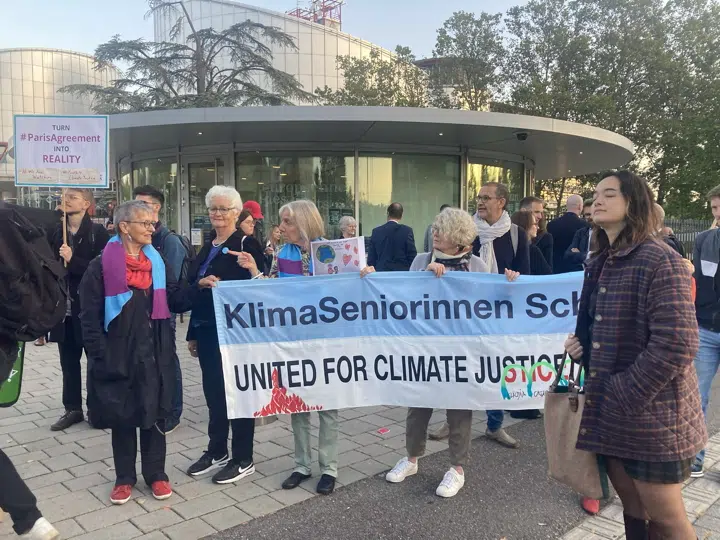
    This is the third climate case heard by the European Court of Human Rights this year. In March, a group of older Swiss women known as the KlimaSeniorinnen argued that they were disproportionately affected by the climate crisis and wanted the court to order Switzerland to do more to cut its emissions. This was followed the same day by a claim brought by a former French politician who also argued France was breaching his human rights.

    The court wants to hear all three of these cases before making a final decision. There are a handful of other climate-related cases pending before it.

    Swiss women involved in another European climate lawsuit support the Portuguese youth at the courthouse in Strasbourg. Credit: Courtesy of the Global Legal Action Network (GLAN)
    Swiss women involved in another European climate lawsuit support the Portuguese youth at the courthouse in Strasbourg. Credit: Courtesy of the Global Legal Action Network (GLAN)

    But the claimants in the Portuguese youth case have some big technical hurdles to overcome before judges even begin to consider the merits of their lawsuit.

    The governments named in the lawsuit submitted individual responses to the court, and all except Russia and the Netherlands also submitted a joint statement, which says the states recognise the severity of the threat of climate change and the need for urgent action.

    But it says the case should be thrown out for failing to meet the court’s basic rules on admissibility. These include the requirement to have exhausted all national legal options before filing a claim at the ECHR. Ignoring this, it says, would involve “radically overhauling” legal precedent.

    The young people’s legal team argues that the rule should be lifted in their case because climate change is such an urgent issue and because it would be a practically and financially unreasonable burden, taking huge legal resources, time, and money, for the group. 

    All states. except Portugal, also argue they should not be held to account for harms in another country. The claimants contend that the impacts of greenhouse emissions do not respect national boundaries.

    Representing 30 states in court, UK lawyer Sudhanshu Swaroop said the lawsuit requires the court to “exceed its mandate.”

    “The applicants in reality are asking the court to build a new model of extra-territorial jurisdiction, contrary to legal principles and with the effect that any person on the planet that claims to be affected by climate change could claim,” he noted. 

    He added that these issues are being addressed through the UN Framework Convention on Climate Change (UNFCCC) and that the young people “are asking the courts to act as legislators rather than judges, and to legislate for a global challenge without having global jurisdiction.”

    Ricardo Matos, a lawyer for Portugal, said the young people could not claim to be victims of the 2017 wildfires, and were effectively trying to bring an actio popularis – a claim on behalf of the wider public rather than themselves as individuals. The European Convention on Human Rights does not allow such claims.

    The governments also argued that the young people are not ‘victims,’ pointing out they cannot prove that they suffer more than the general population by virtue of their age. 

    The young people’s legal team believes these hurdles can be overcome. “This court is uniquely well placed to address these legal issues in the transnational way that climate change requires,” Macdonald told the court. “Piecemeal regulation across Europe represents no effective remedy.”

    According to Climate Action Network, which submitted a third-party intervention, a successful judgment in this case would be “like a new, legally binding treaty, directly obligating 32 European governments to act urgently on the climate crisis.” 

    It also wields “remarkable influence” in the broader context of global litigation, said Duyck, “given that the European Court of Human Rights holds a prominent role in setting legal precedents within Europe and beyond.”

    Speaking outside the court after the hearing, the oldest claimant, Cláudia Duarte Agostinho, said what she had just heard was “very sad.” 

    “The governments have just said that what’s happening all around us is not important,” she added. “They are minimising the effects that climate change has on our human rights. 

    “Outside the courtroom they say all the right things about the climate emergency,” she continued. “But today they are denying the reality that what we are experiencing is getting worse and worse.”

    Travel to report on this lawsuit was supported by a grant from the Foundation for International Law for the Environment.

    Original article by Isabella Kaminski republished from De Smog.

  • Big European insurers ‘underwrite 30% of US coal despite net zero pledges’

    Spread the love

    https://www.theguardian.com/environment/2023/sep/28/big-european-insurers-us-coal-lloyds-of-london-zurich-swiss-re

    Lloyds building London
    Lloyd’s of London has committed to leading the market to a net zero underwriting position, yet it does not mandate or restrict the underwriting policies of its 85 members. Image: Dmitry Tonkonog, CC BY-SA 3.0 https://creativecommons.org/licenses/by-sa/3.0, via Wikimedia Commons

    Lloyd’s of London, Zurich and Swiss Re among top 10 insurers of largest US coalmines, study finds

    Lloyd’s of London and other big European insurers are underwriting almost a third of US coal production despite their net zero pledges, according to research, with the Lloyd’s insurance market emerging as the second-biggest player.

    A report from the Insure Our Future campaign group found that Lloyd’s, Zurich and Swiss Re are among the top 10 insurers of the 25 biggest US coalmines, which produced more than 60% of the country’s output last year. They underwrite 13 mines producing 30.7% of US coal.

    Coal is the largest contributor of carbon dioxide emissions, and the US is the fourth largest producer of coal worldwide, last year mining 595m short tons – a measure commonly used in the US equal to 2,000 pounds (907.18 kg).

    Even though 45 big global insurers have adopted policies limiting coal underwriting in recent years, the report found that some are exploiting loopholes or violating their own policies to continue insuring coalmines.

    …

    https://www.theguardian.com/environment/2023/sep/28/big-european-insurers-us-coal-lloyds-of-london-zurich-swiss-re

  • Swiss glaciers lose 10% of their volume in two years

    Spread the love

    https://www.theguardian.com/environment/2023/sep/28/swiss-glaciers-lose-tenth-volume-in-two-years-climate-crisis

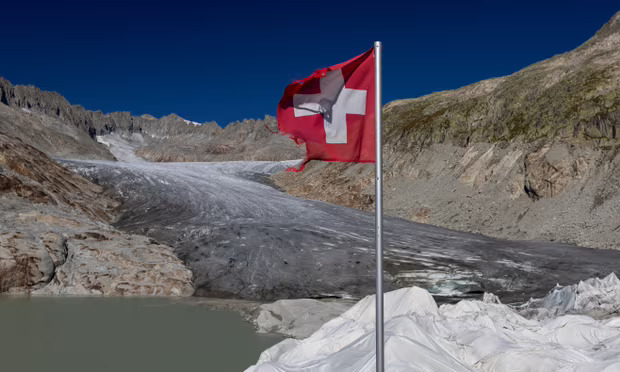
    A Swiss flag at the Rhône glacier in Obergoms, Switzerland. Photograph: Denis Balibouse/Reuters
    A Swiss flag at the Rhône glacier in Obergoms, Switzerland. Photograph: Denis Balibouse/Reuters

    Swiss glaciers have lost 10% of their volume in just two years, a report has found.

    Scientists have said climate breakdown caused by the burning of fossil fuels is the cause of unusually hot summers and winters with very low snow volume, which have caused the accelerating melts. The volume lost during the hot summers of 2022 and 2023 is the same as that lost between 1960 and 1990.

    The analysis by the Swiss Academy of Sciences found 4% of Switzerland’s total glacier volume vanished this year, the second-biggest annual decline on record. The largest decline was in 2022, when there was a 6% drop, the biggest thaw since measurements began.

    Experts have stopped measuring the ice on some glaciers as there is essentially none left. Glacier Monitoring in Switzerland (Glamos), which monitors 176 glaciers, recently halted measurements at the St Annafirn glacier in the central Swiss canton of Uri since it had mostly melted.

    …

    https://www.theguardian.com/environment/2023/sep/28/swiss-glaciers-lose-tenth-volume-in-two-years-climate-crisis