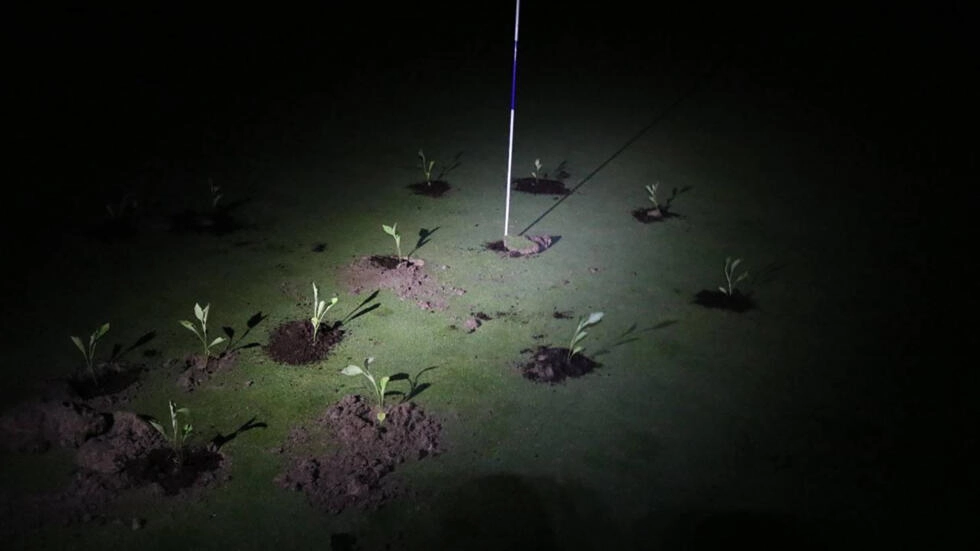
Madrid (AFP) – Climate activists said Sunday they had plugged the holes on 10 golf courses across Spain to protest at the sport’s excessive water usage as Europe lives through a severe drought.
Activists from Extinction Rebellion (XR) filled in the holes under cover of darkness in Barcelona, Madrid, Valencia, the Basque Country, Navarra and the Balearic Island of Ibiza to denounce “the waste of water during one of the worst droughts Europe has ever suffered”.
“Golf has no place in a world without water,” said a statement from the group, which uses direct action to underline its warnings about the dangers to the planet.
…
“Just one hole of a golf course consumes more than 100,000 litres of water a day to maintain the surrounding green,” XR said, citing figures from the Spanish NGO Ecologists In Action.
…
Experts say parts of Spain — which is the world’s biggest exporter of olive oil and a key source of Europe’s fruit and vegetables — are the driest they’ve been in a thousand years, with the prolonged drought depleting reservoirs to half their normal capacity.
…
Extinction Rebellion said it was part of a series of international protests “targeting the richest 1 percent of the population” through their golf courses, private jets and high-end cars to make clear that “the rich and their leisure activities that waste essential resources are a luxury we cannot afford”.
…
It should be clear – if you bother to engage your brain – that the climate crisis is already affecting inflation and the cost of living crisis. Less precipitation (rain) and disrupted weather [patterns] through climate change mean less crops and increased prices in the supermarket for your fruit and veg, vegetable and olive oil, all those goods made from wheat, corn, beans, etc. The Capitalists will tell you it’s all because of the war in Ukraine. Bollocks, climate change is adversely affecting crops everywhere, Ukraine is not the only place growing crops. Climate change is affecting everyone now.
It’s also noted that the rich are specifically addressed targeted.
Related: Climate change crisis: Golf courses on borrowed time as Earth’s weather patterns become wilder
‘These partnerships embarrass the LGBTQ+ community at a time when much of the cultural world is rejecting ties to these toxic industries’
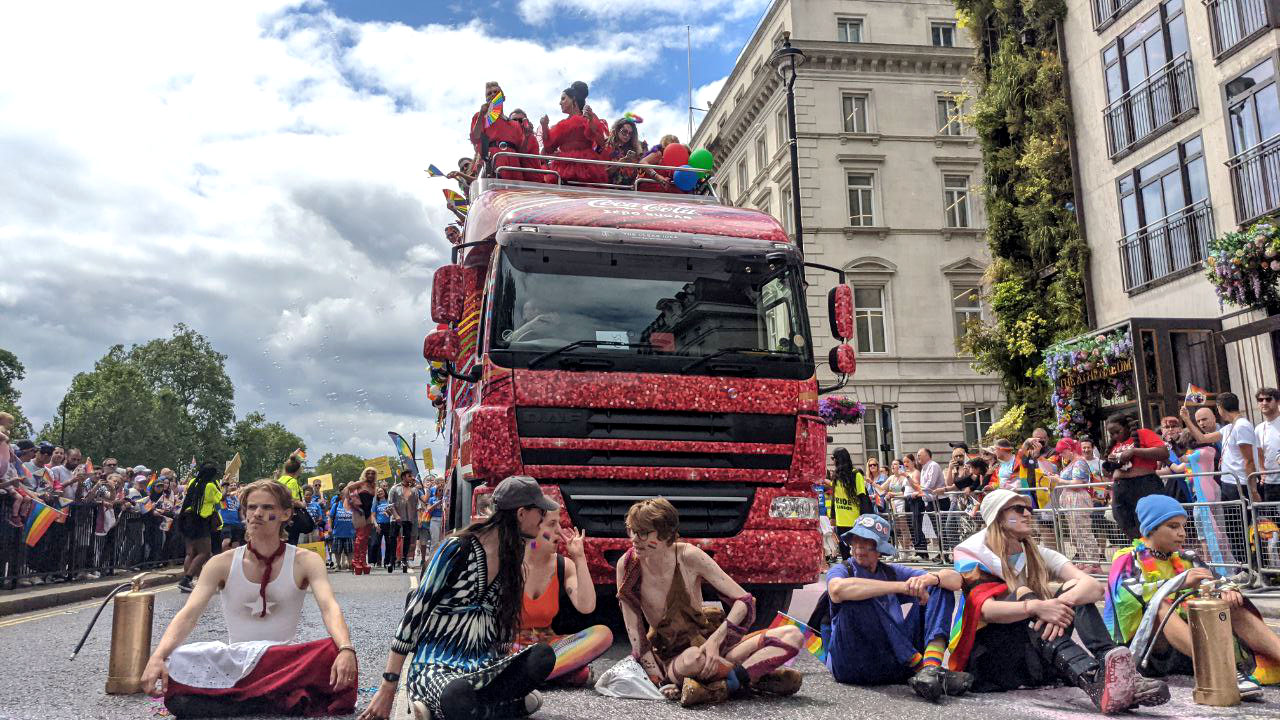
‘Pinkwashing’: Just Stop Oil activists from the LGBTQ community sprayed pink paint and blocked the Pride In London Parade by sitting in front of a Coca-Cola truck taking part in the parade, in protest against Pride working with industries linked to the climate crisis and in protest against Coca-Cola, seen as the world’s biggest plastic polluter, Saturday, July 1, 2023. Image by Just Stop Oil.
Just Stop Oil protesters temporarily blocked London’s Pride Parade Saturday afternoon to protest the event accepting sponsorship money from “high-polluting industries.”
Pride faced accusations of “pinkwashing” over its decision to make United Airlines the headline sponsor of this year’s event.
Seven protesters were arrested at 1:30 pm after blocking the road in front of a Coca-Cola truck. Coca-Cola is seen as the world’s biggest plastic polluter.
LGBTQ+ members of Just Stop Oil called on organizers to condemn new oil, gas, and coal licenses and stop allowing the inclusion of floats from these corporations in the parade.
James Skeet, a Just Stop Oil spokesperson, said in a statement:
“Pride was born from protest. It speaks to how far we’ve come as a community, that high-polluting industries and the banks that fund them, now see Pride as a useful vehicle for sanitizing their reputations, waving rainbow flags in one hand whilst accelerating social collapse with the other. It is queer people, and particularly queer people of color in the global south, who are suffering first in this accelerating social breakdown. What would those who instigated the gay liberation movement during the Stonewall riots in 1969, make of the corporatized spectacle Pride has now become?”
“These partnerships embarrass the LGBTQ+ community, at a time when much of the cultural world is rejecting ties to these toxic industries. We call on Pride to remember the spirit in which it was founded and to respect the memory of all those who fought and died to secure the rights we now possess whilst taking the necessary steps to protect our community long into the future.”
London Mayor Sadiq Khan speaking before the parade said:
“I agree with protesting in a way that is lawful, safe, and peaceful. I think that Extinction Rebellion and Just Stop Oil are really important pressure groups trying to put power on those who have power and influence.”
“I fully support the right to protest. It’s really important to recognize the joy of democracy is protest.”
“I am somebody who feels quite passionately that we have to tackle the climate emergency. And I feel quite passionately about encouraging people to join the movement to tackle the climate emergency. In my view, protest should be peaceful, lawful, and safe.”
Peter Tatchell, the legendary LGBTQ+ rights campaigner, and prominent member of the Gay Liberation Front and the civil resistance group OutRage! Said:
“I helped organize the first Pride in the UK in 1972 and have attended every Pride London march since then. Pride was always meant to be both a celebration and a protest. From the outset, we stood in solidarity with other struggles for freedom and social justice, against corporate pinkwashing and all forms of exploitation. We saw queer liberation as just one aspect of a wider liberation movement.”
“Climate destruction is destroying communities, jobs, homes and lives across the world, especially in poorer countries. Fossil fuels are endangering the survival of humanity – including LGBTQ+ people. Our community must not collude with environment, species and climate destroying companies.”
[4 twitter threads that twitter is refusing to embed, see Original article ]
Our system is killing us. The root of the wreckage we see around us is a broken democracy, not a broken climate. Climate chaos is just a symptom of the endless greed of the powerful – who won’t stop until they’ve trashed even what they need to survive.
This reality is so terrifying that we all want to believe it’s not true. Surely our lives are in good hands, minus a few bad apples. But for more and more people, these last shreds of comfort are going up in wildfire smoke. We’re told to watch the world burn while politicians license new oil – and still obey?
If that makes your head and heart explode, there’s only one place to go: Civil Resistance. It’s the step we take when we definitively turn our backs on the criminals in power, refusing to give them one more second of our time and respect.
All over the world, this is happening. A Glasgow community spontaneously gathers to save neighbours from deportation. The Stop Cop City movement in Atlanta refuses to let the police raze the forest for a vast training complex. People block the subway in New York, in rage and defiance, after homeless black man Jordan Neely was murdered. Just Stop Oil’s partners in the A22 network send shockwaves across Europe – blocking roads, throwing paint over private jets, turning fountains black.
Like these sister movements, Just Stop Oil is clear about what civil resistance means: we no longer consent to a system that doesn’t care if we live or die. A system so dysfunctional it’s willing to sacrifice us to a clique of criminals profiting from shortened lives, hunger and despair. Resistance means we no longer cooperate with a state that holds us in utter contempt, lies to us and treats us as worthless. If the State has no regard for us, we owe it nothing in return.
The good news amongst all this darkness is that civil resistance works. It’s not a miracle cure by any means, but the balance tips decisively in its favour. It’s got rid of dictators like Serbia’s Slobodan Milosevic, brought down segregation in the US, won votes for women, removed the British from India, and helped Polish trade unionists free themselves from Soviet oppression. Just Stop Oil could be just months away from joining this roll of honour.
The techniques of civil resistance can include strikes, boycotts, blockades, cultural disruption and occupations. Its results are just as varied. Civil resistance sometimes wins by sparking mass mobilisation, compelling people to leave the sidelines and join in. Sometimes by dividing the State against itself, winning over police and the judiciary. Victory can also come from raising the costs of keeping a system going – until it’s easier for the oppressor to give way. But behind all these tactics and objectives is the absolute withdrawal of consent from a system that’s failing in its duty to provide protection, care and justice for ordinary people like us.
Here, this failure is stark. Our government takes our hard-earned money, via taxpayer subsidies, and pours it into new oil and gas projects, which will lead to misery, deprivation, suffering and death. It breaks its own climate targets, marching us towards social, economic as well as environmental collapse. It lies to us and gaslights us – telling us new oil will cut our energy bills when we all know it’s going to be sold for profit on the global market, at a global price. As one of our spokespeople, Emma Brown, put it so clearly in an interview: ‘The British public isn’t silly.’ We know we’re being lied to. We know we’re being thrown to the wolves.
If you can’t un-know these horrifying truths, join us in civil resistance before it’s too late. Policy and legislation can’t get us the change we need. They can codify the progress we make – but that will come afterwards. Now is the time to resist and that means all of us. The method will work its magic, but not without you.
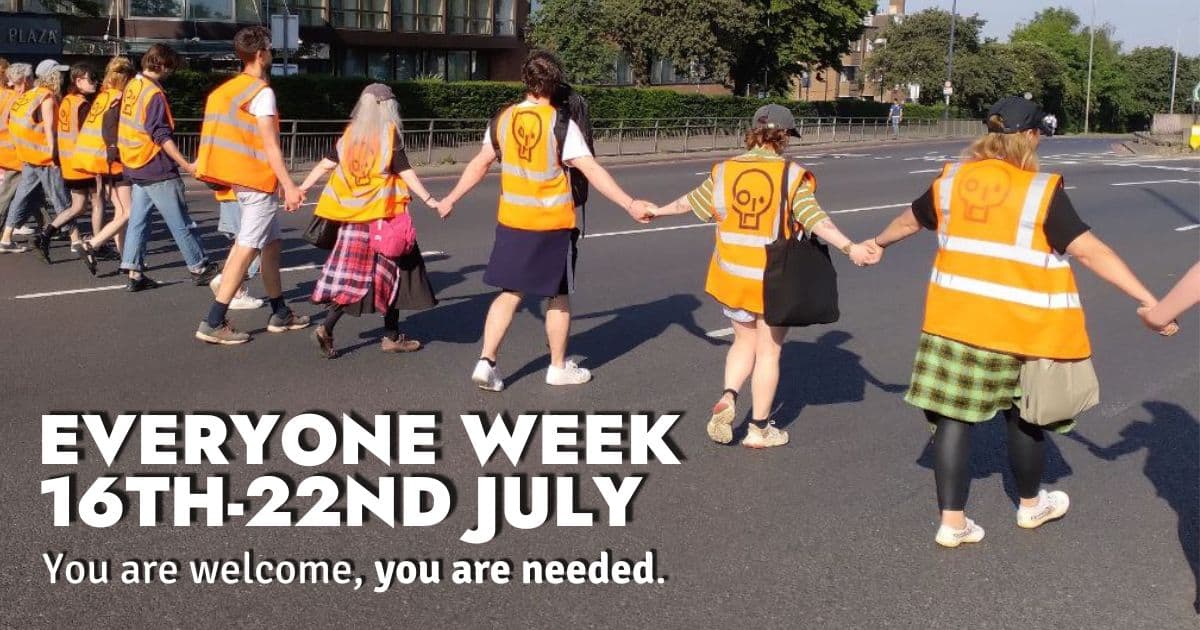
Join Just Stop Oil on a slow march at midday every Saturday, at Parliament Square until we win.
Reading list
1. This is an Uprising, Paul Enger & Mark Engler
2. Blueprint for a Revolution, Srdja Popovic
3. The End of Protest: A new blueprint for Revolution, Micah White
4. Don’t think of an Elephant, George Lakoff
5. From Dictatorship to Democracy, Gene Sharp ( PDF Available free online)
Scientists have warned that 2024 could mark the year when global warming exceeds 1.5℃ above pre-industrial levels. They attribute these predictions, at least in part, to the emergence of an El Niño event.
An El Niño is declared when the sea surface temperature in large parts of the central or eastern equatorial regions of the Pacific Ocean warms significantly – sometimes by as much as 2℃. This additional heat in turn warms the atmosphere. During El Niño years, this warming contributes to a temporary rise in the global temperature by a fraction of a degree.
You can listen to more articles from The Conversation, narrated by Noa, here.
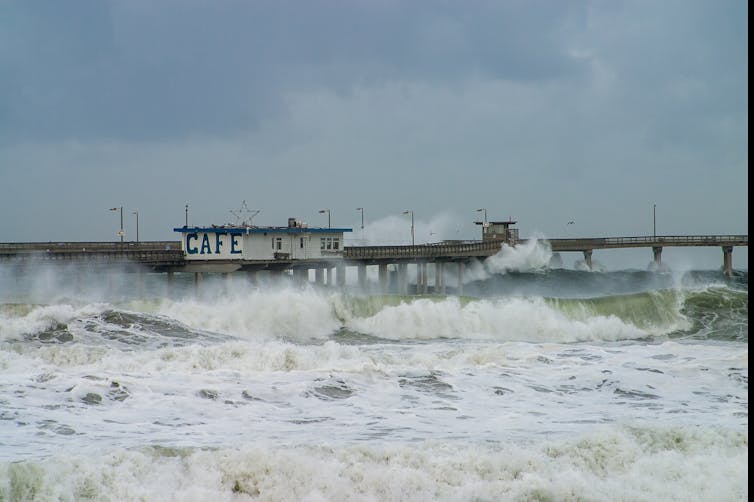
El Niño primarily affects weather in the tropics. Intense downpours that would usually fall on parts of south-east Asia or eastern Australia instead fall on the west coast of South America. This change can cause major drought and flooding on different continents, affecting food production and even weather-dependent sports like cricket.
But changes to the weather in these regions can have knock-on effects all over the world. Even thousands of kilometres away in northern Europe, El Niño tends to cause colder and drier winter weather.
Yet many factors affect European weather, especially during winter. So care is needed when linking unusual weather events in Europe to El Niño.
The Pacific Ocean spans over 13,000 kilometres from its eastern edge on the South American coast to its western margins near Indonesia. The sea surface temperature changes considerably over this vast distance.
Normally, the eastern edge of the Pacific Ocean is more than 5℃ colder on average than the western Pacific. This is primarily due to the upwelling of cold water near South America, a process in which colder water is pulled up from deeper down in the ocean.
However, this temperature contrast flattens or steepens every few years in a natural cycle called the El Niño southern oscillation (Enso). During this cycle, the strength of trade winds that blow westwards across the Pacific can strengthen or weaken, causing more or less cold water to upwell and flow along the equator.
We’re currently entering a period where the eastern Pacific will be warmer than it usually is – an El Niño event. Forecasts suggest that a part of the equatorial Pacific, regarded as a key indicator of Enso, has a 50% chance of warming by over 1.5℃ by the start of 2024.
How Pacific Ocean temperatures change during an El Niño event.
La Niña is the opposite phase of the cycle. It is instead characterised by cooler sea surface temperatures in these waters. This year brought an end to three successive La Niña years.
The western tropical Pacific region has some of the warmest ocean temperatures on Earth. Humid air tends to converge here, creating unstable conditions characterised by turbulent rising air known as convection by meteorologists. The result of this is towering clouds and intense rainfall.
The region with the highest ocean temperature tends to experience the greatest amount of rainfall. As the warmest ocean temperatures shift eastward during El Niño, so too does the location of maximum cloud cover and rainfall.
Each El Niño event is different. Some mainly warm the eastern Pacific Ocean, such as the 1997-98 event. Others cause more warming in the central Pacific, like in 2009-10.
How does it affect Europe’s climate?
Towering clouds and intense rains in the western Pacific create atmospheric waves known as Rossby waves. These waves extend over thousands of kilometres and travel into and along the eastward-flowing jet streams that encircle the planet’s mid-latitude regions. When the Rossby waves interact with the jet streams, they cause them to undulate.
As unsettled weather in the Pacific moves eastwards during an El Niño event, it influences the location of the peaks and troughs of these Rossby waves. This results in subtle changes in the positions of the jet streams. These alterations in the jet streams, which play a significant role in shaping weather patterns, can have notable effects on weather conditions worldwide.
Depending on the specific movement of the jet stream in a particular area, the effect can either lead to warmer or cooler weather, despite El Niño warming the global climate as a whole. El Niño tends to slightly warm Europe in summer and slightly cool northern Europe in winter.
External noise
However, a colder-than-average winter in Europe is not guaranteed during an El Niño event. Europe’s winter climate is affected by various factors beyond El Niño, including conditions in the Atlantic, the amount of Arctic sea ice and the state of the stratosphere 15-40km above us (which is itself affected by El Niño).
For instance, the quasi-biennial oscillation – a regular reversal of winds that blow high above the equator – can alter wind patterns in the stratosphere. This can subsequently affect the position of the North Atlantic storm track, which influences Europe’s winter weather.
But even then, the underlying warming trend caused by climate change is making higher temperatures more probable in all seasons. Together, these other factors make any climatic signals from El Niño harder to detect and forecast. Caution must therefore be exercised before attributing anomalies in European winter weather to El Niño alone.
Don’t have time to read about climate change as much as you’d like?