Category: Climate Crisis

  • Climate change: multi-country media analysis shows scepticism of the basic science is dying out

    Spread the love

    This article is republished from The Conversation under a Creative Commons license. Read the original article.

     

    Frame Stock Footage/Shutterstock

    James Painter, University of Oxford

    Any regular viewer of BBC’s Question Time could be forgiven for thinking that old-fashioned climate science denialism is alive and kicking. In a recent edition, panellist Julia Hartley-Brewer called the IPCC’s climate models “complete nonsense”, and dismissed the 2022 record UK heatwave and the floods in Pakistan by saying: “It’s called weather.”

    But for some time now, researchers have suggested that the balance of arguments propagated by climate sceptics or denialists has shifted from denying or undermining climate science to challenging policy solutions designed to reduce emissions.

    For example, computer-assisted methods applied to thousands of contrarian blogs or websites have found that since the year 2000, “evidence scepticism” which argues that climate change is not happening, or is not caused by humans or the effects won’t be too bad, has been on the decline, while “response” or “solutions scepticism” has been on the rise.

    In the US media and UK media, there is strong evidence too that the prevalence of these arguments may be shifting. By 2019 much less space was being given to those denying the science in newspaper outlets in Australia, Canada, New Zealand, the UK and the US, except in some right-leaning titles.
    tablet showing climate change news article


    From denial to delay.
    Skorzewiak / shutterstock

    But what about television coverage? Recent survey work finds that in most countries, television programmes, including news and documentaries, are by far the most used source of information on climate change compared to online news, print or radio.

    In a new study published in Communications Earth & Environment my colleagues and I looked at 30 news programmes on 20 channels in Australia, Brazil, Sweden, the UK and the US which included coverage of a 2021 report by the IPCC on the physical science basis of climate change. Australia, the UK and the US were chosen for their long history of climate scepticism, whereas Brazil and Sweden were included for the more recent arrival of scepticism among key political parties.

    These channels included 19 “mainstream” examples such as the BBC, ABC in Australia and NBC in America, and 11 examples from a selection of “right-wing” channels ranging from Fox News, which commands a large audience, to more outliers such as GBTV in the UK, SwebbTV in Sweden, Sky News in Australia and Rede TV! in Brazil.

    We then watched and manually coded all 30 programmes (around 220 minutes of content) for examples of the different types of scepticism present, following the broad distinction above between “evidence” and “response/policy” scepticism. But we also distinguished between “general response” scepticism, usually advanced by organised sceptical groups, and “directed” response scepticism, where country-specific economic, social and political obstacles to enacting climate policies were mentioned.

    Science scepticism is no longer mainstream

    First, we found that on mainstream channels, the presence of science scepticism, science sceptics and general contestation around the IPCC’s report was much less present in our sample than in the coverage of the previous round of IPCC reports in 2013 and 2014, even in countries that have historically had strong traditions of science denial.

    Second, response scepticism was in some of the coverage by mainstream channels. But in most cases, these were examples of “directed” scepticism. In contrast, there was more non-specific response scepticism on right-wing channels such as right-wing politician and pro-Brexit campaigner Nigel Farage on GBTV arguing that “whatever we do here [in the UK], it’s China that needs to do far more than us”, or a commentator on Fox News suggesting that “only being able to fly when it is morally justifiable would lead to people having to entirely change their lifestyles”.

    Also on right-wing channels, in four countries (Australia, Sweden, the UK and the US) sceptics were combining evidence and response scepticism. For example, Fox News continued its historical record of scepticism by criticising the IPCC report and hosting evidence sceptics, but it also included a wide range of examples of response scepticism (such as the infringement on civil liberties by taking climate action).

    Finally, we looked at the sorts of arguments that were being made, following a useful taxonomy of climate scepticism or obstructionism published in the journal Nature in 2021. We found a wide variety of claims, but the most common concerned the high cost of taking action and “whataboutism” (typically questioning the need to take action when other countries such as China were not doing enough).
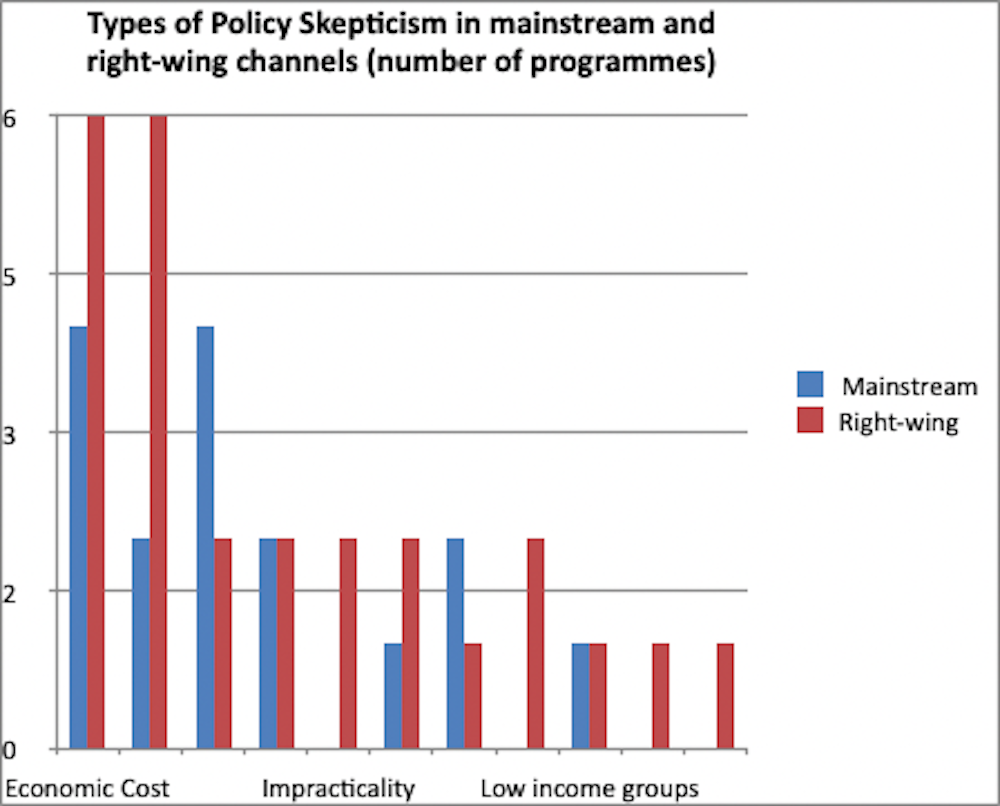
    Graph showing types of policy scepticism


    The most common policy scepticism concerned the economic cost of climate action.
    Painter et al / Nature Comms, Author provided

    Why does this matter? First, how these arguments play out on television is hugely important because of its dominance as a source of climate information. Second, there is strong evidence that media has a very powerful agenda-setting effect, and in certain contexts, can exert a strong effect on attitudes and behaviour change.

    Legitimate policy discussion needs to be carefully distinguished from false claims put out by organised sceptical groups. But for those active in opposing organised scepticism, any definitive shift towards response scepticism across the media, such as vocal opposition to net zero policies, represents an important new challenge to climate action. The Conversation

    James Painter, Research Associate, Reuters Institute, University of Oxford

    This article is republished from The Conversation under a Creative Commons license. Read the original article.

  • How much do people around the world care about climate change? We surveyed 80,000 people in 40 countries to find out

    Spread the love

    This article is republished from The Conversation under a Creative Commons license. Read the original article.
     

    ra2 studio / shutterstock

    Simge Andı, University of Oxford and James Painter, University of Oxford

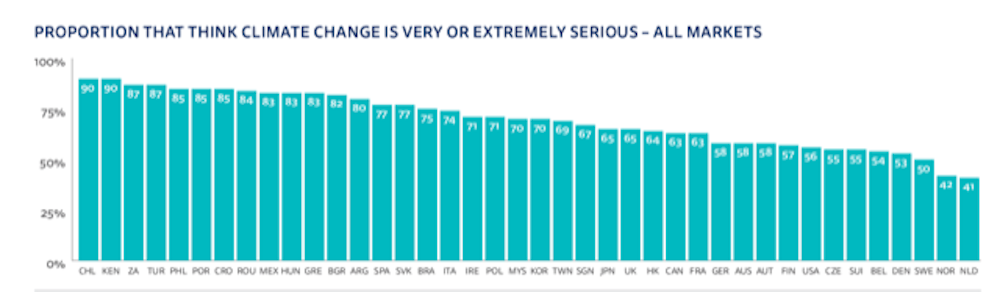
    New survey results from 40 countries shows that climate change matters to most people. In the vast majority of countries, fewer than 3% said climate change was not serious at all.

    We carried out this research as part of the University of Oxford’s Reuters Institute annual Digital News Reports. More than 80,000 people were surveyed online in January and February of this year.

    Almost seven in ten think climate change is “a very, or extremely serious, problem”, but the results show notable country differences. Lack of concern is far higher in the US (12%) as well as in Sweden (9%), Greta Thunberg’s home country. Despite disastrous bush fires at the time of our fieldwork, 8% of respondents in Australia report that climate change is not serious at all. These groups with low levels of concern tend to be right wing and older.

    Four of the five countries showing the highest levels of concern (85-90%) were from the global south, namely Chile, Kenya, South Africa and the Philippines. However, in countries with lower levels of internet penetration, our online survey samples over-represent people who are more affluent and educated.


    Almost everyone in Chile and Kenya thinks climate change is serious. But that’s not the case in Scandinavia and the Low Countries.
    Reuters Institute Digital News Report, Author provided

    Perhaps surprisingly, the five countries with the lowest levels of concern are all in Western Europe. In Belgium, Denmark, Sweden, Norway and the Netherlands, only around half (or less) think that climate change is a serious problem.

    It is the first time that results from survey questions on climate change have been included in the Reuters Institute’s reports, so it is difficult to draw out historical trends. However, results in 2015 from the Pew Center based on surveys in 40 countries (with different questions and countries to those in our survey) found that 54% of those surveyed thought that climate change was “a very serious” problem.

    So it looks like concern for climate change may be rising globally. There is certainly strong evidence that it is increasing in some countries. In the US, in November 2019 two in three Americans (66%) said they were at least “somewhat worried” about global warming, an increase of 10 percentage points over the past five years.

    In the UK, data from the CAST centre at Cardiff University showed that in 2019 levels of “worry” about climate change were at their highest recorded point. Extreme weather events, media reporting and wider publicity were mentioned by respondents as reasons for their increase in concern.

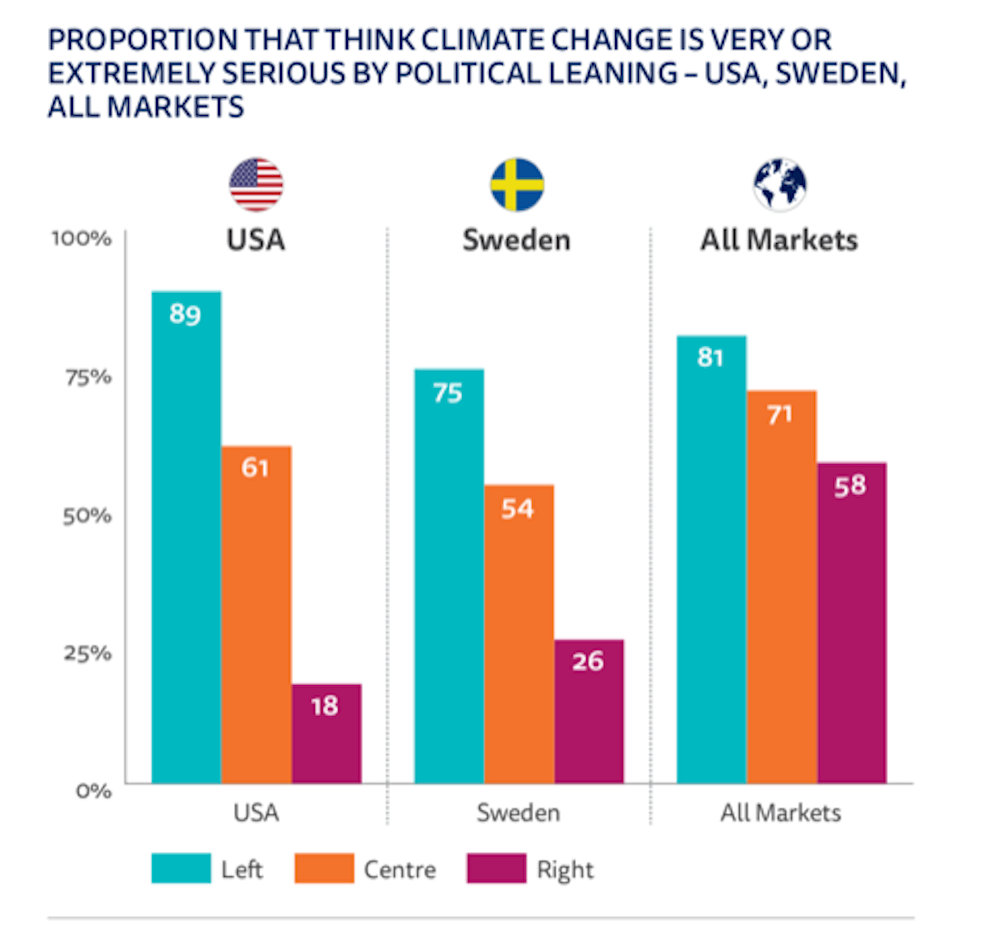
    In our survey, across countries and markets, individuals who identify as left-wing tend to report higher levels of concern. This finding is even more visible in more polarised societies such as the US where 89% of those who self-identify on the left note that climate change is serious, compared to only 18% of those who self-identify on the right.


    Right-wingers tend to take climate change less seriously – especially in the US and Sweden.
    Reuters Institute Digital News Report, Author provided

    We also find a similar divide in Sweden. As Sweden is widely considered one of the world’s most progressive nations, these results surprised us and we asked Martin Hultman, a researcher in climate denialism at Chalmers University in Gothenburg, what to make of them.

    “These figures do not surprise me”, he told us in an email. “Since 2010, the leadership of the far-right political party Sweden Democrats has been against all types of policies to tackle climate change, including the Paris Agreement.”

    “And we know that the spread of climate change denial ideas and rhetoric is widespread in Sweden – not least when digitally-born far-right media sites spread conspiracy theories about Greta Thunberg.”

    TV news still dominates

    Across all countries, people say they pay most attention to climate news on television (35%). Online news sites of major news organisations are the second most popular news source (15%), followed by specialised outlets covering climate issues (13%), then alternative sources such as social media and blogs (9%).

    Figures from the UK, US and Australia are broadly in line with these preferences. Printed newspapers and radio are way down, with only around 5% saying each was the source they paid most attention to. In Chile, where the concern is high, specialised outlets covering climate issues (24%) as well as alternative sources such as social media (17%) are nearly as popular as television (26%).

    The differences in climate news consumption are also visible among different age groups. Younger generations, more specifically the so-called Generation Z (aged 18-24), are more likely to report paying attention to alternative sources on climate change (17%) as well as TV (23%) and online news sites from major news organisations (16%). Older people, however, rely more heavily on TV (42%) and use less of the online news sites (12%) or alternative sources such as social media (5%).

    Respondents from both sides of the political spectrum criticise the media for either being too doom-laden, or not bold enough, in their coverage of climate change. That said, our survey shows that almost half of our respondents (47%) think that news media generally do a good job of informing them about climate change, and 19% think that they do a bad job.

    However, those who have low levels of concern are much more inclined to say that the news media are doing a bad job (46%). This might indicate a lack of trust in climate change coverage or a more general loss of confidence in the news media. The Conversation

    Simge Andı, Postdoctoral Research Fellow, Reuters Institute for the Study of Journalism, University of Oxford and James Painter, Research Associate, Reuters Institute, University of Oxford

    This article is republished from The Conversation under a Creative Commons license. Read the original article.

  • XR campaigners demand government enters talks about the climate emergency in seven-day ultimatum

    Spread the love
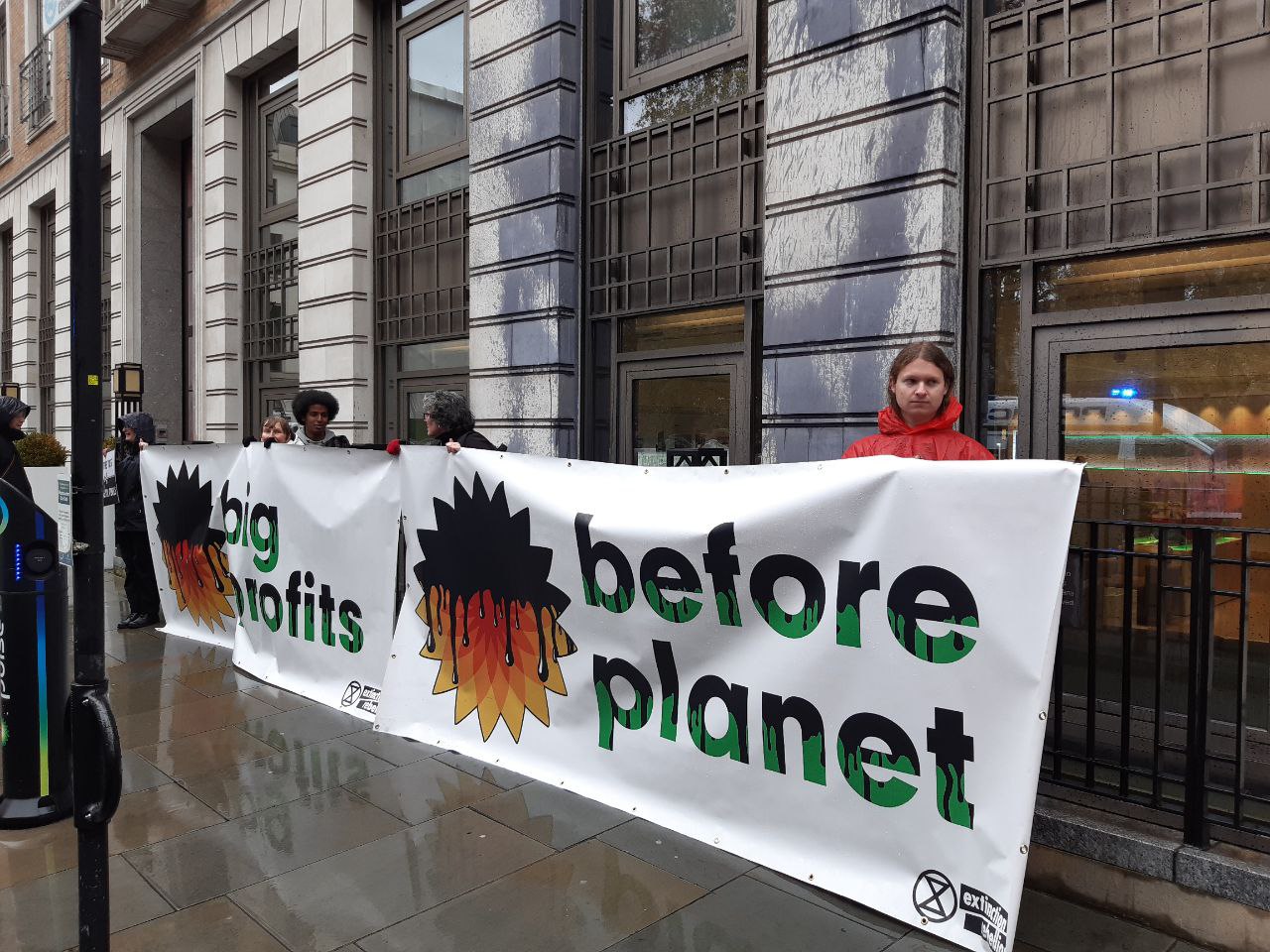
    Extinction Rebellion protests at BP
    Extinction Rebellion protests at BP

    https://morningstaronline.co.uk/article/b/xr-campaigners-demand-government-enters-talks-about-the-climate-emergency-in-seven-day-ultimatum

    ENVIRONMENTAL campaigners have delivered a seven-day ultimatum to the government, demanding it enter talks about the climate emergency.

    Extinction Rebellion and allies from almost 200 environmental and social justice groups, including the PCS union, Greenpeace and War on Want, delivered two demands today.

    The alliance called for the government to halt the search for new fossil fuels immediately. And it also demanded the government should set up emergency citizens’ assemblies to let the people decide how to end the fossil fuel era, setting a deadline for ministers to enter into talks.

    If ministers fail to respond by 5pm on Monday April 24, XR and allies have vowed to step up their campaigns and actions across the country to force them to do so.

    …

    https://morningstaronline.co.uk/article/b/xr-campaigners-demand-government-enters-talks-about-the-climate-emergency-in-seven-day-ultimatum

    comment by dizzy: I doubt that the UK government will respond positively to XR’s demands and instead disregards the climate crisis.

  • Just Stop Oil protest at World Snooker Championship

    Spread the love

    Well done, Just Stop Oil.

    The climate crisis affects snooker fans too …

  • Exxon’s new ‘advanced recycling’ plant raises environmental concerns

    Spread the love

    https://www.theguardian.com/us-news/2023/apr/10/exxon-advanced-recycling-plastic-environment

    Advocates warn plants like the latest addition to the Texas complex generate hazardous pollutants and provide cover for oil giants to produce new plastic products

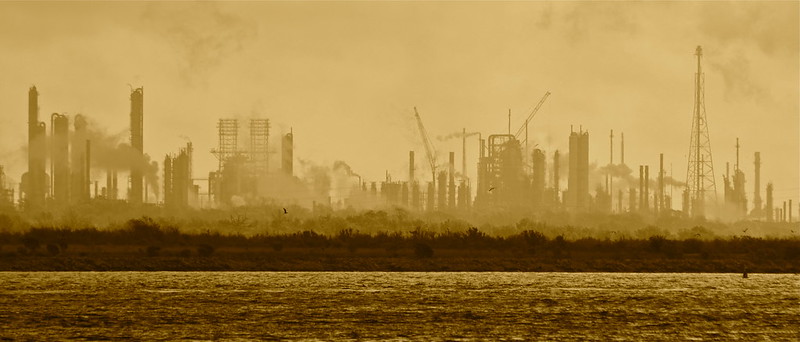
    Exxon plant at Baytown, Texas

    ExxonMobil just launched one of the largest chemical recycling plants in North America – but environmental advocates say the technology is a dangerous distraction from the need to reduce plastic production.

    On the surface, the latest addition to ExxonMobil’s giant petrochemical refinery complex in Baytown, Texas, sounds like it could be a good thing: An “advanced recycling” facility capable of breaking down 36,000 metric tons of hard-to-recycle plastic each year. But plastic waste advocates warn that plants like it do little actual recycling, and instead generate hazardous pollutants while providing cover for oil giants to keep producing millions of tons of new plastic products each year.

    The facility, which began large-scale operations in December of last year, is one of the largest chemical recycling plants in North America. Chemical recycling works by breaking down plastic polymers into small molecules in order to make new plastics, synthetic fuels and other products. Companies like ExxonMobil have rebranded the technology as “advanced recycling” and are now touting it as the latest hi-tech fix to address the plastic crisis, as traditional, mechanical recycling has failed to slow the tide of plastic piling up in landfills and the ocean.

    …

    ExxonMobil’s Baytown complex – which includes the third largest oil refinery in the US and a plant that manufactures 2.3m metric tons of plastic a year – is a major contributor to regional air and water pollution. It also has a long history of emitting chemicals above its permit limits, including the carcinogenic compound benzene. In recent years, ExxonMobil’s Baytown complex has been the site of fires and explosions that have injured workers and triggered shelter-in-place orders for nearby residents.

    “Exxon has a terrible track record of polluting the Baytown community,” Luke Metzger, the executive director of Environment Texas, told the Guardian. “This false ‘chemical recycling’ will only produce more toxic misery for Baytown.”

    https://www.theguardian.com/us-news/2023/apr/10/exxon-advanced-recycling-plastic-environment