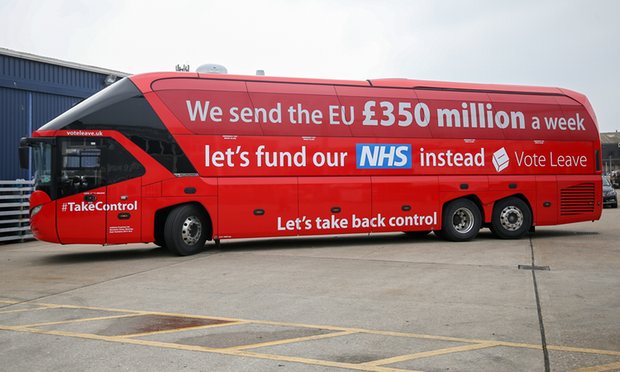
That’s a funny-looking bus, it’s Boris’s lying anti-EU bus promoting money for the NHS when all the anti-EU shites are anti-NHS Neo-Liberal shites.
‘The Prime Minister’s key pledge of reducing the size of the waiting list by March 2024 is looking more and more in doubt.’
The number of people stuck on NHS waiting lists has reached a record high, despite promises from ministers to eliminate lengthy backlogs.
Figures released on October 12, show that as of the end of August there were 8,998 people waiting for treatment for over 18 months, a sharp increase from 7,289 in July. Overall waiting list figures have reached a record high, with 7.75m people waiting for treatment at the end of August, up from 7.68m in July, marking the highest figure since records began in 2007.
The government had promised that all patients who had been waiting for 18 months for an operation in hospital would be treated by April. The following month, the health secretary Steve Barclay admitted that the government had not met its target. Failure to eliminate 18-month backlogs is embarrassing for Sunak, who made ‘cut waiting lists’ one of this five key promises. In January, the Prime Minister had said that “lists will fall, and people will get the care they need more quickly.”
In response to Prime Minister Rishi Sunak’s latest comments on the escalating conflict between Israel and Hamas, Sacha Deshmukh, Amnesty International UK’s Chief Executive, said:
“It is right that Rishi Sunak has expressed horror at the cruel and brutal crimes against Israeli civilians committed by Hamas a week ago, which showed a chilling disregard for life and included war crimes.
“But for the Prime Minister not to mention the Palestinian civilians killed due to Israeli airstrikes or include any call for all parties to the conflict to uphold international humanitarian law, is deeply troubling.
“Israel’s massive bombing campaign in Gaza has already killed at least 1,900 people and injured more than 8,000. The collective punishment of Gaza’s civilian population through restricting water, fuel, food and electricity is a war crime, and the Israeli army’s order to people in northern Gaza to ‘evacuate’ amounts to forced displacement.
“Now more than ever, world leaders should urgently pressure all parties to uphold international humanitarian law consistently and without double standards. The protection of all civilians – Israeli and Palestinian – must be prioritised.”
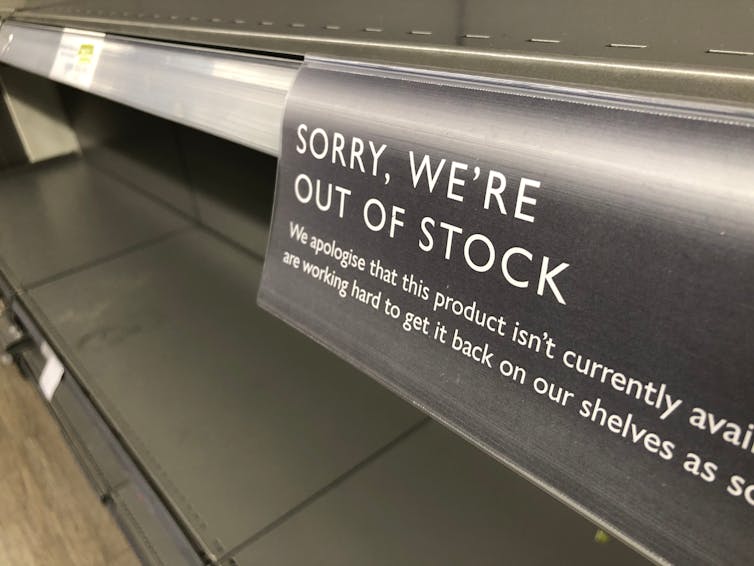
The emptying of supermarket shelves during the COVID pandemic demonstrated the chaos that disruption to the UK’s food supply can provoke. Could this type of disruption have a different cause in the future? And what might the impact on society be?
These are the questions we sought to answer in our new study, which involved surveying 58 leading UK food experts spanning academia, policy, charitable organisations and business.
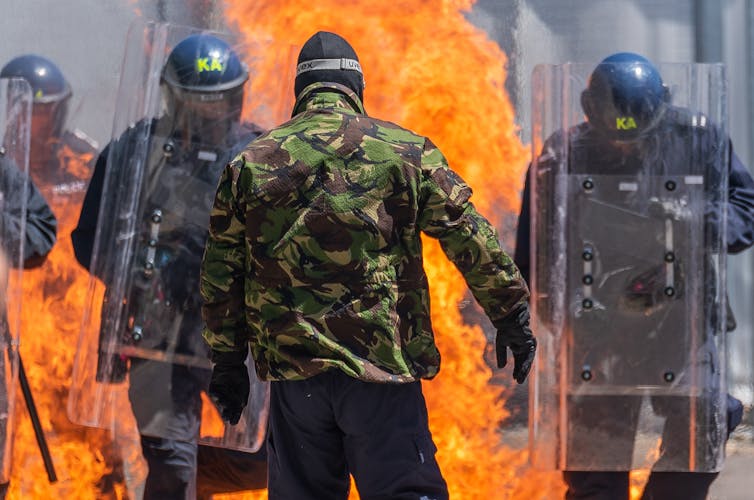
Our findings indicate that food shortages stemming from extreme weather events could potentially lead to civil unrest in the UK within 50 years. Shortages of staple carbohydrates like wheat, bread, pasta and cereal appear to be the most likely triggers of such unrest.
The UK’s food system appears to be particularly vulnerable to significant disruption. This vulnerability can be attributed, in part, to its emphasis on efficiency at the expense of resilience (the ability to withstand and recover from shocks). This approach includes a heavy reliance on seasonal labour and practices like “just-in-time” supply chains, where products are delivered precisely when needed.
Our study emphasises the importance of developing plans to help the UK prepare for, and respond to, the risks associated with food shortages in the future.
Customers emptied supermarket shelves in a panic during the COVID pandemic. Kauka Jarvi/Shutterstock
Expert survey
We asked food experts to rate the likelihood of a scenario occurring in the UK in which more than 30,000 people suffered violent injury over the course of one year through events such as demonstrations or violent looting.
Just over 40% of these experts said they thought such a scenario was either “possible” or “more likely than not” in the next ten years. Over 50 years, nearly 80% of experts believed civil unrest was either possible, more likely than not, or “very likely”.
The experts were then asked about the potential causes of food system disruption that would lead to unrest. They were asked whether they thought this disruption would stem from an overall scarcity of food, or from issues related to food distribution, which could prevent food from reaching the right places and thus create isolated pockets of hunger.
Our results show that most experts (80%) hold the belief that, within the next ten years, logistical distribution issues leading to shortages are the most probable cause of food-related civil unrest.
However, when contemplating a 50-year timeframe, the majority (57%) said an insufficient food supply to sustain the UK population would be the most likely cause, potentially due to events such as a catastrophic harvest failure.
Extreme weather – including storm surges, flooding, snow and drought – was chosen as the leading cause of future food supply shortages and distribution issues over both the ten- and 50-year time frames.
UK already at risk
Just under half of the UK’s entire food supply is imported, including 80% of fruit, 50% of vegetables, and 20% of beef and poultry. Any disruption to imports and supply chains can thus have a significant impact on food availability in the UK. A fall in the availability of food can lead to rising prices and, potentially, social unrest.
COVID, Brexit and the cost of living crisis have highlighted the UK’s vulnerability to such a risk. Between April and August 2022, as inflation squeezed household incomes, over half of independent food banks in the UK reported that 25% or more of the people they supported hadn’t used their services before.
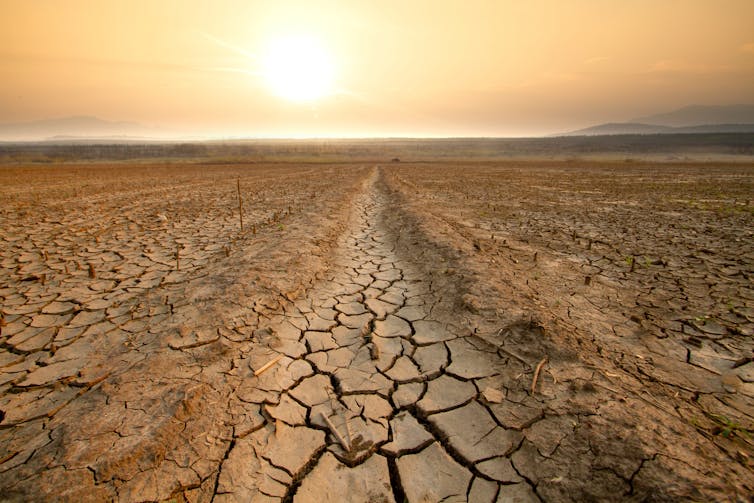
Extreme weather events are also occurring more frequently. Many of these events are driven by climate change. It’s entirely possible that extreme weather will cause major crop yield failures across “multiple breadbaskets” in the coming decades.
This scenario is not far-fetched. We have witnessed numerous instances of major shocks to food production in recent decades.
One notable example, in 2007, saw an 8% decline in global cereal production due to droughts, floods and heatwaves in Australia, India and the US. These events, combined with low global cereal stocks, financial speculation and high fertiliser prices, resulted in cereal prices more than doubling. The crisis sparked food riots in more than 30 countries.
To reduce the risk of civil unrest occurring in the UK as a result of food shortages, it’s crucial to address food poverty. By ensuring people can access and afford the food that is available, trust can be built between communities, government and food supply chains over time.
A scenario where crops fail catastrophically is not far-fetched, say food experts. Piyaset/Shutterstock
Redesigning the food system
The UK needs a food system designed not just for optimal efficiency, but also for resilience. Government agencies and businesses must explore and fund options to make the food system more robust to shocks.
This should include restoring degraded soils and the habitats used by pollinators, improving working conditions within the food supply chain, and prioritising sustainable farming practices.
Growing more robust crop varieties and species, using resources more efficiently, and establishing backup storage and distribution systems to move away from just-in-time delivery are all key aspects of a more resilient food system too.
Efforts to curb the harmful effects of climate change – the most probable cause of future food shortages and distribution issues – should also be ramped up.
The COVID pandemic saw major challenges with food distribution, from which lessons can be learned. Creating a food system that is both resilient and efficient will safeguard against future disruptions, ensuring that food is accessible and affordable while preventing the emergence of civil unrest.
Don’t have time to read about climate change as much as you’d like?
Climate Change Committee also says rowing back on climate policies has harmed investment into UK
…
In a damning verdict on the prime minister’s announcements last month, the Climate Change Committee (CCC) warned of a “substantial policy gap” that was putting the UK off track to meet its crucial 2030 carbon targets.
Piers Forster, the acting chair of the CCC, said: “The prime minister has relaxed important policies to decarbonise buildings and transport and sent a message to business and the international audience that he will allow more time for the UK to transition to key clean technologies.”
He added: “We remain concerned about the likelihood of achieving the UK’s future targets, especially the substantial policy gap to the UK’s 2030 goals.”
The CCC found there were “insufficient” plans to meet about a fifth of the emissions reductions required by 2030 to hit the government’s international goal of cutting carbon by 68% by 2030, compared with 1990 levels.
…
Image of InBedWithBigOil by Not Here To Be Liked + Hex Prints from Just Stop Oil’s You May Find Yourself… art auction. Featuring Rishi Sunak, Fossil Fuels and Rupert Murdoch.