Revealed: Peter Mandelson asked Jeffrey Epstein for Israel advice

Spread the love

https://www.declassifieduk.org/revealed-peter-mandelson-asked-jeffrey-epstein-for-israel-advice

Keir Starmer picked Peter Mandelson as Britain’s ambassador in Washington, DC. (Photo: Carl Court / Alamy)

Britain’s ambassador to the US asked the convicted paedophile to help vet an Israeli consultant in London.

Lord Peter Mandelson asked Jeffrey Epstein to assist with a background check on an Israeli political consultant, Declassified can reveal.

The Labour party grandee and lobbyist – who is now Britain’s ambassador to the US – has always denied having “any kind of professional or business relationship with Epstein in any form”.

But leaked messages show Mandelson contacted him from his work email address in 2013, more than five years after Epstein had pleaded guilty to solicitation of prostitution with a minor.

Mandelson signed off the email in his capacity as chairman of Global Counsel, the multi-million pound lobbying firm that he co-founded. 

It is not clear whether he got a response, but records show that Epstein forwarded the message to Barak’s personal email address.

The correspondence is contained in a huge leak of Barak’s emails, published by a file-sharing website, Distributed Denial of Secrets (DDoS). 

https://www.declassifieduk.org/revealed-peter-mandelson-asked-jeffrey-epstein-for-israel-advice

Continue ReadingRevealed: Peter Mandelson asked Jeffrey Epstein for Israel advice

Is a shift quietly underway in British politics?

Spread the love

Original article by Paul Rogers republished from Open Democracy under a Creative Commons Attribution-NonCommercial 4.0 International licence.

Up and down the country, Jeremy Corbyn is drawing large crowds | Jeff J Mitchell/Getty Images

As Nigel Farage dominates headlines, Jeremy Corbyn is being overlooked by the media – just as he was in 2017

In May 2017, British Conservative prime minister Theresa May called a snap election three years early, despite having a comfortable majority in Parliament and having told the country she would not do so.

May was polling well and assumed it would be easy to push Jeremy Corbyn’s Labour opposition to a crushing defeat, winning an even bigger majority that would strengthen her hand in Brexit negotiations. Most pundits agreed this was the likely outcome.

But on polling day, May failed dismally. The Tories lost their majority. Corbyn, despite having faced bitter opposition from within his own party since being elected leader two years earlier, somehow managed to reach out over them to speak to a much wider public.

Something had happened to the body politic that had been missed by the media. Now, with the announcement of Corbyn and former Labour MP Zarah Sultana’s new party, a similar shift is underway – and is once again flying under the radar.

As I wrote for openDemocracy at the time, back in 2017, Corbyn was drawing large crowds across the country ahead of the election. When his rallies and meetings were held in public spaces, thousands turned up, often at short notice. If scheduled for indoor venues, these would be full to bursting, and he often had to repeat his speech to those waiting outside.

In one sense, there had already been signs of something going on below the political surface. When Corbyn first ran for the party leadership in 2015 – a contest in which he was the runaway winner – there were early indications that he was attracting considerable support from the grassroots.

A year later, strong opposition from within his own party led to a leadership challenge that he won, again achieving a hugely positive reaction at public meetings in spite of his internal critics.

History is repeating itself. Corbyn and Sultana’s new left-wing offering – not yet officially named but for now known as Your Party – may be a work in progress, but the enthusiasm with which it has been greeted is palpable.

Some 800,000 people have signed up to support the idea. If just a quarter follow through to become members when it is formally established, it may well become the UK’s largest political party by membership overnight, given the collapse in Labour membership.

The idea that a new decidedly left party could come to the fore and acquire serious political power may seem impossible, given Westminster’s First Past the Post voting system, but just look at what is happening across the UK political scene, especially in England.

It’s hard to say how many groups have sprung up across the country to form local concentrations of support for Your Party in the past four or so weeks, but it almost certainly runs into the many hundreds. In the West Yorkshire council where I live, two groups have already met, with two more due to do so in the next week, all with loose coordination yet covering the whole area of the metropolitan council.

In contrast, Labour’s practised and experienced membership bureaucracy is seeing support ebbing away. Accurate, up-to-date figures are not easy to come by, but the party reportedly had 309,000 members six months ago, down from a peak of 532,000 under Corbyn in 2019. Some constituency party treasurers are reporting recent membership losses of up to a third over the past year alone.

There are many factors involved in this decline, not least the Labour leadership maintaining a marked degree of austerity and failing to confront Nigel Farage and Reform UK head-on. But perhaps the key problem is the party’s even greater failure to confront Benjamin Netanyahu and his Israeli government over the appalling genocide they are inflicting in Gaza. This issue, probably more than any other, is leading Labour activists who would normally be at the forefront of projecting its policies to leave the party in droves.

Can Labour’s decline and Your Party’s rise, not to mention the current considerable strength of Farage and Reform UK, lead to a radical re-ordering of the political environment in England? Several things suggest it could be possible.

For a start, we’re likely three years away from a general election being called. That gives enough time for Reform’s weaknesses to show themselves.

The party is substantially trading on fear, principally of migrants, but which commonly extends to a more general ‘fear of the other’. Corbyn is particularly effective at countering this head-on with hope, which is thoroughly appealing and especially so to younger people, as can be seen in new polling showing that one in five 16 and 17-year-olds would vote for Corbyn and Sultana’s new party.

Reform is also vulnerable in its attempts to claim it is standing up for the ordinary person against a woke and distant elite. That simply doesn’t add up; given the considerable wealth floating around the Reform leadership and its funders, it is not difficult to present them as the true elite.

Finally, a serious weakness for Reform and the Tories is their Cnut-like denial of climate breakdown and their addiction to fossil carbon. The folly of that stance may well come to haunt them over the next three years, as more and more ordinary people across the UK experience floods, or wildfires, or other climate crisis-related weather phenomena.

Then there is the other side of the political scales, starting with the election this week of Zack Polanski as the Green Party leader. Polanski has not yet ruled out working with Sultana and Corbyn, and there is time for local electoral pacts to be negotiated in forthcoming elections, especially the many local elections and the Scottish and Welsh national elections taking place next May.

We also should not discount the Liberal Democrats, who have considerable geographical concentrations, north and south of the border. In Scotland, in particular, there are plenty of new, younger politicians coming through, just as there are in the Scottish National Party. Your Party is also likely to lead to the emergence of new political figures on the progressive left in the coming months, while others may decide to defect from Labour to the party.

A couple of other elements are worth watching, too. Sultana, Polanski and Corbyn are all highly committed politicians and very effective communicators. Expect to see a lot more of them, even on the legacy media.

Of them, Corbyn is key. He is not remotely a rabble-rouser, yet for the past ten years, he has maintained a formidable and dedicated network of supporters – even at very difficult times. It is very easy to dismiss what he stands for as being from the past, but perhaps it is actually from the future.

Original article by Paul Rogers republished from Open Democracy under a Creative Commons Attribution-NonCommercial 4.0 International licence.

Experiencing issues with this image not appearing. I suspect because it's so critical of Zionist Keir Starmer's support of and complicity in Israel's genocides.
Genocide denier and Current UK Prime Minister Keir Starmer is quoted that he supports Zionism without qualification. He also confirms that UK air force support has been essential in Israel’s mass-murdering genocide. Includes URLs https://www.declassifieduk.org/keir-starmers-100-spy-flights-over-gaza-in-support-of-israel/ and https://youtu.be/O74hZCKKdpA
UK Labour Party government ministers Keir Starmer, Angela Rayner and Rachel Reeves explain that they are partners complicit in Israel's Gaza genocide. The UK has provided Israel with arms, military and air force support. They explain that they don't do gas chambers but do do forced marches, starvation, destroy hospitals, mass-murders of journalists and healthcare workers.
UK Labour Party government ministers Keir Starmer, Angela Rayner and Rachel Reeves explain that they are partners complicit in Israel’s Gaza genocide. The UK has provided Israel with arms, military and air force support. They explain that they don’t do gas chambers but do do forced marches, starvation, destroy hospitals, mass-murders of journalists and healthcare workers.
Nigel Farage urges you to ignore facts and reality and be a climate science denier like him. He says that Reform UK has received millions and millions from the fossil fuel industry to promote climate denial and destroy the planet.
Continue ReadingIs a shift quietly underway in British politics?

Zack Polanski becomes Green party leader – what happens next?

Spread the love
Zack Polanski is the new leader of the Green party. Alamy/Ron Fassbender

Louise Thompson, University of Manchester

Zack Polanski is the new leader of the Green party in England and Wales after winning a leadership election promising a programme of “eco-populism”. Polanski beat incumbent leader Adrian Ramsay and his partner on the ticket, Ellie Chowns.

It’s been just over a year since the party celebrated its best ever results in the most recent general election. In July 2024, it doubled its vote share and quadrupled its representation in the House of Commons to four MPs.

The same election saw terrible results for the Conservatives and even for Labour, despite its win, raising questions about whether two-party politics was well and truly over. Since then, as professor John Curtice has vividly described, things have started to look even shakier.

This year’s local election saw a “record-breaking” fragmentation of the vote in which less than a quarter of local council seats went to the two main parties. The Greens now hold over 800 seats in more than 170 different councils, adding to their electoral portfolio – which also includes two members of the House of Lords and three London Assembly members.

While Polanski will be celebrating today, party members will look to him to raise their electoral fortunes even further. The electoral challenge for the Greens in England and Wales is two-pronged.

First, the party needs to maintain its position in the seats it has already secured. Its four MPs have fairly comfortable majorities, the smallest being Chowns’ 5,800 majority in North Herefordshire. Second, and perhaps most importantly, it needs to maximise its success in the 40 constituencies where it came second. All but one of these constituencies were won by Labour, which makes Labour voters the prime targets.

My research has shown how the Green party has followed a policy of “total engagement” in recent years. It takes its parliamentary work very seriously, using any and every opportunity to get its message across, even in lower-priority policy areas.

The goal here is to build credibility with the electorate. Small parties tend to want voters to think they are bigger than they are, so they can present themselves as realistic contenders for taking on the heavy work and responsibility of government. Caroline Lucas did a fantastic job of this, punching well above her weight as the party’s only MP between 2010 and 2024.

Together, the Green MPs have made over 380 contributions in the House of Commons. Chowns in particular has been a prolific backbencher, making 161 contributions, while the previous co-leaders Carla Denyer and Ramsay have been much quieter.

With Polanski sitting in the London Assembly rather than the House of Commons, this will inevitably change. The four Green MPs will collectively have more time on their hands and, with the right direction from their new leader, will have the space to be more strategic in their parliamentary activities.

Outsiders

But the Greens have always acted as something of an atypical party too, keeping one foot outside Westminster. Lucas was regularly involved in activism, joining protesters campaigning against tuition fee increases and fracking and to support refugees, to name just a few. She was even arrested in 2013 after joining a protest against energy firm Cuadrilla in Sussex (she was later cleared of all charges in court).

The new Green MPs have continued in this vein, with Sian Berry joining a peaceful protest against far-right agitators in Brighton last year and Chowns pressing the government to water down anti-protest laws.

The new leadership will need to decide whether this strategy enhances their electoral appeal. Does it highlight the Greens’ distinctiveness from the establishment parties, or does it imply they aren’t responsible enough to manage being a party of significant size? The answer depends on who you ask. Polanski has participated in several protests in the past, so chances are this activism will continue to be a core feature of Green party politics.

An added complication for the Greens is that two other parties are also chasing left-leaning voters. One of these is Reform UK. Although associated with rightwing views on social issues, the party came second in many Labour seats in 2024 and needs to appeal to both sides of the political spectrum.

This may explain why the Greens have focused their efforts on highlighting Reform’s failures. Berry, for instance, recently challenged Nigel Farage and his colleagues to publish a log of all their meetings since entering the Commons, arguing that it would be in the public interest.

The other outside threat is Jeremy Corbyn and Zarah Sultana’s new and currently nameless party of the left. While we know little about this party’s policy platform right now, it seems to be veering towards a similarly bottom-up democratic model of organisation which has long been favoured by the Greens – possibly even with co-leaders.

The challenge for the Greens will be to better establish their niche on the left, to ensure they capture voters who are disillusioned with Keir Starmer’s wobbly start. Part of the solution could be to focus on a handful of key policy areas which go beyond the Green party’s niche of environmental issues. At the moment, its MPs take something of a scattergun approach in the Commons, contributing on everything from local buses and universal credit to Ukraine and the Middle East.

Some of the most recent questions asked during Prime Minister’s Questions by Greens hint at the options they might pursue. Ramsay has pushed for a wealth tax on the super rich, and an end to the two-child benefit cap. Both Corbyn and Sultana have, of course, been outspoken on these issues in the past.

If the Greens can’t forge a different path to this new left party, they may have no choice but to consider an electoral pact to avoid splitting the anti-Labour vote right down the middle.

Louise Thompson, Senior Lecturer in Politics, University of Manchester

This article is republished from The Conversation under a Creative Commons license. Read the original article.

Continue ReadingZack Polanski becomes Green party leader – what happens next?

In 2017 under Corbyn, Labour held 94/98 Durham County Council seats – under Starmer it has 4

Spread the love
Continue ReadingIn 2017 under Corbyn, Labour held 94/98 Durham County Council seats – under Starmer it has 4

Dates for the diary: UK Labour Party Conference 2025

Spread the love

UK Labour Party conference is held in Liverpool 28th September to 1st October 2025.

Keir Starmer warns against following the https://onaquietday.org blog.
Experiencing issues with this image not appearing. I suspect because it's so critical of Zionist Keir Starmer's support of and complicity in Israel's genocides.
Genocide denier and Current UK Prime Minister Keir Starmer is quoted that he supports Zionism without qualification. He also confirms that UK air force support has been essential in Israel’s mass-murdering genocide. Includes URLs https://www.declassifieduk.org/keir-starmers-100-spy-flights-over-gaza-in-support-of-israel/ and https://youtu.be/O74hZCKKdpA
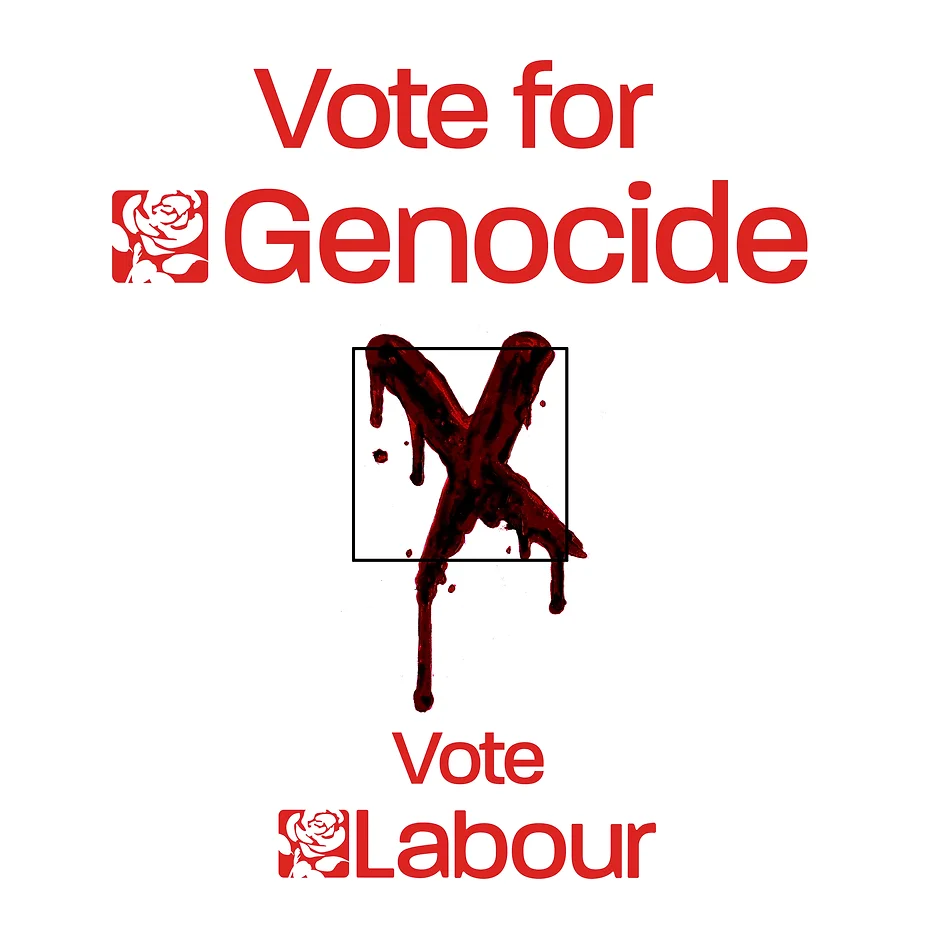
Vote Labour for Genocide.

Continue ReadingDates for the diary: UK Labour Party Conference 2025