UK public has paid £200bn to shareholders of key industries since privatisation

Spread the love

https://www.theguardian.com/politics/2025/sep/16/uk-public-paid-200bn-to-shareholders-of-key-industries-since-privatisation-study

Northern Rail passengers protest over poor service in Manchester in 2019 Photograph: Christopher Thomond/The Guardian

Analysis reveals ‘privatisation premium’ of £250 per household per year paid to owners of water, rail, bus, energy and mail services since 2010

The public has paid almost £200bn to the shareholders who own key British industries since they were privatised, research reveals.

The transfer of tens of billions of pounds to the owners of the privatised water, rail, bus, energy and mail services comes as families face soaring bills, polluted rivers and seas, and expensive and unreliable trains and buses.

As a result, citizens have been paying a “privatisation premium” of £250 per household per year since 2010 alone, the analysis found.

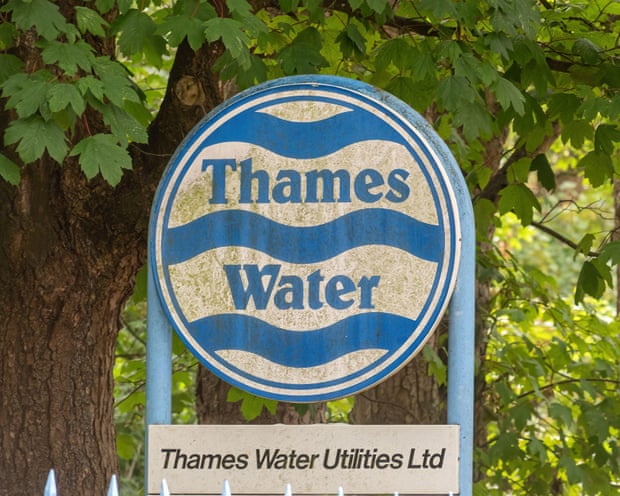
Recent focus has been on the privatised water industry, which has run up long-term debts of £73bn and paid out dividends of £88.4bn in the past 34 years at the same time as overseeing record sewage spills, according to the latest figures.

But for the first time the thinktank Common Wealth has drawn together the haemorrhaging of billions of pounds to shareholders across four key sectors, most of which were privatised from the 1980s and 1990s by Margaret Thatcher’s Conservative government – energy, transport, water and mail.

Article continues at https://www.theguardian.com/politics/2025/sep/16/uk-public-paid-200bn-to-shareholders-of-key-industries-since-privatisation-study

Continue ReadingUK public has paid £200bn to shareholders of key industries since privatisation

Jeremy Corbyn: Surprise, surprise – Labour is reaping what it has sown

Spread the love
Image of Jeremy Corbyn MP, former leader of the Labour Party
Jeremy Corbyn MP, former leader of the Labour Party

https://www.independent.co.uk/voices/jeremy-corbyn-new-party-labour-uk-poverty-b2827322.html

Instead of addressing child poverty, homelessness, poor working conditions or any of the real issues impacting this country, Labour has chosen to deflect the blame and pour billions into arms, says Jeremy Corbyn. Britain is tired of having no political choice – and we’re here to fix that

Over the past year, the government has continued a programme of austerity and privatisation. It has refused to lift the two-child benefit cap, the single biggest driver of child poverty. It has tried to take away the winter fuel allowance. It has increased the bus fare cap. And it has tried to take away £5bn from disabled people, curating a two-tiered benefit system that deprives thousands of people of a dignified life.

There is one area where the government has been very generous, though: arms spending. Government military spending is now at £31.7bn, which is a 6 per cent increase in real terms from last year. Imagine how much better ordinary people’s lives would be if we spent that money on schools, hospitals and green energy instead.

People have had enough of a political regime that serves the interests of billionaires and corporations. They have had enough of a government that inflicts suffering at home and enables genocide abroad. They have had enough of broken promises from political parties that fail to deliver real change.

Original article at https://www.independent.co.uk/voices/jeremy-corbyn-new-party-labour-uk-poverty-b2827322.html

Keir Starmer says that the Labour Party under his leadership all feel a small part of Scunthorpe.
Keir Starmer explains the moral case for cutting disability benefits. He says work will set you free.
Palestine Action joke that appeared in the UK satirical magazine 'Private Eye'.
Palestine Action joke that appeared in the UK satirical magazine ‘Private Eye’.
Continue ReadingJeremy Corbyn: Surprise, surprise – Labour is reaping what it has sown

Revealed: how Boris Johnson traded PM contacts for global business deals

Spread the love

The Boris Files

https://www.theguardian.com/uk-news/2025/sep/08/revealed-how-boris-johnson-traded-pm-contacts-for-global-business-deals

There are more than 1,800 files in the leak of material from Boris Johnson’s private office. Composite: Getty Images/Guardian Design

[Guardian] Exclusive: Leak exposes how former leader has used publicly subsidised office to manage commercial interests

A trove of leaked data from Boris Johnson’s private office reveals how the former prime minister has been profiting from contacts and influence he gained in office in a possible breach of ethics and lobbying rules.

The Boris Files contain emails, letters, invoices, speeches and business contracts. They shine a spotlight on the inner workings of a publicly subsidised company Johnson established after leaving Downing Street in September 2022.

The trove reveals how Johnson has used the company to manage an array of highly paid jobs and business ventures. They raise questions for the former Conservative leader about whether he has breached “revolving door” rules governing post-ministerial careers.

The revelations have echoes of the Greensill Capital lobbying scandal that embroiled one of Johnson’s predecessors, David Cameron. They may also spark questions about the taxpayer-funded allowance that former prime ministers get to run their private offices.

There are more than 1,800 files in the cache, including some that date back to Johnson’s tenure in Downing Street. The Guardian is the only UK media organisation known to have viewed the trove.

https://www.theguardian.com/uk-news/2025/sep/08/revealed-how-boris-johnson-traded-pm-contacts-for-global-business-deals

Continue ReadingRevealed: how Boris Johnson traded PM contacts for global business deals

Plans to ‘maximise extraction’ of North Sea oil and gas would soon run into geological limits

Spread the love
North Sea oil is in its geological twilight. James Jones Jr / shutterstock

Mark Ireland, Newcastle University

“We are going to get all our oil and gas out of the North Sea”, Conservative Party leader Kemi Badenoch said recently. Her promise to “maximise extraction” sets up a clash between political ambitions, economic reality and geological limits.

Reform UK has also said drilling for more oil and gas in the North Sea would be a “day one” priority. But even if the Conservatives or Reform were to be elected and lifted the current moratorium on new exploration licenses, there might not be the promised prizes of oil and gas under the seabed – or enough appetite from investors – to deliver on that promise.

BP, in those days British Petroleum, first extracted gas from under the North Sea in 1967. It marked the start of what was to become, for decades, one of the most valuable sectors of the UK economy, with more than 400 separate oil and gas fields developed to date.

But production peaked in 1999 and the North Sea now produces less than half as much as in its heyday.

It is now a “mature” basin: most of the biggest and easiest-to-develop fields have already been discovered and depleted. What remains are smaller, sometimes more remote, and often more technically challenging or expensive resources and reserves.

This is typical of ageing oil and gas provinces, where production declines even as operating costs rise. New projects must compete with oil and gas extracted from other parts of the world where it is easier and cheaper and more appealing to investors.

Finding oil and gas

Historically, only one in eight exploration wells in the North Sea led to a field producing oil and gas. That ratio has improved: between 2008 and 2017, a bit more than one in four wells led to a commercial success.

But far fewer wells are being drilled today. Even with the advances in technology, such as improved geophysical imaging which allows us to better define opportunities ahead of drilling, the big discoveries were probably made decades ago.

UK exploration wells vs offshore fields by year:

Graph showing wells and oil fields by year
The number of exploration wells is down hugely from its peak in the 1980s and early 90s. Mark Ireland / NSTA

The UK government’s North Sea Transition Authority estimates there could still be around 3.5 billion barrels of oil equivalent in more than 400 undeveloped prospects. But most of these potential fields are small, isolated or technically complex. Developing them will require high oil and gas prices, fiscal stability, and a lot of investor confidence.

Politics vs geology

Even if a future government relaxes exploration licensing rules, geology will remain the bigger constraint. The North Sea is simply not as cheap as it was, and global fossil fuel giants have many other options. It is currently far cheaper to produce oil and gas in other regions, the Middle East or North Africa for example. Projects in these countries are all competing for the same capital.

Volatility in the energy sector will continue to make investors cautious. The 2015 oil price crash cut activity in the UK sector to its lowest level in decades, and it has never fully recovered. As fossil fuels are sold on the global market, political volatility, international and national, can lead to rapid shifts in investor confidence.

In the UK the introduction of a windfall tax in 2023 and changing requirements for environmental impact assessments are all making decision making on long-term projects riskier. And while the UK still needs considerable volumes of gas in future (and more modest amounts of oil) both are declining as our energy system evolves and renewable energy expand.

The UK’s mix of economic uncertainty, mature geology and smaller discoveries will make it harder to attract major international energy firms.

The future of the North Sea

That doesn’t mean the North Sea has finished as a source of oil and gas. For instance, undeveloped discoveries – where oil or gas has been confirmed but not yet produced – represent a lower-risk opportunity. But returns may be modest as many are relatively small and isolated from existing infrastructure.

New exploration licenses, if issued, might extend production modestly, but they are unlikely to deliver another game-changing discovery.

Some analysts argue that future licensing should be highly strategic, limited to projects with clear economic importance or climate compatibility. That approach could reduce reliance on imported gas, which tends to be more carbon-intensive than gas produced domestically. This would certainly make more sense than restarting fracking. But it would still not recreate the industry’s heyday.

Easy oil is over

The North Sea will still produce oil and gas for years to come, but its role will shrink. Even with friendlier policies, the era of big discoveries and rapid growth isn’t coming back.

Maximising extraction may sound appealing to politicians, but geology, economics and climate commitments all point to the North Sea’s best oil and gas days being behind it. The real challenge now is managing the investment during decline while investing in the cleaner solutions that will replace it.


Don’t have time to read about climate change as much as you’d like?
Get a weekly roundup in your inbox instead. Every Wednesday, The Conversation’s environment editor writes Imagine, a short email that goes a little deeper into just one climate issue. Join the 45,000+ readers who’ve subscribed so far.

Mark Ireland, Senior Lecturer in Energy Geoscience, Newcastle University

This article is republished from The Conversation under a Creative Commons license. Read the original article.

UK Conservative Party leader Kemi Badenoch explains her reality that the Earth is flat, the Moon is made of cheese and that she was born from Unicorn horn dust
UK Conservative Party leader Kemi ‘not a genocide’ Badenoch explains her reality that the Earth is flat, the Moon is made of cheese and that she was born from Unicorn horn dust
Continue ReadingPlans to ‘maximise extraction’ of North Sea oil and gas would soon run into geological limits