‘What Climate Breakdown Looks Like’: 50,000+ Flee Wildfires as Chile Declares ‘State of Catastrophe’

Spread the love

Original article by Jessica Corbett republished from Common Dreams under Creative Commons (CC BY-NC-ND 3.0).
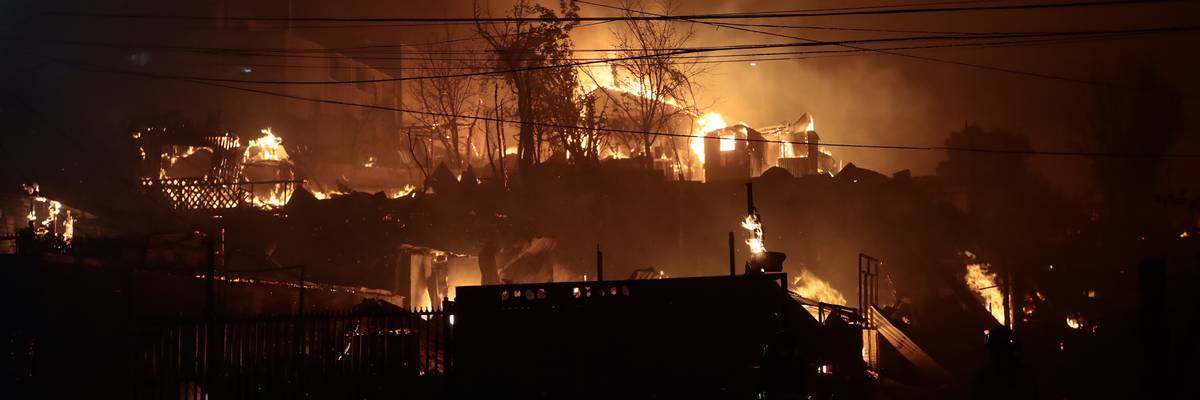
This photo shows the site of a forest fire in Penco, Biobío region, Chile on January 18, 2026. (Photo by Xinhua via Getty Images)

“The first priority, as you know, in these emergencies is always to fight and extinguish the fire. But we cannot forget, at any time, that there are human tragedies here,” said the country’s president.

On the heels of another historically hot year for Earth, disasters tied to the fossil fuel-driven climate emergency have yet again turned deadly, with wildfires in Chile’s Ñuble and Biobío regions killing at least 18 people—a figure that Chilean President Gabriel Boric said he expects to rise.

The South American leader on Sunday declared a “state of catastrophe” in the two regions, where ongoing wildfires have also forced more than 50,000 people to evacuate. The Associated Press reported that during a Sunday press conference in Concepción, Boric estimated that “certainly more than a thousand” homes had already been impacted in just Biobío.

RECOMMENDED…
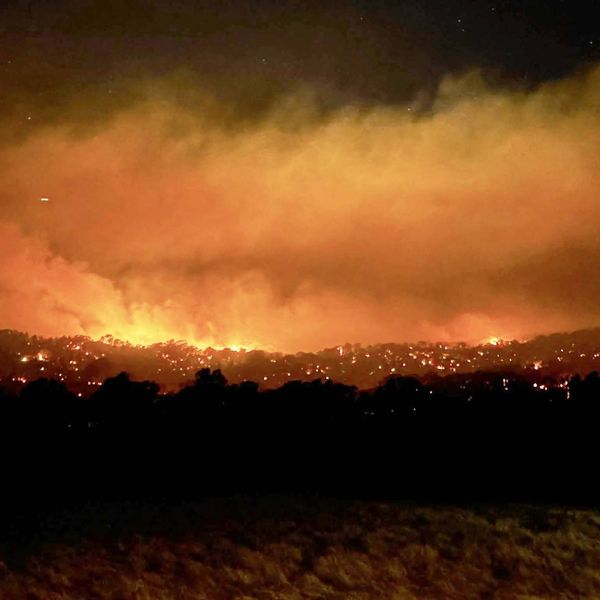
AUSTRALIA-WEATHER-FIRE

‘We Are Running Out of Time’: 2025 Keeps Hot Streak Alive for Global Temperatures
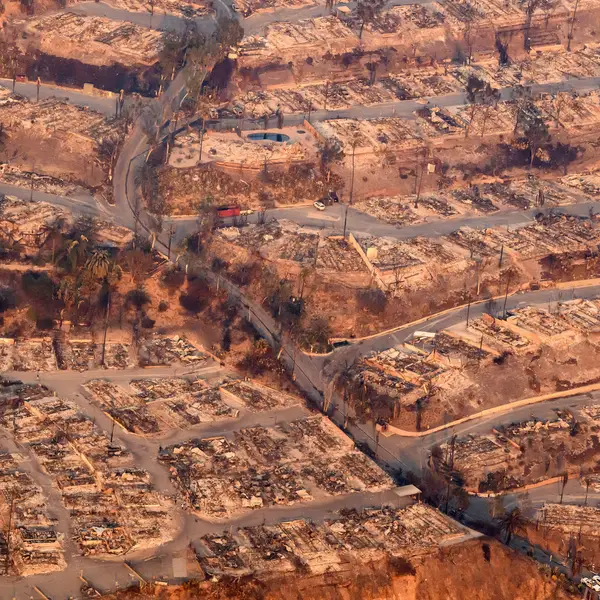
Pacific Palisades neighborhood post fire

Trump Quits Key Treaties Amid ‘Increasingly Deadly and Expensive’ Weather Disasters

“The first priority, as you know, in these emergencies is always to fight and extinguish the fire. But we cannot forget, at any time, that there are human tragedies here, families who are suffering,” the president said. “These are difficult times.”

According to the BBC, “The bulk of the evacuations were carried out in the cities of Penco and Lirquen, just north of Concepción, which have a combined population of 60,000.”

Some Penco residents told the AP that they were surprised by the fire overnight.

“Many people didn’t evacuate. They stayed in their houses because they thought the fire would stop at the edge of the forest,” 55-year-old John Guzmán told the outlet. “It was completely out of control. No one expected it.”

Chile’s National Forest Corporation (CONAF) said that as of late Monday morning, crews were fighting 26 fires across the regions.

As Reuters detailed:

Authorities say adverse conditions like strong winds and high temperatures helped wildfires spread and complicated firefighters’ abilities to control the fires. Much of Chile was under extreme heat alerts, with temperatures expected to reach up to 38ºC (100ºF) from Santiago to Biobío on Sunday and Monday.

Both Chile and Argentina have experienced extreme temperatures and heatwaves since the beginning of the year, with devastating wildfires breaking out in Argentina’s Patagonia earlier this month.

Scientists have warned and research continues to show that, as one Australian expert who led a relevant 2024 study put it to the Guardian, “the fingerprints of climate change are all over” the world’s rise in extreme wildfires.

“We’ve long seen model projections of how fire weather is increasing with climate change,” Calum Cunningham of Australia’s University of Tasmania said when that study was released. “But now we’re at the point where the wildfires themselves, the manifestation of climate change, are occurring in front of our eyes. This is the effect of what we’re doing to the atmosphere, so action is urgent.”

Sharing the Guardian‘s report on the current fires in Chile, British climate scientist Bill McGuire declared: “This is what climate breakdown looks like. But this is just the beginning…”

The most recent United Nations Climate Change Conference, where world leaders aim to coordinate a global response to the planetary crisis, was held in another South American nation that has faced devastating wildfires—and those intentionally set by various industries—in recent years: Brazil. COP30 concluded in November with a deal that doesn’t even include the words “fossil fuels.”

“This is an empty deal,” Nikki Reisch of the Center for International Environmental Law said at the time. “COP30 provides a stark reminder that the answers to the climate crisis do not lie inside the climate talks—they lie with the people and movements leading the way toward a just, equitable, fossil-free future. The science is settled and the law is clear: We must keep fossil fuels in the ground and make polluters pay.”

Original article by Jessica Corbett republished from Common Dreams under Creative Commons (CC BY-NC-ND 3.0).

Elon Musk urges you to be a Fascist like him, says that you can ignore facts and reality then.
Donald Trump urges you to be a Climate Science denier like him. He says that he makes millions and millions for destroying the planet, Burn, Baby, Burn and Flood, Baby, Flood.
Orcas discuss Donald Trump and the killer apes' concept of democracy. Front Orca warns that Trump is crashing his country's economy and that everything he does he does for the fantastically wealthy.
Orcas discuss Donald Trump and the killer apes’ concept of democracy. Front Orca warns that Trump is crashing his country’s economy and that everything he does he does for the fantastically wealthy.

Continue Reading‘What Climate Breakdown Looks Like’: 50,000+ Flee Wildfires as Chile Declares ‘State of Catastrophe’

Cop30: five reasons the UN climate conference failed to deliver on its ‘people’s summit’ promise

Spread the love
Andre Borges / EPA

Simon Chin-Yee, UCL; Mark Maslin, UCL, and Priti Parikh, UCL

As the sun set on the Amazon, the promise of a “people’s Cop” faded with it. The latest UN climate summit – known as Cop30, hosted in the Brazilian city of Belém – came with the usual geopolitics and the added excitement of a flood and a fire.

The summit saw Indigenous protests on an unprecedented scale, but the final negotiations were once again dominated by fossil fuel interests and delaying tactics. After ten years of climate (in)action since the Paris agreement, Brazil promised Cop30 would be an “implementation Cop”. But the summit failed to deliver, even as the world recorded a devastating 1.6˚C of global warming last year.

Here are our five key observations:

1. Indigenous groups were present – but not involved

Located in Amazonia, this was branded the summit for those on the frontlines of climate change. Over 5,000 Indigenous people were there, and they certainly made their voices heard.

However, only 360 secured passes to the main negotiating “blue zone”, compared to 1,600 delegates linked to the fossil fuel industry. Inside the negotiating rooms it was business as usual, with Indigenous groups remaining as observers, unable to vote or attend closed-door meetings.

The choice of location was nicely symbolic but logistically tough. Hosting the conference in the Amazon cost hundreds of millions of dollars in a region where many still lack basic amenities.

A stark image of this inequality: with hotel rooms full, the Brazilian government even docked two cruise ships for delegates, which per head can have eight times the emissions of a five star hotel.

2. The power of protests

But this was the second largest UN climate summit ever, and the first since Glasgow Cop26 in 2021 to take place in a country that permits real public protest. That mattered. Protests of various sizes happened every day during the two-week conference, most notably an Indigenous-led “great people’s march” on the middle Saturday.

Indigenous protesters scored some small wins – but weren’t involved in the main talks. Fraga Alves / EPA

The visible pressure helped obtain recognition of four new Indigenous territories in Brazil. It showed that when civil society has a voice it can secure wins, even outside of the main emissions negotiations.

3. US absence creates a vacuum – and an opportunity

In Donald Trump’s first turn as president, the US sent at least a skeletal group of negotiators. This time, in a historic first, America did not send an official delegation at all.

Trump recently described climate change as “the greatest con job ever perpetrated on the world”, and since returning to power the US has slowed renewables and expanded oil and gas. It even helped scuttle plans for a net zero framework for global shipping last month.

As the US is rolling back its ambition, it is allowing other oil producing countries like Saudi Arabia to ignore their own climate pledges and to try and undermine others.

China has stepped into the void and become one of the loudest voices in the room. As the world’s largest supplier of green technology, Beijing used Cop30 to promote its solar, wind and electric vehicle industries and court countries looking to invest.

But for many delegates, the absence of America came as a relief. Without the distraction of the US attempting to “burn the house down” as it did at the shipping negotiations, the conference was able to get on with the business at hand: negotiating texts and agreements that will limit global warming.

4. ‘Implementation’ through side deals – not the main stage

So what was actually implemented? This year, the main action happened through voluntary pledges, not the binding global agreement.

The Belém pledge, backed by countries including Japan, India and Brazil, committed signatories to quadruple sustainable fuels production and use by 2035.

Brazil also launched a major trust fund for forests, with around US$6 billion (£4.6 billion) already pledged for communities working to protect rainforests. The EU followed by pledging new funds for the Congo Basin, the world’s second largest rainforest.

These are useful steps, but they highlight how the biggest advances at UN climate summits now often happen in the margins, rather than in the main talks.

The outcome of those main talks at Cop30 – the Belém package – is weak, and will get us nowhere near the Paris agreement’s target of limiting global warming to 1.5˚C. Most striking is the absence of the words “fossil fuels” from the final text even though they were central to the Glasgow climate pact (2021) and the UAE consensus (2023) – and of course they represent the main cause of climate change.

5. The Global Mutirão text: a missed opportunity

One potential breakthrough did emerge in negotiating rooms: the Global Mutirão text, a proposed roadmap to “transition away” from fossil fuels. More than 80 countries signed it, from EU members to climate-vulnerable Pacific island states.

Tina Stege, climate envoy for one of those vulnerable states, the Marshall Islands, urged delegates: “Let’s get behind the idea of a fossil fuel roadmap, let’s work together and make it a plan.”

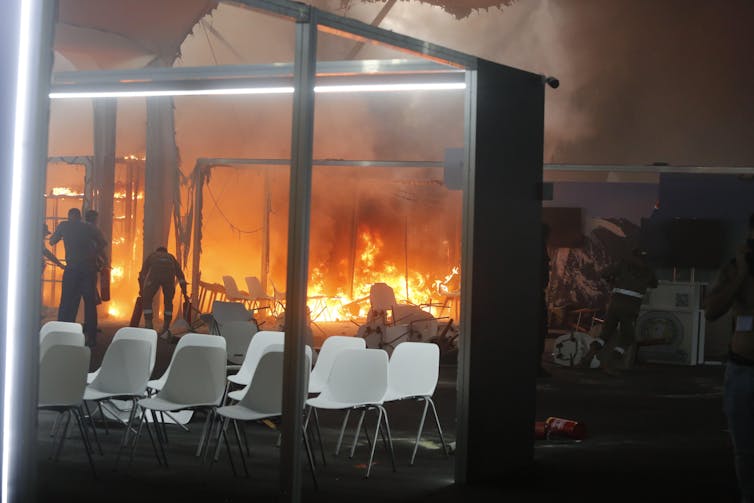
On the final Thursday, a small fire broke out in the pavilion area of the summit. Brazil Photo Press / Alamy

But opposition from Saudi Arabia, India and other major fossil fuel producers watered it down. Negotiations stretched into overtime, not helped by a fire that postponed discussions for a day.

When the final deal was agreed, key references to a fossil fuel phase-out were missing. There was a backlash from Colombia, due to the lack of inclusion of transition away from fossil fuels, which forced the Cop presidency to offer a six-month review as an olive branch.

This was hugely disappointing, as earlier in the summit there seemed to be huge momentum.

A widening gulf

So this was another divisive climate summit. The gulf between oil-producing countries (in particular in the Middle East) and the rest of the world has never been wider.

One positive to come out of the summit was the power of organised people: Indigenous groups and civil society made their voices heard, even if they weren’t translated into the final text.

With next year’s summit to be held in Turkey, these annual climate summits are increasingly migrating to nations with authoritarian leanings where protests are not welcome or completely banned. Our leaders keep stating that time is running out, yet negotiations themselves remain stuck in never ending circles of delays.

Simon Chin-Yee, Lecturer in International Development, UCL; Mark Maslin, UCL Professor of Earth System Science and UNU Lead for Climate, Health and Security, UCL, and Priti Parikh, Professor of Infrastructure Engineering and International Development, UCL

This article is republished from The Conversation under a Creative Commons license. Read the original article.

Donald Trump urges you to be a Climate Science denier like him. He says that he makes millions and millions for destroying the planet, Burn, Baby, Burn and Flood, Baby, Flood.
Nigel Farage urges you to ignore facts and reality and be a climate science denier like him and his Deputy Richard Tice. He says that Reform UK has received £Millions and £Millions from the fossil fuel industry to promote climate denial and destroy the planet.
Orcas comment on killer apes destroying the planet by continuing to burn fossil fuels.

Continue ReadingCop30: five reasons the UN climate conference failed to deliver on its ‘people’s summit’ promise

Keeping promises on renewables, energy efficiency and methane ‘would avoid nearly 1C of global heating’

Spread the love

https://www.theguardian.com/environment/2025/nov/19/keeping-promises-on-renewables-energy-efficiency-and-methane-would-avoid-nearly-1c-of-global-heating

More than 160 governments are nominally signed up to the global methane pledge. Photograph: Orjan F Ellingvag/Corbis/Getty Images

Analysis published at Cop30 summit shows adhering to pledges offer world hope of avoiding climate breakdown

Sticking to three key climate promises – on renewables, energy efficiency and methane – would avoid nearly 1C of global heating and give the world hope of avoiding climate breakdown, analysis published at the Cop30 climate summit suggests.

Governments have already agreed to triple the amount of renewable energy generated by 2030, double global energy efficiency by then, and make substantial cuts to methane emissions.

If they follow through on these promises – still a big if, even though countries are meeting for climate crisis talks in Brazil this week – it would be a “gamechanger”, shaving 0.9C from projected temperature rises this century, according to the Climate Action Tracker coalition.

Achieving all of these measures, among G20 countries alone, would reduce global greenhouse gas emissions by 18bn tonnes in 2035 – enough to cut the rate of global heating by a third in the next decade, and halve it by 2040.

Bill Hare, chief executive of Climate Analytics, one of the organisations behind the report, said: “If [governments] achieve this by 2035, it would be a gamechanger, quickly slowing the rate of warming in the next decade and lowering global warming this century from 2.6C to about 1.7C.”

https://www.theguardian.com/environment/2025/nov/19/keeping-promises-on-renewables-energy-efficiency-and-methane-would-avoid-nearly-1c-of-global-heating

Orcas comment on killer apes destroying the planet by continuing to burn fossil fuels.
Donald Trump urges you to be a Climate Science denier like him. He says that he makes millions and millions for destroying the planet, Burn, Baby, Burn and Flood, Baby, Flood.
Nigel Farage urges you to ignore facts and reality and be a climate science denier like him and his Deputy Richard Tice. He says that Reform UK has received £Millions and £Millions from the fossil fuel industry to promote climate denial and destroy the planet.
Continue ReadingKeeping promises on renewables, energy efficiency and methane ‘would avoid nearly 1C of global heating’

Campaigners Urge Countries to Seize ‘Momentum’ at COP30 and Deliver Roadmap for Green Transition

Spread the love

Original article by Julia Conley republished from Common Dreams under Creative Commons (CC BY-NC-ND 3.0). 

A projection urges leaders to “get serious” about drawing down fossil fuel emissions in Rio de Janeiro, Brazil ahead of the United Nations Climate Change Conference on November 5, 2025. (Photo by Fabio Teixeira/Anadolu via Getty Images)

“We need to make sure that any and all plans towards a fossil fuel-free future are built with community and frontline needs at the heart, and implemented in a way that does not leave vulnerable communities behind.”

Despite concerns over the presence of hundreds of corporate lobbyists peddling “false solutions” at the United Nations Climate Change Conference in Belém, Brazil, campaigners on Monday expressed optimism about the “remarkable speed” with which global support has grown at the summit for a Transition Away From Fossil Fuels Roadmap.

Brazilian President Luiz Inácio Lula da Silva opened the Leader’s Summit on November 6 with a call for the TAFF Roadmap, which would build on the 2023 conference’s (COP28) promise to “transition away from fossil fuels” in a “just, orderly, and equitable manner.”

He urged leaders to map out how their countries will “overcome dependence on fossil fuels,” reverse deforestation, and mobilize resources to achieve those goals, as the presidencies of this year’s conference (COP30) and last year’s released a Baku to Belém Roadmap with a plan to mobilize $1.3 trillion per year in climate finance for developing countries.

350.org found on Monday that within nine days, support for the TAFF Roadmap grew from one to 62 countries.

Suluafi Brianna Fruean, a 350.org Pacific Council elder, acknowledged that a call for “a transition away from fossil fuels is not a new concept for the Pacific, it’s a demand we’ve made at every COP and every room we’ve been in.”

Still, she said, “the growing support for a roadmap to this reality is a sign that the age of fossil fuels is over. We need to make sure that any and all plans towards a fossil fuel-free future are built with community and frontline needs at the heart, and implemented in a way that does not leave vulnerable communities behind.”

“The presidency calls on developing countries to lead, prioritize public, grant-based, concessional finance to protect the world’s most vulnerable, and break the vicious debt cycle. However, it misses the urgency to simplify direct access to finance for communities, especially Indigenous peoples.”

350.org analyzed public statements and written inputs from countries and country groups to the COP30 presidency, and released its analysis of the conference’s momentum as the Brazil presidency released its “consultation text.”

That document lays out options for a final agreement at COP30, including “the ingredients for a highly ambitious outcome,” said 350.org.

Options in the text include establishing a three-year program to implement Article 9.1 in the Paris Agreement, which requires wealthy countries to finance adaptation and a transition away from fossil fuels for the Global South; tripling adaptation finance; and implementing Article 3.5 of the UN Framework Convention on Climate Change, which requires parties to support an economic system that leads “to sustainable economic growth and development in all parties… thus enabling them better to address the problems of climate change.”

“Finance is the engine of climate action. The presidency calls on developing countries to lead, prioritize public, grant-based, concessional finance to protect the world’s most vulnerable, and break the vicious debt cycle,” said Fanny Petitbon, France team lead for 350.org. “However, it misses the urgency to simplify direct access to finance for communities, especially Indigenous peoples, who hold solutions on the ground yet face enormous barriers to securing the funds needed to scale them up.”

A second package of options is set to be released in the coming days and “will cover the more technical negotiating areas,” according to the World Wildlife Fund (WWF).

Andreas Sieber, associate director of policy and campaigns at 350.org, credited Lula with injecting “real momentum into a global roadmap to move away from fossil fuels.”

But Sieber noted that Brazil recently gave its state-owned oil and gas company, Petrobras, license to drill a well in the Amazon rainforest, and Brazil is still one of the top 10 producers of crude oil globally.

“Lula spoke powerfully about justice and cooperation in a divided world, highlighting the need to get rid of fossil fuels and accelerate the energy transition,” Sieber told Argus Media after the Leaders’ Summit. “But he cannot be both a champion of climate justice and one of the world’s biggest oil expanders.”

350.org added that in a TAFF Roadmap, “finance, technology transfer, and capacity-building must be central pillars—not peripheral details—if the transition is to lift up communities rather than deepen inequality.”

WWF also applauded the “momentum” at COP30, and urged “decisive political leadership” in order to “get back on track to the 1.5°C Paris Agreement temperature limit.”

Manuel Pulgar-Vidal, WWF global climate and energy lead, and the president of COP20, said that “COP30 could make history by agreeing on roadmaps for both a transition away from fossil fuels and to combat deforestation. It must also respond to the emissions gap in national climate plans, and make advances on finance, including to help countries adapt to climate change.”

Original article by Julia Conley republished from Common Dreams under Creative Commons (CC BY-NC-ND 3.0). 

Donald Trump urges you to be a Climate Science denier like him. He says that he makes millions and millions for destroying the planet, Burn, Baby, Burn and Flood, Baby, Flood.
Nigel Farage urges you to ignore facts and reality and be a climate science denier like him and his Deputy Richard Tice. He says that Reform UK has received £Millions and £Millions from the fossil fuel industry to promote climate denial and destroy the planet.
Orcas comment on killer apes destroying the planet by continuing to burn fossil fuels.
Continue ReadingCampaigners Urge Countries to Seize ‘Momentum’ at COP30 and Deliver Roadmap for Green Transition

Groups Condemn ‘Exceptionally Weak’ Language on Fossil Fuel Phaseout in COP30 Draft Text

Spread the love

Original article by Julia Conley republished from Common Dreams under Creative Commons (CC BY-NC-ND 3.0). 

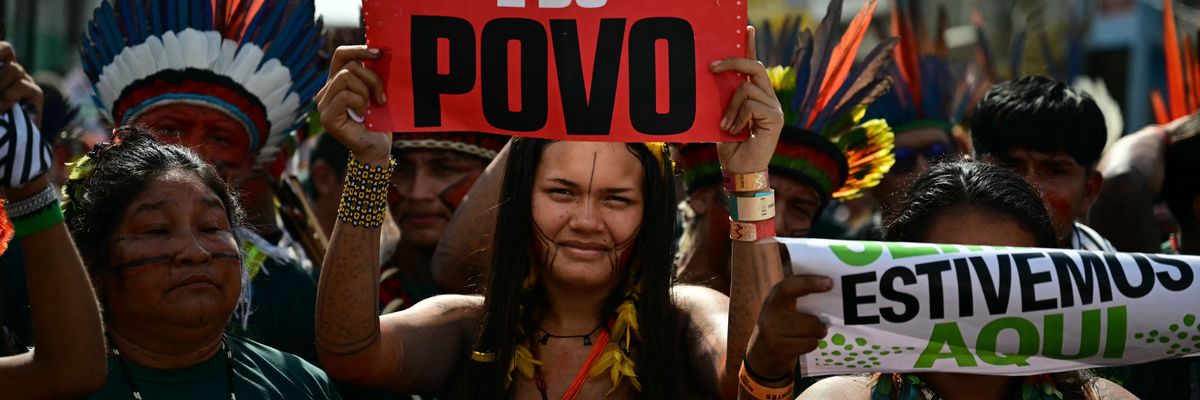
An Indigenous woman holds a sign reading, “The future belongs to the people” during the “Indigenous People Global March” at the United Nations Climate Change Conference in Belém, Brazil, on November 17, 2025. (Photo by Pablo Poriuncula/AFP via Getty Images)

“A roadmap for delivering on 1.5°C without a credible fossil fuel phaseout at its core is hollow,” said one campaigner.

Climate justice organizers on Tuesday expressed some cautious optimism that a draft text out of the United Nations Climate Change Conference in Belém, Brazil contained “building blocks” of a climate justice package that is needed to draw down planet-heating fossil fuel emissions and help the poorest and least-polluting countries confront the climate emergency—but advocates said that with just three days to go until the summit is over, the document still falls far short of delivering solutions.

The draft text, released by COP30 President André Corrêa do Lago, includes references to a “transition away from fossil fuels,” and calls for annual reviews of countries’ Nationally Determined Contributions (NDCs), the efforts they pledge to make to reduce their emissions.

But a day after campaigners expressed optimism about 62 countries and country groups endorsing Brazilian President Luiz Inácio Lula da Silva’s call for a Transition Away From Fossil Fuels (TAFF) Roadmap, 350.org condemned the draft text for mentioning the roadmap only in paragraph 44—and excluding a fossil fuel phaseout from that section of the proposal.

The TAFF Roadmap, according to the draft, would recognize that “finance, capacity-building, and technology transfer are critical enablers of climate action.”

The text also calls for “a high-level ministerial roundtable” where countries would discuss national circumstances, pathways to limiting planetary heating to 1.5°C over preindustrial temperatures, and approaches to supporting government in developing just transition roadmaps, “including to progressively overcome their dependency on fossil fuels and towards halting and reversing deforestation.”

But 350.org condemned that call as an “exceptionally weak,” sole reference to a fossil fuel transition, warning that “a mandated ministerial and a report… offer symbolism, not action.”

“For the decision to carry credibility, the presidency must embed a fossil fuel transition roadmap directly into the 1.5°C response, not relegate it to the margins,” said the group in its analysis of the document. “The roadmap must be placed in the section addressing the 1.5°C ambition gap, where it is currently absent.”

Andreas Sieber, associate director of policy and campaigns for 350.org, said that “the draft text may contain the right ingredients, but it’s been assembled in a way that leaves a bitter aftertaste.”

“For the decision to carry credibility, the presidency must embed a fossil fuel transition roadmap directly into the 1.5°C response, not relegate it to the margins. The roadmap must be placed in the section addressing the 1.5°C ambition gap, where it is currently absent.”

“A roadmap for delivering on 1.5°C without a credible fossil fuel phaseout at its core is hollow. The COP30 presidency must heed the many parties, including President Lula, calling for a clear transition pathway and put it where it belongs: at the center of the 1.5°C response, balanced with adequate finance,” said Sieber. “Without this, the overall effort will fall short.”

The group emphasized that a credible COP30 final text will include “a balanced package that delivers climate finance, strengthened adaptation measures, and a clear road map for phasing out fossil fuels.”

“Without all three pillars in place, a durable and effective agreement will not be possible,” said 350.org

The text mentions climate finance 26 times, the Guardian reported, and urges wealthy countries to clearly lay out their plans to provide financial assistance to the Global South—at a ministerial roundtable in one option included in the document, or through a “Belém Global De-Risking and Project Preparation and Development Facility,” which would “catalyze climate finance and implementation in developing country parties by translating Nationally Determined Contributions and national adaptation plans into project pipelines.”

But 350.org noted that pledges made to a global adaptation fund on Monday “once again fell short with only $133 million secured out of the $300 million target.”

Fanny Petitbon, France team lead for 350.org, warned that “adaptation has long been forgotten in climate finance,” and called on the presidency to ensure it has a central role in the final text.

“Crucially, the call to triple adaptation finance must stay,” said Petitbon. “There is no credible ambition without supporting communities already facing the devastating impacts of the climate emergency. The presidency has begun to respond to strong demands for developed countries to pay their climate debt, which is key for rebuilding trust in all negotiating rooms.”

“But the text still lacks a plan to fully deliver on the collective climate finance goal agreed upon in Baku [at COP29]—ignoring innovative sources of finance like taxing major polluters and the superrich,” Petitibon added, “and fails to guarantee direct access for the most vulnerable, including Indigenous peoples.”

At Oil Change International, global policy leader Romain Ioualalen said the options related to fossil fuels presented in the draft were “wildly unacceptable and a blatant dereliction of duty while the world burns.”

“We don’t need a COP decision to convene a workshop or ministerial roundtable on fossil fuels. What we need is a clear collective direction of travel on how countries intend to phase out fossil fuels based on equity, and how rich Global North countries will provide finance and support to the countries that need it,” said Ioualalen.

“Ministers must fix this mess,” he added, “and deliver the progress that we need to make the fair and funded transition away from fossil fuels they promised in Dubai [at COP28] a reality.”

Original article by Julia Conley republished from Common Dreams under Creative Commons (CC BY-NC-ND 3.0). 

Orcas discuss Donald Trump and the killer apes' concept of democracy. Front Orca warns that Trump is crashing his country's economy and that everything he does he does for the fantastically wealthy.
Orcas discuss Donald Trump and the killer apes’ concept of democracy. Front Orca warns that Trump is crashing his country’s economy and that everything he does he does for the fantastically wealthy.
Donald Trump urges you to be a Climate Science denier like him. He says that he makes millions and millions for destroying the planet, Burn, Baby, Burn and Flood, Baby, Flood.
Nigel Farage urges you to ignore facts and reality and be a climate science denier like him and his Deputy Richard Tice. He says that Reform UK has received £Millions and £Millions from the fossil fuel industry to promote climate denial and destroy the planet.
Continue ReadingGroups Condemn ‘Exceptionally Weak’ Language on Fossil Fuel Phaseout in COP30 Draft Text