Category: Venezuela

  • Nicolás Maduro is not guilty

    Spread the love

    Article by Stephanie Weatherbee Brito and Vijay Prashad republished from BT BreakThrough News under Creative Commons (CC BY-NC-ND 4.0).

    Mobilization in Caracas demanding the return of Nicolás Maduro. Photo: Francisco Trias

    The implications of this case extend far beyond Venezuela. The entire process against Nicolás Maduro and Cilia Flores threatens to establish the US court system as one with global and unlimited jurisdiction.

    Venezuelan President Nicolás Maduro is not guilty. This is a statement of law and fact, since Maduro has not been convicted of any crime. He has pleaded not guilty to every charge brought against him, and the accusations made by the United States remain precisely that: accusations. Under the presumption of innocence – recognized in the United States Constitution and in Article 14 of the International Covenant on Civil and Political Rights – the burden rests entirely upon the prosecution to prove guilt. It is not Maduro who must prove his innocence, but it is the United States government that must prove his guilt.

    On January 3, 2026, United States forces illegally entered Venezuela, attacked targets in and around Caracas, seized President Maduro and his wife and an elected official, Cilia Flores, and transported them to the United States. Two days later, shackled and injured, Maduro appeared before a federal court in Manhattan. “I am innocent. I am not guilty,” he told the court. Both defendants entered pleas of not guilty and are now imprisoned in Brooklyn while awaiting a trial provisionally scheduled for June 2027.

    The charges against Maduro

    The United States alleges that Maduro participated in conspiracies to import cocaine, possess machine guns and destructive devices, and collaborate with organizations Washington has designated as terrorist groups. These charges developed out of an indictment announced during Donald Trump’s first presidency in March 2020. The case was substantially expanded after Maduro was kidnapped through a fourth superseding indictment. An indictment, however, is not evidence tested before a court. It is a document prepared by prosecutors and approved through a grand-jury proceeding at which the defense is normally neither represented nor permitted to challenge the government’s account.

    The prosecution relies heavily upon the idea that Maduro directed the so-called Cartel de los Soles, or Cartel of the Suns. But even organizations deeply hostile to the Venezuelan government acknowledge that this is not a cartel in the conventional sense. The name has long been used as an umbrella expression for disparate Venezuelan officials allegedly involved in criminal activity, long before Maduro entered political life. It does not describe an organization with a demonstrated membership, command structure, headquarters or chain of authority comparable to Mexico’s Sinaloa Cartel. When Washington designated the Cartel de los Soles a foreign terrorist organization in 2025, the Associated Press noted that it was “not a cartel per se.”

    This matters because the prosecution’s language performs much of its political work. Allegations concerning individual acts of corruption are assembled into the image of a unified organization, the organization is then attributed to the Venezuelan state, and responsibility for everything allegedly done by anyone within that loose network is placed upon Maduro. The indictment must still demonstrate that Maduro knowingly joined the specific conspiracies charged. Political authority over a state in which crimes occur does not by itself establish personal criminal responsibility for those crimes.

    Case is dead on arrival

    Venezuela is not a major producer of coca leaf or cocaine. The principal cocaine-producing countries remain Colombia, Peru and Bolivia. Venezuela has been used as a transit territory, particularly for cocaine originating in neighboring Colombia. But transit through a country does not prove that its president commands the traffic, and nor does it substantiate the extravagant political image of Venezuela as the central source of the drugs entering the United States. The US Drug Enforcement Administration’s own 2025 threat assessment concentrated overwhelmingly upon Mexican organizations and their supply chains. The global cocaine trade operates primarily through production in the Andean region, maritime export corridors, Central America and Mexico, not through a single organization supposedly commanded from the Venezuelan presidential palace. The International Criminal Court’s investigation into the situation in Venezuela, for example, is an investigation into alleged crimes within its jurisdiction. It is not a conviction of Maduro and has not produced an individual judgment of guilt against him.

    The US government is expected to rely upon cooperating witnesses, including former Venezuelan intelligence chief Hugo Carvajal and former general Clíver Alcalá. Both men pleaded guilty to serious offenses in the United States. Their evidence cannot be treated as disinterested truth. Cooperating defendants may hope to obtain sentencing benefits by assisting prosecutors. Their claims must therefore be corroborated and subjected to cross-examination. Until that happens, their statements do not establish Maduro’s guilt. In fact, it is better to see their statements as proof of their own attempt to lighten their sentences and launder their soiled reputations.

    The circumstances under which Maduro was brought before the US court create an even deeper problem. Washington did not request extradition through an agreed legal process. It employed military force within another sovereign country without Venezuela’s consent or authorization from the United Nations Security Council. Article 2(4) of the UN Charter prohibits the threat or use of force against the territorial integrity or political independence of a state, subject to narrow exceptions such as self-defence. Arresting a person accused of drug offenses is not one of those exceptions. International-law specialists described the operation as an unlawful use of force, while governments including Brazil, Mexico, and China condemned the violation of Venezuelan sovereignty.

    Maduro’s lawyers have argued that the prosecution violates the immunity enjoyed by an incumbent head of state. Venezuela continued to recognize Maduro as its constitutional president when the United States seized him – a fact tacitly recognized by the United States when it calls Delcy Rodriquez the Acting President. Washington cannot necessarily extinguish the international legal status of another country’s head of state merely by withholding diplomatic recognition. The defense has consequently requested dismissal of the indictment on immunity grounds and has separately challenged the narco-terrorism count for lacking an adequate jurisdictional connection to the United States. Oral argument on these questions is scheduled for November 2026.

    The case of former Honduran president Juan Orlando Hernández exposes the selectivity of Washington’s supposed war against narco-states. Hernández was a close US ally during his presidency from 2014 to 2022. After leaving office, he was extradited – not abducted through a military invasion – and tried in the same federal district in New York where Maduro is now being prosecuted. In March 2024, a jury convicted Hernández after a three-week trial. Prosecutors presented evidence that he had accepted millions of dollars from traffickers, protected cocaine shipments with the Honduran police and military, and helped move more than 400 tons of cocaine towards the United States. He was sentenced to 45 years in prison. Unlike the claims against Maduro, these allegations were tested through testimony, cross-examination and a jury verdict. Yet on December 1, 2025, President Donald Trump pardoned Hernández and secured his release, claiming that the former president had been treated unfairly.

    The contrast could hardly be more revealing. Trump pardoned a former president whose participation in cocaine trafficking had been established in a US courtroom, while threatening and eventually invading Venezuela to seize a president against whom no verdict had been rendered. Hernández belonged to Washington’s political camp; Maduro did not. One was released despite his conviction, while the other was captured despite his legal innocence. This disparity does not by itself disprove the accusations against Maduro, but it demolishes the claim that Washington acted from a consistent concern about narcotics. The determining distinction was political alignment, not the strength of the evidence.

    The implications of this case extend far beyond the specific circumstances of Maduro and Cilia Flores or their consequences for Venezuela. Allowing a foreign state to override the jurisdiction of another country’s legal system, pursue an accusation for which there is no evidence, and proceed with a trial that lacks a basis in international law effectively establishes the US court system as one with global and unlimited jurisdiction. The ambivalence of governments around the world toward this case is therefore alarming, as it risks signalling consent and normalizing such gross overreach. This is particularly relevant for Mexico, which is already facing a series of accusations and extradition demands from the United States with clear political implications. The outcome of Maduro’s trial could set an important precedent for how Mexico – and other countries – are treated in similar circumstances.

    Nicolás Maduro is not guilty therefore expresses the only defensible conclusion at this stage. He was seized through an act of military force, placed before the courts of the state that had pursued his overthrow for years, and charged based on a politically constructed theory that has yet to survive adversarial examination. He remains innocent unless and until admissible evidence proves otherwise beyond a reasonable doubt. Sovereignty is not an ornament, an indictment is not a verdict, and an accusation issued by a powerful state does not become truth merely because that state possesses the weapons to seize the accused.

    Stephanie Weatherbee Brito is the co-coordinator of the International Peoples Assembly (IPA). 

    Vijay Prashad is an Indian historian and journalist. He is the author of forty books, including Washington Bullets, Red Star Over the Third World, The Darker Nations: A People’s History of the Third World, The Poorer Nations: A Possible History of the Global South, and How the International Monetary Fund Suffocates Africa, written with Grieve Chelwa. He is the executive director of Tricontinental: Institute for Social Research, the chief correspondent for Globetrotter, and the chief editor of LeftWord Books (New Delhi). He also appeared in the films Shadow World (2016) and Two Meetings (2017).

    Article by Stephanie Weatherbee Brito and Vijay Prashad republished from BT BreakThrough News under Creative Commons (CC BY-NC-ND 4.0).

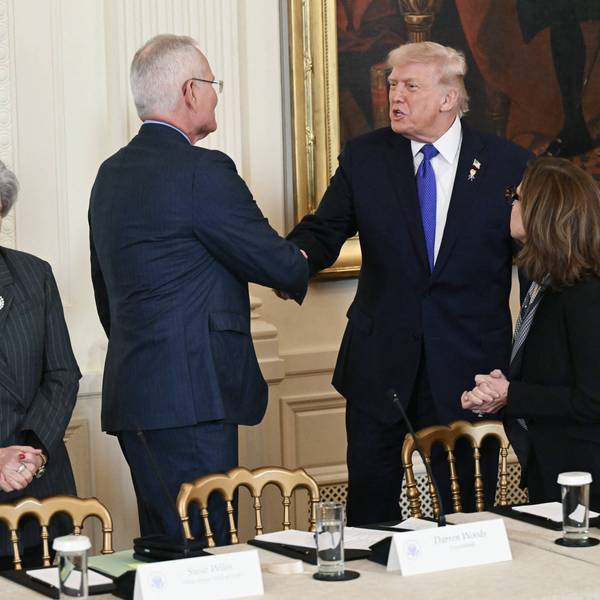
    Climate science denier Donald Trump confirms that he knows nothing about democracy and that more liquid gold is being secured according to his policy of global privateering.
    Climate science denier Donald Trump confirms that he knows nothing about democracy and that more liquid gold is being secured according to his policy of global privateering.
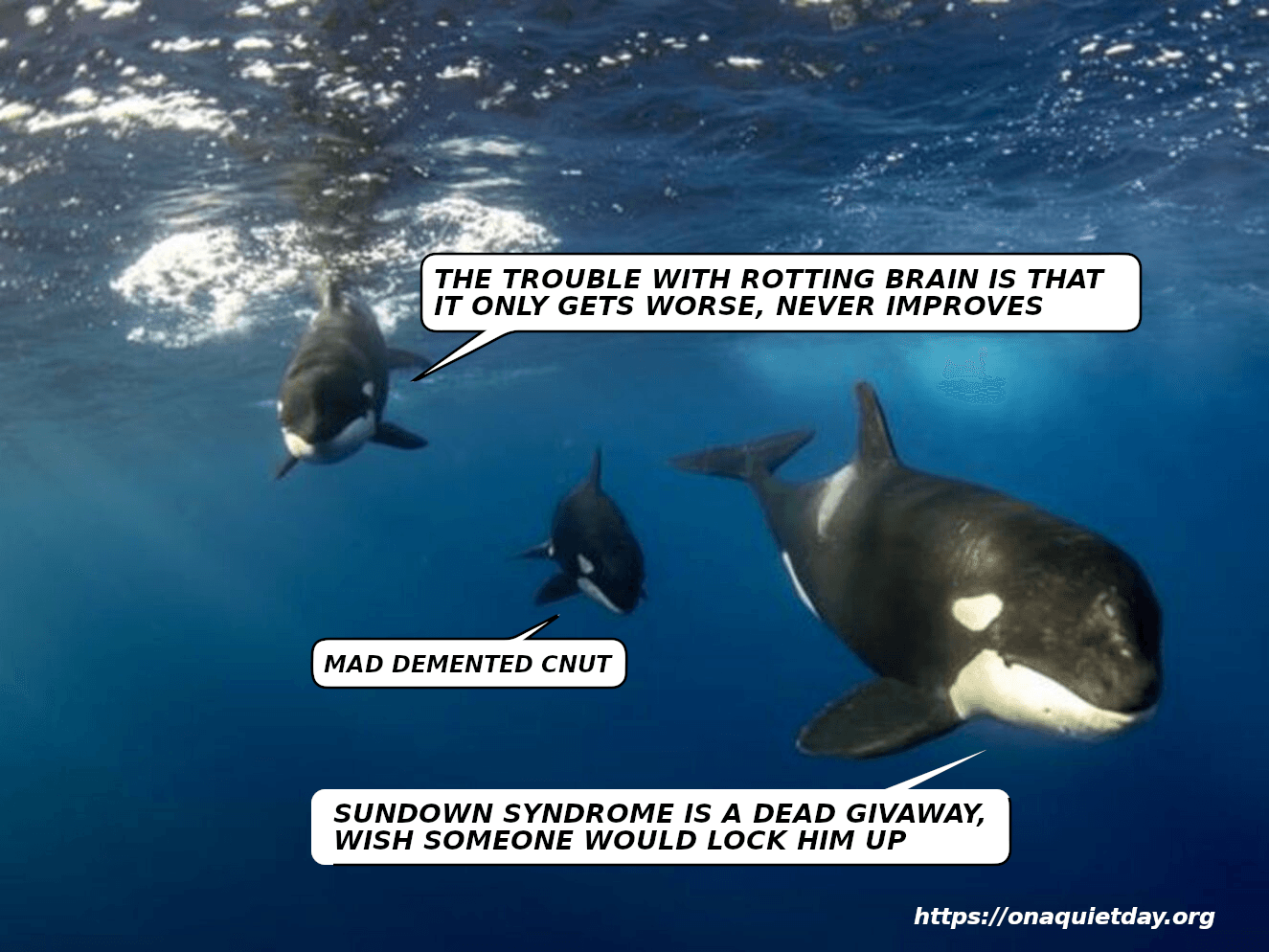
    Orcas discuss rotting brain, front Orca says Sundown Syndrome is a dead givaway and he wishes someone would Lock Him Up
    Orcas discuss rotting brain, front Orca says Sundown Syndrome is a dead givaway and he wishes someone would Lock Him Up
  • Trump Says He’s ‘Seriously Considering Making Venezuela the 51st US State’ as He Brags of Stealing Its Oil Wealth

    Spread the love

    Article by Stephen Prager republished from Common Dreams under Creative Commons (CC BY-NC-ND 3.0).
    US President Donald Trump points out a member of the press during an event on maternal healthcare in the Oval Office of the White House on May 11, 2026, in Washington, DC. (Photo by Kevin Dietsch/Getty Images)

    “Trump’s true priority, ahead of absolutely everything else, is to go down in history in big letters,” said one journalist. “Remaking everything, no matter in which direction or with what consequences.”

    President Donald Trump said on Monday that he is considering trying to annex Venezuela and make it a US state in an imperialist effort to seize more of its oil wealth.

    It’s one of nearly half a dozen nations or territories Trump has threatened to use US military might to illegally conquer and add to the US during his term, including Greenland, Canada, Cuba, and Panama.

    RECOMMENDED…

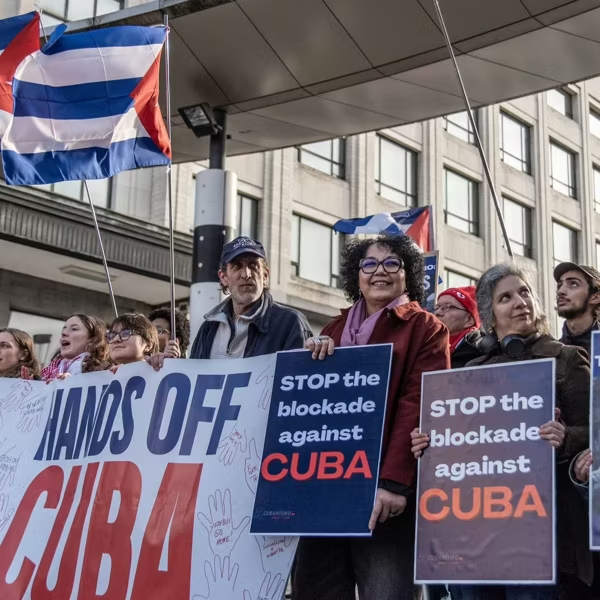
    People protest against Trump aggression against Cuba with signs reading "Stop the Blockade Against Cuba"

    ‘This Is Insane’: Alarm Bells Follow New Report of Looming US Plan to Attack Cuba

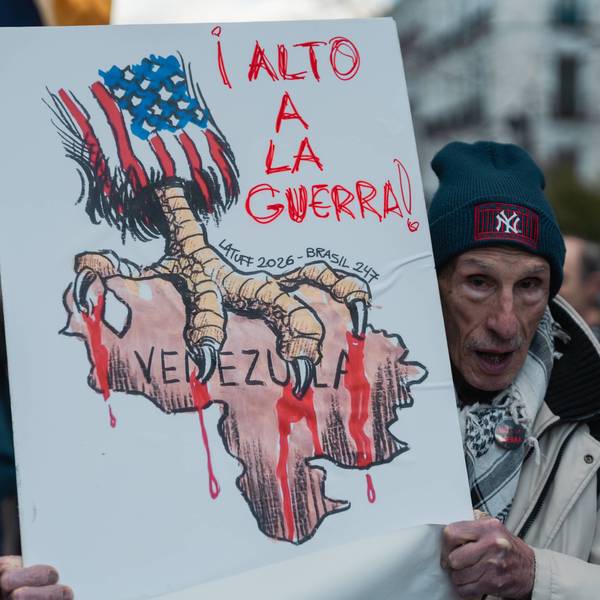
    A protester in Madrid holds a sign showing the US with talons on Venezuela and the words "stop the war!"

    From Boat Murders to Kidnapping Maduro, Trump Spending Billions on ‘Donroe Doctrine’ Militarism

    According to Fox News correspondent John Roberts, Trump said in a phone call that he was “seriously considering making Venezuela the 51st US state,” citing the Latin American nation’s possession of tens of trillions of dollars worth of oil.

    “They were miserable. Now they’re happy. It’s being well run,” Trump recently told Full Measure’s Sharyl Attkisson. “The oil that’s coming out is enormous, the biggest in many years. And the Big Oil companies are going in with the biggest, most beautiful rigs you’ve ever seen.”

    One poll from the Venezuelan firm Meganálisis in March found that while the public was initially happy to be rid of their autocratic president, Nicolás Maduro—who was abducted by US forces in January—the majority now feel that Trump’s action had little to do with democracy or the well-being of the Venezuelan people and more to do with handing control of the country’s nationalized oil reserves to American companies, which Trump stated as his primary objective after ousting Maduro.

    Trump left Maduro’s vice president, Delcy Rodríguez, in place as Venezuela’s interim leader with the promise that she’d act as a pliant collaborator with the US, whom she allowed to declare control over Venezuela’s oil resources “indefinitely” amid market transitions.

    The environmental activist group Global Witness has estimated that over the next 10 years, as much as $150 billion in oil revenue that was expected to go to the Venezuelan treasury, which could have funded projects to develop the impoverished country, instead may flow into the coffers of foreign companies.

    Trump has spoken about the idea of Venezuela becoming the 51st state before, including after the country defeated Italy in the World Baseball Classic in March, when he posted on Truth Social: “STATEHOOD, #51, ANYONE?”

    Last month, during a discussion about his desire to “take” Iran’s oil, Trump described his takeover of Venezuela as something akin to the resource-hungry imperial conquests of centuries past.

    “I’m a businessman first,” he told reporters during a press briefing. “We’ve taken hundreds of millions of barrels [of oil], hundreds of millions… and paid for that war many, many times over. You know the old days, ‘to the winner belong the spoils.’ And I said, ‘Why don’t we use that?’ We haven’t had that in this country probably in 100 years.” He then went on to lament the US-led efforts to “rebuild” Germany after World War II.

    While the US has lifted personal sanctions on Rodríguez and some sanctions on the Venezuelan oil and banking sectors, most of the sanctions that have contributed to the country’s economic collapse remain in place. “Full unrestricted access to global capital markets has not been restored,” explained Roger D. Harris from the Task Force on the Americas and the US Peace Council in Common Dreams last week.

    Actually adding Venezuela as a US state would require approval from both Congress and Venezuela itself—and Trump does not appear to have the latter.

    Issuing a rare rebuke of the US on Monday, Rodríguez responded that becoming the 51st state “would never have been considered” by Venezuela.

    “If there is one thing we Venezuelan men and women have, it is that we love our independence process, we love our heroes and heroines of independence,” the interim leader said.

    Though wars of conquest are expressly forbidden under international law, it’s not clear what leverage Rodríguez would have to resist if Trump attempted to make good on his goal of expanding US territory.

    Argemino Barro, a Spanish political journalist and author, said the possibility that he’s serious can’t be dismissed.

    “Yes, of course, we can dismiss it as provocation or delusion, say that it’s impracticable for XYZ reasons, etc. But this kind of comment is a window into the mindset of a man who fabricates his own reality, and not only that, but imposes it on others,” Barro said. “Trump wants to build the world’s largest triumphal arch right in the middle of Washington, overshadowing the Lincoln Memorial; he wants his face on coins and passports; his name appears on institutions, one airport. Annexing Venezuela, in his mind, fits 100%.”

    “I think Trump’s true priority, ahead of absolutely everything else, is to go down in history in big letters. To enter the league of Alexander the Great, Jesus Christ, and Genghis Khan,” he added. “Remaking everything, no matter in which direction or with what consequences.”

    Article by Stephen Prager republished from Common Dreams under Creative Commons (CC BY-NC-ND 3.0).

    Climate science denier Donald Trump confirms that he knows nothing about democracy and that more liquid gold is being secured according to his policy of global privateering.
    Climate science denier Donald Trump confirms that he knows nothing about democracy and that more liquid gold is being secured according to his policy of global privateering.
    Orcas discuss rotting brain, front Orca says disinhibition and swearing are typical and common symptoms
    Orcas discuss rotting brain, front Orca says disinhibition and swearing are typical and common symptoms
    Donald Trump sings and dances, says that it's fun to kill everyone ...
    Donald Trump sings and dances, says that it’s fun to kill everyone …

  • UN Experts Say Those Ordering and Carrying Out US Boat Strikes Should Be ‘Prosecuted for Homicide’

    Spread the love

    Original article by Julia Conley republished from Common Dreams under Creative Commons (CC BY-NC-ND 3.0).

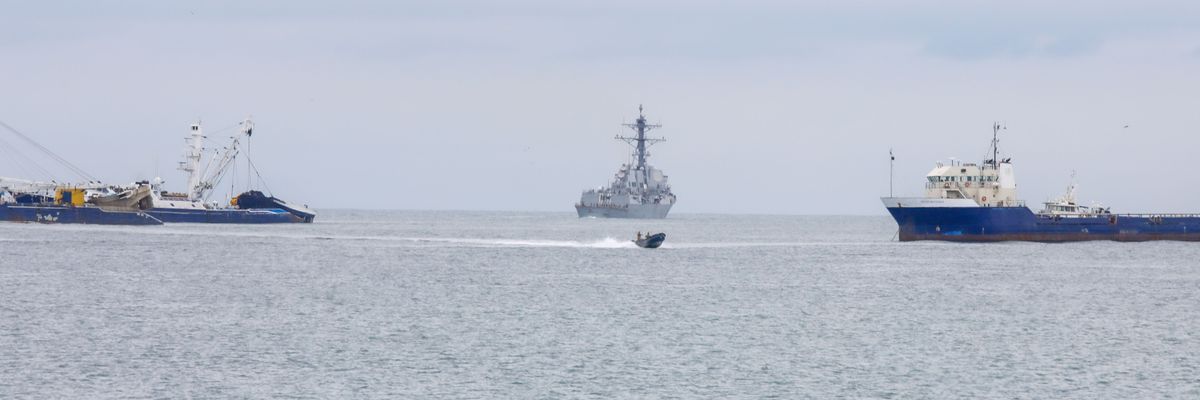
    A small boat is seen near the USS Sampson, a US Navy missile destroyer, off the coast of Panama City, Panama, on September 2, 2025. 
    (Photo by Daniel Gonzalez/Anadolu via Getty Images)

    “US military attacks on alleged drug traffickers at sea,” said two human rights experts, “are grave violations of the right to life and the international law of the sea.”

    Two United Nations rights experts warned that in numerous ways in recent weeks, the Trump administration’s escalation toward Venezuela has violated international law—most recently when President Donald Trump said he had ordered the South American country’s airspace closed following a military buildup in the Caribbean Sea.

    But the two officials, independent expert on democratic and international order George Katrougalos and Ben Saul, the UN special rapporteur on protecting human rights while countering terrorism, reserved their strongest condemnation and warning to the US for the administration’s repeated bombings of boats in the Caribbean and the Pacific, which have targeted at least 22 boats and killed 83 people since September as the White House has claimed without evidence it is combating drug traffickers.

    RECOMMENDED…

    Bombed boat

    Second US Strike on Boat Attack Survivors Was Illegal—But Experts Stress That the Rest Were, Too

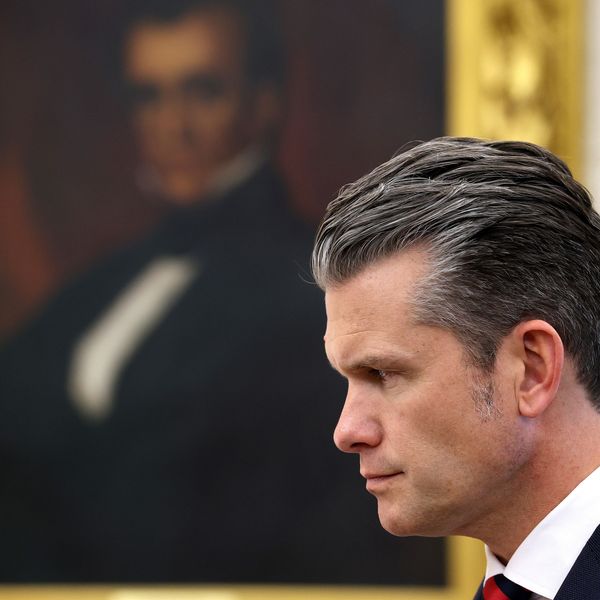
    Pete Hegseth

    Legal Experts Accuse Hegseth of ‘War Crimes, Murder, or Both’ After New Reporting on Boat Strike Order

    The strikes, said Katrougalos and Saul, “are grave violations of the right to life and the international law of the sea. Those involved in ordering and carrying out these extrajudicial killings must be investigated and prosecuted for homicide.”

    Human rights advocates have warned for months that the strikes are extrajudicial killings. Trump has claimed the US is in an “armed conflict” with drug cartels in Venezuela—even though the country is not significantly involved in drug trafficking—but Congress has not authorized any military action in the Caribbean.

    Typically, the US has approached drug trafficking in the region as a criminal issue, with the Coast Guard and other agencies intercepting boats suspected of carrying illegal substances, arresting those on board, and ensuring they receive due process in accordance with the Constitution.

    The Trump administration instead has bombed the boats, with the first operation on September 2 recently the subject of particular concern due to reports that Defense Secretary Pete Hegseth issued an order for military officers to “kill everybody” on board a vessel, leading a commander to direct a second “double-tap” strike to kill two survivors of the initial blast.

    Hegseth and Trump have sought to shift responsibility for the second strike onto Adm. Frank “Mitch” Bradley, the commander who oversaw the attack under Hegseth’s orders. Bradley was scheduled to brief lawmakers Thursday on the incident.

    The White House has maintained Bradley had the authority to kill the survivors of the strike and to carry out all the other bombings of boats, even as reporting on the identities of the victims has shown the US has killed civilians including an out-of-work bus driver and a fisherman, and the family of one Colombian man killed in a strike filed a formal complaint accusing Hegseth himself of murder.

    The UN experts suggested that everyone involved in ordering the nearly two dozen boat strikes, from Trump and Hegseth to any of the service members who have helped carry out the operations, should be investigated for alleged murder.

    After Hegseth defended the September 2 strike earlier this week, Saul emphasized in a social media post that contrary to the defense secretary’s rhetoric about how the boat attacks are “protecting” Americans, he is carrying out “state murder of civilians in peacetime, like executing alleged drug traffickers on the streets of New York or DC.”

    As Common Dreams reported last month, a top military lawyer advised the White House against beginning the boat bombings weeks before the September 2 attack, saying they could expose service members involved in the strikes to legal challenges.

    Katrougalos and Saul urged the administration to “refrain from actions that could further aggravate the situation and ensure that any measures taken fully comply with the UN Charter, the Chicago Convention, and relevant rules of customary international law.”

    They also emphasized that Trump had no authority to declare that Venezuela’s airspace was closed last week—an action that many experts feared could portend imminent US strikes in the South American country.

    “International law is clear: States have complete and exclusive sovereignty over the airspace above their territory. Any measures that seek to regulate, restrict, or ‘close’ another state’s airspace are in blatant violation of the Chicago Convention,” said the experts. “Unilateral measures that interfere with a state’s territorial domain, including its airspace, risk fully undermining the stability of the region and are seriously undermining Venezuela’s economy.”

    Saul and Katrougalos further called on the White House not to repeat “the long history of external interventions in Latin America.”

    “Respect for sovereignty, nonintervention, and the peaceful settlement of disputes,” they said, “are essential to preserving international stability and preventing further deterioration of the situation.”

    Original article by Julia Conley republished from Common Dreams under Creative Commons (CC BY-NC-ND 3.0).

    Orcas discuss Donald Trump and the killer apes' concept of democracy. Front Orca warns that Trump is crashing his country's economy and that everything he does he does for the fantastically wealthy.
    Orcas discuss Donald Trump and the killer apes’ concept of democracy. Front Orca warns that Trump is crashing his country’s economy and that everything he does he does for the fantastically wealthy.
    Donald Fuhrump says that Amerikkka doesn't bother with crimes or charges anymore, not being 100% Amerikkkan and opposing his real estate intentions is enough.
    Donald Fuhrump says that Amerikkka doesn’t bother with crimes or charges anymore, not being 100% Amerikkkan and opposing his real estate intentions is enough.

  • Top Dem Says Video of Military ‘Attacking Shipwrecked Sailors’ Among ‘Most Troubling Things’ He Has Ever Seen

    Spread the love

    Original article by Brad Reed republished from Common Dreams under Creative Commons (CC BY-NC-ND 3.0).

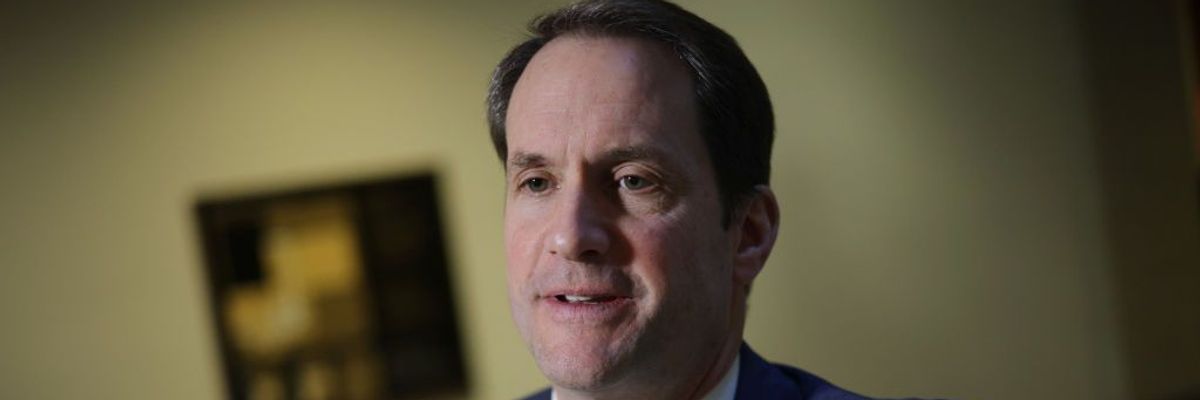
    US Rep. Jim Himes (D-Conn.) speaks to members of the press after a briefing at the US Capitol on February 14, 2024 in Washington, DC. 
    (Photo by Alex Wong/Getty Images)

    “Two individuals in clear distress, without any means of locomotion, with a destroyed vessel, were killed by the United States.”

    US Rep. Jim Himes, the ranking member of the House Permanent Select Committee on Intelligence, expressed horror on Thursday after watching a video of the September 2 double-tap strike on a suspected drug trafficking vessel off the coast of Trinidad and Tobago.

    Speaking to reporters after a briefing on the strike delivered by Adm. Frank Bradley, Himes (D-Conn.) called the video he saw of the attack “one of the most troubling things I’ve seen in my time in public service.”

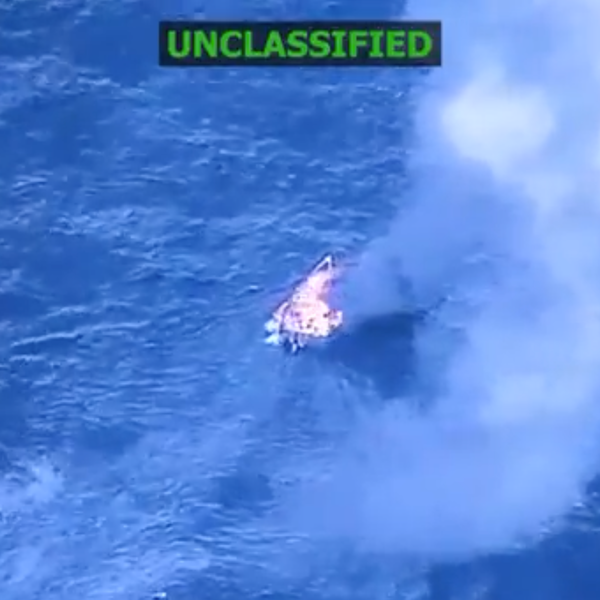
    Himes proceeded to describe the video, which showed the US military firing missiles at two men who had survived an initial attack on their vessel and who were floating in the water while clinging to debris.

    “You have two individuals in clear distress, without any means of locomotion, with a destroyed vessel, [who] were killed by the United States,” he said.

    Himes then started to walk away before a reporter asked him to describe more of what he saw in the video. The Connecticut Democrat then said the video showed a clear “impermissible action,” according to the laws of armed conflict.

    “Any American who sees the video that I saw will see its military attacking shipwrecked sailors,” he said. “Now, there’s a whole set of contextual items that the admiral explained. Yes, they were carrying drugs. They were not in position to continue their mission in any way… People will someday see this video and they will see that that video shows, if you don’t have the broader context, an attack on shipwrecked sailors.”

    Himes finished his talk with reporters by saying that Bradley told lawmakers there had not been a “kill them all” or “no quarter” order given to him by higher-ups. Asked by a reporter if he thought the full video should be released to the public, Himes said, “I do.”

    Himes’ reaction to the video stood in stark contrast to the reaction of Sen. Tom Cotton (R-Ark.), the chairman of the Senate Intelligence Committee, who praised the military for its actions.

    According to HuffPost reporter Jen Bendery, Cotton described the strikes on the two survivors as “righteous strikes” that were “entirely lawful.”

    Cotton also claimed that the video showed “two survivors trying to flip a boat, loaded with drugs, bound for the United States, back over, so they could stay in the fight.”

    Reports from the US government and the United Nations have not identified Venezuela as a significant source of drugs that enter the United States, and the country plays virtually no role in the trafficking of fentanyl, the primary cause of drug overdoses in the US.

    Additionally, many legal scholars have said that a strike on the two men who survived the initial attack on the boat is very likely either an act of murder or a war crime, regardless of whether they were intending to traffic illegal drugs in the US.

    Original article by Brad Reed republished from Common Dreams under Creative Commons (CC BY-NC-ND 3.0).

    Donald Fuhrump says that Amerikkka doesn't bother with crimes or charges anymore, not being 100% Amerikkkan and opposing his real estate intentions is enough.
    Donald Fuhrump says that Amerikkka doesn’t bother with crimes or charges anymore, not being 100% Amerikkkan and opposing his real estate intentions is enough.