Category: Uncategorized

  • Trump’s Venezuela: Why seek regime change if you can get regime compliance?

    Spread the love

    Article by Aman Sethi republished from OpenDemocracy under a Creative Commons Attribution-NonCommercial 4.0 International licence.

    A monument in homage to the struggles of the Venezuelan people for the conquest of their oil | by LUIS ROBAYO/AFP/Getty Images

    The Trump administration’s forcible appropriation of a fifth of Venezuela’s oil reserves is worse than the theft of national assets in post-Soviet Russia.

    Nine months after United States special forces abducted Venezuelan President Nicolás Maduro and his wife in an early morning raid, the US claims to have struck a highly unusual deal to take control of about a fifth of Venezuela’s oil reserves, or about 65 billion barrels, over the course of a 100-year lease period.

    The deal, which is structured through the US Department of Defense (which the Trump administration calls the Department of War), has no recent precedent. While the United States has often engineered military and covert regime change in countries around the world to appropriate resources, the Trump administration’s actions in Venezuela recalls the sorts of 20th century US interventions that lead to a series of revolutions in Latin America and also Iran in the 1950s.

    To make sense of this moment, I caught up with Francisco Rodríguez, a Venezuelan economist, a senior research fellow at the Center for Economic and Policy Research, and professor of public and international affairs at the University of Denver. Rodriguez is also the author of four books, including his latest, The Collapse of Venezuela: Scorched-Earth Politics and Economic Decline. 

    The following is an edited excerpt of our interview. You can listen to the whole  interview on our In Solidarity podcast.

    Aman Sethi: I’d like us to start with just getting your reactions to this, this oil deal. Specifically, if you could just talk through what you know so far, what this means, and whether this is how oil deals are normally done in Venezuela.

    Francisco Rodriguez: Okay, a bit of the background. Venezuela had been under oil sanctions from the US between 2019 and this year. And the US after it carried out a military operation to capture Nicolás Maduro, it decided that it was going to try to forge, let’s call it a “cooperative relationship,” with the government of Delcy Rodriguez, who was Maduro’s vice president.

    And what the US has been trying to do is sell the idea of ‘Now we’re gonna help the Venezuelan oil sector recover’. Venezuela is sitting on the world’s largest oil reserves , but it produces just 1% of world oil output. 

    January of this year just a few days after the military operation to take out Maduro, President Trump actually calls a lot of oil industry executives to the White House, says, “I want you to invest in Venezuela.” Many of these executives say, “We’re not so sure.” One of them actually says this country is really uninvestable under current conditions. So he gets a lukewarm reaction. 

    So now we have the announcement of this plan, and this plan — it promises that Venezuela is going to get $100 billion in oil investment. And that’s really important here, because that’s what most experts have said is needed to get Venezuela to produce what it was producing before the sanctions back in 2016 which was around two and a half million barrels. 

    Now it’s producing roughly one [million barrels per day]. It’s increased a bit to 1.2 million. So you want to get that up by 1.5 million barrels. You need 100 billion to do that. That sounds fine. Actually, that sounds great. If I’m Venezuela, and I’m told, “Hey, here’s the $100 billion you can put into your oil industry, and you’ll get more tax revenue. We’ll benefit.” I say, “Where do I sign?” So that part looks good. 

    But then let’s look at it in more detail because President Trump actually says two things almost in the same breath. He says Venezuela’s gonna get $100 billion of investment in the oil sector, but this is not going to cost a dime to US taxpayers. 

    Okay, wait. 

    So the US is not gonna pay for it. Venezuela is broke, so Venezuela is not gonna pay for it. Who is going to pay for it? Well you would think oil companies, large oil companies, right? Chevron, Exxon, Conoco. But they’re not here. They’re nowhere in the deal. No, they don’t wanna be part of this. 

    So where are these 100 billion going to come out of ?

    Here’s where it gets really interesting and really murky. These $100 billion are going to be put out by a Barbados-based company that was created just a few years ago. It’s a company owned by a businessman with not the best reputation in the world. His name is Alejandro Betancourt. He’s best known for getting billions of dollars in no-bid contracts from the Chavez administration to build electrical plants, at least one of which was never completed. And he’s offering to the US a thirty-five percent stake in his company.

    So the US Department of War is going to now own thirty-five percent of that company. And it’s also going to have the right to purchase at cost twenty percent of the company’s output. So that’s the deal.

    The White House yesterday put out a statement saying that Venezuelan barrels of oil are going to start flowing into US reserves as of November. And basically, President Trump had already said that they were going to replenish the US Strategic Petroleum Reserve with oil that was a gift from Venezuela.

    That’s the word that President Trump used.

    So that means that probably as of today you will have Venezuela sending 40,000 barrels of oil to the US at cost. That’s a loss of about $500 million a year for Venezuela. 

    What is Venezuela getting in return? A promise that somebody, someday, is going to come up with $100 billion is going to be willing to lend them to Mr. Betancourt so that he can invest in the oil sector. 

    This deal is all wrong. This is the most impoverished country in Latin America. 

    How legal is this? Like, is this from a Venezuelan perspective, from an international contracts perspective?

    There’s a set of legal objections to it. Now of course the problem is that in developing countries Venezuela ranks 146 out of 146 countries in terms of the rule of law.

    Asking what is legal or not in a country that has no rule of law, this is almost like a theological question, really.

    Because when we think about the law, laws are interpreted by courts, but the courts are controlled by the government. Article 150 of the Venezuelan Constitution says that the National Assembly has to approve the deal.

    The National Assembly is 90% controlled by the government, so they could have taken the deal before the National Assembly. They didn’t. Why didn’t they do it? Because then they’d have to publish the contract, but they don’t want to publish the contract. Nobody wants to publish the contract.

    There’s a set of other problems I could go down out of all of the different laws that have been violated. But one important one is Article 39 of the country’s hydrocarbons law states that you have to assign contracts in the oil sector through public competitive bidding. There was no public competitive bidding here.

    In fact, a government vice-minister recently said, “The thing is that we’re under an economic emergency decree that we declared after the earthquake.” Really? You’re gonna use the earthquake as an excuse to give away 20% of the country’s reserves?

    What does it smell like to you?

    It smells like Trump essentially said, “I wanna do something about gas prices before the midterm and I wanna claim that I’m getting some of this oil from Venezuela. So I want some of that oil from Venezuela to come in and for me to say that I’m putting it into a strategic reserve, and this is bringing down oil prices. I wanna do that before the midterms. Sign me a deal.” 

    I think that’s essentially all there is. But from the standpoint of Venezuela, Venezuela has just given away 20% of its reserves to a company owned by a very shady figure.

    After the invasion of Iraq when you had the occupation there was a public bidding round for the rights to exploit Iraqi oil. This was a competitive bidding process, it was transmitted through public television, so Iraqis could actually see the bidding taking place in real time.

    This process was transparent. This is the complete opposite. This firm is going to get, over the life of the concession, the equivalent of $303 billion.

    That’s the, that, that is what the private firm gets in profits.

    That is what it’s going to get. That is the equivalent of three years of Venezuelan GDP. 65 billion barrels. Venezuela has a huge level of reserves. The Russian privatization program of 1996 was for 20 billion barrels of oil.

    This is more than three times the size. And in Russia, which was a steal, which was horrible, there was a free-for-all. That’s what led to the rise of the Russian oligarchs. They at least had the decency to rig an auction. Here, there was no auction. They didn’t even pretend.

    So this is not going to end up well. If you’re handing over these massive resources to connected political insiders this is not helping create a democracy. This is consolidating a crony capitalist oligarchy. 

    In your book you’ve likened studying the Venezuelan economy to the equivalent of being a rare disease specialist. For all of us outside who honestly don’t know very much about Venezuela, what is your analysis of the regime in power right now? 

    What is the point at which the people just say, “We’re done with this regime,” and they just get swept out?

    We can understand the American motivations. We can understand Delcy Rodriguez is some kind of captive, but what about the entire country that sits below her? How are people taking this?

    That’s a great question. And it forces one to think about how we got here. So Venezuela got here after about a quarter of a century of very deep polarization. Hugo Chávez, who came into power in 1999 was a populist and popular politician.

    And, like many populist politicians, his message was, “Throw the bums out, people are tired of the old politics. You need change. You need to refound the republic.” And that convinced a lot of people. He was able to get a clear electoral mandate. He reformed the constitution.

    He did what many leaders who have at least an authoritarian bent will do in those circumstances, which is say “We really need to change this, give more power to me.” So he really made the Venezuelan presidency all-powerful in that constitutional reform. And that really shaped Venezuelan politics over the next quarter century because you created a winner-take-all political system in which the opposition was completely out of anything.

     So you ended up in this, this politics which was very polarized between the government and the opposition. Now, Chávez did some things that a lot of Venezuelans liked at the time. He was definitely somebody who sought out ways to let very large disadvantaged majorities which had been excluded from Venezuelan social, economic, and political life have a stake.

    He also did a lot of things very badly.

    He got a huge oil boom. He spent a lot of that money. He ran the country into debt. He hired people like Alejandro Betancourt to build electrical plants, some of which were never built. So the country lived through this deep polarization. And then Chávez died, and then he leaves Maduro. Then the economy starts doing poorly. Then he [Maduro] becomes more repressive because the opposition is really going after him. And then the opposition goes to the US, and the US says “Let’s get tough on this, let’s impose sanctions.” 

    They hurt the country’s oil industry. It leads to a huge decline in the country’s oil production. So they, they effectively create an economic catastrophe. So you end up in this trap, which is what in my book I call the trap of economically destructive political conflict. 

    And the whole– the puzzle that I try to explain in my book is, how is it that you get an economy to collapse, to lose seventy-one percent of per capita income? This is the equivalent of three consecutive great depressions without a war. And my answer is that this happens because there’s a moment in which this politics becomes so destructive that both sides are essentially playing scorched earth.

    So you end up having this battle for the country that turns the economy into a political battlefield, and that’s where it collapses. 

    Then all of a sudden Trump decides to send in US forces, captures Maduro, and decides that he’s going to run the country with the people who are there. What we know and what he has said literally is that he’s put a gun to Delcy Rodriguez’s head. We also know that Delcy Rodriguez is complying with everything that Trump is asking for. 

    Is she doing it because she has a gun to her head, or is she doing it because this actually works in her favor and she can stay in power? Probably both.

    I have, well, several questions from this, but, but let’s start with the question of sanctions. It’s possible for many governments to make many bad decisions and to do bad things to the economy.

    But there is a very specific kind of bad thing that happens once sanctions are imposed, right? When you’re cut out of the US financial system, for example, that is a very, very particular form of economic punishment.

    What is your assessment of the role that, that sanctions have actually played here? Because one thing that I’m struggling with is this narrative of “Venezuela let its oil industry completely collapse, and now we’re gonna fix it, and now everything will be fine”. I’m struggling with the dissonance, but maybe I don’t know enough.

    That’s a very interesting question. It’s a very important question. It’s not an easy question to answer because well, you have many factors going on, and definitely there was a lot of mismanagement.

    There were poor economic policies, so you have to disentangle the effects of those poor policies from the effect of sanctions. 

    My estimate is that approximately half of Venezuela’s economic contraction during its collapse period between 2012 and 2020 can be attributed to sanctions.

    So in other words, this is a country that in the absence of sanctions would have gone through a major crisis. It would have seen, by my estimates, GDP decline by thirty-six percent, but not by seventy-one percent. And in fact, that thirty-six percent decline that would have occurred in the absence of sanctions actually puts it in line with other collapses generated by similar episodes of protracted exercise of bad policies particularly in Latin America.

    And all of them have a very similar pattern. You have a commodity-dependent economy. You have a period in which deep imbalances accumulate. You start getting high levels of debt.

    The country starts going into a current account deficit. You start seeing high levels of capital flight, and then you get a decline in the price of the commodity like what you got between 2014 and 2016. And there you get this deep economic crisis. 

    That is what happened in Venezuela between 2012 and 2016, which were the first three years of Maduro in power. In 2017 something different starts happening. And you start seeing that markets are expecting that the Venezuelan economy will begin to recover.

    Because oil prices had fallen from $100 to $30, and then they had recovered to around $50, $60. What history teaches us is that the economy stabilizes and then begins to recover in that situation. That’s not what happened in Venezuela. In Venezuela, the economy continued shrinking at an accelerating rate. And the difference was that was the year in which sanctions began to be imposed.

    So yes, sanctions did deep damage to this economy. These sanctions didn’t come out of the blue. These sanctions were part of a political strategy by the country’s opposition that was reacting to things that Maduro was doing which were very bad and were very evil and very authoritarian, and said, “We need to up the ante here by doing what we can do. We have allies in the US, that can help us start taking Maduro’s control from the country’s purse strings away.” 

    So in 2019, the Trump administration decided to recognize Juan Guaido, an opposition legislator, as Venezuela’s legitimate President. This is something that the US had never done before. The US had never recognized somebody with no de facto control over the territory as the President. And what happened as a result of that was that all of the country’s offshore assets, including all of the assets of PDVSA, the state-owned oil company, were transferred to the management of Guaido or his appointees. What that meant is that the country no longer had access to its funds. These funds were essentially handed over to the opposition. It made it impossible for the government even to carry out the most basic economic policy.

    There’s nothing in politics that is for free, right? So you acquire a commitment when you have an external power like that, that is helping you. And that means that you can’t question what that external power is doing in your country because you essentially live off of them, right? And this, by the way, was literally true. The Venezuelan opposition — the Venezuelan National Assembly elected in 2015, whose term ended in 2020 — had around 80 opposition legislators who were getting paid monthly salaries out of an account in the Federal Reserve. So the US could literally cut the salaries of the opposition politicians if the opposition decided to go against it.

    This is the typical Faustian bargain, right? You say, “I’m willing to do anything if you will help me regain power,” for good reasons.

    But the reality is that these Faustian bargains don’t end well. 

    I’m imagining an Indian opposition leader touring Europe and America and asking for support to become the Prime Minister of India, and they would be, you know, laughed out of the country.

    I understand that the dynamics are different but it does strike me as an unusual theory of power.  In your book, you also talk about the fact that while Venezuela is shown as an exception to kind of ordinary politics, it in many ways is almost like a weather vane that shows you where politics is going.

    But what does this moment in Venezuela tell us if we say Venezuela is, in some ways, the country of the future? What is it telling us now, especially in light of this deal?

    I would love to be wrong but I do think that Venezuela might be initiating a model that the US is probably going to try to imitate in other countries. 

    President Trump actually considers Venezuela a success story, and he’s been trying to produce similar outcomes in Cuba and Iran. And there have been negotiations between Trump administration officials and officials in those countries where they’re proposing this type of deal. The type of deal is you stay in power, the opposition doesn’t come to power but you change completely the way in which you’re doing things, and you follow our orders essentially.

    And I want to emphasize that this isn’t a government that rules the country with US support. This is a government that is carrying out the orders of the US . This is a government that has carried out military operations with US troops and Venezuelan troops in Venezuelan territory. It recognized Israel. And three days after Marco Rubio announced that the US was launching a campaign to dismantle the International Criminal Court, Venezuela says, “We’re leaving the International Criminal Court.” The first Latin American country to do so.

    So this has become the most dependable US ally in the region. And it’s led to this thesis in Washington of, why seek regime change if you can get regime compliance? That’s essentially what they’re trying to do. 

    You were saying this looks like a somewhat of an odd concept coming from India and thinking about it in terms of the dynamics in that region.

    I would say it’s not that foreign in Latin America. But you have to dig a little bit into history to go there. What the US did in Venezuela was actually what the US did in a number of countries at the beginning of the [20th] century including Cuba, Dominican Republic, Haiti, Panama. It basically imposed protectorates in these countries. 

    The Cuban one is interesting because Cuba, the US kind of occupied and took control of after the Spanish-American War. And then what the US did is that it forced the Cubans as a condition for independence to accept into their constitution to grant the US a standing right of intervention.

    So basically, if the US disagreed, if it took exception to any key decisions of the Cuban government, the US had the right to intervene militarily, and the US, in fact, exercised that right four times in the subsequent twenty years from the signing of that amendment, known as the Platt Amendment.

    And one of the problems with that, it’s no coincidence that it was precisely Cuba that saw the political movement that has been most antagonistic to the US emerge. 

    If you study the early 20th century in Cuba what you find is that Cuban politicians were acting very much in the way in which Venezuelan politicians are acting now

     They understood that whoever was in power needed the support of the US. So they became politicians who were adept at lobbying Washington and at building political coalitions between Washington stakeholders to support them. And this means that they were not politicians that built a domestic political base, that were trying to answer the demands of their constituencies. So the protectorate regime, what it does is that it stifles institutional development in a way that basically doesn’t let the institutions of a democracy emerge.

    And of course, if you have an electorate that cannot express its grievances, cannot express its demands through the political system, a big part of that electorate is going to become very angry, and then you end up with something like the Cuban Revolution. I think that is a very distinct risk now.

    It’s a risk that we will enter into a pattern as a result of Washington’s idea that it can run Latin American countries by remote control, that we’re going to enter into a very similar political dynamics, which, in the end, is going to be bad for the region, but it’s also going to be very bad for the US standing in the region.

    Article by Aman Sethi republished from OpenDemocracy under a Creative Commons Attribution-NonCommercial 4.0 International licence.

    Climate science denier Donald Trump confirms that he knows nothing about democracy and that more liquid gold is being secured according to his policy of global privateering.
    Climate science denier Donald Trump confirms that he knows nothing about democracy and that more liquid gold is being secured according to his policy of global privateering.
    Orcas discuss Donald Trump and the killer apes' concept of democracy. Front Orca warns that Trump is crashing his country's economy and that everything he does he does for the fantastically wealthy.
    Orcas discuss Donald Trump and the killer apes’ concept of democracy. Front Orca warns that Trump is crashing his country’s economy and that everything he does he does for the fantastically wealthy.
    Donald Trump urges you to ignore facts and reality and be a Climate Science denier like him. He says that he makes millions and millions for destroying the planet, Burn, Baby, Burn and Flood, Baby, Flood.
    Donald Trump urges you to ignore facts and reality and be a Climate Science denier like him. He says that he makes millions and millions for destroying the planet, Burn, Baby, Burn and Flood, Baby, Flood.

  • ‘Absolutely Bonkers’ and ‘Unacceptable’: Trump Posts Map Showing US Takeovers of Other Nations

    Spread the love

    Article by Jessica Corbett republished from Common Dreams under Creative Commons (CC BY-NC-ND 3.0).

    President Donald Trump posted on his Truth Social platform a map showing the US flag over not only the United States but also Canada, Greenland, Iceland, the Caribbean, Mexico, and multiple countries in Central America. (Image via President Donald Trump/Truth Social)

    “As always, he is telling us what the plan is,” said one critic. “We must take it seriously.”

    US President Donald Trump has spent his second term threatening takeovers of various other countries, from Canada and Cuba to Greenland, and on Monday he shared on social media a map that fueled fresh fears of his imperialist “Donroe Doctrine.”

    The map on Trump’s Truth Social platform shows the US flag over not only the United States but also Canada, Greenland, Iceland, Mexico, and multiple countries in Central America and the Caribbean.

    RECOMMENDED…

    US President Donald Trump

    ‘The President of the United States Is Mentally Unwell’: Deranged Trump Posts AI Slop of Iran Bombing

    US Vice President JD Vance

    ‘I Wouldn’t Call It a War,’ Says JD Vance After 6 Months of Trump’s Failed, Costly, and Illegal War on Iran

    The post was swiftly condemned across platforms, with Congressman Jonathan Jackson (D-Ill.) declaring that “this is unacceptable.”

    Journalist Stephen Robinson wrote on X that “another world leader posting something like this would have to apologize before their immediate removal.”

    Amy McGrath, a retired Marine fighter pilot and former Democratic US Senate candidate from Kentucky, wondered, “What would we do and say if the Chinese president posted a map of China taking over the Western Pacific?”

    Carl Bildt, co-chair of the European Council on Foreign Relations and former prime minister of Sweden, similarly said: “What would happen if Xi Jinping posted a map where [China] has taken over all of East Asia, and [President Vladimir] Putin one of [Russia] having absorbed all of Western Europe? It would have been seen as either insane or dangerous—or both.”

    While some critics called Trump “absolutely bonkers” and “f*cking insane,” Dr. Brian Goldman, a Canadian emergency physician who’s also an author and broadcaster, asserted: “That’s not insanity. That’s intention.”

    Democratic strategist Michelle Kinney agreed, saying: “As always, he is telling us what the plan is. We must take it seriously.”

    Melanie D’Arrigo, executive director of the Campaign for New York Health, suggested that “the reason why Republicans attack education is so that people don’t recognize the history that repeats itself.”

    Without directly mentioning Trump or his map, Mexican President Sheinbaum said in Spanish on Monday, “We reaffirm that Mexico is neither nor will be a colony or protectorate of any foreign country. Proudly we are a free, independent, and sovereign nation.”

    While Trump is a prolific poster, the map followed a series of posts from Sunday—including other maps and images produced with artificial intelligence—that led progressive influencer Harry Sisson to conclude that the president was “having a mental health episode online” and call for his removal from office.

    “This man is unwell. 25th Amendment NOW,” Sisson said, cataloging posts on a range of topics, from Trump’s recent renaming of Lake Ontario amid tough trade talks with Canada, to the suggestion that New Mexico should be dubbed “New America.”

    The latter was ripped by several Democratic officials, including New Mexico’s governor, Michelle Lujan Grisham, who responded that her state’s name “isn’t up for debate—it’s been ours since before the United States existed.”

    “What is up for debate? Who’s showing up for working families,” she continued. “While the president tries to distract Americans from his disastrous war in Iran, gas prices keep soaring. Americans are also spending more at the grocery store, losing access to healthcare and wondering if they’ll ever be able to afford a home. Under Democratic leadership here in New Mexico, we’re providing families with free childcare and college, protecting access to healthcare, and investing in housing. While the White House wastes time coloring on maps, Nuevo México is busy doing the work.”

    In addition to waging an illegal war on Iran, Trump this term has invaded Venezuela to abduct President Nicolás Maduro and take control of the country’s oil reserves, become the US commander-in-chief to bomb the most countries, and killed over 225 people by blowing up boats allegedly smuggling drugs through international waters. He’s also threatened to seize the Panama Canal and possibly attack nations including Colombia and Mexico.

    As Iran has responded to Trump’s war by restricting traffic through the Strait of Hormuz, the president has teased declaring the key waterway a US territory and naming it after himself. He’s also dubbed the Gulf of Mexico “the Gulf of America” and fought to put his name on the John F. Kennedy Center for the Performing Arts in Washington, DC.

    With the US midterm elections less than two months away, some Democrats in Congress have stepped up their critiques of Trump’s foreign policy—including a delegation of progressive congressional lawmakers and candidates who headed to Uruguay last month for the third Pan-American Congress.

    Shortly after that gathering, delegation member Congressman Jesús “Chuy” García (D-Ill.) stressed that “progressives reject the violent, imperialistic Donroe Doctrine, and believe in a foreign policy rooted in cooperation, diplomacy, and sovereign equality.”

    Article by Jessica Corbett republished from Common Dreams under Creative Commons (CC BY-NC-ND 3.0).

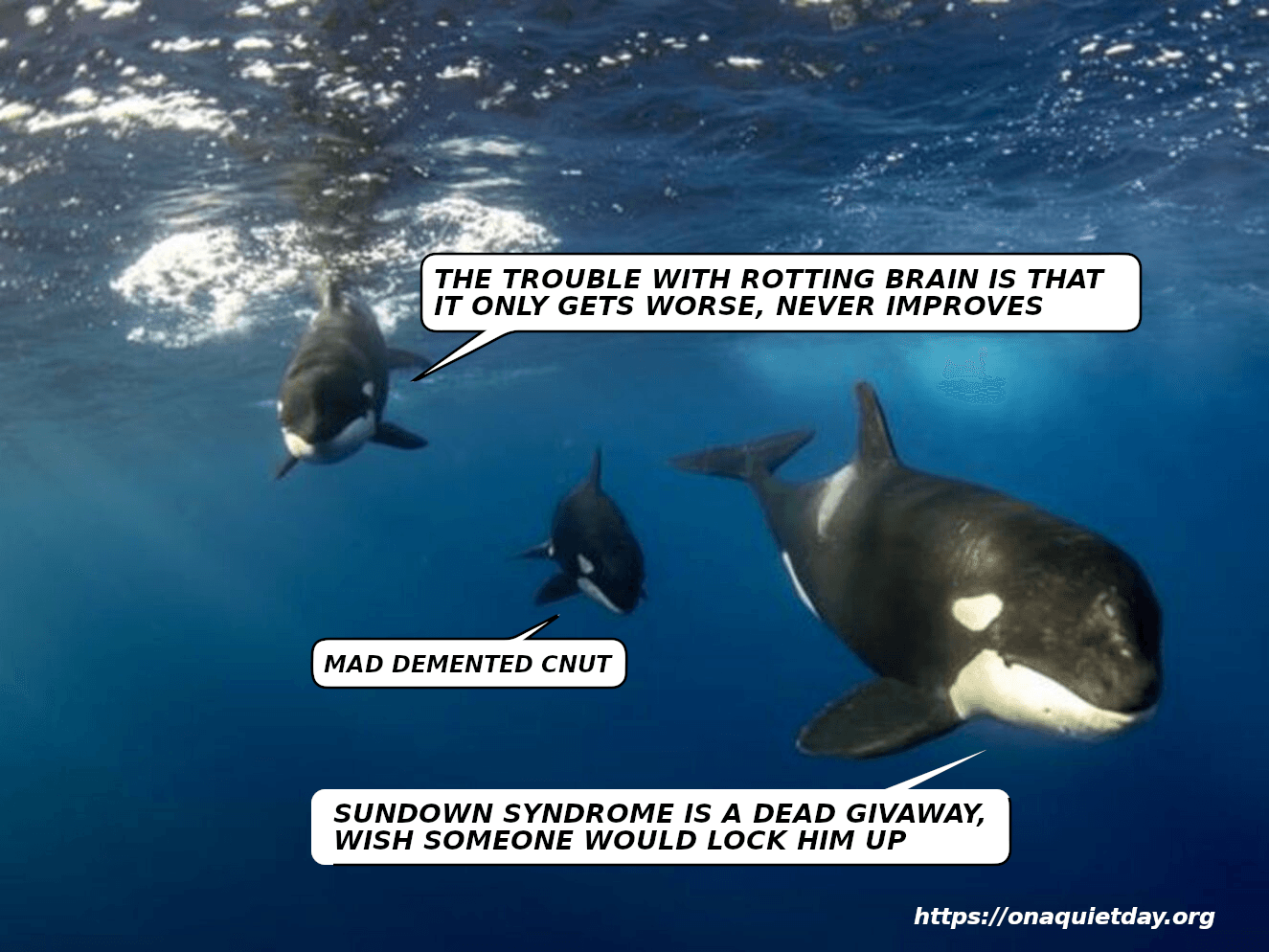
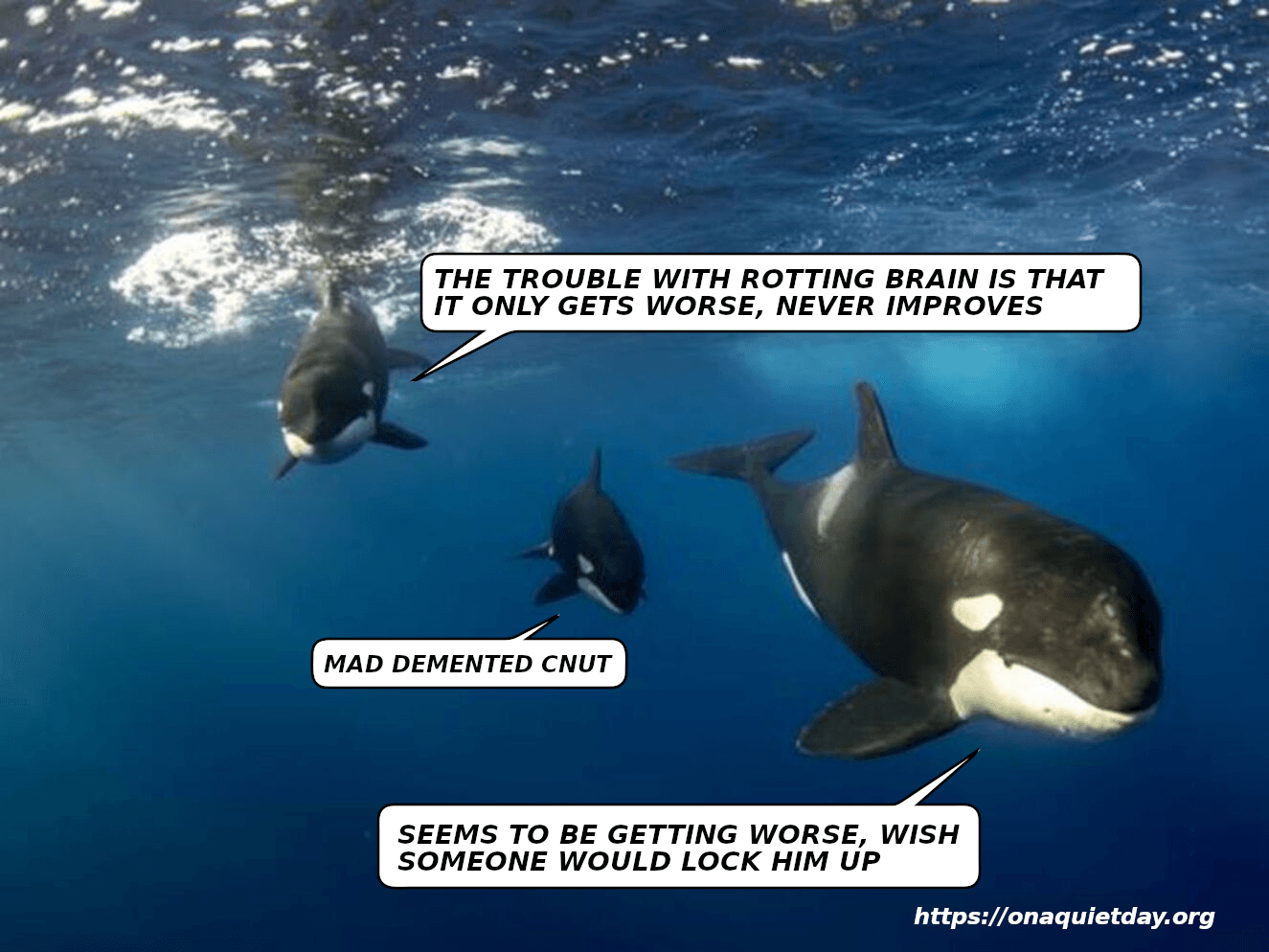
    Orcas discuss rotting brain, front Orca says Sundown Syndrome is a dead givaway and he wishes someone would Lock Him Up
    Orcas discuss rotting brain, front Orca says Sundown Syndrome is a dead givaway and he wishes someone would Lock Him Up
  • Extremist Israeli minister unveils 1,000 new settlement units after trade sanctions

    Spread the love

    This work by Middle East Monitor is licensed under a Creative Commons Attribution-NonCommercial-ShareAlike 4.0 International License

    Israeli far-right Finance Minister Bezalel Smotrich displays a map of an area near the settlement of Maale Adumim, a land corridor known as E1, outside Jerusalem in the occupied West Bank, on August 14, 2025. [Photo by MENAHEM KAHANA/AFP via Getty Images]

    Far-right Israeli Finance Minister Bezalel Smotrich on Wednesday announced plans for 1,000 new settlement housing units in the northern occupied West Bank, a day after 12 Western countries said they intended to impose trade restrictions on goods from illegal Israeli settlements, Anadolu reports.

    Smotrich said on US social media company X that 1,665 dunams (411.5 acres) had been added to the Kida and Havat settlements, allowing for the construction of 1,000 new housing units.

    The leader of the Religious Zionism party described the move as “another historic step in the settlement revolution.”

    Israel has occupied the West Bank, including East Jerusalem, since 1967. The international community considers Israeli settlements built on occupied Palestinian territory illegal under international law, a position rejected by Tel Aviv.

    “After more than 25 years, the Kida and Havat settlements have finally reached the moment when the government is advancing procedures to legalize their status,” Smotrich said.

    Kida and Havat were established in 2003 and 2001, respectively. The Israeli government decided to convert them into recognized settlements in December and March, respectively.

    READ: Palestinian families in Jordan Valley face displacement deadline today

    The government of Prime Minister Benjamin Netanyahu has touted that since taking office in late 2022, it has approved the establishment of 104 new settlements and established 160 agricultural settlement outposts in the occupied West Bank.

    Around 750,000 Israeli occupiers live in 156 settlements and 360 outposts across the occupied West Bank, including occupied East Jerusalem, according to Palestinian figures.

    On Tuesday, the UK, Canada, Denmark, Finland, France, Iceland, Ireland, Norway, Poland, Portugal, Spain and Sweden announced plans to impose trade restrictions on goods originating from the Israeli settlements.

    This work by Middle East Monitor is licensed under a Creative Commons Attribution-NonCommercial-ShareAlike 4.0 International License

    Orcas discuss rotting brain, front Orca says Sundown Syndrome is a dead givaway and he wishes someone would Lock Him Up
    Orcas discuss rotting brain, front Orca says Sundown Syndrome is a dead givaway and he wishes someone would Lock Him Up
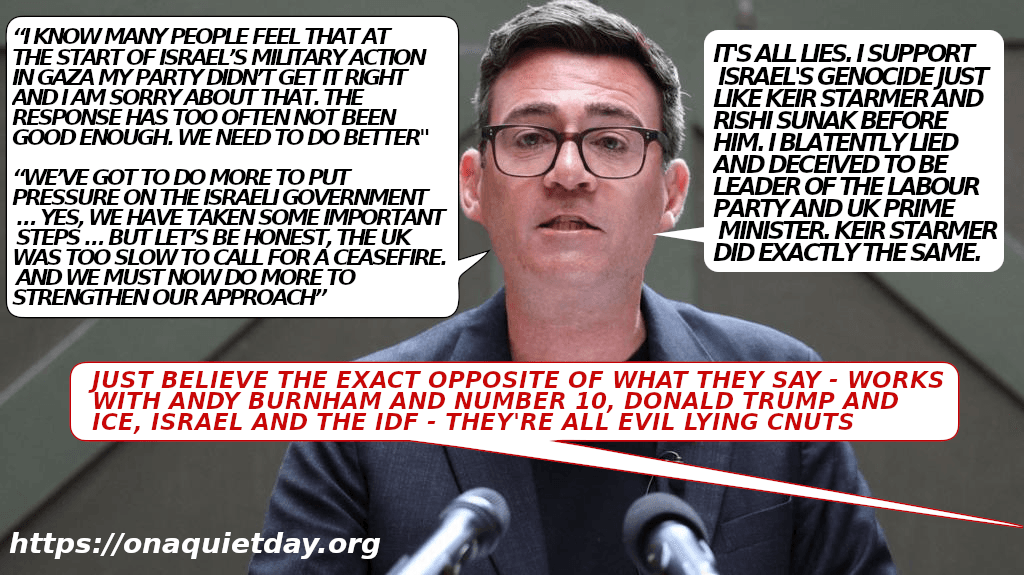
    Donald Trump calls for help from NATO allies in securing the Strait of Hormuz despite saying on 7 March 2026 that they don't need people to join wars after they've already won. He's challenged with the claim that he lies as much as the IDF.
    Donald Trump calls for help from NATO allies in securing the Strait of Hormuz despite saying on 7 March 2026 that they don’t need people to join wars after they’ve already won. He’s challenged with the claim that he lies as much as the IDF.
    Climate science denier Donald Trump confirms that he knows nothing about democracy and that more liquid gold is being secured according to his policy of global privateering.
    Climate science denier Donald Trump confirms that he knows nothing about democracy and that more liquid gold is being secured according to his policy of policy of global privateering.

  • Q&A: What can – and cannot – be said about global warming’s role in the 2026 Himalayan floods

    Spread the love

    Article by Cecilia KeatingRobert McSweeneyAyesha TandonDr Giuliana ViglioneDaisy Dunne republished from Carbon Brief under a CC license.

    An aerial view of Devighat Bazaar in Nuwakot, Nepal, following the floods of 26 August 2026. Credit: ZUMA Press / Alamy Stock Photo

    Can the event be attributed to climate change?

    On the morning of 26 August, flash floods surged through a Himalayan border region of Nepal and the Chinese region of Tibet, killing more than 1,300 people, with thousands still missing.

    In the days since the floods, scientists have examined satellite imagery, drone footage and seismic data in order to understand and explain the forces behind the event.

    While initial theories pinned the flood on a glacial collapse, scientists now understand the event as a “multi-hazard cascade”, which began with a bedrock collapse. 

    Some climate sceptics have tried to use this to falsely claim that human-caused climate change had no impact on the event. 

    Yet, scientists have noted that, while no formal attribution study has been carried out thus far, warming is making such ice-rock avalanches in the region more likely.

    Researchers have highlighted how rapid warming is dramatically reshaping Asia’s high-mountain region – and identified rising temperatures, glacier retreat and permafrost thaw as factors that may have all contributed to the disaster. 

    Balendra Shah, Nepal’s prime minister, has called the floods a “serious signal that…the risks we must bear in the Himalayan region are increasing” due to climate change.

    Here, Carbon Brief unpacks what scientists currently know about the causes of the catastrophic event and what they can – and cannot – say about the role of climate change. 

    What happened?

    report published on 28 August by the HiRisk scientific consortium of high mountain experts detailed the events that led to the flash floods.

    It said that events were set in motion on 26 August when a mass of bedrock, as well as the glacier ice on top of it, broke off a slope of Langtang-Lirung mountain in the Nepalese Himalaya, plunging from approximately 5,200 metres above sea level to the valley floor at 3,000 metres. 

    The landslide shook the ground hard enough that, at 8:37am Nepal local time, the US Geological Survey (USGS) initially reported a magnitude 4.4 earthquake. Later that day, it clarified the shaking was caused by glacier collapse and debris flow, equivalent to a magnitude 5.2 earthquake.

    On the valley floor, the melting ice, water and debris slammed into the Lhende Khola river, a high-altitude river that runs along Nepal’s border with China. 

    Known downstream as the Bhote Koshi river in Nepal and the Poiqu or Poqu in China, the Lhende Khole feeds a network of rivers across Nepal and the Chinese region of Tibet, including the Trishuli river. (In China, the Lhende Khola is known as the Donglin Tsangpo.)

    This image shows a map of Nepal.
    The designations employed and the presentation of the material on this map do not imply the expression of any opinion whatsoever on the part of Carbon Brief concerning the legal status of any country, territory, city or area or of its authorities, or concerning the delimitation of its frontiers or boundaries. Credit: Carbon Brief.

    A large “debris” lake was briefly formed on the valley floor. When this lake burst, a wall of water and rock travelled downstream, killing more than a thousand people and destroying settlementsroadsbridgeshydropower plants and border posts across Nepal and Tibet.

    HiRisk said that the floodwave travelled down rivers as fast as 30km an hour (around 19 miles per hour) and reached Mugling – a Nepalese town more than 130km downstream – at around 1pm local time.

    A separate report from the Center for Land Surface Hazards in the US noted that the flood moved “exceptionally fast, was sediment-laden and extreme in scale”. For example, in the Nepalese municipality of Galchhi, the Trishuli river rose by nine metres in 30 minutes, it said.

    Writing in the ConversationDr Umesh Haritashya, a glaciologist at the University of Dayton in Ohio, explained that the disaster “wasn’t finished when the first wall of water passed [on 26 August]”. 

    He continued that a new “barrier lake” – estimated to hold a few million cubic metres of water – had developed in a location where two rivers meet in Tibet before crossing into Nepal. This lake burst on 28 August and the river rose again, he said. 

    On 4 September, the chief of Nepal’s National Disaster ​Risk Reduction and Management Authority, told Reuters that property and infrastructure worth “at least” $2.5bn (£1.9bn) had been lost. Dharma Raj Upreti estimated the cost to build roads and temporary shelters, provide drinking water and ⁠restore power would be around $53m (£39m). 

    How did bedrock collapse trigger the flash floods?

    In the immediate aftermath of the floods, initial reports suggested that the trigger was a collapsing glacier or earthquake in the high mountains of Nepal.

    After confirming that a seismic tremor was as a result of falling rock and ice, the USGS said the trigger was likely a “glacial collapse and debris flow”. This was widely picked up by the media. 

    Subsequently, satellite imagery revealed that an “enormous chunk of the mountainous bedrock” beneath the glacier had also given way, reported the New York Times

    Dr Kristen Cook, a geomorphologist at the Université Grenoble Alpes in France, told the newspaper:

    “The rock that the glacier was sitting on collapsed…It was a much larger collapse than we were initially able to see in the satellite imagery.”

    The result was a “deluge of rock and ice, which pulverized into mud and water as it surged down the mountainside”, the newspaper said.

    Dr Jakob Steiner a geoscientist at the University of Graz in Austria, tells Carbon Brief:

    “It was not a glacier that collapsed. It was the mountain below the glacier that collapsed and the glacier had no other chance but to go with it because it was sitting on top of it. 

    “The trigger for that is something that we are not 100% certain about, but, in the end, it very much looks like simply a mechanical failure of the rock material because of stressors that have built up over a long period of time.”

    Failures of “bedrock” – the hard, solid rock that sits below looser rocks and soil – are an “increasingly common occurrence”, says Prof Bethan Davies, a professor of glaciology at Newcastle University. She tells Carbon Brief:

    “These massive landslides occur in mountain regions, commonly following rapid deglacierisation [the melting away of a glacier]. Similar events happened in the Chamoli event in 2021 [in the Indian Himalaya] and in the Blatten landslide last year in Switzerland. They’ve also occurred recently in Alaska.”

    With a shift in focus from the failure of a glacier to the bedrock underneath, some climate sceptics seized on the development to falsely claim that climate change had not played any role in the disaster.

    These include Dr Matthew Wielicki, recently appointed by the Trump administration to lead the US Global Change Research Program, on Twitter, as well as former Conservative peer and climate-sceptic commentator Matt Ridley in the Spectator

    However, scientists have highlighted the likely contribution of rapid warming in the region. These factors include the thawing of permafrost and glacier retreat. (For more, see sections below).

    Fundamentally, “this would have been a much less significant tragedy if it had been just a rock-slope failure”, notes Davies.

    The initial landslide took a mixture of rock and ice into a valley that “contains buried ice” as well, she says, providing the water that “resulted in the hyperconcentrated flow, which took so many lives”.

    How have temperatures risen in the affected region? 

    Global temperatures have risen by roughly 1.4C since the pre-industrial period. However, this increase is not uniform across the planet, with some regions warming faster than others. 

    A study published in Global and Planetary Change in June 2026 investigated changes in the Langtang catchment – a river basin in central Nepal, in which the Langtang-Lirung mountain is located, which eventually drains into the Ganges. Around one-quarter of the area is made up of glaciers.

    The paper found that glacial areas of the catchment – found at 4,000 metres above sea level – warmed at 0.31C per decade over 1960-2023. This was “more than three times” the rate observed at a lower elevation weather station, the authors said.

    Looking in more detail at the site of the glacial collapse, Dr Robert Rohde, chief scientist for Berkeley Earth, used ERA5 reanalysis data to show how temperature has changed at the 5,200-metre elevation site where the mass of ice and rock broke loose. 

    Rohde’s analysis found that June-to-August temperatures have been rising at the site of the glacier collapse since the year 1940, with 2026’s summer the fourth warmest on record, behind 2024, 2025 and 2022. This is shown in the graph below.

    Average summer (June-August) temperature at the ice-rock avalanche site over 1940-2026.
    Average summer (June-August) temperature at the ice-rock avalanche site over 1940-2026. Data source: Rohde, Bluesky (2026)

    Rohde also found that the days leading up to the disaster recorded the hottest August temperatures ever experienced at the site. This is shown in the graph below.

    Daily average temperature, from 1 June-1 September, at the glacier collapse site.
    Daily average temperature, from 1 June-1 September, at the ice-rock avalanche site. 2026, 2025 and 2024 are shown in dark, mid and light blue. All other years from 1940-2023 are shown in grey. Source: Rohde, Bluesky (2026)

    On social media, Rohde stated:

    “Given the warming trend, this Nepali glacier had probably been thinning and weakening for years, or even decades. But it ultimately failed during the warmest week in one of its warmest years on record. It would be a hell of a coincidence if global warming wasn’t at least partially to blame.”

    How have rising temperatures affected mountain stability?

    Many experts have linked warming temperatures in the region to thawing permafrost – ground that has been frozen for at least two consecutive years, whose thickness ranges from less than one metre to more than a kilometre. 

    Steiner is part of a research team that has been using sensors to monitor permafrost in the region since 2014. He tells Carbon Brief that it is “pretty clear” the permafrost has been thawing “very actively” at elevations as high as 5,200 metres above sea level “for many years”. He adds:

    “This means that the ground has, over the last decades, moved from being in a solid state into – at least, periodically during the warm season – patchy ground where some is frozen and some isn’t…

    “If you have frozen ground next to non-frozen ground, you have dynamics happening between that because there are different densities and there’s movement happening, which is conducive to interventional failure – and that we know from many other cases.”

    Davies also points to the “degradation” of perennially frozen ground as a factor in the disaster:

    “This permafrost acts as a glue to hold together the rocks and, as it melts, the rock can become weakened.”

    Permafrost thaw can also result in saturated ground, says Davies, which adds “pressure in the joints” of rock and can “facilitate” failure. She continues:

    “Sources of the water include melting permafrost and meltwater from the overlying glacier. We know that this event happened during a period of warmth, but in the absence of heavy precipitation, pointing to ice melt as the source of water.”

    2025 study of rock and ice avalanches in High Mountain Asia found that more than two-thirds started in areas “where permafrost is probable”.

    How have glaciers retreated in the affected region?

    Glaciers – frozen rivers of ice holding three-quarters of the global freshwater supply – are extremely vulnerable to climate change.

    In the Himalaya, the rate of glacier retreat has doubled since the late 20th century, according to a 2019 study in Science Advances.

    The Global and Planetary Change study found that glacier area loss rates in the Langtang catchment increased more than fourfold from 1964 to 2023 – with melting accelerating after 2000.

    It added that glaciers in the region also experienced “fragmentation” and “widespread thinning” over this period.

    The study noted that this loss “coincided with elevation dependent warming”.

    The figure below provides an overview of glacier loss in the Langtang catchment over 1964-2023, with orange, red and dark red indicating areas of retreat.

    In addition, green dots note points of glacier fragmentation, while blue dots show separation and pink show disconnection.

    Glacier loss in the Langtang catchment over 1964-2023.
    Glacier loss in the Langtang catchment over 1964-2023. Orange, red and dark red indicate areas of retreat. Green dots note points of glacier fragmentation, while blue dots show separation and pink show disconnection. Credit: Silwal et al. (2026)

    In comments released by the University of ReadingProf Maria Shahgedanova, a climate scientist researching climate impacts on mountain glaciers, said that the glacier involved in the floods had “retreated by approximately 450 metres between 1990 and 2020”.

    She adds that this “potentially reduce[d] the mechanical support provided by the glacier to the underlying rock slope”.

    Speaking to Carbon Brief, Davies reiterates that the retreat of the glacier is “potentially a contributing factor” to the bedrock collapse and subsequent disaster.

    This is because the removal of the glacier from the lower slopes leaves the “upper rock slopes less stable”, she says.

    The most recent assessment by the International Centre for Integrated Mountain Development said that glaciers in the Hindu Kush Himalaya region are “rapidly shrinking” as a result of climate change. (This region extends 3,500km over Afghanistan, Bangladesh, Bhutan, China, India, Myanmar, Nepal and Pakistan.)

    It said this loss is threatening the safety of the nearly two billion people, including by increasing the risk of “glacial lake outburst floods” (GLOFs). A GLOF is a sudden and catastrophic release of meltwater from a glacial lake. 

    Although this disaster was not caused by a GLOF, it is known that climate change is making such events more likely.

    Can the event be attributed to climate change?

    In the wake of the flash floods, climate campaignersmedia outlets and Nepalese politicians have linked them to human-caused climate change.

    However, many climate scientists have cautioned that it is too early to say precisely how climate change impacted the disaster. 

    Davies tells Carbon Brief:

    “These events happen so quickly that the exact causes and drivers can take a little time to uncover, especially if the event was a surprise and there had been no monitoring system in place.”

    When trying to determine the role human-caused climate change played in the intensity or likelihood of extreme weather, scientists turn to the field of “attribution science”. 

    To date, no formal rapid attribution study has been produced that attempts to quantify whether – and how – climate change contributed to the event.

    Scientists have noted that climate attribution of ice-rock avalanches – which are typically driven by a variety of factors – remains limited, in part because of the lack of a long-term observational record of previous collapses in high mountain areas.

    Meanwhile, the studies that do exist stop short of directly linking such disasters to climate change. For example, the authors of a 2021 study into the Chamoli ice-rock avalanche concluded that “we cannot attribute this individual disaster specifically to climate change”. 

    However, they added, the “possibly increasing frequency of high-mountain slope instabilities can likely be related to observed atmospheric warming and corresponding long-term changes in cryospheric conditions (glaciers and permafrost)”.

    In the aftermath of the disaster, many researchers have similarly highlighted that climate change could not be singled out as the cause of the disaster, even if warming likely increased the probability of its occurrence.

    On the Climate Brink substack, Carbon Brief’s climate science contributor Dr Zeke Hausfather noted that a “definitive single-event attribution” of the more recent disaster “may never be possible” due to the “messy causality of rock-ice avalanches”.

    However, he added that both the existing scientific literature and “essentially every scientist working on these hazards point in the same direction” – namely, that warming is making such events more likely in the Himalaya.

    Steiner tells Carbon Brief it might be possible to attribute different factors that played a role in the disasters to climate change – for instance, the recession of the glacier – but it would be more difficult to do so for the event as a whole.

    Part of the reason for this, he says, is that rock failures in this region of the Himalaya have occurred for millennia, well before humans started altering the climate. 

    However, he continues:

    “The physics of it is not something that has been made possible by climate change. This could have happened without it. But the chance of it happening – and the likelihood of it happening five years after a previous, similar event [in Chamoli] – we, as the scientific community, can be pretty confident about that [being increased because of a changing climate].

    “This is because so many of the changes that we know are related to climate change can potentially drive the build-up to eventual failure.”

    Ultimately, says Davies, a “careful attribution study is needed, but it is hard to argue that the rapidly warming climate is not having an effect in these regions”. She adds:

    “A single event may have multiple drivers, but we are seeing an increase in these events and are likely to see more as the permafrost and glacier melt continues.”

    Article by Cecilia KeatingRobert McSweeneyAyesha TandonDr Giuliana ViglioneDaisy Dunne republished from Carbon Brief under a CC license.

  • Evangelical Zionist Huckabee attacks Jewish Ed Miliband, accuses UK government of ‘Jew hate’

    Spread the love

    This work by Middle East Monitor is licensed under a Creative Commons Attribution-NonCommercial-ShareAlike 4.0 International License.

    U.S. Ambassador to Israel Mike Huckabee delivers a press statement during his visit to the town of Turmus Ayya, northeast of Ramallah in West Bank, Palestine, on September 5, 2026. [Issam Rimawi – Anadolu Agency]

    US Ambassador to Israel Mike Huckabee, an evangelical Christian and one of Washington’s most outspoken supporters of Zionism and Israel’s settlement project, has accused the British government of “Jew hate” in an extraordinary attack prompted by comments from Foreign Secretary Ed Miliband, who is himself Jewish.

    Huckabee launched the attack after Miliband published a video describing a meeting with people who had been in Gaza and were working on the ground there. The foreign secretary said what he had heard about the humanitarian and medical situation was “horrific”, including accounts of medicines being blocked from entering the enclave and children dying while waiting for life-saving treatment.  

    Miliband said the accounts reinforced the need for Britain to take stronger action. He said the government had to “act more decisively” than it had until now.  

    Responding to the video, Huckabee wrote on X: “The Brits have lost it. The Jew hate of their government knows no boundaries and knows no facts.” 

    Israel’s foreign ministry had earlier attacked Miliband’s account, insisting there were “no restrictions whatsoever” on medicines entering Gaza and citing the quantity of medical supplies admitted since the October 2025 ceasefire. 

    However, recent assessments by international humanitarian agencies contradicted the Israeli claim. On 2 September, the World Health Organisation (WHO) said critical laboratory and diagnostic supplies “remain restricted” and that it had not been permitted to bring prosthetic and rehabilitation equipment into Gaza for more than two years. 

    “WHO has not been allowed to send prosthetic and rehabilitation equipment into Gaza for more than two years.”

    OCHA, the United Nations Office for the Coordination of Humanitarian Affairs, has similarly reported restrictions and delays affecting the entry of health commodities, alongside critical shortages of medicines and medical supplies.  

    READ: UK vows further measures amid ‘unacceptable’ expansion of illegal West Bank settlements

    The diplomatic confrontation comes as the new government of Prime Minister Andy Burnham prepares what Miliband has called a “comprehensive” response to Israel’s accelerating settlement expansion in the occupied West Bank. 

    Measures under consideration reportedly include a ban on trade in goods produced in illegal Israeli settlements, alongside targeted sanctions against individuals and entities involved in settlement expansion.  

    Miliband has said Britain does not want UK companies “financing, constructing, or advertising” new Israeli settlements. The proposed measures follow Israel’s decision to advance the E1 settlement project occupied East of Jerusalem. London says E1 would cut through the occupied West Bank, separate it further from East Jerusalem and jeopardise the territorial viability of a Palestinian state.  

    The government has already said it intends to target sanctions at those involved in illegal settlement expansion. Earlier measures introduced by Britain and international partners targeted networks accused of financing and enabling settler violence, while British businesses were advised against economic and financial activity in illegal settlements.  

    The proposed settlement trade ban, which legal analysts say is the least Britain must do to meet its obligations under the 2024 International Court of Justice ruling, has sparked harsh criticism from Britains pro-Israeli lobby

    Stauch advocates of Israel within UK Jewish communities have urged Burnham to reconsider the measure, arguing that it could have unintended consequences for British Jews. Other Jewish voices, including Yachad, have supported sanctions relating to Israel’s occupation and settlements.  

    Huckabee’s accusation of anti-Semitism comes against the background of his own longstanding commitment to Christian Zionism and Israeli territorial claims. He is the first evangelical Christian to serve as US ambassador to Israel and has repeatedly referred to the occupied West Bank by the biblical term “Judea and Samaria”. He has previously rejected the description of the territory as occupied and has preferred to call Israeli settlements “communities”.  

    Huckabee has also questioned whether a Palestinian state should be established in the occupied West Bank at all, suggesting in 2025 that land could instead be found in a Muslim-majority country. In February this year, his use of biblical claims to discuss an Israeli right to territory stretching from the Euphrates to the Nile provoked condemnation from a group of Arab and Muslim-majority states, although Washington stressed that his remarks did not represent a change in official US policy.  

    The Foreign Office did not respond directly to Huckabee’s accusation, but pointed to nearly £318 million ($430 million)in government spending over three years to protect Jewish communities and combat what it called anti-Semitism.

    READ: US Amb. Huckabee doubles down on ‘terror’ label for Israeli occupier violence

    This work by Middle East Monitor is licensed under a Creative Commons Attribution-NonCommercial-ShareAlike 4.0 International License.

    dizzy: Miliband would be far better informed if he followed this blog dear readers ;)

    Rapture, dah, dah, dah, dah, dah-da, it's the final countdown (actually a pre-final countdown).
    Rapture, dah, dah, dah, dah, dah-da, it’s the final countdown (actually a pre-final countdown).
    Image of the rapture when real Christians go without any notice
    the rapture
    Donald Trump sings and dances, says that it's fun to kill everyone ... unless he gets distracted or falls asleep.
    Donald Trump sings and dances, says that it’s fun to kill everyone … unless he gets distracted or falls asleep.
    Orcas discuss rotting brain, front Orca says he wishes someone would lock him up, small Orca speaks bluntly.
    Orcas discuss rotting brain, front Orca says he wishes someone would lock him up, small Orca speaks bluntly.
    Climate science denier Donald Trump confirms that he knows nothing about democracy and that more liquid gold is being secured according to his policy of global privateering.
    Climate science denier Donald Trump confirms that he knows nothing about democracy and that more liquid gold is being secured according to his policy of global privateering.